The pho broth is simmering, the charred onion and ginger are in, and the star anise jar is empty. Or you are making mulled wine, red-braised pork or a pot of soy-braised eggs, and the recipe wants two or three pods you do not have. Star anise is one of those spices most people buy for one recipe, so it is also one of the easiest to run out of.
The good news is that its signature flavor is not unique to it. Star anise gets its licorice taste from a compound called anethole, which, as its Wikipedia entry notes, is the same compound that flavors anise seed, an unrelated plant. Fennel seed is built on it too. So the licorice note is easy to replace. What is harder to copy is the warm, woody, slightly lemony depth that whole pods give a long-simmered broth.
Most recipes call for whole pods, so the ratios below are per 1 whole star anise pod unless noted. If your recipe uses ground star anise, 1 pod is roughly 1/2 teaspoon ground. The best pick depends on whether you are simmering (pho, braises, mulled drinks) or mixing it into something (rubs, baking), so there is a match-the-dish list right after the quick list.
The Quick List
- Chinese five-spice powder — the easiest swap, since star anise is already the main flavor in it
- Anise seed — the closest licorice match, good in broths and baking
- Fennel seed — milder and sweeter, the one most people already have
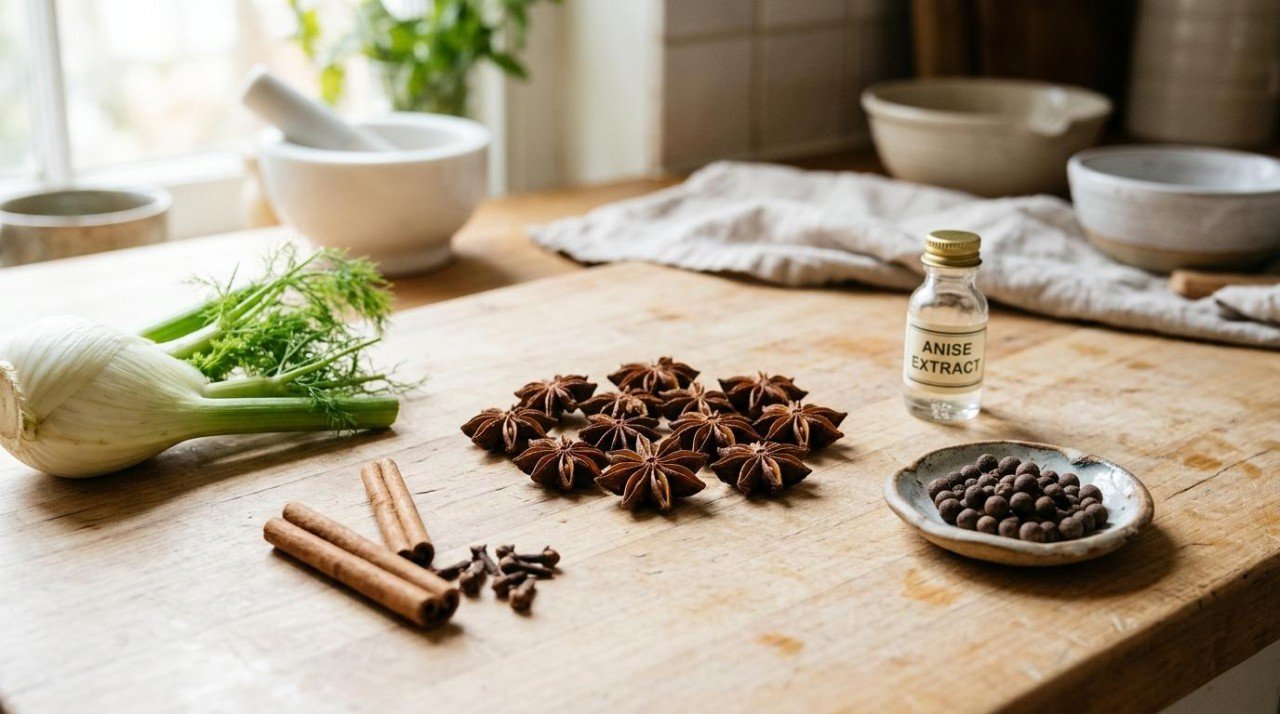
- Fennel seed + cinnamon + cloves — the best rebuild for pho and other spiced broths
- Ground star anise — if the jar is ground, not whole, it is still star anise
- Allspice + a clove — warm spice without licorice, for braises and mulled drinks
- Anise extract — a few drops for baking and drinks
- Anise liqueur (ouzo, pastis, sambuca) — a splash for mulled wine, braises and poached fruit
- Fresh fennel or tarragon — a fresh licorice note for soups, braises and fish
- Leave it out — fine when star anise is one of many spices in the pot
Match the Substitute to the Dish
- Pho and other spiced broths — fennel seed + cinnamon + cloves, anise seed, five-spice
- Red-braised pork, braised beef, short ribs, soy-braised eggs — five-spice, anise seed, fennel seed, allspice + clove
- Mulled wine, cider and chai — anise seed, fennel seed, allspice + clove, a splash of anise liqueur
- Dry rubs, roast duck, char siu — five-spice, ground star anise, ground anise or fennel
- Cookies, biscotti, spice cakes, poached pears — anise extract, ground anise seed, five-spice in small amounts
- Biryani and Indian rice dishes — fennel seed, or leave it out if the recipe already has plenty of whole spices
Chinese Five-Spice Powder
- Swap: 1 whole star anise pod → 1/2 teaspoon five-spice powder, up to 1 teaspoon after tasting
- Best for: Red-braised pork, braised beef, soy-based glazes, roast duck, dry rubs, stir-fry sauces
- Skip it for: Delicate baking and mulled drinks where the cloves and pepper would stand out
Five-spice is mostly star anise, cloves, cinnamon, Sichuan pepper and fennel, so it brings the licorice note plus several of the spices star anise usually cooks alongside. In a Chinese braise, that is often a better match than any single spice. Start with half a teaspoon per pod. Five-spice carries cloves, which get bitter and medicinal in large amounts, so add more only after the dish has simmered for 15 minutes and you have tasted it.
Ground spice behaves differently from a whole pod in liquid. It flavors the broth faster and does not mellow the same way, and it can cloud a clear broth. That is fine in a dark soy braise, less ideal in pho. If you are out of five-spice as well, our five-spice substitutes guide shows how to rebuild it.
Anise Seed
- Swap: 1 whole star anise pod → 1/2 teaspoon anise seed (whole in broths, finely crushed or ground in rubs and baking)
- Best for: Broths, braises, mulled drinks, biscotti, cookies, spiced breads
- Skip it for: Nothing in particular; it is just a bit sweeter and less woody than star anise
Anise seed is the closest flavor match. The half-teaspoon ratio comes from standard spice conversion charts, which put 1 star anise at about 1/2 teaspoon of anise or fennel seed. Star anise tastes stronger, more herbal and a little lemony. Anise seed is sweeter and more floral. In the West, star anise is often used as the cheaper stand-in for anise in baking, so swapping the other way works well there.
In a broth or braise, tie the seeds in a square of cheesecloth or drop them into a tea ball so they do not end up in every spoonful. For baking, grind them first or crush them finely with a mortar and pestle. Whole seeds in a cookie give little bursts of licorice, which some people love and others pick out.
Fennel Seed
- Swap: 1 whole star anise pod → 1/2 teaspoon fennel seed, up to 1 teaspoon for a stronger licorice note
- Best for: Broths, braises, roast pork, Italian-style sausages and meatballs, biryani
- Skip it for: Recipes where star anise is the main flavor, like five-spice salt or anise cookies
Fennel seed is the substitute most kitchens already have, because it shows up in Italian sausage and pizza seasoning. It shares the same licorice compound but is milder and sweeter, with a slightly piney edge. Start with half a teaspoon per pod and work up to a full teaspoon if the licorice is too faint after 20 minutes of simmering.
Toast the seeds in a dry pan for a minute or two before adding them to a broth. That deepens the flavor and gets it a step closer to star anise. Fennel works especially well in spiced rice dishes and in braises that already lean warm and savory.
Fennel Seed + Cinnamon + Cloves (for Pho)
- Swap: each missing star anise pod → 1/2 teaspoon fennel seed, plus 1 extra whole clove for every 2 pods. Keep the cinnamon stick the recipe already calls for.
- Best for: Pho, spiced beef or chicken broth, Vietnamese and Chinese noodle soups
- Skip it for: Baking and rubs, where ground spices work better
Pho is the dish where people miss star anise most. Most recipes use 3 to 6 pods, alongside cinnamon, cloves, coriander seed and sometimes fennel. America's Test Kitchen tested fennel seed and anise seed in place of star anise in a pho broth and found tasters could tell the difference. So the goal here is a broth that still tastes like pho, not one that tastes identical.
Fennel brings the licorice. The extra clove adds some of the woody, warm depth that whole pods give and fennel lacks. Toast everything in a dry pan first, then put it in a spice bag so the broth stays clear. Taste after 30 minutes and pull the bag out once the licorice is noticeable but not loud. Making pho from scratch? Our healthier pho makeover builds a deeply spiced broth with two-thirds less sodium.
Ground Star Anise
- Swap: 1 whole star anise pod → 1/2 teaspoon ground star anise
- Best for: Rubs, braises, glazes, baking
- Skip it for: Clear broths, where it can make the liquid cloudy and gritty
If you have ground star anise but the recipe says whole pods, you are in luck: it is the same spice. The 1/2 teaspoon per pod figure is a rule of thumb, since pods vary in size and ground spice loses strength faster than whole. Ground star anise is strong, so add it in stages.
For a soup or braise, put the ground spice in a coffee filter or cheesecloth tied with string. That gives you most of the flavor without the sandy texture. The swap also works the other way: if a recipe calls for ground star anise and you only have pods, grind one pod per 1/2 teaspoon in a spice grinder or crush it with a mortar and pestle.
Allspice + a Clove
- Swap: 1 whole star anise pod → 2 to 3 whole allspice berries (or 1/4 teaspoon ground) + 1 whole clove
- Best for: Mulled wine and cider, beef stew, braised short ribs, spiced poaching liquid
- Skip it for: Pho and any dish where the licorice flavor is the point
This one does not taste like licorice at all. What it copies is the warm, woody side of star anise. Allspice tastes like a mix of cinnamon, cloves and nutmeg, and a single clove deepens it. In a pot of mulled wine or a beef braise with plenty of other flavors, that warmth is what you would notice missing, and this combination fills the gap well.
If you have even a pinch of fennel or anise seed, add it and you get both halves of the flavor. Cloves are strong, so keep it to one per pod. Our allspice guide and ground cloves guide cover what to do if either jar is empty too.
Anise Extract (for Baking and Drinks)
- Swap: 1 whole star anise pod → 1/4 to 1/3 teaspoon anise extract
- Best for: Cookies, biscotti, cakes, frostings, hot cocoa, mulled drinks (stirred in at the end)
- Skip it for: Savory braises and broths, where it can taste sweet and artificial
McCormick says 1 teaspoon of its anise extract replaces 1 1/2 teaspoons of anise seed. Since one pod is about 1/2 teaspoon of seed, that works out to about 1/3 teaspoon of extract. Start at 1/4 teaspoon, because extracts vary by brand and are easy to overdo.
Extract is the best choice when you are baking and do not want bits of spice in the crumb. In drinks, add it at the end of heating, not at the start, so the flavor does not cook off. For savory food, use the seeds instead.
Anise Liqueur: Ouzo, Pastis or Sambuca
- Swap: 1 whole star anise pod → about 1 teaspoon to 1 tablespoon of anise liqueur, added near the end of cooking and adjusted to taste
- Best for: Mulled wine, poached pears, braised fennel, seafood stews, tomato-based braises
- Skip it for: Pho, alcohol-free cooking, and recipes for kids
Ouzo, pastis and sambuca all get their flavor from anise or star anise, so a splash brings the licorice note quickly. Sambuca is the sweetest of the three, so use it in drinks and desserts. Pastis and ouzo are drier and work better in savory dishes like a fish stew or braised fennel.
Add it near the end of cooking. Most of the alcohol cooks off in a simmering pot, but some stays, and how much depends on cooking time. Start with a teaspoon, taste, and add more only if the dish needs it. This is a substitute you use when the bottle is already in the cabinet. It is not worth buying for one pot of soup.
Take the Guesswork Out of Eating Well
Eat Well Planner helps you organize your favorite recipes, plan balanced meals, and automatically generate shopping lists — all in one place. Whether you're tracking macros, managing dietary restrictions, or just trying to stop asking "what's for dinner?", we've got you covered.
Our AI-powered tools can adapt any recipe to your dietary needs, help you discover new meals you'll love, and even log your nutrition effortlessly. It's meal planning made simple.
Start Organizing Your Meals — FreeFresh Fennel Bulb or Tarragon
- Swap: 1 whole star anise pod → about 1/2 cup thinly sliced fresh fennel bulb cooked in the dish, or 1 teaspoon chopped fresh tarragon stirred in at the end
- Best for: Chicken and fish soups, seafood stews, braised chicken, tomato sauces, roasted vegetables
- Skip it for: Pho, Chinese braises, mulled drinks and baking
These give a lighter, greener licorice note than star anise. Fresh fennel bulb softens and sweetens as it cooks, and it adds vegetable bulk to a soup or braise rather than just flavor. Tarragon is stronger and best added in the last few minutes, because long cooking dulls it. Neither tastes like a Chinese or Vietnamese dish, but in a French or Mediterranean recipe that calls for star anise, they fit naturally.
Fresh fennel is also the one substitute on this list that adds real nutrition. It is a vegetable, so you get fiber and potassium along with the flavor, and it counts as a plant in its own right.
Leave It Out
- Swap: Skip the star anise and keep the rest of the spices
- Best for: Biryani, chai, garam masala-based curries and braises with several other whole spices
- Skip it for: Pho, red-braised pork and anything where star anise is the leading flavor
If a recipe calls for one star anise pod alongside cinnamon, cardamom, cloves, bay leaves and peppercorns, you can usually just leave it out. The dish will taste a little less layered, but it will still taste right. A pot of chai or biryani is a good example: star anise is one supporting voice among many.
Leaving it out works badly when star anise is the backbone of the dish. A pho broth without any licorice note tastes like a generic beef soup. In those cases, use fennel or anise seed.
Which Substitute Should You Use?
If you are not sure, start with what you have. Five-spice is the easiest fix for Chinese braises, glazes and rubs. Anise seed is the closest flavor match for everything else. Fennel seed is the one most people own. For pho, toast fennel seed with an extra clove, keep the cinnamon stick, and put it all in a spice bag. For mulled wine and cider, use anise or fennel seed, or allspice and a clove if you want warmth more than licorice. For baking, use a few drops of anise extract.
Not sure which fits the recipe in front of you? Eat Well Planner's AI recipe chat can answer with your actual recipe in context. Ask something like "I'm out of star anise, what should I use in this braise?" and it will factor in the spices already in the dish, so it will not suggest adding more cloves to a pot that already has six.
What About the Health Side?
You use star anise by the pod, so no substitute here changes the nutrition of a dish in any meaningful way. A few things are still worth knowing.
- Whole spices make it easier to use less salt. A broth seasoned with star anise, cinnamon and charred ginger needs less salt and fish sauce to taste complete. In the SPICE trial summarized by Harvard's Nutrition Source, 40 adults who learned to cook with spices and herbs in place of salt ended up eating about 957 mg less sodium per day than a control group after 20 weeks. It was a small study, but the idea is practical: the more flavor in the pot, the less salt you reach for.
- Mulled wine can carry less sugar than you think. Star anise, cinnamon and orange peel add a sweet impression without any sugar. If you build the spice up, you can usually cut the sugar or honey in a mulled wine recipe by a third or more and still like the result.
- Star anise is not a flu remedy. Star anise is a major source of shikimic acid, a starting material that was used to make the flu drug oseltamivir (Tamiflu). That does not mean the spice itself treats the flu, and modern production mostly uses fermentation instead, as the same Wikipedia entry notes.
- Buy culinary star anise, and do not brew it into tea. Chinese star anise, the spice, is generally recognized as safe. Japanese star anise is a different, toxic plant that looks very similar when dried. In 2003 the FDA warned consumers against drinking teas brewed from star anise after at least 40 people, including 15 infants, became ill with symptoms such as seizures and vomiting. Buying star anise from a regular spice brand at the grocery store is the normal, sensible choice, and that is also a good reason not to give star anise tea to babies or young children.
A Healthier Use for Your Substitute
Star anise and its substitutes are some of the best tools for making vegetables taste rich. A pod or a half teaspoon of fennel seed in the water for braised carrots, a pot of beans or a batch of lentils gives them a warm, savory-sweet flavor that would otherwise come from extra butter or sugar. Roasted squash and sweet potatoes tossed with a pinch of five-spice or ground anise work the same way.
If you track plant diversity, each herb and spice counts as a quarter point in Eat Well Planner's Plant Points, and a fresh fennel bulb counts as a full plant. And if you want to see what a swap does to a dish, the Recipe Playground shows the nutrition score change with every edit, so you can test cutting the salt or sugar in a spiced broth before you commit.
What Not to Use
- Equal amounts of ground cloves: Cloves share the warmth of star anise but are much stronger. A teaspoon in place of a pod can make a broth bitter and medicinal. Use one whole clove per pod, at most.
- Licorice candy: Most licorice candy is flavored with anise oil and a lot of sugar, and some is not licorice-flavored at all. It melts into a sticky, sweet mess and does not belong in a savory pot.
- Curry powder: It shares a few warm spices, but turmeric, cumin and coriander dominate it. Your pho or braise will taste like curry.
- Whole spices in a dry rub: A whole pod or whole seeds will not season a rub or a cookie dough evenly. Grind them first.
- Star anise tea or "Japanese star anise": As noted above, only Chinese star anise from a reputable spice brand belongs in food, and star anise tea is not recommended, especially for infants.
For most kitchens, the answer is in the spice cabinet already: a half teaspoon of anise or fennel seed for every pod, or a half teaspoon of five-spice for a Chinese braise. Taste once the pot has simmered for a while, adjust, and dinner is back on track.