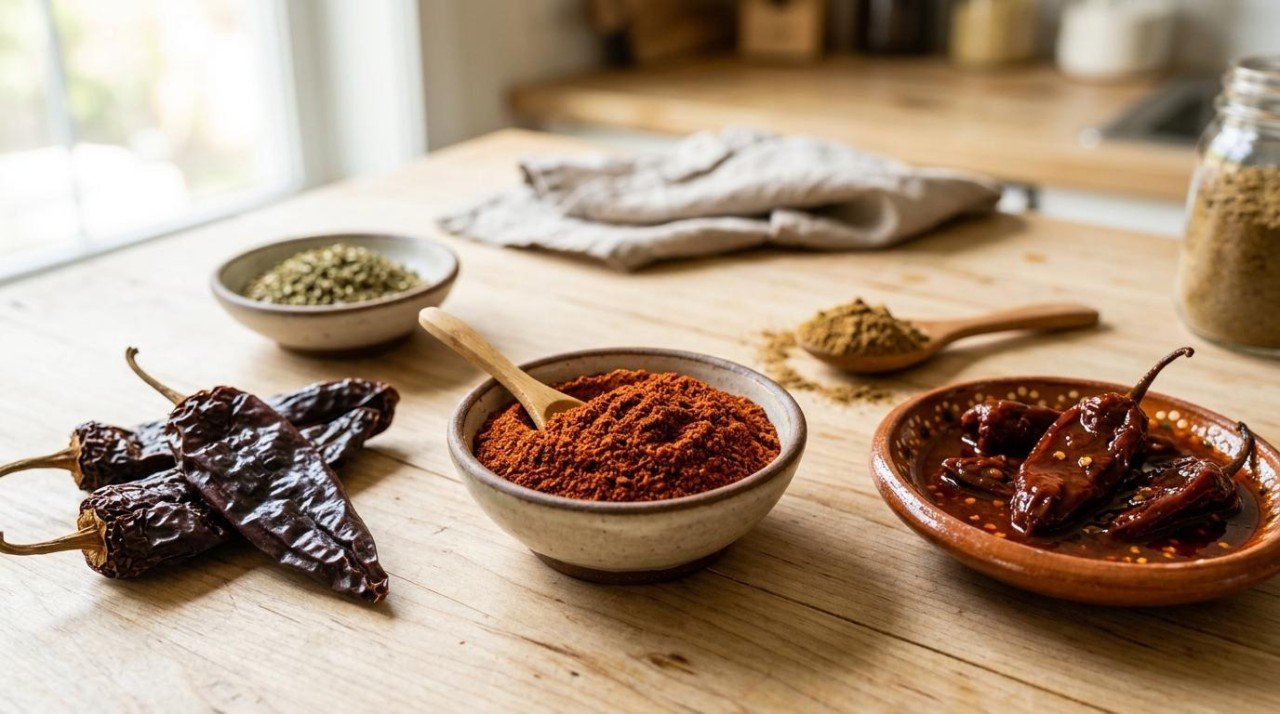
The onions are soft, the beans are drained, and the chili powder jar is empty. Good news: American chili powder is not one spice. It is a blend of mild ground chiles with cumin, garlic and oregano, and often salt, so you can rebuild it from a few jars you probably already have in about a minute.
The best substitute depends on what you are making. A pot of chili or a stew is the most forgiving, since it simmers for a long time and almost any chile-plus-cumin mix tastes right. Taco meat wants the classic Tex-Mex profile and a bit of salt. A dry rub for chicken, ribs or roasted vegetables needs a dry substitute, so pastes and sauces are out.
All ratios below are per 1 tablespoon of chili powder, which is the amount most recipes call for per pound of meat or per 4 servings of chili. If you only remember one thing, it is this: 2 teaspoons paprika + 1/2 teaspoon cumin + 1/4 teaspoon each garlic powder and oregano + a pinch of cayenne is a tablespoon of chili powder.
The Quick List
- Homemade chili powder (paprika + cumin + garlic + oregano + cayenne) — the closest match, works everywhere, no salt unless you add it
- Ancho, New Mexico or guajillo chile powder + cumin — deeper, fruitier chile flavor with similar heat
- Chipotle powder + paprika — smoky and hotter, great in chili, rubs and black beans
- Kashmiri chili powder + cumin — mild and bright red, the safe Indian-pantry pick
- Taco seasoning — fine for taco meat and chili, but cut the recipe's salt
- Chili seasoning mix — replaces chili powder, cumin and salt in a pot of chili all at once
- Chipotles in adobo — smoky heat and body for chili, stews and taco meat
- Red enchilada sauce — chile flavor in liquid form for chili, soups and braises
- Gochugaru + paprika — a sweet, gently smoky Korean chile that works in a pinch
- Harissa — for stews and roasted vegetables where a North African twist is welcome
Chili Powder vs. Chile Powder vs. Indian Chili Powder
Before you grab another red jar, check what it actually is. Three products with nearly the same name behave very differently:
- American chili powder (with an "i") is a seasoning blend. A standard jar of McCormick chili powder lists chili pepper, spices, salt, silicon dioxide and garlic (the silicon dioxide keeps it free-flowing), and in most blends the unnamed "spices" are cumin and oregano. Because the chiles are diluted by other spices, chili powder is mild, typically around 1,000 to 2,000 Scoville heat units (SHU). It was invented in Texas in the 1890s, and William Gebhardt and D.C. Pendery are credited with the first commercial blends, made for chili con carne.
- Chile powder (with an "e"), such as ancho, New Mexico, guajillo or chipotle powder, is a single dried chile, ground. It has no cumin, garlic or oregano, so it tastes more purely of pepper. Heat depends on the chile.
- Indian red chili powder (sometimes labeled "lal mirch" or simply "chilli powder") is also pure ground chiles, but usually hot varieties like Guntur or Byadgi. Piping Pot Curry puts it at 40,000 to 65,000 SHU, which is cayenne territory and roughly 20 to 50 times hotter than a jar of American chili powder. Never swap it in 1:1. Kashmiri chili powder is the exception: the same source rates it at just 1,000 to 2,000 SHU, prized for color rather than heat.
If a British or Indian recipe calls for "chilli powder," it almost always means the hot, pure kind, not the Tex-Mex blend. If an American recipe calls for "chili powder," it means the blend, and every substitute below rebuilds that.
Match the Substitute to the Dish
- Chili, stews, soups and beans — any of them. Homemade blend, ancho powder, chipotle powder, chili seasoning mix, chipotles in adobo, red enchilada sauce and harissa all work in a long simmer.
- Taco meat, burritos, enchilada filling — homemade blend, ancho powder, taco seasoning, chipotles in adobo
- Dry rubs for chicken, pork, ribs and roasted vegetables — homemade blend, ancho or chipotle powder, Kashmiri chili powder. Skip anything wet.
- Sprinkled on eggs, popcorn, corn or fruit — paprika with a pinch of cayenne, or Kashmiri chili powder; skip the cumin-heavy blends
Homemade Chili Powder
- Swap: 1 tablespoon chili powder → 2 teaspoons paprika (sweet or smoked) + 1/2 teaspoon ground cumin + 1/4 teaspoon garlic powder + 1/4 teaspoon dried oregano + 1/8 teaspoon cayenne (optional). Add a pinch of onion powder if you have it.
- Best for: Everything chili powder does: chili, taco meat, rubs, beans, soups, roasted vegetables
- Skip it for: Nothing. If you have paprika and cumin, this is the one to make.
- Health notes: Salt-free unless you add salt, while USDA data puts store-bought chili powder at about 77 mg of sodium per teaspoon
This is the substitute to make first, because it is the same thing that is in the jar, minus the salt. Paprika is ground mild red peppers, so it supplies the color and the chile base. Cumin brings the warm, earthy note that makes chili taste like chili, garlic powder adds savory depth, and oregano gives the faint herbal edge. The cayenne is optional; paprika on its own is milder than most chili powders, so a pinch of cayenne brings the heat back to normal. Leave it out for kids.
Smoked paprika makes a deeper, more Texas-style blend; sweet paprika tastes lighter and brighter. If you cook chili often, mix a jar: 2 tablespoons plus 2 teaspoons paprika, 2 teaspoons cumin, 1 teaspoon each garlic powder, onion powder and oregano, and 1/2 teaspoon cayenne makes about 1/4 cup, enough for four 1-tablespoon uses. Mexican oregano, if you have it, is closer to what commercial blends use than Mediterranean oregano, but either works. Out of paprika too? Our smoked paprika substitutes guide covers the options, and our cumin substitutes guide has you covered if that jar is also empty.
Ancho, New Mexico or Guajillo Chile Powder + Cumin
- Swap: 1 tablespoon chili powder → 2 teaspoons ancho, New Mexico or guajillo chile powder + 1/2 teaspoon ground cumin + 1/4 teaspoon garlic powder + 1/4 teaspoon dried oregano
- Best for: Chili, enchilada sauce, braised beef or pork, rubs, black bean soup
- Skip it for: Dishes where you want the familiar store-bought taste; this tastes noticeably more like real chiles
Pure ground chiles are the base of chili powder, so adding back the cumin, garlic and oregano gets you the same blend, only better. Ancho is a dried, ripe poblano, with a sweet, raisiny, slightly smoky flavor and 1,000 to 1,500 SHU, about the same heat as a jar of chili powder. New Mexico chile powder is earthier and a bit brighter, and guajillo is tangy with a little more heat. Any of them makes a chili with deeper, more complex chile flavor than the blend.
Using ancho alone without the cumin also works in a pinch, especially in chili that already calls for cumin separately. Just add an extra 1/2 teaspoon cumin to the pot. If you have whole dried anchos instead of powder, stem and seed one, tear it up and grind it in a spice grinder: Jo Cooks' homemade chili powder uses 1 ounce of anchos (about 2 to 3 chiles) with 1 1/2 teaspoons each of cumin, garlic powder and oregano, 1 teaspoon onion powder and 1 teaspoon smoked paprika.
Chipotle Powder + Paprika
- Swap: 1 tablespoon chili powder → 1 teaspoon chipotle powder + 1 teaspoon paprika + 1/2 teaspoon ground cumin + 1/4 teaspoon garlic powder + 1/4 teaspoon dried oregano
- Best for: Chili, barbecue rubs, black beans, sweet potatoes, taco meat
- Skip it for: Kids and anyone heat-averse, or any recipe where smoke would clash
Chipotle powder is ground smoke-dried jalapeños, at 2,500 to 8,000 SHU, so it is noticeably hotter than chili powder and very smoky. That is why it only replaces part of the chili powder here, with paprika filling out the rest. PepperScale warns that a straight 1:1 swap would be significantly hotter, and recommends starting small.
The smoke is the upside. It gives a pot of chili or a tray of roasted sweet potatoes a slow-cooked, campfire depth that regular chili powder does not. If you want more smoke and less heat, use smoked paprika in place of sweet paprika and cut the chipotle powder to 1/2 teaspoon.
Kashmiri Chili Powder + Cumin
- Swap: 1 tablespoon chili powder → 2 teaspoons Kashmiri chili powder + 1/2 teaspoon ground cumin + 1/4 teaspoon garlic powder + 1/4 teaspoon dried oregano
- Best for: Chili, rubs, roasted vegetables, anything where you want vivid red color
- Skip it for: Nothing in particular, as long as it really is Kashmiri and not regular Indian chili powder
Kashmiri chili powder is mild, around the same heat as American chili powder, and has a deep, bright red color with a mildly sweet, slightly smoky flavor. It works much like paprika in the homemade blend above, and many Indian pantries have it. The finished dish will be a little redder, which is rarely a problem.
Read the label carefully. A bag labeled just "red chili powder" or "lal mirch" from an Indian grocer is the hot kind. If that is all you have, treat it like cayenne: use 1/4 teaspoon, not 2 teaspoons, and make up the rest of the tablespoon with paprika.
Taco Seasoning
- Swap: 1 tablespoon chili powder → 1 tablespoon taco seasoning, then leave out about 1/4 teaspoon of the recipe's salt. Taste before adding any more.
- Best for: Taco meat, chili, taco soup, bean dip
- Skip it for: Low-sodium cooking and dry rubs, where the cornstarch can turn pasty
- Health notes: About 760 mg of sodium per tablespoon in a typical packet, roughly a third of the daily limit
Taco seasoning is chili powder with more of everything else. A McCormick taco packet lists spices (including chili pepper, paprika and oregano), cornstarch, salt, onion and garlic, so the flavor is close, just saltier and more oniony. In a pot of chili, the cornstarch also thickens a little, which is fine.
The catch is salt. That same label lists 380 mg of sodium per 1 1/2-teaspoon serving, so a tablespoon brings about 760 mg, roughly a third of the 2,300 mg daily limit the FDA recommends. Cut back on any salt the recipe calls for, and season at the end. Homemade taco seasoning is a different story; our taco seasoning substitutes guide has a salt-controlled blend that also works here.
Chili Seasoning Mix
- Swap: In a pot of chili that calls for 2 to 3 tablespoons chili powder plus cumin and salt → 1 packet chili seasoning mix in place of all three. Taste for salt at the end.
- Best for: A standard pot of chili (about 1 pound of meat or 2 to 3 cans of beans)
- Skip it for: Recipes that only need a teaspoon or two, rubs, and anything that is not chili
A chili seasoning packet is chili powder, cumin, garlic, onion, salt and often a thickener like flour or cornmeal, measured out for one pot of chili. So rather than replacing the chili powder alone, let it replace the whole spice line of the recipe. If the recipe also calls for oregano or garlic powder, you can skip those too.
It is too salty and too thick to use by the spoonful in other dishes. Packets vary, so check the label: many list salt near the top. If you are working on sodium, the homemade blend is the better route.
Take the Guesswork Out of Eating Well
Eat Well Planner helps you organize your favorite recipes, plan balanced meals, and automatically generate shopping lists — all in one place. Whether you're tracking macros, managing dietary restrictions, or just trying to stop asking "what's for dinner?", we've got you covered.
Our AI-powered tools can adapt any recipe to your dietary needs, help you discover new meals you'll love, and even log your nutrition effortlessly. It's meal planning made simple.
Start Organizing Your Meals — FreeChipotles in Adobo
- Swap: 1 tablespoon chili powder → 1 minced chipotle pepper + 1 teaspoon adobo sauce from the can + 1/2 teaspoon ground cumin + 1/2 teaspoon dried oregano
- Best for: Chili, stews, braised beef or chicken, taco meat, black beans
- Skip it for: Dry rubs and anything that needs to stay mild
A can of chipotles in adobo is smoked jalapeños in a tangy tomato, vinegar and garlic sauce, so it brings chile flavor, smoke, a little acid and some body all at once. In a pot of chili that has been simmering for an hour, it tastes like it was always the plan.
Start with one pepper per tablespoon of chili powder and add more at the end if you want more heat; the adobo sauce on its own is a milder way to add smoke. Leftover chipotles freeze well in an ice cube tray. Our chipotles in adobo substitutes guide covers this from the other direction.
Red Enchilada Sauce
- Swap: 1 tablespoon chili powder → 1/4 cup red enchilada sauce + 1/2 teaspoon ground cumin, and reduce the recipe's broth or water by 1/4 cup
- Best for: Chili, tortilla soup, braised chicken or pork, bean and vegetable stews
- Skip it for: Rubs and dry seasonings, and dishes that cannot take extra liquid
Red enchilada sauce is ground chiles, tomato, garlic and spices in liquid form, which makes it a natural fit for anything that simmers. It gives chili a rounder, more tomato-forward chile flavor. Since it adds liquid, cut the same amount from the recipe's broth, water or tomatoes so the dish does not go thin.
Canned enchilada sauces contain salt, and some contain more than others, so taste before seasoning. The extra cumin keeps the flavor in chili-powder territory.
Gochugaru + Paprika
- Swap: 1 tablespoon chili powder → 1 teaspoon gochugaru + 1 teaspoon paprika + 1/2 teaspoon ground cumin + 1/4 teaspoon garlic powder + 1/4 teaspoon dried oregano
- Best for: Chili, stews, roasted vegetables, beans
- Skip it for: Smooth sauces and rubs where the flakes' texture would show; grind it first if you can
Korean chile flakes are sweet, slightly smoky, and at 4,000 to 8,000 SHU, around jalapeño heat, a bit hotter than chili powder. That is why they are cut with paprika here. The flavor is fruity and pleasant and disappears into a pot of chili or a tray of roasted vegetables. If you have a spice grinder or mortar and pestle, grind the flakes fine; otherwise they soften in anything that simmers.
Harissa
- Swap: 1 tablespoon chili powder → 1 tablespoon harissa paste + 1/2 teaspoon ground cumin
- Best for: Bean and lentil stews, chickpea chili, roasted vegetables, braised lamb or chicken
- Skip it for: Classic Tex-Mex chili and taco meat if you want them to taste traditional
Harissa is a North African chile paste, usually made with dried chiles, garlic, caraway or coriander, and olive oil. It brings the chile and garlic you need but swaps oregano for caraway, so the dish tilts toward North Africa. In a vegetarian chickpea chili or a pan of roasted carrots, that is a welcome change, not a compromise. Brands range from mild to quite hot, so taste yours and start with less if it bites. Our harissa substitutes guide explains what to expect from different styles.
Healthier Upgrade: Make It Yourself and Leave Out the Salt
Chili powder itself is not unhealthy. It is mostly ground chiles and spices. But many jars include salt, and that adds up when a pot of chili calls for 2 or 3 tablespoons. Making your own blend lets you decide.
- Store-bought chili powder: USDA data puts it at about 77 mg of sodium per teaspoon, or about 230 mg per tablespoon. A pot of chili with 3 tablespoons gets about 700 mg of sodium from the chili powder alone, before broth, canned tomatoes and beans. Brands vary, and salt-free chili powders exist, so check the label.
- Homemade blend: Paprika, cumin, garlic powder, oregano and cayenne together have very little sodium, so nearly all of the salt in your chili is the salt you add, and you can add it at the end, to taste.
- The chile bonus: Chiles are rich in carotenoids. A teaspoon of chili powder has about 40 mcg of vitamin A (RAE) and 0.9 g of fiber, per the same USDA data. That is a small amount, about 4% of the daily value for vitamin A, but a tablespoon or two in a pot of chili makes a real, if modest, contribution.
Cooking with spices is one of the most practical ways to cut salt without losing flavor. In the 20-week SPICE trial summarized by Harvard's Nutrition Source, adults coached to use spices and herbs in place of salt ended up excreting about 957 mg less sodium per day than a self-directed control group. The FDA notes that over 70% of the sodium Americans eat comes from packaged and prepared foods, so swapping a salted blend for your own is one of the easy wins.
The other upgrade is what goes in the pot. A chili built on beans, tomatoes, onions and peppers is an easy way to add fiber and plant variety to the week. Our healthier beef chili makeover shows exactly which swaps raise the nutrition score, and our ground beef substitutes guide has ratios for stretching the meat with lentils and beans.
What Not to Use
- Indian red chili powder, cayenne or crushed red pepper 1:1: These are pure hot chiles at around 30,000 SHU or more, many times hotter than a chili powder blend. A tablespoon in place of chili powder can make a pot of chili inedible. Use 1/8 to 1/4 teaspoon for heat and build the rest from paprika and cumin.
- Paprika alone: It covers the color and the mild chile, but without cumin, garlic and oregano the dish tastes flat. Add at least the cumin.
- Cajun or Creole seasoning: The paprika and cayenne overlap, but the thyme and high salt content push the dish toward jambalaya, not chili.
- Curry powder: It shares cumin and coriander, but turmeric and fenugreek make it taste distinctly Indian and turn the dish yellow-brown.
- Sweet chili sauce or hot sauce as the main seasoning: Sweet chili sauce adds sugar and garlic but little chile depth. A dash or two of hot sauce is fine for heat, but it cannot carry the flavor of a whole pot.
Which Chili Powder Substitute Should You Use?
If you have paprika and cumin, make the homemade blend: 2 teaspoons paprika, 1/2 teaspoon cumin, 1/4 teaspoon each garlic powder and oregano, and a pinch of cayenne per tablespoon. If you have ancho or New Mexico chile powder, use that as the base for an even better pot of chili. For smoke, reach for chipotle powder or chipotles in adobo. For a pot of chili with no spices on hand, a chili seasoning packet covers everything. And if the only red jar in the house is Indian chili powder, use a pinch, not a spoonful.
Not sure which of these fits the recipe in front of you? Eat Well Planner's AI recipe chat can answer with your actual recipe in context: ask "I'm out of chili powder, what should I use?" and it will work from what is already in the dish, including whether there is cumin in it already or the heat is already high. If you are curious what dropping a salty blend does to the dish, the Recipe Playground lets you swap ingredients and watch the nutrition score and sodium change live, and Make It Healthier suggests swaps like these, each checked against the nutrition score before it is shown to you.