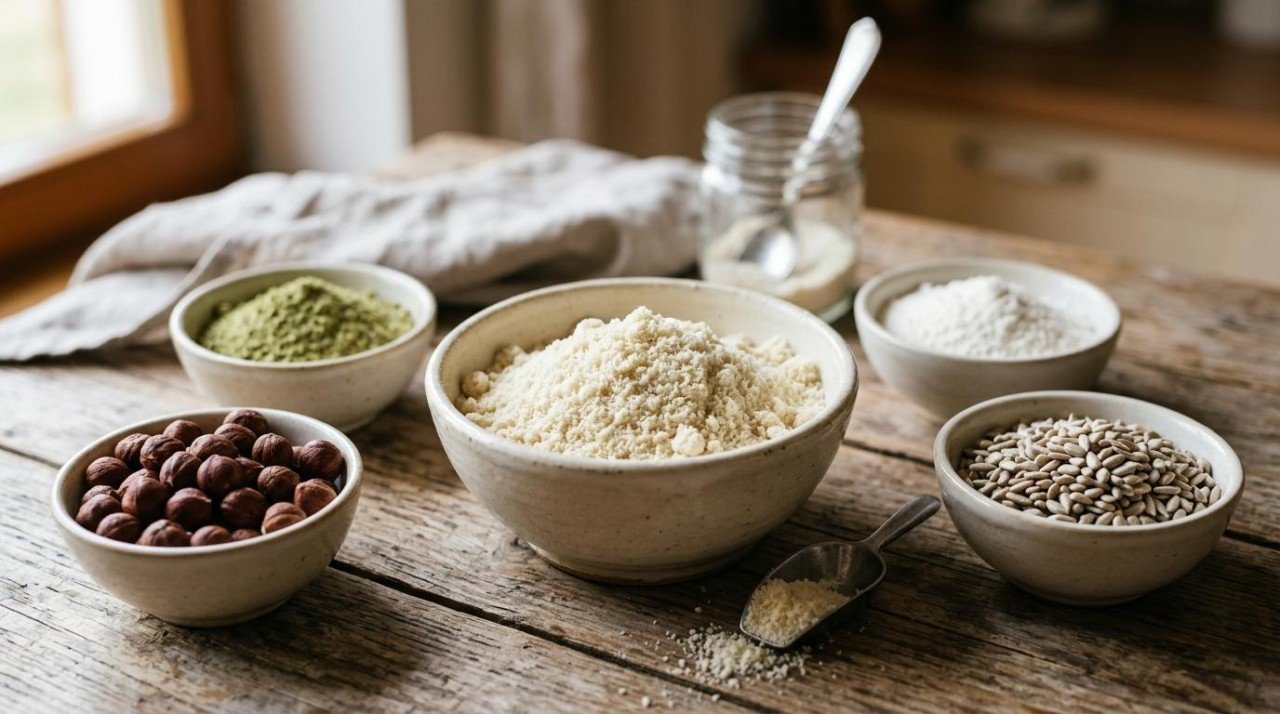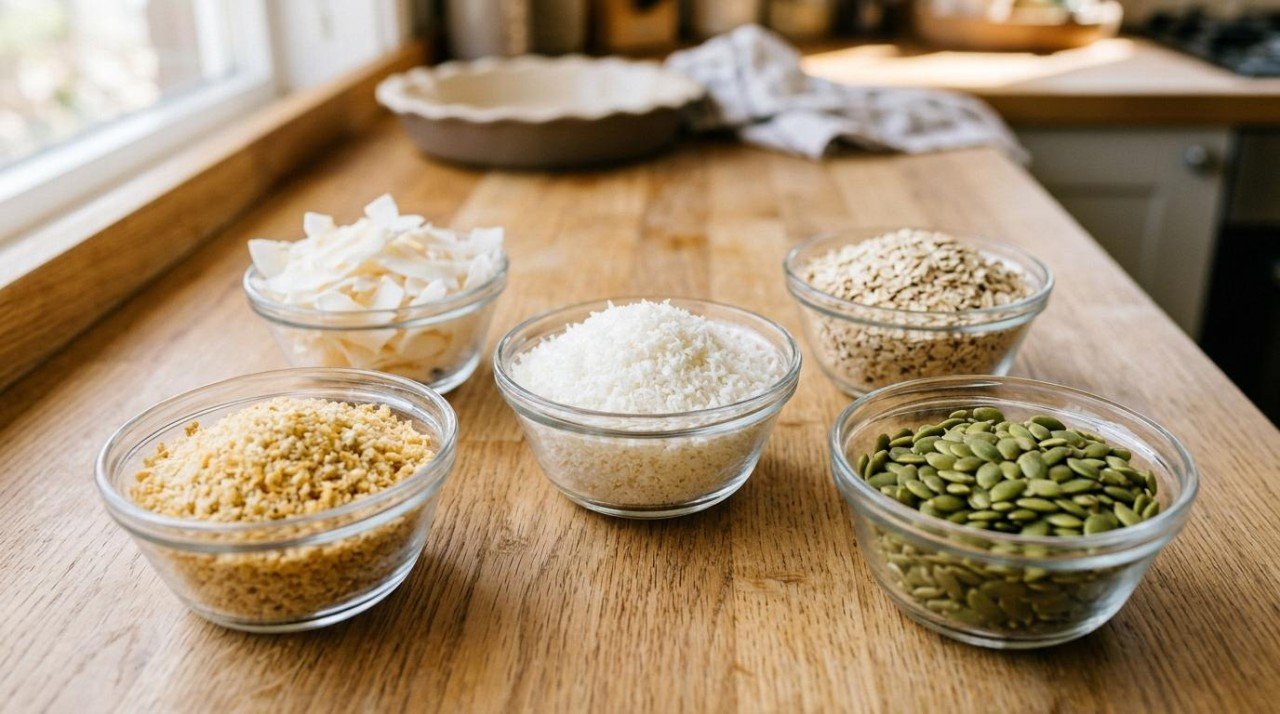
The macaroon batter is mixed, the granola oats are on the sheet pan, or the shrimp are peeled and waiting, and the bag of shredded coconut turns out to be empty. Or it's the wrong bag: the recipe says sweetened and you have unsweetened, or it says shredded and you have big flakes or fine desiccated coconut from the bulk bin. Either way, dinner (or dessert) is still on.
The right fix depends on what the coconut is doing. In baking it brings chew, sweetness, and moisture. In a coating like coconut shrimp it is the crunchy, toasty crust. In granola, energy bites, and toppings it adds texture and a little richness. So this guide starts with the easy wins (converting between the coconut you have and the coconut the recipe wants), then covers real substitutes for each of those three jobs, all with exact ratios.
A few of the swaps are genuine upgrades, too. Nuts and seeds bring more protein and far less saturated fat, and none of them make you give up the crunch.
The Quick List
- Unsweetened coconut + a little sugar — the fix when the recipe wants sweetened; 1:1 plus about 3 tablespoons sugar per cup
- Sweetened coconut, less sugar elsewhere — the reverse swap, 1:1 with the recipe's sugar trimmed
- Desiccated coconut — finer and drier, so use about 2/3 cup per cup of shredded
- Coconut flakes or chips — the same coconut in bigger pieces; pulse or chop, then swap 1:1
- Fresh or frozen grated coconut — perfect in curries, chutneys, and moist cakes; dry it first for anything crisp
- Chopped nuts — the best all-around stand-in for cookies, bars, and toppings
- Rolled oats — the chewy, budget-friendly swap for cookies, bars, and granola
- Panko — the go-to coating when you're out of coconut for coconut shrimp or chicken
- Seeds (sunflower, pumpkin, hemp) — the nut-free pick for granola, energy bites, and toppings
- Coconut extract — the coconut flavor without the texture, paired with any swap above
First, Know What You're Replacing
Shredded coconut is dried coconut meat cut into thin strands. It comes two ways, and the difference matters more than people expect. Sweetened shredded coconut (the moist, bagged kind in the baking aisle) is soaked in sugar syrup. According to USDA data, it is about 43% sugar by weight, which works out to roughly 40 grams of sugar per cup. Unsweetened shredded coconut is just dried coconut, so it is drier, a bit crisper, and much less sweet.
The other forms on the shelf are the same food cut differently, which is why they make the easiest substitutes. The catch is that a cup of each weighs something different, so a straight cup-for-cup swap can throw a recipe off. King Arthur's ingredient weight chart puts it plainly:
- Unsweetened shredded coconut: 53 grams per cup
- Unsweetened large flakes: 60 grams per cup
- Sweetened shredded coconut: 85 grams per cup (much of that extra weight is sugar and moisture)
- Unsweetened desiccated coconut: 85 grams per cup
If you have a kitchen scale, swapping by weight is the most accurate way to trade one coconut for another. The ratios below are worked out from those weights, so you can also do it with cups.
Swapping One Kind of Coconut for Another
If you have any coconut in the pantry, start here. These swaps keep the flavor and nearly all the texture, and they work in baking, coatings, and granola alike.
Unsweetened Coconut When the Recipe Says Sweetened
- Swap: 1 cup sweetened shredded coconut → 1 cup unsweetened shredded coconut + about 3 tablespoons sugar. For extra moisture, first toss the coconut with a quick syrup of 4 tablespoons warm water and 4 teaspoons sugar
- Best for: Cookies, cakes, bars, granola, and coatings
- Skip it for: Nothing, really. Macaroons need the moistening step, though
- Health notes: You control the sugar, and you can often use less than the full amount without missing it
In most recipes, unsweetened coconut drops right in. Baking Bites says it "can be used in all baking applications unless a recipe specifically calls for sweetened coconut," and notes it gives cookies and cakes a "subtler" coconut flavor. That subtler sweetness is the main thing you're making up for. Since a cup of sweetened coconut carries about 40 grams of sugar, adding about 3 tablespoons of sugar per cup to the batter brings the recipe back into balance. In a recipe that's already plenty sweet, like a frosted coconut cake, you can skip most of it.
The other difference is moisture. Sweetened coconut is soft and chewy; unsweetened is dry and can make cookies a little crumbly. Mother Would Know has a simple fix: warm 1 tablespoon of water with 1 teaspoon of sugar for every 1/4 cup of unsweetened coconut, then stir in the coconut until the syrup is absorbed. For a full cup, that's 4 tablespoons of water and 4 teaspoons of sugar. Let it sit on a plate for 20 to 30 minutes to dry slightly if the recipe is a dry one, such as cookies. You don't need that step for granola or anything that adds liquid later. For macaroons, where the coconut is the cookie, use this moistening step plus the extra sugar, or the cookies will bake up dry and loose.
Sweetened Coconut When the Recipe Says Unsweetened
- Swap: 1:1 by volume, and cut the recipe's sugar by about 3 tablespoons for every cup of coconut
- Best for: Cookies, bars, cakes, quick breads, and sweet toppings
- Skip it for: Savory dishes (curries, coconut rice, savory crusts) and sugar-free or low-sugar recipes
Going the other direction is easy in sweet recipes. Just take some sugar out so the result isn't cloying. If the recipe has no sugar to cut, like a lightly sweetened granola, the sweetened coconut will simply make it sweeter, which many people won't mind. Watch the oven, though. All that sugar makes sweetened coconut brown and burn faster, so check toppings and granola a few minutes early and tent with foil if the coconut darkens before the dish is done. In savory food, the sweetness is hard to hide, so skip it there.
Desiccated Coconut
- Swap: About 2/3 cup desiccated coconut per 1 cup unsweetened shredded coconut. For sweetened shredded, use about 1/2 cup desiccated plus the sugar and moistening step above
- Best for: Cakes, cookies, bars, energy bites, and coatings where a finer crumb is fine
- Skip it for: Garnishing a coconut cake or anywhere you want visible, chewy strands
Desiccated coconut is unsweetened coconut ground much finer and dried further, so it's popular in British, Australian, and South Asian recipes. Because the pieces are small, more of it packs into a cup. King Arthur weighs a cup at 85 grams versus 53 for unsweetened shredded, which is why you need only about two-thirds as much. It also soaks up liquid more readily, so in a batter that already seems thick, add a spoonful of milk or water. Expect a smoother, less chewy texture, which is a non-issue in most cakes and bars and actually helps coatings stick.
Coconut Flakes or Chips
- Swap: 1:1 by volume after a few quick pulses in a food processor or a rough chop
- Best for: Granola, trail mix, oatmeal and yogurt toppings; chopped, everything shredded coconut does
- Skip it for: Nothing, once chopped. Whole chips are too big for macaroons and coatings
Flakes and chips are the same unsweetened coconut in wider ribbons, and at 60 grams per cup they're close enough in weight to shredded to swap evenly once they're broken down. Use them whole in granola, where the big, toasty chips are a treat. For cookies, macaroons, or coatings, pulse them a few times until they look like coarse shreds. Stop before they turn into powder, or they'll pack like desiccated coconut. Like shredded coconut, flakes toast fast, so they need watching.
Fresh or Frozen Grated Coconut
- Swap: About 1 1/4 cups fresh or thawed frozen grated coconut per 1 cup unsweetened shredded coconut
- Best for: Curries, chutneys, coconut rice, South Indian stir-fries, and moist cakes
- Skip it for: Granola, coatings, and crisp cookies, unless you dry it first
Fresh coconut is roughly 47% water, so a cup of it holds less coconut than a cup of dried. That's why you need a little more. Frozen grated coconut, sold in the freezer aisle of Indian and Asian grocery stores, works the same way and is much easier than cracking a whole coconut. It's lovely anywhere moisture is welcome, and in savory dishes it tastes fresher and milkier than dried coconut. For a crisp result, spread it thin on a sheet pan and dry it in a low oven (around 250 F), stirring often, until it feels dry and before it browns.
When Coconut Is in the Baking (Cookies, Bars, Cakes, Macaroons)
In baked goods, shredded coconut mostly adds chew, bulk, and a little fat. Several pantry staples cover those jobs well. You'll lose the coconut flavor, but adding a little coconut extract brings it back (see below).
Chopped Nuts
- Swap: 3/4 to 1 cup chopped nuts per 1 cup shredded coconut
- Best for: Cookies, blondies, bars, quick breads, coffee cake streusel, and cake fillings
- Skip it for: Macaroons, and anyone baking for a nut allergy
- Health notes: Almonds have about 3.8 grams of saturated fat per 100 grams versus about 57 in unsweetened dried coconut, plus three times the protein
Nuts are the most versatile coconut stand-in. They bring richness and texture and brown nicely. Almonds are closest in feel, especially sliced almonds broken up a little, while pecans and walnuts add a buttery, toasty flavor that suits blondies and cookies. Macadamias are a natural partner for tropical flavors, so try them in anything that pairs coconut with lime, pineapple, or white chocolate. Chop them about the size of a lentil so they spread through the dough the way coconut shreds would. Toasting the nuts for 5 to 8 minutes at 350 F before chopping makes the flavor much deeper.
Nuts also make a real nutrition difference. According to USDA data, almonds carry about 21 grams of protein and only 3.8 grams of saturated fat per 100 grams, plus plenty of vitamin E and magnesium. Unsweetened dried coconut has about 57 grams of saturated fat and 7 grams of protein for the same weight. That said, coconut is not a villain: unsweetened coconut also has a hefty 16 grams of fiber per 100 grams. If you're curious about the saturated fat debate, our deep dive on how coconut oil became a "superfood" walks through the evidence.
Rolled Oats
- Swap: 1:1 by volume; for a finer, more coconut-like texture, pulse old-fashioned oats 2 or 3 times first
- Best for: Drop cookies, oat bars, crumble toppings, and no-bake bites
- Skip it for: Cake garnishes, macaroons, and delicate cakes, where oats feel heavy
- Health notes: About 10.6 grams of fiber and 17 grams of protein per 100 grams, with very little saturated fat
Oats share coconut's chewy, slightly toasty quality, which is why so many cookie recipes use both. In a coconut cookie or bar, swapping oats in gives you something close to a classic oatmeal cookie. Oats absorb a bit more moisture than dried coconut, so if the dough seems stiff, add a tablespoon of milk. Nutritionally, oats bring about 10.6 grams of fiber and 17 grams of protein per 100 grams, with barely any sodium. Use certified gluten-free oats if you're baking for someone with celiac disease. Out of oats as well? Our rolled oats substitutes guide has you covered.
A Note on Macaroons
Coconut macaroons are the one recipe where nothing truly stands in for coconut. The shreds are the cookie's whole structure, held together with egg white or condensed milk. Your best move is to use any coconut you have via the conversions above: desiccated (about half the volume of sweetened shredded, plus sugar), pulsed flakes, or unsweetened coconut with the syrup trick. If you have no coconut at all, switch cookies. Almond macaroons, made with almond flour and egg white, are the closest cousin and use the same basic method.
Coconut Extract (for the Flavor)
- Swap: Start with 1/2 teaspoon coconut extract per cup of coconut you're replacing, and add up to 1 teaspoon to taste. Combine it with nuts or oats for texture
- Best for: Cookies, cakes, frostings, whipped cream, and smoothies
- Skip it for: Use on its own when the coconut is there for texture, as in coatings, granola, and macaroons
Extract solves the flavor half of the problem. It's very concentrated, so start small; too much tastes like sunscreen. A good combination for a coconut cookie is chopped macadamias or almonds for texture with 1/2 teaspoon of extract in the dough. Add the extract with the vanilla, and taste the dough (if it has no raw egg) or frosting before adding more.
Take the Guesswork Out of Eating Well
Eat Well Planner helps you organize your favorite recipes, plan balanced meals, and automatically generate shopping lists — all in one place. Whether you're tracking macros, managing dietary restrictions, or just trying to stop asking "what's for dinner?", we've got you covered.
Our AI-powered tools can adapt any recipe to your dietary needs, help you discover new meals you'll love, and even log your nutrition effortlessly. It's meal planning made simple.
Start Organizing Your Meals — FreeWhen Coconut Is the Coating (Coconut Shrimp, Chicken, Fish)
In a coating, coconut toasts into a sweet, crunchy crust. The basic breading routine stays the same for any substitute: dredge in flour, dip in beaten egg, then press the coating on firmly.
Panko
- Swap: 1:1 by volume; for coconut shrimp without coconut, add 1/2 teaspoon coconut extract to the egg wash
- Best for: Shrimp, chicken tenders, fish sticks, and tofu
- Skip it for: Gluten-free cooking, unless you use a gluten-free panko
Many coconut shrimp recipes already mix coconut with panko, so panko alone is the obvious backup. It gives a lighter, more neutral, less sweet crust that crisps beautifully in oil or an air fryer. To keep some of the tropical feel, serve it with a sweet chili or mango dipping sauce, or add a pinch of sugar to the panko. If panko is missing too, our panko substitutes guide covers cornflakes, crackers, Rice Chex, and more.
Crushed Nuts (Macadamia, Cashew, or Almond)
- Swap: 1:1 by volume, chopped fine; or half chopped nuts and half panko for a lighter crust
- Best for: Baked or air-fried shrimp, chicken, and white fish
- Skip it for: Deep-frying, where nuts can scorch before the food is cooked
Macadamias and cashews have the same rich, slightly sweet character as coconut and pair beautifully with tropical sauces. Chop them fine or pulse until they look like coarse crumbs, stopping before they turn to paste. Mixing them half-and-half with panko gives the most even browning. Bake or air-fry at about 400 F rather than deep-frying, and watch closely during the last few minutes.
When Coconut Is in Granola, Energy Bites, or a Topping
Here coconut is mostly about crunch and texture, so this is the most forgiving job. Nearly anything toasty and dry will work.
Seeds: Sunflower, Pumpkin, or Hemp
- Swap: 3/4 to 1 cup seeds per 1 cup shredded coconut
- Best for: Granola, energy bites, trail mix, and oatmeal or yogurt toppings; the best nut-free pick
- Skip it for: Cake garnishes and macaroons
- Health notes: Hemp hearts provide about 32 grams of protein per 100 grams and are rich in plant omega-3
Seeds give granola and energy bites the same small, crunchy bits that coconut does, with no nut allergy worries. Sunflower and pumpkin seeds (pepitas) toast well right alongside oats. Hemp hearts are small and soft, a lot like desiccated coconut in energy bites. They're also a standout for nutrition: about 32 grams of protein, 8.7 grams of plant omega-3 (ALA), and only 4.6 grams of saturated fat per 100 grams. Chia seeds work in energy bites too, and they help hold the mix together. See our chia seed guide if you're out of those.
Timing is the trick in granola. Coconut is usually stirred in for the last part of baking because it burns quickly. Seeds and nuts can go in at the start with the oats, which actually makes them easier to work with than coconut.
More Oats, Nuts, or Puffed Grains
- Swap: 1:1 by volume, using extra rolled oats, chopped nuts, or puffed rice or quinoa
- Best for: Granola, granola bars, and no-bake bites
- Skip it for: Recipes where coconut is the main flavor, unless you add coconut extract
The simplest granola fix is to bump up what's already in the bowl. Extra oats keep it budget-friendly, extra nuts make it richer, and puffed rice or puffed quinoa adds lightness and crunch to bars. If you want a hint of coconut, a few drops of coconut extract in the wet ingredients goes a long way, and a tablespoon of coconut oil as the fat adds a little more.
Healthier Upgrades Worth Trying on Purpose
Unsweetened coconut is a perfectly good ingredient. It's rich in fiber and adds a flavor nothing else really matches. Still, if you bake with sweetened coconut often, or want more protein and less saturated fat in your snacks, a few swaps are worth making on purpose:
- Switch from sweetened to unsweetened. Going from sweetened to unsweetened coconut cuts about 40 grams of sugar per cup, and in many recipes you can add back less sugar than that without anyone noticing.
- Go half-and-half with nuts or seeds. Replace half the coconut in granola or energy bites with almonds or hemp hearts. You keep the coconut flavor and add protein while cutting the saturated fat significantly.
- Add plant variety. Every new nut, seed, and grain is another plant in your week. A granola with oats, pumpkin seeds, almonds, and a little coconut packs four plants into a single breakfast.
What Not to Use
- Coconut flour. It's coconut with most of the fat removed, ground to a powder that soaks up huge amounts of liquid. Use it in place of shredded coconut and you'll get dry, dense baking and a pasty coating.
- Lots of coconut extract on its own. It adds flavor but no texture, and too much of it tastes artificial. Pair a small amount with nuts or oats.
- Sweetened coconut in savory food. In curries, coconut rice, or savory crusts, its sugar stands out. Use unsweetened, fresh, or frozen coconut instead.
- Cup-for-cup desiccated coconut. A cup of desiccated coconut weighs more than half again as much as a cup of unsweetened shredded, so a straight swap makes baking dry and heavy. Use about two-thirds as much.
One allergy note: in January 2025 the FDA removed coconut from its list of tree nuts that must be declared as allergens, as the Academy of Nutrition and Dietetics explains. Coconut must still appear in the ingredient list but may no longer show up in a "Contains: tree nuts" statement. If you're cooking for someone with a coconut allergy, read the full ingredient list, and reach for seeds rather than nuts when a nut allergy is also in the mix.
The Bottom Line
If you have any form of coconut, convert it: unsweetened plus a little sugar for sweetened, two-thirds as much desiccated, or pulsed flakes. If you have none, match the swap to the job. Use chopped nuts or oats in baking, panko or crushed macadamias in coatings, and seeds or extra oats in granola, plus a little coconut extract wherever you miss the flavor.
Not sure which of these suits the recipe in front of you? Eat Well Planner's AI recipe chat can help. Open your recipe, tell it you're out of shredded coconut, and it will suggest the swap that fits that dish, with your ingredients and method in view. And if you want to see what trading coconut for almonds or hemp hearts does to a recipe's nutrition, the Recipe Playground shows the change in protein, fiber, and saturated fat before you commit.