The brownie batter is mixed, the oven is hot, and the recipe wants a teaspoon of espresso powder. You don't have any, and you are wondering whether you can leave it out. You can, but most good chocolate recipes include it for a reason. A small amount of espresso powder doesn't make brownies taste like coffee. It makes them taste more like chocolate: deeper, darker, and less flat.
The good news is that espresso powder is one of the easiest ingredients to replace. Instant coffee, brewed coffee, coffee extract, and even a spoonful of coffee liqueur can all do its job, and there are caffeine-free options too. The right pick depends on what you're making. A dry swap works anywhere, while a liquid swap only works when the recipe has liquid to trade. In a spice rub, the rules change again.
Below is every substitute worth using, with an exact ratio for each, notes on where it works and where it doesn't, and a section on caffeine for anyone baking for kids or cutting back.
The Quick List
- Instant espresso granules — a 1:1 swap; crush them if the recipe uses the powder dry
- Instant coffee — the most common pantry fix; use about 50% more
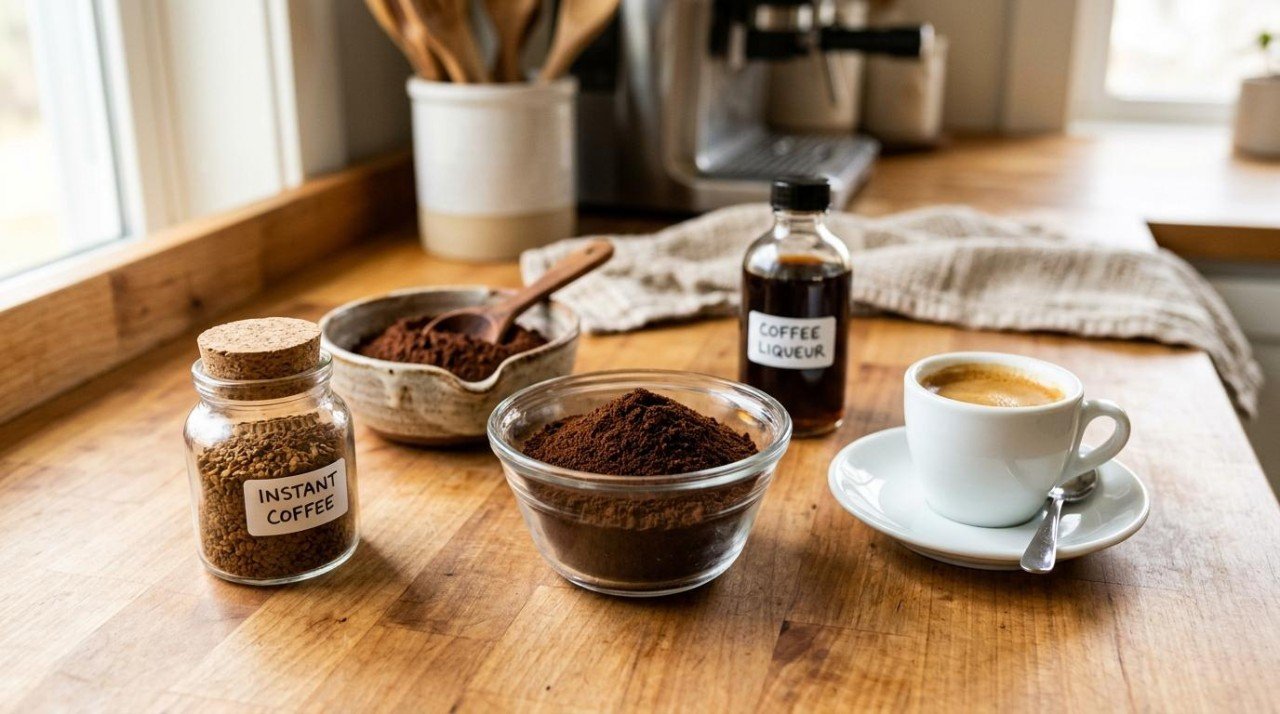
- Strong brewed coffee or espresso — chocolate cakes and any batter with liquid to replace
- Cold brew concentrate — same as brewed espresso, no machine needed
- Coffee extract — a 1:1 swap with almost no added liquid; great for frosting
- Coffee liqueur — buttercream, glazes, tiramisu, and other no-bake desserts
- Finely ground coffee or espresso beans — the best swap for steak and brisket rubs; fine in small amounts in dark bakes
- Decaf instant coffee or espresso — the same flavor job with almost no caffeine
- Chicory or roasted grain coffee alternatives — caffeine-free, roasty and malty
- Dutch-process or black cocoa — deeper chocolate flavor with no coffee at all
First: What Espresso Powder Actually Does
Espresso powder is not just finely ground coffee. According to King Arthur Baking, it is made from darkly roasted coffee beans that have been ground, brewed, and dried, and it is much more concentrated than regular instant coffee. Because it has already been brewed, it dissolves completely, so it disappears into a batter without any grit.
How much the recipe uses tells you what it's for. In chocolate recipes, King Arthur notes that you only need about a teaspoon, and at that level it doesn't add any coffee flavor; it just intensifies the chocolate. Use more and you get a clear mocha taste. So there are really two kinds of recipe:
- Espresso powder as a booster (1/2 to 2 teaspoons in brownies, chocolate cake, cookies, chili, or a spice rub). Almost any substitute on this list works, and a modest difference in strength won't be noticed.
- Espresso powder as the main flavor (a tablespoon or more in coffee buttercream, mocha cake, tiramisu, or coffee ice cream). Strength matters here, so stick to the closest swaps: instant espresso, instant coffee, coffee extract, or brewed espresso.
If the recipe only uses a pinch and you have nothing on this list, leaving it out won't ruin anything. The result will just taste a little less chocolatey.
1. Instant Espresso Granules
- Swap: 1:1 by volume. If the recipe adds the powder dry (to frosting, a rub, or dry ingredients), crush the granules to a fine powder first with the back of a spoon or a mortar and pestle
- Best for: Everything espresso powder is used for
- Skip it for: Nothing
Many recipes that say "espresso powder" were written with instant espresso in mind, and brands like Medaglia d'Oro sell it in the coffee aisle as granules rather than a fine powder. It is the same kind of product: brewed, dried espresso. The only practical difference is the size of the pieces. In a wet batter, or if you dissolve it in a teaspoon of hot water first, the granules melt in and you'll never know. In a dry use like buttercream or a steak rub, large granules can leave dark specks or pockets of bitterness, so grind them fine.
2. Instant Coffee
- Swap: 1 teaspoon espresso powder → 1 1/2 teaspoons instant coffee. For a recipe where coffee is the main flavor, go up to 2 teaspoons and taste
- Best for: Brownies, chocolate cake, cookies, chocolate frosting, chili, mole, barbecue sauce
- Skip it for: Nothing in particular, but expect a slightly more bitter edge and a paler color in coffee-forward desserts
This is the swap most people have on hand. Instant coffee is made the same way as espresso powder (brewed, then dried), but from a lighter brew, so it is weaker. King Arthur's guidance is to use about 50% more instant coffee than the espresso powder called for, with the caveat that it may add a slightly bitter edge, similar to brewed coffee. Tasting Table suggests that doubling the amount is a good start, which makes sense when coffee is the star of the recipe. In a chocolate bake where the coffee is just a booster, 50% more is plenty.
Most instant coffee comes as freeze-dried granules, so treat it like #1: dissolve it in a teaspoon of the recipe's warm liquid, or crush it fine if it goes in dry. Use plain instant coffee, not a flavored or "3-in-1" mix with sugar and creamer (more on that below).
3. Strong Brewed Coffee or Brewed Espresso
- Swap: 1 teaspoon espresso powder → replace about 1/4 cup (2 shots) of the recipe's water or milk with brewed espresso, or 1/2 to 3/4 cup of the liquid with strong brewed coffee
- Best for: Chocolate cake, cupcakes, chocolate pudding, mole, chili, braises
- Skip it for: Brownies, cookies, and frosting, which have little or no liquid to trade
Liquid coffee works beautifully, as long as the recipe has liquid you can swap out. Plenty of classic chocolate cakes already call for a cup of hot coffee for exactly this reason. Home-Ec 101's rule of thumb is to substitute 1/2 cup strongly brewed coffee per teaspoon of instant coffee and cut back the other liquids to match. Espresso powder is stronger than instant coffee, so aim for the upper end of the range above, or use brewed espresso, which packs the same flavor into less liquid. Always remove an equal amount of water, milk, or buttermilk so the batter doesn't get thinner.
There is a bonus here when the recipe uses cocoa powder. Whisk the cocoa into the coffee while it's still hot and let it sit for a couple of minutes before adding it to the batter. This "blooming" step, which Tasting Table also recommends, deepens the chocolate flavor, which is the whole point of the espresso powder in the first place.
Brew it strong. Regular-strength coffee diluted into a batter tastes like almost nothing, so if you're making it fresh, use about twice the grounds you'd use for drinking. Leftover coffee from the morning pot works fine.
4. Cold Brew Concentrate
- Swap: Use undiluted concentrate exactly as you would brewed espresso (#3): about 1/4 cup in place of 1/4 cup of the recipe's liquid per teaspoon of espresso powder
- Best for: Chocolate cake, puddings, coffee-flavored whipped cream, no-bake desserts
- Skip it for: Recipes with no liquid to replace
If you don't have an espresso machine, a bottle of cold brew concentrate from the fridge is the next best thing. It is strong, smooth, and less bitter than hot-brewed coffee, which suits creamy desserts especially well. Strength varies a lot between brands, so check the label: if it says to dilute 1:1 for drinking, use it straight. Ready-to-drink cold brew is regular strength, so treat it like brewed coffee instead and use the larger amount from #3.
5. Coffee Extract
- Swap: 1 teaspoon espresso powder → 1 teaspoon coffee extract
- Best for: Frosting, buttercream, whipped cream, glazes, cookies, brownies
- Skip it for: Spice rubs, where a liquid won't stick the way a powder does
Coffee extract is the liquid cousin of espresso powder: a concentrated coffee flavor, usually in an alcohol base, sold in small bottles near the vanilla extract. A teaspoon is a splash of liquid, so as Tasting Table notes, you usually won't need to reduce other liquids. That makes it the cleanest swap for frosting, where dissolving instant coffee can be fussy and brewed coffee would make the frosting runny.
Brands differ in strength, so for a coffee-forward recipe, start with the 1:1 swap and add more a few drops at a time, tasting as you go.
6. Coffee Liqueur
- Swap: 1 teaspoon espresso powder → 1 to 2 tablespoons coffee liqueur, and cut the recipe's milk or cream by the same amount
- Best for: Buttercream, glazes, chocolate ganache, whipped cream, tiramisu, chocolate mousse
- Skip it for: Desserts for kids, rubs, and anything where its sweetness would throw off the balance
Coffee liqueur brings coffee flavor plus sweetness and a little vanilla, and it is lovely in creamy, no-bake desserts. It is weaker than espresso powder, which is why the swap is a tablespoon or two rather than a teaspoon. It also contains sugar, so you may want to trim a spoonful of powdered sugar from a frosting. In anything that isn't cooked, the alcohol stays in, so this is a grown-ups-only option. In baked goods, the flavor fades a lot in the oven, so save it for frostings and fillings.
7. Finely Ground Coffee or Espresso Beans
- Swap, rubs: 1:1 by volume, ground as fine as your grinder allows
- Swap, baking: About half the amount of espresso powder called for, ground to a fine powder, in dark bakes only
- Best for: Steak, brisket, pork, and lamb rubs; chili; dark chocolate cookies and brownies
- Skip it for: Frosting, light-colored batters, and anything smooth, where it reads as grit
Ground coffee is not the same as instant. Home-Ec 101 is emphatic that coffee grounds are just roasted, ground coffee beans, not dried brewed coffee, so they don't dissolve. That is a problem in frosting, but in a rub it's actually an advantage: the fine grounds toast on the surface of the meat and become part of the crust. For brisket, Chowhound suggests about 40 grams of coffee for every 4 pounds of meat as a starting point, with a fine grind for best results. Pair it with brown sugar, salt, smoked paprika, garlic powder, and a little chili powder for a classic coffee rub.
In baking, ground coffee is a small-dose trick. Grind it as fine as possible (an espresso grind or finer), use about half as much as the espresso powder called for, and keep it to dark, textured bakes like brownies or chocolate cookies, where tiny specks won't stand out. Home-Ec 101 notes that finely ground espresso is the exception to the "no grounds" rule because it is fine enough not to create a crunchy texture.
8. Decaf Instant Coffee or Espresso
- Swap: Same as the regular versions: 1:1 for decaf instant espresso, 1 1/2 teaspoons decaf instant coffee per teaspoon of espresso powder
- Best for: Kids' birthday cakes, evening baking, anyone avoiding caffeine
- Skip it for: Nothing; the flavor is very close to regular
If caffeine is the reason you're looking for a substitute, decaf is the easiest answer, because it does exactly the same job with the same ratios. Decaf instant espresso is harder to find than regular, but decaf instant coffee is in nearly every grocery store. A rounded teaspoon of decaf instant coffee has about 2 mg of caffeine, which, spread across a pan of brownies, is effectively none. Decaf is not completely caffeine-free, though; the FDA notes that decaf coffee still contains some caffeine, typically 2 to 15 mg per 8-ounce cup.
9. Chicory or Roasted Grain Coffee Alternatives
- Swap: For instant powders like Dandy Blend, start 1:1 for espresso powder and add up to double, tasting as you go. For brewed chicory, use it like strong brewed coffee (#3)
- Best for: Caffeine-free chocolate cakes, brownies, muffins, and chili
- Skip it for: Coffee buttercream, tiramisu, and other desserts where you want true coffee flavor
Roasted chicory root and roasted grain drinks were the classic coffee stand-ins long before decaf was common, and they have a dark, toasty, slightly bitter flavor that plays well with chocolate. Instant versions dissolve easily; Tasting Table notes that Dandy Blend can be added as dry granules or mixed into a liquid that's room temperature or even cold. It doesn't taste exactly like coffee, more like a malty, earthy roast, but as a chocolate booster it does the job well.
Check the ingredients if gluten matters. Many of these drinks are made from roasted barley or rye. Dandy Blend lists barley and rye alongside dandelion and chicory root, and the company says the gluten is removed during extraction, but people with celiac disease may want to check with the manufacturer. Pure roasted chicory has no grains at all.
10. Dutch-Process or Black Cocoa
- Swap: 1 teaspoon espresso powder → 1 tablespoon Dutch-process or black cocoa, added to the dry ingredients
- Best for: Brownies, chocolate cake, chocolate cookies, chili and mole
- Skip it for: Any recipe where coffee flavor is the point
If you have no coffee of any kind, think about what the espresso powder was there to do: make the chocolate taste darker and more intense. More chocolate does that too. Dutch-process cocoa is dark, smooth, and mellow, and black cocoa is even darker, with the flavor of a chocolate sandwich cookie. Tasting Table suggests Dutch-process cocoa as a replacement for espresso in chocolate desserts precisely because its flavor is deep and its color is nearly black.
A tablespoon of extra cocoa in a pan of brownies or a chocolate cake won't upset the recipe. Much more than that starts to dry the batter out, since cocoa absorbs liquid like flour. If you only have natural cocoa, it works too; bloom it in any hot liquid the recipe uses for the most flavor. Our cocoa powder guide explains the differences between the types, and what to do if you're out of that as well.
Caffeine-Free Options (and How Much Caffeine You're Really Adding)
The most common reason people look for an espresso powder substitute, besides running out, is caffeine, usually because the brownies are for kids or for an evening get-together. It's worth knowing how little caffeine is actually involved, and where most of it comes from.
Per USDA data, regular instant coffee powder has about 31 mg of caffeine per gram, and a teaspoon weighs roughly 1 to 2 grams depending on how heaped it is. So a teaspoon in a 16-square pan of brownies adds only a few milligrams per square. Espresso powder is more concentrated, but at the amounts recipes use, it is still a small number per serving. For comparison, the FDA cites 400 mg a day as an amount not generally associated with negative effects for most adults.
Here is the surprising part: in many chocolate recipes, the cocoa contributes more caffeine than the coffee does. Unsweetened cocoa powder has 198 mg of caffeine per cup, which works out to about 100 mg in the half cup a typical pan of brownies uses, along with a lot of theobromine, caffeine's milder chemical cousin. Leaving out the espresso powder makes a chocolate dessert lower in caffeine, not caffeine-free.
So, for the most caffeine-conscious option:
- For most bakes, decaf instant coffee (#8) is all you need. It has the same flavor and the same ratios, with almost no caffeine.
- For a truly caffeine-free bake, use chicory or a roasted grain drink (#9), and consider carob powder in place of some of the cocoa. Our cocoa powder guide covers how to swap carob in.
- If you're pregnant or sensitive to caffeine, the FDA suggests talking with your health care provider about how much caffeine is right for you. If caffeine tends to make you jittery, our post on caffeine and anxiety walks through how to find your personal limit.
Nutritionally, espresso powder itself is close to a rounding error: a few calories per teaspoon. The swaps that change a recipe's nutrition are the ones that add sugar, like coffee liqueur, so it's the rest of the recipe that matters. If you're curious what that looks like for a favorite chocolate bake, our healthier brownies post walks through it step by step, and in Eat Well Planner, Make It Healthier suggests swaps for your own recipe and checks the real nutritional gain before showing them to you.
Take the Guesswork Out of Eating Well
Eat Well Planner helps you organize your favorite recipes, plan balanced meals, and automatically generate shopping lists — all in one place. Whether you're tracking macros, managing dietary restrictions, or just trying to stop asking "what's for dinner?", we've got you covered.
Our AI-powered tools can adapt any recipe to your dietary needs, help you discover new meals you'll love, and even log your nutrition effortlessly. It's meal planning made simple.
Start Organizing Your Meals — FreeQuick Match: Which Substitute for Which Recipe
- Brownies and chocolate cookies: Instant espresso (#1), instant coffee (#2), coffee extract (#5), or an extra tablespoon of Dutch cocoa (#10)
- Chocolate cake and cupcakes: Replace some of the liquid with brewed espresso, strong coffee, or cold brew concentrate (#3, #4), and bloom the cocoa in it
- Chocolate or coffee buttercream: Coffee extract (#5) or finely crushed instant espresso (#1), dissolved in a teaspoon of hot water; coffee liqueur (#6) for adults
- Tiramisu and mousse: Brewed espresso or cold brew concentrate for soaking and flavoring (#3, #4), with coffee liqueur (#6) as an optional extra. Our healthier tiramisu uses brewed espresso throughout
- Steak, brisket, and pork rubs: Finely ground coffee or espresso beans (#7), or crushed instant espresso (#1)
- Chili, mole, and barbecue sauce: Instant coffee (#2), a splash of brewed coffee (#3), or a spoonful of cocoa (#10). A teaspoon of instant coffee is a great addition to a pot of beef chili
- Baking for kids or late evening: Decaf instant coffee (#8) or chicory (#9)
What Not to Use
- "3-in-1" instant coffee mixes or flavored instant coffee. These are mostly sugar and powdered creamer, with a little coffee. You'd need so much to get any flavor that you'd throw off the recipe's sugar and fat, and flavors like hazelnut or French vanilla will come through clearly.
- Regular drip-grind coffee in a smooth batter or frosting. Coarse grounds don't dissolve, so they stay gritty and add a bitter crunch. If ground coffee is all you have, grind it as fine as possible and keep it to dark bakes and rubs (#7).
- Dried, reground used coffee grounds as "homemade espresso powder." You'll find this tip online, and it beats nothing in a rub, but used grounds have already given up most of their flavor to the brew and still won't dissolve. They behave like weak ground coffee, not espresso powder. Instant coffee is a much better swap.
- Brewed coffee in a recipe with no liquid to replace. Adding a half cup of coffee to brownie or cookie dough makes it too wet, and the result spreads or turns cakey. Use a dry swap instead.
- Carob powder as a coffee replacement. Carob is a good stand-in for cocoa, but it is sweet and mild, with none of coffee's roasty bitterness, so it won't deepen chocolate the way espresso powder does. Use chicory or decaf if you need a caffeine-free booster.
Which One Should You Use?
If you have instant espresso, use it 1:1 and crush it for dry uses. If you have instant coffee, use about 50% more than the recipe calls for. If the recipe has liquid in it, especially a chocolate cake, swap some of that liquid for strong brewed coffee or espresso and bloom the cocoa in it. For frosting, coffee extract is the cleanest swap. For a rub, finely ground coffee is actually the best choice. And if caffeine is the concern, decaf instant coffee works the same way, or you can use chicory for a fully caffeine-free bake. If the recipe only uses a pinch for chocolate depth, an extra spoonful of Dutch cocoa, or simply leaving it out, will do.
When you're looking at one specific recipe and still aren't sure, ask about that recipe directly. The AI recipe chat in Eat Well Planner reads the whole recipe, so you can ask "I'm out of espresso powder for this chocolate cake, but I have cold brew, how much do I use and what liquid do I cut?" and get an answer worked out for that cake. If you want a caffeine-free version for a kid's birthday, Recipe Variations can rewrite the whole recipe with the swaps already built in. And for the rest of the baking shelf, see our guides to cocoa powder and vanilla extract.