The onions are soft, the chicken thighs are browned, and the tagine recipe says "add 1 tablespoon ras el hanout." You bought a jar for one recipe two years ago, and it is either empty or smells like dust. Ras el hanout is the warm, rounded, slightly sweet spice blend behind a lot of North African cooking, and without it a tagine tastes like a perfectly decent stew that forgot where it came from.
The good news is that ras el hanout is built almost entirely from spices most kitchens already have: cumin, coriander, ginger, cinnamon, turmeric, allspice and a few more. You can rebuild a very convincing version in two minutes, or get close with a blend you already own. The catch is that the best substitute depends on whether you are simmering a tagine, where the spices have time to mellow, or rubbing meat for the grill, where they hit hard and fast.
All ratios below are for ground ras el hanout. If you only want one answer, scroll to the homemade blend; if you are missing half the spices in it, the pumpkin pie spice mix and garam masala are the fastest fixes.
The Quick List
- Homemade ras el hanout from ground spices — the closest match, and the one to use if you have the jars
- Cumin + coriander + ginger + cinnamon + paprika — a 5-spice shortcut that covers the essentials
- Pumpkin pie spice + cumin + coriander + turmeric — a surprisingly good pantry hack for tagines
- Garam masala + ginger — the best store-bought blend swap for tagines and stews
- Baharat — the best store-bought blend swap for rubs, kebabs and grilled meat
- Curry powder + cinnamon — works in stews and soups if you use a little less
- Moroccan or tagine seasoning — close cousins sold under other names; check for salt
- Harissa + warm spices — for rubs and marinades where some heat is welcome
- Cumin + cinnamon — the bare-minimum 2-spice fix
What Ras el Hanout Actually Is
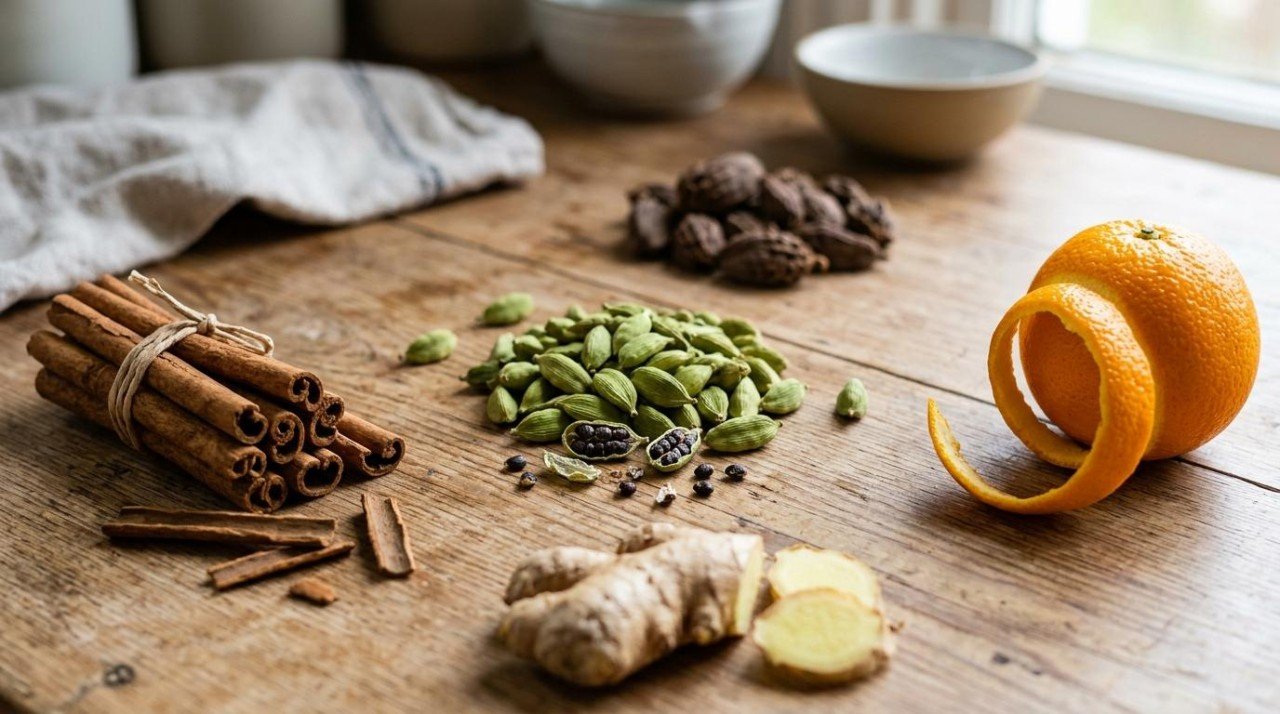
The name is Arabic for "head of the shop," and as Wikipedia's entry puts it, it implies "a mixture of the best spices the seller has to offer." It is made in different forms across Morocco, Algeria and Tunisia, and there is no fixed recipe; each shop or family has its own. Typical versions contain over a dozen spices, and the common ones are cardamom, cumin, clove, cinnamon, nutmeg, mace, allspice, dry ginger, chiles, coriander seed, peppercorns, paprika, fenugreek and turmeric. Some regional blends add dried rosebuds, grains of paradise or galangal.
That variety is good news for substitutes. Because no two jars taste the same, you are not chasing one exact flavor, just its general shape: an earthy base of cumin and coriander, warmth from ginger and black pepper, a sweet perfumed layer of cinnamon, allspice, cardamom and nutmeg, and a golden color from turmeric. Rebuild those four layers and the dish will taste right. Ras el hanout is also generally warm rather than hot; some blends include a little cayenne, but it is not a chile blend like harissa.
Match the Substitute to the Dish
Ras el hanout does two quite different jobs, and the best stand-in for each is not the same.
Tagines, Stews and Soups
In a tagine, a chickpea stew or a pot of harira, the spices are bloomed in oil with the onions and then simmered for 30 minutes to a couple of hours. That long cook softens rough edges and blends everything together, so this is where substitutes are most forgiving. The homemade blend, the pumpkin pie spice mix, garam masala + ginger and curry powder + cinnamon all do well here. The thing to get right is the sweet-warm layer (cinnamon, allspice, ginger), which is what makes a tagine taste like a tagine instead of a curry.
Rubs, Marinades and Grilled Meat
On lamb chops, chicken thighs, kebabs, salmon or a sheet pan of roasted carrots, the spices get a short, hot cook and stay right on the surface. Every note is louder, so harsh or dusty spices show. Here the homemade blend, the 5-spice shortcut and baharat shine, and harissa works if you want heat. Go easy on curry powder (raw-tasting turmeric and fenugreek stand out on a grill) and on cinnamon and allspice, which can taste like dessert when they char. Mixing the spices with olive oil, salt, garlic and a squeeze of lemon before rubbing them on helps them toast evenly instead of burning.
Couscous, Rice and Finishing
When ras el hanout is stirred into couscous, rice or a yogurt sauce at the end, the spices barely cook. Use the homemade blend or the 5-spice shortcut, toast it for 30 seconds in a little oil or butter first, and skip curry powder entirely.
Homemade Ras el Hanout From Ground Spices
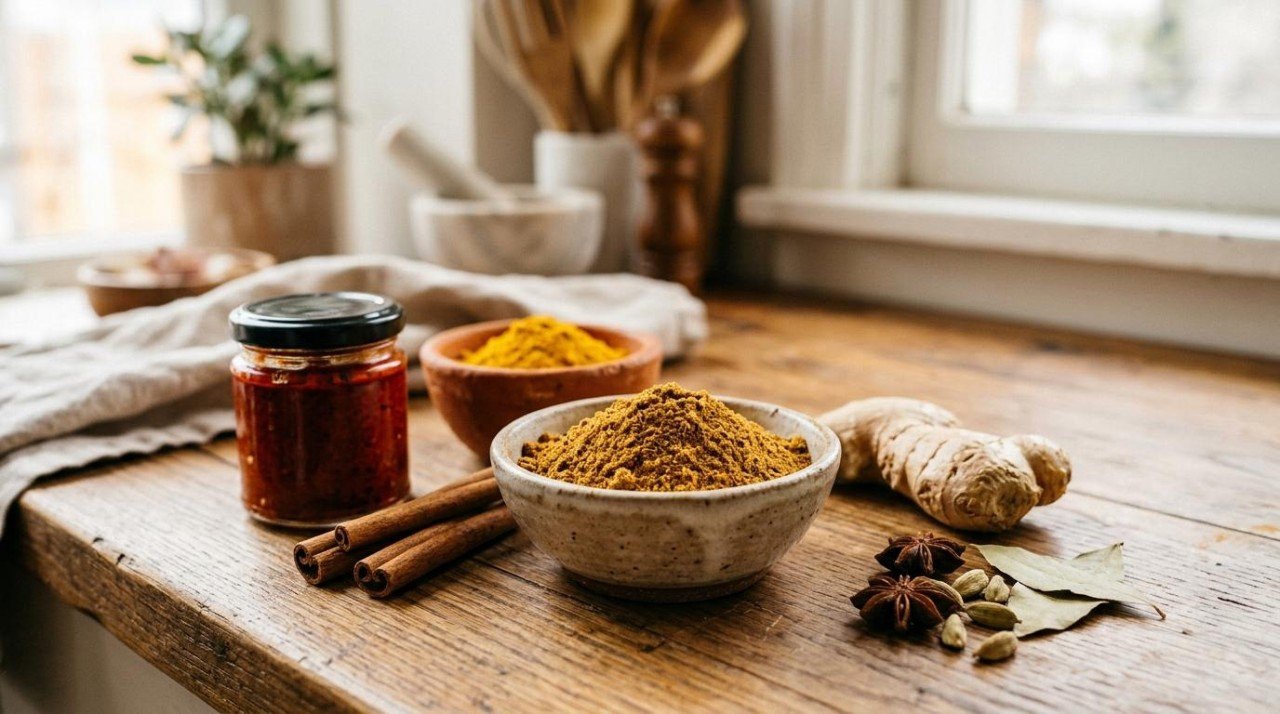
- Swap: 1 tablespoon ras el hanout → 3/4 teaspoon ground cumin + 1/2 teaspoon ground coriander + 1/2 teaspoon ground ginger + 1/2 teaspoon ground turmeric + 1/4 teaspoon ground cinnamon + 1/4 teaspoon ground allspice + 1/8 teaspoon ground cardamom + 1/8 teaspoon ground black pepper. Use it 1:1.
- Best for: Everything ras el hanout does: tagines, stews, rubs, marinades, roasted vegetables, couscous
- Skip it for: Nothing. If you have the spices, this is the one to make.
Published recipes disagree a lot on proportions, which is fitting for a blend with no fixed recipe. The Spice House's version leans heavily on ginger, cardamom and mace, with 2 teaspoons of each and only 1/2 teaspoon of cumin, while PepperScale's quick blend puts cumin, turmeric and ginger up front at 1 teaspoon each. The mix above sits between them: cumin and coriander for an earthy base most home cooks expect, ginger and turmeric for warmth and color, and small amounts of cinnamon, allspice and cardamom, since those take over quickly.
Add a pinch of nutmeg, mace or cayenne if you have them, or a few crushed dried rose petals if you happen to keep them around. Missing one of the minor spices is fine; missing both cinnamon and allspice is the biggest loss, because that sweet layer is the signature. To make a jar, multiply by four: 1 tablespoon cumin, 2 teaspoons each coriander, ginger and turmeric, 1 teaspoon each cinnamon and allspice, and 1/2 teaspoon each cardamom and black pepper makes 1/4 cup. The Spice House says homemade ras el hanout keeps "in an airtight container for up to 6 months," though ground spices lose aroma steadily, so smaller batches taste better.
Cumin + Coriander + Ginger + Cinnamon + Paprika
- Swap: 1 tablespoon ras el hanout → 1 1/4 teaspoons ground cumin + 3/4 teaspoon ground coriander + 1/2 teaspoon ground ginger + 1/4 teaspoon ground cinnamon + 1/4 teaspoon sweet paprika
- Best for: Rubs for lamb, chicken and fish, kebabs, roasted vegetables, couscous
- Skip it for: Dishes where a golden color matters, like a chicken and preserved lemon tagine; add 1/4 teaspoon turmeric if you have it
This is the short version: five jars instead of eight, and it still tastes clearly North African. It builds on PepperScale's simplified mix of cumin, coriander, ginger and paprika, which it admits is not "as complex as a typical ras el hanout recipe" but works in a pinch. Adding a little cinnamon brings back the sweet note that makes people recognize the blend.
Paprika here is mostly for color and a mild sweet-pepper flavor. Swap in cayenne (start with 1/8 teaspoon) if you like heat, or smoked paprika for grilled meat, but use no more than 1/4 teaspoon, since smokiness is not part of most ras el hanout. Short on ground coriander? Use 1/2 teaspoon more cumin instead; out of cumin, our cumin substitutes guide has the fixes.
Pumpkin Pie Spice + Cumin + Coriander + Turmeric
- Swap: 1 tablespoon ras el hanout → 1 1/4 teaspoons ground cumin + 3/4 teaspoon pumpkin pie spice + 1/2 teaspoon ground coriander + 1/4 teaspoon ground turmeric + a pinch of black pepper
- Best for: Tagines, chickpea and lentil stews, roasted squash, carrots and sweet potatoes
- Skip it for: Using pumpkin pie spice on its own; a savory dish will taste like a latte
This sounds strange until you look at what pumpkin pie spice is: cinnamon, ginger, nutmeg and allspice, which is almost exactly ras el hanout's sweet half in a single jar. Cumin, coriander and turmeric supply the earthy, golden half, and the pepper adds warmth. In a slow-cooked tagine it is genuinely hard to tell apart from a mild store-bought blend.
Keep pumpkin pie spice to about a quarter of the mix. Above that, the cinnamon and nutmeg start to dominate. Some pumpkin pie spice brands include cloves, which is fine at this amount. It is a little sweet for a rub on grilled meat, but in anything with dried apricots, prunes, squash or honey, which is a lot of tagines, it fits right in. No pumpkin pie spice either? Our pumpkin pie spice guide shows how to mix it from cinnamon, ginger, nutmeg and allspice.
Garam Masala + Ginger
- Swap: 1 tablespoon ras el hanout → 2 3/4 teaspoons garam masala + 1/4 teaspoon ground ginger, plus a pinch of turmeric if you have it
- Best for: Tagines, lamb and chicken stews, lentil and chickpea soups, roasted vegetables
- Skip it for: Dishes where you want an unmistakably Moroccan flavor and have the spices to make the real thing
Garam masala is the closest blend most American kitchens already own. As PepperScale notes, the two share cumin, coriander, cinnamon and cloves, and both are aromatic rather than hot. The big gaps are ginger and turmeric, which garam masala usually lacks and ras el hanout leans on, so adding them closes most of the distance.
The result tastes a little more Indian, with more cardamom and clove. That is barely noticeable in a long-simmered stew, more noticeable in couscous. Garam masala is also usually milder than ras el hanout, so add a pinch of cayenne if your recipe expects a little heat. And because garam masala's perfume fades with long cooking, stir in an extra 1/2 teaspoon in the last few minutes of a tagine for a brighter finish.
Baharat
- Swap: Use 1:1. For a closer match in tagines, add 1/4 teaspoon ground ginger and a pinch of turmeric per tablespoon.
- Best for: Rubs and marinades for lamb, beef and chicken, kebabs, meatballs, grilled vegetables
- Skip it for: Delicate couscous or rice dishes, where its stronger pepper note stands out
Baharat is the Middle Eastern counterpart to ras el hanout, and its name simply means "spices" in Arabic. A typical version, like the University of Nebraska-Lincoln Extension recipe, combines black pepper, cumin, coriander, cloves, cardamom, paprika, cinnamon and nutmeg; Lebanese "seven spice" versions lean harder on allspice. The extension describes it as having a "deep, mildly sweet taste with a touch of smokiness," and that overlaps a lot with ras el hanout.
The main differences are more black pepper and usually no ginger, turmeric or floral notes. On grilled meat, that pepper-forward profile is an asset, which is why baharat is the best store-bought swap for rubs. In a tagine, the ginger and turmeric additions bring back the warmth and the golden color.
Take the Guesswork Out of Eating Well
Eat Well Planner helps you organize your favorite recipes, plan balanced meals, and automatically generate shopping lists — all in one place. Whether you're tracking macros, managing dietary restrictions, or just trying to stop asking "what's for dinner?", we've got you covered.
Our AI-powered tools can adapt any recipe to your dietary needs, help you discover new meals you'll love, and even log your nutrition effortlessly. It's meal planning made simple.
Start Organizing Your Meals — FreeCurry Powder + Cinnamon
- Swap: 1 tablespoon ras el hanout → 2 teaspoons curry powder + 1/4 teaspoon ground cinnamon + 1/4 teaspoon ground allspice (or a pinch more cinnamon). Add it with the onions, not at the end.
- Best for: Tagines, chickpea and lentil stews, vegetable soups
- Skip it for: Rubs for grilling, couscous, yogurt sauces and anything where the spice barely cooks
Curry powder already contains cumin, coriander, turmeric and often ginger, so it covers ras el hanout's earthy, golden base. What it is missing is the sweet layer, and it usually adds fenugreek and sometimes mustard, which push it toward curry. Using less and adding cinnamon and allspice corrects for both. PepperScale suggests picking a curry powder with ginger and cinnamon in it over one with dried mustard, if you have a choice.
Timing matters more with this swap than any other. Turmeric and fenugreek taste raw and bitter until they have had a minute or two in hot oil, so bloom the curry powder with the onions and let the dish simmer at least 20 minutes. That is also why it is a poor choice for rubs: on a quick-grilled chop it tastes like curry powder, not ras el hanout.
Moroccan Seasoning or Tagine Spice
- Swap: Use 1:1, then taste. If salt is listed among the first few ingredients, cut the recipe's salt by about half and adjust at the end.
- Best for: Whatever the label says it is designed for, usually tagines, chicken and roasted vegetables
- Skip it for: Recipes that already call for a lot of salt, if the blend contains salt too
Check the cabinet for anything labeled "Moroccan seasoning," "tagine spice" or "North African blend." These are often ras el hanout under a friendlier name, built on the same cumin, coriander, ginger, cinnamon and turmeric base. Some are simplified versions with only five or six spices; some add garlic or dried herbs, which Wikipedia notes are usually left out of traditional ras el hanout but show up in some commercial blends sold in Europe and North America.
The main thing to look for is salt. Pure ras el hanout is just spices, but seasoning blends often include salt, and even some homemade recipes, like PepperScale's, add it. If you use a salted blend in a recipe that also calls for salt, you can end up with a noticeably saltier dish. Season lightly and taste before serving.
Harissa + Warm Spices
- Swap: 1 tablespoon ras el hanout → 1 teaspoon harissa paste + 1 teaspoon ground cumin + 1/4 teaspoon ground cinnamon + 1/4 teaspoon ground ginger, stirred into the oil of a marinade
- Best for: Marinades and rubs for chicken, lamb, shrimp and roasted vegetables, especially when you want some heat
- Skip it for: Mild tagines, sweet dishes with dried fruit, and anyone who does not like spicy food
Harissa is a North African chile paste, not a warm spice blend, so it is not a like-for-like swap. But it shares cumin and coriander and fits the same kinds of dishes, and in a marinade, where the paste mixes easily with oil, lemon and garlic, it gives you a bold, red-tinged result with the same regional character. The cinnamon and ginger supply the sweet warmth harissa lacks.
Heat varies a lot by brand, from mild jarred red-pepper styles to fiery tubes, so start with the teaspoon above and taste. Harissa paste also usually contains salt, so salt the marinade lightly.
Cumin + Cinnamon
- Swap: 1 tablespoon ras el hanout → 2 1/2 teaspoons ground cumin + 1/4 teaspoon ground cinnamon + 1/4 teaspoon ground black pepper
- Best for: Tagines, stews and roasted vegetables when nothing else on this list is in the house
- Skip it for: Dishes built around ras el hanout as the main flavor, like a simple spiced couscous
Cumin is in nearly every ras el hanout recipe, and a small amount of cinnamon brings back the sweet note that distinguishes it from plain cumin. Black pepper adds warmth. It is flatter than the real blend, with none of the floral or gingery notes, but it is far better than leaving the spice out.
If you have even one more spice, add it: a pinch of ginger, turmeric, allspice or cardamom each makes a noticeable difference. Do not increase the cinnamon to make up for missing spices, though. At much more than 1/4 teaspoon per tablespoon, a savory dish starts tasting like baking.
What About the Health Side?
Ras el hanout is used by the teaspoon or tablespoon, so the substitute you choose will not change a dish's nutrition much. Two things are still worth knowing.
- Sodium: Plain spices have almost no sodium, so a homemade blend from single spices is effectively salt-free. Commercial Moroccan seasonings and some ras el hanout jars do contain salt, so if you are watching sodium, read the label or mix your own.
- Flavor instead of salt: A blend this aromatic makes food taste full without needing as much salt. In a 20-week randomized trial summarized by Harvard's Nutrition Source, 40 adults who were coached to cook with spices and herbs in place of salt excreted about 957 mg less sodium per day than a self-directed control group. The study was small, but the practical idea holds.
The bigger nutritional story is the dishes ras el hanout goes into. Many tagines and North African stews are built on chickpeas, lentils, carrots, squash, tomatoes and onions, which adds up to a lot of fiber and plant variety in one pot. If you have been meaning to cook more legumes, our case for lentils as the best nutritional value in the grocery store is a good place to start. As for the health claims attached to individual spices like turmeric, ginger and cinnamon, the evidence is thinner than social media suggests; Is Your Spice Rack a Medicine Cabinet? looks at what actually holds up.
What Not to Use
- Chinese five-spice: It shares cinnamon and cloves, but star anise and fennel give it a strong licorice flavor that takes over a tagine.
- Za'atar: Another Middle Eastern staple, but it is an herb blend of thyme, sumac and sesame. It is tangy and herby, not warm, and it does a completely different job.
- Chili powder: American chili powder is built on ground chiles, oregano and garlic. It points a dish toward Tex-Mex, not North Africa.
- Cinnamon, allspice or pumpkin pie spice on their own: At ras el hanout quantities, a single sweet spice makes a savory dish taste like dessert. Use them only alongside cumin.
- Turmeric on its own: It gives you the color, but on its own it tastes earthy and slightly bitter, with no warmth or sweetness.
Which Ras el Hanout Substitute Should You Use?
If you have the spices, make the homemade blend; it takes two minutes and is the real thing. For a tagine or stew, garam masala + ginger, the pumpkin pie spice mix or curry powder + cinnamon will all get you there, as long as you bloom them with the onions and give the pot time. For rubs and grilled meat, use the 5-spice shortcut or baharat, and add harissa if you want heat. Whatever you use, start a little low, taste near the end and adjust. With a blend that changes from shop to shop, nobody can tell you got it "wrong."
If you are not sure which of these fits the dish in front of you, ask Eat Well Planner's AI recipe chat something like "I'm out of ras el hanout, what can I use in this tagine?" It answers with your actual recipe in context, including the spices already in it and how long it cooks. And if you are adapting a recipe for the whole household, say a milder version for the kids or one without lamb, Recipe Variations rewrites the full recipe with those changes worked in. Lamb tagine but no lamb? Our lamb substitutes guide covers that too.