The cream cheese is softening on the counter, the chicken is in the slow cooker, and the ranch packet the recipe calls for is nowhere in the pantry. Good news: ranch seasoning is one of the easiest packets to rebuild. It is dried herbs, garlic, onion, salt and a tangy dairy powder, and you probably have most of that already.
The best substitute depends on what you are making. A dressing or dip needs the classic dill-and-buttermilk flavor, because ranch is the whole point. A slow cooker recipe like crack chicken or ranch pot roast is more forgiving, since the cream cheese or meat juices fill in the tang. And a dry seasoning for roasted potatoes, wings or popcorn mostly needs the herbs, garlic and salt to stick.
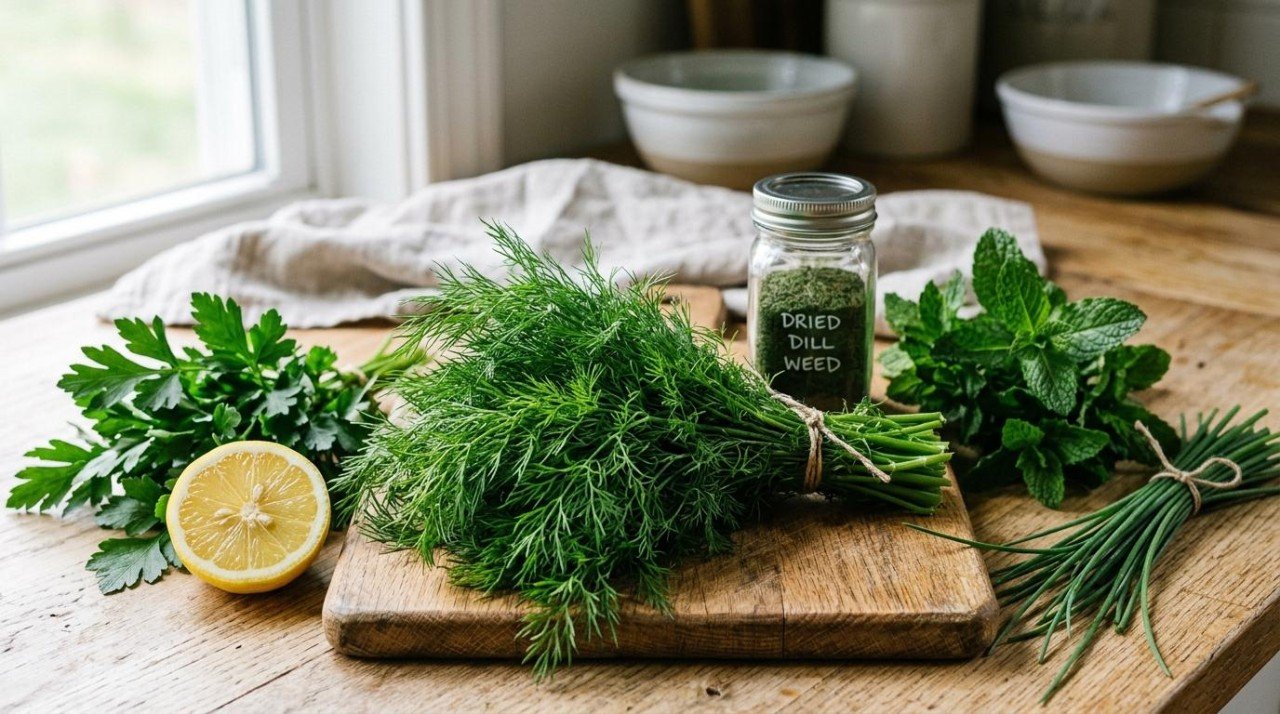
All ratios below replace one standard 1-ounce packet, which works out to about 3 tablespoons of dry mix. If you only remember one thing, remember this: dried dill + dried parsley + garlic powder + onion powder is ranch. Everything else is a supporting player.
The Quick List
- Homemade ranch seasoning — the closest match, with about 70% less sodium, in five minutes
- Herb-only ranch (no buttermilk powder) — the same blend minus the specialty ingredient, when the recipe already has dairy
- Fresh herb ranch — the best-tasting option for dressings and dips
- Dried dill + garlic salt — the 2-jar pantry fix
- Italian dressing mix + dill — the other packet in the pantry, best for chicken and potatoes
- Lemon pepper + dill — bright and zippy for chicken, wings, fish and vegetables
- Dry onion soup mix + herbs — deeper and more savory, great for dips and pot roast
- Bottled ranch dressing — for marinades, pasta salad and casseroles that can take the extra liquid
What's Actually in a Ranch Packet
The ingredient list on a 1-ounce packet of Hidden Valley Original Ranch Salad Dressing & Seasoning Mix reads: maltodextrin, buttermilk, salt, monosodium glutamate, garlic, onion, lactic acid, calcium lactate, spices, citric acid, plus small amounts of gums and flavorings. The directions call for the whole packet stirred into 1 cup of mayonnaise and 1 cup of whole milk, or shaken straight onto food as a seasoning.
Three of those ingredients explain why plain dried herbs taste a little flat next to the packet. Buttermilk powder, plus lactic and citric acid, gives ranch its sour, cultured tang. MSG adds a savory, almost brothy depth. And salt does a lot of the heavy lifting: the packet's label lists 60 mg of sodium per 1/4 teaspoon and about 36 servings per packet, which is roughly 2,160 mg of sodium in one packet. That is nearly the entire daily limit the FDA recommends for adults (less than 2,300 mg). The herbs themselves hide under the single word "spices."
So every substitute below is really about rebuilding four things: the herbs (dill above all), the alliums (garlic and onion), the tang, and the salt. Get those four and nobody will know there was no packet.
Match the Substitute to the Recipe
- Ranch dressing — homemade seasoning, herb-only ranch made with buttermilk, fresh herb ranch
- Ranch dip (with sour cream, yogurt or cream cheese) — homemade seasoning, fresh herb ranch, herb-only ranch, dry onion soup mix + herbs
- Crack chicken, ranch pot roast and other slow cooker dishes — homemade seasoning, herb-only ranch, Italian dressing mix + dill, dry onion soup mix + herbs
- Dry seasoning for potatoes, wings, chicken, popcorn and crackers — homemade seasoning, dill + garlic salt, lemon pepper + dill, Italian dressing mix + dill
- Marinades, pasta salad and casseroles — bottled ranch dressing, homemade seasoning
Homemade Ranch Seasoning
- Swap: 1 packet (1 ounce) → 4 teaspoons buttermilk powder + 1 1/2 teaspoons dried parsley + 1 teaspoon onion powder + 3/4 teaspoon garlic powder + 3/4 teaspoon dried dill + 1/2 teaspoon dried chives + 1/4 teaspoon salt + 1/8 teaspoon black pepper (about 3 tablespoons)
- Best for: Everything a packet does: dressing, dip, crack chicken, roasted potatoes, wings, oyster crackers
- Skip it for: Nothing. If you have buttermilk powder, this is the one to make.
- Health notes: About 600 mg of sodium per packet's worth, compared with roughly 2,160 mg in the packet, or about 70% less
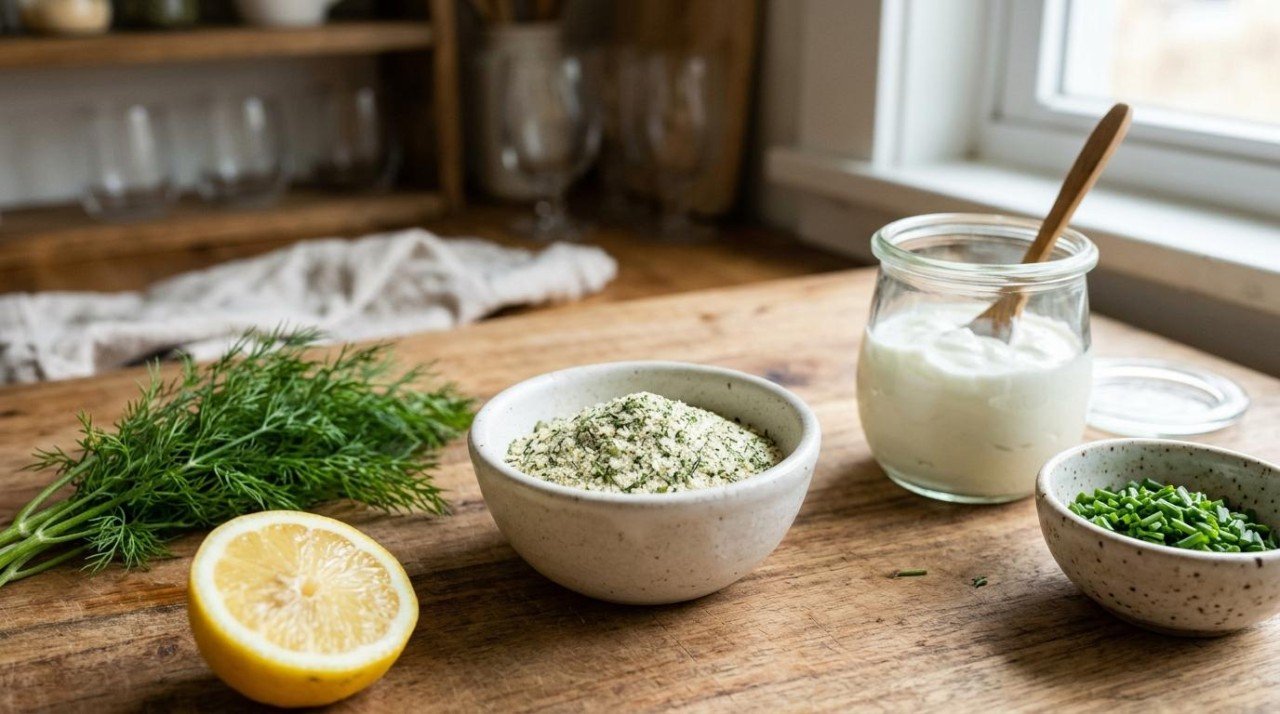
This is the packet without the guesswork. The buttermilk powder brings back the cultured tang that makes ranch taste like ranch instead of like herb dip, and it also helps the seasoning cling to roasted potatoes and chicken. Dill is the flavor people recognize; parsley and chives are the green backbone; garlic and onion powder are what make it savory. Use powders rather than fresh garlic for a cold dressing, since raw garlic gets sharp and harsh as it sits.
If you cook with ranch often, mix a jar. Crayons and Cravings uses 1/3 cup buttermilk powder, 2 tablespoons dried parsley, 1 1/2 tablespoons onion powder, 1 tablespoon garlic powder, 3 teaspoons dried dill, 2 teaspoons freeze-dried chives, 1 teaspoon salt and 1/2 teaspoon pepper, which makes about 3/4 cup, or four packets' worth at 3 tablespoons each. Because of the buttermilk powder, keep the jar in the refrigerator, where it lasts up to 3 months, and shake it before each use since the powder settles to the bottom. For dressing, whisk 3 tablespoons into 1 cup mayonnaise and 1 cup milk; for dip, stir 3 tablespoons into 16 ounces of sour cream. Chill either one for at least an hour so the dried herbs soften and the flavor blooms.
Buttermilk powder lives in the baking aisle, usually near the powdered milk. If you want to miss the packet's MSG even less, a pinch of MSG or 1 teaspoon of nutritional yeast adds back that savory depth, and our nutritional yeast guide covers what else it can do.
Herb-Only Ranch (No Buttermilk Powder)
- Swap: 1 packet → 2 teaspoons dried parsley + 1 teaspoon dried dill + 1 teaspoon onion powder + 1 teaspoon garlic powder + 1/2 teaspoon dried chives + 1/4 teaspoon black pepper + 1/4 teaspoon salt. Get the tang from the recipe's dairy (see below).
- Best for: Crack chicken, dips with sour cream or Greek yogurt, dressing made with real buttermilk
- Skip it for: Dry seasoning for popcorn or crackers, where nothing replaces the missing tang
- Health notes: About 575 mg of sodium per packet's worth, nearly all from the 1/4 teaspoon of salt
Most people do not have buttermilk powder, and most of the time they do not need it, because the recipe already has a tangy dairy ingredient. Cream cheese in crack chicken, sour cream or Greek yogurt in dip and real buttermilk in dressing all bring the sourness that the powder supplies in a packet. Make the herb blend, and let the dairy do the rest.
For dressing, use 1 cup buttermilk in place of the milk the packet calls for; that is how ranch was originally made, before there was a packet. Out of buttermilk? Our buttermilk substitutes guide has the milk-and-lemon trick. For dip, add 1 to 2 teaspoons of lemon juice to the sour cream if it tastes a little flat. Nonfat dry milk powder is a reasonable stand-in for buttermilk powder when you want the creamy, milky note (4 teaspoons per packet), but it is not tangy, so still add the lemon.
Fresh Herb Ranch
- Swap: 1 packet → 2 tablespoons chopped fresh parsley + 1 tablespoon chopped fresh dill + 1 tablespoon chopped fresh chives + 1 teaspoon garlic powder + 1 teaspoon onion powder + 1/4 teaspoon salt + 1/4 teaspoon black pepper + 1 to 2 teaspoons lemon juice
- Best for: Dressing, dips, potato salad, drizzling over grain bowls and tacos
- Skip it for: Dry rubs, seasoning before roasting (fresh herbs scorch), and anything that needs to sit on a shelf
- Health notes: About 575 mg of sodium per batch, and real herbs instead of a few flecks
This is the substitute that beats the packet rather than just matching it. Fresh dill and chives taste brighter and grassier than dried, and the dressing turns a pale, speckled green. The general rule is about 3 parts fresh herbs to 1 part dried, which is why the amounts here are tablespoons instead of teaspoons. Keep the garlic and onion as powders; fresh garlic and onion overpower a cold dressing within an hour.
It keeps about 4 to 5 days in the fridge once mixed into dairy. If your store is out of one herb, our fresh dill and fresh chives guides have the next-best options (thinly sliced green onion tops are a near-perfect chive stand-in here).
Dried Dill + Garlic Salt
- Swap: 1 packet → 2 teaspoons dried dill + 1/2 teaspoon garlic salt + 1/2 teaspoon garlic powder + 1 teaspoon onion powder (if you have it) + 1/4 teaspoon black pepper. Add no other salt until you taste.
- Best for: Roasted potatoes, chicken, dips, crack chicken
- Skip it for: Low-sodium cooking, unless you cut the garlic salt to 1/4 teaspoon
- Health notes: About 1,100 mg of sodium per packet's worth, still about half of the packet
If your spice rack is thin, these are the two jars that matter. Dill is the defining ranch herb, and garlic salt covers the garlic and the salt in one shake. The flavor leans more dill-pickle than classic ranch, which most people enjoy, especially on potatoes and in dips. A teaspoon of dried parsley, if you have it, softens the dill and makes it taste more rounded.
Measure the garlic salt rather than shaking it in. McCormick garlic salt carries about 540 mg of sodium per 1/4 teaspoon, which means a full teaspoon would equal the entire packet. Half a teaspoon of garlic salt plus half a teaspoon of garlic powder gives you all the garlic flavor at half the salt. If you are also out of garlic powder, our garlic powder substitutes guide has the conversions.
Italian Dressing Mix + Dill
- Swap: 1 ranch packet → 1 packet (0.7 ounce) Italian dressing mix + 1 teaspoon dried dill. Add no salt.
- Best for: Crack chicken, slow cooker chicken, roasted potatoes, baked chicken breasts
- Skip it for: Ranch dressing or veggie dip, where it tastes clearly Italian, not ranch
- Health notes: Saltier than ranch: about 330 mg of sodium per 1/8 packet, or roughly 2,600 mg per packet
Italian dressing mix is the packet most likely to be sitting next to the missing ranch packet, and it shares more with ranch than you would think: garlic, onion, salt and dried herbs, plus a tangy note from citric acid. The difference is the herbs (Italian-style oregano and basil notes instead of dill), so a teaspoon of dill pulls it back toward ranch. In a slow cooker with cream cheese and chicken, the result reads as a creamy herb chicken, which is a perfectly good dinner.
It works especially well on roasted potatoes: toss 2 pounds of cubed potatoes with 2 tablespoons of oil and the seasoning, and roast at 425°F until crisp. Because it is saltier than ranch, do not add any salt to the recipe, and skip salty extras like bacon bits until you taste. Our Italian seasoning guide covers the dried herb blend if that is what you have instead of the dressing mix.
Take the Guesswork Out of Eating Well
Eat Well Planner helps you organize your favorite recipes, plan balanced meals, and automatically generate shopping lists — all in one place. Whether you're tracking macros, managing dietary restrictions, or just trying to stop asking "what's for dinner?", we've got you covered.
Our AI-powered tools can adapt any recipe to your dietary needs, help you discover new meals you'll love, and even log your nutrition effortlessly. It's meal planning made simple.
Start Organizing Your Meals — FreeLemon Pepper + Dill
- Swap: 1 packet → 2 teaspoons lemon pepper seasoning + 1 teaspoon dried dill + 1 teaspoon garlic powder + 1 teaspoon onion powder. Add no salt.
- Best for: Wings, chicken breasts and thighs, fish, roasted vegetables, popcorn
- Skip it for: Creamy dips and dressings, where the citric acid and pepper taste sharp instead of mellow
- Health notes: About 1,400 mg of sodium per packet's worth from the lemon pepper, so it is not a low-sodium shortcut
Lemon pepper covers the tang (citric acid) and the black pepper in ranch at the same time, which makes it a natural dry-rub substitute. Add dill and the alliums, and you get something halfway between ranch and lemon-herb, which is excellent on chicken wings, salmon and roasted broccoli. Toss popcorn with a little melted butter or oil first so the seasoning sticks.
Check the label before you measure. Most lemon pepper is mostly salt: McCormick's version lists salt as the first ingredient, ahead of black pepper, and carries about 180 mg of sodium per 1/4 teaspoon. That is why the swap uses 2 teaspoons and skips added salt entirely. A salt-free lemon pepper (several brands make one) lets you use a full tablespoon plus 1/4 teaspoon of salt instead, for a brighter flavor with less sodium.
Dry Onion Soup Mix + Herbs
- Swap: 1 ranch packet → 2 tablespoons dry onion soup mix + 1 teaspoon dried dill + 1 teaspoon dried parsley. Add no salt.
- Best for: Sour cream dips, crack chicken, ranch pot roast, meatloaf, burgers
- Skip it for: Dressing, and anything light or delicate like fish
- Health notes: About 1,200 mg of sodium for the 2 tablespoons, based on Lipton's label of about 610 mg per tablespoon
Onion soup mix tastes more like French onion dip than ranch: deeper, beefier and very onion-forward. Dill and parsley give it a ranch-like herby lift. It is a genuinely good swap in hearty slow cooker dishes like pot roast, and in crack chicken the onion depth works well with the bacon.
Use only about half an envelope. A full envelope in place of a ranch packet would be much saltier and would make the onion flavor take over. Stir the soup mix into dip at least an hour ahead, because the dried onion pieces need time in the sour cream to soften.
Bottled Ranch Dressing
- Swap: 1 packet → 1/2 cup bottled ranch dressing + 1/2 teaspoon dried dill + 1/2 teaspoon garlic powder + 1/2 teaspoon onion powder. Cut 1/2 cup of other liquid or dairy from the recipe.
- Best for: Chicken marinades, ranch pasta salad, ranch potato casseroles, baked ranch chicken
- Skip it for: Dry rubs, popcorn and crackers (it will make them soggy), and dips that need to stay thick
Bottled ranch has all the flavor of the packet, but it is diluted: one packet makes 2 cups of dressing, so half a cup of dressing carries only about a quarter of a packet's seasoning. That is why the swap adds back extra dill, garlic and onion. Treat these amounts as a starting point and taste at the end; you can always stir in more dressing, but you cannot take it back out.
The other catch is moisture and fat. In crack chicken or a casserole, the dressing adds liquid and oil that a dry packet does not, so cut back on any milk, broth or sour cream by about the same amount, or the sauce will turn out loose. For a marinade, though, bottled ranch is arguably better than the packet: whisk 1/2 cup with the juice of half a lemon, coat 1 1/2 pounds of chicken and let it sit for 30 minutes to 4 hours before grilling or baking.
Healthier Upgrade: Make Your Own and Control the Salt
Ranch seasoning is one of those swaps where the homemade version is not just a stand-in; it is meaningfully better for you. The herbs, garlic and onion are not the issue. The salt is, and with a packet you cannot turn it down.
- Ranch dressing packet: About 2,160 mg of sodium per packet, based on the label above. In a batch of dressing that makes 16 two-tablespoon servings, that is about 135 mg a serving from the seasoning alone, before the mayonnaise.
- Ranch dip packet: Saltier still. Retailer listings for Hidden Valley's dip mix show 240 mg of sodium per 1/2 teaspoon across about 16 servings, which works out to roughly 3,800 mg per packet.
- Homemade with 1/4 teaspoon salt: About 575 mg from the salt, plus a little from the buttermilk powder, for roughly 600 mg. That is about 70% less than the dressing packet and about 85% less than the dip packet.
The FDA notes that over 70% of the sodium Americans eat comes from packaged and prepared foods rather than the salt shaker, and seasoning packets are a classic example: small, easy to overlook, and salted for you. Herbs and spices are one of the most practical tools for cutting back without noticing. In a 20-week trial summarized by Harvard's Nutrition Source, adults coached to use spices and herbs in place of salt ended up with sodium excretion about 957 mg a day lower than a control group. Ranch, with its strong dill, garlic and onion, is a great place to practice that; the herbs carry so much flavor that most people do not miss the extra salt.
The other upgrade is what you stir the seasoning into. Using Greek yogurt for part or all of the sour cream in a dip adds protein and keeps the tang (our sour cream substitutes guide has the ratios). We tested this on a full batch of dressing in our healthier ranch dressing makeover, which swaps most of the mayo for Greek yogurt and uses fresh herbs and buttermilk; it took the recipe's nutrition score from 20 to 54 and still tastes like ranch. And for the slow cooker crowd, our healthier crack chicken uses a homemade ranch blend alongside a few other swaps. If you are working on blood pressure, sodium is only half the story; our post on potassium, the other half of the salt equation explains why the vegetables you dip in the ranch matter too.
What Not to Use
- Ranch dip mix in place of dressing mix (1:1): They look identical, but the dip mix is formulated for 16 ounces of sour cream and is much saltier. In dressing or a slow cooker recipe, use about half of the dip packet and taste.
- Italian seasoning on its own: Without dill, the oregano, basil and rosemary make it taste like pizza, not ranch. Add dill (as in the Italian dressing mix swap above) or skip it.
- Cajun or Creole seasoning: The garlic and onion overlap, but paprika, cayenne and thyme push the dish in a completely different direction, and most blends are very salty.
- Seasoned salt: It is mostly salt, paprika and sugar, with none of the herbs. A packet's worth would make the dish salty without tasting like ranch.
- Fresh garlic and onion in a cold dressing or dip: They turn harsh and overpowering as they sit. Use powders for anything served cold.
- Celery salt as the base: It is mostly salt with a strong celery flavor, so it tastes more like a Bloody Mary rim than ranch.
Which Ranch Seasoning Substitute Should You Use?
If you have dried dill, parsley, garlic powder and onion powder, make the homemade blend; it takes five minutes, tastes like the packet, and lets you decide how much salt goes in. Add buttermilk powder if you have it, or let the recipe's buttermilk, sour cream, yogurt or cream cheese bring the tang. For dressing and dips, fresh herbs are the best version of all. For dry seasoning on chicken, wings and vegetables, lemon pepper plus dill is the best pantry swap, and for slow cooker dishes, Italian dressing mix or onion soup mix with a little dill will get dinner on the table. Whatever you use, taste before you salt, since garlic salt, lemon pepper and every packet bring their own.
Not sure which of these fits the recipe in front of you? Eat Well Planner's AI recipe chat can answer with your actual recipe in context: ask "I'm out of ranch seasoning, what should I use?" and it will work from the dish and the ingredients you have. If you want to see exactly what dropping the packet does to the dish, the Recipe Playground lets you swap ingredients and watch the nutrition score and sodium change live, and Make It Healthier suggests more swaps like this one, each checked against the nutrition score before it is shown to you.