The recipe calls for three very ripe bananas, and the fruit bowl has one green banana and two lemons. Or the bananas aren't the problem at all: someone at your table is allergic, or simply can't stand the taste, and you'd still like a moist loaf of quick bread or a batch of muffins. Either way, mashed banana is easier to replace than you might think, because in most baked goods it's doing a job that several other soft, sweet purees can do.
The catch is that banana does more than one job. Which substitute works best depends on which job matters in your recipe. In banana bread and muffins it's mostly moisture, sweetness and that tender, dense crumb. In vegan and egg-free baking it's often standing in for an egg. In "lighter" recipes it's replacing some of the butter or oil. And in a handful of recipes, like two-ingredient pancakes or banana oat cookies, the banana is the recipe.
Every swap below is measured against 1 cup of mashed banana, which is about two medium bananas (USDA weighs a cup of mashed banana at 225 g and a medium banana at 118 g). Banana size varies a lot, though, so if your recipe counts bananas rather than cups, figure about 1/2 cup of mash per medium banana. Most of these substitutes go in cup for cup. The adjustments that matter, like adding a little sugar or holding back some liquid, are in each section.
The Quick List
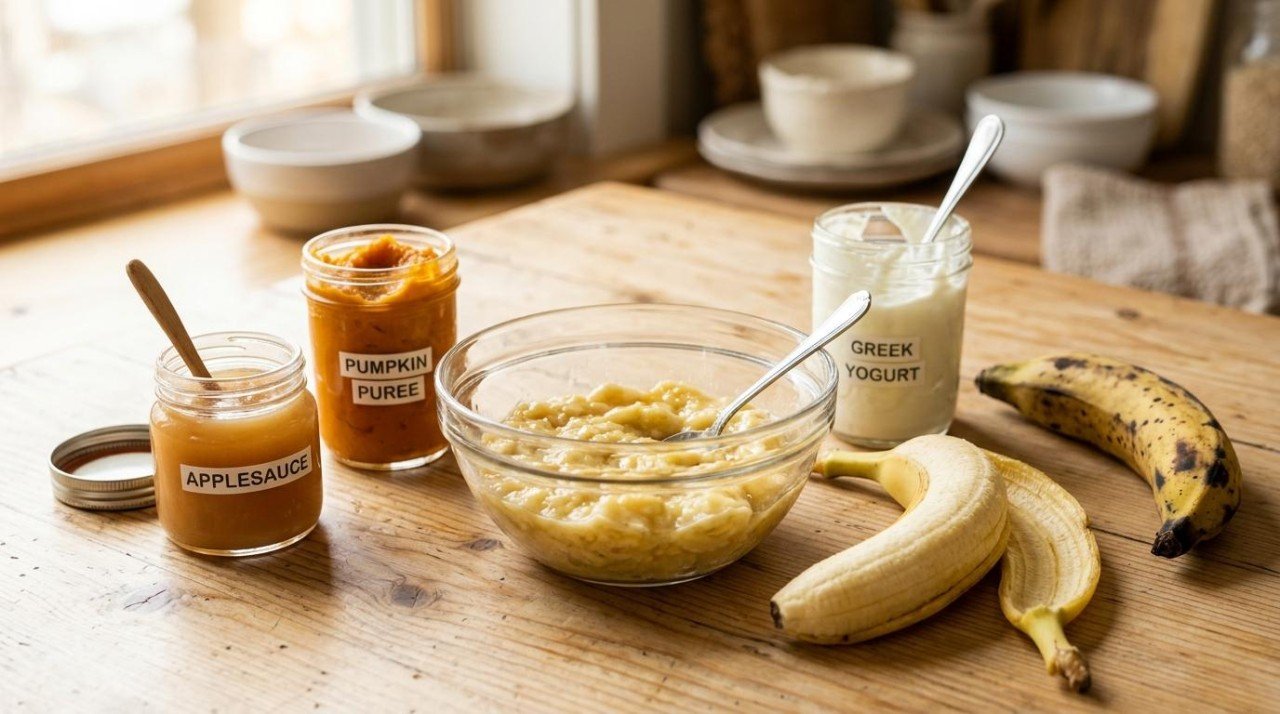
- Unsweetened applesauce — the easiest all-around swap for breads, muffins and cakes
- Pumpkin or butternut squash puree — moist and tender, with more fiber; add a little sugar
- Mashed sweet potato — the closest match for banana's thick, dense body
- Very ripe plantain — keeps the banana-like flavor (if you're simply out of bananas, not allergic)
- Plain Greek yogurt — tangy, protein-rich, great in muffins and snack cakes
- Silken tofu — neutral, smooth and egg-free; best in vegan bakes
- Date paste + applesauce — fruit-sweetened, caramel-like, good in spiced loaves
- Flax egg — for when the banana was only there to replace an egg
What Banana Does in a Recipe
It helps to know what you're replacing. Mashed banana is about three-quarters water, so it keeps baked goods moist. It's naturally sweet: a cup carries about 27.5 g of sugar, roughly two tablespoons' worth. It's starchy and thick, which gives banana bread its dense, fudgy crumb and helps bind the batter, a bit like an egg. And that sugar caramelizes in the oven, which is why banana bakes brown so deeply.
No single substitute does all four of those things exactly the way banana does, but most do two or three of them well. The two adjustments you'll make most often are sweetness (pumpkin, yogurt and tofu are much less sweet than banana) and moisture (applesauce and pumpkin are wetter). Both are easy to fix once you know to look for them.
Unsweetened Applesauce
- Swap: 1 cup mashed banana → 1 cup thick, unsweetened applesauce, and hold back about 2 tablespoons of the recipe's other liquid
- Best for: Quick breads, muffins, snack cakes, spice cakes, and recipes where banana replaces oil
- Skip it for: Recipes built around banana, like two-ingredient pancakes or banana oat cookies; applesauce is too thin to hold them together
- Health notes: A cup has 102 calories, 2.7 g fiber and 23 g sugar, about half the calories of the same amount of banana
Applesauce is the swap most bakers reach for first, and with good reason. It's sweet enough that you rarely need to add sugar (23 g per cup versus banana's 27.5 g), its mild flavor disappears behind cinnamon and vanilla, and it keeps a loaf soft for days. King Arthur Baking treats mashed banana, applesauce, pumpkin and sweet potato purees as interchangeable when they're used as an egg replacer, noting that they "perform similarly in baked goods."
The difference is water. Applesauce is about 88 percent water to banana's 75 percent, which works out to roughly 3 extra tablespoons of water per cup. That's why "homestyle" or chunky applesauce, blended smooth, works better than thin, runny sauce. If yours is loose, let it drain in a fine sieve for 15 minutes, or hold back a couple of tablespoons of the milk or water in the recipe. Your loaf will be a little lighter in color and won't taste like banana. Lean into that with extra cinnamon, a handful of raisins or walnuts, or a grated apple folded in for an apple-spice loaf.
Pumpkin or Butternut Squash Puree
- Swap: 1 cup mashed banana → 1 cup plain pumpkin or butternut puree, plus about 1 1/2 tablespoons extra sugar or maple syrup if you want the same sweetness
- Best for: Quick breads, muffins, pancakes, waffles, baked oatmeal, spice cakes
- Skip it for: Light vanilla cakes where the orange color and earthy flavor would stand out
- Health notes: A cup of canned pumpkin has 83 calories, 7.1 g fiber and 1,906 mcg of vitamin A, more than twice the Daily Value, and only about 8 g of sugar
Pumpkin gives you the same moist, tender crumb as banana, and it's the most nutritious swap on this list: more fiber than banana, a huge dose of vitamin A, and less than a third of the sugar. That last part is also the one thing to adjust. A cup of pumpkin carries about 19 g less sugar than a cup of banana, which is roughly 1 1/2 tablespoons of granulated sugar. In a spiced loaf that already has 3/4 cup of sugar, you may not miss it. In a lightly sweetened muffin, add it back, or taste the batter and decide.
Pumpkin is even wetter than applesauce (about 90 percent water), so the same rule applies: hold back 2 to 3 tablespoons of the recipe's liquid, or drain homemade puree in a paper-towel-lined sieve until it holds a soft mound on a spoon. Use plain puree, not pumpkin pie mix, which is already sweetened and spiced. Expect an orange, pumpkin-bread-style loaf, which pairs naturally with cinnamon, ginger, nutmeg and chocolate chips. If you need to stretch a can or don't have one, our pumpkin puree substitutes guide covers butternut, kabocha and more.
Mashed Sweet Potato
- Swap: 1 cup mashed banana → 1 cup smooth mashed sweet potato, plus about 1 tablespoon extra sugar if needed
- Best for: Dense quick breads, muffins, brownies, blondies, pancakes
- Skip it for: Delicate, airy cakes; it's heavy and will weigh them down
- Health notes: A cup of canned mashed sweet potato has 232 calories, 4.6 g fiber, 796 mg potassium and 1,017 mcg vitamin A
Of all the substitutes here, sweet potato is the closest to banana's texture. It's thick, starchy and about 76 percent water, almost exactly banana's moisture level, so you don't need to change any liquid. It brings the same dense, fudgy quality to a loaf, and it's sweet enough that most recipes need only a spoonful of extra sugar (a cup has about 13 g of sugar, versus banana's 27.5 g). Its potassium is nearly identical to banana's, too.
Roast whole sweet potatoes at 400°F until they're collapsing and their sugars are oozing, 45 to 60 minutes, then scoop out the flesh and mash or blend until completely smooth. Roasting gives a sweeter, more caramel-like flavor than boiling. Plain canned sweet potato, drained and blended, works fine, but skip the "candied yams" packed in syrup. It's especially good in chocolate bakes, where its color and flavor vanish completely. For more ways to use it, see our sweet potato substitutes guide, which covers the swap from the other direction.
Very Ripe Plantain
- Swap: 1 cup mashed banana → 1 cup well-mashed black-ripe plantain
- Best for: Banana bread, muffins and pancakes when you want the banana flavor and just don't have bananas
- Skip it for: Anyone with a banana allergy; plantains are close relatives of bananas
- Health notes: Nutritionally similar to banana, a bit starchier
If you're out of bananas but have plantains, you're in luck. A plantain whose skin has gone fully black is soft, sweet and fragrant, and it bakes into a loaf that tastes like a mellow banana bread. Plantain bread is a popular bake in many West African and Caribbean kitchens for exactly this reason. Wait for black, not yellow: a yellow plantain is still firm and starchy and won't mash smoothly, and a green one is a vegetable for frying.
Plantain is drier and denser than banana, so mash it very well (a potato masher works) and expect a slightly heavier crumb. Many plantain bread recipes add a few tablespoons of yogurt or sour cream to keep it moist, which is a good habit when swapping one in for banana. Since plantain is still in the banana family, it's not a fix for allergies. For that, keep reading.
Plain Greek Yogurt
- Swap: 1 cup mashed banana → 1 cup plain Greek yogurt, plus about 2 tablespoons sugar, honey or maple syrup
- Best for: Muffins, snack cakes, pancakes, waffles, and recipes where banana replaces some of the oil
- Skip it for: Banana-built recipes like two-ingredient pancakes or oat cookies; yogurt is too loose to hold them together
- Health notes: A 6-ounce container of nonfat plain Greek yogurt has 100 calories and 17 g of protein, along with 187 mg calcium
Greek yogurt makes a moist, tender crumb with a pleasant tang, a bit like a sour cream coffee cake. It's also the protein upgrade on this list: a cup of banana has under 3 g of protein, while a similar amount of Greek yogurt has well over 20 g. Because it has very little sugar of its own, add back about 2 tablespoons of sweetener per cup, or the result will taste noticeably flat. The acidity also reacts with baking soda, which helps the rise, so don't worry if a recipe calls for soda; it'll still work.
What yogurt doesn't give you is banana's density or its deep brown crust. The crumb will be lighter and paler, so check it a few minutes early and rely on a toothpick, not color, to tell when it's done. Regular plain yogurt works, too, but it's thinner, so hold back a couple of tablespoons of liquid. Out of yogurt, as well? Our Greek yogurt substitutes guide has options.
Silken Tofu
- Swap: 1 cup mashed banana → 1 cup silken tofu, blended completely smooth, plus about 2 tablespoons sweetener
- Best for: Vegan muffins, brownies, chocolate cakes, and any egg-free bake
- Skip it for: Recipes that rely on banana for flavor; tofu tastes of almost nothing
- Health notes: Soft silken tofu has about 46 calories and 4 g of protein per 84 g serving, with very little sugar
Silken tofu is the go-to swap when you need something dairy-free, egg-free and banana-free at once. Blended, it becomes a smooth, thick cream that adds moisture and binds the batter, and its flavor vanishes completely, especially behind chocolate. Use silken (sold in shelf-stable cartons or in the refrigerated section), not the firm block tofu you'd use for stir-fries, and blend it until there's no graininess at all.
Like yogurt, it's barely sweet. Tasting Table notes that when you replace banana with silken tofu, you may need another sweet ingredient to make up for the banana's absence, so plan on about 2 tablespoons of sugar, honey or maple syrup per cup. Expect a paler, more cake-like crumb than banana gives you. For more ways to work with it, see our tofu substitutes guide.
Date Paste + Applesauce
- Swap: 1 cup mashed banana → 1/2 cup date paste + 1/2 cup unsweetened applesauce, and cut the recipe's sugar by about a quarter to start
- Best for: Spiced quick breads, bran or oat muffins, snack bars, recipes sweetened mainly by the fruit
- Skip it for: Light, pale cakes; dates darken the crumb and taste of caramel
- Health notes: One Medjool date has 66 calories, 1.6 g fiber and about 16 g of sugar; this is a sweetness swap, not a sugar cut
Many "naturally sweetened" banana recipes use the banana as their main sweetener. Date paste is the substitute that keeps that idea, because it's thick, sticky and very sweet, with a deep caramel flavor that suits cinnamon, nutmeg and walnuts. To make it, soak pitted dates in hot water for 10 minutes, then blend with just enough of the soaking water to get a thick, smooth paste. Make a little more than you need; leftover paste keeps in the fridge and sweetens oatmeal nicely.
Date paste is much sweeter and stickier than banana, which is why it's paired with applesauce here rather than used alone. Treat this blend as a starting point, not an exact formula, and taste the batter before it goes in the pan. Be honest with yourself about the health angle, too: date sugar is still sugar. What you gain over table sugar is some fiber and potassium, and a recipe that gets its sweetness from whole fruit.
Flax Egg (When Banana Is the Egg Replacer)
- Swap: 1/4 cup mashed banana (used in place of 1 egg) → 1 tablespoon ground flaxseed + 3 tablespoons water, rested 5 to 10 minutes until gelled
- Best for: Vegan cookies, muffins, pancakes and quick breads where the banana is only binding
- Skip it for: Recipes where banana is also the main moisture and sweetness, like banana bread itself
- Health notes: Adds fiber and plant omega-3 fats
In vegan baking, a quarter cup of mashed banana often stands in for one egg. If that's the banana's only job, you don't need a fruit at all. A flax egg binds just as well with no banana flavor, which is a relief in a vanilla cookie or a savory-leaning muffin. Use ground flaxseed (whole seeds won't gel) and wait until the mixture looks thick and gloopy before stirring it in. A chia egg, made the same way, works too.
Banana adds sweetness and moisture as well as binding, so swapping it for flax can leave a cookie slightly drier and less sweet. If the dough looks stiff, add a tablespoon of applesauce or plant milk. Our egg substitutes for baking guide covers every egg replacer in detail, including how many eggs each one can handle.
Which Substitute for Which Recipe
Most of these work in most quick breads and muffins. The trickier cases are recipes where banana is doing something more specific.
Banana bread and other quick breads
Your loaf won't taste like banana bread anymore, so think of it as a different loaf that uses the same method. For the closest texture, use mashed sweet potato. For the easiest swap, use applesauce for an apple-spice bread. For the most nutrition, use pumpkin. Plantain is the only swap that keeps the banana flavor. Whichever you choose, the dense, moist crumb will hold up. Check for doneness a few minutes early, since lower-sugar substitutes brown more slowly and wetter ones can need a few extra minutes, so a toothpick is more reliable than the color of the top.
Muffins, snack cakes and pancakes
This is the most forgiving category. Every substitute on the list works, and Greek yogurt is the standout for muffins and pancakes, giving a fluffy, tender crumb and a lot more protein. Applesauce and pumpkin are good, too. Adjust the sweetness for pumpkin, yogurt and tofu, and hold back a little liquid for applesauce and pumpkin.
When banana replaces the egg
Use a flax or chia egg if you want no flavor at all, or 1/4 cup applesauce or pumpkin per egg if a little moisture and sweetness is welcome. King Arthur notes that fruit and vegetable purees can make cookies cakey and give cakes and muffins a denser texture, so they're best in recipes that are meant to be moist and dense anyway.
When banana replaces butter or oil
Some lighter recipes use mashed banana in place of some or all of the fat. Unsweetened applesauce and pumpkin are the natural swaps here, cup for cup with the banana, and plain Greek yogurt works well in muffins. All of them keep the bake moist; none of them add richness, so the crumb stays soft rather than buttery.
Recipes that are mostly banana
Two-ingredient banana pancakes, banana oat cookies and "nice cream" are built on banana's thick, starchy body, and no substitute rescues them cup for cup. Mashed sweet potato or very thick pumpkin will hold an oat cookie together, but it's really a different recipe, so you're better off looking for one written for that ingredient. For a frozen "nice cream," frozen mango or a mix of frozen berries and Greek yogurt gives the creamiest result.
A Note for Banana Allergies
If you're avoiding banana because of an allergy rather than an empty fruit bowl, pick your substitute with care. Banana allergy is often linked to latex allergy through what's called latex-fruit syndrome, and the Allergy & Asthma Network lists avocado, banana, chestnut and kiwi as the foods with high cross-reactivity, noting that these reactions occur in 30 to 50 percent of people with latex allergy. The same list puts apple, carrot, potato and melon in the moderate group, and pumpkin, pear and zucchini in the low or undetermined group.
In practice, that means avoiding plantain (it's a banana) and not swapping in avocado or chestnut flour. Applesauce is fine for many people with a banana allergy, but since apple is on the moderate list, it's worth checking with your allergist first. Pumpkin and squash puree, Greek yogurt, silken tofu and a flax egg are all outside the high and moderate groups, though everyone's allergies are different, so follow your own allergist's advice.
How the Substitutes Compare Nutritionally
Banana is a perfectly nutritious baking ingredient, so the goal here isn't to replace it with something "healthier." It's to know what each swap adds and takes away. Per cup:
- Mashed banana: 200 calories, 5.9 g fiber, 27.5 g sugar, 806 mg potassium
- Canned pumpkin: 83 calories, 7.1 g fiber, 8 g sugar, 505 mg potassium, more than twice the Daily Value for vitamin A
- Unsweetened applesauce: 102 calories, 2.7 g fiber, 23 g sugar, 181 mg potassium
- Mashed sweet potato (canned): 232 calories, 4.6 g fiber, 13 g sugar, 796 mg potassium
- Nonfat plain Greek yogurt (8 ounces, about 1 cup): about 135 calories, 23 g protein and 7 g sugar (scaled from the 6-ounce container)
Pumpkin is the clear nutritional upgrade: more fiber, far more vitamin A and less than a third of the sugar, at well under half the calories. Greek yogurt is the protein upgrade. Applesauce trims calories but brings less fiber. Sweet potato is the one that keeps banana's potassium. And once you add back a tablespoon or two of sugar to the less sweet options, the totals shift a little, which is exactly the kind of change that's hard to eyeball across a whole recipe. Every fruit and vegetable swap here still counts as a plant, too, so they all add to a weekly plant-diversity goal.
Eat Well Planner's Recipe Playground lets you swap the banana in your recipe for pumpkin or Greek yogurt and watch the nutrition score, fiber, sugar and protein change live, before you bake anything. Make It Healthier goes a step further: it suggests swaps like these on its own and checks the actual nutritional gain with a calculator before showing them to you.
Take the Guesswork Out of Eating Well
Eat Well Planner helps you organize your favorite recipes, plan balanced meals, and automatically generate shopping lists — all in one place. Whether you're tracking macros, managing dietary restrictions, or just trying to stop asking "what's for dinner?", we've got you covered.
Our AI-powered tools can adapt any recipe to your dietary needs, help you discover new meals you'll love, and even log your nutrition effortlessly. It's meal planning made simple.
Start Organizing Your Meals — FreeWhat Not to Use
- Sweetened applesauce or pumpkin pie mix without adjusting. Both bring added sugar on top of what the recipe already calls for. If they're all you have, cut the recipe's sugar by about a quarter cup per cup used.
- Extra milk or water. It replaces the moisture but none of the body, sweetness or binding, so you end up with a flat, gummy loaf.
- Extra oil or butter. It keeps things moist but makes the bake greasy and heavy, and it does nothing for binding.
- Banana chips or dried banana. They're dry, often fried and sweetened, and they won't mash into anything useful. Chop them as a topping if you like, but don't count them as the banana.
- Instant banana pudding mix. It adds banana flavor along with a lot of sugar and starch, and it changes the batter's structure in unpredictable ways.
- Avocado, if you're avoiding banana for allergy reasons. It's one of the most common cross-reacting foods (see the allergy note above).
- Underripe banana. If you do have bananas that are still yellow or green, they're starchy, hard to mash and much less sweet. In a pinch, bake them in their skins at 300°F until the peels turn black, anywhere from 15 to 45 minutes depending on how green they are. That softens them enough to mash, but it's closer to cooking than true ripening, so taste the batter and add a spoonful of sugar if it needs it.
Make Any of These Fit Your Recipe
Mashed banana is mostly a soft, sweet, moist puree, and plenty of other things in your kitchen can play that part. Applesauce is the easiest swap, sweet potato gives the closest texture, pumpkin brings the most nutrition, and Greek yogurt adds the most protein. Plantain is your best bet if you just ran out of bananas and still want the flavor, and a flax egg handles recipes where banana was only standing in for an egg. Adjust the sweetness for pumpkin, yogurt and tofu, and hold back a little liquid for applesauce and pumpkin. That covers most of it.
Not sure which one suits the recipe in front of you? Open it in Eat Well Planner and ask the AI recipe chat something like "I'm out of bananas, what can I use in these muffins?" It'll recommend a swap for that specific recipe, with every ingredient in context, including how much sugar to add back. If you're baking for someone with a banana allergy, Recipe Variations can rewrite the whole recipe banana-free, with every amount adjusted, so you're not reworking it line by line. And if you'd like to see how far a banana loaf itself can be pushed toward better nutrition, our healthier banana bread scores every swap.