The recipe calls for "1 teaspoon dried marjoram," and you are fairly sure you have never bought marjoram in your life. That is normal. Marjoram is one of those herbs that shows up in a German sausage recipe, a Thanksgiving stuffing or an old family soup, and then nowhere else for a year.
The good news is that marjoram is a member of the oregano family, and its flavor sits right between oregano and thyme. Most kitchens already have at least one herb that can stand in for it, and many have a seasoning blend that already contains it.
The best pick depends on what you are making. Sausage, meatloaf and stuffing want savory, peppery herbs. Tomato sauces and pizza want oregano and basil. Soups, beans and stews are forgiving and take almost anything in the list. All ratios below assume the recipe calls for dried marjoram leaves unless noted, and there is a conversion section further down if your recipe calls for fresh.
The Quick List
- Oregano — the closest relative; use half as much because it is much stronger
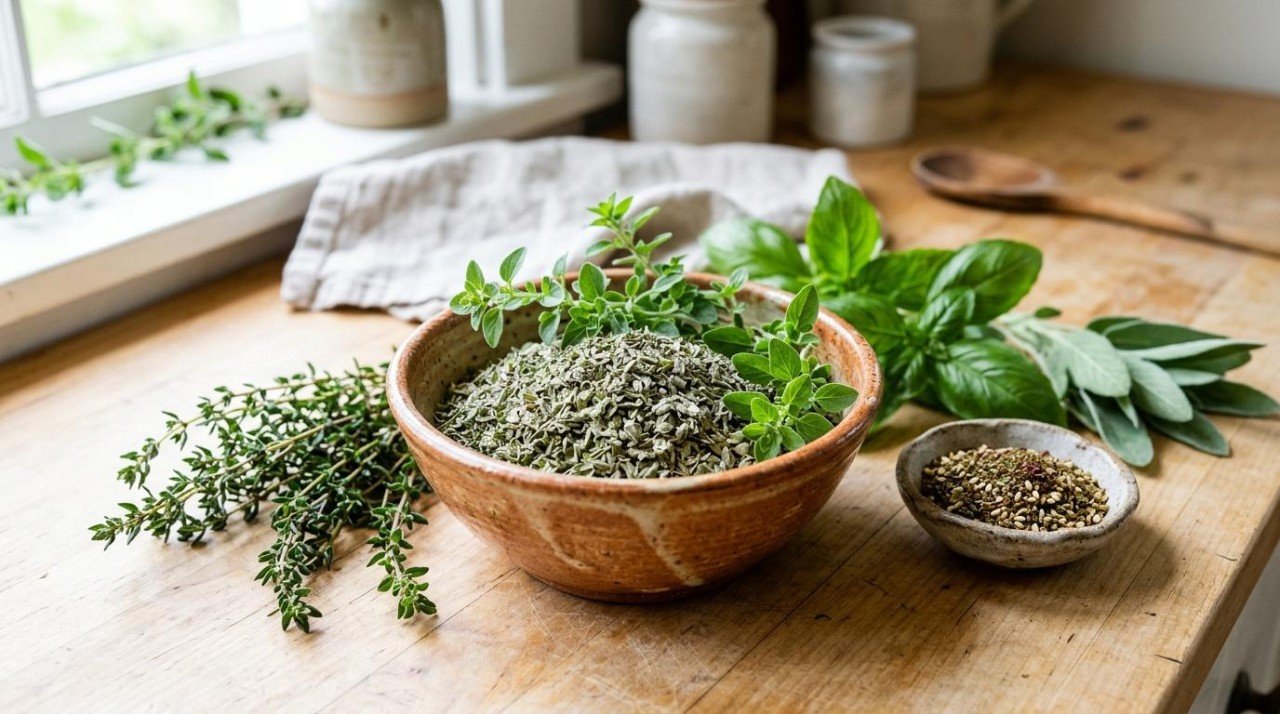
- Thyme — the safest all-purpose swap, especially for meat, soups and stuffing
- Thyme + oregano — the closest two-jar match to marjoram's flavor
- Summer savory — the classic swap for sausage and bean dishes
- Italian seasoning — already contains marjoram; best for tomato sauces, pizza and meatballs
- Poultry seasoning — also contains marjoram; best for stuffing, gravy and pork
- Herbes de Provence — marjoram's French home blend; for roasts and vegetables
- Basil — the sweet-herb swap for tomato dishes, salads and fresh marjoram
- Sage — for sausage and stuffing only, and in small amounts
- Za'atar — made from a wild marjoram relative; for flatbread, eggs and roasted vegetables
What Marjoram Tastes Like (and Why Oregano Is So Close)
Marjoram is Origanum majorana, a close cousin of common oregano, Origanum vulgare. University of Illinois Extension describes sweet marjoram as "another member of the Oregano family but with a sweeter, milder flavor," and lists its classic uses as "soups, egg dishes, beef, and chicken dishes, sausages, cheese and tomato dishes." Wikipedia describes its flavor as "sweet pine and citrus."
In practice, think of marjoram as oregano with the volume turned down and a little floral sweetness added. That gives you two simple rules for substituting it. First, if you use oregano, use less. Second, if you want to recreate the sweetness, a little thyme or basil helps.
One naming trap is worth knowing. "Wild marjoram" is another name for regular oregano, and "pot marjoram" can mean other oregano species too. If your recipe says "sweet marjoram" or just "marjoram," it means Origanum majorana, the milder one.
Match the Substitute to the Dish
- Sausage, meatloaf, meatballs and burgers — summer savory, thyme + oregano, thyme, sage (small), poultry seasoning
- Stuffing, gravy, roast chicken and turkey — poultry seasoning, thyme, sage (small), herbes de Provence
- Tomato sauces, pizza and lasagna — oregano (half), Italian seasoning, basil, thyme + oregano
- Soups, stews, beans and lentils — thyme, summer savory, thyme + oregano, Italian seasoning
- Eggs, roasted vegetables and potatoes — thyme, herbes de Provence, za'atar, oregano (half)
- Salads, dressings and recipes calling for fresh marjoram — fresh basil, fresh oregano (half), fresh thyme
Oregano
- Swap: 1 teaspoon dried marjoram → 1/2 teaspoon dried oregano. Fresh for fresh: 1 tablespoon fresh marjoram → 1 1/2 teaspoons chopped fresh oregano.
- Best for: Tomato sauces, pizza, lasagna, meatballs, roasted vegetables, Greek-style chicken and lamb
- Skip it for: Delicate dishes where marjoram is the main flavor, like herbed butter, egg dishes or a light chicken soup
Oregano is marjoram's closest relative, so it is the first jar most cooks reach for. The catch is strength. The Spice House says to "only use about half the amount of oregano, as it has a much more pungent flavor," and that is the right starting point. Use the full amount and the dish will taste noticeably sharper and more like pizza.
Oregano is a great swap in anything with tomatoes, garlic and olive oil, because those flavors already lean in its direction. Taste near the end of cooking and add a pinch more only if the dish seems flat. If you have basil too, a small pinch of each gets you closer to marjoram's softer, sweeter side.
Thyme
- Swap: 1 teaspoon dried marjoram → 3/4 to 1 teaspoon dried thyme
- Best for: Chicken, beef, pork, stuffing, gravy, soups, stews, beans, eggs, roasted vegetables
- Skip it for: Tomato sauces and pizza, where you miss oregano's flavor more
Thyme is the safest single substitute. It is earthy and savory like marjoram, it is mild enough to use at nearly full strength, and it suits almost every dish that calls for marjoram. You lose some of marjoram's sweet, floral edge, but the dish will still taste finished and balanced.
Thyme also holds up well to long cooking, which makes it a good choice for soups, stews and slow-cooked beans. Start with 3/4 teaspoon and add the rest if needed; ground thyme is a different story, so see the "what not to use" list below.
Thyme + Oregano
- Swap: 1 teaspoon dried marjoram → 1/2 teaspoon dried thyme + 1/4 teaspoon dried oregano
- Best for: Nearly everything: sausage, meatloaf, soups, tomato sauces, beans, roasted vegetables
- Skip it for: Not much. This is the one to use if you have both jars.
Marjoram tastes like a cross between oregano and thyme, so mixing the two gets you closer than either one alone. Thyme gives the earthy, savory base, and a small amount of oregano adds the oregano-family flavor without its sharpness. The total amount is a little less than the recipe calls for because oregano is strong.
If you have a pinch of dried basil, add it. It brings back some of the sweetness that marjoram has and the other two herbs lack. This combination is our top pick when you have a full spice drawer and no idea which herb to grab.
Summer Savory
- Swap: 1 teaspoon dried marjoram → 3/4 to 1 teaspoon dried summer savory
- Best for: Sausage, bean soups, lentils, green beans, meatloaf, grilled meats, stuffing
- Skip it for: Tomato sauces and pizza, where it tastes out of place
Summer savory is less common in American kitchens, but if you have it, it is a great match for meat and bean dishes. Wikipedia describes its flavor as "pungent piney flavor with peppery hints," often compared to "a cross between mint and thyme." It is also favored for sausages because of its "sweeter, more delicate aroma" compared with winter savory, which is the same job marjoram does in many sausage recipes.
Savory has what Wikipedia calls a "natural affinity" for beans, and in German it is called Bohnenkraut, which literally means "bean herb." If your recipe is a split pea, lentil or white bean soup, summer savory is arguably better than marjoram. Winter savory is stronger and more bitter, so if that is what you have, use about half as much. If you are cooking beans from scratch, our guide on how to cook dried beans from scratch covers the rest.
Italian Seasoning
- Swap: 1 teaspoon dried marjoram → 1 teaspoon Italian seasoning
- Best for: Tomato sauces, pizza, lasagna, meatballs, minestrone, roasted vegetables, garlic bread
- Skip it for: Sausage, stuffing and recipes where marjoram is the only herb, since basil and oregano take over
Many Italian seasoning blends already contain marjoram. McCormick's standard blend, for example, lists marjoram first, alongside basil, rosemary, thyme, oregano, savory and sage. That makes it an easy 1:1 swap in any Italian-style dish, especially tomato sauces where the extra basil and oregano are welcome anyway.
The trade-off is that the blend brings its own flavor. In a dish that already has several herbs, you will not notice. In a simple dish where marjoram was meant to be the main note, it will taste more like marinara. Our Italian seasoning substitutes guide has a homemade blend if you want to control the mix.
Poultry Seasoning
- Swap: 1 teaspoon dried marjoram → 3/4 teaspoon poultry seasoning
- Best for: Stuffing, gravy, roast turkey and chicken, pork chops, chicken pot pie, breakfast sausage
- Skip it for: Tomato sauces and pizza, where sage tastes out of place
Poultry seasoning is the other everyday blend that already contains marjoram. The standard McCormick Poultry Seasoning lists "Thyme, Sage, Marjoram, Rosemary, Black Pepper, and Nutmeg." For stuffing and gravy, that is close to perfect, because many stuffing recipes use marjoram alongside sage and thyme anyway.
Use a little less than the recipe calls for, since the sage is strong and the blend includes pepper. If the recipe also calls for separate sage and thyme, cut those back slightly too. Our poultry seasoning substitutes guide breaks the blend down if you want to build your own, and our healthier Thanksgiving stuffing is a good place to use it.
Herbes de Provence
- Swap: 1 teaspoon dried marjoram → 3/4 teaspoon herbes de Provence
- Best for: Roast chicken, lamb, roasted potatoes and vegetables, ratatouille, white bean soups
- Skip it for: Sausage, creamy sauces and gravy, especially if your jar contains lavender
Marjoram is one of the core herbs in many herbes de Provence blends, alongside thyme, rosemary, savory and oregano. That makes the blend a good stand-in for roasts and vegetables, which is where marjoram and herbes de Provence are both used most.
Check the jar for lavender. Many American blends include it, and its floral note works on a roast chicken but can taste soapy in a creamy sauce or sausage. Also crush the blend in your fingers before adding it, since the rosemary needles can be hard. Our herbes de Provence substitutes guide explains what goes into the blend.
Take the Guesswork Out of Eating Well
Eat Well Planner helps you organize your favorite recipes, plan balanced meals, and automatically generate shopping lists — all in one place. Whether you're tracking macros, managing dietary restrictions, or just trying to stop asking "what's for dinner?", we've got you covered.
Our AI-powered tools can adapt any recipe to your dietary needs, help you discover new meals you'll love, and even log your nutrition effortlessly. It's meal planning made simple.
Start Organizing Your Meals — FreeBasil
- Swap: 1 tablespoon fresh marjoram → 1 tablespoon chopped fresh basil. Dried: 1 teaspoon dried marjoram → 1 teaspoon dried basil, ideally with a pinch of thyme or oregano.
- Best for: Tomato sauces, tomato salads, pasta, pizza, vinaigrettes, recipes that call for fresh marjoram
- Skip it for: Sausage, stuffing, gravy and long-cooked meat dishes, where basil's sweetness tastes out of place
Basil does not taste like marjoram, but it shares its sweetness and its love of tomatoes. That makes it the best swap when your recipe calls for fresh marjoram in a salad, dressing or tomato dish, where you want something tender, green and gentle rather than earthy.
Fresh basil is delicate, so add it at the end of cooking or just before serving. Dried basil is weaker and duller, so pair it with a pinch of oregano or thyme to give it more of marjoram's savory depth. If basil is the herb you are short on next time, our fresh basil substitutes guide has you covered.
Sage
- Swap: 1 teaspoon dried marjoram → 1/2 teaspoon dried rubbed sage, ideally with 1/2 teaspoon dried thyme
- Best for: Breakfast sausage, pork, stuffing, gravy, roast turkey, butternut squash
- Skip it for: Tomato sauces, soups, eggs and anything delicate
Sage is not a close flavor match, but it does the same job as marjoram in sausage and stuffing: a savory, slightly piney herb that pairs well with pork, poultry and bread. Sage is much stronger, though, and can taste bitter or medicinal in large amounts, so use half as much.
Mixing sage with thyme gives a better result than sage alone. Together they taste like a classic stuffing or breakfast sausage, which is exactly what most marjoram-and-sage recipes are going for. If the recipe already includes sage, skip this swap and use thyme instead, or the sage will take over.
Za'atar
- Swap: 1 teaspoon dried marjoram → 1 teaspoon za'atar, and reduce the recipe's salt slightly if the blend contains salt
- Best for: Flatbread, roasted vegetables, chickpeas, eggs, chicken, olive oil for dipping, yogurt dips
- Skip it for: Sausage, stuffing, gravy and tomato sauces, where the sesame and tang feel out of place
Za'atar is both an herb and a blend. According to Wikipedia, the herb is mainly Origanum syriacum, "known regionally as Bible hyssop, Arabic oregano, or wild marjoram," a close relative of sweet marjoram. The blend combines the dried herb (or thyme, oregano or marjoram) with toasted sesame seeds, sumac and salt.
That means the herb side of za'atar is a natural match for marjoram. The sumac adds a lemony tang and the sesame adds crunch, so the dish will taste different, but often in a good way. It is especially good on roasted vegetables, eggs and flatbread. Check the label for salt, and taste before adding the rest of the recipe's salt.
Fresh vs. Dried Marjoram: Conversions
Recipes switch between fresh and dried marjoram, and your substitute may be in a different form than the recipe. The standard conversion from Penn State Extension is "1 Tablespoon fresh herbs = 1 tsp dried herbs = ¼ tsp powdered herb." University of Illinois Extension gives the same 3:1 fresh-to-dried ratio.
- 1 tablespoon fresh marjoram = 1 teaspoon dried marjoram = 1/4 teaspoon ground marjoram
- 1 tablespoon fresh marjoram → 1/2 teaspoon dried oregano, or 3/4 to 1 teaspoon dried thyme
- 1 teaspoon dried marjoram → 1 1/2 teaspoons fresh oregano, or 2 to 3 teaspoons fresh thyme leaves
Fresh marjoram is tender, so add it near the end of cooking or use it raw. Dried marjoram can go in at the start of a soup or sauce. If you bought a bunch of fresh herbs for one recipe, here is how to stop letting fresh herbs die in the fridge.
What About the Health Side?
Marjoram is used by the teaspoon, so swapping it will not change a dish's nutrition much. Two points are still worth knowing.
- Single herbs are salt-free; some blends are not. Dried marjoram, oregano, thyme, savory and basil have almost no sodium, and neither do plain Italian seasoning or poultry seasoning. Za'atar and many "herb and garlic" blends often contain salt. If you swap in a blend, check the label and taste before adding the recipe's salt.
- Herbs help you use less salt. A well-seasoned dish tastes complete with less salt. In a 20-week randomized trial summarized by Harvard's Nutrition Source, 40 adults coached to cook with spices and herbs ended up excreting about 957 mg less sodium per day than a control group. It was a small study, but it is a good reason to be generous with herbs in soups, beans and homemade sausage, which tend to be salty.
Each different herb also counts toward the "30 plants a week" idea from gut health research. A pinch of marjoram or thyme is a small amount, but it is an easy way to add variety; our post on simple ways to sneak more plants into any meal has more ideas. For the bigger health claims made about individual herbs, the evidence at kitchen quantities is thinner than social media suggests, and Is Your Spice Rack a Medicine Cabinet? walks through what holds up.
What Not to Use
- Oregano at full strength: Measured 1:1, oregano will make the dish taste sharp and pizza-like. Use half.
- Mexican oregano: Despite the name, it comes from a different plant family than Mediterranean oregano and marjoram. It has a stronger, more citrusy and grassy flavor that suits chili and salsa, not sausage or stuffing.
- Ground herbs measured like leaves: Ground thyme, sage or marjoram packs about four times as densely as dried leaves. If you only have ground, use about a quarter of the amount.
- Rosemary alone: Rosemary is in the same broad herb family, but it is piney and resinous and will take over a dish. A small pinch in a blend is fine; as a direct substitute, it is too strong.
- Lots of sage: Sage is the most common overcorrection in sausage and stuffing. More than half the marjoram amount tends to taste bitter.
Which Marjoram Substitute Should You Use?
If you have thyme and oregano, mix them: half a teaspoon of thyme and a quarter teaspoon of oregano for every teaspoon of marjoram. If you only have one jar, thyme is the safest choice for sausage, stuffing, soups and beans, and oregano at half the amount is best for tomato sauces and pizza. Summer savory is excellent in sausage and bean dishes. Italian seasoning and poultry seasoning both already contain marjoram, so pick the one that matches your dish. For a recipe that calls for fresh marjoram in a salad or tomato dish, use fresh basil.
If you are not sure which option fits the recipe on your counter, ask Eat Well Planner's AI recipe chat something like "I'm out of marjoram, what should I use in this?" It answers with your actual recipe in context, including the other herbs and salt already in it, so it will not tell you to add sage to a stuffing that already has plenty. And if you want to see whether a swap is worth making, the Recipe Playground lets you change ingredients and watch the nutrition score update, for example to test whether cutting a soup's salt and adding more herbs and beans moves the needle. For a cozy place to try it, our healthier creamy tomato soup takes marjoram or any of its substitutes beautifully.