The salsa is chopped, the avocados are ready, and the jalapeño you were sure was in the crisper drawer turns out to be a lime. Or the store had a bin of serranos and poblanos and no jalapeños at all. Or someone at the table cannot handle heat, and you need the green pepper flavor without the burn.
A jalapeño does two jobs at once. It brings moderate heat, enough to notice and not enough to hurt, and a fresh, grassy, green-pepper flavor with a crisp bite when raw. Most substitutes do one of those well and the other badly, so the right pick depends on which one your dish actually needs, and on whether the pepper is going in raw, cooked, stuffed or on top.
Here is what works, with ratios, organized by how you are using it. There is also a heat scale so you can go hotter or milder on purpose.
The Quick List
- Serrano — the closest fresh swap for salsa and guacamole; 1:1, and it runs hotter
- Fresno — similar heat with a fruitier flavor; a straight 1:1, red instead of green
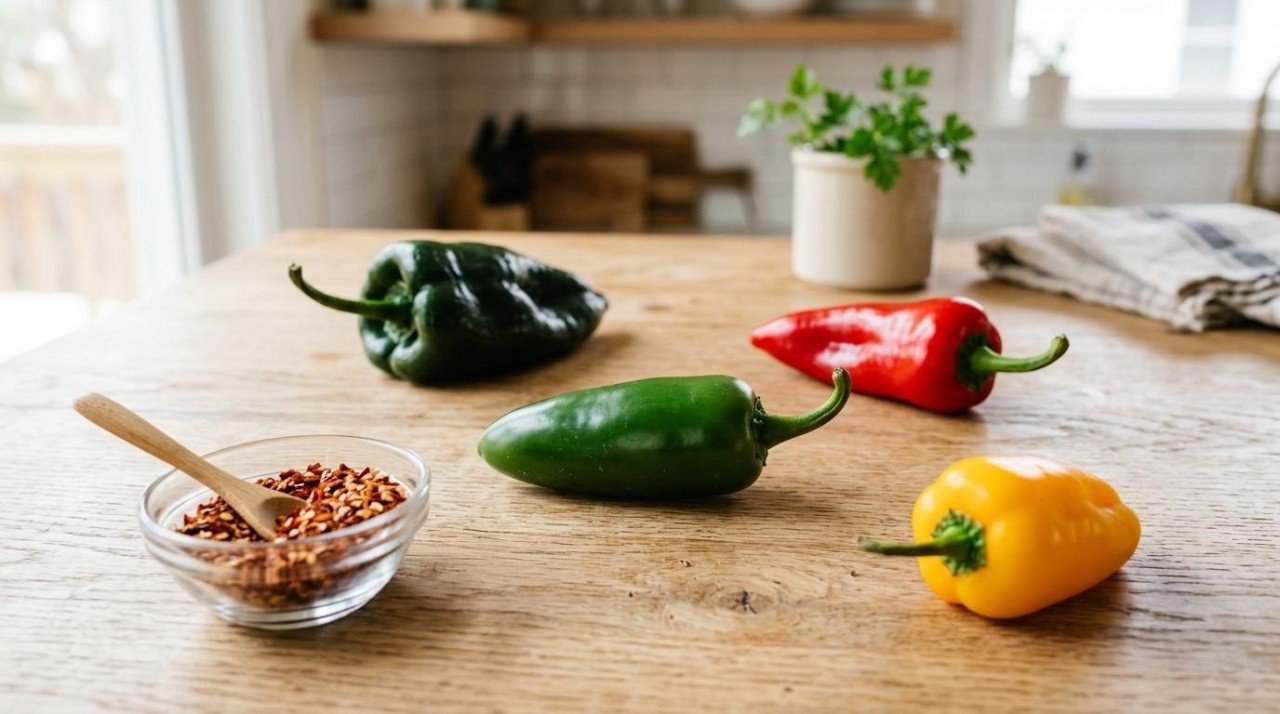
- Green bell pepper + red pepper flakes — the flavor and the crunch, with heat you can dial in exactly
- Red pepper flakes — the pantry answer for anything cooked; 1/4 teaspoon per jalapeño
- Ground cayenne — clean heat for chili, soups and sauces; 1/8 teaspoon per jalapeño
- Chipotle in adobo — a smoked jalapeño, literally; for chili, braises and marinades
- Canned diced green chiles — the mild, ready-chopped option for casseroles, dips and eggs
- Poblano — milder, earthier, and big enough to stuff
- Anaheim — mild and long; good for stuffing, roasting and green chili
- Mini sweet peppers — the best popper boat for anyone who does not want heat
- Pickled jalapeños — same pepper, different job; best on top of nachos, pizza and burgers
- Banana peppers — mild and tangy; a pickled topping when jalapeños are too much
The Heat Scale: How Hot Is Each Substitute?
Heat is measured in Scoville heat units (SHU). The ranges below come from the University of Florida's peppers ranked by heat unless noted. Peppers vary a lot from plant to plant (a jalapeño grown in a hot, dry summer is hotter than one grown somewhere mild), so treat these as neighborhoods, not exact addresses.
- Bell pepper and mini sweet peppers: 0
- Poblano: 1,000 to 2,000
- Anaheim: 1,000 to 5,000 (the University of Arizona Extension puts New Mexico types like Anaheim at 500 to 2,500)
- Jalapeño (and chipotle, which is a smoked jalapeño): 2,000 to 8,000
- Fresno: 2,500 to 10,000, per Tasting Table
- Serrano: 10,000 to 25,000
- Cayenne: 25,000 to 50,000
- Habanero: 100,000 to 350,000
One more thing before the swaps, because it lets you use a hotter pepper safely. The heat in a chile is not mostly in the seeds. It is in the white ribs (the pith) the seeds hang from. In lab tests on jalapeños, America's Test Kitchen found the pith had about 100 times the capsaicin of the flesh, and the seeds about 15 times. Scrape out the ribs and seeds and even a serrano calms down a lot. Leave them in and a mild pepper gets a bit more bite.
For Salsa, Guacamole and Anything Raw
Raw dishes are where the jalapeño's flavor and crunch matter most, so you want a fresh pepper here, not a dried spice. Flakes and powders taste dusty in pico de gallo.
Serrano
- Swap: 1 jalapeño → 1 serrano, ribs and seeds removed if you want similar heat
- Best for: Pico de gallo, salsa verde, guacamole, ceviche, chutneys
- Skip it for: Poppers (too small to stuff), and anyone sensitive to heat
Serranos taste the most like jalapeños: bright, grassy and green, with thinner walls and a slightly sharper bite. They are also much hotter per bite, which is why some cooks say never to use them in place of jalapeños. The reason the 1:1 swap still works is size. A serrano weighs about 6 grams and a jalapeño about 14 grams, so one small, hot serrano lands closer to one jalapeño than the Scoville numbers suggest. It will still run hotter.
For a crowd, mince one serrano with the ribs out, stir it in, and taste before adding a second. You can always add heat to salsa. You cannot take it out. If you are making guacamole, our guacamole makeover uses the same approach.
Fresno
- Swap: 1 jalapeño → 1 Fresno
- Best for: Salsa, ceviche, fish tacos, quick pickles, anywhere red looks nice
- Skip it for: Salsa verde or anything that needs to stay green
Fresnos look like a red jalapeño and sit in nearly the same heat range, a little hotter at the top end. The flavor is fruitier and a touch sweeter, closer to a ripe red jalapeño than a green one. In a tomato salsa that is an upgrade, not a compromise.
Green bell pepper + red pepper flakes
- Swap: 1 jalapeño → 2 1/2 tablespoons finely diced green bell pepper + 1/8 to 1/4 teaspoon red pepper flakes (or none)
- Best for: Salsa and guac for kids or heat-shy eaters, cornbread, egg dishes, slaws
- Skip it for: Anywhere the jalapeño was the main source of heat and you want that fresh-chile burn
A green bell pepper is the jalapeño's flavor with the heat taken out: grassy, slightly bitter, crunchy. Diced small, it gives salsa the same texture and green flecks. Then you control the heat separately with a pinch of flakes, which makes this the most adjustable option on the list. Skip the flakes entirely and you have a no-heat version for kids that still tastes like salsa.
The 2 1/2 tablespoons comes from size: a whole jalapeño chopped is about 2 1/2 tablespoons. Use the same amount of bell pepper so the salsa's proportions do not change.
For Chili, Soups, Stir-Fries and Cooked Dishes
Once a pepper is simmered, its fresh flavor mostly fades and what is left is heat plus a little vegetal depth. That is good news: dried spices and canned chiles work much better here than in raw dishes.
Red pepper flakes
- Swap: 1 jalapeño → 1/4 teaspoon red pepper flakes, adjusted to taste
- Best for: Chili, pasta sauces, stir-fries, soups, braised greens, pizza
- Skip it for: Raw salsas and garnishes, where the flakes stay chewy and dusty
The pantry fix, and the one America's Test Kitchen recommends when you want control over heat: a measured spoonful behaves the same every time, while fresh chiles vary pepper to pepper. Dried chile flakes are hotter by weight than a fresh jalapeño, but a quarter teaspoon is a small amount. Add it with the onions so the heat blooms in the oil and spreads through the dish, then taste at the end.
Ground cayenne
- Swap: 1 jalapeño → 1/8 teaspoon ground cayenne
- Best for: Chili, soups, sauces, spice rubs, creamy dips, anything smooth
- Skip it for: Anything raw where you wanted pepper texture
Cayenne is several times hotter than a jalapeño, so start smaller than you think. Its advantage over flakes is that it disappears into the dish, which makes it the better pick for smooth things like queso, soups and dips. It adds heat and color but none of the green flavor, so if the jalapeño was also there for flavor, pair it with a little diced bell pepper or a spoonful of canned green chiles.
Chipotle in adobo
- Swap: 1 jalapeño → 1/2 to 1 canned chipotle, minced, plus a little of the sauce; or 1/2 teaspoon chipotle powder
- Best for: Chili, black beans, braised meats, barbecue sauce, marinades, burger mix
- Skip it for: Anything that should taste fresh and bright, like pico de gallo
A chipotle is a ripe jalapeño that has been smoked and dried, so technically this is not a substitute at all. It is the same pepper, transformed: deep, smoky and a little sweet from the tomatoey adobo sauce. Drying concentrates the heat, so start with half a pepper. Freeze the rest of the can flat in a zip-top bag and break off a piece whenever you need one.
Chipotle changes the character of a dish more than anything else on this list. In a pot of chili that is usually a welcome change. In a delicate fish dish, it takes over.
Canned diced green chiles
- Swap: 1 jalapeño → 3 tablespoons canned diced green chiles (a 4-ounce can replaces about 3 jalapeños)
- Best for: Casseroles, enchiladas, queso, scrambled eggs, cornbread, white chicken chili
- Skip it for: Raw salsa, where they are soft and taste cooked; and anywhere you want real heat
Those little cans hold roasted long green chiles, typically Anaheim or New Mexico (Hatch) types. The mild ones bring a soft, roasted green-chile flavor and almost no heat, already chopped; some brands also sell medium and hot. Use a little more than the jalapeño volume because they are milder, and add a pinch of cayenne if you miss the kick. Drain them for anything that should not get watery, like a cornbread batter. Brands vary in how much salt they add, so check the label if you are watching sodium.
Poblano (for cooked dishes)
- Swap: 1 jalapeño → 2 1/2 to 3 tablespoons chopped poblano, plus a pinch of red pepper flakes if you want heat
- Best for: Fajitas, soups, rice dishes, black bean dishes, egg scrambles
- Skip it for: Anywhere the dish is meant to be spicy, unless you add heat separately
Poblanos are mild, dark green, and earthier than jalapeños, with thicker walls. Measure by volume, not by pepper: one poblano is several times the size of a jalapeño. They are at their best roasted or charred, which brings out a sweet, smoky note. (Dried, a poblano becomes an ancho chile.)
Take the Guesswork Out of Eating Well
Eat Well Planner helps you organize your favorite recipes, plan balanced meals, and automatically generate shopping lists — all in one place. Whether you're tracking macros, managing dietary restrictions, or just trying to stop asking "what's for dinner?", we've got you covered.
Our AI-powered tools can adapt any recipe to your dietary needs, help you discover new meals you'll love, and even log your nutrition effortlessly. It's meal planning made simple.
Start Organizing Your Meals — FreeFor Poppers and Stuffed Peppers
Poppers need a pepper that is the right size to stuff and sturdy enough to bake. Flavor matters less, because the filling carries the dish. All of these work with the same cream cheese and cheddar fillings. Our cream cheese substitution guide has lighter filling options.
Mini sweet peppers
- Swap: 1 jalapeño → 1 mini sweet pepper, halved lengthwise
- Best for: Poppers for kids or mixed crowds, party trays, air fryer poppers
- Skip it for: Anyone who wants the popper to actually be spicy (add flakes or diced chile to the filling instead)
These are almost exactly jalapeño-sized, they come in a bag of red, orange and yellow, and they have zero heat. They are also sweeter and thinner-walled, so check them a few minutes early: they soften faster than jalapeños. If half the table wants heat, stir a minced jalapeño substitute (a serrano, or flakes) into half the filling.
Poblano (for stuffing)
- Swap: 6 to 8 jalapeño poppers → 1 poblano, cut into 4 to 6 wide strips; or stuff whole poblanos as a main dish
- Best for: Bigger "popper boats," chiles rellenos, stuffed peppers for dinner
- Skip it for: Bite-size appetizers that need to be eaten in one go
A poblano is mild, holds its shape in the oven, and has enough room for real filling. It turns a popper into a meal: stuff it with rice, beans and cheese and you have dinner. The skin is a little tough raw; roast or broil the poblanos for a few minutes first if you want them silky.
Anaheim or cubanelle
- Swap: 2 jalapeños → about 1 Anaheim or cubanelle, cut into 2 to 3 pieces
- Best for: Long stuffed "fingers," grilled stuffed peppers, sausage-stuffed peppers
- Skip it for: Round, poppable bites
Long, mild peppers with thin skins. Anaheims have a little heat; cubanelles (about 1,000 SHU on the UF scale) have almost none and are sweeter. Both soften quickly, so they work well on the grill.
For Toppings: Nachos, Pizza, Burgers and Sandwiches
Pickled jalapeños
- Swap: 1 fresh jalapeño → about 2 1/2 tablespoons sliced pickled jalapeños, drained
- Best for: Nachos, pizza, burgers, tuna and egg salad, cooked sauces where a little vinegar works
- Skip it for: Fresh salsa and guacamole, where the vinegar and soft texture are noticeable
- Health notes: USDA data for canned jalapeños with their brine works out to roughly 270 mg of sodium per fresh jalapeño's worth; a fresh jalapeño has almost none
Same pepper, so the heat is right, but pickling softens the crunch and adds a lot of tang and salt. That makes them perfect where a jalapeño is a topping and a little vinegar helps, like cutting through cheese on nachos. In a cooked dish, rinse them and drop any other vinegar or lime in the recipe slightly. The brine is good for something too: a spoonful livens up a vinaigrette or a dip.
The sodium number is from USDA data via NutritionValue, which lists canned jalapeños at about 1,670 mg of sodium per 100 g, solids and liquid together. Draining helps some. It matters most when you use a lot, like a big handful on a sheet of nachos.
Banana peppers
- Swap: 1 fresh jalapeño → about 2 1/2 tablespoons sliced pickled banana peppers
- Best for: Pizza, subs, salads, Greek-style dishes, anyone who finds pickled jalapeños too hot
- Skip it for: Mexican dishes where the jalapeño's green-chile flavor is expected
Pickled banana peppers are mild, tangy and a little sweet, with a similar look on a pizza. If you want something closer to jalapeño heat in the same shape, look for Hungarian wax peppers: they look like banana peppers but sit at 3,500 to 10,000 SHU and taste similar to jalapeños.
The Healthier Angle: Peppers Are a Vitamin C Food
Here is something most people do not know about jalapeños: a single fresh one has about 16.6 mg of vitamin C, around 18% of the daily value, in about 4 calories. Fresh peppers of all kinds are some of the best vitamin C sources you can buy, which is a good reason to lean on fresh substitutes over dried ones when you can.
- Green bell pepper is the like-for-like swap: 2 1/2 tablespoons has roughly the same vitamin C as one jalapeño, based on 80 mg per 100 g.
- Red bell pepper goes further, at about 128 mg per 100 g, plus vitamin A. One cup chopped has more than twice the daily value of vitamin C.
- Serranos have less vitamin C than jalapeños per gram (about 45 mg per 100 g vs. 119), and you use less of them.
- Pickled and canned peppers lose most of their vitamin C and gain a lot of sodium.
The simplest upgrade is not a swap at all: when you are short on jalapeño, bulk out the salsa or the chili with diced bell pepper and get the heat from flakes. You get more pepper, more crunch and more vitamin C, and you keep the heat exactly where you want it. If you track plant diversity, a different kind of pepper counts as a new plant, too.
What Not to Use
- A whole habanero in place of a jalapeño. Habaneros are roughly 40 times hotter by Scoville rating. If that is all you have, use a thin sliver with no ribs or seeds, taste, and go from there.
- Chili powder. American chili powder is a blend of mild ground chiles, cumin, oregano and garlic, and often salt. It will change a dish's flavor more than its heat. Fine in chili, odd in guacamole.
- Sriracha or hot sauce as a 1:1 swap. A squeeze adds heat, but also garlic, sugar, vinegar and liquid. Good in a pinch for cooked dishes and dips, in small amounts. Our sriracha guide explains what each sauce brings.
- Dried jalapeño flakes as a fresh swap in raw food. They work in cooked dishes, but they never rehydrate into anything crisp.
Which Substitute Fits Your Recipe?
A list like this can only tell you what usually works. If you are halfway through a specific recipe, the faster answer is to ask about that recipe. Eat Well Planner's AI recipe chat has your full recipe in front of it, so "I am out of jalapeños and my kids hate heat" gets an answer about your salsa, not salsa in general. Need it milder for the whole week? Recipe Variations rewrites the whole recipe at your heat level in one step.
And if you are swapping in bell peppers to bulk up a dish, Make It Healthier will show you what the change does to the recipe's nutrition score before you cook. Building out the rest of the salsa? Our guides to cilantro and lime juice cover the other two ingredients most likely to be missing.