The chicken is in the pan, the potatoes are cut, and the recipe says "1 tablespoon herbes de Provence." You check the spice drawer and there is no herbes de Provence in it, which is common. Lots of cooks buy one jar for one recipe and then forget about it for three years.
The good news is that herbes de Provence is just a handful of dried herbs, and most kitchens have at least two of them. Thyme, rosemary and oregano will get you most of the way, and a jar of Italian seasoning gets you surprisingly close in a single shake.
The best pick depends on what you are cooking. A roast chicken or a pan of potatoes is very forgiving. A slow stew wants herbs that hold up to long cooking. A vinaigrette or a herbed goat cheese is where fresh herbs really shine. All ratios below assume the recipe calls for dried herbes de Provence, measured in teaspoons or tablespoons.
The Quick List
- Homemade herbes de Provence — the closest match, mixed in two minutes from four dried herbs
- Italian seasoning — the easiest store-bought swap; a bit more basil, no lavender
- Dried thyme + rosemary — the best two-jar fix for roast chicken, lamb and potatoes
- Dried thyme alone — the best single herb if that is all you have
- Dried oregano + marjoram — good for ratatouille, tomatoes and grilled vegetables
- Fresh herbs — use three times as much; best for dressings, goat cheese and finishing
- Thyme + bay leaf — a simple bouquet garni-style fix for stews and braises
- Poultry seasoning — a sage-heavy cousin for roast chicken, pork and stuffing
- Za'atar — thyme flavor with lemony tang and sesame, for roasted vegetables and flatbread
What Herbes de Provence Actually Is
Herbes de Provence is a blend of dried herbs that grow wild in the hills of southern France. There is no single recipe, but the core herbs are the same in nearly every version: thyme, rosemary, savory, oregano and marjoram. Some blends also add basil, bay leaf, fennel seed or sage.
France does have an official version. The Label Rouge herbes de Provence, a French quality label, is defined as "19% thyme, 27% rosemary, 27% savory and 27% oregano." Notice what is missing: lavender. The purple buds that many Americans think of as the defining ingredient are mostly an export-market addition. Wikipedia's summary notes that lavender is "typically included" in North American blends but does not appear in the recipes in Jean-Baptiste Reboul's 1910 compendium of Provençal cooking.
That is useful to know because it means a substitute does not have to taste floral to be authentic. American jars vary a lot, too. McCormick's culinary version lists rosemary, marjoram, thyme, sage, anise seed, savory and lavender, so if your recipe was developed with a supermarket jar, it may have a hint of sage and licorice as well. Get the thyme and rosemary right and you are most of the way there.
Match the Substitute to the Dish
- Roast chicken, lamb, pork and potatoes — homemade blend, thyme + rosemary, Italian seasoning, poultry seasoning
- Roasted and grilled vegetables, ratatouille, tomatoes — homemade blend, oregano + marjoram, Italian seasoning, za'atar
- Stews, braises, beans and soups — thyme + bay leaf, thyme alone, homemade blend, Italian seasoning
- Fish and seafood — homemade blend (light on rosemary), thyme alone, fresh herbs
- Vinaigrettes, herbed goat cheese and finishing — fresh herbs, homemade blend, oregano + marjoram
- Bread, focaccia and fougasse — homemade blend, Italian seasoning, za'atar on top
Homemade Herbes de Provence
- Swap: 1 tablespoon herbes de Provence → 1 teaspoon dried thyme + 3/4 teaspoon dried savory (or marjoram) + 3/4 teaspoon dried oregano + 1/2 teaspoon dried rosemary, crushed. Use it 1:1.
- Best for: Everything herbes de Provence does: roasts, vegetables, stews, fish, dressings, bread
- Skip it for: Nothing in particular. If you have the herbs, this is the one to use.
This mix stays close to the French formula but tones the rosemary down a little. Dried rosemary from American supermarkets is hard and assertive, and it is the herb most likely to take over a dish. If you want to follow the Label Rouge proportions exactly, use equal parts rosemary, savory and oregano with slightly less thyme. Either way, crush the rosemary needles between your fingers or with the back of a spoon before measuring, or you will be picking splinters out of your stew.
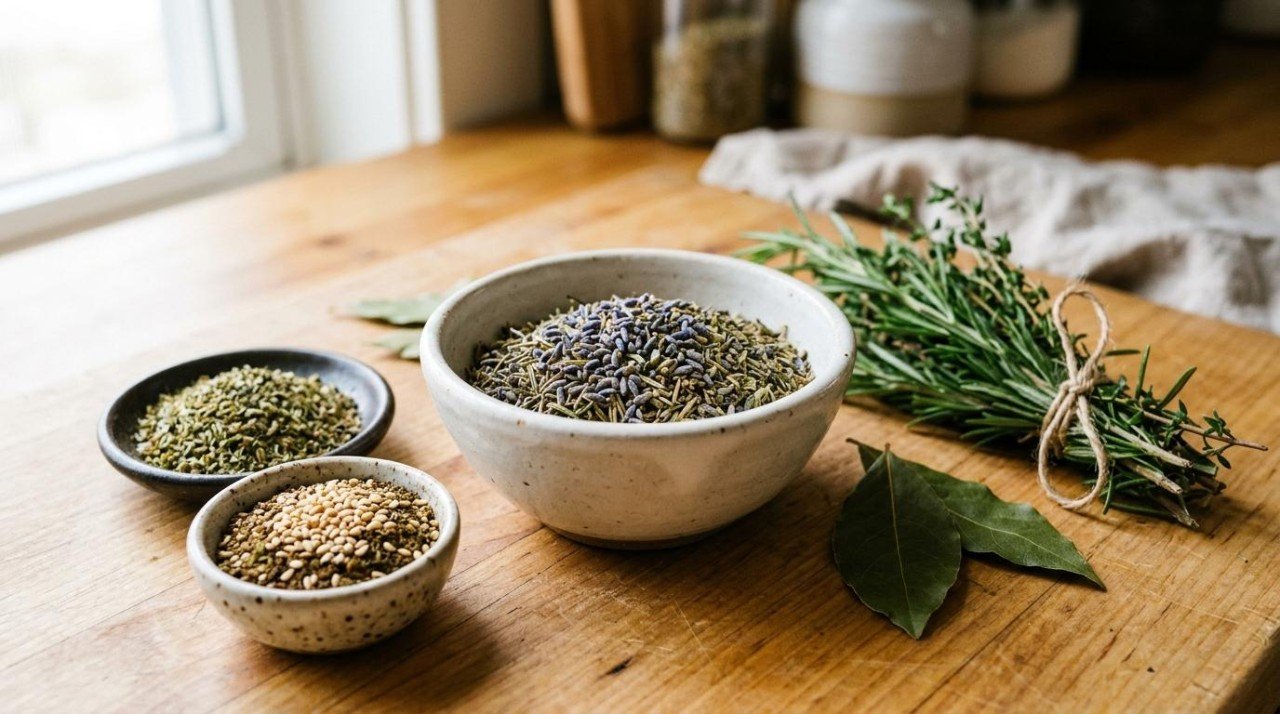
Savory is the one herb many cooks do not have. It tastes like a peppery thyme, and marjoram or more thyme fills its place well. For a whole jar, mix 2 tablespoons thyme, 1 1/2 tablespoons each of savory (or marjoram) and oregano, and 1 tablespoon crushed rosemary. That makes about 6 tablespoons. If you want the American-style floral note, add 1/2 teaspoon dried culinary lavender to the jar, and no more. The Spice House suggests leaving lavender out or using a very small pinch of lemon zest for brightness if you do not have it. Dried herbs fade over months, so if your jars are old, use a little more and taste.
Italian Seasoning
- Swap: 1 teaspoon herbes de Provence → 1 teaspoon Italian seasoning, plus a pinch of dried thyme if you have it
- Best for: Roast chicken, roasted vegetables, potatoes, white bean soups, focaccia
- Skip it for: Recipes where the floral lavender note is the point, like lavender-honey roast chicken or herbed shortbread
Italian seasoning is the closest blend you are likely to find at any grocery store. Both blends share thyme, rosemary, oregano and marjoram, and some Italian blends contain savory too. The main difference, as Tasting Table explains, is that Italian blends "are more oregano- and basil-forward," while herbes de Provence often includes lavender. In a roast or a stew, most people will not notice the swap.
The extra basil makes Italian seasoning taste slightly sweeter and more like pizza sauce. A pinch of thyme pulls it back toward Provence. If you are curious how the two blends compare from the other direction, our Italian seasoning substitutes guide includes a homemade version you can use for both.
Dried Thyme + Rosemary
- Swap: 1 teaspoon herbes de Provence → 3/4 teaspoon dried thyme + 1/4 teaspoon dried rosemary, crushed
- Best for: Roast chicken, lamb, pork tenderloin, roasted potatoes, root vegetables
- Skip it for: Delicate fish and vinaigrettes, where rosemary can taste piney and harsh
If you only have two jars, these are the two to have. Thyme is the backbone of most herbes de Provence, and rosemary adds the resinous, piney note that makes it taste Mediterranean. Together they are a classic pairing for roast meat and potatoes, which is exactly where herbes de Provence is used most.
Keep the rosemary small. A quarter of the amount is enough to be noticeable without taking over. If you have a pinch of oregano or marjoram, add it for a rounder flavor. Our rosemary substitutes guide covers what to do if rosemary is the herb you are missing.
Dried Thyme Alone
- Swap: 1 teaspoon herbes de Provence → 3/4 to 1 teaspoon dried thyme. Taste near the end and add more if needed.
- Best for: Chicken, fish, beans, lentils, soups, stews, roasted vegetables, egg dishes
- Skip it for: Not much. It is a little flat on its own, but it rarely clashes with anything.
Thyme is the most useful single herb you can grab. It is earthy, savory and mild enough to use at nearly full strength, and it plays well with everything herbes de Provence touches. You will lose some of the complexity, but the dish will taste finished.
Dried savory or marjoram also work alone at the same ratio. Savory is the closest in flavor, with thyme-like warmth and a peppery edge, and it is especially good in bean dishes. Marjoram is softer and sweeter. If you have both thyme and one of these, use them half and half.
Dried Oregano + Marjoram
- Swap: 1 teaspoon herbes de Provence → 1/2 teaspoon dried oregano + 1/2 teaspoon dried marjoram (or 3/4 teaspoon oregano alone)
- Best for: Ratatouille, roasted tomatoes, eggplant, zucchini, grilled vegetables, vinaigrettes
- Skip it for: Roast lamb and pork, where you miss the thyme and rosemary more
Oregano is one of the four herbs in the official French blend, and marjoram is its gentler relative. Together they make a good stand-in for the vegetable-heavy dishes of Provence, like ratatouille and stuffed tomatoes, and for anything with tomatoes, garlic and olive oil.
Dried oregano is strong, so if you only have oregano, start with three-quarters of the amount. A small pinch of thyme makes this pair taste much closer to the real blend.
Fresh Herbs
- Swap: 1 teaspoon herbes de Provence → 1 tablespoon chopped fresh herbs: about 1 1/2 teaspoons thyme leaves, 1 teaspoon oregano or marjoram and 1/2 teaspoon finely chopped rosemary
- Best for: Vinaigrettes, herbed goat cheese, marinades, grilled fish, roasted vegetables, finishing a dish
- Skip it for: Dry rubs and spice mixes, where the moisture in fresh herbs makes clumps
Fresh herbs have more water than dried, so you need more of them. University of Illinois Extension gives the standard rule: use three times as much fresh as dried, a 3:1 ratio, so 1 tablespoon of fresh for each teaspoon of dried. Fresh herbs taste brighter and greener than the dried blend, which makes them an upgrade in raw or quick dishes.
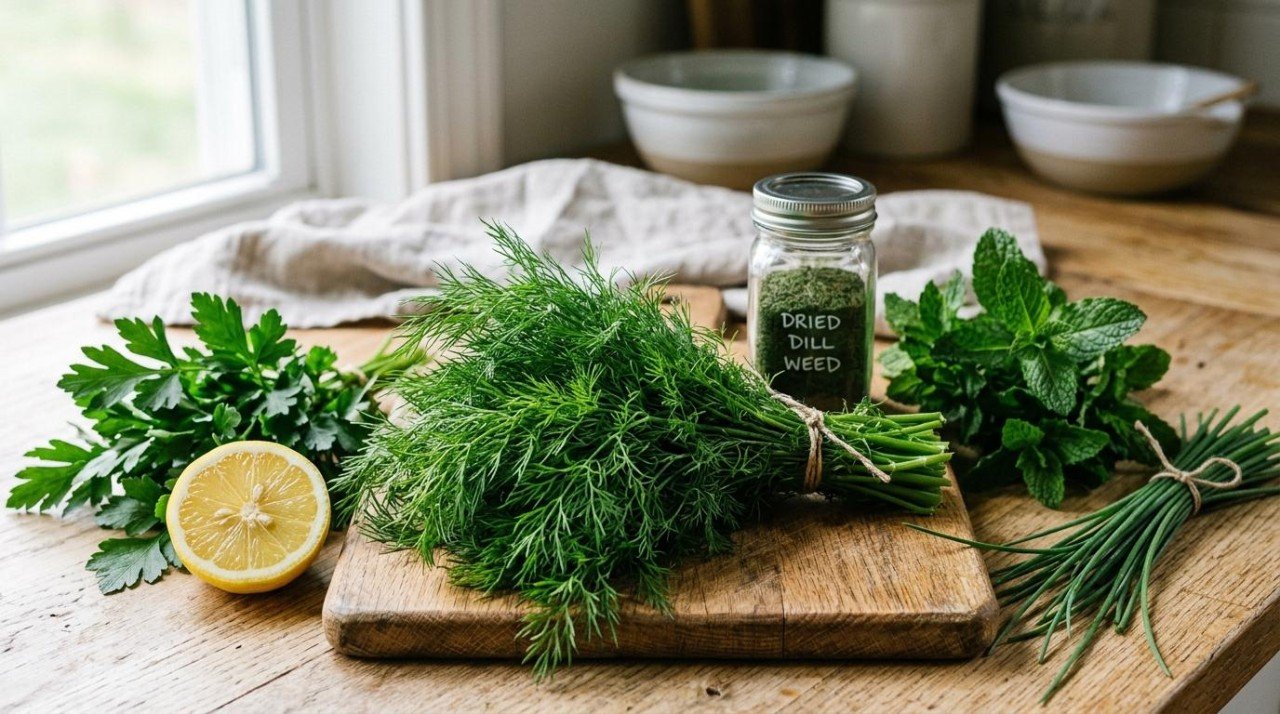
The herbs in herbes de Provence are all sturdy, woody herbs, so fresh versions hold up well to cooking. Strip thyme leaves by running your fingers down the stem against the direction of growth, and chop rosemary very finely. For a roast, a few whole sprigs tucked under the chicken or around the potatoes work just as well and are easy to remove. If you have a bunch going limp in the fridge, here is how to stop letting fresh herbs die in the fridge.
Take the Guesswork Out of Eating Well
Eat Well Planner helps you organize your favorite recipes, plan balanced meals, and automatically generate shopping lists — all in one place. Whether you're tracking macros, managing dietary restrictions, or just trying to stop asking "what's for dinner?", we've got you covered.
Our AI-powered tools can adapt any recipe to your dietary needs, help you discover new meals you'll love, and even log your nutrition effortlessly. It's meal planning made simple.
Start Organizing Your Meals — FreeThyme + Bay Leaf
- Swap: 1 teaspoon herbes de Provence → 3/4 teaspoon dried thyme + 1 bay leaf, simmered with the dish and removed before serving
- Best for: Beef stew, daube, braised chicken, white bean soup, lentils, pot roast
- Skip it for: Quick dishes, roasts and dressings; bay leaf needs long, gentle cooking to give up its flavor
This is essentially a simple bouquet garni, the classic French bundle of robust herbs used in long-cooked dishes. In a stew that simmers for an hour or more, herbes de Provence mostly fades into a savory, herbal background anyway, and thyme and bay give you that same background very well.
If you have fresh thyme, tie 4 or 5 sprigs together with the bay leaf so you can fish them out at the end. Add a small strip of orange zest for a Provençal touch in beef or lamb stews. Our healthier beef stew is a good place to try it.
Poultry Seasoning
- Swap: 1 teaspoon herbes de Provence → 3/4 teaspoon poultry seasoning, plus a pinch of rosemary or oregano if you have it
- Best for: Roast chicken and turkey, pork chops, stuffing, chicken soup, roasted root vegetables
- Skip it for: Fish, ratatouille and vinaigrettes, where sage tastes out of place
Poultry seasoning is usually built on sage and thyme, with marjoram, rosemary, black pepper and sometimes nutmeg. That is a lot of overlap with herbes de Provence, and some American herbes de Provence jars include sage too. The difference is that sage leads, so the dish will taste more like Thanksgiving than southern France. On a roast chicken or a tray of root vegetables, that is a perfectly good trade.
Use a little less than the recipe calls for, since sage turns bitter in large amounts. Our poultry seasoning substitutes guide breaks down what is in the blend if you want to adjust it.
Za'atar
- Swap: 1 teaspoon herbes de Provence → 1 teaspoon za'atar, and cut the salt slightly if the blend contains salt
- Best for: Roasted vegetables, chickpeas, chicken, flatbread and focaccia, olive oil for dipping, eggs
- Skip it for: Stews, braises and tomato sauces, where the sesame seeds and tang feel out of place
Za'atar is a Middle Eastern blend of thyme or oregano (or the wild herb za'atar itself) with tangy sumac and toasted sesame seeds. The herb side is close to herbes de Provence, and the sumac adds a lemony note that works beautifully on roasted vegetables and chicken. The dish will taste a little different, but in a good way.
It also makes a great topping for bread dough before baking, in place of herbes de Provence on focaccia or fougasse. Check the label: many za'atar blends contain salt.
What About the Health Side?
Herbes de Provence is used by the teaspoon, so swapping it does not change a dish's nutrition much. Two points are still worth knowing.
- Plain herbs are salt-free; some blends are not. Herbes de Provence, Italian seasoning and single dried herbs have almost no sodium. Za'atar, Greek seasoning and many "herb and garlic" mixes often include salt. If you swap in a blend, check the label and taste before adding the recipe's salt.
- Herbs help you use less salt. A well-herbed dish tastes complete with less salt. In a 20-week randomized trial summarized by Harvard's Nutrition Source, 40 adults coached to cook with spices and herbs instead of salt ended up excreting about 957 mg less sodium per day than a control group. It was a small study, but it is a good reason to be generous with herbs on roasted vegetables and chicken.
Each different herb also counts toward the "30 plants a week" idea from gut health research. A pinch of dried thyme is a small amount, but it is an easy way to add variety; our post on simple ways to sneak more plants into any meal has more ideas. For the bigger health claims made about individual herbs, the evidence at kitchen quantities is thinner than social media suggests, and Is Your Spice Rack a Medicine Cabinet? walks through what holds up.
What Not to Use
- Fines herbes: The name sounds similar, and both are French, but they are opposites. Fines herbes are delicate fresh herbs (parsley, chives, tarragon and chervil) meant for eggs, fish and dishes that cook briefly. They do not have the woody, savory flavor of herbes de Provence and fade in a roast or stew. Our chives substitutes guide covers where those soft herbs do belong.
- Lots of lavender: If you add lavender to a homemade blend, keep it to a small pinch. Dried lavender is about three times as strong as fresh, and too much makes food taste like soap.
- Garden or craft-store lavender: Use only lavender sold for cooking. Culinary lavender is English lavender (Lavandula angustifolia), which has a gentler aroma; other types, especially lavandin, taste strongly soapy, and decorative lavender is not grown or handled as food.
- Dried rosemary at full strength: Measured 1:1, it will overpower the dish. Use about a quarter of the amount and mix it with thyme.
- Ground herbs measured like leaves: Ground thyme or sage packs more densely than dried leaves. If you only have ground herbs, use about half the amount.
Which Herbes de Provence Substitute Should You Use?
If you have thyme, rosemary and oregano, mix the homemade blend; it takes two minutes and it is closer to the French original than most jars. If you need a single store-bought swap, Italian seasoning works 1:1 in nearly every roast, stew and vegetable dish. For roast chicken and potatoes, thyme with a little rosemary is all you need. For a long-simmered stew, thyme and a bay leaf do the job. For vinaigrettes and herbed goat cheese, fresh herbs are an upgrade.
If you are not sure which option fits the recipe on your counter, ask Eat Well Planner's AI recipe chat something like "I'm out of herbes de Provence, what should I use in this?" It answers with your actual recipe in context, including the other herbs and salt already in it. And if you want to try a swap before committing, the Recipe Playground lets you change ingredients and see what happens to the nutrition score, so you can test whether loading up a roast with extra vegetables and herbs, and a little less salt, actually moves the needle. For more on making roasted vegetables taste great, try the roasting method that converts vegetable haters.