The curry base is sizzling, the recipe says "2 teaspoons ground coriander," and the jar is empty. Ground coriander is easy to underestimate because it rarely tastes loud. It is the warm, lightly citrusy, almost floral note under curries, dals, chili, tagines, spiced sausages and even some cookies, and when it is missing the dish tastes flatter and a little heavier.
The good news is that coriander plays well with others, so several spices you probably own can cover for it. The catch is that the right pick depends on the dish: what rescues a curry is not what rescues a batch of spice cookies or homemade sausage. Every substitute below has a measured ratio plus a note on where it works and where it does not.
All ratios assume the recipe calls for ground coriander (the dried seed). If you are actually out of the fresh green herb, you want our cilantro substitutes guide instead. More on that naming mix-up just below.
The Quick List
- Whole coriander seeds — the best fix of all if you have them, just toast and grind
- Ground cumin — the most common swap for curries, chili and Middle Eastern dishes, at half the amount
- Coriander-cumin powder (dhana jeera) — a 1:1 swap for Indian cooking, already mostly coriander
- Garam masala — strong pick for Indian dishes, stirred in near the end
- Curry powder — easy fix for curries, dals and lentil soups
- Caraway — best for sausages, rye bread, cabbage and European stews
- Fennel seed — good in sausages, tomato sauces and fish dishes
- Cardamom — the best swap for baking, used sparingly
- Lemon or orange zest — brings back coriander's citrus note in baking, dressings and marinades
- Cilantro stems — for fresh dishes like salsa, chutney and curry pastes only
- Mustard seed + dill seed — for pickles and brines that call for whole coriander
Coriander vs. Cilantro: Which One Is Your Recipe Asking For?
Coriander and cilantro come from the same plant, Coriandrum sativum. What changes is which part you use and which country your recipe comes from.
- In the US and Canada: "cilantro" means the fresh leaves and stems, and "coriander" means the dried seeds, whole or ground.
- In the UK, Australia, India and much of the world: "coriander" usually means the fresh leaves too. British recipes often say "fresh coriander" or "a handful of coriander" for the herb, and "coriander seeds" or "ground coriander" for the spice.
So if a British or Australian recipe calls for "chopped coriander" or "coriander leaves," it means cilantro, and none of the substitutes below apply. If it says "ground coriander," it always means the spice. When a recipe gives the amount in teaspoons, it almost certainly means the seed; when it gives a handful or a bunch, it means the herb.
The two really do taste different, too. Fresh leaves get their sharp, green aroma from a group of aldehydes, compounds that a 2006 study of coriander plants found to be "barely detectable" in the fruits (the seeds). The seeds are dominated instead by linalool, which the researchers describe as having "a sweet fresh scent, much like the flowers." That is also why people who think cilantro tastes like soap are often perfectly happy with ground coriander. A genetic study of more than 14,000 people linked the soapy perception to a variant near smell receptor genes, including one that binds several of cilantro's aldehydes, the same compounds the seeds barely contain.
Whole vs. Ground Coriander
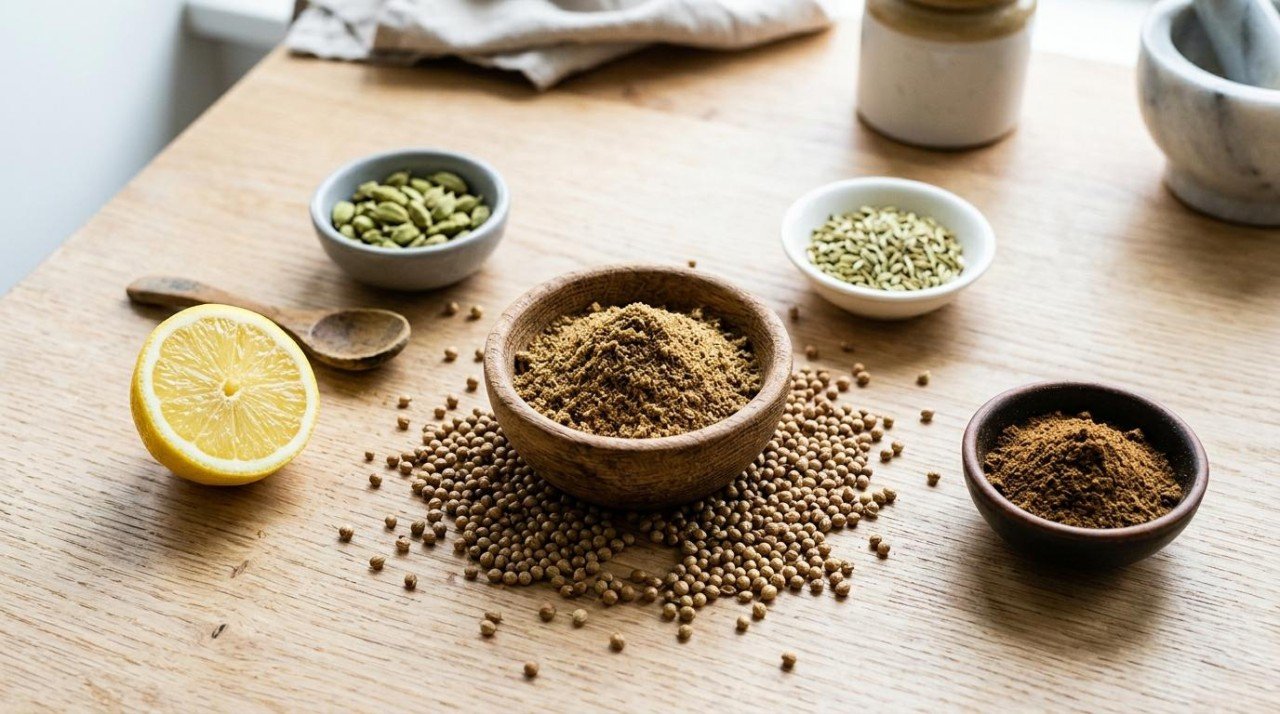
Before reaching for a different spice, check for whole coriander seeds. They are a common leftover from pickling or a curry recipe, and they are the best possible substitute because they are the same thing.
- Swap: 1 teaspoon ground coriander → 1 1/4 teaspoons whole coriander seeds, toasted and ground
- Reverse swap: 1 teaspoon whole seeds → about 3/4 teaspoon ground coriander
- Best for: Everything that calls for ground coriander
Coriander seeds are light, papery and easy to crush, so you do not need a spice grinder. Toast them in a dry skillet over medium heat for 1 to 2 minutes, shaking the pan, until fragrant and a shade darker. Let them cool, then grind in a mortar and pestle, crush them under the flat of a heavy knife, or roll them in a zip-top bag with a rolling pin. Freshly ground coriander is noticeably brighter than the pre-ground kind, so taste before adding the full amount.
Published whole-to-ground conversions vary a bit because grind size changes how much fits in a spoon, so these numbers lean conservative. Coriander is forgiving, but it is still easier to add a pinch than to take one out.
Match the Substitute to the Dish
- Curries, dals, chana masala, biryani — dhana jeera, garam masala, curry powder, ground cumin
- Chili, taco meat, Mexican rice, black beans — ground cumin, a little lemon zest at the end
- Tagines, kebabs, falafel, hummus, Middle Eastern rubs — ground cumin, a pinch of caraway or cardamom
- Sausages, meatballs, pastrami crusts, rye bread, sauerkraut — caraway, fennel seed, extra black pepper
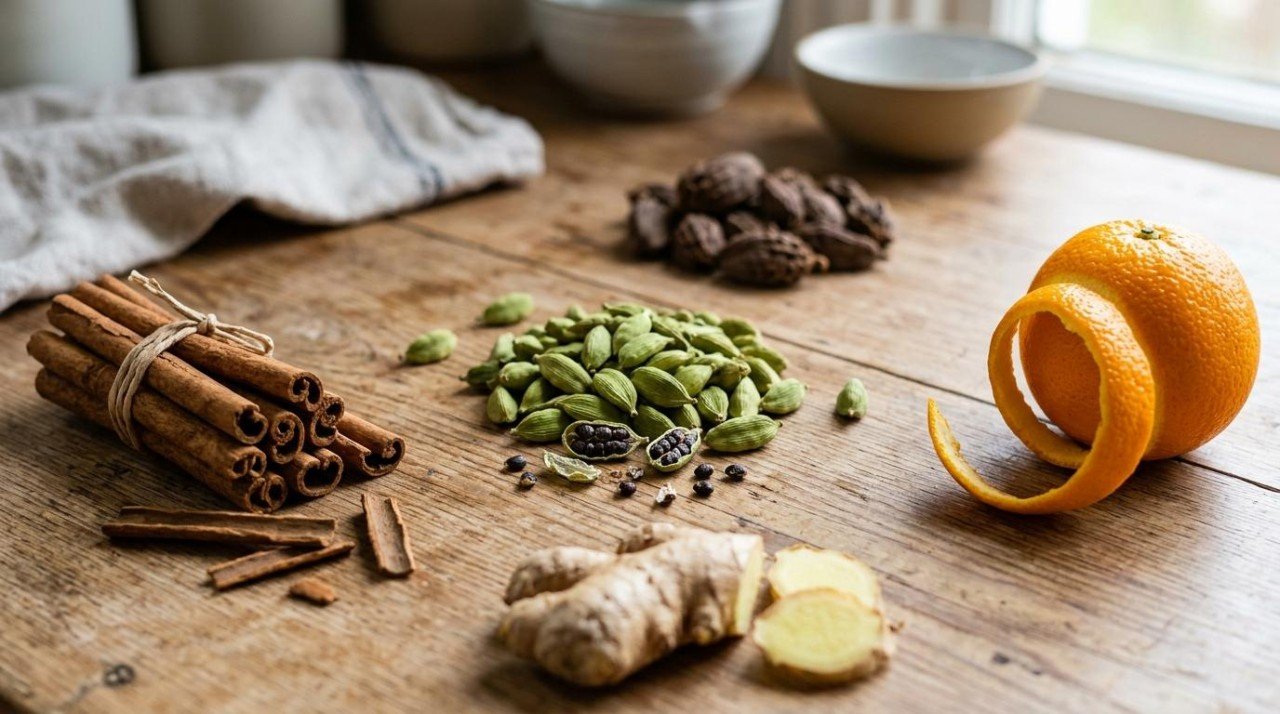
- Spice cookies, quick breads, apple and pear desserts — cardamom, orange or lemon zest
- Salsa, chutney, Thai curry paste, green marinades — cilantro stems
- Pickles and brines — mustard seed + dill seed
Ground Cumin
- Swap: 1 teaspoon ground coriander → 1/2 teaspoon ground cumin, then taste and add up to 1/4 teaspoon more
- Best for: Curries, chili, taco meat, lentil soups, hummus, falafel, roasted vegetables
- Skip it for: Baking and anything delicate, where cumin's earthy, musky flavor will stand out
Cumin and coriander are the classic spice pair. They show up together in Indian, Mexican, Middle Eastern and North African cooking, so if your recipe calls for coriander, it very likely calls for cumin too. Swapping one for the other keeps the dish in the right flavor family, but the balance shifts: cumin is deeper, earthier and stronger, while coriander is lighter and more citrusy. That is why you start with half as much.
If the recipe already includes cumin, do not just double it. Add the extra half teaspoon, then brighten the finished dish with a squeeze of lemon or lime, which puts back some of the citrus lift coriander would have brought. Our cumin substitutes guide covers the reverse problem, since it is common to run out of both at once.
Coriander-Cumin Powder (Dhana Jeera)
- Swap: 1 teaspoon ground coriander → 1 teaspoon dhana jeera; if the recipe also calls for cumin, reduce the cumin by about a third
- Best for: Indian curries, dals, vegetable stir-fries (sabzi), spiced rice
- Skip it for: Baking and sausage blends
Dhana jeera, sold in Indian grocery stores and online, is simply ground coriander and cumin mixed together. It is a staple in Gujarati cooking, and home versions are often made with equal weights of the two spices. Because coriander seeds are much lighter and fluffier than cumin, that works out to roughly twice as much coriander as cumin by volume, so the blend tastes mostly of coriander with cumin's warmth behind it. Commercial versions vary, so taste yours.
If your recipe calls for both coriander and cumin, which many Indian recipes do, dhana jeera can replace the pair at once. Just account for the cumin already in it so the dish does not end up cumin-heavy.
Garam Masala
- Swap: 1 teaspoon ground coriander → 1/2 teaspoon garam masala, stirred in during the last few minutes of cooking
- Best for: Indian curries, dals, chana masala, spiced rice, roasted cauliflower
- Skip it for: Tex-Mex, sausages and anything where cinnamon and clove would taste out of place
Most garam masala blends include coriander, along with cumin, black pepper, cardamom, cinnamon and cloves. That makes it a natural fit in Indian dishes, but the sweet, warm spices are more intense than coriander on its own, so use half the amount.
Coriander is usually added early, with the onions or tomatoes, but garam masala is traditionally stirred in near the end to keep its aroma bright. If you are making garam masala do double duty, add it late rather than frying it at the start. If you are out of that too, see our garam masala substitutes.
Curry Powder
- Swap: 1 teaspoon ground coriander → 1/2 teaspoon curry powder, then taste and add up to 1/2 teaspoon more
- Best for: Curries, dals, lentil and chickpea soups, curried chicken or egg salad, roasted vegetables
- Skip it for: Baking, sausages and dishes where turmeric's yellow color does not belong
Coriander is often one of the main ingredients in curry powder, alongside turmeric, cumin, fenugreek and chiles. In a dish that already uses several spices, curry powder fills the gap well. Expect the color to shift golden and the flavor to lean a little more toward "curry" because of the fenugreek and turmeric.
Bloom curry powder in the oil with the onions for about a minute so it loses its raw, dusty edge, and go easy if your blend is a hot one. Our curry powder substitutes guide shows how to build a quick blend if you have the individual spices but no jar.
Caraway
- Swap: 1 teaspoon ground coriander → 1/2 teaspoon ground caraway (or 1 teaspoon coriander seeds → 1/2 teaspoon caraway seeds)
- Best for: Sausages, meatballs, rye bread, sauerkraut, cabbage, potatoes, goulash and other European stews
- Skip it for: Indian curries and baking, where its rye-bread flavor is obvious
Caraway belongs to the same plant family as coriander, and the two are used side by side in Central and Eastern European cooking, especially in sausages and dark rye breads. Caraway is sharper and more pungent, with a faint anise edge, so use half as much.
This is the best pick for the "sausage and charcuterie" side of coriander's job. If you are making homemade sausage, meatballs or a pork rub with ground pork, half the coriander's amount in caraway plus an extra pinch of black pepper keeps the seasoning in the right territory.
Fennel Seed
- Swap: 1 teaspoon ground coriander → 1/2 teaspoon ground fennel seed, then taste
- Best for: Sausages, meatballs, tomato sauces, fish and seafood, roasted vegetables
- Skip it for: Chili, Mexican dishes and baking where a licorice note would be unwelcome
Fennel seed is another relative from the carrot and parsley family. It shares coriander's sweet, aromatic side but adds a clear licorice flavor. In Italian-style sausage or meatballs, that is a welcome note; in a curry, a small amount blends in, but a full teaspoon will start to taste like fennel.
For a sausage or pork seasoning, a mix of 1/4 teaspoon fennel and 1/4 teaspoon caraway per teaspoon of coriander is a balanced middle ground, with neither seed dominating.
Cardamom
- Swap: 1 teaspoon ground coriander → 1/4 teaspoon ground cardamom
- Best for: Spice cookies, gingerbread, quick breads, apple and pear desserts, rice pudding, some Indian curries in tiny amounts
- Skip it for: Chili, tacos and sausages
Coriander turns up more in baking than people expect, especially in European spice cookies and cakes, where it adds a gentle citrusy warmth next to cinnamon and ginger. Cardamom is the best stand-in there: it has the same bright, floral, citrusy quality, but it is far stronger, so a quarter of the amount is plenty.
In a curry, a pinch of cardamom can cover some of coriander's perfume but none of its body, so pair it with cumin or curry powder rather than using it alone. For more on how strong cardamom is, see our cardamom substitutes guide.
Lemon or Orange Zest
- Swap: 1 teaspoon ground coriander → 1/2 teaspoon finely grated lemon or orange zest, plus a pinch of cumin (savory) or cardamom (baking)
- Best for: Baked goods, dressings, marinades, roasted carrots, grain salads, fish
- Skip it for: Long-simmered curries, where the zest's fresh flavor fades
Ground coriander's appeal is largely its citrusy aroma, so zest is a surprisingly good partial substitute. It brings back the brightness, but not the warm, toasty seed flavor, which is why a pinch of another spice helps fill out the gap. Orange zest suits baking and roasted root vegetables; lemon zest suits savory dressings, fish and chicken.
Add zest at the end of cooking or right into the batter. It is also the one swap on this list that adds a little vitamin C instead of just aroma, though in zest-sized amounts the gain is small.
Take the Guesswork Out of Eating Well
Eat Well Planner helps you organize your favorite recipes, plan balanced meals, and automatically generate shopping lists — all in one place. Whether you're tracking macros, managing dietary restrictions, or just trying to stop asking "what's for dinner?", we've got you covered.
Our AI-powered tools can adapt any recipe to your dietary needs, help you discover new meals you'll love, and even log your nutrition effortlessly. It's meal planning made simple.
Start Organizing Your Meals — FreeCilantro Stems (for Fresh Dishes Only)
- Swap: 1 teaspoon ground coriander → 1 to 2 tablespoons finely chopped cilantro stems, plus a little lime or lemon zest
- Best for: Salsa, green chutney, Thai curry paste, chimichurri-style sauces, marinades, fresh grain salads
- Skip it for: Spice rubs, baking, sausages, long-cooked curries, and anyone who thinks cilantro tastes like soap
This is not a flavor match, since the leaves and seeds taste very different. But in fresh, uncooked dishes where ground coriander's job is to add an aromatic, slightly citrusy lift, cilantro stems do a similar job in a different way. The stems carry more flavor than the leaves and hold up better when blended into a paste or marinade. Traditional Thai curry pastes use both coriander root and coriander seed, which is a good sign the two can share the work.
Stick to dishes that are served fresh or cooked briefly. In a long simmer, fresh cilantro's flavor fades and you get none of the seed's warmth in return.
Mustard Seed + Dill Seed (for Pickling)
- Swap: 1 teaspoon whole coriander seeds → 1/2 teaspoon yellow mustard seeds + 1/2 teaspoon dill seeds
- Best for: Pickles, quick-pickled vegetables, pickling spice, corned beef brine
- Skip it for: Ground-spice dishes like curries and baking
Whole coriander seeds are a standard part of pickling spice, where they add a mild citrusy note alongside mustard seed, dill, peppercorns and bay. If you are out, simply increasing the mustard and dill seeds keeps the brine tasting like classic pickles. Store-bought pickling spice also works 1:1, since it usually contains coriander already.
For a pastrami crust, where cracked coriander and black pepper are the whole show, use extra cracked black pepper plus about half the coriander's amount in crushed caraway or fennel seed.
What About the Health Side?
Ground coriander is used in small amounts, so swapping it for another spice will not change a dish's nutrition much. A few honest numbers:
- Fiber and minerals: Coriander seed is roughly 42% fiber by weight, according to USDA FoodData Central data for coriander seed. Since a teaspoon of ground coriander weighs under 2 grams, that is about 0.75 g of fiber per teaspoon, plus small amounts of calcium, magnesium and iron. In a curry that uses a tablespoon or two, it adds up to a modest bonus, not a meaningful source.
- Sodium: Pure coriander, cumin, caraway, fennel and cardamom are essentially sodium-free. Blends are where salt can sneak in, so if you substitute curry powder or garam masala, check the label for added salt.
The bigger benefit is what a well-stocked spice cabinet lets you leave out. In the SPICE trial summarized by Harvard's Nutrition Source, adults who learned to cook with spices and herbs in place of salt ended up eating about 957 mg less sodium per day than a control group after 20 weeks. It was a small study of 40 people, but the principle holds: spices like coriander make food taste full and layered without leaning on salt. For a realistic look at which spice health claims hold up and which do not, see Is Your Spice Rack a Medicine Cabinet?
What Not to Use
- Dried cilantro leaves: They have lost most of the fresh herb's flavor and never had the seed's warmth. Neither job gets done.
- Turmeric on its own: It colors a curry but tastes bitter and earthy, with none of coriander's citrus or sweetness.
- Cinnamon, cloves or nutmeg in savory dishes: They are warm, but at coriander quantities they will make a curry or chili taste like dessert.
- Chili powder in non-Mexican dishes: It brings cumin, garlic and heat, and it can turn a delicate curry into something that tastes like taco night.
- Celery seed: Another relative from the same plant family, but its flavor is grassy and bitter, and a full teaspoon will overpower most dishes.
Which Ground Coriander Substitute Should You Use?
If you have whole coriander seeds, toast and grind them; nothing else comes close. For curries and dals, use dhana jeera, garam masala, curry powder or half the amount of cumin. For chili and Middle Eastern dishes, use cumin with a squeeze of citrus. For sausages and rye bread, use caraway or fennel. For baking, use a little cardamom with some orange zest. When in doubt, 1/2 teaspoon of cumin plus a squeeze of lemon per teaspoon of coriander is a safe starting point in most savory dishes.
If you are not sure which one fits the dish in front of you, Eat Well Planner's AI recipe chat can answer with your actual recipe in context. Ask "I'm out of ground coriander, what should I use here?" and it will look at the other spices already in the recipe before suggesting a swap, so you do not end up doubling the cumin in a dish that already has plenty. And if you would rather have a version of the recipe rewritten around what is in your cabinet, Recipe Variations can do that in one step.