The gingerbread dough is half mixed, the recipe says "1/2 teaspoon ground cloves," and the jar is empty. Or the ham is in the oven, the glaze calls for a pinch of cloves, and there is nothing on the spice rack but cinnamon and an old jar of allspice. Cloves are rarely more than a fraction of a teaspoon in any recipe, but they carry a lot of weight: they are the deep, sweet, slightly numbing note that makes gingerbread taste like gingerbread and mulled cider taste like the holidays.
The good news is that cloves are easy to replace, and the closest substitute is a spice most kitchens already have. The thing to watch is strength. Cloves are one of the most intense spices in the cabinet, and most substitutes are milder, so the usual mistake is not using too little of the swap. It is using too much of a strong one, or doubling up on cloves that are already hiding in a blend.
Because recipes almost always call for cloves in small amounts, every ratio below is given per 1/4 teaspoon of ground cloves. Scale it up or down to match your recipe. If you have whole cloves, you may not need a substitute at all; see the section just below the quick list.
The Quick List
- Allspice — the closest single-spice match, works in baking, glazes and drinks
- Pumpkin pie spice — the easy fix for pies, muffins, spice cakes and quick breads
- Nutmeg (or mace) — warm and sweet, best in baking, custards and eggnog
- Cinnamon + a pinch of black pepper — the one everyone has, good in sweet recipes
- Apple pie spice — fruit desserts, crisps and baked oatmeal
- Gingerbread spice, chai masala or mulling spices — blends that often already contain cloves
- Chinese five spice — ham glazes, braised pork and savory roasts
- Garam masala — curries, spiced rice, lentils and stews
- Cardamom — chai, spiced coffee and sweet breads
Whole Cloves vs. Ground Cloves
If the recipe calls for ground cloves and you have a jar of whole cloves, grind them. That beats every substitute on this list. A spice grinder or a clean coffee grinder does it in about 30 seconds; a mortar and pestle works too, with some patience. Whole cloves are woody, so sift the powder through a fine strainer to catch the tough bits.
- Recipe calls for ground, you have whole: Clove sizes vary a lot, so counting cloves is an unreliable way to measure. Grind a little more than you need, then measure the powder with a measuring spoon. Freshly ground cloves are noticeably stronger than most jars of pre-ground, so start with about three-quarters of the amount and taste.
- Recipe calls for whole cloves to infuse or stud, you have ground: Ground cloves release all of their flavor at once instead of slowly, and they will cloud a clear drink. For a pot of mulled cider or wine, start with about 1/8 teaspoon, taste after 10 minutes, and add more only if needed. For a studded ham, skip the studding and stir a pinch of ground cloves or allspice into the glaze instead.
- Old jar of ground cloves: Smell it before you use it. If it barely smells like anything, use up to a third more, or reach for a substitute that is fresher.
Match the Substitute to the Dish
- Gingerbread, spice cakes, molasses cookies, fruitcake — allspice, pumpkin pie spice, gingerbread spice, nutmeg plus cinnamon
- Pumpkin, sweet potato and apple pies, muffins and quick breads — pumpkin pie spice, allspice, apple pie spice, cinnamon plus a pinch of pepper
- Mulled wine, mulled cider, wassail, chai — allspice (whole berries if you have them), mulling spices, chai masala, cardamom
- Ham glazes, pork roasts, braised meats — allspice, Chinese five spice, a pinch of nutmeg
- Curries, biryani, pilaf, lentils, stews — garam masala, allspice, a cinnamon stick
- Barbecue sauce, chili, Cincinnati chili, pickling — allspice, a pinch of Chinese five spice
Allspice
- Swap: 1/4 teaspoon ground cloves → 1/4 teaspoon ground allspice
- Best for: Everything cloves go in: gingerbread, spice cakes, pies, ham glazes, mulled drinks, barbecue sauce, chili, curries
- Skip it for: Recipes that already call for a lot of allspice, where you would just be adding more of the same
Allspice is the clear first choice, and the reason is chemistry, not just flavor. It is the dried berry of a tree in the same plant family as cloves, and its main aroma compound is eugenol, the same compound that dominates clove oil. The reference site Gernot Katzer's Spice Pages describes allspice as "powerfully aromatic, like cloves with a hint of cinnamon and nutmeg," which is exactly what you want from a clove substitute.
Allspice is a bit softer and rounder than cloves, so a straight 1:1 swap rarely overshoots. If the dish depends on a strong clove note, like a gingerbread or a mulled wine, you can go up to a heaping 1/4 teaspoon. For drinks, whole allspice berries are a perfect stand-in for whole cloves: use them the same way and strain them out. And if the recipe also calls for allspice, use a different substitute from this list so the dish does not tip into one-note territory.
Pumpkin Pie Spice
- Swap: 1/4 teaspoon ground cloves → 1/4 teaspoon pumpkin pie spice, up to 1/2 teaspoon in recipes with few other spices
- Best for: Pumpkin and sweet potato pie, spice cakes, muffins, quick breads, oatmeal, spiced lattes
- Skip it for: Savory glazes, curries and barbecue sauce, where the cinnamon and ginger read as dessert
Pumpkin pie spice is mostly cinnamon, with ginger, nutmeg and allspice, and homemade versions often include cloves too. Here is a detail that surprises people: the best-known store blend has no cloves in it at all. McCormick's own ingredient list reads "Cinnamon, Ginger, Nutmeg, All Spice." The allspice is what gives the blend its clove-like warmth, which is why it works so well here.
Since the blend is milder than cloves, you have more room to play. In a pie or cake that already has its own cinnamon and ginger, 1:1 is plenty. In a recipe where cloves are the only spice, you can double it, but expect the result to taste more like cinnamon. If you are also short on the pumpkin, our pumpkin puree substitutes guide covers that too.
Nutmeg (or Mace)
- Swap: 1/4 teaspoon ground cloves → 1/4 teaspoon ground nutmeg or ground mace
- Best for: Spice cakes, cookies, custards, eggnog, pies, sweet potatoes, squash
- Skip it for: Recipes that already call for nutmeg, and dishes where cloves are the star, like a clove-studded ham
Nutmeg shares cloves' warm, sweet character but is gentler and woodier, without the sharp, numbing edge. In baking, that softness is often welcome. A spice cake made with nutmeg in place of cloves tastes a little less intense but still balanced and wintery. Mace, the lacy covering of the nutmeg seed, works the same way and is slightly brighter.
Nutmeg on its own lacks cloves' depth, so it does best when the recipe also has cinnamon or ginger. If cloves are the only spice in the recipe, combine half nutmeg and half cinnamon for a fuller flavor. And if nutmeg is also missing from your rack, our nutmeg substitutes guide picks up from there.
Cinnamon + a Pinch of Black Pepper
- Swap: 1/4 teaspoon ground cloves → 1/4 teaspoon ground cinnamon + a small pinch of finely ground black pepper
- Best for: Cookies, muffins, quick breads, pies, oatmeal, baked apples, French toast
- Skip it for: Ham glazes and savory dishes where cinnamon would push the flavor toward dessert
Cinnamon is the substitute nearly every kitchen has. On its own it is sweeter and less pungent than cloves, and the result tastes like a cinnamon cookie rather than a spice cookie. A tiny pinch of black pepper adds back some of the bite that cloves bring, so the swap tastes less flat. Keep the pepper very small: you want warmth, not heat.
If the recipe already calls for a lot of cinnamon, adding more makes the dish one-dimensional. In that case, use allspice or nutmeg instead, or simply bump up the ginger slightly if there is ginger in the recipe.
Apple Pie Spice
- Swap: 1/4 teaspoon ground cloves → 1/4 teaspoon apple pie spice
- Best for: Apple and pear desserts, crisps, cobblers, baked oatmeal, muffins
- Skip it for: Gingerbread and dark spice cakes, where it lacks depth, and all savory dishes
Apple pie spice is cinnamon-heavy, usually with nutmeg and allspice, and some versions include cloves. It is milder than pumpkin pie spice and much milder than cloves, so a 1:1 swap is safe. It shines in fruit desserts, where cloves' job is to add warmth rather than a strong, distinctive note.
In gingerbread or a molasses cookie, apple pie spice will taste noticeably lighter. That can be fine, but if you want the deep, dark character those recipes are known for, allspice is the better pick.
Gingerbread Spice, Chai Masala or Mulling Spices
- Swap: Check the label. If the blend contains cloves, 1/4 teaspoon ground cloves → 1/4 to 1/2 teaspoon of the blend; if it does not, treat it like pumpkin pie spice
- Best for: Gingerbread, molasses cookies, chai, spiced lattes, mulled wine and cider
- Skip it for: Recipes where the blend's other spices, like cardamom in chai masala, would clash
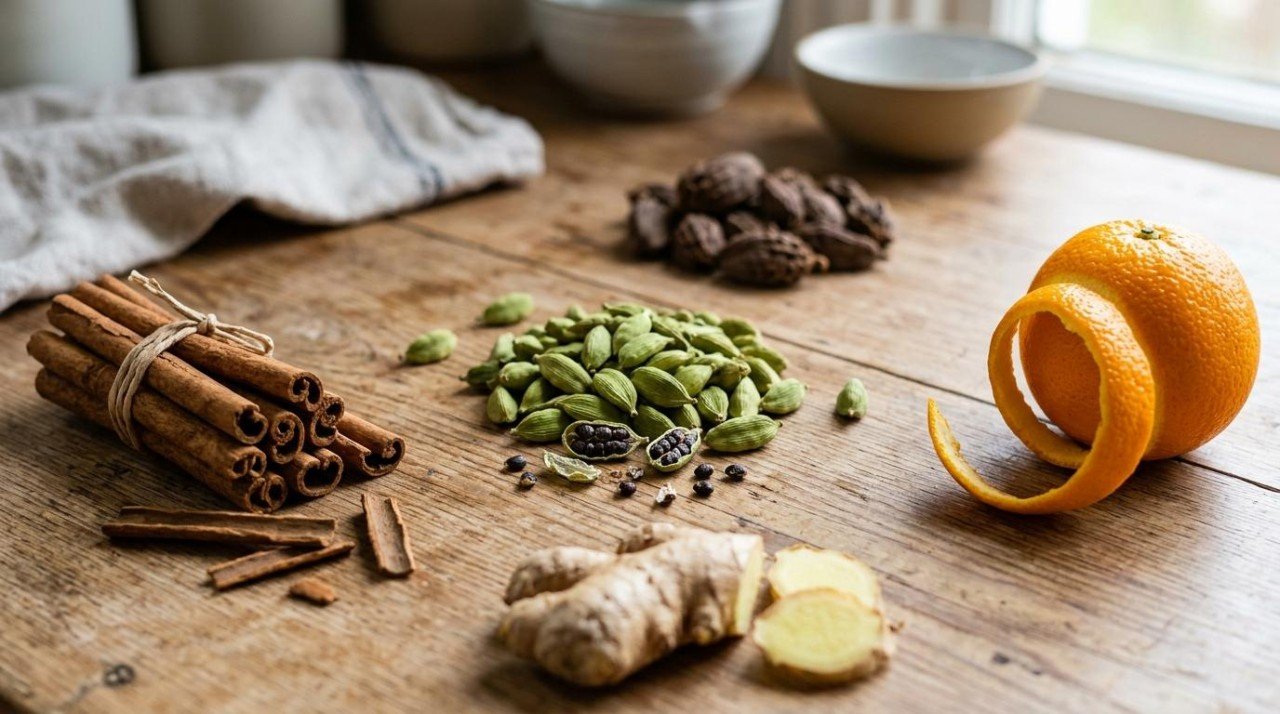
Many spice blends sold for the holidays already contain cloves, which makes them some of the closest substitutes you can find. Gingerbread spice blends commonly combine ginger, cinnamon, cloves and nutmeg. Chai masala typically adds cardamom, cloves, ginger, cinnamon and black pepper. Mulling spice mixes are usually whole or cracked cinnamon, cloves, allspice and dried orange peel. Read the label, though, because recipes vary by brand.
Whole mulling spices are perfect for drinks: they infuse slowly and strain out cleanly. In baking, use a ground blend, and adjust the other spices in the recipe to account for what the blend already contains. If the recipe calls for cinnamon and ginger in addition to cloves, and your blend has all three, cut back on the cinnamon and ginger a little.
Chinese Five Spice
- Swap: 1/4 teaspoon ground cloves → 1/8 to 1/4 teaspoon Chinese five spice
- Best for: Ham and pork glazes, braised pork, roast duck, barbecue sauce, stir-fry sauces
- Skip it for: Most desserts and mulled drinks, where the star anise reads as licorice
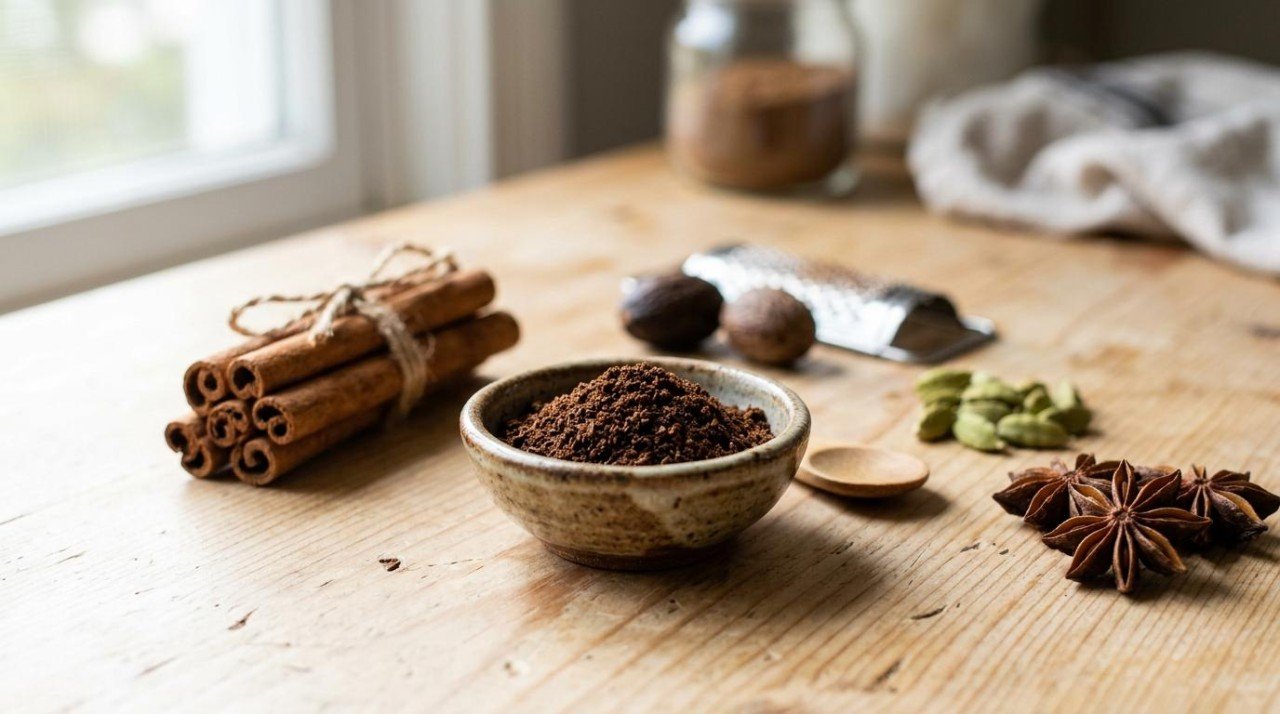
Chinese five spice is traditionally made from star anise, cloves, cinnamon (usually cassia), Sichuan pepper and fennel seeds, so it already contains cloves. The catch is star anise, which is the loudest voice in most blends and gives it a sweet licorice flavor. In a sticky ham glaze or a pork roast, that is often an upgrade; in a pumpkin pie, it is not.
Start with half the amount in glazes, taste, then add more if you want. A brown sugar and mustard ham glaze with a pinch of five spice is a good example of a substitute that does more than fill a gap. Some commercial blends swap in coriander or skip the cloves, so a quick label check is worth it.
Garam Masala
- Swap: 1/4 teaspoon ground cloves → 1/4 teaspoon garam masala, then taste and add more if needed
- Best for: Curries, biryani, pilaf, lentil soups, dal, spiced rice, savory stews
- Skip it for: Desserts and holiday drinks, where cumin and black pepper are out of place
Cloves are a core ingredient in many garam masala recipes, alongside cinnamon, cardamom, black pepper, cumin and coriander. In a curry or biryani that calls for ground cloves, garam masala slots right in and often tastes better than cloves alone. Rice is a classic place for cloves too; Gernot Katzer's Spice Pages notes that rice is frequently aromatized with a few cloves in many cuisines.
Because blends vary widely, start with the same amount and taste. Add it near the end of cooking to keep its aroma. If garam masala is the thing you are out of, our garam masala substitutes guide covers that.
Cardamom
- Swap: 1/4 teaspoon ground cloves → 1/8 teaspoon ground cardamom
- Best for: Chai, spiced coffee, sweet breads, rice pudding, Scandinavian baking
- Skip it for: Ham glazes, gingerbread and barbecue sauce
Cardamom does not taste like cloves. It is floral, citrusy and slightly eucalyptus-like. But in drinks and sweet breads, where cloves are there to add a fragrant, warm note, cardamom fills the same role, and in chai it is arguably the more important spice anyway.
Cardamom is strong, so start with half the amount. It works best as a supporting player alongside cinnamon and ginger, not as the only warm spice in a dark, heavy recipe. If cardamom is the spice you are missing, see our cardamom substitutes guide.
Ham Glazes and Spiced Drinks: A Closer Look
These two uses trip people up the most, because cloves are often used whole rather than ground.
Ham and pork
- Studded ham with no whole cloves: Skip the studding. Stir 1/8 to 1/4 teaspoon ground allspice into the glaze instead. The ham will look plainer but taste almost the same.
- Glaze that calls for ground cloves: Allspice 1:1 is the best match. Chinese five spice at half the amount is a good alternative if you like a hint of anise.
- Pork roasts and braises: Allspice, five spice or a small pinch of nutmeg all work. Cinnamon alone tends to taste too sweet with pork.
Mulled wine, mulled cider and chai
- Best swap: Whole allspice berries, used the same way as whole cloves. They infuse slowly and strain out easily.
- Next best: A cinnamon stick plus a few slices of fresh ginger or a strip of orange peel. It will be less clove-forward but still tastes festive.
- Using ground spices: Ground spices cloud the drink and can taste gritty. Use small amounts and strain through a coffee filter or fine cloth if clarity matters.
What About the Health Side?
Swapping one warm spice for another will not change the nutrition of a recipe in any meaningful way. A quarter teaspoon of cloves spread across a whole pie or a pot of cider is a tiny amount per serving. A few points are still worth knowing.
- Cloves are surprisingly rich in manganese. According to the USDA data for ground cloves, 100 grams contains about 60 mg of manganese. A full teaspoon (about 2 grams) works out to roughly 1.3 mg, a bit more than half of the 2.3 mg Daily Value. But nobody eats a teaspoon of cloves in one sitting, and the share in a slice of pie is small. At recipe amounts, the swap does not cost you anything meaningful either way.
- Ground spices are essentially salt-free. Allspice, nutmeg, cinnamon and cardamom have negligible sodium. Most spice blends do too, but check the label on anything sold as a seasoning, since some include salt or sugar.
- Warm spices make it easier to cut sugar and salt. Cloves, cinnamon and allspice make food taste sweeter and richer than it is. The same goes for savory dishes and salt. In a 20-week randomized trial summarized by Harvard's Nutrition Source, 40 adults who learned to cook with spices and herbs instead of salt ended up eating about 957 mg less sodium per day than a control group. It was a small study, but the practical point holds.
- Cooking with cloves is safe; clove oil is a different story. Clove oil is a concentrated essential oil that is about 60 to 90 percent eugenol, and the Tennessee Poison Center notes that as little as 5 to 10 ml has caused serious toxicity in small children, including liver damage and seizures. The same source is clear that cloves used as a spice are not toxic. Never use clove oil as a substitute for ground cloves in food, and keep it out of reach of kids.
You will see bold health claims for cloves online, from blood sugar control to liver protection. Most of that research uses concentrated extracts or is done in animals, not the pinch that goes into a cookie. For an honest look at which spice claims hold up, see Is Your Spice Rack a Medicine Cabinet?
A Healthier Use for Your Substitute
If you are reaching for a clove substitute because you are baking, warm spices are one of the easiest ways to make a recipe a little better for you without anyone noticing. A generous hand with allspice, pumpkin pie spice or cinnamon lets you cut back on sugar in muffins, quick breads and baked oatmeal while still tasting sweet and full. Our healthier pumpkin pie makeover leans on the spices to do exactly that, and the same idea works in carrot cake and baked oats.
Holiday drinks are another easy win. Mulled cider made with whole spices and a strip of orange peel needs little or no added sugar, since the apples are already sweet and the spices make it taste richer. For ham, a glaze built on mustard, a little maple or brown sugar and plenty of allspice or five spice gets its flavor from the spices rather than a thick coat of sugar.
Take the Guesswork Out of Eating Well
Eat Well Planner helps you organize your favorite recipes, plan balanced meals, and automatically generate shopping lists — all in one place. Whether you're tracking macros, managing dietary restrictions, or just trying to stop asking "what's for dinner?", we've got you covered.
Our AI-powered tools can adapt any recipe to your dietary needs, help you discover new meals you'll love, and even log your nutrition effortlessly. It's meal planning made simple.
Start Organizing Your Meals — FreeWhat Not to Use
- Clove oil or clove extract: It is far stronger than ground cloves, easy to overdo, and clove oil is toxic in small amounts for children. Stick to the spice.
- More cloves "to be safe": If you find a jar with a few pinches left, use what the recipe says and fill the gap with allspice. Overdoing cloves gives food a bitter, numbing, medicinal taste that is hard to fix.
- Doubling cloves hidden in blends: If you swap in gingerbread spice or chai masala and the recipe also calls for cloves, you may already have plenty. Check the label first.
- Star anise on its own: It is warm but strongly licorice-flavored. In a five-spice blend it works; alone it changes the dish rather than standing in for cloves.
- Garlic cloves: Easy to mix up when skimming an ingredient list. A recipe that says "2 cloves" in an ingredient list with garlic means garlic; a recipe that says "ground cloves" means the spice. They are not interchangeable in either direction.
- Pumpkin pie spice in savory dishes: It works in a ham glaze only if the glaze is already sweet. In curries, chili or barbecue sauce, use allspice, five spice or garam masala instead.
Which Clove Substitute Should You Use?
If you have allspice, use it 1:1 in anything, from gingerbread to ham glaze to mulled wine. For pies, muffins and spice cakes, pumpkin pie spice at the same amount is the easiest fix. For custards and eggnog, use nutmeg or mace. For a ham glaze or pork roast, use allspice or half the amount of Chinese five spice. For curries and rice, use garam masala. And if all you have is cinnamon, use the same amount with a tiny pinch of black pepper.
If you are not sure which one fits the recipe you are making right now, that is exactly what Eat Well Planner's AI recipe chat is for. Ask "I'm out of ground cloves, what should I use in this?" and it answers with your actual recipe in context, including which other spices are already in it, so it will not suggest pumpkin pie spice for a curry or pile more allspice onto a recipe that already has a tablespoon of it. And if you are baking and want to see what cutting the sugar does to the recipe before you try it, the Recipe Playground shows the change in the nutrition score live, one edit at a time.