The panna cotta recipe looks perfect, right up until the ingredient list says "1 envelope unflavored gelatin." Maybe the cupboard is empty. More often, though, the problem is the gelatin itself. Standard gelatin is made from the collagen in animal skin and bones, usually pork or beef. That rules it out for vegetarians and vegans, and for anyone keeping halal or kosher it depends on exactly where it came from.
The good news is that gelatin is one of the easier ingredients to replace, as long as you match the substitute to the dessert. Gelatin's real talent is a soft wobble that melts the moment it hits your tongue. No plant gel copies that perfectly, but several come close, and each one is strong in a different place. Agar is brilliant for jellies and panna cotta and poor at marshmallows. Pectin is made for jam and useless in a mousse. Cornstarch gives you a spoonable pudding, never a clean slice.
So this guide is split by what you're making: firm sets like jellies, panna cotta and gummies first, then marshmallows, then mousses, no-bake cheesecakes and whipped cream. Every swap comes with a ratio and an honest note on how the texture changes.
The Quick List
- Halal or kosher gelatin (beef or fish) — a true 1:1 swap for every recipe, including marshmallows
- Agar-agar — the best vegan all-rounder for jellies, panna cotta, and custards; sets firmer
- Carrageenan — the closest vegan match to gelatin's soft, wobbly texture, especially in milk desserts
- Pectin — jams, jellies, and fruit gummies
- Chia seeds — quick fruit jams and spoonable "jelly," with a big fiber bonus
- Aquafaba plus agar — homemade vegan marshmallows
- Gelatin-free marshmallows or marshmallow creme — when marshmallows are an ingredient, as in crispy rice treats
- Chocolate — sets chocolate mousse with no gelatin at all
- Cream cheese or mascarpone — no-bake cheesecakes and stabilized whipped cream
- Instant pudding mix — the easiest way to stabilize whipped cream
- Sweetened condensed milk plus citrus juice — no-bake lemon and lime pie fillings
- Cornstarch or arrowroot — puddings and pie fillings, for a soft set
First: How Gelatin Works (and Why Plant Swaps Aren't 1:1)
Gelatin is a protein. A standard 1/4-ounce envelope holds about 2 1/2 teaspoons of powder and sets roughly 2 cups of liquid to a classic wobble. You bloom it in cold liquid, dissolve it gently in warm liquid (never boiling), and chill it for several hours. Because it melts at around body temperature, a gelatin dessert dissolves in your mouth, and it also softens if it sits out on a warm day.
Most substitutes are carbohydrates instead: seaweed extracts, fruit fiber, starch. They behave differently in three important ways. They usually need to be boiled, not just warmed, before they work. They set quickly, often at room temperature, so you have less time to pour. And they tend to stay solid when warm, which is handy for a picnic but means you lose that melt-in-the-mouth finish. Keep those three things in mind and the swaps below will make sense.
One quick tip if you're working with sheet (leaf) gelatin instead: sheets vary in strength, so check the package. As a rough guide, 3 to 4 sheets replace one envelope of powder.
For Jellies, Panna Cotta, Custards, and Gummies
1. Halal or Kosher Gelatin (Beef or Fish)
- Swap: 1:1 for regular gelatin, using the same method
- Best for: Everything gelatin does: jellies, panna cotta, mousse, marshmallows, gummies, aspic
- Skip it for: Vegetarian and vegan cooking, since it is still an animal product
If your reason for avoiding gelatin is religious rather than vegetarian, the simplest substitute is gelatin from an acceptable source. Halal-certified beef gelatin and kosher fish gelatin are both sold in stores and online, and they work exactly like the regular kind. Fish gelatin is the most common kosher option, and the OK kosher agency notes that most kosher marshmallows are made with fish gelatin. It can be slightly weaker than pork or beef gelatin depending on the type, so if your panna cotta seems soft, use a little more next time. Modern fish gelatin has very little smell, and none comes through in a sweet dessert.
Read the certification, not just the word "kosher." The Vegetarian Resource Group found there is no uniform meaning to the term "kosher gelatin." Some agencies certify only fish or kosher-slaughtered beef, while at least one certifies gelatin from any animal. And kosher never means vegetarian. For halal cooking, look for a halal mark that names the source. Kosher fish gelatin is widely accepted, but rulings on other kosher gelatin vary.
2. Agar-Agar
- Swap (powder): For a firm, sliceable jelly, use 1 teaspoon agar powder per 1 cup of liquid. For a classic jelly wobble, use about 1/2 to 3/4 teaspoon per cup. For panna cotta, use 1/4 to 1/2 teaspoon per cup. In a recipe calling for 1 envelope gelatin to 2 cups liquid, that means about 1 to 1 1/2 teaspoons agar powder
- Swap (flakes): Flakes are roughly a third as strong as powder, so use about 1 tablespoon of flakes per cup of liquid for a firm set
- Best for: Fruit jellies, layered desserts, panna cotta, custards, vegan cheesecake toppings, anything served outside or at room temperature
- Skip it for: Marshmallows on its own, frozen desserts, and anything you want to melt softly in the mouth
Agar is a seaweed extract and the most widely available vegan gelatin substitute. It is sold as powder, flakes, or bars in Asian groceries, health food stores, and online. Its big rule is that it must boil. Whisk the powder into cold liquid, bring it to a full boil, and keep it bubbling for 1 to 2 minutes, stirring. Flakes need longer: America's Test Kitchen soaks them in the liquid for 10 minutes, then boils them for another 10 to dissolve them fully. Agar strength also varies by brand, so test a spoonful on a cold plate before pouring the whole batch. It firms up in a couple of minutes.
Agar behaves differently from gelatin once it's dissolved. It sets as it cools to about 95 to 104°F and does not melt again until about 194°F, so pour it as soon as it's ready and don't expect it to wait for you. The texture is firmer and cleaner, more like a sliceable jelly than a jiggle. With dairy, dissolve the agar fully in milk or water before adding cream. In ATK's cheesecake test, agar stirred into heavy cream didn't dissolve and produced "a loose, liquidy mess". Very acidic mixtures may need about 20% more agar, and it's best to stir in lemon juice after boiling. One real advantage: fresh pineapple, kiwi, papaya, and mango contain enzymes that break down gelatin's protein and stop it from setting, but they don't affect agar. If you want a fresh pineapple jelly, agar is the way to make it.
If an agar dessert fails, it's fixable. If it didn't set, reheat it to a boil with a pinch more agar. If it set too firm, reheat it with a little more liquid. Then pour it again.
3. Carrageenan
- Swap: Weigh it. Use iota carrageenan at 0.3 to 0.6% of the liquid's weight (about 3/4 to 1 1/2 grams per cup of milk) for soft, wobbly sets. Use kappa at 0.2 to 0.4% (about 1/2 to 1 gram per cup) for firmer, sliceable gels
- Best for: Panna cotta, flan, milk puddings, vegan "jello," vegan marshmallows (iota)
- Skip it for: Measuring by the spoon. Small differences change the texture, so a 0.01-gram scale helps
Carrageenan comes from red seaweed, like agar, but its texture is closer to gelatin. Iota carrageenan gives soft, elastic gels and sets with the calcium already in milk, which makes it ideal for creamy desserts. Kappa gives firmer, more brittle gels and needs potassium or calcium to set. A carrageenan supplier recommends heating it to at least 176°F and holding it there for about 2 minutes, and mixing the powder with some of the recipe's sugar first so it doesn't clump. It's sold by modernist cooking suppliers, and it's also the base of many store-bought vegan "gel" dessert powders. If you buy one of those, follow its package ratio.
A note on health: food-grade carrageenan is approved as a food additive by the FDA and Europe's EFSA. A 2024 review found animal and cell studies that suggest it could inflame the gut, but notes that only a few human studies exist. The most cited one was a 12-person trial in people with ulcerative colitis in remission, in which relapses occurred only in the group taking carrageenan. That's far from proof, but if you have inflammatory bowel disease, agar is the more cautious choice.
4. Pectin
- Swap: Not interchangeable with gelatin by measure. Follow the pectin package's recipe for the amount of fruit you have
- Best for: Jams, fruit jellies, fruit gummies and pâte de fruit, fruit-juice "jello" (with low-sugar pectin)
- Skip it for: Panna cotta, mousse, marshmallows, and anything without fruit
Pectin is the fiber that makes fruit set into jam, so it shines anywhere fruit is the star. Regular pectin forms a gel with sugar and acid, and it will not gel without sugar, which is why classic jam recipes use so much of it. Low-sugar pectin such as Pomona's sets with calcium instead, so you can use far less sweetener or a different one, like honey or maple syrup. The box includes recipes for jam, jelly, and a fruit-juice gel dessert.
For homemade fruit gummies, pectin gives the tender, short bite of a French pâte de fruit rather than the chew of a gummy bear. Gelatin-free store-bought gummies often use pectin for just that reason.
5. Chia Seeds
- Swap: 1 to 2 tablespoons chia seeds per 1 cup of mashed or blended fruit for a soft jam. Rest for 15 to 20 minutes, or overnight in the fridge for a thicker set
- Best for: Quick fridge jams, fruit fillings for bars and thumbprint cookies, spoonable fruit "jelly" cups
- Skip it for: Anything smooth, clear, or sliceable, since the seeds stay visible
- Health notes: 2 tablespoons of chia carry about 11 grams of fiber and 4 grams of protein
Chia isn't a true gelatin substitute, but it handles one of gelatin's everyday jobs (thickening fruit) with no cooking at all. The seeds absorb up to 10 times their weight in liquid and form a soft gel. Mash berries or warm frozen fruit, stir in the chia and a little maple syrup or lemon to taste, and wait. The jam keeps for about a week in the fridge. It has a seedy, tapioca-like texture, so it works best where that's welcome. Blend it after it sets if you want it smoother.
For Marshmallows
Marshmallows are the hardest gelatin job to replace. Gelatin traps air in a whipped sugar syrup and gives the springy chew and campfire melt you expect. No plant gel does both. If you avoid gelatin for religious reasons, use halal beef or kosher fish gelatin (#1) in your usual recipe and you won't notice a difference. For a vegan version, here are your options.
6. Aquafaba Plus Agar
- Swap: No direct swap in a gelatin recipe. Use a recipe written for aquafaba, which replaces gelatin's whipping power, with agar powder (not flakes) doing the setting
- Best for: Homemade vegan marshmallows for hot cocoa, snacking, and s'mores
- Skip it for: Toasting over a fire. These brown but don't turn gooey the way gelatin marshmallows do
Aquafaba, the liquid from a can of chickpeas, whips into a stable foam like egg whites. Vegan marshmallow recipes beat it to stiff peaks, stream in hot sugar syrup, then add agar boiled with water and sugar to set the foam. The result is fluffy and sweet but a little less springy than the classic. The marshmallows hold their shape when heated rather than melting. For s'mores, one vegan cooking site suggests microwaving them in 30-second bursts instead of toasting. Weigh the agar if your recipe gives grams. It's potent enough that a small mistake shows.
7. Gelatin-Free Marshmallows or Marshmallow Creme
- Swap: Store-bought vegan marshmallows replace regular ones 1:1. For crispy rice treats, a 7-ounce jar of marshmallow creme replaces a 10-ounce bag of marshmallows
- Best for: Recipes that use marshmallows as an ingredient: crispy rice treats, fudge, sweet potato casserole, rocky road
- Skip it for: Vegan cooking unless the label says vegan, because most creme contains egg whites
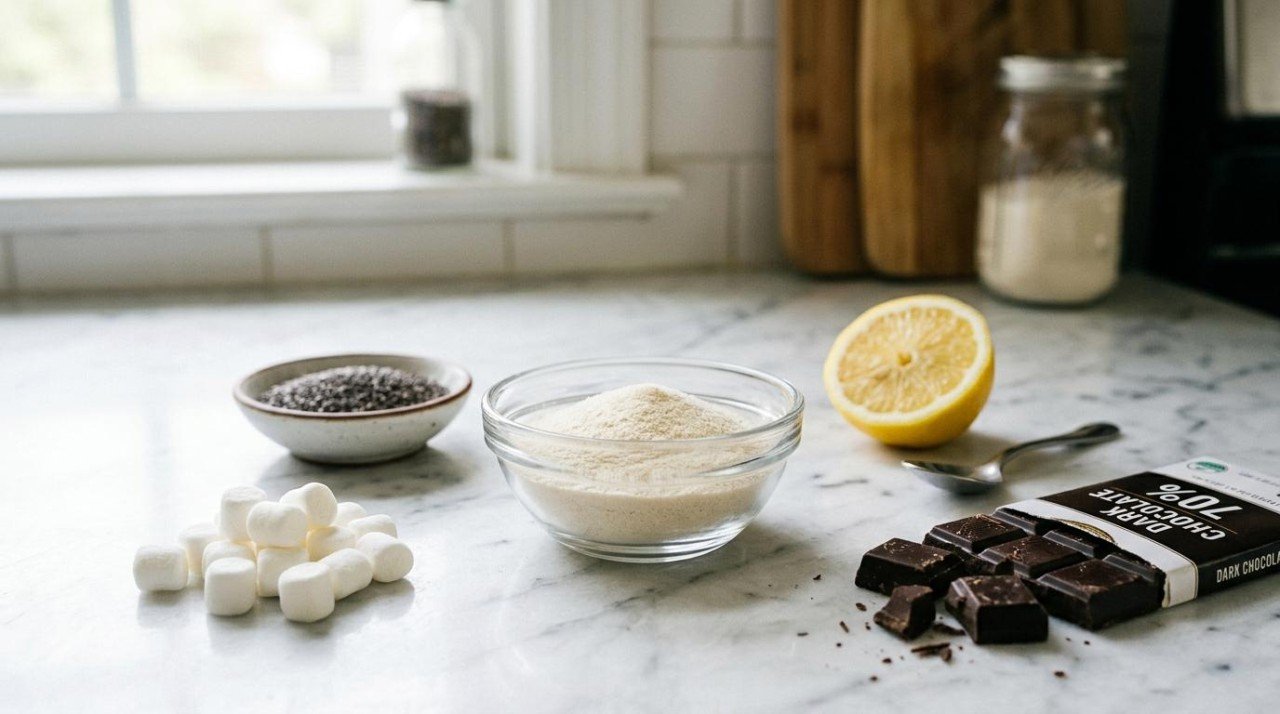
When marshmallows are just one ingredient, buy a gelatin-free version. Vegan brands such as Dandies and Trader Joe's mini marshmallows use carrageenan instead of gelatin. They melt more slowly, so give them an extra minute on low heat when making treats. Marshmallow creme (fluff) is usually gelatin-free too, which makes it an easy choice for vegetarian or halal cooking. It does typically contain egg whites, though, so check the label if you're cooking vegan.
For Mousses, No-Bake Cheesecakes, and Whipped Cream
In creamy desserts, gelatin usually plays a supporting role: it keeps a mousse from slumping or whipped cream from weeping. You can often swap it for an ingredient that sets on its own as it chills.
8. Chocolate
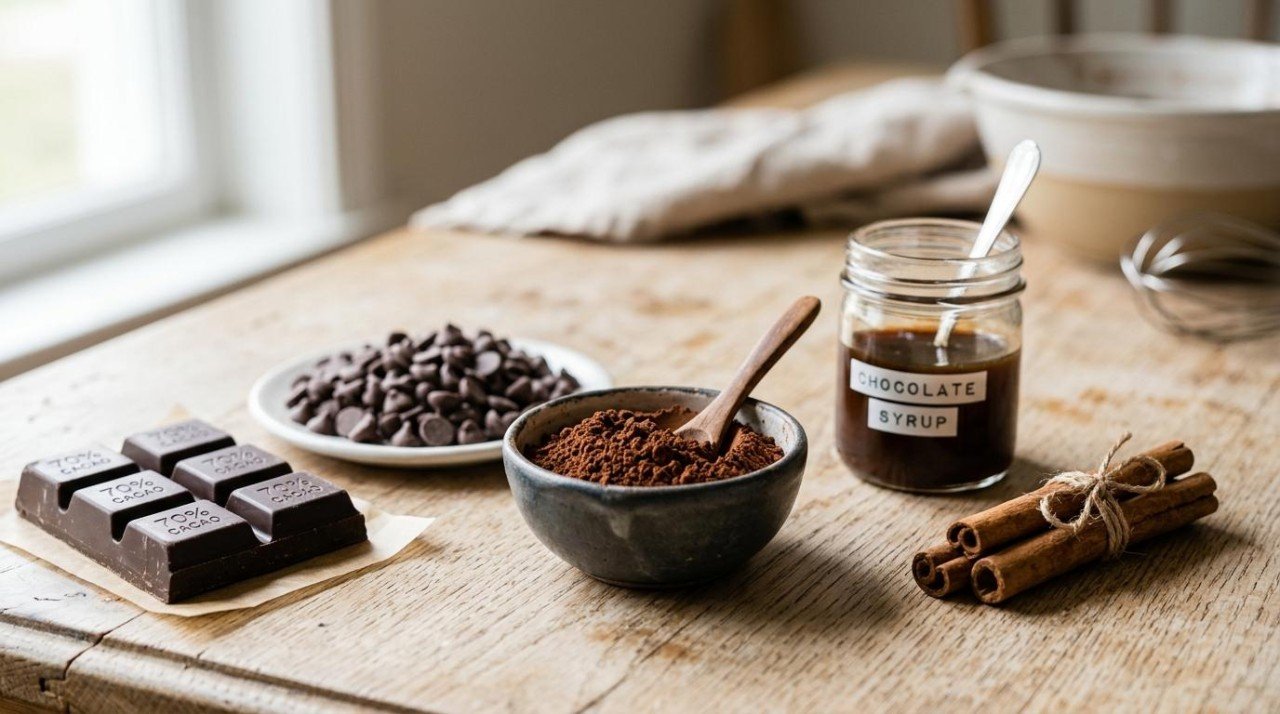
- Swap: Leave the gelatin out. Use about 6 ounces of melted bittersweet chocolate, cooled to lukewarm, folded into 1 1/2 cups of heavy cream whipped to soft peaks
- Best for: Chocolate mousse, chocolate cream pie filling, mousse cake layers
- Skip it for: Fruit mousses, which have no cocoa butter to set them
Cocoa butter is solid at fridge temperature, so plenty of chocolate in a mousse firms it up without any help. Many classic chocolate mousses never used gelatin at all. Fold the chocolate in while it's still fluid but no longer hot. If it's too warm it deflates the cream, and if it's too cool it seizes into specks. Chill for at least 3 hours. White chocolate works too, but it sets more softly.
9. Cream Cheese or Mascarpone
- Swap for whipped cream: Beat 2 ounces (1/4 cup) softened cream cheese or mascarpone with the sugar until smooth, then add 1 cup of cold heavy cream and whip to stiff peaks
- Swap for no-bake cheesecake: Skip the gelatin, use full-fat block cream cheese, and fold in heavy cream whipped to stiff peaks. Chill overnight
- Best for: Cake frosting, pie toppings, trifles, no-bake cheesecakes
- Skip it for: Recipes where you don't want a tangy, cheesecake flavor
Cream cheese and mascarpone add structure from their own fat and protein, so whipped cream made with them holds its shape for a day or two in the fridge. Mascarpone tastes milder and richer, while cream cheese adds a gentle tang that suits fruit desserts. Make sure the cheese is soft and fully smooth before the cream goes in, or you'll get little lumps. In a no-bake cheesecake, full-fat block cream cheese is essential. Tub-style and reduced-fat versions are too soft to hold a slice.
10. Instant Pudding Mix
- Swap: Start with 1 1/2 teaspoons instant pudding mix per 1 cup of heavy cream, adding up to 1 tablespoon for a firmer whip. Add it with the sugar
- Best for: Stabilized whipped cream for piping, icebox cakes, and topping pies a day ahead
- Skip it for: Cook-and-serve pudding mix, which won't thicken cold
The starch in instant pudding mix absorbs the water that would otherwise weep out of whipped cream. Chowhound suggests 1 1/2 teaspoons per cup of cream to start, warning that too much can turn the cream into whipped pudding. The mix is sweetened, so cut back on the sugar. Vanilla or white chocolate flavors keep the cream neutral, and other flavors can be fun in the right dessert. Check the label if you're cooking vegetarian. Most instant puddings are gelatin-free, but it's worth a glance.
11. Sweetened Condensed Milk Plus Citrus Juice
- Swap: 1 can (14 ounces) sweetened condensed milk whisked with 1/2 cup fresh lemon or lime juice, chilled for at least 4 hours
- Best for: No-bake lemon or key lime pie, icebox pie fillings, lemon bars without the bake
- Skip it for: Anything that shouldn't be sweet and tart
Acid thickens the milk proteins in sweetened condensed milk, so this filling sets into a sliceable pie in the fridge with no gelatin and no oven. This is how old-fashioned lemon icebox pies work. Use fresh juice and whisk until the mixture thickens noticeably before pouring it into the crust. For a lighter, mousse-like version, fold in a cup of whipped cream. It will set more softly.
12. Cornstarch or Arrowroot
- Swap: About 1 tablespoon cornstarch per 1 cup of liquid for a soft, spoonable set, and up to 1 1/2 tablespoons for a firmer pudding. Bring it to a full boil for 1 minute
- Best for: Puddings, pie fillings, fruit glazes, cream pies
- Skip it for: Panna cotta, jellies, and anything that should hold a clean, unmolded shape
Starch thickens rather than gels, so it gives you a creamy pudding instead of a wobble. That's perfect for a banana cream pie and wrong for panna cotta you want to turn out of a mold. Whisk the starch into cold liquid first, then cook it, stirring, until it bubbles and thickens. Undercooked cornstarch tastes chalky and can thin out again overnight. Arrowroot gives a clearer, glossier finish for fruit glazes and works well with acidic fruit, but it turns slimy with dairy and breaks down if it's boiled too long, so add it near the end.
Healthier Upgrades
Gelatin itself is nearly pure protein, about 6 grams per envelope, so it isn't something you need to replace for health reasons. Agar and pectin are mostly fiber, but you use so little that the nutrition change is tiny. The real health difference in a gelatin dessert is what you're setting.
A boxed jello mix is mostly sugar and artificial color. The same agar or gelatin will just as happily set 100% fruit juice, blended mango, or a puree of berries and yogurt. That keeps the fun wobbly dessert kids love and adds actual fruit to it. Chia jam (#5) is the standout swap: a quarter cup of chia in a batch of berry jam brings over 20 grams of fiber and cuts out most of the sugar of a standard jam. And every fruit you use counts toward your weekly plant variety. Eat Well Planner's Plant Points tracker is built around the "30 plants a week" goal, so a mixed-berry chia jam is an easy few points.
When you're making those changes to a real recipe, it helps to see the numbers. In Eat Well Planner, Make It Healthier looks at your dessert and suggests swaps like these, then checks each one with a nutrition calculator before showing it to you. In the Recipe Playground, you can trade boxed mix for fruit puree or sugar for maple syrup and watch the nutrition score change with every edit.
Take the Guesswork Out of Eating Well
Eat Well Planner helps you organize your favorite recipes, plan balanced meals, and automatically generate shopping lists — all in one place. Whether you're tracking macros, managing dietary restrictions, or just trying to stop asking "what's for dinner?", we've got you covered.
Our AI-powered tools can adapt any recipe to your dietary needs, help you discover new meals you'll love, and even log your nutrition effortlessly. It's meal planning made simple.
Start Organizing Your Meals — FreeWhat Not to Use
- Agar flakes measured like powder. Flakes are about a third as strong. If the recipe says powder and you use the same amount of flakes, you'll end up with soup.
- Agar stirred into warm liquid. Agar that hasn't boiled won't set, no matter how long it chills. This is the most common reason vegan panna cotta fails.
- Xanthan or guar gum. They thicken liquids but don't set them, so you get a thick syrup, not a jelly. Save them for sauces and gluten-free baking.
- Flour. It needs long cooking to lose its raw taste and turns puddings cloudy and pasty. Cornstarch does the same job better.
- Regular pectin in a low-sugar recipe. Standard pectin needs a lot of sugar to set. If you're cutting sugar, buy a low- or no-sugar pectin.
- Gelatin with fresh pineapple, kiwi, or papaya. Not a substitute, but a common reason gelatin "fails." Enzymes in these fruits break down the gelatin. Use canned or cooked fruit, or switch to agar.
- Agar in a frozen dessert. Agar gels tend to weep and turn grainy once frozen. For ice pops or frozen mousse, use gelatin, iota carrageenan, or just the fruit and cream.
Which One Should You Use?
If you avoid gelatin for halal or kosher reasons, buy certified beef or fish gelatin and use it 1:1. Nothing changes. For a vegan jelly, panna cotta, or custard, reach for agar powder: boil it, use less than you'd expect, and test a spoonful before you pour. For a softer, more gelatin-like wobble in milk desserts, carrageenan is the closest match if you're willing to weigh it. For jam and fruit gummies, use pectin. For marshmallows, use an aquafaba recipe or buy vegan ones. And for mousses, cheesecakes, and whipped cream, you can often skip the gel entirely and let chocolate, cream cheese, instant pudding, or condensed milk do the setting.
If you're still not sure which one fits the recipe in front of you, ask about that exact recipe. Eat Well Planner's AI recipe chat reads the whole recipe, so you can ask something like "I want to make this panna cotta vegan, how much agar do I use for 3 cups of coconut milk?" and get an answer based on that recipe's liquid and fat. If you want the entire dessert made vegetarian, Recipe Variations can rewrite it with the swaps already worked in. And if the panna cotta also calls for cream you don't have, our guides to heavy cream and coconut milk have you covered.