The chicken is trussed, the potatoes are cut, the oven is at 425 degrees, and the recipe wants two sprigs of fresh rosemary. What you have is a hard little twig at the bottom of the crisper drawer that has gone gray and brittle, or nothing at all.
Rosemary is easier to replace than most people think, because it is doing a very specific job: it is the piney, resinous, faintly eucalyptus-like note in a dish, and it comes with a woody structure that survives an hour in a hot oven without turning to mush. Match those two things and you are most of the way there. What makes rosemary tricky is not that it is irreplaceable, it is that it is loud. Almost every substitution mistake with this herb is using too much of something, not the wrong something.
Here is what actually works, with the ratios, organized so you can find the one that fits whatever is currently in your oven.
The Quick List
- Fresh thyme — the safest all-purpose swap; works everywhere rosemary does, 1:1
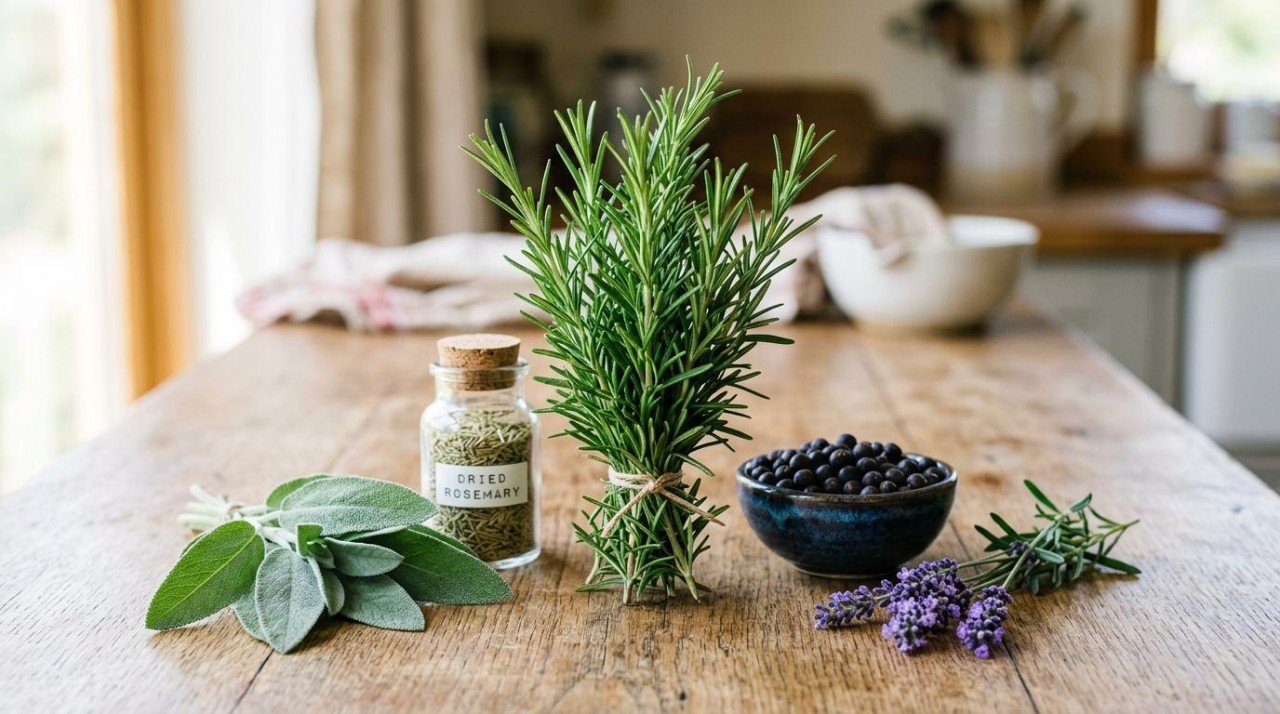
- Dried rosemary — the pantry answer at one third the amount, and you have to crush it
- Fresh sage — the closest flavor match on the woody, camphor side; use two thirds
- Thyme plus a little sage — the best homemade approximation of actual rosemary
- Savory (winter or summer) — the underrated one; peppery and Provençal, 1:1
- Herbes de Provence or Italian seasoning — both blends already contain rosemary
- Bay leaf — for braises, beans, and stocks; useless in anything not simmered
- Fresh marjoram — softer and sweeter; lovely on chicken and vegetables
- Fresh oregano — more pungent, use less; best in Mediterranean and tomato dishes
- Juniper berries — for the pine note specifically, on pork, lamb, game, and cabbage
- Culinary lavender — a tiny pinch, for focaccia, shortbread, and lamb only
First: How Much Rosemary Are We Actually Talking About?
Recipes measure rosemary in sprigs, which is not a unit. A sprig can be two inches or eight. As a working number, a 4-inch sprig gives you roughly 1 to 1.5 teaspoons of chopped leaves, so two or three sprigs land somewhere around a tablespoon. Every ratio below uses 1 tablespoon of chopped fresh rosemary as the base unit.
The fresh-to-dried conversion is the other number worth memorizing. Penn State Extension puts it plainly: 1 tablespoon fresh herbs = 1 teaspoon dried herbs = 1/4 teaspoon powdered herb, because dried herbs run three to four times stronger than fresh. Illinois Extension gives the same guidance as one quarter to one third the amount called for, and notes that sturdy herbs like rosemary, sage, and thyme are the ones that dry well in the first place. With rosemary specifically, start at the low end. It is the herb people most often overshoot into medicinal territory.
Fresh Thyme
- Swap: 1 tablespoon chopped fresh rosemary → 1 tablespoon fresh thyme leaves (1:1, or up to 1.5x if you want more presence)
- Best for: Roast chicken, roast potatoes, lamb, focaccia, soups and stews, mushrooms, marinades, compound butter
- Skip it for: Nothing, really — it is the one substitute here with almost no failure mode
If you only remember one swap from this page, make it thyme. It occupies the same slot in a dish: a woody Mediterranean herb that holds up to long roasting, pairs with the same proteins, and reads as savory and slightly resinous rather than fresh and grassy. You can leave whole sprigs in a roasting pan the same way, and fish them out the same way.
What you lose is the pine. Thyme is earthier and more floral where rosemary is sharp and coniferous, so a rosemary-forward dish made with thyme will taste correct but quieter. That is usually a feature. Thyme is far more forgiving of a heavy hand, so if you were nervous about getting the amount right, this is the swap that lets you stop worrying about it.
Dried Rosemary
- Swap: 1 tablespoon chopped fresh rosemary → 1 teaspoon dried rosemary, crushed (or 1/4 teaspoon ground)
- Best for: Roasts, braises, soups, marinades, bread dough, spice rubs — anything with heat and time
- Skip it for: Garnish, or anything raw and uncooked, where the needles stay hard and taste dusty
Rosemary is one of the herbs that dries genuinely well, which is why the jar in your cupboard is a real substitute rather than a consolation prize. But dried rosemary needles are little wooden splinters, and they do not soften much even after an hour in the oven. Crush them first: rub the measured amount between your palms, or give it ten seconds in a mortar or a spice grinder. That is the difference between a dish that tastes like rosemary and a dish that has pine needles in it.
Add dried rosemary early rather than late so it has liquid and time to rehydrate. In a vinaigrette or a marinade, let it sit at least 15 minutes before you taste. And note the ground rosemary line above: powdered herb is stronger again by volume, so a teaspoon of ground rosemary where you meant a teaspoon of needles will wreck the dish.
Fresh Sage
- Swap: 1 tablespoon chopped fresh rosemary → 2 teaspoons chopped fresh sage (or 1/2 teaspoon dried, rubbed)
- Best for: Pork, chicken, sausage, white beans, squash, brown butter sauces, potatoes, stuffing
- Skip it for: Delicate fish, lemony dressings, and desserts — sage is too musky for all three
Sage is the closest match nobody suggests, and the chemistry backs it up. Rosemary's aroma is built largely on alpha-pinene, 1,8-cineole, and camphor, and common sage oil is typically 4.5 to 24.5% camphor and 5.5 to 13% 1,8-cineole on top of its thujone. That shared camphor-and-cineole backbone is exactly the cool, woody, faintly medicinal quality you are trying to replace.
What sage adds on its own account is a soft, dusty, almost woolly note that rosemary does not have, and it is potent, so stay at about two thirds the amount. On pork and white beans it is arguably better than the rosemary you were reaching for. Fry a few whole leaves in the roasting fat and scatter them over at the end if you want the crisp-texture version of the same idea.
Thyme Plus a Little Sage
- Swap: 1 tablespoon chopped fresh rosemary → 2 teaspoons fresh thyme + 1 teaspoon fresh sage
- Best for: Any roast where rosemary was the signature flavor and you want it to still taste like the recipe
- Skip it for: Nothing, though it is more work than reaching for one jar
Thyme gets you the structure and the savory Mediterranean base. Sage supplies the camphor edge that thyme is missing. Together they land noticeably closer to rosemary than either does alone, and this is the swap to use when rosemary is in the recipe title — rosemary roast chicken, rosemary potatoes, rosemary focaccia — and you want the dish to still be recognizably itself.
The same trick works with dried: 3/4 teaspoon dried thyme plus a scant 1/4 teaspoon dried sage per tablespoon of fresh rosemary.
Savory (Winter or Summer)
- Swap: 1 tablespoon chopped fresh rosemary → 1 tablespoon chopped fresh savory (or 1 teaspoon dried)
- Best for: Beans and lentils, roast pork and poultry, sausage, green beans, grilled vegetables
- Skip it for: Sweet applications, where it turns flatly herbal
Savory is the herb most American kitchens forgot, and it is a direct structural stand-in for rosemary — peppery, resinous, and thoroughly Provençal. It is not an accident that it turns up alongside rosemary in the classic French blend: the Label Rouge standard for herbes de Provence is 27% savory, 27% rosemary, 27% oregano, and 19% thyme.
Winter savory is the tougher, more piney one and behaves most like rosemary in a hot oven. Summer savory is softer and slightly sweeter. Either is excellent with beans, which is also where rosemary shines — Illinois Extension lists rosemary among the seasonings for dried beans and lentils in its guidance on flavoring food with less salt.
Herbes de Provence or Italian Seasoning
- Swap: 1 tablespoon chopped fresh rosemary → 1 teaspoon herbes de Provence, or 1 to 1.5 teaspoons Italian seasoning
- Best for: Roast chicken and potatoes, vegetables, focaccia, tomato sauces, rubs and marinades
- Skip it for: Dishes where you want one clean herb note, or a carefully built flavor you do not want five extra herbs in
This is the swap most people already own and never think of. Both blends contain dried rosemary, so you are not approximating the flavor — you are diluting it with its own relatives. Herbes de Provence is the better match of the two: rosemary, savory, thyme, and oregano is a near-perfect list of everything else on this page.
One caveat on American herbes de Provence. It usually contains lavender, which is a North American addition rather than a traditional Provençal one — lavender does not appear in the classic Provençal recipes at all. It is delicious on lamb and in focaccia and strange in a tomato sauce, so read the label before you commit. Italian seasoning is more oregano-and-basil forward, which nudges the dish Italian: fine for potatoes and roast chicken, less good for a French-leaning braise.
Bay Leaf
- Swap: 1 tablespoon chopped fresh rosemary → 1 to 2 dried bay leaves, added early and removed before serving
- Best for: Braises, stews, beans, stocks, tomato sauce, pot roast — anything simmered 30 minutes or more
- Skip it for: Roasted potatoes, focaccia, garnish, dressings, compound butter — bay needs liquid and time, and it is never eaten
Bay is a better rosemary substitute than its reputation suggests, and once again the reason is 1,8-cineole. Bay laurel oil is typically around 32% 1,8-cineole, and well over 50% in some Mediterranean samples — the same cool, eucalyptus-adjacent compound doing a lot of rosemary's work.
The catch is that bay gives that flavor up only slowly, into hot liquid, and the leaf itself stays inedible. So it covers exactly one half of rosemary's range: the long-simmered half. In a pot of white beans or a beef braise it genuinely fills the gap. On a sheet pan of potatoes it does nothing at all.
Fresh Marjoram
- Swap: 1 tablespoon chopped fresh rosemary → 1 tablespoon chopped fresh marjoram (or 1 teaspoon dried)
- Best for: Chicken, roasted vegetables, mushrooms, eggs, summer squash, lighter marinades
- Skip it for: Long braises and hard roasting — it fades where rosemary would hold
Marjoram is the gentle option: floral, sweetly herbal, and much less assertive than either rosemary or its cousin oregano. It will not give you pine, but it will give you an unmistakably Mediterranean seasoning, and it is close to impossible to overdo.
Because it is delicate, add it in the last 10 to 15 minutes of cooking rather than at the start. Put marjoram in at the beginning of a two-hour braise and you will end up with an unseasoned braise.
Fresh Oregano
- Swap: 1 tablespoon chopped fresh rosemary → 2 teaspoons chopped fresh oregano (or 3/4 teaspoon dried)
- Best for: Tomato-based dishes, Greek and Italian roasts, lamb, potatoes, grilled vegetables, lemony marinades
- Skip it for: French and Northern European dishes, cream sauces, and anything sweet
Oregano is more pungent than rosemary and pulls in a different direction — peppery and slightly bitter rather than piney — so it changes the dish's accent rather than hiding the substitution. Use about two thirds the amount.
Where it works, though, it works completely. Lemon, garlic, olive oil, and oregano on roast potatoes or lamb is its own excellent dish, and nobody will miss the rosemary. Lean into it rather than apologizing for it.
Juniper Berries
- Swap: 1 tablespoon chopped fresh rosemary → 4 to 6 dried juniper berries, crushed
- Best for: Pork, lamb, venison and game, duck, cabbage and sauerkraut, potatoes, brines
- Skip it for: Chicken, fish, focaccia, and anything wanting a green herbal note rather than pure resin
If what you specifically want back is the pine, this is the most direct answer on the page. Juniper berries are dominated by alpha-pinene — the same compound that gives rosemary its coniferous edge — which is why gin and rosemary taste like cousins.
Crush the berries lightly with the flat of a knife or in a mortar to open them up, then treat them like a whole spice: into the braise, the brine, or the roasting pan. They are potent and one-note, so this is a supporting swap rather than a full replacement. Four berries plus a few thyme sprigs will get you closer to rosemary roast pork than either would alone.
Culinary Lavender
- Swap: 1 tablespoon chopped fresh rosemary → 1/4 to 1/2 teaspoon dried culinary lavender buds
- Best for: Focaccia, shortbread, lamb, honey syrups, roasted stone fruit, lemon desserts
- Skip it for: Tomato sauce, stock, beans, and most weeknight savory cooking
Rosemary shows up in a surprising number of sweet and half-sweet applications — rosemary shortbread, rosemary honey, focaccia with grapes — and in those, lavender is the substitute that keeps the dish interesting instead of just making it plainer. It shares rosemary's floral, camphor-tinged quality and belongs to the same Mediterranean flavor world.
Use a genuinely small amount. Lavender goes from lovely to soapy faster than any herb here, and half a teaspoon of buds is plenty for a whole loaf of focaccia or a batch of shortbread.
Rosemary Oil and Rosemary Butter: One Safety Note
Infusing olive oil with rosemary is one of the most common uses of the herb, and it comes with a rule worth knowing. Fresh herbs are low-acid and can carry Clostridium botulinum spores, and oil creates exactly the oxygen-free environment those spores like. Penn State Extension's guidance is to keep oils infused with fresh herbs refrigerated and use them within 2 to 4 days, while oils made with dried herbs can be refrigerated for up to three months.
So if you are making rosemary oil to keep around, make it with dried rosemary. Rosemary butter is a different and much simpler proposition: keep it refrigerated and use it within a week or two, or freeze it — which is also the best way to bank a bunch of fresh rosemary before it goes gray on you.
What You Gain From the Swap (and What You Do Not)
Nobody eats enough rosemary for it to move their macros, and any article telling you a substitute is healthier because of a teaspoon of herb is selling something. But two real things are going on here.
The first is that these herbs are, by weight, some of the most polyphenol-dense things in your kitchen. In rosemary, carnosic acid and carnosol together make up roughly 5% of the dried leaf, and rosemary extract is approved in the EU as a food additive (E392) specifically because it is effective enough as an antioxidant to extend the shelf life of fats. You are not eating it in medicinal quantities, but it is not nothing either — and thyme, sage, oregano, and savory all sit in the same plant family.
The second is more practical: herbs are how you season food generously without leaning on salt, and every different herb counts as a distinct plant toward the gut-health target of 30 different plants a week. Rotating thyme, sage, and savory through a week does more for plant diversity than reaching for the same rosemary every time.
What none of that tells you is which substitute fits your recipe. That is where a general guide runs out. In Eat Well Planner you can open the actual recipe you are cooking and ask the AI recipe chat "I have no rosemary, what should I use in this?" — with your ingredient list, cooking method, and times in front of it, so the answer accounts for whether the herb is going into a 90-minute braise or onto a finished plate. If you want the change made permanent, Recipe Variations will rewrite the whole recipe with the swap already worked in.
Take the Guesswork Out of Eating Well
Eat Well Planner helps you organize your favorite recipes, plan balanced meals, and automatically generate shopping lists — all in one place. Whether you're tracking macros, managing dietary restrictions, or just trying to stop asking "what's for dinner?", we've got you covered.
Our AI-powered tools can adapt any recipe to your dietary needs, help you discover new meals you'll love, and even log your nutrition effortlessly. It's meal planning made simple.
Start Organizing Your Meals — FreeWhat Not to Use
- Pine, fir, or spruce needles from the yard. Yes, rosemary tastes piney. No, do not forage a substitute unless you can positively identify the species — yew, common in hedges and ornamental plantings, is toxic. Not worth it for a sheet pan of potatoes.
- Rosemary essential oil. Enormously concentrated and not measured in anything resembling culinary units. Cooking is not the intended use.
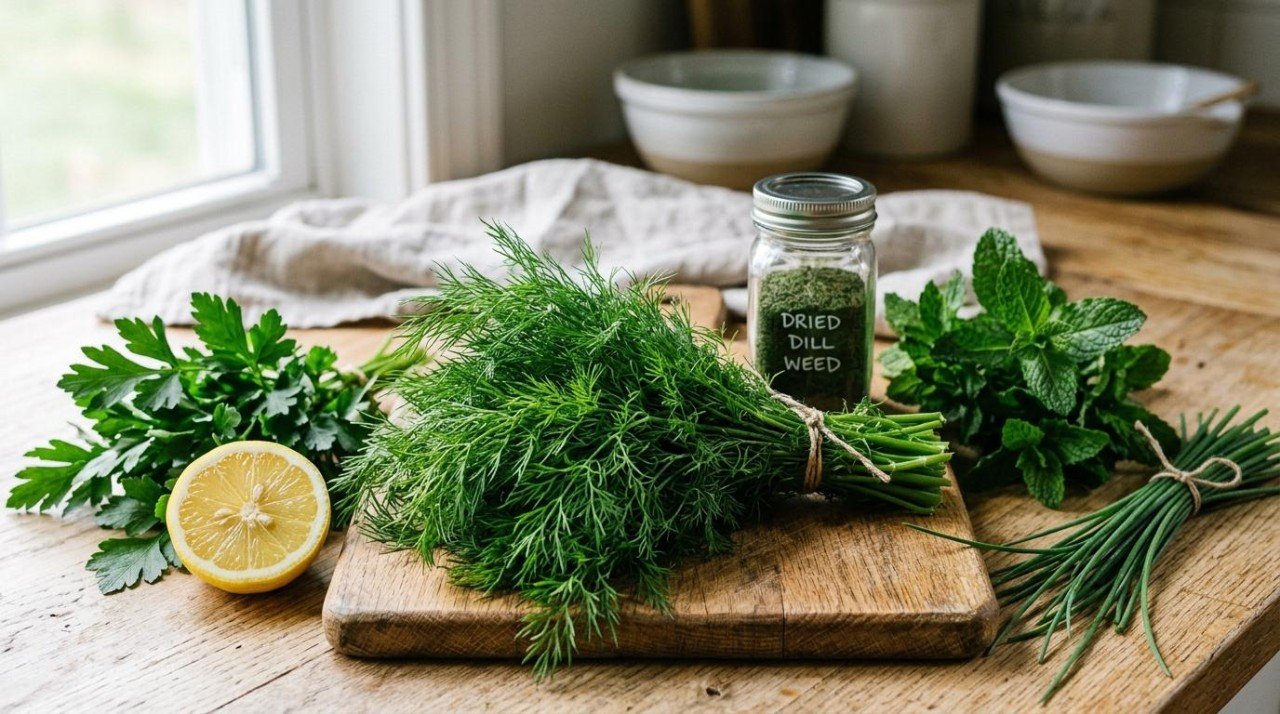
- Basil, mint, cilantro, or dill. All fine herbs, all pulling in the opposite direction — bright, fresh, and soft where rosemary is woody and resinous. They will not fail quietly; they will make the dish taste like a different cuisine.
- Ground rosemary measured like whole needles. Powder is far stronger by volume. A teaspoon of ground where you meant a teaspoon of needles gives you a bitter, medicinal dish.
- A bay leaf as a garnish. If the rosemary was decoration on the plate, use parsley, thyme, or a fennel frond. A bay leaf on top of a plate is just a leaf on top of a plate.
The Short Version
Reach for thyme if you want the safe answer, sage if you want the accurate one, and both together if the recipe is named after rosemary. Use one third the amount if you are going to dried, crush it before it goes in, and start lower than you think — restraint is the whole skill with this herb.
And if you keep buying rosemary for one recipe and throwing away the rest of the bunch, that is a planning problem rather than a cooking one. Eat Well Planner lets you import recipes from anywhere, build a week around the ingredients you already bought, and generate the shopping list from the plan, so the herbs you buy actually get used before they turn gray in the drawer.