The onions are soft, the chicken is browned, the recipe says "2 tablespoons curry powder," and the jar is empty. Or maybe you are making curried egg salad for lunch and only just realized you never bought curry powder in the first place. Either way, you can keep cooking.
Curry powder is a blend, not a single spice, and most of what goes into it is probably already in your cabinet: coriander, cumin, turmeric, ginger and a little chili. That makes it one of the easier ingredients to replace. The best substitute depends on what you are making, though. A simmered curry can take almost any warm spice blend, while a cold curried chicken salad needs something that tastes good raw. Every swap below has an exact ratio and a note on what it is good for and what it is not.
All ratios assume standard mild yellow curry powder, the kind sold in most American supermarkets.
The Quick List
- Homemade curry powder — the closest match, ready in two minutes from basic spices
- Coriander + cumin + turmeric — the three-jar shortcut when you are missing the rest
- Garam masala + turmeric — best for Indian curries, dals and soups
- Another curry powder — Madras, Jamaican or Japanese curry powder, with a few adjustments
- Curry paste — great in simmered curries and soups, not for dry uses
- Indian masala blends — sambar powder, chana masala or tandoori masala in saucy dishes
- Ras el hanout — warm and often turmeric-tinted, good with roasted vegetables and stews
- Chaat masala — for sprinkling on salads and roasted vegetables, not for cooking a curry base
First, What Is Curry Powder?
Curry powder is a Western-style blend, not a traditional Indian spice. Indian home cooks generally build each dish from individual spices, or from a masala made for that particular dish, rather than reaching for one all-purpose powder. Pre-mixed curry powder grew out of the British taste for Indian food in the colonial era and was sold so cooks back in Britain could approximate those flavors with a single jar.
That history is useful when you are substituting, because it means curry powder is a fairly predictable mix. Most versions are built on coriander and cumin, colored and earthy from turmeric, with smaller amounts of ginger, chili, fenugreek, black pepper, mustard and sometimes cardamom, cinnamon or cloves. "Madras" curry powder is typically hotter, and Jamaican and Japanese curry powders lean on their own regional flavors. If you can recreate the coriander-cumin-turmeric core, you are most of the way there.
Match the Substitute to the Dish
- Simmered curries, dals, chickpea stews, curried lentil soup — homemade blend, garam masala + turmeric, curry paste, Indian masala blends
- Curried egg salad, chicken salad, deviled eggs, curry mayo or yogurt dips — homemade blend or the three-jar shortcut (bloomed first), another curry powder, a pinch of chaat masala to finish
- Pureed soups like butternut squash, carrot or cauliflower — homemade blend, garam masala + turmeric, curry paste, ras el hanout
- Roasted vegetables, spice rubs, curried rice — homemade blend, three-jar shortcut, ras el hanout, chaat masala as a finishing sprinkle
Homemade Curry Powder
- Swap: 1 tablespoon curry powder → 1 teaspoon ground coriander + 3/4 teaspoon ground cumin + 3/4 teaspoon ground turmeric + 1/4 teaspoon ground ginger + a pinch each of cayenne and black pepper
- Best for: Everything curry powder is used for: curries, curried salads, soups, roasted vegetables, rice, marinades
- Skip it for: Nothing in particular; this is the default answer
- Health notes: No added salt, and you can raise the turmeric if you like (see the health section below)
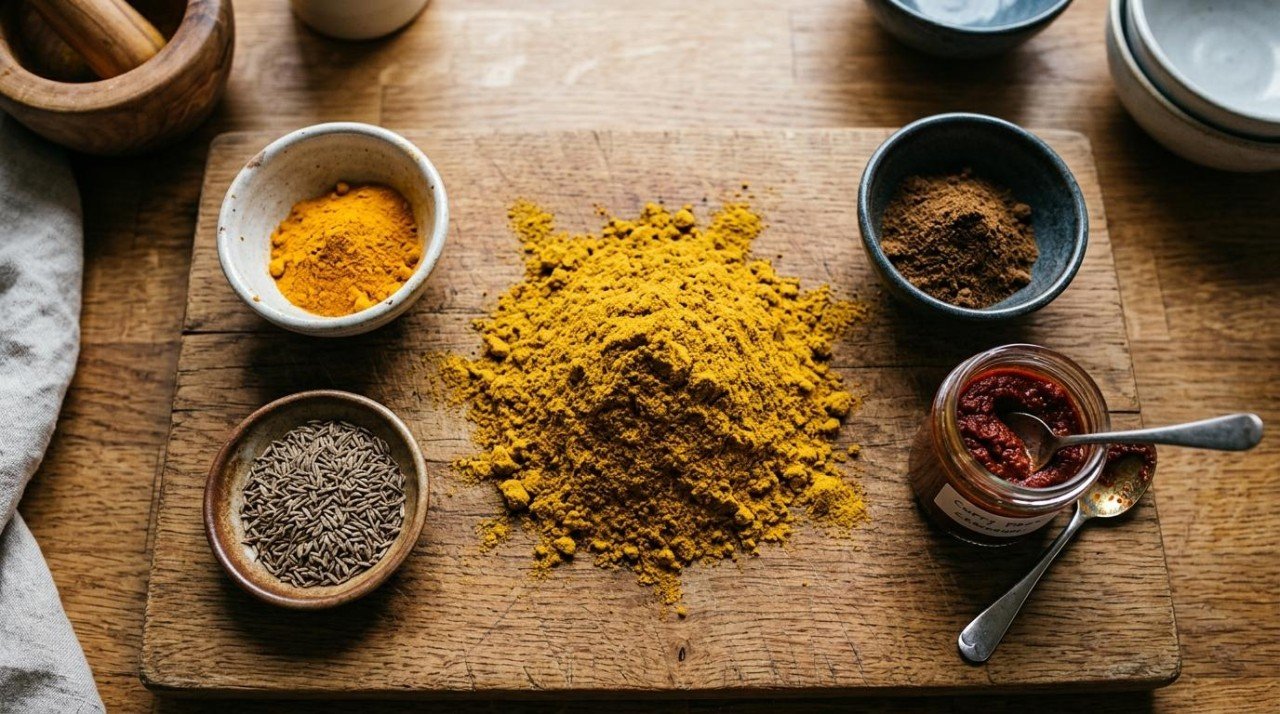
This is the closest substitute because it is simply curry powder made from its usual parts. Coriander supplies the bulk and the bright, citrusy base, cumin brings the warm, earthy depth, turmeric gives the golden color and slight bitterness, and ginger and chili add warmth. Stir it together in a small bowl and use it exactly as you would the store-bought jar. If you have ground fenugreek, mustard powder or cardamom, a small pinch of any of them makes it taste even more like the real thing; fenugreek in particular is behind that distinctive "curry" aroma many people recognize.
If you cook with curry powder often, make a jar. Kitchen Treaty's blend makes about 1/2 cup from 2 tablespoons each of ground cumin, turmeric and coriander, 1 tablespoon dried ginger, 1/2 teaspoon each of cardamom and cayenne, and 1/4 teaspoon ground mustard seed. Store it airtight in a cool, dark spot. If you only have whole coriander and cumin seeds, toast them in a dry pan for a minute or two until fragrant, then grind them; it is a little more work and tastes noticeably fresher than any jar.
Coriander + Cumin + Turmeric (the Three-Jar Shortcut)
- Swap: 1 teaspoon curry powder → 1/2 teaspoon ground coriander + 1/4 teaspoon ground cumin + 1/4 teaspoon ground turmeric
- Best for: Curries with plenty of other aromatics (onion, garlic, ginger), roasted cauliflower, curried rice, soups
- Skip it for: Recipes where curry powder is the only seasoning, unless you add a pinch of chili and ginger
If you do not have ginger, cayenne or the extras, these three spices alone cover most of what curry powder does. The result is a little flatter and less warm than a full blend, but in a dish that already starts with sauteed onion, garlic and fresh ginger, nobody will notice. If you have chili powder or red pepper flakes, a pinch brings back the gentle heat.
Missing one of the three? Coriander and cumin together still give you a warm, savory base without the yellow color. Turmeric alone does not work; see the "What Not to Use" list below. If cumin is the one you are out of, our cumin substitutes guide has you covered.
Garam Masala + Turmeric
- Swap: 1 teaspoon curry powder → 3/4 teaspoon garam masala + 1/4 teaspoon ground turmeric, plus a pinch of cayenne if you want heat
- Best for: Indian-style curries, dals, chana masala, curried lentil or butternut squash soup
- Skip it for: Cold curried salads and dips, where garam masala's sweet spices taste sharper and more perfumed than curry powder
Garam masala is the blend most people have if they have any Indian spices at all. It shares cumin and coriander with curry powder but leans on warm, sweet spices like cardamom, cinnamon, cloves and black pepper, and it usually contains little or no turmeric. Adding turmeric brings back curry powder's color and earthy base, and using a little less garam masala keeps the sweet spices from taking over.
One timing note: garam masala is traditionally stirred in near the end of cooking as an aromatic finish. When you are using it to replace curry powder, though, it is fine to add it at the start with the onions and turmeric so the spices cook into the sauce. For an extra layer of fragrance, hold back a pinch and stir it in just before serving.
Another Curry Powder (Madras, Jamaican or Japanese)
- Swap: 1 teaspoon curry powder → 1 teaspoon of the other curry powder; start with 1/2 teaspoon of Madras if your family is sensitive to heat
- Best for: Anything that calls for generic curry powder
- Skip it for: Japanese curry roux blocks, which are a different product (see below)
If your cabinet has a specific style of curry powder rather than the plain yellow kind, use it. Madras curry powder is generally hotter and a bit more robust, so cut the amount or skip any extra chili in the recipe. Jamaican curry powder is usually heavier on turmeric and often includes allspice, which gives it a warmer, slightly sweeter taste that works beautifully in stews and with chicken. Japanese curry powder (sold in small tins) is milder and sweeter, good in soups, fried rice and curried egg salad.
Japanese curry roux blocks are not a substitute for powder. They are mostly flour, fat and salt with curry seasoning, designed to thicken a sauce. Dropping one into a recipe that calls for curry powder will thicken it and add a lot of sodium, so save them for Japanese-style curry.
Curry Paste
- Swap: 1 teaspoon curry powder → 2 teaspoons curry paste, then taste and adjust
- Best for: Simmered curries, coconut soups, lentil and vegetable stews, marinades
- Skip it for: Dry rubs, roasted vegetables you want crisp, and spice mixes for dusting or dredging
- Health notes: Many jarred pastes contain salt, and Thai pastes often contain shrimp paste or fish sauce, so check the label and cut added salt
Pastes are spices ground with oil, aromatics and often salt, so they pack more flavor per spoonful than a dry powder but also carry more volume. Chef Abishek Sharma, quoted in The Takeout, suggests roughly a tablespoon of paste for every 1 to 2 teaspoons of powder. Two teaspoons of paste per teaspoon of powder sits in the middle of that range; start there and add more after tasting. Fry the paste in the oil for a minute or two before adding liquid, just as you would bloom powder, so it loses its raw edge. Since paste brings its own oil, you can use a little less fat in the pan.
Indian-style curry pastes (often labeled Madras, tikka or korma) are the closest match to curry powder. Thai red, yellow or green pastes will work in a simmered curry or soup, but they bring lemongrass, galangal and lime leaf, so the dish will taste noticeably Thai. Yellow Thai paste, which is turmeric-forward, is the closest of the three. If the coconut milk is also missing, see our coconut milk substitutes; and if you are using green paste anyway, our healthier Thai green curry shows how to keep the paste flavor while cutting the sodium.
Take the Guesswork Out of Eating Well
Eat Well Planner helps you organize your favorite recipes, plan balanced meals, and automatically generate shopping lists — all in one place. Whether you're tracking macros, managing dietary restrictions, or just trying to stop asking "what's for dinner?", we've got you covered.
Our AI-powered tools can adapt any recipe to your dietary needs, help you discover new meals you'll love, and even log your nutrition effortlessly. It's meal planning made simple.
Start Organizing Your Meals — FreeIndian Masala Blends (Sambar, Chana Masala, Tandoori)
- Swap: 1 teaspoon curry powder → 1 teaspoon sambar powder or chana masala; 3/4 teaspoon tandoori masala
- Best for: Saucy curries, dals, chickpea and lentil stews, vegetable curries
- Skip it for: Curried egg or chicken salad, where their stronger, tangier or hotter flavors stand out
If you shop at an Indian grocery store, you may have a dish-specific masala that makes a good stand-in. Sambar powder is built on coriander, cumin, chili, fenugreek and often lentils, with turmeric in many versions, so it is a close cousin of curry powder and works well in lentil and vegetable dishes. Chana masala is more tangy (it usually contains dried mango powder, or amchur) and works in any chickpea or bean curry. Tandoori masala is designed for marinades; it is often red rather than yellow and may contain salt, so use a little less and taste before salting.
Read the ingredient list before you use any of these. Some blends contain salt, and some are much hotter than mild curry powder. Adding 1/4 teaspoon turmeric per teaspoon of blend helps bring back curry powder's golden color if that matters to you.
Ras el Hanout
- Swap: 1 teaspoon curry powder → 1 teaspoon ras el hanout, adding 1/4 teaspoon turmeric if yours is not already golden
- Best for: Roasted vegetables, chicken or lamb stews, chickpea and lentil soups, couscous and rice
- Skip it for: Recipes where you want a classic curry flavor, like curried chicken salad
Ras el hanout is a North African blend that varies widely from maker to maker, but most versions include cumin, coriander, ginger and black pepper, along with warm spices like cinnamon and allspice, and many include turmeric. That overlap makes it a surprisingly good substitute in roasted vegetables, soups and stews. It tastes sweeter and more floral than curry powder, so the dish will lean Moroccan rather than Indian, which is often a welcome change.
It is especially good tossed with cauliflower, carrots or chickpeas before roasting. Our post on the roasting method that converts vegetable haters has the technique; a teaspoon of ras el hanout per sheet pan is a great place to start.
Chaat Masala (for Finishing, Not Cooking)
- Swap: 1 teaspoon curry powder → 1/2 teaspoon chaat masala, sprinkled on at the end; skip added salt until you have tasted
- Best for: Curried egg or chicken salad, roasted vegetables, chickpea salads, fruit, yogurt dips
- Skip it for: The base of a simmered curry, where its tang and sulfurous notes do not belong
- Health notes: Usually contains black salt (kala namak), so it adds meaningful sodium
Chaat masala is a tangy, salty finishing blend used on Indian street snacks. It usually contains dried mango powder (amchur), cumin, coriander, chili and black salt, which has a distinctive sulfur, almost egg-like aroma. It does not taste like curry powder, and it is not meant to be cooked into a sauce. As a sprinkle, though, it is excellent in the exact places curry powder often shows up in American cooking: egg salad, chicken salad and roasted vegetables.
For curried egg or chicken salad, the best approach is to combine it with the three-jar shortcut: bloom 1/2 teaspoon of coriander, cumin and turmeric mixed together in a teaspoon of oil for 30 seconds, cool it, stir it into your mayo or Greek yogurt, then finish with a pinch of chaat masala. Taste before adding any other salt.
A Tip for Curried Salads and Dips
Raw ground spices can taste dusty and a little harsh in a cold dish. Whether you use real curry powder or one of the substitutes above, warm it in a teaspoon of oil over low heat for 30 to 60 seconds, just until fragrant, then let it cool before mixing it into mayonnaise, yogurt or dressing. This short step makes the flavor round and mellow instead of gritty, and it is the reason restaurant curried chicken salad often tastes better than homemade. It works especially well with turmeric, which is noticeably bitter when raw.
What About the Health Side?
Curry powder is used in small amounts, so swapping it will not transform a dish nutritionally. A few points are still worth knowing.
- Sodium: Plain curry powder is essentially salt-free. According to USDA FoodData Central, a teaspoon (2 g) contains about 1 mg of sodium. The substitutes that change this are chaat masala, curry pastes, some tandoori masalas and Japanese curry roux, which can add significant salt. If you are watching sodium, the homemade blend is the safest choice.
- Turmeric and curcumin: Turmeric's main active compound, curcumin, is the reason curry gets talked about as "anti-inflammatory." But curry powder is not a reliable source of it. When researchers tested 28 turmeric and curry powder products, pure turmeric averaged 3.14% curcumin by weight, while all but one of the curry powders contained relatively small amounts, with large variation between brands. If you want more turmeric in your cooking, a homemade blend lets you control exactly how much goes in.
- Black pepper: Curcumin is poorly absorbed on its own. In a small study in healthy volunteers, taking piperine (the compound in black pepper) with curcumin increased its bioavailability by 2,000%. Those were supplement doses, 2 grams of curcumin with 20 mg of piperine, far more than any curry contains, so do not expect a medicinal effect from your dinner. A pinch of black pepper in the blend is still a nice, harmless habit, and it tastes good.
The more meaningful benefit is variety. A homemade blend uses four or five separate spices instead of one jar, and plant-diversity trackers like Eat Well Planner's Plant Points count each herb and spice as a quarter point toward the 30-plants-a-week goal. Combined with the vegetables and legumes that usually go into a curry, that adds up. For a realistic look at which spice health claims hold up, see Is Your Spice Rack a Medicine Cabinet?, and for the bigger picture, our guide to anti-inflammatory eating explains why overall eating patterns matter far more than any single spice.
What Not to Use
- Turmeric on its own: It gives the yellow color but tastes bitter and earthy without the warmth of cumin and coriander. Use it as part of a blend, never alone at full curry powder quantities.
- Cumin on its own: A teaspoon of cumin in place of a teaspoon of curry powder makes a dish taste like chili, not curry. Use half the amount and pair it with coriander.
- Chinese five-spice: Star anise and cinnamon dominate. It is a great blend, but it tastes nothing like curry.
- American chili powder or taco seasoning: They share cumin, but the chile, oregano and garlic push the dish toward Tex-Mex, and taco seasoning adds a lot of salt.
- Pumpkin pie spice or allspice alone: Warm, but sweet. At curry powder quantities, they make a savory dish taste like dessert.
- Yellow mustard powder alone: It is a minor ingredient in many curry powders, but on its own it is sharp and hot and will not give you curry flavor.
Which Curry Powder Substitute Should You Use?
If you have coriander, cumin and turmeric, make the homemade blend; it is the closest match for every use. For an Indian-style curry or dal, garam masala plus turmeric or a spoonful of curry paste works well. For curried egg or chicken salad, bloom the three-jar shortcut in oil and finish with a pinch of chaat masala. For roasted vegetables and soups, ras el hanout is a delicious alternative that takes the dish in a slightly different direction.
If you are not sure which one fits the recipe in front of you, Eat Well Planner's AI recipe chat can help. Ask "I'm out of curry powder, what should I use in this?" and it answers with your actual recipe in context, including the spices and aromatics already in it. If you are deciding between a salty paste and a homemade blend, the Recipe Playground shows how each choice changes the recipe's nutrition before you commit. And if the curry is missing more than one thing, our guides to fresh ginger substitutes and chickpea substitutes can help you finish dinner with what you have.