The chili is simmering, the onions and garlic smell great, and the spice jar labeled "cumin" turns out to hold a dusty quarter teaspoon, or nothing at all. Cumin is one of those spices that seems minor until it is missing. It gives chili, taco meat, curries, dals and hummus their warm, earthy, slightly smoky backbone, and without it those dishes taste thin.
No single spice tastes exactly like cumin, but several get very close, and one or two are probably in your cabinet right now. The trick is matching the substitute to the dish: what works in a pot of chili is not what works in a lentil dal or a bowl of hummus. Every swap below has a measured ratio, plus a note on what it is good for and what it is not.
All ratios assume the recipe calls for ground cumin. If yours calls for whole seeds, see the conversion section just below the quick list.
The Quick List
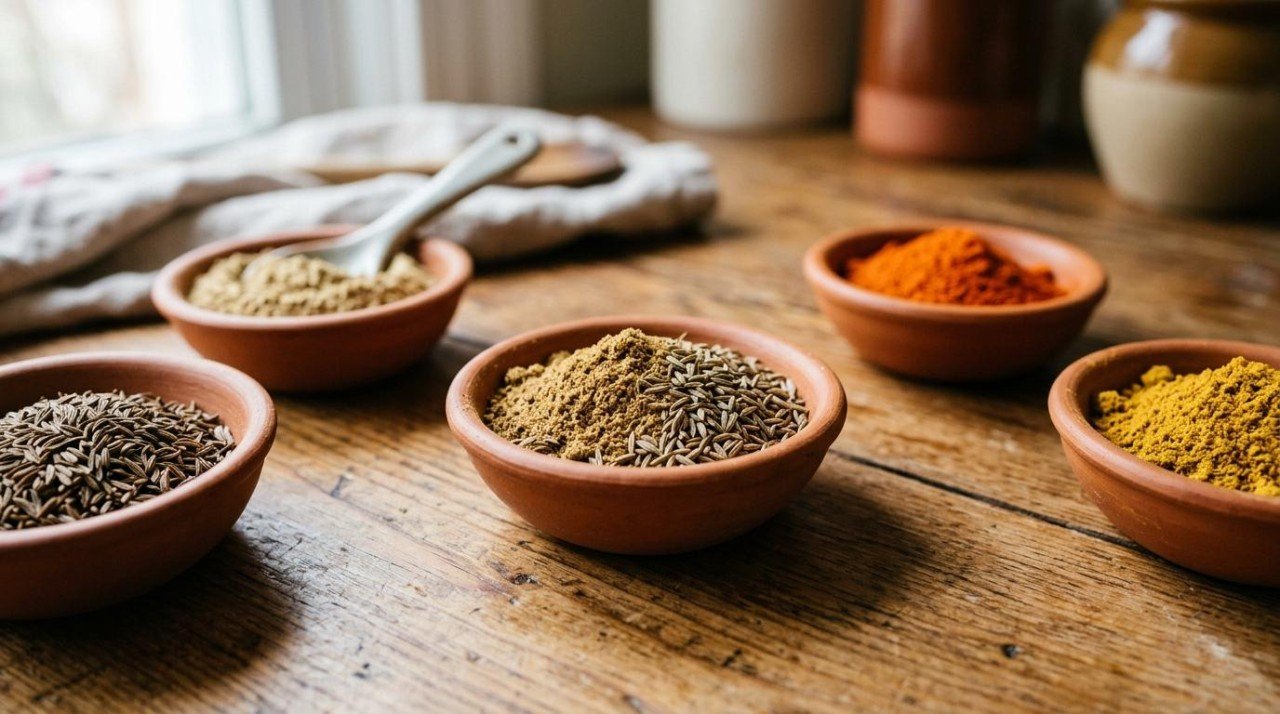
- Ground coriander — the closest single spice, works in almost any dish
- Coriander + smoked paprika + caraway — the best all-purpose homemade stand-in
- Chili powder — easiest fix for chili and taco meat, since most blends contain cumin
- Taco seasoning — fine for Tex-Mex if you cut the salt elsewhere
- Caraway seeds — cumin's closest botanical cousin, great with roasted vegetables and cabbage
- Curry powder — strong pick for curries, dals and lentil soups
- Garam masala — best for Indian dishes, added near the end
- Ras el hanout or baharat — for Middle Eastern and North African dishes
- Smoked paprika — supplies the smoky note, best paired with coriander
- Black cumin (kala jeera) — a near twin, if you happen to have it
- Fennel seeds — a last resort in small amounts, sweeter and anise-flavored
Ground vs. Whole Cumin Seeds
Before reaching for a substitute, check whether you have cumin in the other form. A lot of kitchens have a jar of ground cumin and a forgotten bag of seeds, or the reverse, and that is a much better swap than anything else on this list.
- Recipe calls for seeds, you have ground: 1 teaspoon cumin seeds → about 3/4 teaspoon ground cumin. Taste and add more if needed. Since ground cumin does not need time in hot oil to release flavor, add it with the other ground spices rather than at the very start.
- Recipe calls for ground, you have seeds: 1 teaspoon ground cumin → about 1 1/4 teaspoons cumin seeds. For the best flavor, toast the seeds in a dry pan for 1 to 2 minutes until fragrant and a shade darker, then grind them in a spice grinder or mortar and pestle.
Published conversions for whole versus ground spices disagree a bit, mostly because grind size and how tightly ground spice is packed into a spoon vary. That is why these numbers are on the conservative side. It is always easier to add a pinch more than to take it back out.
Whole seeds also shine in their own way. In Indian cooking, cumin seeds are often sizzled in hot oil or ghee for 30 to 60 seconds before anything else goes in, a technique called tadka or tempering. If you have seeds and a recipe that starts with oil in a pan, that is an excellent way to use them even when the recipe asks for ground.
Match the Substitute to the Dish
- Chili, taco meat, enchiladas, fajitas, black beans — chili powder, taco seasoning, coriander + smoked paprika
- Curries, dals, chana masala, lentil soup — curry powder, garam masala, ground coriander, black cumin
- Hummus, falafel, shakshuka, tagines, kebabs — ground coriander, ras el hanout, baharat, a pinch of caraway
- Roasted vegetables, rubs, grain bowls, dressings — coriander + smoked paprika, caraway, chili powder
Ground Coriander
- Swap: 1 teaspoon ground cumin → 1/2 teaspoon ground coriander, then taste and add up to 1/4 teaspoon more
- Best for: Nearly everything: chili, curries, hummus, falafel, roasted vegetables, spice rubs
- Skip it for: Dishes where cumin is the star flavor, like cumin-roasted carrots, unless you add something smoky alongside it
Coriander seed and cumin come from the same plant family (the carrot and parsley family) and the two show up together in cuisines from Mexico to India to Morocco, so coriander never tastes out of place in a cumin recipe. It is lighter and more citrusy, with less of cumin's deep, musky earthiness, which is why you start with half the amount: more coriander does not make it taste more like cumin, it just makes the dish taste lemony.
On its own, coriander makes a dish taste a little brighter than intended. That is fine in hummus or a curry with lots of other spices. In chili or taco meat, where cumin does a lot of the work, pair it with smoked paprika (see the next section).
One common mix-up: ground coriander is the dried seed, not the fresh leaves. Fresh cilantro tastes completely different and will not stand in for cumin. If you are out of the fresh herb instead, our cilantro substitutes guide covers that.
The Best All-Purpose Blend: Coriander + Smoked Paprika + Caraway
- Swap: 1 teaspoon ground cumin → 1/2 teaspoon ground coriander + 1/4 teaspoon smoked paprika + a pinch (about 1/8 teaspoon) ground caraway, if you have it
- Best for: Chili, taco meat, black beans, roasted vegetables, rubs for chicken or pork
- Skip it for: Delicate dishes where a red color or smoky flavor would be out of place, like a pale yogurt sauce
Cumin's flavor has roughly three parts: a warm, citrusy seed note, a smoky and slightly bitter edge, and a deep earthiness. No single spice hits all three, but this combination comes close. Coriander covers the seed note, smoked paprika brings the smoke, and a pinch of caraway adds the earthy, slightly pungent depth that coriander lacks.
If you are making a big batch of chili or taco meat regularly, it is worth mixing a small jar of this in advance. Without the caraway, the blend still works well; it just tastes a little lighter.
Chili Powder
- Swap: 1 teaspoon ground cumin → 1 teaspoon chili powder, then taste and add up to 1 teaspoon more
- Best for: Chili, taco meat, enchilada sauce, black beans, Tex-Mex soups
- Skip it for: Curries, hummus, dals and anything where chile flavor and red color do not belong
American chili powder is a blend, not pure ground chiles. Most versions combine ground dried chiles with cumin, garlic, oregano and salt, so in a pot of chili you are effectively replacing the cumin with more of a seasoning that already contains it. Brands vary in how much cumin they use, and some list it only as "spices," so check the label and taste as you go.
Two things to watch. First, chili powder brings heat; a mild blend is fine, but a hot one can push a dish further than you want. Second, many blends contain salt. Per USDA data, a teaspoon of chili powder carries about 77 mg of sodium, compared with roughly 3.5 mg in a teaspoon of cumin. That is not much per spoonful, but it adds up when you are using a tablespoon or more, so go a little lighter on added salt. Note that pure ground chiles labeled "chile powder" (like ancho or guajillo) do not contain cumin and will not work as a cumin replacement on their own.
Taco Seasoning
- Swap: 1 teaspoon ground cumin → 1 teaspoon taco seasoning, and cut the salt in the recipe
- Best for: Taco meat, burrito bowls, quesadilla fillings, Tex-Mex beans and rice
- Skip it for: Non-Mexican dishes and anything that already uses its own carefully balanced spice mix
Taco seasoning is usually chili powder, cumin, paprika, garlic, onion and a good amount of salt. That makes it a reasonable shortcut for taco night, but it also means you are adding salt, garlic and onion flavor along with the cumin. Start with the same amount as the cumin, taste, and leave out or reduce any salt the recipe calls for.
Packets and jars vary widely in sodium, so check the label. Some packets list salt as the first ingredient, which makes the packet more salt than spice. If you are seasoning ground beef or turkey for tacos and want more control, the coriander and smoked paprika blend above plus a little chili powder and garlic powder gets you most of the way there without a packet.
Caraway Seeds
- Swap: 1 teaspoon ground cumin → 1/2 teaspoon ground caraway (or 1 teaspoon cumin seeds → 1/2 teaspoon caraway seeds)
- Best for: Roasted root vegetables, cabbage, potatoes, sausages, stews, rye-friendly flavors, Middle Eastern dishes in small amounts
- Skip it for: Tacos and chili where it is the only substitute, since it can taste noticeably like rye bread
Caraway looks a lot like cumin, and the two are close enough relatives that their names get tangled across languages. In German, for example, caraway is Kümmel and cumin is Kreuzkümmel. Caraway shares cumin's earthy warmth but adds a sharper, slightly anise-like note, which is why you use half as much.
Caraway is the best fit when the dish is not specifically Mexican or Indian: cumin-roasted carrots, braised cabbage, potato dishes and hearty stews all take to it well. If you only have whole caraway seeds and need ground, toast and grind them like cumin seeds.
Curry Powder
- Swap: 1 teaspoon ground cumin → 1/2 teaspoon curry powder, then taste and add up to 1/2 teaspoon more
- Best for: Curries, dals, lentil soup, chickpea stews, roasted cauliflower, curried chicken salad
- Skip it for: Chili, tacos and hummus, where its turmeric color and flavor will be out of place
Most curry powders are built on cumin and coriander, with turmeric, fenugreek, chiles and other spices on top. In a curry or dal that already uses several spices, adding curry powder in place of cumin keeps the dish in the right flavor family, even if the balance shifts a little.
Expect two changes: a more golden color from turmeric, and a slightly more "curry-like" overall flavor from fenugreek. Bloom it in the oil with the onions for a minute so it loses its raw, dusty taste.
Garam Masala
- Swap: 1 teaspoon ground cumin → 1/2 teaspoon garam masala, added in the last few minutes of cooking
- Best for: Indian curries, dals, chana masala, spiced rice, roasted vegetables
- Skip it for: Tex-Mex and anything where warm, sweet spices like cinnamon and cloves would taste odd
Garam masala blends vary by family and region, but most include cumin along with coriander, cardamom, black pepper, cinnamon and cloves. Those sweet, warm spices mean garam masala is more fragrant and less earthy than cumin, so use half the amount.
Traditionally, garam masala is stirred in near the end of cooking to preserve its aroma, rather than fried at the start the way cumin seeds often are. If your recipe starts by blooming cumin in oil, skip that step and add the garam masala just before serving.
Take the Guesswork Out of Eating Well
Eat Well Planner helps you organize your favorite recipes, plan balanced meals, and automatically generate shopping lists — all in one place. Whether you're tracking macros, managing dietary restrictions, or just trying to stop asking "what's for dinner?", we've got you covered.
Our AI-powered tools can adapt any recipe to your dietary needs, help you discover new meals you'll love, and even log your nutrition effortlessly. It's meal planning made simple.
Start Organizing Your Meals — FreeRas el Hanout or Baharat
- Swap: 1 teaspoon ground cumin → 1/2 teaspoon ras el hanout or baharat
- Best for: Tagines, kebabs, lamb or chicken rubs, roasted vegetables, lentil and chickpea dishes
- Skip it for: Hummus where you want a clean, simple flavor, and Tex-Mex dishes
Ras el hanout is a North African blend and baharat is a Middle Eastern one. Both vary widely by maker, but most versions include cumin along with coriander, black pepper and warm spices like cinnamon, allspice or cloves. If your recipe is from either of those cuisines, a blend like this keeps the dish in its home flavor territory. Because the sweeter spices are more noticeable than cumin, start with half the amount.
For hummus specifically, a straight 1/2 teaspoon of ground coriander is the cleaner choice. Our tahini substitutes and chickpea substitutes guides cover the other ingredients that tend to run out mid-hummus.
Smoked Paprika
- Swap: 1 teaspoon ground cumin → 1/2 teaspoon smoked paprika, ideally combined with 1/2 teaspoon ground coriander
- Best for: Chili, black beans, roasted potatoes and vegetables, rubs, shakshuka
- Skip it for: Curries and light, pale dishes, where its smoky flavor and red color would stand out
Smoked paprika does not taste like cumin; it tastes like smoke and sweet peppers. What it replaces is cumin's smoky, toasty edge, which is a big part of why cumin matters so much in chili and beans. Used alone, it gives a dish depth but not cumin's distinct earthiness, which is why it works best paired with coriander.
Regular sweet paprika is much milder and does not bring the smoke, so it is a weak substitute. Hot smoked paprika works too, but adds heat.
Black Cumin (Kala Jeera)
- Swap: 1 teaspoon cumin seeds → 1 teaspoon black cumin seeds
- Best for: Indian rice dishes like biryani and pulao, curries, tempered oils
- Skip it for: Recipes that need ground cumin in large amounts; it is pricier and harder to find
Black cumin, sold as kala jeera or shah jeera in Indian grocery stores, is a close relative of regular cumin with thinner, darker seeds and a sweeter, slightly smoky flavor. If you have it, it is the closest match on this list. It is most often used whole, bloomed in hot oil or ghee.
Watch the label, though. Nigella seeds (kalonji) are also sometimes sold as "black cumin" or "black seed," and they are a different plant entirely, with a peppery, oniony flavor that does not resemble cumin at all.
Fennel Seeds
- Swap: 1 teaspoon cumin seeds → 1/4 to 1/2 teaspoon fennel seeds, ideally with an equal amount of coriander
- Best for: Sausages, roasted vegetables, tomato sauces, some curries
- Skip it for: Chili, taco meat and hummus, where the licorice note will be obvious
Fennel is another member of the same plant family, and it shares cumin's warm seediness, but it is much sweeter and has a clear licorice flavor. Treat it as a last resort and use a small amount, preferably mixed with coriander to tone the sweetness down.
What About the Health Side?
Cumin is used in such small amounts that swapping it out will not change your diet much. A few numbers are worth knowing, though.
- Iron: Cumin is unusually rich in iron for a spice. According to USDA FoodData Central, one teaspoon of cumin seeds (2.1 g) contains about 1.4 mg of iron, roughly 8% of the daily value. The same amount of coriander seed has about 0.3 mg, and chili powder and curry powder about 0.4 to 0.5 mg. This is non-heme iron, which the body absorbs less efficiently than iron from meat, so cumin is a small bonus rather than a real iron source. (Our post on why you absorb so little of the iron in spinach explains why.)
- Sodium: Pure spices like cumin, coriander, caraway and smoked paprika have almost no sodium. Seasoning blends are a different story, especially taco seasoning and some chili powders, so if you are watching sodium, single spices are the better substitute.
The bigger health benefit of a well-stocked spice cabinet is that it makes it easier to cook flavorful food with less salt. In a 20-week randomized trial summarized by Harvard's Nutrition Source, participants who learned to cook with spices and herbs in place of salt ended up eating about 957 mg less sodium per day than a control group. It was a small study of 40 people, but the practical point holds: spices like cumin and coriander make food taste deep and savory without relying on salt. For a broader look at which spice health claims hold up, see Is Your Spice Rack a Medicine Cabinet?
What Not to Use
- Fresh cilantro: The leaves of the coriander plant taste bright and grassy, nothing like cumin. Only the dried seed (ground coriander) works.
- Turmeric on its own: It looks similar in a curry, but it is bitter and earthy in a different way, and adds no warmth or smoke. It will turn the dish yellow without making it taste like cumin.
- Nigella seeds: Sometimes sold as "black cumin," but they taste oniony and peppery. Not a substitute.
- Pure ground chiles (ancho, guajillo, cayenne): These add chile flavor and heat, but no cumin. American chili powder blends are a different product.
- Cinnamon, allspice or nutmeg: They are warm, but sweet. In a savory chili or curry, they will taste wrong at cumin quantities.
- Liquid smoke: A few drops can add smokiness, but it brings none of cumin's earthy, seedy flavor and is very easy to overdo.
Which Cumin Substitute Should You Use?
For chili and tacos, use chili powder or the coriander and smoked paprika blend. For curries and dals, use curry powder, garam masala or ground coriander. For hummus and Middle Eastern dishes, use ground coriander or a pinch of caraway. When in doubt, half a teaspoon of ground coriander per teaspoon of cumin is the safest starting point almost anywhere.
If you are not sure which one suits the recipe you are making right now, that is exactly what Eat Well Planner's AI recipe chat is for. Ask "I'm out of cumin, what should I use in this?" and it answers with your actual recipe in context, including the other spices already in it. If you are reaching for a salty blend like taco seasoning, the Recipe Playground shows you what the swap does to the dish's nutrition score before you commit. And if you are making chili tonight, our healthier beef chili makeover shows a few more easy upgrades worth trying while you are at it.