Celery is the vegetable almost every soup recipe calls for and almost nobody buys on purpose. You need two stalks for the chicken noodle soup, the bunch in the crisper went limp a week ago, and the store is twenty minutes away. Or someone at the table hates the stringy crunch, or can't eat celery at all. Either way, the fix is easy, as long as you match the substitute to what the celery is actually doing in your recipe.
And celery has two very different jobs. In soups, stocks, stews, stuffing, and sauces, it's a background aromatic: part of the mirepoix with onion and carrot, or the Cajun "holy trinity" with onion and green pepper, adding a savory, slightly bitter, herbal note that you'd miss only if it were gone. In tuna salad, chicken salad, Waldorf salad, and veggie platters, it's raw crunch and juiciness, and the flavor barely matters. The best swaps for one job are mostly useless for the other, so this guide is split that way, with exact amounts for each.
Two numbers to keep handy: by USDA weights, one medium stalk of celery (7 1/2 to 8 inches long) weighs about 40 g, and a cup of chopped celery weighs about 101 g. So 1 cup chopped is about 2 1/2 medium stalks, and one stalk gives you a little under 1/2 cup. Most fresh-vegetable swaps below replace celery cup for cup, so convert "2 stalks" to "about 3/4 cup chopped" and measure from there.
The Quick List
- Fennel bulb — the best all-around swap, cooked or raw; mild anise flavor that fades with cooking
- Celeriac (celery root) — the most celery-like flavor for soups, stews, and stuffing; no crunch
- Celery seed — concentrated celery flavor for soups, stews, stuffing, and dressings, from the spice rack
- Celery salt — the same flavor plus salt; cut the recipe's salt to match
- Dried celery flakes — a pantry stand-in for soups, casseroles, and stuffing
- Leeks — a gentle, sweet aromatic for soups, stocks, and braises
- Bok choy stems — crisp-tender crunch for stir-fries and soups, and a decent raw swap
- Parsley stems or lovage — the herbal "green" note celery adds to stocks and soups
- Green bell pepper — gumbo, jambalaya, and other Cajun trinity dishes
- Jicama — the best raw crunch for tuna salad, chicken salad, slaws, and dipping
- Water chestnuts — crunch that survives mayo dressings and stir-fries
- Cucumber, radishes, or a crisp apple — fresh, juicy crunch for salads and snacks
- Nothing at all — in many cooked dishes, a little more onion and carrot does the job
Quick Picks by Dish
- Chicken noodle soup or stock: fennel or celeriac, plus 1/8 teaspoon celery seed if you want that classic flavor
- Thanksgiving stuffing: fennel or celeriac for texture, celery seed for flavor (or both)
- Gumbo, jambalaya, or étouffée: extra green bell pepper, plus a pinch of celery seed
- Pot roast, stews, and braises: celeriac, leeks, or fennel
- Tuna, chicken, egg, or potato salad: jicama, water chestnuts, or fennel, finely diced
- Waldorf salad: fennel or jicama (the apple's already there)
- Stir-fries: bok choy stems or water chestnuts
- Veggie platter or "ants on a log": jicama, cucumber, or carrot sticks
First: Avoiding Celery Because of an Allergy?
If celery is off the menu because of a food allergy rather than an empty crisper, a few of the most popular swaps are off the menu too. Celeriac, celery seed, celery salt, and dried celery flakes are all the same plant (Apium graveolens). Allergy UK says celeriac should also be avoided, and that celery spice stays allergenic for people with a raw celery allergy despite being dried and powdered. Celery is one of the 14 major allergens that must be declared on food labels in the UK and EU, though not in the US, where it's often hidden in stock cubes, spice blends, soups, and salad dressings.
Celery also belongs to the carrot family (Apiaceae), along with fennel, parsley, lovage, dill, coriander, caraway, anise, and carrots. Celery allergy is often tied to birch or mugwort pollen, and allergen references list carrot as the family's other major allergen, while the pollen-linked "celery-carrot-mugwort-spice syndrome" names parsley, carrot, anise, dill, coriander, fennel, and caraway as possible cross-reactors. Not everyone with a celery allergy reacts to its relatives, but that's a question for your allergist, not a substitution guide. Every swap below is marked with whether it's in the celery family so you can sort quickly. The ones that aren't (leeks, bok choy, green bell pepper, jicama, water chestnuts, cucumber, radishes) are unrelated plants.
For Soups, Stocks, Stews, and Stuffing
When celery is chopped and cooked down with onion and carrot, its crunch disappears and only its flavor is left: savory, a little bitter, and herbal. That makes this the easier category to substitute, and it means a spice-rack swap can work just as well as a fresh vegetable. Classic mirepoix is 2 parts onion to 1 part each of carrot and celery by weight, so celery is only about a quarter of the base to begin with.
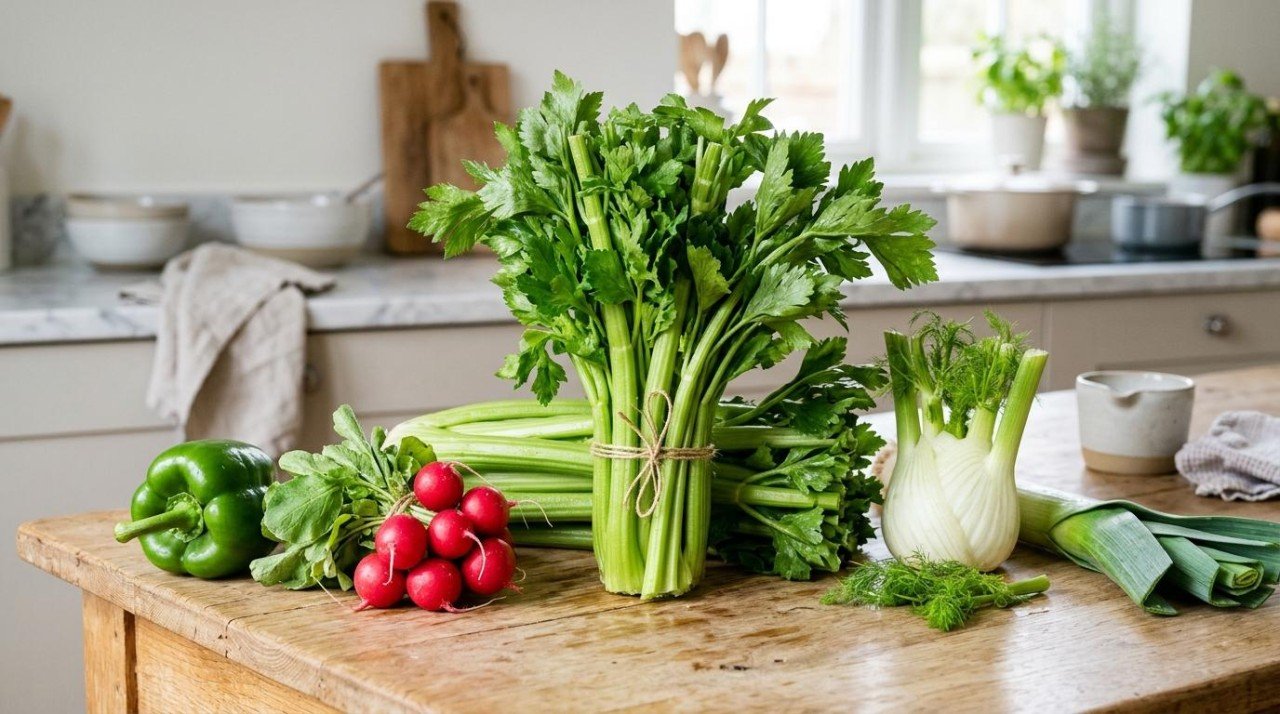
Fennel
- Swap: 1:1 by volume, chopped; 1 medium bulb (about 8 ounces, or 234 g) replaces 5 to 6 medium stalks
- Best for: Soups, stocks, stews, braises, stuffing, tomato sauces, roasted vegetables, and raw salads
- Skip it for: People who strongly dislike licorice, and Cajun or Tex-Mex dishes where anise doesn't fit
- Celery family: Yes
- Health notes: 3.1 g fiber per 100 g, nearly twice what celery has, plus more potassium (414 mg vs. 260 mg)
Fennel is the closest thing to a universal celery substitute. It has the same crisp, layered, watery texture, it cooks in about the same time, and its anise flavor softens into a gentle sweetness once it's sautéed or simmered. In a soup or stuffing, most people taste "a really good aromatic base" rather than licorice. Trim off the stalks and fronds, halve the bulb, cut out the tough triangular core, and chop it the same size as your onion.
The stalks that grow out of the top of the bulb look and act even more like celery. They're too fibrous to eat raw, but they're great chopped into a stock or soup base. Save the fronds and chop them over the finished dish like an herb.
Celeriac (Celery Root)
- Swap: 1:1 by volume, peeled and cut into 1/4-inch dice
- Best for: Soups, stocks, stews, pot roast, stuffing, mashed or puréed sides
- Skip it for: Raw salads where you want celery's watery crunch, and anyone avoiding celery for allergy reasons
- Celery family: Yes (it's the same species as celery)
- Health notes: Starchier than celery, at 42 calories per 100 g vs. 14, with a bit more vitamin K and vitamin C
Celeriac is a variety of celery grown for its knobby root instead of its stalks, so the flavor is unmistakably celery: earthy, nutty, and a little sweeter. It's the swap to reach for when the dish should taste exactly like it was made with celery. It's also a traditional choice in classic mirepoix, where the celery can be either the familiar stalks or celeriac.
The root is dense, so it needs a few more minutes than celery to soften. Cut it a little smaller than you would celery, and start it with the onions. The skin is thick and gnarled; the easiest way to peel it is to slice off the top and bottom, stand it flat, and cut the skin away with a knife. A whole root is usually far more than one recipe needs, so mash or roast the rest.
Celery Seed
- Swap: 1/8 teaspoon celery seed per stalk, up to about 1/4 teaspoon if you want stronger celery flavor (so 1/4 to 1/2 teaspoon for a typical 2-stalk soup)
- Best for: Soups, stews, stocks, stuffing, casseroles, coleslaw and potato salad dressings, pickles
- Skip it for: Anything that needs celery's crunch or bulk
- Celery family: Yes
Celery seed is the dried seed of the celery plant, and it tastes like an intensified version of the stalk: grassy, warm, and a little bitter. It's very strong, so start with the smaller amount; you can always add more, but too much turns a soup bitter. Add it with the aromatics so it has time to bloom, or crush it lightly first. For a soup that's missing celery's bulk too, pair the seed with an extra half onion or carrot, so the pot still has the same volume of vegetables.
Celery seed is also the secret in a lot of classic American dishes that don't contain celery at all: creamy coleslaw, potato salad, and Chicago-style hot dogs. In those recipes, a pinch of celery seed in the dressing gives you the flavor without any stalks.
Celery Salt
- Swap: 1/4 to 1/2 teaspoon celery salt per stalk, and cut the recipe's added salt by the same amount
- Best for: Soups, stews, stuffing, potato and egg salads, Bloody Marys, seasoning rubs
- Skip it for: Low-sodium cooking, and dishes that are already well salted
- Celery family: Yes
- Health notes: Celery salt is mostly salt, so this swap adds sodium unless you reduce the other salt
Celery salt is ground celery seed mixed with salt, so it works the same way as celery seed with one important catch: you're also adding salt. The fix is simple. Measure the celery salt, then take that same amount out of the recipe's salt. If the recipe says "salt to taste," add the celery salt first and taste before adding any plain salt. Celery seed is the better pick when you have both, because it gives you full control of the seasoning.
Dried Celery Flakes
- Swap: 2 tablespoons dried celery flakes per 1/4 cup chopped fresh celery (about 1/2 cup flakes per cup of fresh)
- Best for: Soups, stews, stuffing, casseroles, pasta sauces, pot roast
- Skip it for: Raw salads and anything that needs crunch
- Celery family: Yes
Dried celery flakes are dehydrated chopped celery, sold in the spice aisle. That ratio is McCormick's own guidance for its flakes, and it's a good starting point for any brand. The flakes rehydrate right in the pot, so in a soup or stew you just stir them in with the liquid. In a drier dish like stuffing or a casserole, soak them in a little hot broth or water for about 10 minutes first so they soften. They taste milder than celery seed and closer to cooked celery, which makes them the easiest spice-rack swap to get right.
Leeks
- Swap: 1:1 by volume, using the white and light green parts only, sliced and well rinsed
- Best for: Soups, stocks, chowders, braises, stuffing, pot pies
- Skip it for: Raw salads and Cajun dishes
- Celery family: No
Leeks don't taste like celery, but they fill the same role in a soup base: a mild, sweet, aromatic vegetable that melts into the background and makes the broth taste richer. They're the best swap when you're cooking for someone who can't eat celery or its relatives. Slice the leeks, then swish them in a bowl of cold water to wash out the grit trapped between the layers, and lift them out rather than pouring them into a strainer. For more on how leeks behave, see our leek substitutes guide.
Bok Choy Stems
- Swap: 1:1 by volume, using the white stems, sliced or chopped (save the leaves for the end of cooking)
- Best for: Stir-fries, noodle soups, fried rice, brothy soups, and in a pinch, raw salads
- Skip it for: Long-simmered stews, where the stems turn soft
- Celery family: No
- Health notes: 45 mg vitamin C and 105 mg calcium per 100 g, against celery's 3 mg and 40 mg
Bok choy stems are the closest texture match to celery among vegetables that aren't related to it: juicy, crisp, and mild, with a faint cabbage sweetness. They cook faster than celery, so in a soup, add the stems in the last 10 minutes; in a stir-fry, give them 2 to 3 minutes before the leaves go in. Raw, the stems are crunchier and juicier than you'd expect, though a little more watery than celery in a mayo-based salad.
Parsley Stems or Lovage
- Swap: For stock, add a big handful of parsley stems; for soup, use about 1 tablespoon chopped parsley leaves per stalk, stirred in at the end. Use lovage at about a third of the amount of celery, and taste as you go
- Best for: Stocks, broths, soups, and stews where celery's herbal note is what you're missing
- Skip it for: Anything that needs bulk or crunch
- Celery family: Yes (both)
Celery and parsley are close cousins, and parsley stems carry a lot of the same green, slightly bitter flavor. That's why they're a standard addition to stocks: toss them in whole and strain them out with everything else. For a bigger, brighter herb flavor, see our fresh parsley substitutes guide.
Lovage is a garden herb that tastes so much like celery that some cooks describe it as having more celery taste than celery does. If you grow it or can find it at a farmers' market, it's an excellent swap in soups and stocks, but it's strong, so start with a few leaves and add more after tasting.
Green Bell Pepper (for the Cajun Trinity)
- Swap: 1:1 by volume; about 2 medium stalks equals 1 medium green bell pepper, chopped
- Best for: Gumbo, jambalaya, étouffée, red beans and rice, dirty rice, sloppy joes, chili
- Skip it for: Delicate soups like chicken noodle, where it takes over
- Celery family: No
- Health notes: Much more vitamin C than celery: 80 mg per 100 g
The Cajun holy trinity is onion, celery, and green bell pepper, and in that combination, green pepper already does a similar job: grassy, slightly bitter, and vegetal. Doubling the pepper keeps the flavor balance closer to the original than any other swap, and nobody will notice a missing third of the trinity under a dark roux and a spoonful of spice. A pinch of celery seed gets you even closer. It works the other way too: our bell pepper substitutes guide recommends celery when the pepper's the one missing.
Or Just Leave It Out
- Swap: Replace the celery's volume with more onion and carrot (or just omit it)
- Best for: Soups, stews, sauces, and braises with lots of other flavors
- Skip it for: Dishes where celery is a main ingredient, like cream of celery soup
- Celery family: Carrots are; onions aren't
In a heavily seasoned stew, chili, or tomato sauce, celery is a quiet supporting player, and leaving it out is often the best choice. Add an extra half onion or carrot to keep the same volume of vegetables in the pot, and the dish will still taste complete. If you're short on onions too, our onion substitutes guide has you covered. And if the soup tastes a little flat at the end, a splash of lemon juice or vinegar usually helps more than anything else.
For Tuna Salad, Chicken Salad, and Raw Crunch
Raw celery is mostly about crunch and freshness. In tuna, chicken, egg, and potato salads, it breaks up the creamy dressing with something crisp and juicy, and it keeps that crunch for a day or two in the fridge. The best swaps here are firm, watery vegetables that hold up to mayo.
Jicama
- Swap: 1:1 by volume, peeled and cut into 1/4-inch dice (or sticks for dipping)
- Best for: Tuna, chicken, and egg salads, slaws, chopped salads, grain bowls, veggie platters
- Skip it for: Cooked dishes, where it stays crunchy but adds no flavor
- Celery family: No
- Health notes: 4.9 g fiber per 100 g, about three times what celery has, plus 20 mg vitamin C
Jicama is the best raw substitute for celery's crunch. It's crisp, juicy, and mildly sweet, a little like a cross between a water chestnut and a pear, and it holds its crunch for days in a dressed salad without getting watery. Peel off the thick brown skin with a knife or sturdy peeler, then dice it to the same size you'd cut celery. It doesn't have celery's savory edge, so in tuna or chicken salad, a pinch of celery seed in the dressing brings that back.
Water Chestnuts
- Swap: 1:1 by volume, drained and chopped
- Best for: Chicken salad, tuna salad, lettuce wraps, stir-fries, fried rice
- Skip it for: Soups and stews, where they add crunch but no flavor
- Celery family: No
Canned water chestnuts are a handy pantry swap: they stay crunchy even after cooking, which makes them the one raw-crunch substitute that also works in a stir-fry. They're mild and slightly sweet, so they won't change the flavor of a salad. Drain them, rinse them to get rid of the "canned" taste, and chop them into small pieces so they don't overpower everything else.
Fennel (Raw)
- Swap: 1:1 by volume, finely diced or thinly sliced
- Best for: Waldorf salad, chicken salad, tuna salad, slaws, green salads
- Skip it for: Anyone who doesn't like licorice; raw fennel tastes much stronger than cooked
- Celery family: Yes
Raw fennel has the closest texture to raw celery of anything on this list: crisp, layered, and juicy. The anise flavor is more noticeable raw, but it pairs especially well with apples, citrus, chicken, and tuna, which is why it's such a good fit for Waldorf salad. Slice it as thin as you can, or finely dice it for mayo-based salads, and add a squeeze of lemon if you're making it ahead.
Cucumber, Radishes, or a Crisp Apple
- Swap: 1:1 by volume, diced
- Best for: Tuna and chicken salads (cucumber or apple), green salads and slaws (radishes), snack platters (all three)
- Skip it for: Cooking, and salads you're making more than a day ahead
- Celery family: No
Cucumber is the easiest swap to find, but it's much more watery than celery. Use English or Persian cucumbers, scoop out the seeds, and pat the diced pieces dry before you mix them into a mayo-based salad, or it'll get soupy within a few hours. Radishes add crunch and a peppery bite. A diced crisp apple, like Honeycrisp or Granny Smith, gives chicken salad the sweet, crunchy contrast that grapes and celery usually provide together.
For a veggie platter or a snack of peanut butter on "logs," the swap is simply another sturdy dipper: carrot sticks, cucumber spears, jicama sticks, bell pepper strips, or apple slices.
The Healthier Angle: What a Swap Adds
Celery doesn't need a healthier substitute. It's mostly water, with 14 calories, 1.6 g fiber, and 260 mg potassium per 100 g, plus a useful amount of vitamin K. But it's not especially nutrient-dense, so many of the swaps on this list bring more to the table than celery does:
- More fiber: jicama (4.9 g per 100 g) and fennel (3.1 g), vs. celery's 1.6 g
- More vitamin C: green bell pepper (80 mg), bok choy (45 mg), and jicama (20 mg), vs. celery's 3 mg
- More calcium: bok choy, with 105 mg per 100 g
- More potassium and vitamin K: fennel, with 414 mg potassium and about twice the vitamin K
The amounts in a single soup or salad are small, so we're not going to pretend that swapping celery for fennel changes your health. The bigger win is variety. Any time you use a vegetable that isn't already in your weekly rotation, you've added one more plant to your week, which is the whole idea behind tracking plant diversity for gut health. A tuna salad with jicama or a soup built on fennel and leeks is an easy way to work in a vegetable you rarely buy.
If you want to see what a swap does to a specific recipe, that's where Eat Well Planner comes in. Open any recipe in the Recipe Playground, swap the celery for fennel, jicama, or bok choy, and the nutrition score updates live, showing what you gained and lost with each edit. Or let Make It Healthier suggest swaps for you, with every improvement verified by a nutrition calculator before you see it.
Take the Guesswork Out of Eating Well
Eat Well Planner helps you organize your favorite recipes, plan balanced meals, and automatically generate shopping lists — all in one place. Whether you're tracking macros, managing dietary restrictions, or just trying to stop asking "what's for dinner?", we've got you covered.
Our AI-powered tools can adapt any recipe to your dietary needs, help you discover new meals you'll love, and even log your nutrition effortlessly. It's meal planning made simple.
Start Organizing Your Meals — FreeWhat Not to Use
- Celery salt without adjusting the salt. It's mostly salt. Adding it on top of the recipe's full amount of salt is the most common way to oversalt a soup.
- Celery seed by the spoonful. A teaspoon in place of one stalk makes a soup taste bitter and medicinal. Start with 1/8 teaspoon per stalk.
- Cucumber in cooked dishes. It turns limp and watery in a soup or stir-fry. Keep it for raw salads.
- Celeriac, celery seed, or celery salt for a celery allergy. They're all the same plant. Leeks, bok choy, and green bell pepper are safer choices; check with your allergist about fennel, parsley, and carrots.
- Green bell pepper in a delicate soup. It's perfect in gumbo but takes over a chicken noodle soup or a light broth. Use fennel, leeks, or celeriac there.
The Bottom Line
For soups, stocks, stews, and stuffing, use fennel or celeriac for a fresh vegetable, or celery seed, celery salt, or dried flakes from the spice rack. Use leeks or bok choy stems if you're avoiding celery's whole family, and extra green bell pepper for Cajun dishes. For tuna salad, chicken salad, and other raw uses, jicama, water chestnuts, and fennel give you the best crunch. And in a well-seasoned stew, you can often just leave celery out.
When you're not sure which of these fits the dish in front of you, ask Eat Well Planner's AI recipe chat. Unlike a general guide, it has your actual recipe in context, so "I'm out of celery, what should I use?" gets an answer for that dish, down to the amount and when to add it. If you're cooking for someone with a celery allergy, Recipe Variations can rewrite the whole recipe without celery or its relatives, so you're not adapting it line by line. You can try it free.