The recipe says "1/4 teaspoon cayenne," and the spot in the spice drawer where the cayenne should be is empty. Cayenne is mostly there for heat, not flavor, so this is one of the easier spices to replace. The only real trick is getting the amount right, because the red jars that could stand in for it range from barely warm to several times hotter.
Two things decide which substitute to use. The first is form: a dry rub, spice blend or anything sprinkled on top needs a dry substitute, while a soup, sauce, chili or marinade can take hot sauce or fresh chiles. The second is heat: cayenne sits at 30,000 to 50,000 Scoville heat units (SHU), so most substitutes need a bigger spoonful to match it, and a couple need a smaller one.
All ratios below are per 1/4 teaspoon of ground cayenne, the amount most recipes use for a dish that serves 4. Scale up or down from there. When in doubt, start with half the suggested amount, taste, and add more. You can always add heat; you cannot take it out.
The Quick List
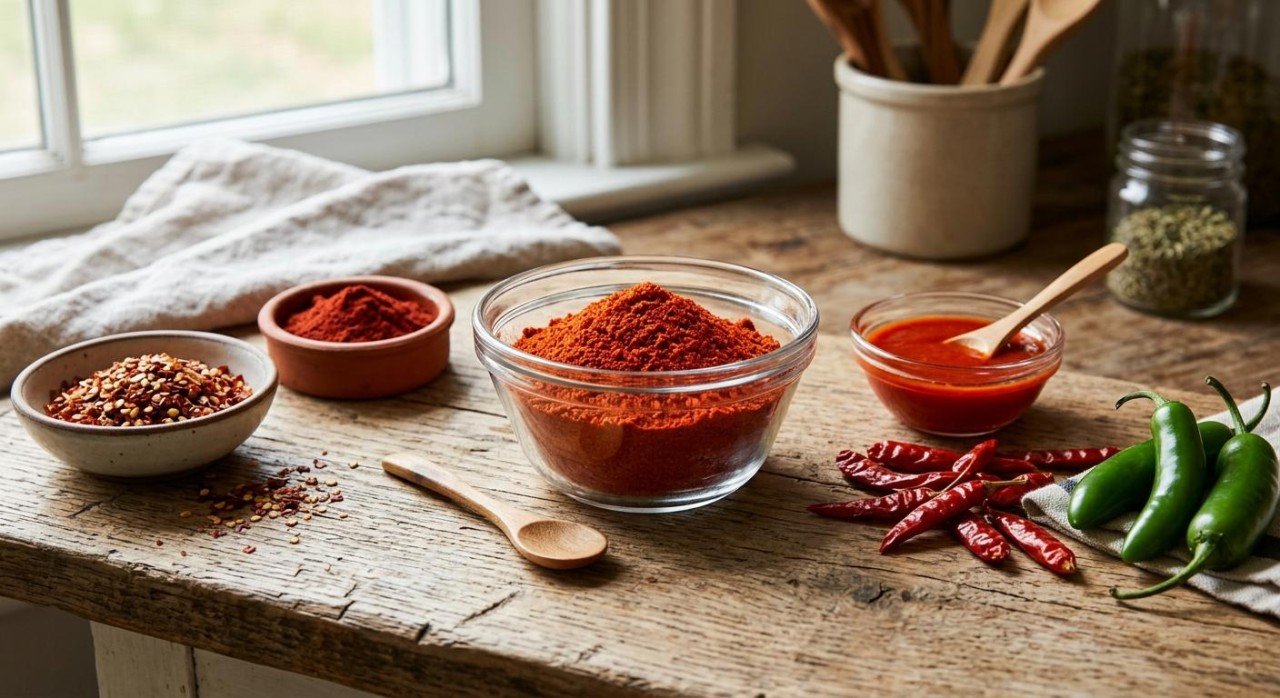
- Crushed red pepper flakes — the most common swap; use about double, and grind them for rubs
- Hot paprika — the closest dry match in color and texture, slightly sweeter and a bit milder
- Indian red chili powder — about the same heat as cayenne, swap 1:1 (not Kashmiri)
- Chile de arbol powder — clean heat with a nutty edge; use about double
- Thai chili powder or dried Thai chiles — hotter than cayenne, use half
- Tabasco-style hot sauce — easy heat for sauces, soups and marinades; not for rubs
- Fresh hot chiles — serrano, Thai or red jalapeño for anything that cooks in liquid or oil
- Aleppo pepper — fruity, gently warm flakes for finishing and Mediterranean dishes
- Gochugaru — sweet, mild Korean chile flakes, great on vegetables and in stews
- Chipotle powder — smoky and milder, best in barbecue rubs, chili and beans
- Chili powder — a last resort for Tex-Mex dishes; much milder and brings cumin along
How Hot Is Each Substitute?
The heat ranges below come from PepperScale's Scoville listings unless noted. Use them to adjust the ratio when your jar is different from the one in the recipe:
- Thai chiles: 50,000 to 100,000 SHU, about twice as hot as cayenne
- Indian red chili powder: 40,000 to 65,000 SHU, roughly equal to cayenne
- Cayenne: 30,000 to 50,000 SHU
- Crushed red pepper flakes: around 15,000 to 30,000 SHU overall, about half of cayenne, since the blend is usually cayenne-based but diluted
- Chile de arbol: 15,000 to 30,000 SHU, about half of cayenne
- Serrano: 10,000 to 23,000 SHU
- Aleppo pepper: about 10,000 SHU, often milder as sold, since the seeds are usually removed
- Gochugaru: 4,000 to 8,000 SHU
- Chipotle: 2,500 to 8,000 SHU
- Tabasco Original: 2,500 to 5,000 SHU
- Chili powder (the American blend): about 1,000 to 2,000 SHU
- Kashmiri chili powder: 1,000 to 2,000 SHU, mild and mostly used for color
- Frank's RedHot Original: about 450 SHU
Hot paprika is not on the list because its heat varies a lot from brand to brand. It is reliably milder than cayenne, but how much milder depends on the jar.
Match the Substitute to the Dish
- Dry rubs, spice blends and seasoned flour (fried chicken, blackened fish, roasted nuts): hot paprika, Indian red chili powder, chile de arbol powder, Thai chili powder, or ground red pepper flakes. Everything has to be dry and fine.
- Sauces, soups, chili, curries and braises: almost anything works. Red pepper flakes, hot sauce, fresh chiles, Indian chili powder and chipotle powder all disappear into a long simmer.
- Marinades and dressings: hot sauce, fresh chiles, or any of the powders. Flakes are fine here too.
- Deviled eggs, popcorn, dips and finishing sprinkles: hot paprika for the same red look, Aleppo pepper for a gentler, fruitier finish
- Baking, hot chocolate and sweets (Mexican chocolate cookies, spiced brownies): fine powders only. Indian red chili powder or Thai chili powder in a smaller amount; skip flakes, which stay chewy, and hot sauce, which adds vinegar.
Crushed Red Pepper Flakes
- Swap: 1/4 teaspoon cayenne → 1/2 teaspoon crushed red pepper flakes. For rubs and smooth sauces, grind them fine first.
- Best for: Pasta sauces, soups, chili, stir-fries, marinades, rubs (ground)
- Skip it for: Smooth sauces, dips and baked goods where whole flakes would show or stay chewy
Red pepper flakes are the cayenne substitute most people already own, and the match is close, because the flakes are usually made with a base of cayenne pepper. They also contain seeds and lighter-colored bits of pod, so they are less concentrated. PepperScale suggests using about double the amount of flakes. The heat is also spottier: you get bursts where a flake lands rather than even warmth throughout.
Grinding fixes both problems. A spice grinder, mortar and pestle, or even a few seconds in a clean coffee grinder turns flakes into a coarse powder that works in a rub or blackening blend. In anything that simmers for 20 minutes or more, whole flakes soften and release their heat into the liquid, so grinding is optional. Blooming them in the cooking oil for 30 seconds before adding the rest of the ingredients spreads the heat even better.
Hot Paprika
- Swap: 1/4 teaspoon cayenne → 1/4 to 1/2 teaspoon hot paprika. Start at 1/4, taste, and add more.
- Best for: Dry rubs, deviled eggs, goulash, roasted potatoes, seasoned flour, dips, sprinkling on top
- Skip it for: Dishes that need a lot of heat from a small amount
- Health notes: Same story as cayenne: virtually no sodium, a little vitamin A from the red pepper carotenoids
Hot paprika is the closest swap in look and texture: the same fine red powder, the same color in the finished dish. PepperScale calls it the closest match for ground cayenne, with a starting ratio of about one for one, but notes that heat varies by brand. Hot paprika also has an earthy sweetness that cayenne does not, which works well in goulash, chicken paprikash and roasted vegetables.
Check the label. A jar that just says "paprika" is almost always the sweet, mild kind, which has color and flavor but very little heat. Hungarian hot paprika and Spanish hot paprika (picante) are what you want. If you only have sweet or smoked paprika, use it for the color and add a pinch of red pepper flakes or a dash of hot sauce for the heat. Our smoked paprika substitutes guide explains the different paprikas in more detail.
Indian Red Chili Powder
- Swap: 1/4 teaspoon cayenne → 1/4 teaspoon Indian red chili powder
- Best for: Everything: curries, rubs, soups, chili, baking, hot chocolate
- Skip it for: Nothing, as long as it is the hot kind and not Kashmiri
If you cook Indian food, you may already have a cayenne substitute without realizing it. The plain "red chili powder" or "lal mirch" sold at Indian grocers is ground hot red chiles, often varieties like Guntur, and Piping Pot Curry rates it at 40,000 to 65,000 SHU, about the same as cayenne. It is a fine, dry powder with a clean heat, so it works one for one anywhere cayenne does.
The one to watch is Kashmiri chili powder. The same source rates it at just 1,000 to 2,000 SHU. It is prized for its deep red color, not heat, so swapping it 1:1 for cayenne gives you a red dish with almost no kick. If Kashmiri is all you have, use it like hot paprika (1/2 teaspoon or more) and add heat from another source.
Also watch for the confusing label "chilli powder" (two l's) on British or Indian brands. It usually means pure hot chile powder, not the mild American chili powder blend.
Chile de Arbol Powder
- Swap: 1/4 teaspoon cayenne → 1/2 teaspoon ground chile de arbol, or 1 small dried arbol chile, stemmed and ground
- Best for: Mexican dishes, salsas, chili, rubs, roasted nuts, soups
- Skip it for: Recipes where a nutty, slightly smoky note would clash (delicate cream sauces)
Chile de arbol is a long, thin Mexican chile at 15,000 to 30,000 SHU, around half of cayenne's heat. PepperScale describes its flavor as earthy, a little nutty and smoky, with a light grassy note, and stronger once dried. That makes it a slightly more interesting stand-in than cayenne, which tastes mostly of plain heat.
Ground arbol is sold in Mexican groceries and some spice shops. More often you will find whole dried arbol chiles. Pull off the stems, shake out some seeds if you want less heat, and grind them, or toast them for 30 seconds in a dry skillet first for a deeper flavor. Pod size varies, so taste and adjust.
Thai Chili Powder or Dried Thai Chiles
- Swap: 1/4 teaspoon cayenne → 1/8 teaspoon Thai chili powder, or 1 small dried Thai chile, crushed. Taste and add more.
- Best for: Stir-fries, curries, soups, dipping sauces, marinades
- Skip it for: Kids and anyone heat-averse, or anywhere a heavy hand would be hard to undo
This is one of the few substitutes that runs hotter than cayenne. Thai chiles measure 50,000 to 100,000 SHU, about double, and PepperScale suggests starting with about half as much. Thai chili powder, sold in Asian groceries, is the same chile ground, with the same sharp, clean heat.
Because it is so hot, measure carefully, and use a 1/8 teaspoon measure rather than a pinch between your fingers. Rinse your hands after crushing whole chiles and do not touch your eyes.
Take the Guesswork Out of Eating Well
Eat Well Planner helps you organize your favorite recipes, plan balanced meals, and automatically generate shopping lists — all in one place. Whether you're tracking macros, managing dietary restrictions, or just trying to stop asking "what's for dinner?", we've got you covered.
Our AI-powered tools can adapt any recipe to your dietary needs, help you discover new meals you'll love, and even log your nutrition effortlessly. It's meal planning made simple.
Start Organizing Your Meals — FreeTabasco-Style Hot Sauce
- Swap: 1/4 teaspoon cayenne → start with 1/2 teaspoon Tabasco or a similar thin, vinegary red sauce, taste, and go up to about 1 teaspoon
- Best for: Soups, chili, gumbo, sauces, marinades, deviled egg filling, dressings, Bloody Marys
- Skip it for: Dry rubs, seasoned flour, baking and anything that must stay dry
- Health notes: Tabasco Original has 35 mg of sodium per teaspoon, but many thicker sauces are much saltier, so check the label
Hot sauce is the easiest substitute when the dish is already wet. Tabasco Original is just aged red peppers, salt and distilled vinegar, at 2,500 to 5,000 SHU. That is much milder than cayenne, but a teaspoon of sauce is mostly liquid, so you need noticeably more sauce than you would powder. PepperScale notes that it also adds vinegar tang, which is welcome in gumbo, greens, bean soups and marinades and less so in a sweet or creamy dish.
Not every hot sauce will get you there. Frank's RedHot Original is made from aged cayenne red peppers, vinegar, water, salt and garlic, but PepperScale puts the finished sauce at only about 450 SHU. You would need so much of it to match the heat of cayenne that the vinegar and salt would take over the dish. Use Frank's for flavor in wings or buffalo dip, and add flakes if you want real heat. Thick sauces like sriracha bring garlic and sugar, so they work in stir-fries and dipping sauces but taste out of place in a classic Cajun dish.
Fresh Hot Chiles
- Swap: 1/4 teaspoon cayenne → about 1 small fresh serrano, 1/2 fresh Thai chile, or 1 to 2 red jalapeños, minced. Seed them for less heat.
- Best for: Soups, curries, chili, stir-fries, salsas, marinades, anything sauteed
- Skip it for: Rubs, blends, baking and anything that needs a dry spice
Fresh chiles add heat plus a bright, green, slightly fruity flavor that dried cayenne does not have. Serranos are about 10,000 to 23,000 SHU, roughly half of cayenne. Jalapeños are much milder at 2,500 to 8,000 SHU, and PepperScale notes you may not reach cayenne's heat with them at all. A red jalapeño is a better pick than a green one if you can find it. Thai chiles run hotter than cayenne, so use half of one.
Fresh chiles vary a lot from pod to pod, even within the same variety, so taste a tiny piece before adding it. Cook them in the oil at the start for a rounder heat, or stir them in at the end for a sharper one. Our jalapeño substitutes guide compares fresh chiles in more detail.
Aleppo Pepper
- Swap: 1/4 teaspoon cayenne → 1/2 to 1 teaspoon Aleppo pepper
- Best for: Finishing roasted vegetables, eggs, hummus, grilled meats, Mediterranean and Middle Eastern dishes, salad dressings
- Skip it for: Dishes that need real, sharp heat, like Cajun cooking or hot wings
Aleppo pepper is a coarse, oily, burgundy-red flake from Syria and Turkey. It rates about 10,000 SHU, and the flakes are often milder still because the seeds are removed. It has a tomato-like brightness, a raisin-like tang and a faint saltiness from the way it is dried. It is not going to match cayenne's heat without using a lot, but for dishes where cayenne is a pinch of warmth on top, it is arguably an upgrade.
Use it where you can see and taste it: over fried eggs, on a bowl of hummus, in a lemon vinaigrette, or on roasted cauliflower. In a long-simmered dish, its fruity notes mostly fade and you are left with mild warmth.
Gochugaru
- Swap: 1/4 teaspoon cayenne → 1 teaspoon gochugaru, more to taste. Grind it fine for rubs.
- Best for: Stews, soups, stir-fries, roasted vegetables, marinades, Korean dishes
- Skip it for: Recipes that need a lot of heat from a small amount
Gochugaru is Korean red chile flakes, the chile in kimchi. At 4,000 to 8,000 SHU, it is much milder than cayenne, roughly jalapeño heat, and has a sweet, slightly smoky flavor. It is usually made seedless and sold in a coarse flake or a fine powder.
Because it is mild, you need a lot more of it to get close to cayenne's heat, and that much gochugaru also adds a noticeable sweet red-pepper flavor and a lot of color. That is a plus in a vegetable stew, a pot of beans or a tray of roasted carrots, and a minus in a recipe that just wants clean heat. For more heat without more flavor, use gochugaru for half and red pepper flakes for the rest.
Chipotle Powder
- Swap: 1/4 teaspoon cayenne → 1/2 to 1 teaspoon chipotle powder
- Best for: Barbecue rubs, chili, black beans, sweet potatoes, burgers, taco meat
- Skip it for: Dishes where smoke would clash, like curries, Asian stir-fries and baked goods
Chipotle powder is ground smoke-dried red jalapeños at 2,500 to 8,000 SHU, so it is much milder than cayenne, with a strong smoky flavor. PepperScale does not recommend it as a general cayenne substitute for exactly that reason: the smoke can redirect the dish.
That is a problem in a curry and an improvement in a dry rub for ribs, a pot of chili or a tray of roasted sweet potatoes. Use it where smoke belongs, and add a pinch of red pepper flakes if you want the heat to match too. A minced chipotle from a can of chipotles in adobo works the same way in wet dishes; our chipotles in adobo substitutes guide covers that can in more detail.
Chili Powder
- Swap: 1/4 teaspoon cayenne → 1 teaspoon chili powder for flavor, plus a pinch of red pepper flakes if you want the heat. Cut back on any cumin and salt in the recipe.
- Best for: Chili, taco meat, Tex-Mex rubs, bean dishes
- Skip it for: Curries, Cajun dishes, Asian dishes, baking and anything that needs heat without extra flavor
American chili powder is a seasoning blend of mild ground chiles with cumin, garlic, oregano and often salt, at around 1,000 to 2,000 SHU, many times milder than cayenne. PepperScale notes it takes noticeably more to match the heat, which also brings in all those other seasonings. In a pot of chili that is fine, because the dish already has cumin and oregano. In anything else, it changes the flavor.
Use it as a last resort, and only in Tex-Mex cooking. Our chili powder substitutes guide breaks down what is in the jar.
Healthier Upgrade: Use Heat to Cut the Salt
Cayenne itself is about as healthy as an ingredient gets. USDA data puts a teaspoon at 6 calories, 1 mg of sodium, 37 mcg of vitamin A (RAE) and about 0.5 g of fiber. Nobody eats a teaspoon at once, so its nutrients are small, but so is everything else, and most of the dry substitutes above are just as clean. The thing to watch is what comes along with the heat:
- Pure ground chiles (hot paprika, Indian chili powder, arbol, Thai chili powder, red pepper flakes, gochugaru): essentially salt-free. These are the best swaps nutritionally.
- Hot sauces: Tabasco Original is a modest 35 mg of sodium per teaspoon, but thicker sauces and wing sauces can be much saltier. Read the label, especially if you are using a tablespoon or more.
- Chili powder blends: many contain salt, so the recipe's salt may need to come down.
The bigger opportunity is using heat to do some of the work salt usually does. Spices and chiles make food taste bold, and in the 20-week SPICE trial summarized by Harvard's Nutrition Source, adults coached to season with spices and herbs in place of salt ended up excreting about 957 mg less sodium per day than a self-directed control group. A pinch of cayenne or a teaspoon of flakes in soups, beans and roasted vegetables makes it easier to go lighter on the salt shaker.
There is also some interesting, if early, research on chiles themselves. In an Italian study of 22,811 adults published in the Journal of the American College of Cardiology, people who ate chili peppers four or more times a week had 23% lower all-cause mortality over about eight years than those who rarely ate them. The study was observational, so it cannot prove chiles caused the difference. The regular chili eaters also ate a more Mediterranean-style diet, and an accompanying editorial cautioned that the overall eating pattern likely matters most. The takeaway is a modest one: chiles are a great way to make vegetables, beans and whole grains taste exciting, and that eating pattern is good for you.
What Not to Use
- Sweet or smoked paprika on its own: Right color, almost no heat. Fine for color; add flakes or hot sauce for the kick.
- Kashmiri chili powder 1:1: At 1,000 to 2,000 SHU, it is mostly color. A dish that should be spicy will come out mild.
- Black or white pepper: Their heat comes from piperine, not capsaicin, and feels sharper and more aromatic than cayenne's slow burn. A little is fine in a pinch, but a quarter teaspoon of black pepper in place of cayenne will taste peppery, not spicy.
- Superhot sauces and powders (ghost pepper, habanero, Carolina Reaper): Many times hotter than cayenne. Unless you know the product, a drop can be too much.
- Sweet chili sauce: Mostly sugar with mild chile. It adds sweetness, not cayenne-level heat.
- Curry powder or Cajun seasoning: Both often contain cayenne, but they also bring turmeric, cumin or thyme and, in many Cajun blends, a lot of salt. They change the dish more than they replace one spice.
Which Cayenne Substitute Should You Use?
For most recipes, grab the red pepper flakes: use 1/2 teaspoon for every 1/4 teaspoon of cayenne, and grind them for rubs. If you have hot paprika, it is the closest look-alike for rubs, deviled eggs and sprinkling on top. Indian red chili powder is a true 1:1 swap, as long as it is not Kashmiri. In soups, sauces and marinades, a teaspoon of Tabasco-style hot sauce or a minced fresh chile does the job. And if the dish can use a little more flavor than cayenne gives, chipotle, Aleppo and gochugaru each turn a substitution into an upgrade, as long as you accept that they are milder.
Not sure how much heat your specific recipe can take? Eat Well Planner's AI recipe chat can answer with the recipe in front of it: ask "I'm out of cayenne, I have red pepper flakes and hot sauce, what should I use and how much?" and it will work from the dish you are actually making, including whether a rub needs to stay dry. If you are cutting back on salt, Make It Healthier suggests ingredient swaps like using spices to cut sodium, each checked against the recipe's nutrition score, and the Recipe Playground shows exactly what a swap does to the recipe's nutrition before you commit.