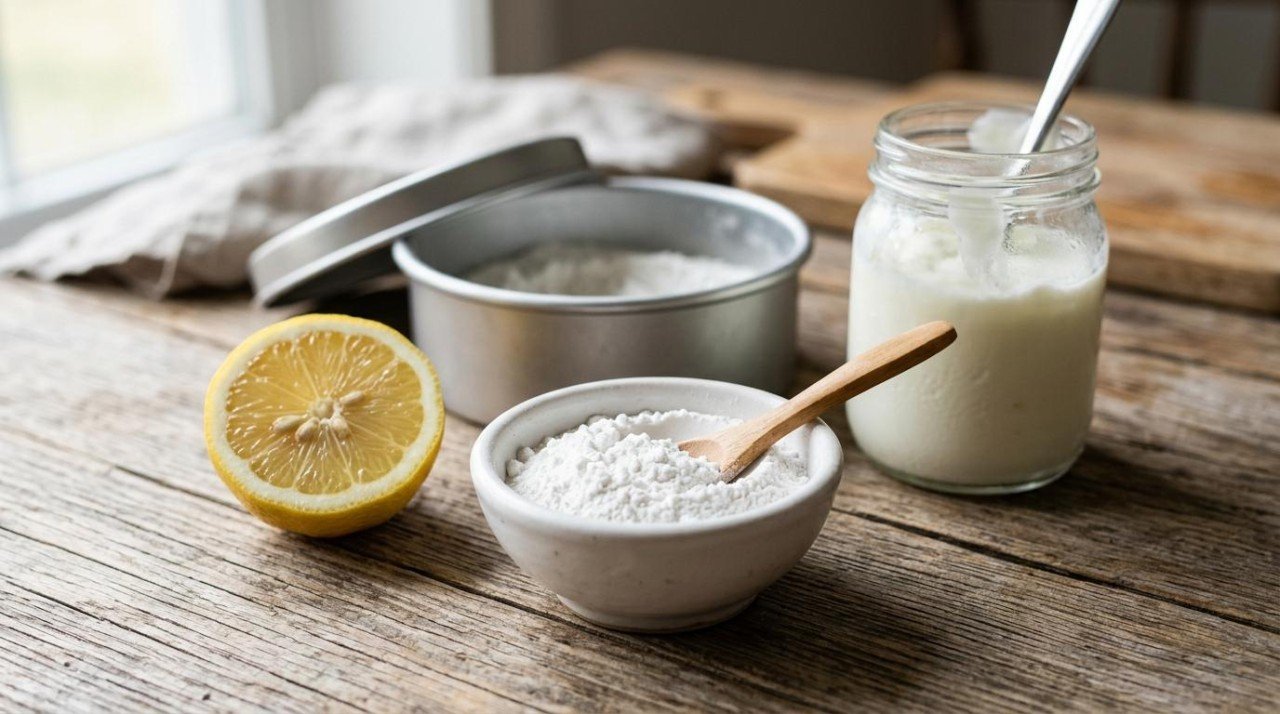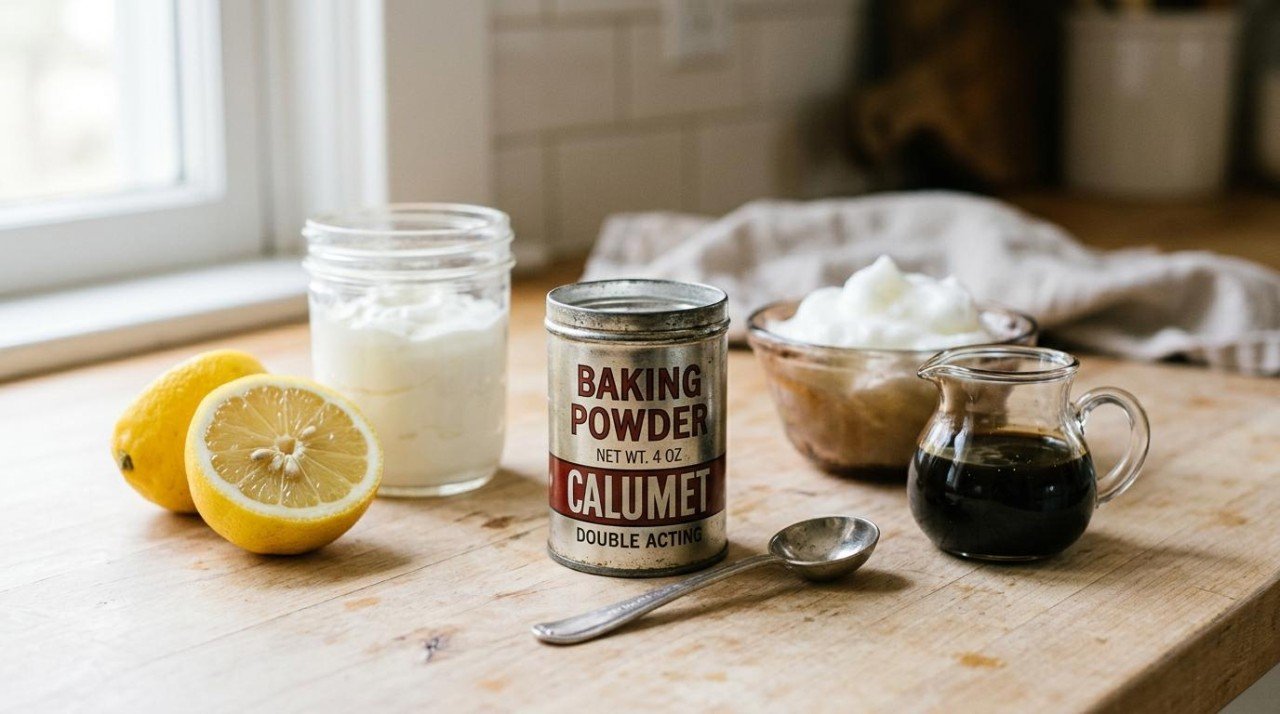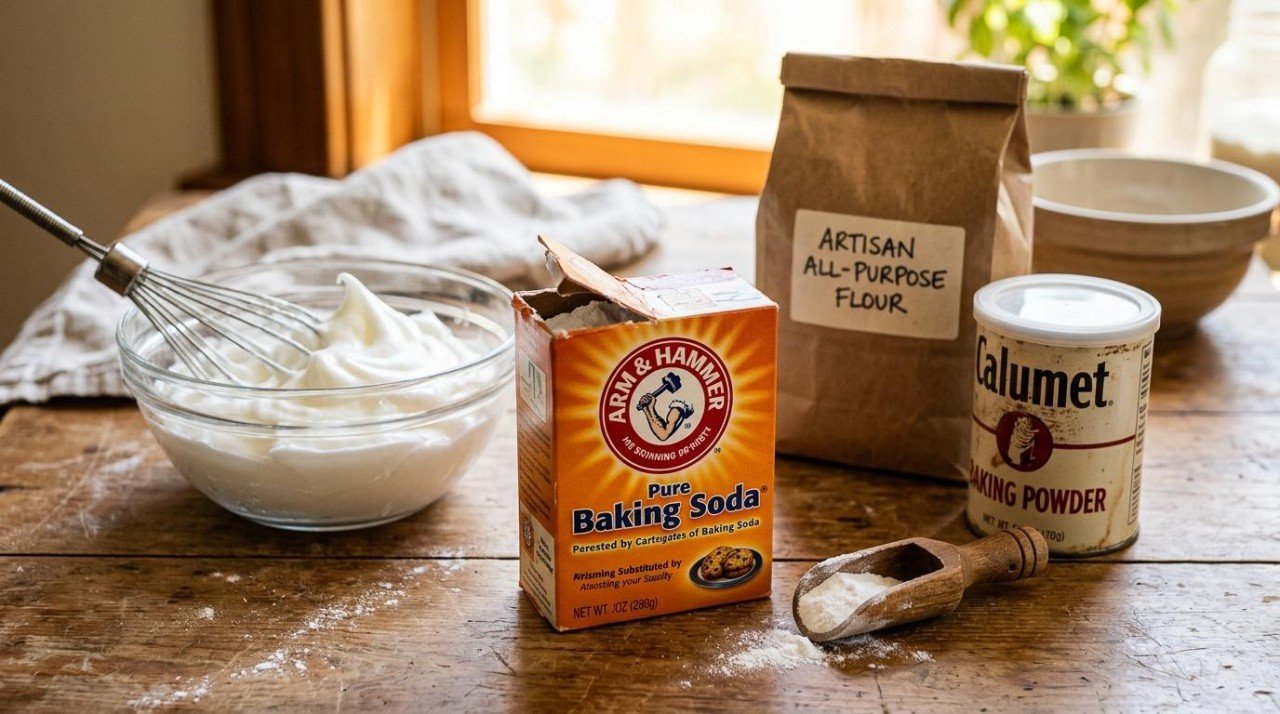
The dry ingredients are half measured, the oven is preheating, and you tip the box over the bowl to find it empty. Baking soda is one of those ingredients you never think about until the exact moment you need it. The good news: most recipes can be rescued with something else you likely have on hand.
The best stand-in depends on how much soda the recipe calls for and what the soda is actually doing. In a lot of recipes it is just there to make things rise, and a swap works fine. But baking soda quietly does two other jobs in some recipes — it helps things brown and it helps cookies spread — and no substitute copies those perfectly. So before you swap, it is worth a quick look at what you are making.
Here are the substitutes that genuinely work, with exact ratios, plus an honest section on when you are better off pausing and getting more soda.
The Quick List
- Baking powder — the go-to; use three times as much and cut the salt
- Potassium bicarbonate (plus a pinch of salt) — a sodium-free 1:1 swap, great for low-sodium baking
- Self-rising flour — when it is also replacing the flour in the recipe
- Baker\'s ammonia — old-school crispness for thin cookies and crackers only
- Whipped egg whites — pure mechanical lift when you have no chemical leavener at all
How Baking Soda Works (30 Seconds, Then the Swaps)
Baking soda is pure sodium bicarbonate — an alkaline (high-pH) powder. On its own it does nothing. It needs an acid in the batter to react with, and that reaction releases the carbon dioxide bubbles that make things rise. That is why recipes with baking soda almost always include an acidic ingredient: buttermilk, yogurt, brown sugar, molasses, cocoa, or a splash of vinegar.
Keep that in mind, because it explains the whole substitution list. Some swaps bring their own acid; some, like baking soda, still need the acid already in your recipe. Match the swap to what your recipe has and you will get it right.
Baking Powder
- Swap: 1 teaspoon baking soda → 3 teaspoons (1 tablespoon) baking powder
- Also: cut back the salt the recipe adds, since baking powder brings its own sodium
- Best for: Most everyday recipes calling for 1/2 to 1 teaspoon of soda — muffins, quick breads, pancakes, cakes
- Skip it for: Thin, chewy cookies that rely on soda for spread and deep browning (more on that below)
This is the substitute almost everyone reaches for, and for good reason: baking powder is mostly baking soda with a dry acid and a little cornstarch already mixed in. Because that acid is packed in with it, baking powder is only about a third as strong, which is why you need roughly three times as much.
One thing to know: baking powder brings its own acid to the party. If your recipe already has an acidic ingredient, that acid now goes unused and the batter stays a little more acidic than the original recipe intended. In most bakes you will never notice. In cookies you sometimes will — they come out a touch cakier and paler. And if you have to use a large amount of baking powder to hit that 3:1 ratio, it can leave a faintly bitter, metallic edge, so this swap is happiest when the original called for a small amount of soda.
Potassium Bicarbonate (the Low-Sodium Upgrade)
- Swap: 1:1 with baking soda
- Also: add about 1/4 to 1/2 teaspoon of salt per teaspoon to replace the flavor the sodium would have contributed
- Best for: Anyone watching sodium; it behaves chemically almost exactly like baking soda
- Health notes: Sodium-free, and it adds a little potassium instead — a genuine win for blood pressure
Potassium bicarbonate is the closest chemical match to baking soda on this list. It is alkaline, it needs the same acid in your recipe to activate, and it leavens at the same one-to-one strength. The only real difference is in the name: it swaps sodium for potassium.
That makes it the standout pick for anyone managing blood pressure or otherwise cutting back on sodium. A teaspoon of baking soda carries a bit over 1,200 mg of sodium, so in a recipe with several teaspoons, switching to potassium bicarbonate is a meaningful reduction. Because baking soda also contributes a little flavor and browning through its sodium, most sources suggest adding a small amount of salt back in — use less than the swap suggests if you are keeping sodium low, and taste-test in a small batch first. It is not a pantry staple, but it is easy to order and worth keeping around if low-sodium baking is a regular thing for you.
Self-Rising Flour
- Swap: Replace the flour in the recipe 1:1 with self-rising flour, then omit the baking soda and the added salt
- Best for: Biscuits, pancakes, quick breads, and simple cakes with a standard flour-to-leavener ratio
- Skip it for: Recipes leaning heavily on an acidic ingredient, unless you also swap that out
Self-rising flour is regular flour with leavening and salt already blended in — about 1 1/2 teaspoons of baking powder and 1/4 teaspoon of salt per cup. So this is not a spoon-for-spoon swap; it replaces the flour and the leavener at the same time. Use it 1:1 for the all-purpose flour your recipe calls for, then leave out the baking soda and salt.
Because the leavening in self-rising flour is baking powder, the same acid caveat applies: it does not need extra acid, so a recipe built around buttermilk or yogurt can end up slightly tangy and a bit flatter. If that is your recipe, swap the acidic liquid for plain milk to even things out. If you find yourself doing this often, it is worth reading up on flour substitutes in general so you know how each type behaves.
When you are unsure whether a swap like this will throw off your specific recipe, this is exactly the kind of question the Eat Well Planner AI recipe chat is built for. Instead of general guidance, you can pull up the actual recipe you are making and ask which substitute fits it — it reads your ingredient list, notices whether you already have an acid in there, and tells you what to adjust. It is the difference between a blog post that covers the average case and an answer for the exact bowl in front of you.
Take the Guesswork Out of Eating Well
Eat Well Planner helps you organize your favorite recipes, plan balanced meals, and automatically generate shopping lists — all in one place. Whether you're tracking macros, managing dietary restrictions, or just trying to stop asking "what's for dinner?", we've got you covered.
Our AI-powered tools can adapt any recipe to your dietary needs, help you discover new meals you'll love, and even log your nutrition effortlessly. It's meal planning made simple.
Start Organizing Your Meals — FreeBaker\'s Ammonia (for Thin, Crisp Cookies Only)
- Swap: 1:1 with baking soda
- Best for: Thin, crisp cookies and crackers — think gingersnaps, wafers, springerle, and old-fashioned crackers
- Skip it for: Cakes, muffins, or anything thick and moist
Baker\'s ammonia (ammonium bicarbonate) is the leavener bakers used before modern baking soda and powder existed, and it still has one specialty it does better than either: it makes thin baked goods incredibly light and crisp. As it heats, it breaks down into gas and escapes completely, leaving behind an airy snap.
The catch is right there in the name. In a thin cookie or cracker, the ammonia gas bakes off entirely and you never smell it. In a thick, moist crumb like a cake or muffin, that gas gets trapped and cannot escape, leaving an unpleasant smell. So reach for this one only when you are baking something thin and crisp — and in that narrow lane, it is genuinely the best tool for the job.
Whipped Egg Whites
- Swap: No fixed ratio — separate the eggs the recipe already uses, whip the whites to soft peaks, and fold them in at the very end
- Best for: Pancakes, waffles, and sponge-style cakes where you simply need lift and have no chemical leavener at all
- Skip it for: Cookies, dense batters, or anything that needs browning
This is the emergency option when your recipe already uses eggs and you have no baking soda, no powder, and no time to shop. Whipping egg whites folds air into the batter mechanically, which gives you lift without any chemistry. It will not brown your bake or make cookies spread, but for something like pancakes or a light cake, folding in whipped whites can carry the rise on its own.
It works best in batters that are already fairly loose and where a fluffy, tender texture is welcome. If eggs are central to what you are baking, it is worth understanding all the jobs they do — our guide to substitutes for eggs in baking breaks that down.
When You Cannot Really Swap It
Here is the honest part. In plenty of recipes, baking soda is only there to make things rise, and any swap above will do. But in some recipes soda is doing more than lifting, and no substitute reproduces it:
- Browning. Baking soda raises the dough\'s pH, and an alkaline dough browns faster and deeper through the Maillard reaction. That golden color on a soda-leavened cookie or quick bread is partly the soda\'s doing.
- Spread. That same higher pH weakens gluten, so cookies relax and spread out before they set. Swap in baking powder and the dough stays more acidic, holds its shape, and puffs up instead.
- Signature texture and color. Chewy chocolate chip cookies, dark quick breads, and the deep color and flavor of pretzels and bagels all lean on alkalinity. Take the soda out and you change the character of the finished thing.
So if you swap baking powder into a chewy cookie recipe, do not be surprised when the cookies come out paler, puffier, and more cake-like — that is the chemistry, not a mistake. It is still a perfectly good cookie, just a different one. When baking soda is clearly central to how a recipe looks and feels, the best move is often to pause and pick up a fresh box. It is cheap, it lasts for ages, and no substitute quite matches it.
The Bottom Line
For most recipes, three teaspoons of baking powder per teaspoon of soda (and a little less salt) will get you across the finish line. If you are baking low-sodium, potassium bicarbonate is a smart one-to-one upgrade. Reach for self-rising flour when it can do double duty, baker\'s ammonia for thin and crisp, and whipped egg whites when you have nothing else but eggs. Just remember that when soda is there for browning and spread, a swap changes the result — and sometimes the right call is to wait.
The trickiest swaps are always the ones that depend on your specific recipe. That is where Eat Well Planner earns its keep: import any recipe, ask the AI chat which substitute fits it, and get an answer that accounts for the acids and ratios already in your bowl. And when you want to make a recipe genuinely better rather than just make do, its Make It Healthier feature suggests swaps and checks the real nutritional gain before recommending them — so the next time you are staring at an empty box, you have a tool that does the thinking with you.