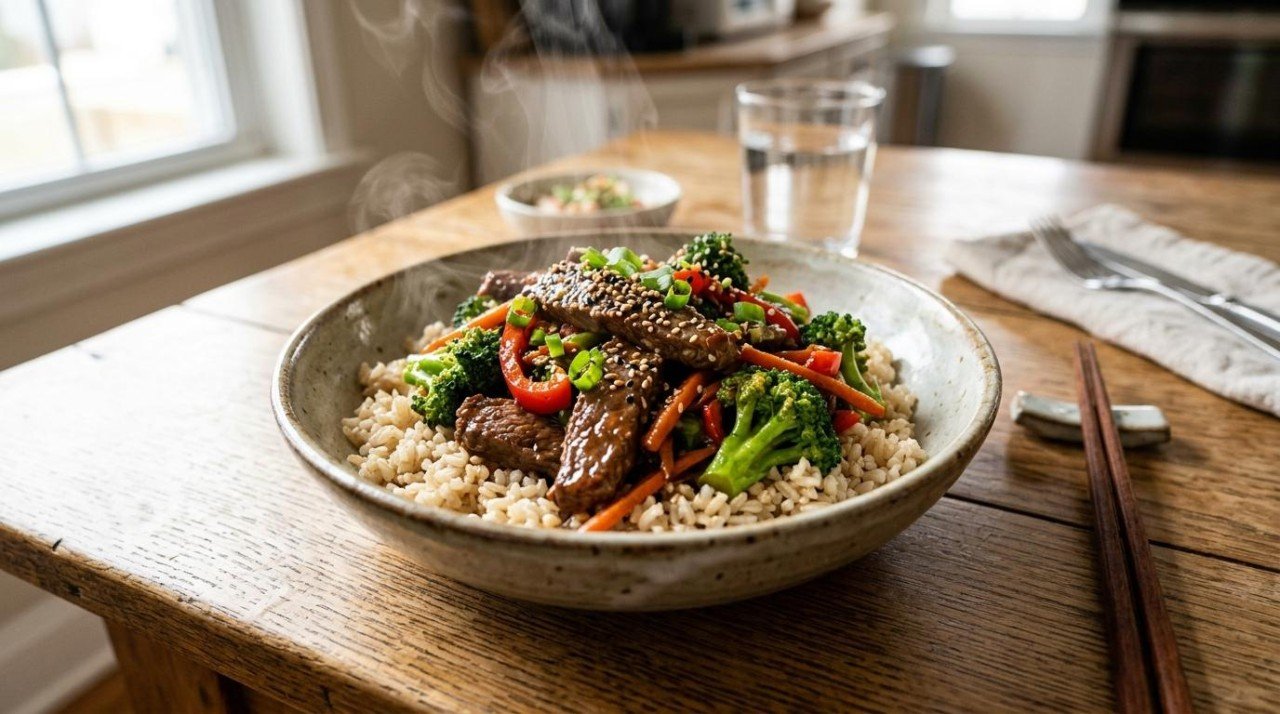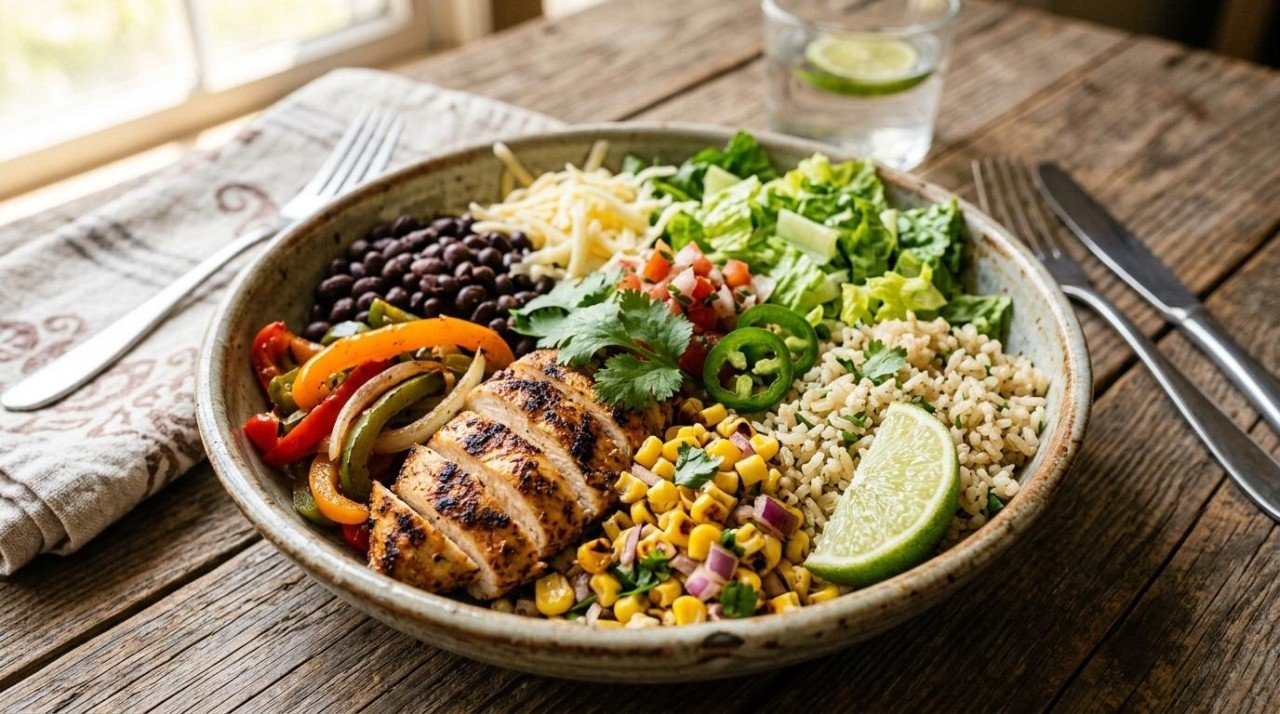
The Chipotle burrito bowl is the rare fast-casual meal people defend with real conviction, and mostly they are right to. It is built in front of you out of things you can name: rice, beans, grilled chicken, salsa. No mystery sauce, no fryer.
So we did not expect a disaster when we ran the standard order through our Nutrition Score. We got 51 out of 100 — genuinely middling, neither the health food some people assume nor the calorie bomb others do. The interesting part was what happened next. We scored fourteen versions of the same bowl, changing one thing at a time, and the results almost completely contradict the way people talk about ordering here.
Skipping the rice, the move everyone makes: worth 3 points. Skipping the beans, the move nobody thinks twice about: minus 11. The single best free change on the whole menu turned out to be a topping most people never question. Here is the full ranking, and the exact order that scored highest without turning into a sad bowl of lettuce.
The standard order: what is in it and how it scores
Our baseline is the bowl most people build: chicken, cilantro-lime white rice, black beans, fresh tomato salsa, cheese, and sour cream. Using Chipotle's own published portions — 4 oz of chicken, 4 oz of rice, 4 oz of beans, 4 oz of salsa, 1 oz of cheese, 2 oz of sour cream — that is 765 calories and 1,640 mg of sodium by their numbers.
To score it, we rebuilt each component from its actual ingredients at those portion sizes, calibrated so the calories and sodium land on Chipotle's published figures for every item. Our standard bowl comes out at 799 calories and 1,640 mg of sodium — close enough, and every build below is modeled exactly the same way, so the differences between them are real.
Scored per serving against our default nutrition profile, the standard bowl lands at 51 out of 100:
- 799 calories
- 1,640 mg sodium — 71% of a day's worth, flagged "very high"
- 13.2 g saturated fat — 56% of a day's worth, also flagged "very high"
- 9.8 g fiber and 44 g protein — both genuinely good
- 4.25 plants toward a weekly target of 30
- Zero added sugar — worth saying out loud, because almost nothing else at this price point can claim it
Notice how much of that is already fine. The protein is excellent, the fiber is respectable before you have added a single vegetable, and the score calls out niacin at 116% of the Daily Value, vitamin B6 at 90%, and folate at 84%. This is a real meal made of real food, and the score sees that.
What holds it at 51 is two numbers. Sodium is the big one: 1,640 mg in a single lunch, when the Dietary Guidelines cap sits at 2,300 mg for a whole day. And saturated fat at 13.2 g is more than half a day's worth, almost all of it from two toppings. Gut health scores 46 and heart health 47, while energy and weight management sit in the 60s. That gap is the whole story of this post.
Every build choice, ranked
We scored the standard bowl, then changed exactly one thing and scored it again. Every number below is the score of the whole bowl with that single change made, so you can read it as a menu of what each decision is actually worth:
- Skip the black beans: 40 (-11)
- Get it as a burrito instead: 47 (-4)
- Add queso blanco: 48 (-3)
- Ask for half rice: 52 (+1)
- Double chicken: 52 (+1)
- Add romaine lettuce: 53 (+2)
- Add fajita veggies: 53 (+2)
- Add tomatillo-green chili salsa: 53 (+2)
- Brown rice instead of white: 54 (+3)
- Skip the rice entirely: 54 (+3)
- Add guacamole: 54 (+3)
- Roasted chili-corn salsa instead of fresh tomato salsa: 56 (+5)
- Skip the cheese: 57 (+6)
- Skip the sour cream: 59 (+8)
Two things jump out. First, the rice barely matters: removing all 4 oz of it — the sacrifice people make and then feel virtuous about — buys 3 points, the same as adding guacamole. Half rice buys 1. Second, the beans are load-bearing in a way nothing else is. Take them out and the bowl loses 7.8 g of fiber, gut health collapses from 46 to 30, and the score drops 11 points to 40 — more damage than queso, sour cream, and a flour tortilla combined.
The upgrades, in the order worth making them
Now the same changes stacked, each one scored on top of the last, so the deltas below are what each move is worth at that point in the build. Four changes take the standard bowl from 51 to 70, and none of them costs you money or leaves you hungry.
1. Skip the sour cream
- Swap: 2 oz sour cream → nothing (or a second salsa in its place)
- Score impact: +8 points (51 to 59)
- What it changes: Cuts saturated fat almost in half, from 13.2 g to 7.1 g, and drops 112 calories
- What it costs you: The cool, creamy contrast. This is a real loss, and it is the one swap here you might feel
Two ounces of sour cream carries 7 g of saturated fat by Chipotle's own numbers and almost no sodium — it is pure richness, which is exactly why it is the biggest single lever in the bowl. Nothing else you can decline gives back 8 points. If you want the creamy note without the whole thing, ask for a scoop of guacamole in that slot instead, or double up on salsa so the bowl is not dry. At home, plain Greek yogurt does the tangy-cool job almost perfectly, and our sour cream substitutes guide walks through the rest of the options.
2. Brown rice instead of white
- Swap: Cilantro-lime white rice → cilantro-lime brown rice
- Score impact: +4 points (59 to 63)
- What it changes: Adds fiber and magnesium, and quietly removes 160 mg of sodium — Chipotle salts the white rice nearly twice as hard
- What it costs you: A chewier, nuttier grain. Same lime and cilantro, so the flavor of the bowl is unchanged
This is the swap with the strongest evidence behind it and the smallest sacrifice attached. Refining grain strips out the bran and germ along with more than half of wheat's B vitamins, 90% of the vitamin E, and virtually all of the fiber, and Harvard's research group notes that swapping white rice for whole grains is associated with a 36% lower risk of type 2 diabetes. It is a free upgrade at the counter and one of the easiest wins on the entire menu. If you want the full picture of what else can sit in that slot, we covered it in our white rice substitutes guide.
3. Roasted chili-corn salsa instead of fresh tomato salsa
- Swap: 4 oz fresh tomato salsa → 4 oz roasted chili-corn salsa
- Score impact: +5 points (63 to 68)
- What it changes: Removes 220 mg of sodium and adds corn and poblano, for more fiber and another plant
- What it costs you: The fresh, sharp, raw-tomato bite. The corn salsa is sweeter and smokier — different, not worse
This one surprised us most. Fresh tomato salsa feels like the obvious healthy choice, and at 25 calories it is not doing any damage — but per Chipotle's own numbers, 4 oz of it carries 550 mg of sodium, more than the cheese, the beans, and the sour cream put together. The roasted chili-corn salsa has 330 mg, plus 3 g of fiber and 80 calories of actual food. If you love the pico, keep it and take the 5 points somewhere else — just know it is the saltiest thing on the line that is not meat.
4. Add fajita veggies and romaine
- Swap: Nothing → 2 oz fajita veggies and 1 oz romaine, both free
- Score impact: +2 points (68 to 70)
- What it changes: Takes the bowl from 5.25 plants to 9.25, and pushes fiber to 12.5 g
- What it costs you: Nothing at all. Ask for both
Two points sounds small next to the sour cream's eight, but this is where the plant count jumps by four, and plant variety is measured differently from fiber. In the American Gut Project, people who ate more than 30 different plant types a week had more diverse gut microbiomes than people eating 10 or fewer. Peppers, onions, corn, poblano, romaine, beans, and cilantro in one lunch is a real contribution to that number, which is why we track it separately in the app as Plant Points.
Take the Guesswork Out of Eating Well
Eat Well Planner helps you organize your favorite recipes, plan balanced meals, and automatically generate shopping lists — all in one place. Whether you're tracking macros, managing dietary restrictions, or just trying to stop asking "what's for dinner?", we've got you covered.
Our AI-powered tools can adapt any recipe to your dietary needs, help you discover new meals you'll love, and even log your nutrition effortlessly. It's meal planning made simple.
Start Organizing Your Meals — FreeWhat we kept (on purpose)
The cheese stays. Dropping it is worth 6 points on the standard bowl, but by the end of this build it was worth minus 3 — once the sour cream is gone and the vegetables are in, that ounce of Monterey Jack is carrying calcium and protein rather than piling onto an already rich bowl.
The chicken stays at a single portion: double meat scored +1 on the standard bowl and -2 on the finished one, and adds 310 mg of sodium either way. And the rice stays at a full portion, which is where we stopped, because the numbers said to. Skipping it entirely is worth 3 points and leaves you with a smaller lunch that you will follow with a snack. A whole-grain base you actually eat beats a virtuous gap in the bowl.
The order that scores highest: 70 out of 100
Say this at the counter, exactly in this order:
- Burrito bowl, cilantro-lime brown rice
- Black beans (do not skip these)
- Chicken, single portion
- Fajita veggies — free, and always ask
- Roasted chili-corn salsa
- Cheese
- Romaine lettuce on top
- No sour cream
Per serving, against the standard order:
- Score: 51 → 70
- Calories: 799 → 781
- Sodium: 1,640 mg → 1,410 mg
- Saturated fat: 13.2 g → 7.8 g
- Fiber: 9.8 g → 12.5 g
- Protein: 44 g → 45 g
- Plants: 4.25 → 9.25
- Gut health dimension: 46 → 72
Same price, same portion sizes, same ninety seconds at the counter. The one caution that survives is sodium: 1,410 mg is still 61% of a day's worth, and there is no version of a restaurant burrito bowl that fixes that. Most of the salt in the American diet comes from commercially prepared food, not the shaker at home — which is the one thing you can only solve in your own kitchen.
Make it at home: the same bowl, 77 out of 100
Build the identical bowl at home, where you control the salt and the oil, and the same seven components score 77 — 711 calories, 45 g protein, 12.5 g fiber, 7 g saturated fat, and 1,070 mg of sodium. Serves 4.
- 3/4 cup uncooked brown rice (about 2 1/4 cups cooked)
- 2 tablespoons neutral oil, divided
- 1 1/2 lb boneless, skinless chicken breast
- 1 tablespoon chipotle chiles in adobo, minced, plus 1 teaspoon cumin and 1 teaspoon dried oregano
- Two 15-oz cans black beans, drained and rinsed
- 2 1/2 cups corn kernels (about 3 ears, or a 12-oz bag frozen)
- 1/2 poblano pepper, seeded and diced
- 1/2 small red onion, diced fine
- 1 green bell pepper and 1/2 red bell pepper, sliced
- 1/2 medium yellow onion, sliced
- 1 cup (4 oz) shredded Monterey Jack cheese
- 2 1/2 cups shredded romaine lettuce
- 1 cup chopped cilantro and the juice of 1 lime, divided
- 1/2 teaspoon fine salt, divided
- Cook the brown rice, then fork through 1 tablespoon of the oil, half the lime juice, half the cilantro, and 1/4 teaspoon of the salt.
- Toss the chicken with the minced chipotle, cumin, and oregano. Grill or sear over high heat about 5 to 6 minutes a side, until 165F, then rest 5 minutes and chop into bite-size pieces.
- Char the poblano and corn in a dry skillet over high heat until spotted brown, 4 to 5 minutes, then toss with the diced red onion, the remaining lime juice and cilantro, and the remaining 1/4 teaspoon salt. That is the corn salsa.
- In the same skillet, cook the sliced peppers and yellow onion in 1 teaspoon of the oil over high heat until blistered but still crisp, 4 to 5 minutes.
- Warm the beans through with the remaining 2 teaspoons of oil.
- Build each bowl: rice, beans, chicken, fajita peppers, corn salsa, cheese, and a handful of romaine on top.
Rinsing the canned beans matters more than it sounds — it is the difference between beans as a fiber source and beans as a salt delivery system.
Builds we tested and skipped
- Guacamole on the finished bowl: 68 (-2). This one hurt. Guac is worth +3 on the standard bowl, but stacked on top of the cleaned-up build it pushes total fat to 45 g and sodium to 1,770 mg, and the score gives the 2 points back. Add it anyway if guacamole is why you came — 68 is still 17 points above where you started.
- Both salsas at once: 64 (-6). Fresh tomato salsa plus corn salsa sounds like more vegetables. It is mostly more sodium: 2,320 mg.
- The low-carb order: 65. No rice, no beans, double chicken, supergreens, cheese, guac, fajita veggies. Respectable, and still 5 points below the bowl that keeps the whole grain and the beans.
- The salad with chipotle-honey vinaigrette: 61. The dressing alone brings 850 mg of sodium and 12 g of sugar, which is how a salad ends up scoring 9 points below a bowl with rice in it.
- Wrapping it in a flour tortilla: 47 (-4). The burrito costs 600 mg of sodium and 50 g of refined carbohydrate before anything goes inside it. Our tortilla substitutes guide covers what to reach for at home.
Make it fit other diets
Sofritas is the obvious vegetarian build, though it is the saltiest protein on the menu at 560 mg per 4 oz, so it pairs best with the corn salsa rather than the pico. Dairy-free means dropping the cheese and asking for guacamole in that slot instead. For the home version, the AI recipe chat in Eat Well Planner will rewrite the whole bowl for either one in a single step, with amounts adjusted — no guessing at substitutions.
Do this with your own dinners
Nothing here required willpower or a smaller portion. It required knowing which four of the fourteen choices in front of you actually move the number — and that is not something you can eyeball, because the intuitive answer (skip the rice) was worth a third of the unintuitive one (skip the sour cream), and the choice nobody debates at all (the beans) mattered most.
That is what Make It Healthier does inside Eat Well Planner: import any recipe from a URL, a photo, or a video, and it scores it the same way we scored this bowl, then proposes specific swaps with the nutritional gain verified by a calculator before you ever see the suggestion. And if you want to run the experiment yourself — keep the guacamole, drop the cheese, see what half rice really costs — the Recipe Playground lets you change one ingredient at a time and watch the score move. That is precisely how this post got written.