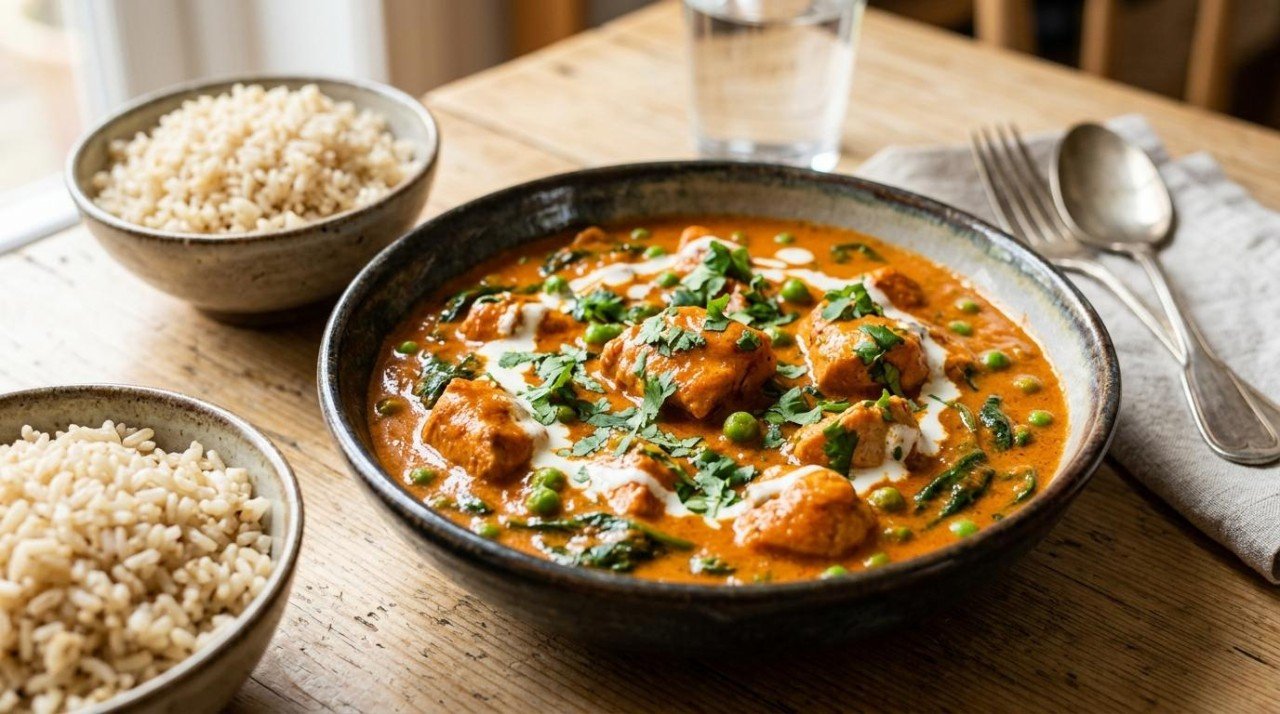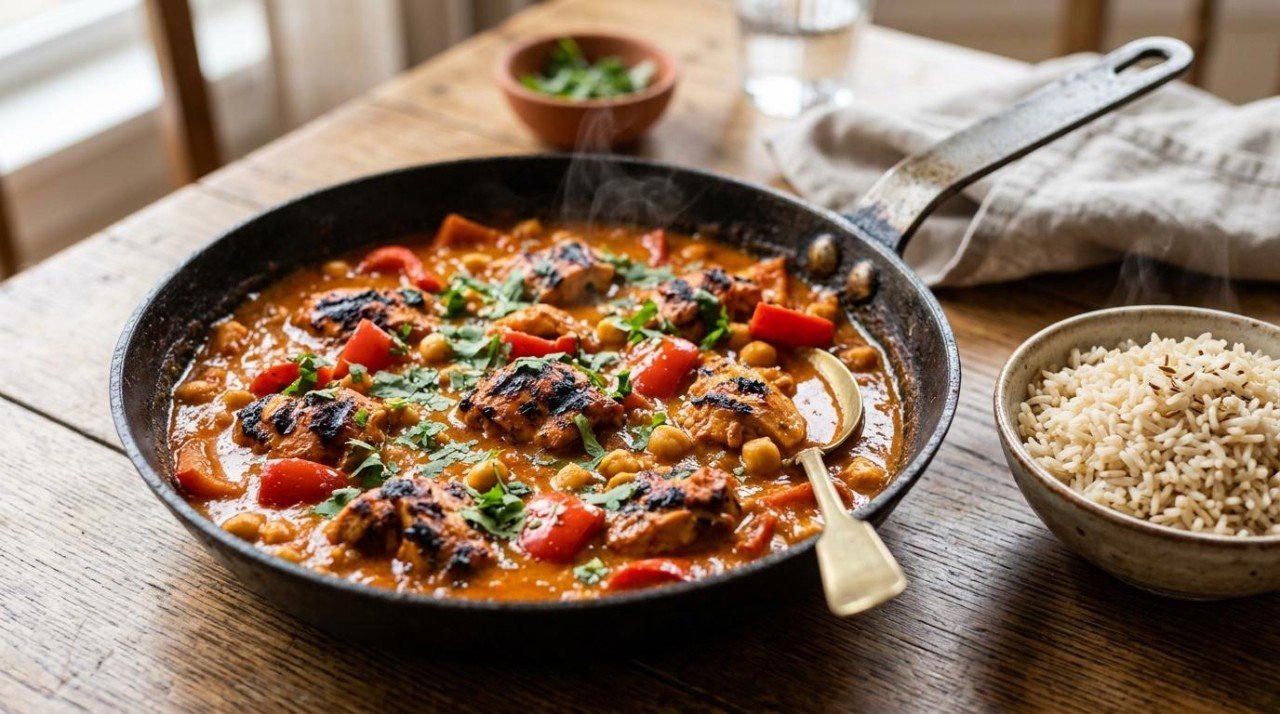
Chicken tikka masala might be the most ordered curry in the English-speaking world. It is charred, yogurt-marinated chicken in a creamy, gently spiced tomato sauce, and almost nobody dislikes it. Where it came from is still argued about. The most famous story credits Ali Ahmed Aslam of the Shish Mahal in Glasgow, but historians have challenged it, and the most anyone can say for sure is that the dish was most likely invented in Britain, probably by a Bangladeshi chef. It became popular enough that the UK foreign secretary Robin Cook called it "a true British national dish" in 2001.
We scored a typical homemade version, served over basmati rice, and it came back at 42 out of 100. Our rebuilt version scores 84, exactly double. It is still creamy, still orange-red and still tikka masala. Here is every change, what each one is worth, and the two swaps that turned out to depend on each other.
The original: what's in it and how it scores
We modeled a classic home recipe for four, close to popular versions like Cafe Delites' chicken tikka masala. The chicken is 1.5 lb marinated in a cup of whole milk yogurt with lemon, garlic, ginger, garam masala and spices, plus a teaspoon of salt. The sauce starts with 3 tablespoons of butter and a tablespoon of oil, then onion, more spices, a 14-ounce can of tomato puree, tomato paste, a little sugar, another teaspoon of salt and a full cup of heavy cream. Each person gets about a cup of salted white basmati rice.
Scored per serving against our default nutrition profile, that is a 42:
- 902 calories
- 19.7 g saturated fat, nearly the whole 20 g Daily Value in one dinner, flagged "very high"
- 1,950 mg sodium, against a Daily Value of 2,300 mg, also flagged "very high"
- 5.2 g fiber
- 51 g protein, which is excellent
- 5.25 plant points for the week
The diagnosis is short. Two things drag this dish down, and they are the same two the score lists as weaknesses: the cup of heavy cream and the salt. Almost all of the saturated fat comes from the cream, with the butter adding the rest. The sodium comes from two teaspoons of salt in the curry plus salted rice. The FDA links high-sodium diets to a higher risk of high blood pressure, a leading contributor to heart disease and stroke.
Just as important is what is already fine. The chicken is lean and packed with protein. The yogurt marinade is a strength. The tomato base and the spice load (garam masala, cumin, turmeric, coriander, paprika, ginger, garlic) cost the score nothing and give the dish its whole personality. None of that changes.
The upgrades
Six changes, scored cumulatively in this order. The first one is the card everything else is played on.
1. Evaporated milk instead of heavy cream
- Swap: 1 cup heavy cream → 1 cup evaporated milk
- Score impact: +9 points (42 to 51)
- What it changes: Saturated fat drops from 19.7 g to 10.5 g per serving, calories fall by 120, and protein goes up 3 g
- What it costs you: A little silkiness. The sauce is still creamy and pale orange, just slightly lighter on the tongue
Evaporated milk is regular milk cooked until more than half of its water is gone, so it is concentrated and creamy without cream's fat. It is also the natural choice for a simmered sauce: it holds up to gentle heat without curdling, as long as you let it come to room temperature first and keep the sauce at a low simmer after it goes in. Even the Cafe Delites recipe notes you can use it in place of cream. Our heavy cream substitutes and evaporated milk substitutes guides go deeper on both.
Why not the cashew cream we used in our butter chicken makeover? It works here too. Swapped into the finished recipe, 1/3 cup of cashews blended with water scores 85 against our 84, essentially a tie. Evaporated milk is cheaper, comes in a can you can keep in the pantry, and needs no blender.
2. Stir in a can of chickpeas
- Swap: Add one 15-ounce can of no-salt-added chickpeas, drained
- Score impact: +6 points (51 to 57)
- What it changes: Fiber nearly doubles, from 5.2 g to 10 g per serving, protein rises again and the plant count goes up
- What it costs you: Nothing you will miss. Chickpeas soak up the sauce and make every spoonful heartier
Chickpeas and tomato-onion masala are an old pairing (chana masala is chickpeas simmered in a very similar tomato-onion masala), so they feel at home in the pot. Buy no-salt-added cans if you can. Regular canned chickpeas cost the finished recipe 6 points in our tests, all of it sodium. If regular is what you have, drain and rinse them: Cook's Illustrated found that draining and rinsing cut sodium by about 21 to 27 percent, or about 100 mg per half cup.
3. Brown basmati instead of white
- Swap: White basmati rice → brown basmati rice, same amount
- Score impact: +2 points (57 to 59) with the rice still salted
- What it changes: More fiber, magnesium up from 38% to 51% of the Daily Value per serving, and one more plant point
- What it costs you: About 20 extra minutes of cooking and a chewier, nuttier grain. Basmati's fragrance survives
A small number on its own, and we want to be honest about that. Refining grain strips out a lot: according to Harvard's Nutrition Source, milling removes "virtually all of the fiber" and more than half of wheat's B vitamins, and diets high in whole grains are linked to lower risk of heart disease and type 2 diabetes. The real payoff comes in the next step, when you stop salting the water. See our white rice substitutes guide for other grains that work under curry.
4. Halve the salt, and leave it out of the rice
- Swap: 2 tsp salt in the curry plus salted rice → 1 tsp in the curry, unsalted rice
- Score impact: +18 points (59 to 77), the biggest single jump
- What it changes: Sodium falls from about 2,020 mg to 1,000 mg per serving
- What it costs you: Very little. Lemon, ginger, garlic and a full spice load carry the flavor, and the chickpeas and rice taste of the sauce instead of the salt
Half of this jump is the curry and half is the rice. Cutting the curry's salt in half was worth +9, and cooking the rice in plain water was worth another +9.
Here is the part that surprised us. Halving the salt in the original, with the full cup of cream still in it, earned exactly 1 point. The same cut is worth 9 at this point in the build, after the cream, chickpeas and rice have been dealt with. The score was flagging both problems, and fixing the salt while the cream still dominated barely registered. If you only try one change and it seems to do nothing, it may be waiting for the other one.
5. Char some bell pepper with the chicken
- Swap: Add 1 red bell pepper, cut into chunks and broiled with the chicken
- Score impact: +4 points (77 to 81)
- What it changes: Vitamin C triples, from 28% to 87% of the Daily Value per serving, plus another plant point, for about 10 calories
- What it costs you: Nothing. Charred pepper and onion are what you find on a tikka skewer anyway
The "tikka" in the name is the chunks of marinated chicken roasted on skewers, often alternating with pepper and onion. Bringing the pepper along into the sauce adds sweetness and smoke. With the chickpeas, rice and pepper, the dish now has 8.25 plant points, up from 5.25. Research from the American Gut Project found that people eating more than 30 different plants a week had more diverse gut microbiomes than people eating 10 or fewer.
6. Bloom the spices in less butter
- Swap: 3 tbsp butter + 1 tbsp oil → 1 tbsp butter + 2 tbsp oil
- Score impact: +3 points (81 to 84)
- What it changes: Saturated fat drops from 10.9 g to 7.9 g per serving, and the score's saturated fat flag disappears
- What it costs you: A bit of buttery roundness, which you get back by blooming the spices properly
The trick is to cook the ground spices in the hot fat for about a minute before the tomatoes go in. America's Test Kitchen explains that the main flavor compounds in many spices are "largely fat-soluble," so a short sizzle in fat pulls out far more flavor than simmering them in liquid. When the spices are doing more of the work, you need less butter to make the sauce taste rich. We kept one tablespoon of real butter for its flavor; our butter substitutes guide covers other options.
What we kept (on purpose)
The whole milk yogurt marinade, because it tenderizes the chicken and gives the sauce its tang. (Nonfat Greek yogurt is worth another 2 points if you have it.) One tablespoon of butter. One teaspoon of sugar, which balances the tomatoes and costs only 1 point. A full cup of rice per person. And every single spice. We stopped at 84 because the next moves, like cutting the rice or the dairy further, start making a different dish.
Take the Guesswork Out of Eating Well
Eat Well Planner helps you organize your favorite recipes, plan balanced meals, and automatically generate shopping lists — all in one place. Whether you're tracking macros, managing dietary restrictions, or just trying to stop asking "what's for dinner?", we've got you covered.
Our AI-powered tools can adapt any recipe to your dietary needs, help you discover new meals you'll love, and even log your nutrition effortlessly. It's meal planning made simple.
Start Organizing Your Meals — FreeThe healthier version: full recipe
Final Nutrition Score: 84 (up from 42). Serves 4.
For the chicken:
- 1.5 lb boneless skinless chicken breasts, cut into 1 1/2-inch chunks
- 1 cup plain whole milk yogurt
- 1 tbsp lemon juice
- 3 cloves garlic, finely grated
- 1 tbsp finely grated fresh ginger
- 1 1/2 tsp garam masala
- 1 tsp ground cumin
- 1 tsp paprika
- 1/2 tsp ground turmeric
- 1/2 tsp salt
- 1 red bell pepper, cut into 1 1/2-inch pieces
- 1 tbsp canola oil
For the sauce and to serve:
- 1 1/3 cups brown basmati rice (makes about 4 cups cooked)
- 1 tbsp canola oil
- 1 tbsp butter
- 1 large onion, finely diced
- 3 cloves garlic, finely grated
- 1 tbsp finely grated fresh ginger
- 1 1/2 tsp garam masala
- 1 tsp ground cumin
- 1 tsp ground coriander
- 1 tsp paprika
- 1/2 tsp ground turmeric
- 1/2 tsp cayenne pepper (or to taste)
- 2 tbsp tomato paste
- 1 can (14 oz) tomato puree
- 1 tsp sugar
- 1/2 tsp salt
- 1 can (15 oz) no-salt-added chickpeas, drained
- 1 cup evaporated milk, at room temperature
- 1/4 cup chopped fresh cilantro
- Mix the yogurt, lemon juice, garlic, ginger, spices and salt for the chicken in a bowl. Add the chicken, stir to coat and marinate for at least 30 minutes, or up to 24 hours in the fridge.
- Cook the brown basmati rice in unsalted water according to the package directions, usually about 40 to 45 minutes.
- Heat the broiler. Toss the bell pepper with 1 tbsp oil and spread it on a foil-lined sheet pan with the chicken, shaking off excess marinade. Broil 6 inches from the heat for 10 to 12 minutes, turning once, until the chicken is charred at the edges and cooked through.
- Meanwhile, heat 1 tbsp oil and the butter in a large skillet over medium heat. Cook the onion for 8 to 10 minutes, until soft and golden. Add the garlic and ginger and cook 1 minute.
- Add all the sauce spices and stir for about 1 minute, until fragrant. Stir in the tomato paste and cook 1 minute more.
- Add the tomato puree, sugar and salt. Simmer for 10 minutes, stirring occasionally, until slightly thickened.
- Add the chickpeas, then lower the heat and stir in the evaporated milk. Keep at a gentle simmer, not a boil, for 5 minutes.
- Stir in the chicken and pepper with any juices from the pan and simmer 2 to 3 minutes. Taste and adjust the cayenne. Top with cilantro and serve over the rice.
Per serving, original vs. healthier:
- Nutrition Score: 42 → 84
- Calories: 902 → 866
- Saturated fat: 19.7 g → 7.9 g
- Sodium: 1,950 mg → 960 mg
- Fiber: 5.2 g → 11.5 g
- Protein: 51 g → 59.5 g
- Plant points: 5.25 → 8.25
Notice the calories barely move. This makeover does not shrink your dinner. It swaps saturated fat and salt for chickpeas, vegetables and whole grain, so you get more fiber and protein for about the same plate. We scored it with chicken breast. Thighs are juicier and work just as well; see our chicken thigh substitutes guide if you are weighing the two.
Swaps we tested and skipped
- Fat-free evaporated milk. On the original it beat regular evaporated milk by 5 points. In the finished recipe, the gap shrinks to 1 point (85), and the sauce is thinner. We kept regular.
- Half cream, half evaporated milk. A popular compromise, and it scores 77, 7 points below ours. Putting the full cup of cream back drops the finished recipe to 67.
- Cutting the salt to 3/4 tsp. Worth 1 point (85) and it clears the score's last sodium flag. We found 1 teaspoon tasted right for four people, but if you are watching sodium, go for it.
- Less rice. Cutting to 3/4 cup per person earns 1 point. Not worth a hungrier dinner.
- Going back to white rice. Salted white rice in the finished recipe drops it to 73, which shows how much of the rice step was really the salt.
Make it fit other diets
For a vegetarian version, skip the chicken and double the chickpeas, or add cubed paneer or roasted cauliflower. For dairy-free, marinate the chicken in lemon and spices with a spoon of oil, and use the blended cashew cream from our butter chicken post in place of the evaporated milk. The dish is naturally gluten-free. Or let the app do it: Eat Well Planner's Recipe Variations and AI recipe chat can rewrite this exact recipe dairy-free or vegetarian in one step.
Do this to any recipe
Everything in this post came from the same process the app runs for you. Import a recipe you love from any website, Instagram reel or YouTube video, and it gets a Nutrition Score. Tap Make It Healthier and the AI proposes swaps like the ones above, with each gain checked by a calculator before you see it. Want to keep the cream and make up the points elsewhere? Open the Recipe Playground and watch the score move with every change. For more Indian takeout favorites, see our healthier tandoori chicken and the garam masala substitutes guide.