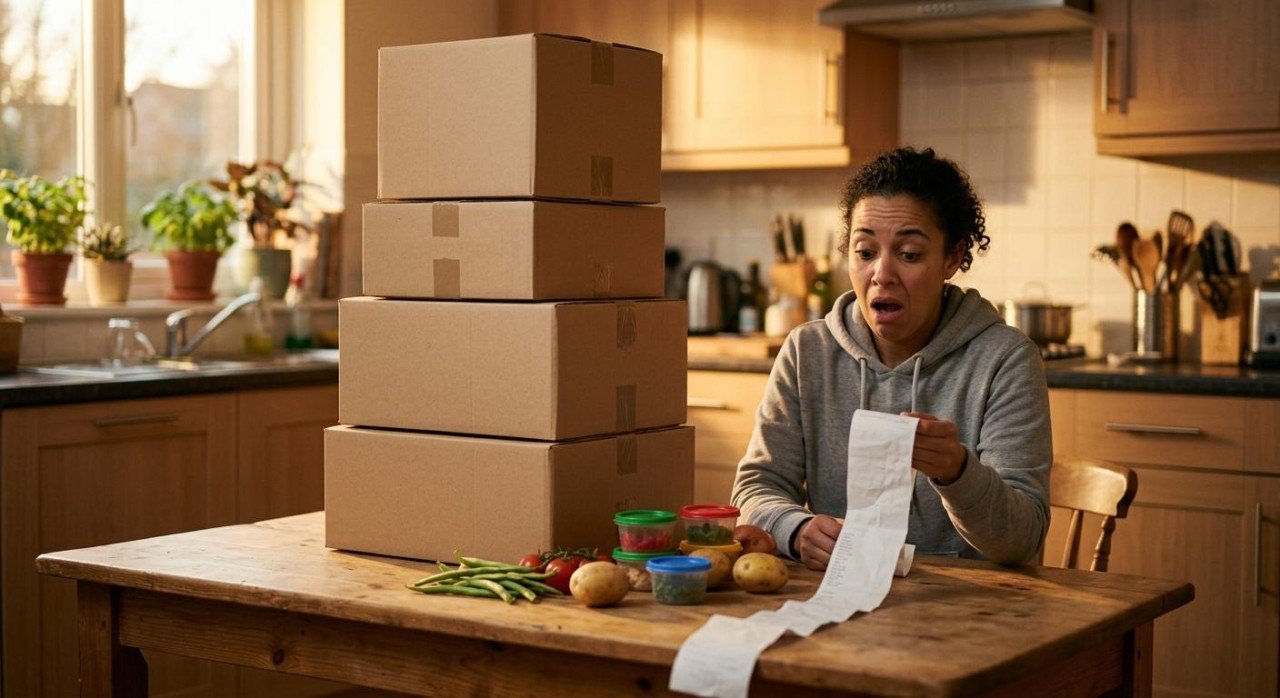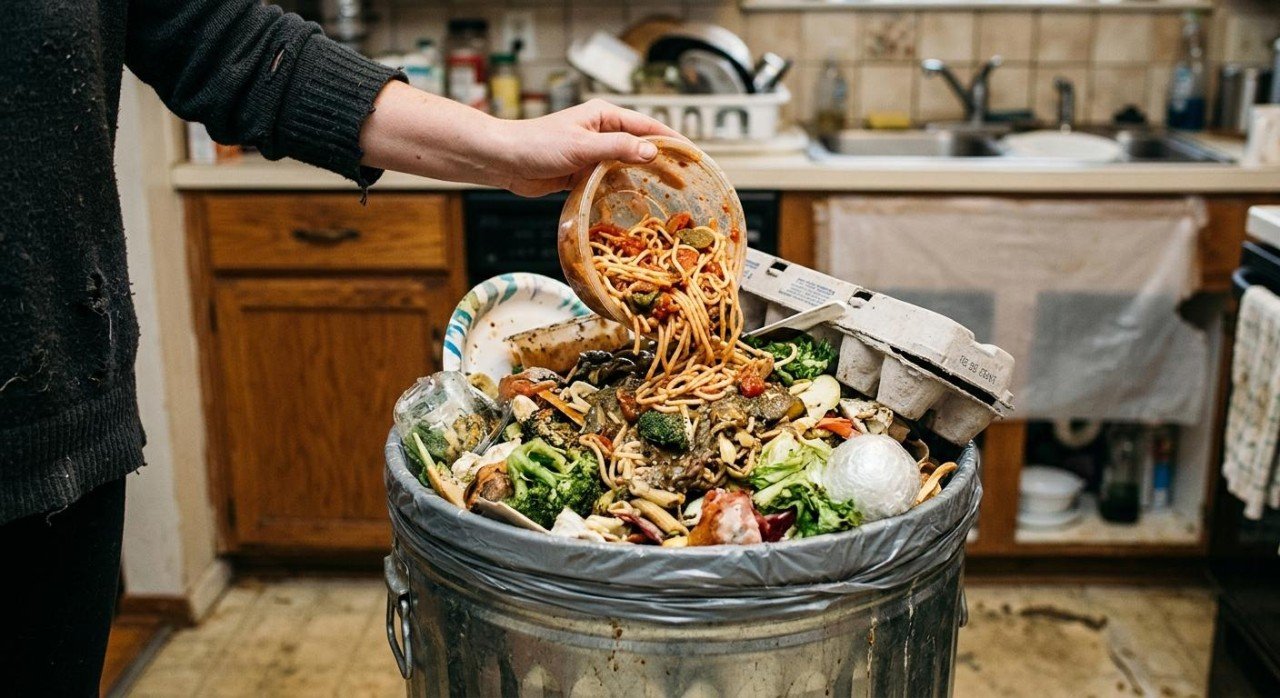
If someone took $80 out of your wallet every month, you'd notice. You'd cancel the subscription, call the bank, change the locks. But when the same $80 leaves your house as a slimy bag of spinach, half a rotisserie chicken pushed to the back of the fridge, and a loaf of bread that went stale on the counter, it doesn't register as losing money at all. It registers as Tuesday.
That's the strange psychology of food waste: it's one of the biggest leaks in most household budgets, and it's almost perfectly invisible. No single moment feels expensive. You're never holding $80 in your hand when it happens. You're holding a wilted cucumber, and the trash can is right there.
This post puts a real number on the leak — spoiler: for most households, $80 a month is the conservative estimate — explains the four habits that cause most of it, and walks through the fixes that actually work, none of which require composting bins or guilt.
The Real Number Is Probably Higher Than $80
Researchers have measured household food waste several different ways, and every serious estimate lands in the same uncomfortable neighborhood.
A 2025 report from the U.S. Environmental Protection Agency, Estimating the Cost of Food Waste to American Consumers, puts the cost at $728 per person per year. For a family of four, that works out to $2,913 a year — about $56 every single week, or over $240 a month. The same report notes that more food reaches landfills than any other material in the municipal solid waste stream.
An earlier and widely cited study from Penn State came at the question from a completely different angle and landed in the same place. Economists analyzed data from roughly 4,000 households in the USDA's National Household Food Acquisition and Purchase Survey and found that the average American household wastes 31.9% of the food it acquires — nearly a third of everything brought home — at a cost of about $1,866 per household per year. Nationally, that added up to an estimated $240 billion in wasted food. The findings were published in the American Journal of Agricultural Economics.
ReFED, a nonprofit that tracks U.S. food waste data, estimates that the average American spent over $760 in 2024 on food that went uneaten — and that consumer food waste makes up nearly half of all surplus food in the country, at an annual cost of $259 billion.
Run the math on any of these and the headline of this post starts to look gentle. ReFED's per-person figure alone works out to more than $60 a month for a single adult; a two-person household clears $80 with room to spare, and a family of four is closer to $250. Zoom out and the scale gets genuinely strange: according to the EPA, 30 to 40 percent of the U.S. food supply is never eaten — a problem big enough that the EPA and USDA set a national goal to cut food loss and waste in half by 2030.
One more detail from the Penn State study worth sitting with: this isn't a problem of careless people. More than two-thirds of households wasted between 20% and 50% of their food. Almost everyone is in this together — which suggests the cause isn't character. It's the system most of us shop and cook in.
Why You Don't Feel It
An $80 monthly leak should hurt. Here's why it doesn't.
It leaves in tiny increments. Nobody throws away $80 of food at once. They throw away $1.50 of cilantro, $4 of berries, $3 of leftover pasta — a dozen small, individually forgettable decisions spread across thirty days. Each one feels like cleaning the fridge, not spending money.
The money was already spent. By the time food hits the trash, the purchase is old news. The pain of paying happened at the register a week ago; tossing the wilted result feels like tidying up, not losing anything. Psychologically, the loss got booked under "groceries," which feels virtuous, instead of under "waste," which doesn't.
It hides inside a big, noisy bill. Grocery spending swings week to week anyway, so the waste never shows up as a line item. You can't see the difference between a $160 grocery week where you ate everything and a $160 week where $35 of it went in the trash. The receipt looks identical.
The result: a leak that would be intolerable as a subscription charge runs quietly for years. The good news is that the causes are specific, well-studied, and very fixable.
Where the Money Actually Goes
1. Shopping without a plan
Most food waste is decided in the grocery store, not at the trash can. When you shop without knowing what you'll cook, you buy by vibes — and vibes overbuy. You grab ingredients for meals you might make, duplicates of things you might already have, and whatever the end-cap display suggested. None of it is attached to an actual dinner on an actual night, so when the week gets busy, it has no job to do and quietly expires.
The evidence on this is direct. The Penn State researchers found that households that shop with a list waste less food — planning and food management measurably influence how much ends up wasted.
2. Buying in optimism
Related but distinct: the aspirational purchase. The bag of kale bought by the person you'd like to be, eaten by no one. The bulk deal that was only a deal if you finished it. The "we should eat more fish" salmon that needed cooking within two days you didn't have. Grocery stores are full of future-you purchases, and future you is busy.
Interestingly, the Penn State study found that higher-income households waste more, as do households that buy more fresh produce — not because vegetables are a mistake, but because perishable food bought without a plan is the most likely food to die in the crisper. The answer isn't buying less produce; it's buying produce with a plan attached.
3. Trusting dates that were never about safety
A huge share of "spoiled" food was never spoiled. A 2025 national survey of over 2,000 U.S. adults by the Harvard Law School Food Law and Policy Clinic, ReFED, and Johns Hopkins found that 43% of consumers always or usually throw away food near or past the date on the label, and 88% do so at least occasionally. The confusion runs deep: 87% of respondents believed they understood what date labels mean, but only 53% actually answered correctly when tested. Almost half thought the federal government regulates those dates — in reality, only infant formula dates are federally regulated. ReFED estimates date label confusion alone leads Americans to throw away about three billion pounds of food, worth $7 billion, every year.
The thing most of those labels are communicating is quality — when the manufacturer thinks the product tastes its best — not the moment it becomes unsafe. Utah State University Extension estimates date label confusion accounts for roughly 20% of consumer food waste, and notes most products remain safe well past the printed date if they've been handled properly. The yogurt from three days "past date" was probably fine. The trash can got it anyway.
4. Storage that sabotages you
Some food dies of neglect; some is actively killed by where you put it. Greens stored in the low-humidity drawer wilt in days. Potatoes and onions stored together in a warm cabinet sprout. Leftovers in opaque containers become archaeology. Your fridge has zones with real temperature and humidity differences, and most of us were never taught what goes where.
5. No plan for leftovers and odds-and-ends
Half an onion, a cup of cooked rice, two-thirds of a can of tomatoes, Thursday's chili. Without a use-it-up habit, these fragments accumulate at the back of the fridge until they're unrecognizable. Leftovers don't die because nobody wanted them — they die because nobody could see them, and no meal was ever assigned to them.
The Fixes: Getting Your $80 Back
You don't need to do all of these at once. Each one plugs its own leak.
Plan first, then shop the plan
This is the single highest-leverage change, because it fixes causes one and two simultaneously. Decide what you're cooking this week before you shop, write a list from those meals, and buy the list. Every item in your cart now has a job and a date. The EPA's own guidance for preventing wasted food at home starts exactly here: make a list with weekly meals in mind, and keep a running list of meals your household already enjoys so planning gets faster every week.
A realistic plan beats an ambitious one. Plan for the week you'll actually have — including the night you'll be too tired to cook — not the week an idealized version of you would have. Three or four planned dinners with deliberate leftovers will beat seven aspirational ones every time.
This is also, frankly, the part where software earns its keep. Eat Well Planner generates a weekly meal plan from your own saved recipes based on your preferences and goals, then automatically builds the shopping list from it — every ingredient on the list exists because a specific planned meal needs it. The plan-to-list pipeline that researchers keep finding in low-waste households becomes the default instead of a discipline you have to maintain.
Take the Guesswork Out of Eating Well
Eat Well Planner helps you organize your favorite recipes, plan balanced meals, and automatically generate shopping lists — all in one place. Whether you're tracking macros, managing dietary restrictions, or just trying to stop asking "what's for dinner?", we've got you covered.
Our AI-powered tools can adapt any recipe to your dietary needs, help you discover new meals you'll love, and even log your nutrition effortlessly. It's meal planning made simple.
Start Organizing Your Meals — FreeShop your kitchen before you shop the store
Before you finalize any list, spend ninety seconds looking at what you already have — fridge, freezer, pantry. Build at least one meal this week around the thing that will expire first. This one habit kills duplicates (no third jar of cumin) and gives at-risk food a scheduled exit before it becomes trash.
Create an "eat me first" shelf
Designate one visible spot in the fridge — eye level, front and center — for anything that needs to be used soon: open packages, ripe produce, leftovers, that last hot dog. When anyone in the house wants a snack or a meal starter, that shelf gets first look. It works because it solves the visibility problem: food at the back of the fridge isn't being saved, it's being scheduled for the trash. The same principle drives the "first in, first out" rotation that USU Extension recommends — newer groceries go behind older ones, so the older ones get used.
Store things where they actually last
A few placements from the EPA's home storage guidance that pay for themselves immediately:
- High-humidity crisper drawer (vents closed): things that wilt — leafy greens, carrots, cucumbers, broccoli.
- Low-humidity drawer (vents open): most fruits and produce that rot.
- Not in the fridge at all: potatoes, onions, garlic, winter squash, and eggplant want a cool, dry, dark, ventilated spot — and ideally not all together.
- Bottom shelf: the coldest zone — store meat, poultry, and fish there, and keep the fridge at 40°F or below.
- The freezer is a pause button. Bread, sliced fruit, meat you won't cook in time, and leftovers all freeze well — label them with contents and a date so they come back out.
Read dates as information, not commands
"Best if used by" is the manufacturer's opinion about peak quality, not a safety deadline. Before tossing something near its date, use your senses — look, smell, taste a little. Cooked leftovers are a different story with a real clock: plan to eat them within three to four days, which is exactly why they belong on the eat-me-first shelf with a date written on the lid.
Build one "clean-out" meal into every week
Give the fragments a destination. The EPA's suggestion list is basically a permission slip: fold whatever you have into soups, casseroles, stir fries, frittatas, sauces, pancakes, or smoothies. A fried rice, a frittata, or a "whatever's left" soup on Thursday converts the week's odds and ends into dinner instead of trash — and saves you a meal's worth of new groceries at the same time.
If staring at three random ingredients doesn't spark ideas, this is another spot where Eat Well Planner helps: search your saved recipe book by the ingredients you need to use up, or ask the AI recipe chat how to adapt a recipe around what's actually in your fridge — swap the protein, halve the servings, work in that half-bag of spinach.
What Getting It Back Looks Like
Nobody goes from wasting a third of their food to wasting nothing, and that's fine — this isn't about perfection, it's about plugging the biggest leaks. USU Extension pegs the realistic prize at around $370 per person per year in potential savings from waste-reduction habits; for a household, that's the most painless raise you'll get this year. It comes with quieter benefits too: fewer "what's for dinner" standoffs, a fridge you can actually see into, and less of the low-grade guilt that comes from scraping good intentions into the trash.
Start with one week. Plan your meals, shop the list, set up the eat-me-first shelf, and put a clean-out meal on Thursday. The $80 doesn't come back all at once — but unlike most budget advice, this one doesn't ask you to give anything up. You were never eating that food anyway. You were just paying for it.
Ready to make the plan-to-list habit automatic? Try Eat Well Planner free — plan your week from recipes you love, and let the shopping list write itself.