You've heard the rule your whole life: drink eight glasses of water a day. It's printed on water bottles, repeated by wellness influencers, and treated like settled science. So you carry your bottle around, feel vaguely guilty when you don't finish it, and assume that any afternoon slump, headache, or foggy patch must mean you're not drinking enough.
Here's the thing, though: the "8 glasses a day" rule was never based on real evidence, and water from your tap is only part of the hydration picture. A surprising share of the fluid your body runs on comes from what's on your plate — the cucumber in your salad, the broth in your soup, the orange you grab in the afternoon. If you've been chugging water and still feel off, the problem might not be your bottle. It might be what you're eating.
Where the "8 Glasses" Rule Actually Came From
The eight-glasses advice has a surprisingly flimsy origin story. According to the McGill University Office for Science and Society, the number traces back to a 1945 recommendation from the US Food and Nutrition Board, which suggested roughly 2.5 liters of water a day for adults. That works out to about eight cups — hence the slogan.
But here's the part almost everyone misses. The very same recommendation noted that most of that water could come from food. As McGill puts it, "by eating regular food and having coffee, juice or what have you, you will end up consuming 2 litres of water without having to go seek it out specifically." In other words, the original guidance never said to drink eight glasses on top of everything else you consume. That crucial caveat got lost, and a myth was born.
No rigorous study has ever shown that healthy adults need to force down eight glasses of plain water daily. Your body is far smarter than any quota: it has a finely tuned thirst mechanism that tells you to drink when blood concentration starts to rise, well before you reach any danger zone. For most healthy people, drinking to thirst — and eating well — covers the bases.
Your Hydration Needs Aren't One Number
The bigger problem with "8 glasses for everyone" is that hydration simply doesn't work as a one-size-fits-all number. How much fluid you need depends on several moving parts:
- Body size. A 200-pound person carries more tissue to keep hydrated than a 120-pound person and will naturally need more fluid.
- Activity level. Every time you sweat through a workout, a run, or a physical shift at work, you lose water and electrolytes that need replacing. An intense session can easily double your needs for the day.
- Climate and environment. Hot, humid weather ramps up sweating, but so does dry winter air and the recycled air in heated buildings and airplane cabins. High altitude increases fluid loss too.
- Life stage. Pregnancy and breastfeeding raise fluid needs considerably, and illness with fever, vomiting, or diarrhea can drain reserves fast.
- Your diet. This is the one almost nobody thinks about — and it's the focus of this post. What you eat can contribute a meaningful portion of your daily water, or almost none at all.
For a rough baseline, the National Academy of Medicine suggests adult men aim for about 13 cups (104 ounces) of total water a day and adult women about 9 cups (72 ounces), with pregnant women closer to 10 cups and breastfeeding women around 13, according to Harvard's Nutrition Source. The key phrase is total water — that figure includes every drop you get from food and all beverages, not just glasses of plain water.
You're Eating Your Water, Too
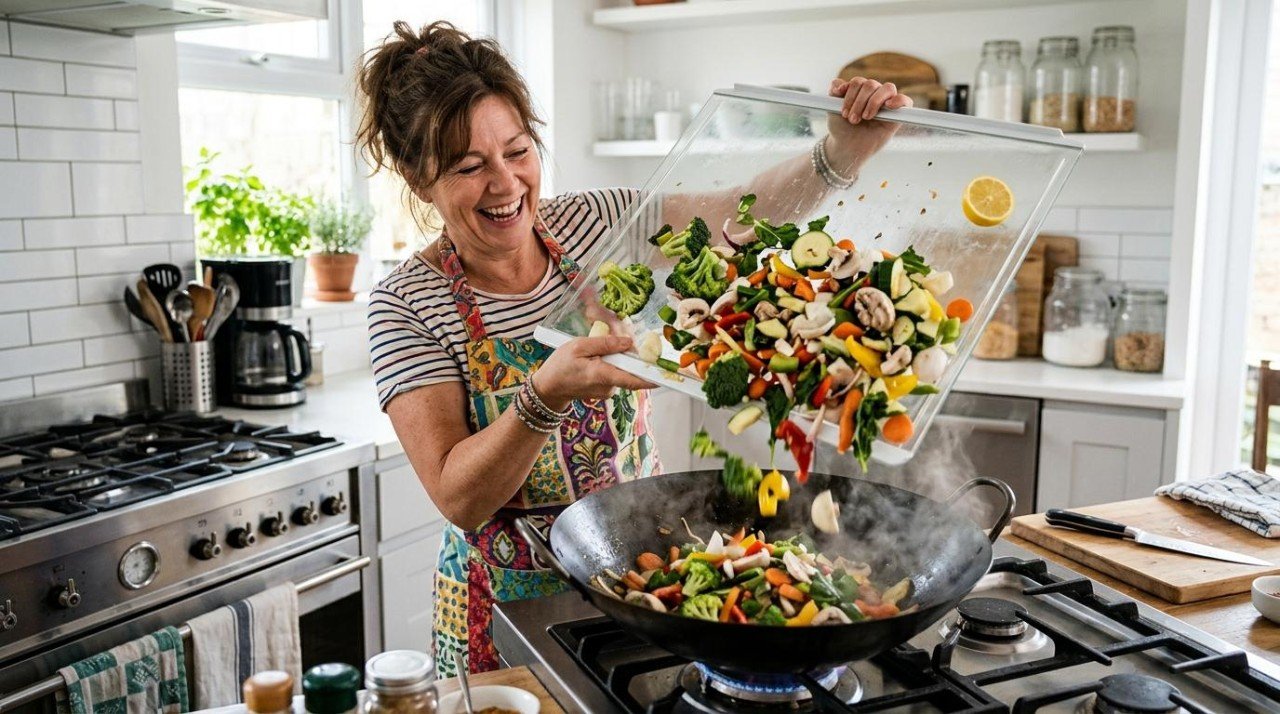
Here's the fact that reframes the whole conversation. About 20% of your total water intake comes not from drinks but from food — particularly water-rich fruits and vegetables, per Harvard's Nutrition Source. That's roughly a fifth of your hydration arriving on a fork.
And some foods are essentially edible water. Consider how water-dense these everyday choices are:
- Cucumber and lettuce — around 96% water
- Watermelon, strawberries, and cantaloupe — roughly 91–92% water
- Tomatoes, bell peppers, and celery — about 94–95% water
- Oranges, grapefruit, and peaches — close to 88% water
- Broth-based soups — often 90%+ water, plus electrolytes like sodium and potassium that help your body actually hold onto fluid
- Plain yogurt and cottage cheese — surprisingly water-rich at around 80%
This is exactly why the title of this post isn't just provocative. If your diet leans heavily on dry, processed convenience foods — crackers, chips, granola bars, frozen pizza, fast food — you're getting very little water from what you eat, so you have to make up the entire deficit through drinking. Someone who eats plenty of produce, soups, and fresh meals gets a steady drip of hydration all day without thinking about it. Two people can drink the exact same amount of water and end up hydrated very differently, purely because of what's on their plates.
There's a bonus, too: water-rich whole foods come bundled with fiber, potassium, and other nutrients that help your body regulate fluid balance. A glass of water hydrates; a bowl of vegetable soup hydrates and nourishes. Leaning on food for part of your hydration is one of those rare health moves that solves two problems at once.
The catch is that eating this way takes a little planning. It's easy to intend to eat more cucumber, melon, and brothy soups, and just as easy to reach for the dry snack when you haven't shopped for the fresh stuff. This is where having a plan changes everything.
Take the Guesswork Out of Eating Well
Eat Well Planner helps you organize your favorite recipes, plan balanced meals, and automatically generate shopping lists — all in one place. Whether you're tracking macros, managing dietary restrictions, or just trying to stop asking "what's for dinner?", we've got you covered.
Our AI-powered tools can adapt any recipe to your dietary needs, help you discover new meals you'll love, and even log your nutrition effortlessly. It's meal planning made simple.
Start Organizing Your Meals — FreeEat Well Planner is built to make exactly this kind of eating the path of least resistance. You can search and save recipes that lean on water-rich ingredients — think gazpachos, big leafy salads, fruit-forward breakfasts, and brothy soups — then let the app build a balanced weekly meal plan around them and generate the shopping list automatically. When your fridge is already stocked with watermelon, cucumbers, and the makings of a good soup, hydrating through food stops being a nice idea and becomes what's actually in front of you. And because the app tracks nutrition for every recipe and logged meal, you can see how much your diet is contributing to your overall intake.
The Signs of Dehydration People Miss
When most people picture dehydration, they think of intense thirst or a dry mouth. But by the time you feel genuinely parched, you're already behind. The earlier, sneakier symptoms are the ones that get blamed on everything else.
Even mild dehydration — a fluid deficit of as little as 2% of body weight — can produce real, measurable effects. Harvard's Nutrition Source notes that at this level people experience fatigue, confusion or short-term memory problems, and mood changes like increased irritability. Researchers have repeatedly found that small fluid shortfalls drag down concentration, alertness, and short-term memory, and can worsen headaches.
So the next time you hit a 3 p.m. wall, can't focus on a task, feel unusually cranky, or get a low-grade headache, it's worth asking whether you've had enough fluid — and enough water-rich food — that day. Other signs to watch for include:
- Dark yellow urine (pale straw color is the goal)
- Dry skin and lips that don't bounce back
- Lightheadedness when you stand up
- Feeling hungry when you're actually thirsty — the two signals are easy to confuse
That last point matters: people often reach for a snack when a glass of water or a piece of fruit was what their body was really asking for.
Clearing Up the Coffee Question
One of the most persistent hydration myths is that coffee and tea dehydrate you — that the caffeine acts like a diuretic and "cancels out" the fluid. It's the reason some people believe their morning coffee doesn't count.
The science says otherwise. Caffeine does have a mild diuretic effect, but it's far too weak to put you in the red, especially if you drink coffee regularly. A 2014 study published in PLOS ONE followed 50 habitual male coffee drinkers who consumed four cups of black coffee a day and found "no significant differences" in their total body water or hydration markers compared to when they drank the same volume of water. The researchers concluded that "coffee, when consumed in moderation by caffeine habituated males provides similar hydrating qualities to water."
Harvard's Nutrition Source agrees, noting that while more than about 180 mg of caffeine (roughly two cups of brewed coffee) may temporarily increase urination in some people, it "will not necessarily lead to dehydration," and that caffeinated coffee and tea genuinely contribute to your total daily water intake. So go ahead and count your morning coffee and your afternoon tea toward your fluids. They're doing more good than harm.
Sparkling vs. Still: Does the Fizz Matter?
Plenty of people who can't stomach plain water happily drink sparkling — and then worry the bubbles somehow make it less hydrating. Good news: they don't. Unsweetened sparkling water is simply still water with carbon dioxide dissolved in it, and it hydrates you just as effectively.
The American Heart Association confirms that carbonated water "can contribute beautifully" to your total fluid intake, and that it can be especially useful for people who struggle to drink enough — if the fizz makes you reach for it more often, that's a genuine win for hydration. A couple of sensible caveats: check the label for added sodium on some brands, and don't make acidic sparkling water your only beverage if you're concerned about tooth enamel. But as a tool to drink more, it's a great option.
Practical Hydration Strategies (Beyond Carrying a Water Bottle)
If "just drink more water" hasn't worked for you, try shifting the focus to building hydration into your day through small, durable habits:
- Hydrate with your meals. Make produce the centerpiece, not the garnish. A side salad, a piece of fruit, or a cup of soup with lunch and dinner can quietly add several cups of water to your day.
- Start the day with a soup or smoothie. Brothy soups and fruit-and-yogurt smoothies are some of the most hydrating ways to eat, and they double as real nourishment.
- Keep water-rich snacks visible. A bowl of grapes, melon, or cherry tomatoes on the counter gets eaten; produce hidden in the crisper drawer rots. Put hydration where you'll see it.
- Flavor your water if plain bores you. Add cucumber, citrus, mint, or berries, or switch to unsweetened sparkling. The most hydrating drink is the one you'll actually finish.
- Use thirst and urine color as your guide. Aim for pale straw–colored urine and drink when you're thirsty, rather than forcing yourself to a rigid number.
- Drink more around exertion and heat. Front-load fluids before exercise and on hot days, and lean on electrolyte-containing foods like broths and fruit to help your body retain what you take in.
The throughline here is that hydration is a whole-diet project, not a water-bottle project. When your meals are built around fresh, water-rich ingredients, you're hydrating all day long without obsessing over a tally — and you're getting fiber, vitamins, and minerals in the same bites.
The Bottom Line
The eight-glasses rule is a well-meaning myth. Your real hydration needs depend on your size, your activity, your climate, your life stage, and — crucially — what you eat. About a fifth of your water comes from food, and the gap between a produce-rich diet and a dry, processed one is enormous. Coffee and sparkling water both count. And the early signs of dehydration, like fatigue, brain fog, and irritability, are easy to mistake for something else entirely.
So if you've been feeling off despite drinking plenty, look at your plate before you blame your bottle. Eating more whole, water-rich foods is one of the simplest ways to feel more energized, more focused, and genuinely better hydrated.
If you'd like to make that kind of eating effortless, try organizing your meals with Eat Well Planner — plan a week of fresh, hydrating recipes, get an automatic shopping list, and let the app handle the decision fatigue so eating well becomes your default.