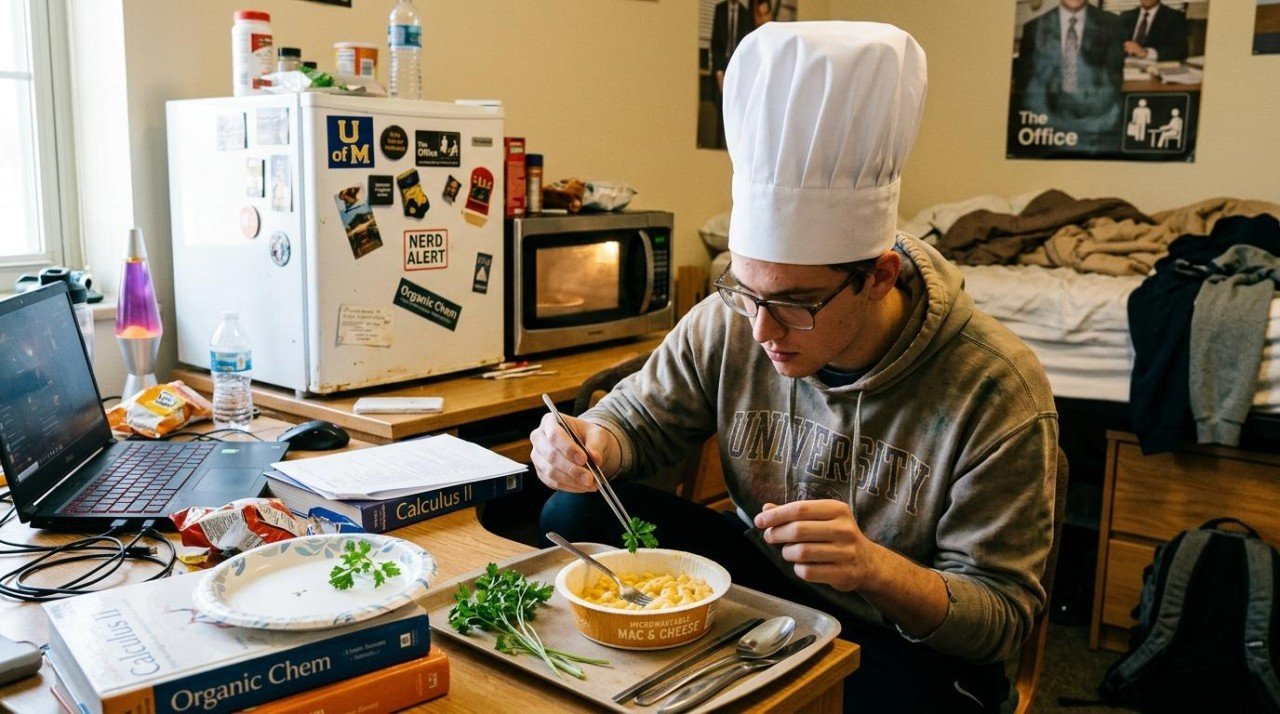
Picture the setup: a dorm room the size of a walk-in closet, a mini-fridge humming under the desk, a shared microwave down the hall, and maybe an electric kettle if you got lucky. No stove. No oven. Barely any counter space. Add a tight budget, a schedule packed with back-to-back classes, and a dining hall that starts to feel repetitive by week three, and it is easy to see how so many students end up in the all-ramen rut.
Here is the good news: you can eat genuinely well in a dorm without a kitchen, without much money, and without spending time you do not have. It takes a small pantry, a few no-cook and microwave-only tricks, and a loose plan. This is not about eating perfectly or spending your loan refund on groceries. It is about giving your body real fuel between lectures so you can think, focus, and feel human. No judgment about the ramen — let's just build some better options around it.
Why This Is Worth a Little Effort
Eating on a student budget is not a minor inconvenience for a lot of people — it is a real strain. According to a U.S. Government Accountability Office analysis of federal data, an estimated 23 percent of college students — about 3.8 million people — experienced food insecurity in 2020. If money and access feel tight, you are far from alone, and being strategic about cheap, filling, nutritious staples is one of the most practical things you can do.
The all-ramen diet is tempting because it is cheap, fast, and shelf-stable. The problem is what it leaves out. A single package of instant ramen delivers around 1,760 mg of sodium — roughly three-quarters of the American Heart Association's 2,300 mg daily limit — while providing only about 5 grams of protein, 1 gram of fiber, and almost none of the vitamins and minerals your body actually runs on. Ramen is not the enemy. It just works far better as a base you build on than as the whole meal.
The two nutrients most worth chasing are the two that quick dorm food usually skips: protein and fiber. Protein keeps you full and steady between classes; fiber does the same while feeding your gut and smoothing out energy crashes. Most Americans fall short on fiber in particular — only about 5 percent of men and 9 percent of women hit the recommended 25 to 38 grams a day. The whole strategy below comes down to one simple move: add a source of protein and a source of fiber or produce to whatever you are eating.
The Mini-Fridge and Shelf-Stable Starter Pantry
Eating well in a dorm starts with what you keep on hand. If the right ingredients are already in the room, the good meal becomes the easy one. You do not need all of this at once — build it up over a few grocery trips.
Shelf-stable (no fridge needed):
- Canned beans (black, chickpeas, kidney) and canned tuna or salmon — cheap, protein-packed, and no cooking required. One cup of black beans carries about 15 grams of protein and 15 grams of fiber.
- Rolled oats — the base for overnight oats and microwave oatmeal, and a genuinely heart-healthy grain. The soluble fiber in oats, beta-glucan, is well studied for gently lowering cholesterol.
- Nut butter (peanut, almond) — protein and healthy fat that keeps for months and spreads on anything.
- Whole-grain wraps or bread, whole-grain crackers, and a bag of brown rice or quinoa in microwaveable pouches.
- Shelf-stable fruit — apples, oranges, bananas, plus dried fruit and a bag of nuts or trail mix for snacks.
- Low-sodium seasonings — hot sauce, salsa, soy sauce, everything-bagel seasoning, olive oil packets. Flavor is what makes simple food worth eating.
Mini-fridge staples:
- Eggs — maybe the best value in the store. One large egg has about 6 grams of protein plus choline, selenium, and B12, and it cooks in a microwave in under a minute.
- Plain Greek yogurt — around 20 grams of protein per cup, nearly double regular yogurt. Buy it plain and sweeten it yourself with fruit.
- Pre-washed greens, baby carrots, cherry tomatoes, hummus, and cheese (string cheese and pre-sliced keep well and travel to class).
- Frozen vegetables and fruit — if your fridge has a small freezer, this is the single best trick for produce on a budget. Frozen vegetables are picked and frozen at peak ripeness, and research shows their vitamin content is comparable to fresh — in some cases, like vitamin C, frozen actually held up better than fresh produce that had been sitting in a fridge for a week. They also do not wilt on you before you get around to eating them.
Stock even half of this and you have the makings of a couple dozen quick meals — no stove, no waste, no daily "what do I eat" spiral.
Take the Guesswork Out of Eating Well
Eat Well Planner helps you organize your favorite recipes, plan balanced meals, and automatically generate shopping lists — all in one place. Whether you're tracking macros, managing dietary restrictions, or just trying to stop asking "what's for dinner?", we've got you covered.
Our AI-powered tools can adapt any recipe to your dietary needs, help you discover new meals you'll love, and even log your nutrition effortlessly. It's meal planning made simple.
Start Organizing Your Meals — FreeNo-Cook and Microwave-Only Meals That Actually Fill You Up
Here is the core rotation. Everything here needs, at most, a microwave, a bowl, and a spoon.
Overnight Oats (No Cooking At All)
The workhorse of dorm breakfasts. Before bed, combine half a cup of rolled oats with half a cup of milk or yogurt in any jar or container, stir in a spoon of nut butter or a handful of frozen berries, and stash it in the fridge. By morning the oats have softened and it is ready to eat cold — no microwave, no line in the hallway. The oats bring fiber, the yogurt or milk brings protein, and the fruit brings produce. That is a complete breakfast you made in ninety seconds the night before.
Microwave Egg Mug
Crack two eggs into a mug, beat them with a fork, add a splash of milk and whatever mix-ins you have — chopped spinach, a spoon of salsa, a sprinkle of cheese, some frozen peppers. Microwave in 30-second bursts, stirring between each, for about a minute total until just set. You have a hot, high-protein meal in the time it takes to check your email. Add a piece of fruit or a whole-grain wrap on the side and it is a real meal, not a snack.
Microwave Oatmeal
The hot-weather-optional version: half a cup of oats, one cup of water or milk, microwave for about two minutes (watch it — it likes to bubble over). Top with banana and peanut butter, or frozen berries and a handful of nuts. Cheap, warm, and filling, with the cholesterol-friendly soluble fiber of whole oats built in.
Grain and Bean Bowls
This is the template that will save you all semester. Microwave a pouch of brown rice or quinoa (90 seconds), dump it in a bowl, add a rinsed half-can of beans, pile on any vegetables you have (frozen, fresh, or a scoop of salsa), and finish with a sauce — hot sauce, soy sauce, a spoon of hummus thinned with water, whatever you like. Warm it for another minute. That is a genuinely balanced meal — whole grain, plant protein, fiber, and produce — for roughly the cost of two packs of ramen.
Bean and Veg Combos
Beans do not even need a grain to be a meal. Mash a half-can of chickpeas with a fork, mix in a little olive oil, lemon or hot sauce, salt, and eat it on crackers or scooped up with carrots. Or warm black beans with salsa and cheese and eat with a wrap. Canned beans are the closest thing dorm cooking has to a cheat code: no prep, huge protein and fiber, and they keep for years.
Microwave Quesadillas and Wraps
Lay a whole-grain tortilla on a plate, sprinkle cheese and any fillings (beans, leftover chicken, spinach, salsa) over half, fold it over, and microwave for about 45 seconds until the cheese melts. It will not be crispy like a pan version, but it is hot, satisfying, and endlessly customizable. Cold wraps work just as well: hummus, greens, and tuna rolled up is a five-minute lunch you can eat walking to class.
Five-Minute Combos That Hit Protein, Fiber, and Produce
When you are between classes and cannot even be bothered to microwave anything, assembly beats cooking. Each of these takes about five minutes and covers all three bases:
- Greek yogurt + frozen berries + a handful of nuts. Thawed for a few minutes or eaten slightly frozen. Protein, fiber, produce, done.
- Whole-grain crackers + canned tuna + baby carrots. Mix the tuna with a little hummus or mayo. Genuinely filling.
- Apple or banana + peanut butter + string cheese. The lazy classic, and a legitimately balanced snack-meal.
- Hummus + pre-cut veggies + whole-grain pita or crackers. Add a hard-boiled egg for more staying power.
- Cottage cheese or Greek yogurt + cherry tomatoes + everything-bagel seasoning. Savory, high-protein, and weirdly addictive.
- Bean and salsa cup. Half a can of rinsed beans, a scoop of salsa, a squeeze of lime, eaten with tortilla chips or a wrap.
Notice the pattern: a protein (yogurt, beans, tuna, egg, cheese, nut butter), a fiber or produce (fruit, veg, whole grain), and a little flavor. Once that template lives in your head, you can build a decent meal out of almost anything in the fridge.
How to Upgrade Dining-Hall Meals
If you are on a meal plan, the dining hall is your biggest nutritional lever — and a few small habits make a real difference. The goal is not to eat less. It is to steer toward the things the quick-and-easy stations skip.
- Build the plate around protein and vegetables first. Hit the salad bar, the grilled protein, the beans or eggs, and the vegetable sides before you fill up on the pizza-and-fries station. You are not banning anything — just front-loading the stuff that keeps you full.
- Raid the salad bar as a free pantry. Chickpeas, hard-boiled eggs, seeds, and cut vegetables from the salad bar are perfect toppings to boost any bland entree — and you can often grab an apple, banana, or handful of nuts to take back to the room for later.
- Choose whole grains when they are offered. Brown rice, oatmeal at breakfast, and whole-grain bread quietly add the fiber most dorm diets are missing.
- Watch the drinks. Soda and sugary coffee drinks are where a lot of empty calories sneak in. Water, milk, or unsweetened tea leaves more room for food that actually fills you.
- Take backups with you. A dining hall banana or hard-boiled egg tucked in your bag is what keeps you out of the vending machine at 4 p.m.
Dining-hall food gets a bad reputation, but most halls have genuinely good building blocks. It is mostly a matter of steering the plate rather than letting the convenience stations steer it for you.
Making It Stick Without Overthinking It
The hardest part of eating well in a dorm is not any single meal — it is the decision fatigue of figuring it out over and over while juggling everything else college throws at you. When you are tired and hungry between classes, whatever is easiest wins. The trick is to make the good option the easy one by deciding in advance and keeping the right things stocked.
This is where a little planning tool helps more than you would expect. Eat Well Planner is free, works in your browser, and is built for exactly this kind of low-equipment, low-budget cooking. You can save no-cook and microwave recipes to your own recipe book — including importing quick meal ideas straight from an Instagram reel or YouTube video when you find one — and tag the ones that fit your tiny kitchen. You can plan out a loose week of dorm-friendly meals so you are not staring at the fridge deciding, and the app turns that plan into an organized shopping list automatically, which keeps your grocery run cheap and focused instead of full of impulse snacks. If you want to see whether you are actually getting enough protein and fiber, the built-in food diary and nutrition tracking will show you, without any tedious math.
You do not need a full kitchen, a big budget, or hours of free time to eat like a person instead of a vending machine. You need a handful of staples, a few five-minute templates, and a rough plan — and the rest gets easy. Start with one better breakfast or one grain bowl this week, keep the pantry stocked, and let the good option become the default.
Ready to plan a week of dorm-friendly meals and build a cheap, shelf-stable shopping list? Try organizing your meals with Eat Well Planner — it is free to use.