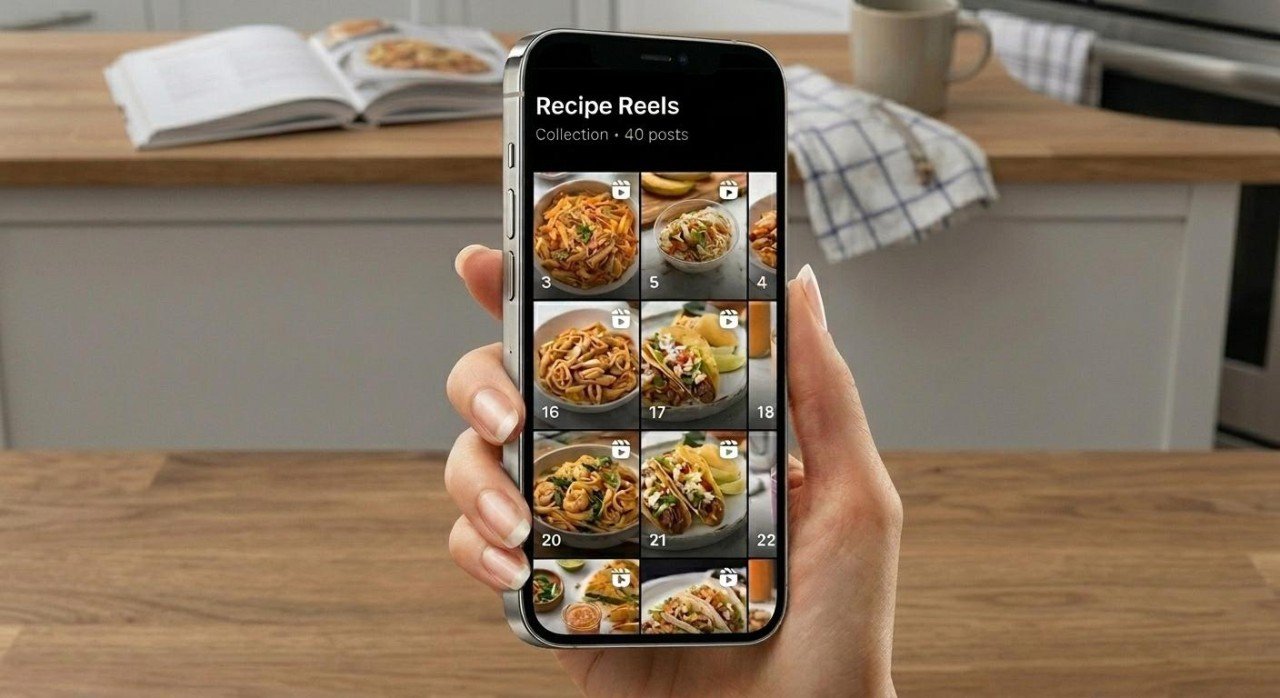
Open your phone and count them. The recipes screenshotted in your camera roll. The Instagram reels saved to a folder called "Make This." The Pinterest boards with names like "Dinner Ideas" and "Dinner Ideas 2." The browser bookmarks, the cookbook gifts with cracked spines, the texts from your sister with a link and the word "obsessed." If you are like most people who love food, you have collected hundreds of recipes you fully intend to cook someday.
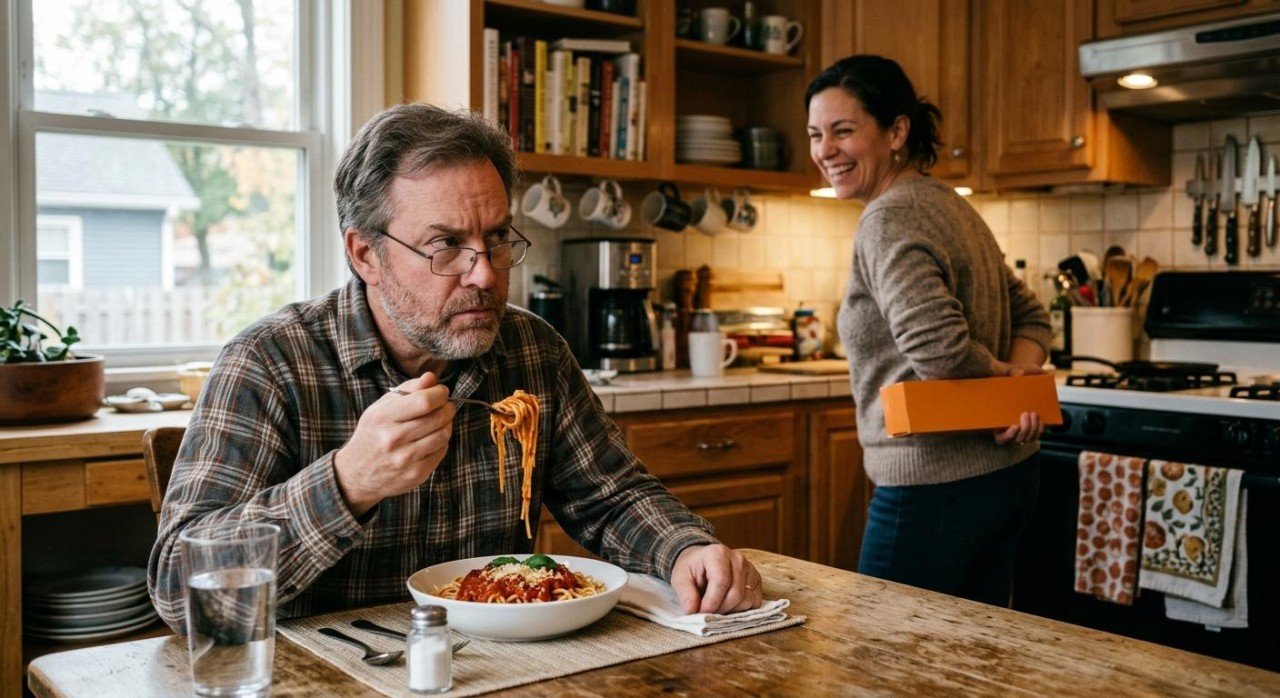
And tonight you are going to make the chicken thing again. The one you always make.
This is the saved-recipe graveyard, and almost everyone who cooks has one. The gap between the meals we collect and the meals we actually put on the table is enormous — and weirdly consistent. The good news is that it is a fixable problem, and the fix has nothing to do with finding more recipes. It is about finally using the ones you already have.
Collecting Isn't Cooking
Saving a recipe feels like progress. It scratches the same itch as making a to-do list: a little hit of "I'm going to be the kind of person who does this." But saving and cooking are two completely different behaviors, and the first one almost never turns into the second on its own.
There is research that captures this gap with uncomfortable precision. A 2021 George Mason University study published in the Journal of Medical Internet Research analyzed how people actually engage with recipes on Pinterest. Led by Hong Xue, the researchers found that users pinned and liked the wholesome stuff — recipes built around poultry, fish, and vegetables — but their real-world engagement, the comments and the photos of finished dishes, clustered around recipes high in fat, sugar, and calories. We save the food we wish we cooked and make the food we actually crave. Fewer than 3% of comments even mentioned a recipe's healthfulness.
The lesson isn't that you're a hypocrite. It's that a saved recipe is a statement of intention, not a plan. Aspiration is cheap and infinite — that's exactly why we accumulate so much of it. Cooking is finite. It costs time, energy, groceries, and a decision made at the worst possible hour of the day.
Why You Default to the Same Six
Once you understand the second half of that equation — the cost of actually cooking — the same-six-meals rut stops looking like a personal failing and starts looking like exactly what you'd predict.
Repeating meals is overwhelmingly normal. In HelloFresh's State of Home Cooking report, 86% of adults described themselves as "meal repeaters" who eat the same meals over and over at least some of the time. A separate survey of American eating habits, QuestionPro's "$24K Kitchen" report, found 43% repeat the same meals several times a week. And it tracks with how small our working repertoires really are: a 2023 survey of 2,000 Americans conducted by OnePoll for HelloFresh found the average person knows just 15 recipes by heart and cooks around 10 home-cooked meals a week. Fifteen in your head, hundreds in your bookmarks, and you rotate through maybe half a dozen.
Why does the saved stuff stay saved? A big part of it is decision fatigue. A 2025 narrative review in the journal Nutrients pulled together 84 studies on how mental depletion shapes eating and found a consistent pattern: when people are cognitively worn down, they shift toward automatic, low-effort, default choices. The review notes these effects land hardest on exactly the people deciding what's for dinner most nights — caregivers, shift workers, and households juggling a high daily decision load. By 6 p.m., after a day of choices, "the usual chicken thing" isn't laziness. It's the path your tired brain is built to take.
You may have heard that we make a jaw-dropping 226 food decisions a day, a number that gets cited constantly to explain this exhaustion. It's worth knowing that figure doesn't hold up. Researchers at the Max Planck Institute for Human Development showed in a 2025 paper in the journal Appetite that the famous 226.7 number — from a 2007 study by Brian Wansink and Jeffery Sobal — was a measurement artifact, not a real count. It came from a cognitive quirk called the subadditivity effect, where breaking a question into sub-parts inflates the total. When people are simply asked how many food decisions they make, they say about 14. The exhaustion is real; the scary statistic was never solid. (Worth noting too that Wansink resigned from Cornell in 2018 after a misconduct investigation that led to 18 of his papers being retracted.)
Here's the most useful nuance, though: repetition itself is not the enemy. In the HelloFresh data, the top reason people repeat meals (60%) was simply that it guarantees everyone gets something they like. A reliable rotation is a feature, not a bug. The problem is a stale, accidental rotation — one you fell into rather than chose. That's when boredom sets in, and boredom has consequences: among people who said they expected to cook less in the coming year, 58% blamed being bored with the same recipes. When the home rotation gets dull, people don't reach into their saved folder. They reach for takeout — which 72% of Americans already order at least once a week, per the QuestionPro report.
So the saved-recipe graveyard isn't just a tidiness issue. It's the difference between cooking dinner and ordering it.
Take the Guesswork Out of Eating Well
Eat Well Planner helps you organize your favorite recipes, plan balanced meals, and automatically generate shopping lists — all in one place. Whether you're tracking macros, managing dietary restrictions, or just trying to stop asking "what's for dinner?", we've got you covered.
Our AI-powered tools can adapt any recipe to your dietary needs, help you discover new meals you'll love, and even log your nutrition effortlessly. It's meal planning made simple.
Start Organizing Your Meals — FreeStep 1: Audit the Graveyard (Be Ruthless)
The instinct when your saved recipes feel useless is to go find better ones. Resist it. You don't have a discovery problem; you have a clutter problem. More recipes make the rotation worse, because they bury the keepers deeper.
Set aside 20 minutes and go through your saved recipes with one honest question for each: "Will I realistically make this in the next two months?" Not "is this impressive," not "did this look amazing at 11 p.m." Just: is this going on a real Tuesday?
Three buckets:
- Yes. Genuinely want to make it, and it fits your real life — your skill level, your weeknight time budget, the ingredients you can actually get. Keep it.
- No. The 14-ingredient project, the dish that needs a tool you don't own, the one you saved because of the photo. Delete it. It is not serving you; it is hiding the recipes that would.
- Maybe / someday. Special-occasion or aspirational. Don't delete, but move it out of your main rotation so it stops adding to the noise.
Most people cut half their collection in one sitting and feel lighter immediately. You are not losing recipes. You are surfacing the ones worth cooking.
Step 2: Tag the Keepers So You Can Actually Find Them
A pile of 50 good recipes is still useless if you can't pull up the right one in the 30 seconds you have before decision fatigue wins. The fix is to tag the survivors with the labels you'll actually search by when you're tired. Think in terms of how you really decide:
- Effort: 15-minute weeknight, normal weeknight, weekend project
- Main ingredient: chicken, salmon, lentils, ground beef, tofu
- Type: sheet-pan, one-pot, salad, soup, breakfast-for-dinner
- Who it pleases: kid-approved, partner's favorite, good for guests
- Season: light summer meals versus cozy winter ones
The categories that matter are yours. If "things I can make with what's already in the fridge" is your real-life filter, tag for that. The goal is that when it's 5:30 and you have chicken and 25 minutes, you can find the four recipes that fit instead of scrolling past 200 that don't.
Step 3: Build a Deliberate Rotation
This is the step almost everyone skips, and it's the one that actually moves recipes from saved to cooked. A good recipe will not insert itself into your week. You have to put it there on purpose.
The most reliable structure is a loose theme night framework — taco night, pasta night, sheet-pan night, soup-and-bread night, stir-fry night. About 26% of Americans already cook certain meals on set days, according to the HelloFresh report, and there's a reason it sticks: it shrinks the nightly question from "what should I cook out of everything in existence?" down to "which taco?" You keep the comfort of a routine while rotating the actual recipe underneath it. Monday is still pasta night; this week it's the one with the burst-tomato sauce you saved in March.
A practical way to start: pick your six current default meals and write them down honestly. Then, each week, swap exactly one of them for a keeper from your audited list. One. Not a whole new menu — that's the kind of overhaul that collapses by Wednesday. Swapping one meal a week means that in two months you've cycled a dozen forgotten recipes into active use, and the winners earn their way into your permanent rotation. The ones that flop quietly drop out. Your six becomes a living set instead of a rut.
Step 4: Build a System to Resurface Forgotten Gems
Even a clean, tagged, rotating collection has a slow leak: recipes you genuinely loved drift to the bottom and vanish from memory. You're not avoiding them — you've just forgotten they exist. The recipe you made once last spring, everyone raved about, and then never thought of again.
The remedy is a system that pushes recipes back at you instead of waiting for you to remember them. A few low-tech versions: a monthly "make something old" night where you deliberately scroll to the bottom of your list; a short "greatest hits" note you actually keep updated; or a physical recipe box where cooked cards go to the back so older ones cycle forward. The principle is the same in every case — don't rely on memory to surface your best recipes, because memory is exactly what's failing you.
Where Eat Well Planner Fits
This whole system gets dramatically easier when your recipes live in one place instead of scattered across Instagram saves, screenshots, bookmarks, and texts — and that fragmentation is half of why the graveyard exists in the first place. Eat Well Planner was built to close the gap between saving and cooking.
- One searchable recipe box. Import recipes straight from any website, Instagram reel, or YouTube video, and the AI pulls out the ingredients, instructions, and nutrition automatically. Everything you've collected ends up in one organized, searchable place — so the audit in Step 1 is something you can actually do, instead of a folder you're afraid to open.
- Organize and tag the keepers. Your recipe book is easy to search and sort, so the right meal for tonight is a quick filter away rather than an endless scroll.
- Planning that builds the rotation for you. Set up a profile with your preferences and goals, and the AI assembles a balanced weekly plan from your saved recipes — the deliberate rotation from Step 3, without the willpower.
- Forgotten gems, resurfaced. Usage-based suggestions surface recipes you keep overlooking, so the ones you loved once stop disappearing to the bottom of the pile.
- Shopping lists that close the loop. Once a plan is set, the app generates an organized shopping list automatically — which means the recipe you finally decided to cook actually gets its ingredients into your cart, instead of staying a nice idea.
None of this requires you to be more disciplined. It just removes the friction between the recipe you saved and the dinner on your plate.
The Real Goal
You don't need 400 recipes. You need maybe 30 you'll genuinely cook, organized so you can find them, and a habit of rotating new ones in before the old ones go stale. That's the whole game.
The collecting was never the problem — it's a sign you care about eating well. The problem is that collecting quietly stood in for cooking. Cull the graveyard, tag the survivors, swap one meal a week, and build a small system to resurface the ones you forget. Do that, and the recipes you fell in love with finally make it onto the table — which, after all, is the only place a recipe was ever supposed to end up.