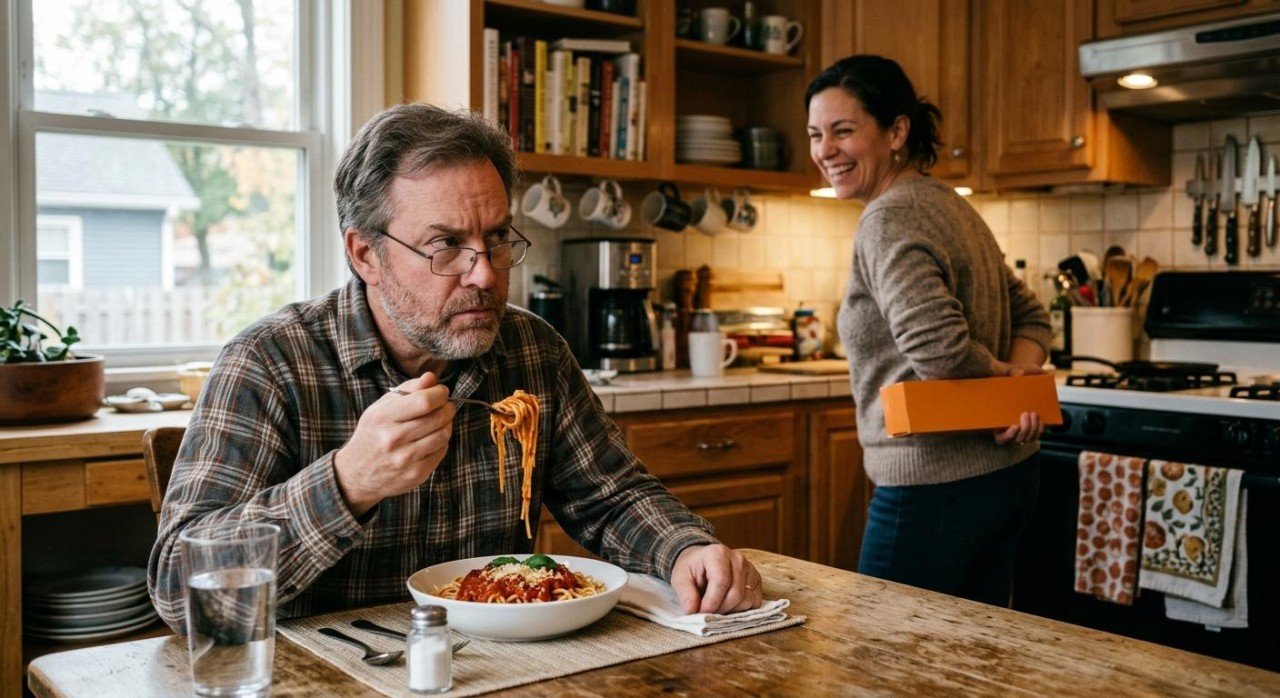
It is 5:30 pm and someone is about to ask you the most dreaded question in the English language: "What's for dinner?" You have nothing planned. The fridge is a mystery box of half-used ingredients. Everyone wants something different. And you have already made roughly a thousand other decisions today.
For the person in the household who handles the meals — and research confirms that this is overwhelmingly one person — the daily dinner question is not really about food. It is about mental load. It is about holding everyone's preferences, dietary needs, nutritional balance, what is in the cupboards, what needs using up, how much time you have, and what you can be bothered to cook, all in your head, every single day. No wonder so many of us default to delivery apps or the same three meals on rotation.
The good news is that the fix is not learning to cook better or finding more willpower. It is building a simple system that makes most of the decisions for you before the question even gets asked.
The Hidden Weight of Daily Meal Decisions
Decision fatigue is a well-documented phenomenon. As we make more choices throughout the day, the quality of those decisions deteriorates. A 2025 narrative review in the journal Nutrients found that when cognitive resources become depleted, people shift toward fast, automatic, and impulsive decision-making — prioritising immediate rewards over long-term health goals. In practical terms, that means reaching for the takeaway menu instead of chopping vegetables.
A 2024 survey by Talker Research of 2,000 adults found that 77% reported being too exhausted to cook after work on at least some days. Monday was the worst offender, with 35% naming it the hardest day to get a home-cooked meal together. And 74% said they would eat healthier if it were simply more convenient.
The mental load extends beyond the cooking itself. Planning meals, checking what you have, making a shopping list, navigating different preferences within a household — all of this is cognitive labor that largely goes unrecognized. A 2024 study in Archives of Women's Mental Health surveyed 322 mothers and found they handled 73% of all cognitive household labor, compared to 27% for their partners. That disparity was larger than for physical tasks, and it was significantly associated with higher levels of stress, depressive symptoms, and burnout.
As the researchers noted, "the labor of planning a weekly rotation of meals may go unrecognized by other family members, or even by oneself." The invisibility is the problem. It takes real effort, but because there is nothing tangible to show for it, it feels like it should be easy — which only makes it more draining when it is not.
Strategy 1: Build a Rotating Meal Roster
The single most effective way to eliminate the nightly dinner dilemma is to stop treating it as a nightly decision at all. Instead, build a roster of 10 to 15 meals your household already likes, and rotate through them every two weeks.
This is not about eating the same things forever. It is about creating a default. When you do not have the energy to think, the roster tells you what to cook. When you do feel inspired, you swap something in. The key shift is that planning becomes the exception, not the rule.
Start by sitting down — ideally with the other adults in your household — and listing every meal your family reliably eats without complaint. Most households have more of these than they think. Pasta bolognese. Stir-fry with rice. Chicken fajitas. A simple roast. Fish fingers and vegetables for the nights nobody has the energy for anything ambitious.
Once you have your list, organize them into a two-week pattern. Spread the effort out — put the quicker meals on your busiest days and save anything more involved for the evenings when you have breathing room. Then repeat. The second time through the roster, each meal already has a tested shopping list, a familiar process, and no decision to make.
Strategy 2: Use Theme Nights to Simplify Choices
If a full roster feels like too much structure, theme nights are a lighter-touch version of the same idea. Instead of planning specific meals, you assign a category to each day of the week: Taco Tuesday, pasta night on Wednesday, stir-fry Friday, and so on.
The beauty of themes is that they narrow the decision without eliminating creativity. "Taco Tuesday" could mean beef tacos one week, fish tacos the next, black bean quesadillas the week after. The theme gives you a starting point, and from there you only need to decide on the details, not the whole meal from scratch.
Some popular theme nights that families use:
- Meatless Monday — a vegetarian or plant-based meal to start the week
- Taco Tuesday — wraps, burritos, fajitas, or anything that goes in a tortilla
- One-Pot Wednesday — soups, stews, curries, or casseroles that create leftovers for the next day
- Breakfast-for-Dinner Thursday — pancakes, eggs, and toast; a family favorite that takes 15 minutes
- Stir-Fry Friday — quick, customisable, and a good way to use up whatever vegetables are left from the week
- Pizza Saturday — homemade or good-quality shop-bought, with everyone choosing their own toppings
- Roast Sunday — a classic that yields leftovers for Monday's lunch or dinner
Theme nights also create anticipation, especially for children. When kids know that Friday is stir-fry night or Saturday is pizza night, mealtimes become something to look forward to rather than negotiate over.
Strategy 3: Let Family Members Own a Meal
One of the fastest ways to reduce the burden on the household's default meal planner is to share it. Give each family member one night a week where they choose what is for dinner. They pick the recipe, and depending on their age, they help prepare it too.
This works on multiple levels. It distributes the decision-making. It gives everyone a sense of ownership over the family's food. And it introduces variety that you might not have thought of yourself — children often have surprisingly strong opinions about what they want to eat when given real agency over the choice.
For younger children, offer two or three options rather than an open-ended question. "Would you like fish pie or chicken and rice on your night?" is much more manageable than "What do you want for dinner?" and still gives them genuine choice.
For teenagers and older children, this is also a practical life skill. Having a regular slot where they plan, shop for, and cook (or help cook) a meal prepares them for feeding themselves once they leave home — which is something many young adults struggle with.
Strategy 4: Get Kids Into the Kitchen
Speaking of involving children: one of the most reliable ways to reduce mealtime resistance is to involve the resistant parties in the process. Children who participate in food preparation are more willing to try what they have helped make, including foods they would normally refuse.
Research compiled by Utah State University found that children who regularly help with meal preparation eat an additional serving of vegetables per day compared to children who do not. A separate review found that kids involved in cooking are more inclined to consume both raw and cooked vegetables at mealtimes, and show greater willingness to taste unfamiliar foods.
The key is that cooking together removes the pressure. When a child helps wash the lettuce, tear the herbs, or stir the sauce, they are interacting with the food in a relaxed, curious context rather than being told to eat something they are suspicious of. It is exposure without confrontation.
Practical ways to involve children at different ages:
- Ages 3 to 5 — washing vegetables, tearing lettuce, stirring cold ingredients, putting toppings on pizza
- Ages 6 to 8 — measuring ingredients, cracking eggs, spreading sauces, assembling wraps or sandwiches
- Ages 9 to 12 — following simple recipes, using a peeler, grating cheese, making salads independently
- Ages 13 and up — cooking simple meals start to finish, with supervision around knives and heat as needed
Will it take longer than doing it yourself? Often, yes. But the long-term payoff — children who eat more varied food, who develop real kitchen skills, and who feel invested in family meals — is worth the extra mess.
Take the Guesswork Out of Eating Well
Eat Well Planner helps you organize your favorite recipes, plan balanced meals, and automatically generate shopping lists — all in one place. Whether you're tracking macros, managing dietary restrictions, or just trying to stop asking "what's for dinner?", we've got you covered.
Our AI-powered tools can adapt any recipe to your dietary needs, help you discover new meals you'll love, and even log your nutrition effortlessly. It's meal planning made simple.
Start Organizing Your Meals — FreeStrategy 5: Cook Once, Eat Twice
Batch cooking does not have to mean rows of identical meal-prep containers. The simplest version is to deliberately make more than you need, so tomorrow's meal is already sorted.
Double a bolognese and the second half becomes a lasagne filling or a jacket potato topping the next day. Roast a whole chicken on Sunday and the leftover meat goes into Monday's wraps, Tuesday's soup, or a quick fried rice. Make a big pot of curry and freeze half in single portions for the nights when cooking is genuinely not happening.
This approach works because it costs almost nothing in extra time. As anyone who has cooked bolognese knows, browning 500g of mince takes the same effort as browning a kilogram. You are already at the hob, the pan is already dirty, and the seasoning is already out. The marginal effort of doubling up is close to zero, but the time saved on a future meal is enormous.
Research from Johns Hopkins Bloomberg School of Public Health analyzed the diets of over 9,000 adults and found that people who cooked dinner at home six to seven times a week consumed 137 fewer calories per day than those who cooked once a week or less. They also consumed less fat and less sugar — not because they were actively restricting, but because home-cooked food is naturally less calorie-dense than takeaway or restaurant food. Every extra meal you cook at home tips the balance in your favor, and doubling up is the lowest-effort way to add more home-cooked meals to your week.
Strategy 6: Keep an Emergency Meal List
Every household needs a list of five to eight meals that can be made almost entirely from store-cupboard and freezer staples. These are the meals for the nights when the plan falls apart — someone is late, the shopping did not happen, or you are just too tired to think.
Emergency meals are not about culinary ambition. They are about having a better option than ordering delivery. A good emergency meal can be assembled in 15 to 20 minutes from ingredients you always have on hand.
Some examples:
- Pasta with tinned tomatoes and whatever vegetables you have — frozen peas, a tin of sweetcorn, a handful of spinach
- Egg fried rice — using leftover or microwave rice, frozen peas, soy sauce, and eggs
- Beans on toast with cheese — genuinely nutritious and ready in five minutes
- Omelette with frozen vegetables and cheese — customisable with whatever is available
- Tinned tuna pasta with sweetcorn and mayo — a childhood staple that still works
- Quesadillas with tinned beans and cheese — assembled and cooked in ten minutes
- Soup from frozen vegetables and stock cubes — add a tin of lentils for protein and body
The key is stocking the essentials so these meals are always available. Keep your cupboards supplied with pasta, rice, tinned tomatoes, tinned beans, tinned tuna, stock cubes, and basic spices. Keep your freezer stocked with frozen peas, frozen mixed vegetables, and bread for toast. As long as you have eggs, cheese, and one or two fresh items, you can always make a decent meal from what is already in the house.
Strategy 7: Shop With a Plan
Impulse grocery shopping is one of the biggest drivers of both food waste and overspending. When you walk into a supermarket without a list, you buy what looks appealing in the moment rather than what you actually need for the week. The result is a fridge full of ingredients that do not quite go together and a bin full of food that never got eaten.
UK households throw away 6.7 million tonnes of food each year, costing the average household around £470 annually. Seventy percent of that waste is food that was edible — it was bought with good intentions and then forgotten, pushed to the back of the fridge, or left until it went off. On average, every person in the UK wastes the equivalent of 140 meals per year.
A shopping list built around a meal plan solves most of this. When every item in your trolley has a destination — a specific meal it is going into, on a specific day — the chances of it ending up in the bin drop dramatically. You buy what you need, in the quantities you need, and nothing else.
This is one area where technology genuinely helps. Eat Well Planner generates an organized shopping list automatically from your weekly meal plan, so you do not have to cross-reference recipes and check quantities manually. You can also add individual recipes to the list on the fly. The result is a focused shop that takes less time, costs less money, and produces less waste — which, for a busy household, adds up to a meaningful difference over a year.
Balancing Different Preferences Under One Roof
One of the biggest complications in family meal planning is that different people want different things. One child will not eat anything green. Another has gone vegetarian. One adult is trying to cut carbs. The other just wants something quick.
Trying to cook a completely separate meal for each person is unsustainable. But you can build flexibility into a shared meal without multiplying your workload:
- Cook a customisable base. Meals like fajitas, stir-fries, grain bowls, and build-your-own pizzas let everyone assemble their own plate from shared components. You cook once; everyone eats differently.
- Separate the controversial element. If one person does not eat meat, make the main dish vegetarian and add cooked chicken or mince on the side for everyone else. If someone avoids gluten, serve the sauce over rice for them and pasta for everyone else.
- Use the "accepted foods" rule. Include at least one component in every meal that each family member will eat. This stops mealtimes from becoming a battleground while still exposing fussy eaters to new foods without pressure.
- Batch prep individual elements. Grill a few extra chicken breasts alongside the tofu for the vegetarian. Cook both rice and pasta while the hob is already in use. Small additions to the prep take minutes but prevent the need for separate meals.
The goal is not to make everyone perfectly happy every night. It is to make sure no one goes hungry and no one feels ignored, while keeping the cooking effort manageable for the person doing it.
Putting It All Together: A System That Runs Itself
None of these strategies works in isolation as well as they work together. The most effective approach combines several of them into a simple weekly routine:
- Pick one day for planning. Sunday morning or Thursday evening — whatever suits your schedule. Spend 10 to 15 minutes deciding the week's meals using your roster, theme nights, and family input.
- Write the shopping list based on your plan. Check what you already have first so you do not buy duplicates.
- Shop once. A single focused trip with a list is faster, cheaper, and less stressful than multiple impromptu visits throughout the week.
- Do a quick prep session if you have time. Even 30 minutes of washing and chopping vegetables, cooking a grain, or marinating a protein can shave significant time off weeknight cooking.
- Keep your emergency meal list on the fridge for the nights when the plan fails. Because it will sometimes fail, and that is fine — the point is to have a better default than panic.
Once this system is running, the question "What's for dinner?" has an answer before it is even asked. The mental load does not disappear entirely — someone still needs to maintain the roster and do the shop — but it shrinks from a daily burden into a weekly task that takes a few minutes.
If you want to take even more of the friction out of the process, Eat Well Planner can handle the planning and list-building for you. Import your family's favorite recipes from any website, Instagram post, or YouTube video, set up your dietary preferences, and let the AI generate a balanced weekly plan with an automatic shopping list. You can set up separate profiles for different family members with different dietary needs, so the plan accounts for everyone without you having to juggle it all in your head. It turns the whole system into something that takes minutes rather than mental energy.
The daily dinner question will keep coming. The difference is whether you meet it with a blank stare or a ready answer. A little structure upfront — a roster, some themes, a stocked cupboard, and a plan — turns your most exhausting decision into one that is already made.