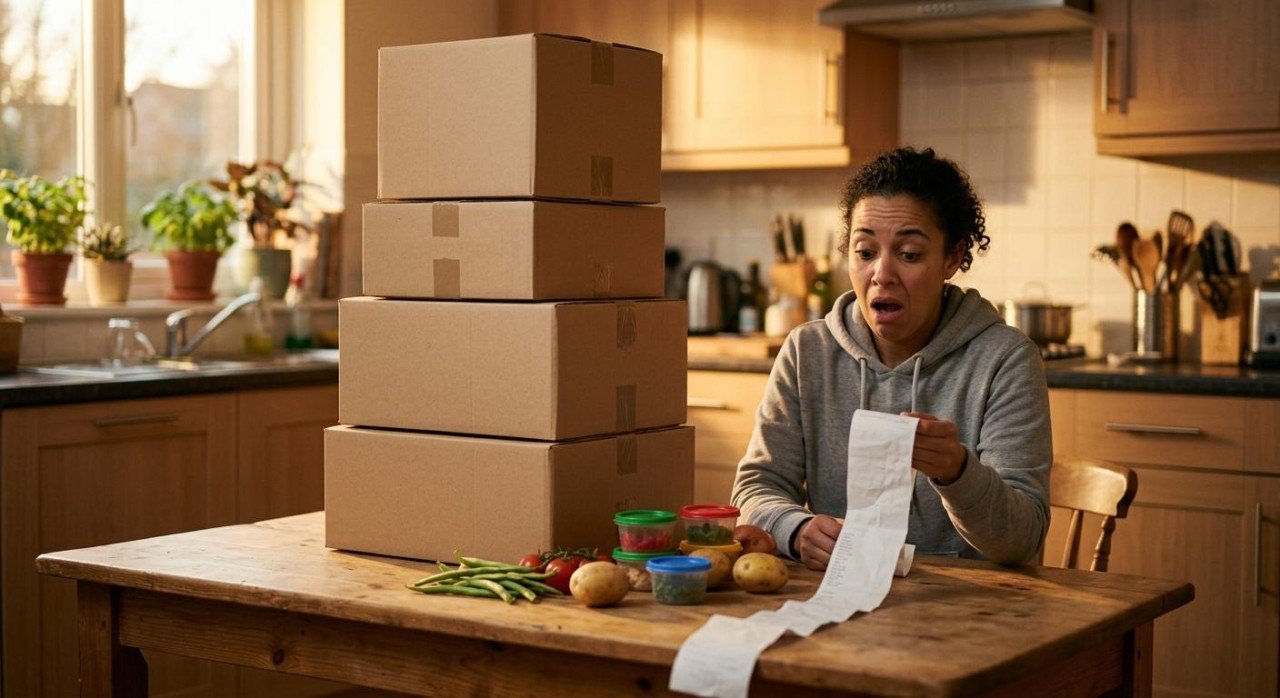
It is 6:47 pm on a Tuesday. You have just walked through the door after a long day, the kitchen is cold, and the fridge contains half a cucumber, some leftover rice of uncertain age, and a jar of pesto you optimistically bought three weeks ago. You know you should cook something. Instead, you open a delivery app.
This scene plays out in millions of homes every week. Not because people lack willpower or cooking skills, but because they lack a plan. The friction between wanting to eat well and actually doing it sits almost entirely in the planning, deciding, and shopping stages — not the cooking itself.
That is where the Sunday prep system comes in. It is not about spending your whole weekend in the kitchen or eating identical tupperware meals for five days. It is about spending two to three focused hours on one day to remove the daily decision-making that derails healthy eating for the rest of the week.
Done well, it can save you roughly five hours of scattered cooking and deliberating throughout the week, and around £40 in takeaway orders, impulse buys, and food you would otherwise throw away. Here is how to set it up, step by step.
The Real Cost of "I'll Figure It Out Later"
The daily question of what to eat takes a surprising toll. Research from the USDA found that the average person spends 37 minutes a day just preparing and serving food and cleaning up. When you add the mental overhead of deciding what to cook, checking what ingredients you have, and possibly running to the shop for missing items, those minutes compound into hours across a week.
Then there is the financial side. According to UK government data, the average person spends £11.25 per week on eating out and £1.90 on takeaway food brought home. That might sound modest, but it only captures averages — if you are the kind of person who orders delivery two or three times a week when you have not planned dinner, those figures climb quickly. A couple ordering takeaway three evenings a week at £15 each time is spending £90 a week, or over £4,600 a year, just on the nights they did not have a plan.
Food waste adds to the bill. UK households throw away around 6.7 million tonnes of food each year, costing the average household roughly £470 annually. The main culprit, according to WRAP research, is food that was not used in time — the vegetables that went limp, the chicken you forgot about, the bread that went stale. Nearly 40% of edible food waste happens simply because the food was not eaten before it went off.
A weekly prep system attacks all three problems at once: it batches your cooking time, eliminates the nightly "what should I eat" paralysis, and ensures every ingredient you buy has somewhere to go. Tools like Eat Well Planner can handle the planning and shopping list automatically, so the only effort left is the cooking itself.
Think Components, Not Complete Meals
Here is where most meal prep advice goes wrong. The typical guide tells you to cook five identical portions of chicken-rice-broccoli on Sunday and eat them all week. By Wednesday, you are so bored that the delivery app starts looking like a lifeline.
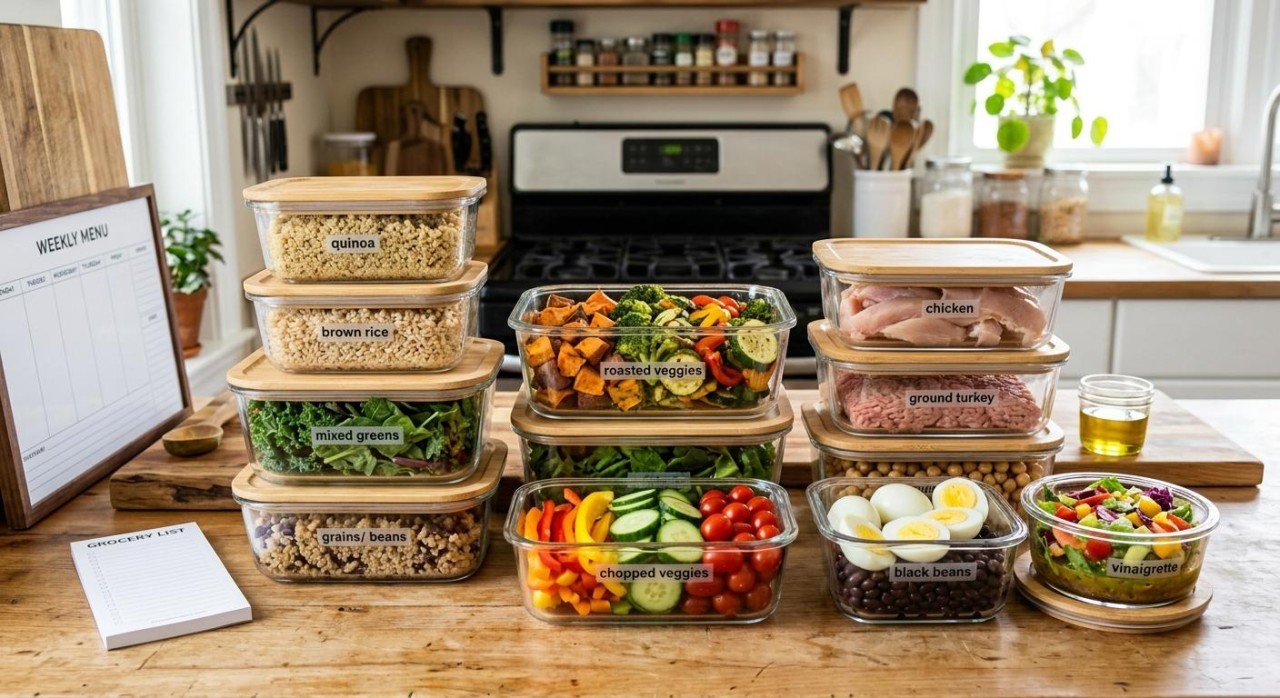
A better approach is component prep — preparing versatile building blocks that can be mixed and matched into different meals throughout the week. Instead of assembling five finished dishes, you prepare:
- Two or three proteins — a tray of roasted chicken thighs, a batch of seasoned lentils, some baked salmon fillets
- Two or three grains or bases — a pot of brown rice, some cooked quinoa, a batch of roasted sweet potatoes
- A variety of vegetables — a sheet pan of roasted Mediterranean vegetables, some raw prepped salad ingredients, a batch of steamed broccoli
- Two or three sauces or dressings — a tahini dressing, a simple vinaigrette, a batch of pesto or chimichurri
With those components in the fridge, Monday's dinner might be a grain bowl with chicken, roasted vegetables, and tahini. Tuesday is a salad with salmon, quinoa, and vinaigrette. Wednesday is lentils over sweet potato with pesto. Same prep session, completely different meals each night — assembled in under ten minutes.
This mix-and-match approach also handles the household problem: one person can have their components in a wrap, another in a bowl, another as a salad. Same ingredients, different plates, no complaints.
A Sample Sunday Prep Schedule
You do not need a free afternoon. Two to three hours is plenty, especially once you have done it a few times. Here is a realistic schedule:
Before you start (15 minutes): Check what you already have in the fridge, freezer, and cupboards. Decide on your components for the week based on what needs using up and what your meal plan calls for. Write a quick shopping list for anything missing — or if you use something like Eat Well Planner, your shopping list is already generated from your meal plan, so you can skip straight to the shop.
0:00 – 0:15 — Get the oven working first. Preheat to 200°C. Chop your roasting vegetables (peppers, courgettes, red onion, sweet potatoes) and your protein for the oven (chicken thighs, salmon). Season everything, put it on trays, and get them in. These will look after themselves for 30 to 45 minutes while you work on other things.
0:15 – 0:35 — Start your grains. Get a pot of rice or quinoa going on the hob. This is mostly passive time — set a timer and move on.
0:20 – 0:50 — Prep raw ingredients. Wash and chop salad vegetables. Slice cucumbers, halve cherry tomatoes, shred cabbage, dice peppers. Store them in airtight containers lined with a sheet of kitchen paper to absorb moisture. Chopped raw vegetables stay fresh for five to six days when stored properly.
0:50 – 1:10 — Make your sauces. Blend a tahini dressing, whisk a vinaigrette, or make a batch of whatever sauce you like. This takes five to ten minutes per sauce and transforms plain components into proper meals.
1:00 – 1:20 — Cook a second protein. While the oven trays are still working, cook a stovetop protein: brown some lentils with spices, scramble a batch of seasoned tofu, or pan-fry some beans. If you already have enough protein from the oven, use this time to make a big pot of soup or stew instead.
1:15 – 1:40 — Start taking things out. Your oven trays and grains should be done around now. Let everything cool for about 20 to 30 minutes before portioning into containers. Food safety guidelines recommend refrigerating within two hours of cooking.
1:40 – 2:00 — Portion and store. Divide everything into containers. Keep sauces separate. Label anything going into the freezer with the date.
2:00 – 2:15 — Clean up. Wash up as you go where possible, and you will find the final cleanup is minimal.
That is roughly two hours of active work, and you have just set up your dinners (and probably lunches) for the entire week.
The Planning Phase: Where the Real Savings Happen
The prep session itself is satisfying, but the biggest impact comes from what happens before it: the planning. When you sit down for even ten minutes to decide what you will eat that week and write a shopping list, three things happen.
First, you buy only what you need. No more wandering the aisles picking up things that look good but have no destination. Research from the Love Food Hate Waste campaign found that meal planning and shopping lists tackle the two biggest causes of household food waste — not using food in time and buying more than you need — and are proven to be effective in most homes.
Second, you can plan around overlapping ingredients. If you are roasting peppers for a grain bowl, you can roast extra for a frittata later in the week. If you are buying a whole chicken, the leftovers become sandwich filling or soup. This kind of ingredient overlap is where the real financial savings stack up — you are not buying separate ingredients for seven separate meals, you are buying versatile staples that do double or triple duty.
Third, you eliminate the decision fatigue that leads to expensive, less healthy choices. Research from Johns Hopkins Bloomberg School of Public Health found that people who cook dinner at home six to seven times a week consume 137 fewer calories per day than those who cook once a week or less. They also consume less fat and less sugar — not because they are trying harder, but because home-cooked food tends to be less calorie-dense than restaurant or takeaway food by default.
This is where a tool like Eat Well Planner can make the planning phase genuinely effortless. The app generates a weekly meal plan tailored to your dietary preferences and then automatically creates an organized shopping list with every ingredient you need. Instead of spending Sunday morning deciding what to cook and writing a list from scratch, you can go straight from a ready-made plan to the shop to the kitchen. It removes the one part of meal prep that most people find tedious enough to skip.
Take the Guesswork Out of Eating Well
Eat Well Planner helps you organize your favorite recipes, plan balanced meals, and automatically generate shopping lists — all in one place. Whether you're tracking macros, managing dietary restrictions, or just trying to stop asking "what's for dinner?", we've got you covered.
Our AI-powered tools can adapt any recipe to your dietary needs, help you discover new meals you'll love, and even log your nutrition effortlessly. It's meal planning made simple.
Start Organizing Your Meals — FreeHow Long Things Actually Last (The Wednesday Myth)
One of the biggest reasons people give up on meal prep is the belief that everything goes off by midweek. "I prep on Sunday, but by Wednesday it's all gone weird." This is usually a storage problem, not a freshness problem.
Here is a realistic guide to how long properly stored prepped food lasts in the fridge (at 4°C or below):
- Cooked chicken, beef, or pork: 3 to 4 days
- Cooked fish or seafood: 2 to 3 days (eat these early in the week)
- Cooked grains (rice, quinoa, pasta): 3 to 5 days
- Roasted vegetables: 3 to 4 days
- Raw chopped vegetables: 5 to 6 days
- Soups and stews: 3 to 5 days
- Salads with dressing: 1 to 2 days (without dressing: 3 to 5 days)
- Sauces and dressings: 3 to 6 days
- Overnight oats: up to 5 days
The key rules for keeping prepped food fresh:
- Use airtight containers. Glass is ideal — it does not absorb odors and you can see what is inside.
- Cool food before storing. Let cooked food cool for about 30 minutes at room temperature, then refrigerate. Do not leave it out for more than two hours.
- Keep sauces separate. Soggy food is the number one reason people think meal prep tastes bad by day three. Store dressings, sauces, and wet toppings in separate small containers and add them when you eat.
- Eat seafood and dairy-based dishes first. Plan your week so that the more perishable proteins are eaten Monday and Tuesday, with heartier dishes like soups, stews, and grain bowls later in the week.
The Freezer: Your Second Prep Day
If the fridge gets you to Wednesday or Thursday, the freezer gets you to Sunday. Freezing is the single best trick for adding variety to a meal prep routine without doing extra work.
Most cooked meals freeze well for two to three months. Soups, stews, curries, chilli, and grain-based dishes are particularly good candidates. Tomato-based pasta sauces can last three to six months in the freezer.
The strategy is simple: whenever you cook something that freezes well, make a double batch. Eat half this week, freeze half for a future week. Over the course of a month, you build up a rotating stock of frozen meals that cover the days when you do not feel like cooking at all — without resorting to takeaway or processed convenience food.
Foods that freeze well:
- Soups, stews, and curries
- Cooked grains (rice, quinoa)
- Bolognese and other tomato-based sauces
- Chilli and bean dishes
- Casseroles and bakes
- Marinated raw proteins (they actually absorb flavor while defrosting)
Foods that do not freeze well:
- Raw salad vegetables
- Cream-based sauces (they tend to split)
- Dishes with a high water content like cucumber or lettuce
- Fried foods (they lose their crunch)
Label everything with the name and date. A piece of masking tape and a marker pen is all you need. Future you will be grateful not to find yourself playing "mystery container" with something frozen in October.
Start Smaller Than You Think
If the idea of a full two-hour prep session feels overwhelming, do not start there. The most common reason people abandon meal prep is that they tried to do too much on day one, felt exhausted, and decided it was not for them.
Instead, start with just one meal. For most people, that means lunches. Preparing five workday lunches on Sunday takes about 45 minutes and immediately eliminates five decisions, five trips to a shop or canteen, and — if you were buying lunch out — potentially £25 to £50 a week.
Once lunches feel routine, add a second layer: prep your dinner components. Then maybe breakfast (overnight oats take five minutes to assemble for the whole week). Build the habit gradually, and it stops feeling like a chore and starts feeling like a shortcut.
Overcoming the Three Biggest Barriers
"I don't have time"
This is the most common objection, and it is usually based on a misunderstanding of the maths. Cooking from scratch seven nights a week takes 30 to 60 minutes each time — that is 3.5 to 7 hours of cooking, plus the daily deciding and shopping. A single two-hour prep session replaces most of that. You are not adding time to your week; you are consolidating scattered time into one focused block and getting the rest of your evenings back.
If Sunday does not work, any day will do. Some people prefer Saturday morning before the weekend gets busy. Others use a weekday evening. The day matters less than the consistency.
"I get bored eating the same thing"
This is exactly why component prep works so much better than cooking five identical meals. With a fridge full of different proteins, grains, vegetables, and sauces, you have dozens of possible combinations. Monday's chicken-rice-tahini bowl becomes Wednesday's chicken wrap with roasted vegetables and pesto, using exactly the same prepped ingredients.
The freezer strategy also helps here. When you have a stock of different frozen meals accumulated over previous weeks, your Thursday dinner does not have to come from this Sunday's prep at all — it can be a curry you froze three weeks ago.
"Everything goes off by Wednesday"
As covered in the storage section, this is almost always fixable. Use proper airtight containers, keep sauces separate, and schedule your week so that shorter-lived ingredients (fish, fresh salads) are eaten earlier and longer-lasting ones (stews, grain bowls, roasted vegetables) fill the back half of the week. With the freezer handling Thursday and beyond, you really only need your fresh prep to last three or four days — well within safe limits for almost everything.
Putting It All Together
The Sunday prep system is not about perfection or Instagram-worthy rows of matching containers. It is about one simple shift: moving the thinking and the work to a single window so that the rest of your week runs on autopilot.
The numbers make the case on their own. Home-cooked meals are cheaper than eating out. Planned shopping wastes less food. Having food ready to go means you reach for it instead of a delivery app. And batch cooking in one session is faster than cooking from scratch every night.
If you want to make the planning part even simpler, Eat Well Planner can generate a personalized weekly meal plan and shopping list based on recipes you actually want to eat. You can import recipes from any website, Instagram, or YouTube — so that stir-fry you bookmarked last week can become part of next Sunday's prep. The app handles the planning, you handle the cooking, and Tuesday evenings stop being a source of stress.
Start this Sunday. Pick one protein, one grain, and one vegetable. Roast, cook, chop. Put them in containers. See how the week feels different when the answer to "what's for dinner?" is already sitting in your fridge.