It is 6:30 pm. You are tired, hungry, and staring into a fridge that offers no obvious answers. A delivery app is already open on your phone. You tell yourself the same thing you always do: "I just don't have time to cook anything healthy."
But what if a genuinely nutritious dinner took the same 30 minutes as waiting for that delivery? Not a sad salad or a bowl of plain rice — a proper, satisfying, balanced meal that covers your nutritional bases and actually tastes good?
That is what this post is about. A simple four-part formula you can apply to almost any ingredients you have on hand, plus practical shortcuts that keep the whole thing under half an hour. No culinary expertise required. No obscure ingredients. Just a framework that turns "I don't know what to cook" into a meal you can feel good about.
The Formula: How to Build a Balanced Plate
Nutrition advice has a complexity problem. Macros, micros, glycaemic indices, omega ratios — it can feel like you need a degree just to decide what to have for dinner. But the most effective approach to balanced eating is also the simplest, and it starts with how you divide your plate.
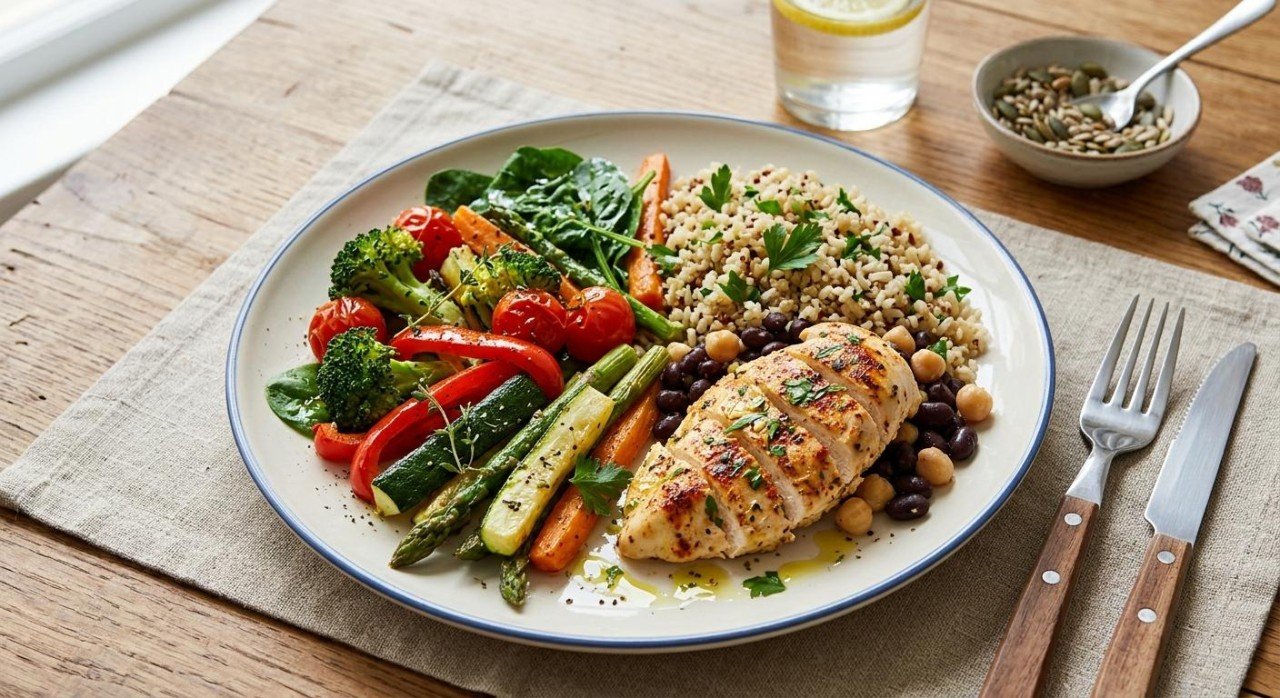
The plate method breaks every meal into four components:
- Half your plate: vegetables
- A quarter of your plate: protein
- A quarter of your plate: complex carbohydrates
- A drizzle of healthy fat
This is not a fad diet framework. It is essentially the same model recommended by Harvard's Healthy Eating Plate, which was developed by nutrition scientists at the Harvard T.H. Chan School of Public Health. It is also the approach used by the American Diabetes Association and has roots in the original plate model created by the Swedish Diabetic Association in 1987.
A 2022 scoping review of 23 studies found that portion control plates based on this model increased nutrition knowledge and supported positive dietary behaviors, including increased fruit and vegetable intake in both children and adults. In weight management interventions, participants using the plate method lost significantly more weight than control groups.
The beauty of this approach is that you do not need to count calories, weigh portions, or track macros. You just look at your plate. If roughly half of it is vegetables, a quarter is protein, a quarter is a whole grain or starchy vegetable, and there is some healthy fat in there, you have built a nutritionally solid meal. Every time.
What Each Part Actually Does
Vegetables (Half Your Plate)
Filling half your plate with vegetables is the single most impactful thing you can do for a meal's nutritional quality. Vegetables deliver fiber, vitamins, minerals, and phytonutrients while adding volume and satisfaction without a lot of calories. The more variety and color you include, the broader the range of nutrients you get — red tomatoes provide lycopene, dark leafy greens deliver folate and iron, and orange peppers are loaded with vitamin C.
Harvard's guidelines specifically note that potatoes do not count as vegetables here because of their effect on blood sugar. Think broccoli, spinach, peppers, courgettes, mushrooms, cauliflower, green beans, tomatoes, aubergine — essentially anything that is not a starchy tuber.
Protein (A Quarter of Your Plate)
Protein keeps you full, supports muscle maintenance, and helps stabilize blood sugar after a meal. Good options include chicken, fish, eggs, beans, lentils, tofu, and nuts. Harvard's Healthy Eating Plate recommends choosing fish, poultry, beans, and nuts while limiting red meat and avoiding processed meats like bacon and sausages.
You do not need a massive slab of meat here. A palm-sized portion of chicken, a tin of drained chickpeas, or a couple of eggs is plenty for one meal. Plant-based proteins like beans and lentils bring the added benefit of fiber — something most people are not getting enough of.
Complex Carbohydrates (A Quarter of Your Plate)
Carbohydrates are your body's preferred fuel source, but the type matters. Whole grains and complex carbs — brown rice, quinoa, whole wheat pasta, sweet potatoes, oats — release energy gradually and come packaged with fiber, B vitamins, and minerals. Refined carbs like white bread and white rice have been stripped of most of that goodness.
A quarter of a plate is not a huge portion, and that is the point. Most people over-serve carbs and under-serve vegetables. Flipping that ratio is the simplest upgrade you can make.
Healthy Fat (A Drizzle)
Fat is not a plate section so much as a finishing touch, but it is essential. A drizzle of olive oil, a handful of nuts, half an avocado, or a sprinkle of seeds adds flavor and helps your body absorb fat-soluble vitamins like A, D, E, and K from your vegetables. Without some fat in the meal, you are leaving nutrients on the table.
Harvard's plate guidelines specifically recommend using healthy oils like olive oil for cooking and dressing, and limiting butter and saturated fats.
The "30 Minutes Is Not Enough" Myth
One of the biggest barriers to cooking at home is the perception that healthy meals require serious time in the kitchen. A 2020 study of university students found that participants perceived cooking healthily as a significantly more complicated and time-consuming process than cooking in general — even though the actual time difference between a nutritious meal and a less nutritious one is often negligible.
The reality? In a 2019 survey of UK adults, more than half said they preferred to spend less than 30 minutes cooking a weeknight dinner. And research published in the American Journal of Preventive Medicine found that the frequency of home cooking matters more than the time spent on each individual meal. Simply cooking one additional meal per week at home improved diet quality more than spending extra minutes on any single cooking session.
In other words, a quick 25-minute stir-fry that you actually make beats an elaborate 90-minute recipe that stays bookmarked on your phone. Speed and simplicity are not the enemies of nutrition. They are the enablers.
Five Shortcuts That Make It Possible
The four-part plate formula tells you what to put on your plate. These five shortcuts tell you how to get it there in under 30 minutes.
1. Use Frozen and Pre-Chopped Vegetables
If you have been avoiding frozen vegetables because you assumed they were nutritionally inferior, the science says otherwise. Research comparing fresh and frozen produce consistently finds that frozen vegetables are nutritionally similar to fresh ones — and in some cases, they retain more nutrients. Fresh green peas, for example, can lose up to 51% of their vitamin C within 24 to 48 hours of harvest, while frozen peas locked in those nutrients at peak ripeness.
Frozen vegetables are already washed, chopped, and ready to cook. A bag of frozen stir-fry vegetables or broccoli florets goes from freezer to pan in minutes, instantly filling that crucial half of your plate. Pre-chopped fresh vegetables from the supermarket work just as well if you prefer them — the small premium is worth the time saved.
2. Keep Canned Beans and Lentils Stocked
A tin of chickpeas, black beans, or lentils is one of the most underrated kitchen shortcuts. You get protein, fiber, and complex carbohydrates in one ingredient, ready in the time it takes to open a tin and drain it.
The nutritional credentials are serious. A modelling analysis of nearly 44,574 adults using NHANES data found that replacing one serving of a typical protein source with canned beans increased dietary fiber intake by 30% and improved overall diet quality scores by 12%. Dan Buettner's Blue Zones research found that beans and legumes were a cornerstone of the diet in all five regions where people live the longest — from black beans in Costa Rica to lentils in the Mediterranean to soybeans in Okinawa.
Toss drained chickpeas into a curry, stir black beans through a burrito bowl, or add lentils to a simple tomato sauce. You can also rinse canned beans to reduce sodium by up to 40%.
3. Learn Three or Four Versatile Sauces
The difference between a boring plate of chicken-rice-broccoli and a meal you actually look forward to eating is almost always the sauce. And the sauces that transform simple ingredients into satisfying meals are surprisingly quick to make:
- Peanut sauce (5 minutes) — peanut butter, soy sauce, lime juice, a pinch of chilli flakes, and a splash of water. Brilliant on stir-fries, noodles, or grain bowls.
- Tahini dressing (3 minutes) — tahini, lemon juice, garlic, salt, and water. Drizzle over roasted vegetables, falafel, or salads.
- Simple tomato sauce (15 minutes) — tinned tomatoes, garlic, olive oil, and dried herbs. Works on pasta, as a base for baked eggs, or spooned over grains.
- Chimichurri (10 minutes) — fresh parsley, garlic, olive oil, red wine vinegar, and red pepper flakes. Transforms grilled chicken, fish, or roasted sweet potatoes.
Make a batch on Sunday and it will carry you through several weeknight meals. Most of these keep for a week in the fridge, and they turn the simplest ingredients into something worth eating.
4. Embrace One-Pan and One-Pot Cooking
Sheet pan dinners and one-pot meals are not just lazy cooking — they are smart cooking. When you roast protein and vegetables together on a single tray, you naturally build a balanced plate with minimal effort and minimal washing up. The same logic applies to a one-pot curry, stew, or stir-fry.
The method also has a nutritional advantage: when vegetables roast alongside healthy fats like olive oil, the fat increases the bioavailability of fat-soluble vitamins and antioxidants. You are not just saving time — you are actually getting more out of your vegetables.
A typical sheet pan dinner takes five to ten minutes of prep (chop, season, arrange on tray) and 20 minutes in the oven. While it cooks, you are free to do anything else. That is the kind of "cooking" that fits into a busy weeknight.
5. Choose Quick-Cooking Grains
If brown rice's 40-minute cooking time puts you off, there are whole grains that are ready in a fraction of the time:
- Couscous — 5 minutes. Pour boiling water over it and cover. Done.
- Quinoa — 15 minutes. A complete protein containing all nine essential amino acids, plus 8g of protein and 5g of fiber per cooked cup.
- Bulgur wheat — 12 minutes. High in fiber and common in Mediterranean cooking.
- Egg noodles or rice noodles — 4 to 6 minutes. Perfect for stir-fries and Asian-inspired bowls.
You can also batch-cook slower grains like brown rice on the weekend and reheat portions during the week. A container of cooked rice in the fridge turns a 30-minute meal into a 15-minute one.
Take the Guesswork Out of Eating Well
Eat Well Planner helps you organize your favorite recipes, plan balanced meals, and automatically generate shopping lists — all in one place. Whether you're tracking macros, managing dietary restrictions, or just trying to stop asking "what's for dinner?", we've got you covered.
Our AI-powered tools can adapt any recipe to your dietary needs, help you discover new meals you'll love, and even log your nutrition effortlessly. It's meal planning made simple.
Start Organizing Your Meals — FreeSeven 30-Minute Meals That Follow the Formula
Theory is useful. Actual meals are better. Here are seven dinners that follow the four-part plate formula and genuinely come together in 30 minutes or less. Each one uses the shortcuts above.
1. Chicken and Vegetable Stir-Fry with Peanut Sauce
Vegetables: A bag of frozen stir-fry vegetables (peppers, mangetout, broccoli, carrots). Protein: Sliced chicken breast or thigh. Carbs: Rice noodles. Fat: Peanut sauce plus a drizzle of sesame oil.
Cook the chicken in a hot wok or large frying pan for 5 to 6 minutes, add the frozen vegetables straight from the bag, and stir-fry for another 4 to 5 minutes. Meanwhile, cook rice noodles according to the packet (usually 4 minutes). Toss everything together with peanut sauce. Total time: about 20 minutes.
2. Sheet Pan Salmon with Roasted Vegetables and Quinoa
Vegetables: Courgettes, cherry tomatoes, and red onion. Protein: Salmon fillets. Carbs: Quinoa. Fat: Olive oil for roasting plus the omega-3s already in the salmon.
Start the quinoa on the hob (15 minutes). While it heats, toss chopped vegetables with olive oil, salt, and pepper on a baking tray. Nestle salmon fillets among the vegetables. Roast at 200°C for 15 to 18 minutes. Everything finishes at roughly the same time. Total time: about 25 minutes.
3. Black Bean Burrito Bowl
Vegetables: Shredded lettuce, diced tomatoes, sliced peppers, and sweetcorn. Protein: Tinned black beans, heated with cumin and smoked paprika. Carbs: Brown rice (batch-cooked) or microwave rice. Fat: Half an avocado and a squeeze of lime.
Heat the beans with spices for 5 minutes. Warm the rice. Chop the fresh vegetables. Assemble everything in a bowl. Total time: about 15 minutes.
4. One-Pot Lentil and Vegetable Curry
Vegetables: Spinach, tinned tomatoes, and frozen cauliflower florets. Protein and carbs: Red lentils (they cook in 15 minutes and cover both the protein and carb portions). Fat: Coconut milk and a tablespoon of coconut oil for cooking.
Sauté onion and garlic in coconut oil for 2 minutes. Add curry paste or spices, stir for 30 seconds. Pour in tinned tomatoes, coconut milk, and rinsed red lentils. Add frozen cauliflower. Simmer for 15 minutes. Stir in spinach until wilted. Serve over a small portion of rice or with naan bread. Total time: about 25 minutes.
5. Mediterranean Chicken with Couscous
Vegetables: Roasted peppers, courgettes, and red onion (or use a jar of roasted peppers for speed). Protein: Chicken thighs, sliced. Carbs: Couscous. Fat: Olive oil and a few olives.
Pan-fry sliced chicken thighs with oregano and garlic for 8 to 10 minutes. Add chopped vegetables to the pan for the last 5 minutes. Meanwhile, pour boiling water over couscous, cover, and leave for 5 minutes. Fluff with a fork, stir through olive oil and lemon juice. Serve the chicken and vegetables over the couscous with a few olives scattered on top. Total time: about 20 minutes.
6. Prawn and Vegetable Noodle Bowl
Vegetables: Pak choi, sugar snap peas, and spring onions. Protein: Raw king prawns (they cook in 3 to 4 minutes). Carbs: Egg noodles. Fat: Sesame oil and a drizzle of the peanut sauce.
Cook egg noodles for 4 minutes, drain. In the same pan, stir-fry prawns for 2 minutes, add halved pak choi and sugar snap peas for another 3 minutes. Toss in the noodles, add soy sauce and a squeeze of lime. Finish with sesame oil and sliced spring onions. Total time: about 15 minutes.
7. Baked Eggs in Tomato Sauce (Shakshuka)
Vegetables: Tinned tomatoes, peppers, and onion (plus spinach if you want to bulk it out). Protein: Eggs. Carbs: Crusty whole wheat bread for dipping. Fat: Olive oil, plus a crumble of feta if you like.
Sauté diced onion and pepper in olive oil for 5 minutes. Add tinned tomatoes, cumin, paprika, and a pinch of chilli. Simmer for 10 minutes. Make wells in the sauce and crack in 3 to 4 eggs. Cover and cook for 5 to 7 minutes until the whites are set. Serve straight from the pan with bread for dipping. Total time: about 25 minutes.
The Confidence Problem
If these meals seem simple, that is the point. One of the most persistent myths in modern food culture is that cooking well requires skill, talent, and elaborate technique. Cooking shows and social media set a bar that has nothing to do with feeding yourself properly.
A study of 11,396 UK adults published in the International Journal of Behavioral Nutrition and Physical Activity found that people who ate home-cooked meals more than five times per week consumed 62g more fruit and 98g more vegetables daily than those who cooked fewer than three times a week. They were also 28% less likely to have an overweight BMI. The meals did not need to be complicated. They just needed to happen.
That is the real insight. The obstacle for most people is not a lack of recipes or cooking skill — it is the nightly decision of what to make. Research on decision fatigue and food shows that as cognitive resources deplete throughout the day, people default to familiar, convenient options regardless of nutritional value. By evening, when willpower is at its lowest, the path of least resistance wins. If that path is a delivery app, you will order delivery. If that path is a fridge stocked with the right ingredients and a formula you already know, you will cook.
Making the Formula Stick
Knowing the formula is step one. Making it your default is where the real health benefits come from. A few things that help:
- Keep a stocked "emergency shelf." A few tins of beans, a bag of frozen vegetables, a packet of rice noodles, a jar of passata, and some eggs. With just these staples, you can make at least three of the meals above without any advance planning.
- Prep your vegetables once a week. Even 20 minutes of washing and chopping on a Sunday means your weeknight meals come together significantly faster. Pre-chopped vegetables stored in airtight containers with a sheet of kitchen paper stay fresh for five to six days.
- Plan loosely, not rigidly. You do not need to assign a specific meal to every day of the week. Just knowing you have the ingredients for three or four formula-based meals is enough to keep you out of the delivery app.
- Rotate your sauces. The same chicken-vegetables-grain combination tastes completely different with peanut sauce one night and chimichurri the next. Sauce variety prevents meal fatigue without requiring you to learn new recipes.
- Let a tool do the planning. If the deciding-and-shopping part is your bottleneck, Eat Well Planner can generate a balanced weekly meal plan from recipes you actually like, then create a shopping list automatically. It removes the mental overhead so you can focus on the part that matters: the cooking itself.
Start With One Meal
You do not need to overhaul your entire diet this week. Pick one of the seven meals above — whichever sounds easiest or uses ingredients you already have — and make it tonight or tomorrow. See how long it actually takes. Notice how you feel afterwards compared to a takeaway.
The four-part formula is not a diet. It is a decision-making shortcut. Half vegetables, quarter protein, quarter carbs, a drizzle of fat. Once that pattern is in your head, you stop needing recipes for every meal. You start seeing the formula everywhere — in a leftover roast chicken that becomes a grain bowl, in a tin of chickpeas that becomes a quick curry, in a bag of frozen vegetables that becomes the foundation of dinner instead of an afterthought.
Healthy eating does not require hours in the kitchen. It requires a formula, a few shortcuts, and the 30 minutes you were going to spend waiting for delivery anyway.