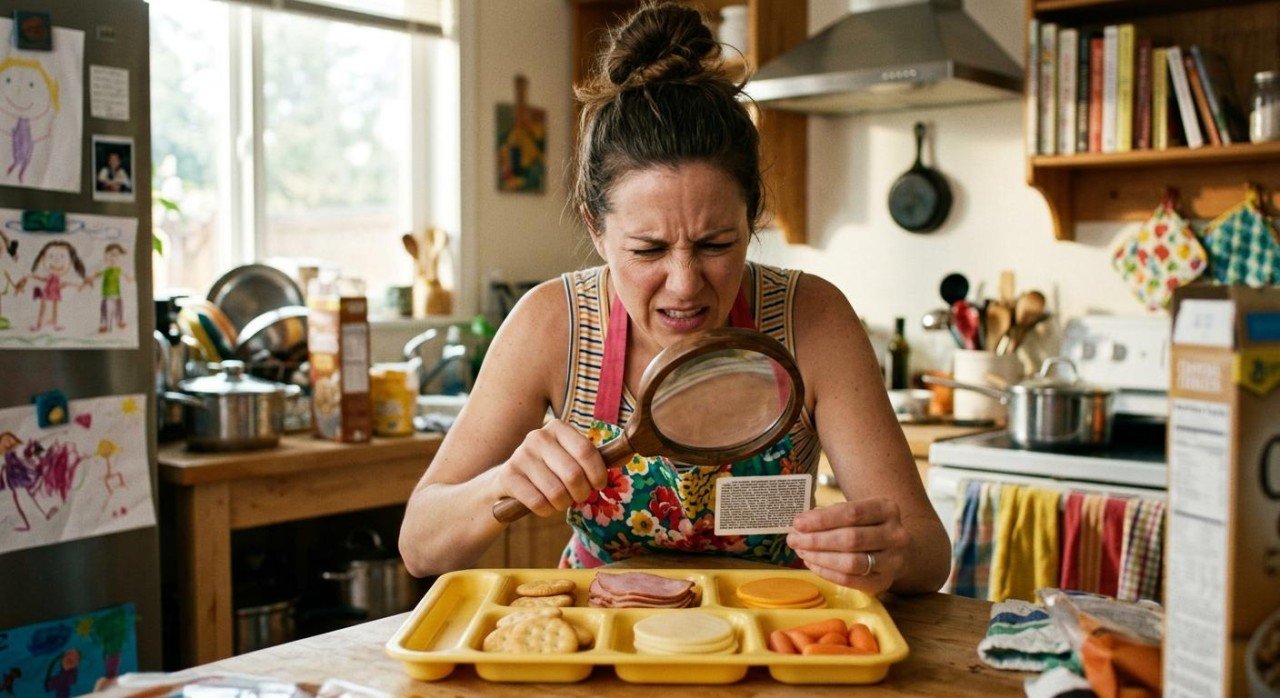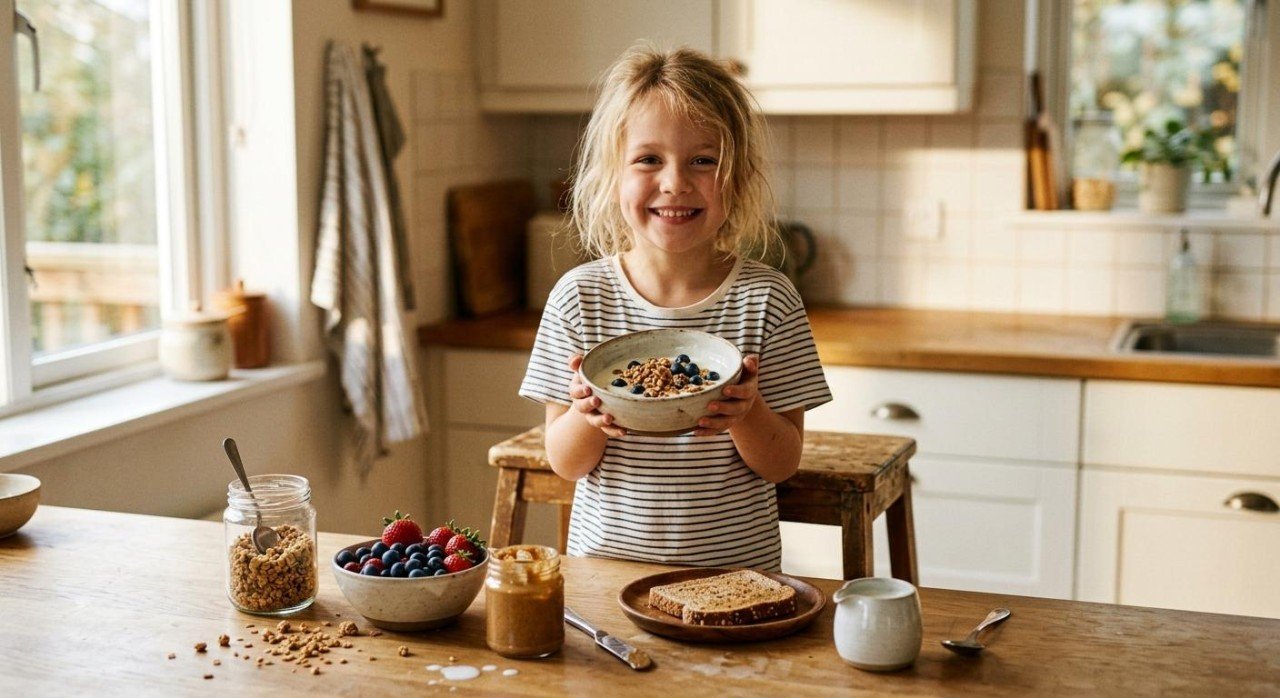
There is a particular kind of quiet that settles over a kitchen the first week a teenager is gone. The fridge stays full longer. Nobody asks what's for dinner. And somewhere across town — in a dorm, a shared apartment, a first place of their own — that same teenager is standing in front of an empty counter wondering whether ramen counts as a meal three nights running.
For most of us, cooking isn't something we sat down and formally learned. We absorbed it: standing next to a parent, getting handed the wooden spoon, being told to watch the pot. If your teen is heading toward college or independence in the next year or two, the window to pass that on is open right now — and it's worth treating as deliberately as any other part of getting them ready to leave.
This isn't about turning them into a chef. It's about sending them off able to feed themselves real food, on a budget, without getting sick or burning the place down. That's a life skill that protects their health and their wallet for decades — and the research backs that up more strongly than you might expect.
Why This Skill Matters More Than It Looks
The most compelling evidence here is long-term. In a decade-long study from the University of Minnesota's Project EAT, researchers followed 1,158 young people and found that those who rated their cooking skills as "very adequate" at ages 18 to 23 were eating measurably better ten years later, in their early 30s. They had 3.5 times the odds of preparing a vegetable-rich meal most days, and were far more likely to be the person doing the cooking in their household. Concretely, 62% of the confident group prepared meals with vegetables most days, versus 36% of those who'd felt unprepared — and only 57% ate fast food weekly, compared with 73% of the low-skill group. The cooking confidence a young adult builds early genuinely seems to carry forward.
The flip side shows up earlier. A 2024 analysis of 847 adolescents in Spain, part of the EHDLA study, found that teens who rated their own cooking skills as very inadequate ate more ultra-processed food each week than those who felt very capable. It makes intuitive sense: when you can't cook, the default becomes whatever requires no cooking — and that's almost always the packaged, processed option.
There's a money argument too. Researchers at the University of Washington tracked the eating habits of 437 adults and found that people who cooked at home more often had healthier diets — and, contrary to the usual assumption, paid no more for the privilege. Cooking roughly six nights a week scored notably higher on a standard diet-quality index than cooking three nights, with no increase in monthly food spending. As the study's senior author put it, cooking more at home gets you a better diet at no real added cost, while eating out more gets you a less healthy diet at a higher one. For a young person about to live on a tight budget, that's not a small thing.
And here's the part parents tend to underestimate: cooking seems to be good for them emotionally, not just nutritionally. A study of 8,500 secondary school students published in the Journal of Nutrition Education and Behavior found that the teens with the strongest cooking abilities reported lower levels of depressive symptoms, greater mental well-being, and stronger family connections. Learning to feed yourself is a quiet form of confidence. It tells a young person: I can take care of myself.
The Core Skills Worth Teaching
You don't need a curriculum. You need to make sure a handful of genuinely useful skills get covered before they go. Here's what actually matters.
A handful of reliable recipes
Nobody needs forty recipes to leave home. They need five or six they can make without thinking — meals they actually like, that cover breakfast, a couple of dinners, and something to bring for lunch. Think a vegetable-loaded pasta, a stir-fry, a sheet-pan chicken and vegetables, a pot of chili or a bean-based soup, scrambled eggs done properly, and a grain bowl they can throw together from whatever's around.
The goal is fluency, not variety. A teen who can cook six things confidently will eat better than one who owns a cookbook of a hundred recipes they've never touched. Pick the six together, and have them cook each one at least twice while you're still around to answer questions.
Knife skills and stove safety
This is the part parents worry about most, and it's the most teachable. The single most valuable knife technique is the "claw grip": curling the fingertips of the hand holding the food inward so the knuckles, not the fingertips, face the blade. Done right, the side of the knife rides against the knuckles and the fingertips stay tucked safely out of the path — it's one of the first things taught in culinary schools for exactly this reason. Pair it with a simple rule: a sharp knife is safer than a dull one, because a dull blade slips.
For the stove, the lessons are mostly about respect and attention: keep pot handles turned inward so they don't get knocked, never leave oil heating unattended, know that a grease fire gets smothered with a lid or baking soda and never water, and keep a clear path between the stove and the sink. None of this takes a class. It takes doing it next to them a few times and narrating what you're doing and why.
Reading a recipe
An overlooked skill: actually reading a recipe all the way through before starting. Teach them to read it twice, gather everything first (the chef's habit of mise en place), and understand the vocabulary — what "simmer" versus "boil" means, what "dice" versus "chop" looks like, why "season to taste" isn't a cop-out. Once a teen can read and follow a recipe, the entire internet of food opens up to them. They're no longer dependent on the six things you taught them; they can teach themselves the seventh.
Shopping on a budget
Cooking starts at the store, and this is where a lot of money quietly leaks away. Walk them through the basics: make a list and stick to it, check unit prices rather than sticker prices, lean on cheap and nutritious staples (dried beans and lentils, eggs, frozen vegetables, oats, rice, in-season produce), and understand that store brands are usually the same food for less. Teach them that the most expensive food is the food that rots in the fridge unused — which is exactly what a plan prevents.
Food storage and safety
This is the unglamorous skill that keeps them out of the bathroom — or the emergency room. The essentials are simple and worth drilling. Bacteria multiply fastest between 40°F and 140°F, so perishable food shouldn't sit out more than two hours. Leftovers go in the fridge promptly and get eaten within three to four days. Raw meat stays separate from everything else, and hands and cutting boards get washed after handling it.
Two habits are worth singling out because so few people have them. First, handwashing: in a USDA observational study, participants failed to wash their hands when they should have a striking share of the time. Second, the food thermometer. A national survey by the Annenberg Public Policy Center found that 73% of Americans don't regularly use one — relying on color and guesswork instead, which is exactly how undercooked chicken happens. A cheap instant-read thermometer and a few numbers to memorize (165°F for poultry, 160°F for ground meat, 145°F for whole cuts of beef or pork with a short rest) will spare your kid a genuinely miserable night. It's the easiest food-safety upgrade you can hand them.
Improvising from a pantry
The final skill is the one that separates someone who survives from someone who thrives: looking at what's on hand and making a meal of it. This is less a technique than a mindset, and you teach it by example. Show them the formula behind a balanced plate — a protein, a vegetable or two, a starch or grain, something with flavor (acid, fat, spice) — and that almost any combination of those produces something edible. A can of beans, an onion, a handful of frozen vegetables, and some rice is dinner. Once they see meals as flexible formulas rather than rigid recipes, an empty-looking kitchen stops being a crisis.
Hand Over Real Responsibility
Skills only stick when they're used under real stakes, and there's no substitute for genuine ownership. The single most effective thing you can do is hand over an entire dinner — not just the cooking, but the whole job. Let your teen plan one weeknight meal a week: they choose what to make, write the shopping list, do the shopping (or add to yours), cook it, and yes, handle some of the cleanup.
The first few will be rough. The pasta will be over the sauce will be under and dinner will land at 8:15. Resist the urge to take the spoon back. The point isn't a perfect meal; it's letting them feel the full arc of feeding people — including the planning and the timing, which is where most new cooks actually struggle. A teen who has run that loop a dozen times before they leave will step into their own kitchen already knowing how it goes.
This is also where a little structure helps, because the planning-and-shopping half of cooking is the part nobody teaches and everybody finds hardest. Giving them a system to lean on — somewhere to keep the recipes they like, plan the week, and generate the shopping list automatically — turns an abstract responsibility into a concrete routine they can actually follow.
That's exactly the kind of training-wheels setup Eat Well Planner is built for. A teen can build their own recipe book — importing the meals they actually want to eat straight from a YouTube video, an Instagram reel, or any recipe site — then plan their week and let the app generate the shopping list for them. It's the planning, shopping, and organizing scaffolding that usually has to live in a parent's head, handed over in a form a young person can run on their own. They learn the rhythm of plan-shop-cook with support, so that by the time they're doing it solo in their first apartment, it already feels familiar.
Take the Guesswork Out of Eating Well
Eat Well Planner helps you organize your favorite recipes, plan balanced meals, and automatically generate shopping lists — all in one place. Whether you're tracking macros, managing dietary restrictions, or just trying to stop asking "what's for dinner?", we've got you covered.
Our AI-powered tools can adapt any recipe to your dietary needs, help you discover new meals you'll love, and even log your nutrition effortlessly. It's meal planning made simple.
Start Organizing Your Meals — FreeAn Age-Appropriate Progression
If your kids are younger and you're reading ahead, the good news is that this doesn't have to be crammed into a panicked summer before move-out. It works far better as a slow handover, with responsibility growing as they do.
- Ages 6 to 10: Kitchen helper. Washing produce, stirring, measuring, tearing lettuce, cracking eggs, setting the table. The goal is comfort and curiosity, not output. Kids this age who get to help are more likely to grow into teens who want to cook.
- Ages 11 to 13: Supervised cooking. Introduce the knife and the stove with you right there — the claw grip, simple stovetop tasks, following a short recipe start to finish. Let them own breakfast or a simple lunch.
- Ages 14 to 16: Independent meals. They cook full dinners on their own, learn food safety and storage properly, and start handling parts of the shopping. This is the age to begin the weekly dinner handoff.
- Ages 17 to 18: Full ownership. Planning, budgeting, shopping, cooking, and storing — the complete cycle. Treat the last year at home as a dress rehearsal for the life they're about to live, with you available as backup rather than running the show.
If your teen is already 17 and you haven't done any of this, don't despair — just compress it. Spend the months before they leave running the full cycle together as often as you can. Even a handful of real reps beats none, and the longitudinal research suggests that the confidence built now is what carries forward, not the number of recipes memorized.
The Bottom Line
Teaching a teenager to cook is one of those parenting tasks that's easy to keep postponing because it never feels urgent — until suddenly they're gone and it's too late to do it casually. But it's also one of the highest-return skills you can send them off with. It shapes how well they eat, how much they spend, and even, the evidence suggests, how they feel — for years after they've left your kitchen.
You don't have to do it perfectly. You just have to start handing over the spoon: one recipe, one shopping list, one weeknight dinner at a time. Give them the core skills, give them real responsibility, and give them a system to lean on while they find their feet. By the time they're standing in their own kitchen, "what's for dinner" won't be a crisis. It'll just be a question they know how to answer.
If you'd like to give your teen a head start on the planning side, try setting up Eat Well Planner together — build their first recipe book, plan a week, and let the auto-generated shopping list do the heavy lifting while they learn the ropes.