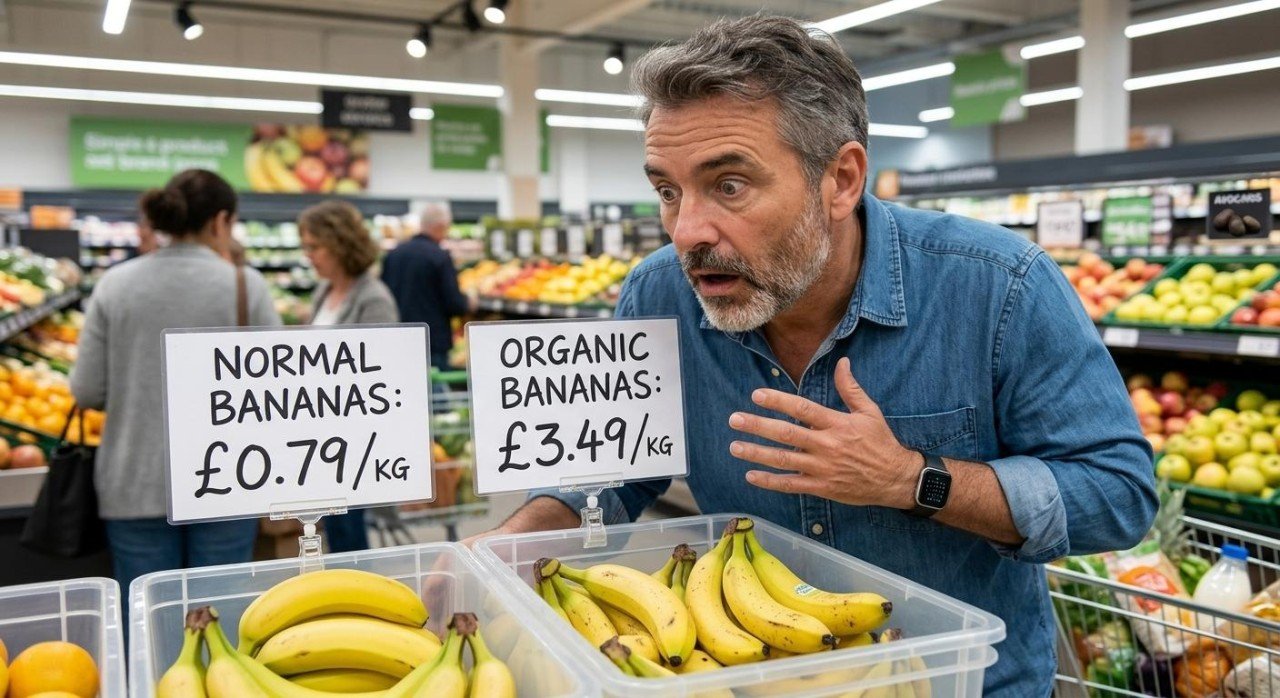
Walk into any supermarket and you'll find two versions of more or less everything. The organic apple sits next to the conventional one, looking almost identical — except one costs nearly twice as much. Multiply that across your weekly shop and the organic premium can add hundreds of pounds to your grocery bill each year.
So is it worth it? The honest answer is: sometimes yes, often no, and the loudest voices on both sides tend to oversimplify. Buying everything organic is an expensive, anxious way to shop. Writing off organic entirely means missing a handful of places where it genuinely matters. This post walks through what "organic" actually means, what the research says about pesticides and nutrition, and where your grocery money is best spent.
What "Organic" Actually Means
The word "organic" sounds vaguely wholesome, but in most countries it has a specific legal definition. In the US, USDA organic certification prohibits the use of synthetic pesticides and fertilizers, sewage sludge, genetically modified organisms, and irradiation. Livestock must have access to the outdoors, be fed organic feed, and cannot be given growth hormones or routine antibiotics.
There are actually several tiers of organic labelling:
- "100% Organic" — every ingredient (excluding water and salt) is certified organic.
- "Organic" — at least 95% of ingredients by weight are certified organic. The remaining 5% must come from an approved list of non-organic substances.
- "Made with Organic [ingredient]" — at least 70% of ingredients are organic. The USDA Organic seal cannot appear on these products.
- Products with less than 70% organic content can only list specific organic ingredients in the ingredient panel, not on the front of the pack.
What organic certification does not guarantee is arguably just as important. Organic does not mean pesticide-free — organic farmers can use a range of approved natural pesticides, including copper sulphate, sulfur, and pyrethrins. Organic does not mean local, fresh, or small-scale. An organic strawberry can be grown on an industrial farm 3,000 miles away and flown to your supermarket. And critically, organic does not automatically mean more nutritious. The label is about how the food was produced, not what's in it.
The Pesticide Question
The most common reason people buy organic is to avoid pesticide residues on their food. This is where the evidence gets genuinely interesting — and contested.
On one hand, pesticide residues on conventional produce are real. The US Department of Agriculture's Pesticide Data Program routinely detects residues on the majority of non-organic fruit and vegetable samples. The advocacy group Environmental Working Group turns this data into its annual Shopper's Guide to Pesticides in Produce, which ranks items by residue levels. Their 2026 analysis looked at more than 54,000 samples of 47 fruits and vegetables and identified 264 pesticides and their breakdown products. The most contaminated items, in their ranking, were spinach, kale and other leafy greens, strawberries, grapes, nectarines, peaches, cherries, apples, blackberries, pears, potatoes, and blueberries. The least contaminated included pineapple, sweet corn, avocados, papaya, onions, frozen sweet peas, asparagus, cabbage, cauliflower, watermelon, mangoes, bananas, carrots, mushrooms, and kiwi.
On the other hand, "residue detected" and "residue at a level that could harm you" are very different things. The EPA sets tolerance levels for pesticide residues that include large safety margins — typically 100 times below the level shown to cause no observable effects in animal studies, with additional factors added for children and pregnant women. USDA monitoring consistently finds that residues on conventional produce are well within these tolerances.
How far within? A peer-reviewed analysis in the Journal of Toxicology examined actual dietary exposure to the ten most frequently detected pesticides on the EWG's "Dirty Dozen" commodities. It found that 75% of pesticide-commodity combinations produced exposures below 0.01% of the reference dose — that is, roughly one million times lower than the level at which no adverse effect was observed in animal studies. The authors concluded that substituting organic versions of these items "does not result in any appreciable reduction of consumer risks."
Does that settle the debate? Not entirely. Critics of regulatory tolerance levels point out that they're set one pesticide at a time and don't fully account for exposure to multiple residues simultaneously, endocrine-disrupting effects, or vulnerable populations. These are reasonable concerns, and the research on chronic low-dose exposure is still evolving. But it's also true that the "dirty dozen" framing — which implies these foods are dangerous — overstates what the data actually shows.
The pragmatic takeaway: washing produce thoroughly under running water removes a meaningful portion of surface residues (and the dirt and bacteria most likely to actually make you sick), and the health benefits of eating conventional fruits and vegetables vastly outweigh the theoretical risks from residues at current exposure levels.
Are Organic Foods More Nutritious?
This is where the organic marketing story gets weakest. The most thorough review of the question, a Stanford meta-analysis of 237 studies, found no significant differences in vitamin content between organic and conventional produce. The only nutrient that was reliably higher in organic produce was phosphorus — a mineral that almost nobody is deficient in. Lead author Dena Bravata put it bluntly at the time: "There isn't much difference between organic and conventional foods, if you're an adult and making a decision based solely on your health."
There are a couple of notable exceptions, both involving animal products. A systematic review led by Newcastle University, which analyzed 196 papers on milk and 67 papers on meat, found that both organic milk and organic meat contained around 50% more omega-3 fatty acids than their conventional equivalents. This isn't magic — it's a consequence of how the animals are fed. Organic standards require more pasture access, and cows grazing on grass produce milk with a more favorable fatty acid profile than cows eating primarily grain.
How meaningful is this in practice? That depends on where omega-3s come from in your diet. If you eat oily fish regularly, the organic milk upgrade is fairly minor. If you don't eat fish and rely heavily on dairy, it's more significant. Either way, it's a genuine — if modest — nutritional advantage.
For plant foods, there's a related finding: organic produce tends to have higher levels of certain antioxidant compounds. A 2014 meta-analysis in the British Journal of Nutrition, covering 343 peer-reviewed studies, found classes of polyphenols and flavonoids roughly 19–69% higher in organic crops. Whether this translates into meaningful health outcomes is uncertain — but the real lesson is that eating any fruits and vegetables, organic or not, gives you far more antioxidants than skipping them.
The Environmental Angle
If nutrition is roughly a wash, what about the environment? Here the picture is more nuanced than either side tends to admit.
Organic farming reliably produces real environmental benefits at the farm level. Long-term studies show higher biodiversity on organic farms — more insects, birds, and soil organisms — and reduced runoff of synthetic fertilizers and pesticides into surrounding waterways. Soil organic matter and microbial activity tend to be higher. Farmworkers and nearby communities face lower exposure to synthetic pesticides.
The complication is yield. Organic systems produce, on average, 20–35% less food per hectare than conventional ones. That means feeding the same population organically requires more land, which — depending on what that land would otherwise be — can offset the emissions and biodiversity benefits of the farming method itself. If a 100% organic switchover meant converting forests or grasslands to cropland, the climate maths gets ugly fast.
This doesn't invalidate organic's environmental case, but it does argue against a simple "organic equals green" framing. If environmental impact is your main concern, the bigger levers are almost certainly eating less meat (particularly beef), reducing food waste, and choosing seasonal produce — not swapping conventional apples for organic ones.
When Organic Is Probably Worth the Premium
With all that context, where does organic actually earn its keep? A few categories have the strongest case:
- Dairy, especially milk and yogurt you consume regularly. The omega-3 difference is real, and organic dairy standards also require more humane pasture access for cows. If you drink a lot of milk, this is one of the clearer wins.
- Eggs. "Organic" eggs come from hens with outdoor access and organic feed, which typically means better welfare and a marginally better fatty acid profile. "Pasture-raised" is often a more meaningful label here, but organic certification tends to correlate with higher welfare standards overall.
- Meat, particularly beef and chicken you eat frequently. Organic meat cannot come from animals given routine antibiotics or growth hormones. Given ongoing concerns about antibiotic resistance linked to livestock use, this is a reasonable reason to spend more if your budget allows.
- Thin-skinned produce you eat whole and in large quantities. If strawberries, grapes, or apples are a staple in your household — especially for children — the organic version removes one layer of uncertainty, even if the conventional is likely fine.
- Leafy greens you eat often. Spinach, kale, and other greens consistently show up with more pesticide residues than thicker-skinned vegetables, partly because you eat the whole leaf and partly because they're sprayed repeatedly during growth.
When Conventional Is Perfectly Fine
For everything else, spending more on organic is mostly an optional comfort. Some categories where conventional is a genuinely sensible choice:
- Thick-skinned and peeled produce. Avocados, bananas, pineapples, watermelon, onions, and mangoes all have inedible skins that you discard — which is also where most residues end up. The flesh you actually eat has very little exposure.
- Sweet corn and frozen peas. Both consistently show extremely low residue levels in USDA testing.
- Mushrooms, cabbage, cauliflower, asparagus. These rank among the cleanest conventional options year after year.
- Grains, flour, pasta, rice. Residues are typically very low and well within safety limits. If you're buying flour or dried pasta weekly, the organic upgrade is low-impact.
- Anything frozen or canned, when fresh isn't practical. A conventional frozen vegetable absolutely beats a processed ready-meal. The choice that matters most here is vegetable versus not-a-vegetable, not organic versus conventional.
The Thing That Actually Matters
Step back for a moment. According to the US Centers for Disease Control and Prevention, only 12.3% of American adults meet the daily fruit intake recommendation, and just 10% meet the vegetable recommendation. Nine out of ten people are not eating enough produce of any kind.
Against that backdrop, the organic-versus-conventional debate is a second-order concern. A diet rich in conventional fruits and vegetables is dramatically healthier than a diet light on produce with a few organic items scattered in. If the organic price tag is the reason you put the bag of apples back on the shelf and reach for a processed snack instead, organic has actively hurt your health.
The most important decision you make in the produce aisle is whether to buy produce at all, and how much variety you'll eat through the week. Organic is a nice-to-have. Diverse, fresh, whole foods — in whatever form you can afford consistently — is the non-negotiable.
Take the Guesswork Out of Eating Well
Eat Well Planner helps you organize your favorite recipes, plan balanced meals, and automatically generate shopping lists — all in one place. Whether you're tracking macros, managing dietary restrictions, or just trying to stop asking "what's for dinner?", we've got you covered.
Our AI-powered tools can adapt any recipe to your dietary needs, help you discover new meals you'll love, and even log your nutrition effortlessly. It's meal planning made simple.
Start Organizing Your Meals — FreeA Practical Shopping Strategy
If you want a simple rule of thumb, here's one that covers most households:
- Start from a meal plan, not a shopping list. Decide what you actually want to eat this week. A clear plan keeps you focused on whether the meal is nutritious and fresh, not on whether each individual apple is certified.
- Prioritise organic where it matters most. Dairy you drink daily, meat you eat regularly, and thin-skinned produce that shows up often in your diet — spinach, strawberries, grapes, apples — are the highest-value upgrades if your budget stretches.
- Buy conventional for everything else. Bananas, onions, avocados, corn, and cabbage are genuinely fine. So are frozen and tinned vegetables.
- Wash thoroughly either way. Rinsing produce under running water for a few seconds and rubbing the surface removes a meaningful portion of residues (and, more importantly, bacteria and soil).
- Spend any money you save on more variety. Every pound you don't spend on organic cauliflower is a pound you can spend on an extra vegetable, a herb you've never cooked with, or a new type of bean. Variety matters more for health than organic certification ever will.
If the thought of planning meals like this feels like one more thing on an already-full plate, it doesn't have to be. Eat Well Planner builds weekly meal plans from recipes you've saved, generates an organized shopping list automatically, and shows you the nutrition breakdown for every meal — so you can make informed choices about where to spend on organic without spreadsheet-level effort. You can import recipes from any website, Instagram reel, or YouTube video, and the app handles ingredients, nutrition, and the shopping list from there.
The Bottom Line
Organic is neither a scam nor a silver bullet. For a small set of foods — dairy, meat, certain thin-skinned produce — it delivers modest but genuine benefits. For the rest of the supermarket, the nutritional case is weak, the environmental case is mixed, and the cost case is often indefensible.
The guilt many people feel at the supermarket — scanning organic price tags, doing mental maths, wondering if they're slowly poisoning their family — is mostly unearned. Eating more fruit, more vegetables, more variety, and less ultra-processed food will do far more for your health than switching every item to organic. Buy organic where it counts, buy conventional where it doesn't, and spend the difference on more plants on your plate. That's the trade every serious body of evidence points to.