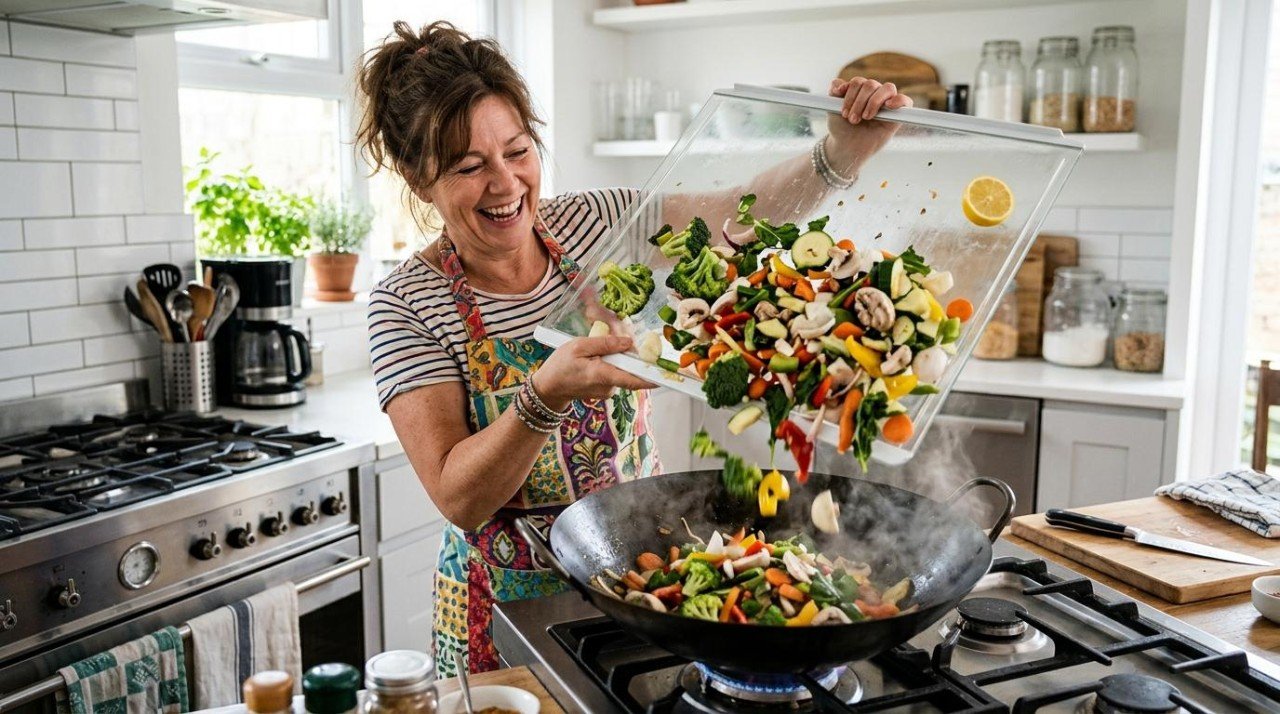
You already know you should eat more plants. Every nutritionist, every headline, every well-meaning relative has told you so. And yet, according to the CDC, only about 1 in 10 adults in the US eat enough fruits and vegetables. The gap between knowing and doing is enormous — and it's not because people are lazy or don't care. It's because "eat more vegetables" sounds like a complete overhaul of the way you eat.
It doesn't have to be. The most effective approach isn't replacing your meals with salads or going plant-based overnight. It's sneaking more plants into the food you already enjoy — small additions that barely change your routine but meaningfully change your nutrition.
And there's a compelling reason to focus on variety, not just volume. Research from the American Gut Project — a landmark study of over 11,000 people — found that those who ate 30 or more different plants per week had significantly more diverse gut microbiomes than those eating fewer than 10. That diversity is linked to better immunity, reduced inflammation, and even improved mental health. The good news is that "plants" doesn't just mean vegetables — fruits, nuts, seeds, legumes, whole grains, herbs, and spices all count.
So here are 10 genuinely simple ways to get more of them into your day, starting with what you're already eating.
1. Add a Handful of Greens to Your Smoothie
This is the gateway move for a reason: it works, and you can barely taste it. A handful of spinach or baby kale blended into a fruit smoothie adds iron, vitamin K, folate, and fiber without changing the flavor in any noticeable way. The fruit completely masks the taste of the greens.
If you're worried that blending destroys the nutrients, it doesn't. Johns Hopkins Medicine confirms that blending fruits and vegetables does not significantly reduce their nutritional value. In fact, breaking down the cell walls can make certain nutrients more accessible to your body.
Try this: Blend a banana, a handful of frozen berries, a generous handful of spinach, and some milk or yogurt. You've just added 3–4 different plants to your breakfast without thinking about it. Toss in a tablespoon of chia seeds or flaxseed for an extra plant point and a boost of omega-3s.
2. Stir Beans or Lentils into Soups, Stews, and Sauces
Legumes are one of the most underrated foods in the average diet. They're loaded with protein, fiber, and minerals — a cup of cooked lentils delivers roughly 17 grams of protein and 15 grams of fiber. And they have a remarkable ability to disappear into dishes you're already making.
Red lentils are particularly good for this because they break down completely when cooked, melting into the sauce and thickening it without adding any noticeable texture change. Stir them into a pasta sauce, a chilli, a curry, or even a tinned soup — they'll absorb the surrounding flavor and quietly boost the nutritional profile of the entire meal.
Try this: Next time you make a bolognese or pasta sauce, add half a cup of red lentils along with an extra splash of water. By the time the sauce has simmered, the lentils will have dissolved into it. You've just added a meaningful serving of plant protein and fiber to a meal that already felt complete.
3. Snack on Nuts and Seeds Instead of Reaching for Packets
When hunger hits between meals, most people reach for something processed — chips, biscuits, a cereal bar. Swapping in a small handful of nuts or seeds is one of the simplest nutritional upgrades you can make. Almonds, walnuts, pumpkin seeds, and sunflower seeds are all rich in healthy fats, protein, fiber, and minerals like magnesium and zinc.
The key is making it convenient. If nuts and seeds aren't within arm's reach, you'll default to whatever is. Keep a bag at your desk, in your bag, or in the kitchen where your snacks usually live.
Try this: Make a simple trail mix with three or four different nuts and seeds — say, almonds, cashews, pumpkin seeds, and dried cranberries. That's four plant foods in one snack. Mix up the combination each time you refill it and you're adding real variety to your week without any cooking involved.
4. Use Herbs and Spices Generously
Here's something most people don't realize: herbs and spices count as plants. Every time you add basil to a pasta, cumin to a curry, or cinnamon to your porridge, you're ticking off another plant in your weekly tally.
But it goes beyond the counting game. Herbs and spices are among the richest dietary sources of polyphenols — plant compounds with antioxidant and anti-inflammatory properties that have been linked to reduced risk of cardiovascular disease, cancer, and type 2 diabetes. Gram for gram, many dried herbs contain more polyphenols than fruits and vegetables.
Try this: Pick two or three herbs and spices you don't currently use and start adding them to meals this week. Smoked paprika on roasted vegetables. Fresh coriander on top of a stir-fry. Turmeric and black pepper in scrambled eggs. Each one is a different plant, and each one brings a different set of beneficial compounds to the table.
Take the Guesswork Out of Eating Well
Eat Well Planner helps you organize your favorite recipes, plan balanced meals, and automatically generate shopping lists — all in one place. Whether you're tracking macros, managing dietary restrictions, or just trying to stop asking "what's for dinner?", we've got you covered.
Our AI-powered tools can adapt any recipe to your dietary needs, help you discover new meals you'll love, and even log your nutrition effortlessly. It's meal planning made simple.
Start Organizing Your Meals — Free5. Try Cauliflower Rice or Courgette Noodles as a Partial Swap
You don't have to replace all the rice on your plate with cauliflower rice — but swapping out even half of it gets a whole extra serving of vegetables into your meal with minimal effort. The same goes for spiralised courgette (zucchini) mixed in with regular pasta.
The nutritional difference is striking. A cup of cauliflower rice contains roughly 25 calories and 2 grams of fiber, compared to about 200 calories in a cup of cooked white rice. You also get a decent dose of vitamins C and K. It's not about demonising rice — it's about adding another vegetable to a meal that might otherwise have none.
Try this: Buy a bag of pre-riced cauliflower from the freezer section (they're widely available now) and mix it 50/50 with your regular rice in a stir-fry or curry. You likely won't notice much difference in taste, but you've just halved the calorie density of the base while adding vitamins and fiber.
6. Build Overnight Oats with Seeds and Berries
Overnight oats are one of the easiest breakfasts to prepare — five minutes the night before, and it's ready when you wake up. But what makes them especially useful for sneaking in plants is how naturally they lend themselves to toppings.
Oats themselves are a whole grain with well-documented benefits for heart health and blood sugar control. A randomised controlled trial published in Nutrients found that overnight oats produced a 33% lower glucose response compared to a refined grain alternative, even when nuts and seeds were added. Layer in chia seeds, flaxseed, berries, and a few walnuts, and a single bowl can contain five or six different plant foods.
Try this: Combine rolled oats with milk (or a plant-based alternative), a tablespoon of chia seeds, and a drizzle of honey. In the morning, top with mixed berries and a scattering of chopped nuts. Vary the berries and seeds each week and you'll rack up plant variety without even thinking about it.
7. Add a Simple Side Salad to Any Meal
This one sounds almost too obvious, but that's exactly why it works. The meals where most people are lowest on vegetables — lunch sandwiches, pizza, pasta — are also the meals where a quick side salad makes the biggest difference. It doesn't need to be elaborate. A few leaves, some cherry tomatoes, a sliced cucumber, maybe some red onion — done in two minutes.
The trick is keeping the ingredients ready to go. Pre-washed salad leaves, cherry tomatoes that don't need chopping, and a simple dressing you like are all you need. When the barrier to entry is low enough, it stops feeling like extra effort and just becomes part of the meal.
Try this: Every time you do a food shop, grab a bag of mixed salad leaves, a punnet of cherry tomatoes, and a cucumber. That's your side salad kit for the week. Add it alongside any meal that currently has no vegetables on the plate. Even two or three times a week, that's a meaningful increase.
8. Keep Frozen Vegetables Stocked as Your Safety Net
One of the biggest reasons people don't eat more vegetables is that fresh ones go off before they get around to cooking them. Frozen vegetables solve that problem entirely. They sit in the freezer for months, they're ready in minutes, and — contrary to what many people assume — they're not nutritionally inferior.
A two-year study published in the Journal of Food Composition and Analysis compared the vitamin content of fresh and frozen fruits and vegetables including broccoli, spinach, green beans, and corn. The researchers found that the nutritional value of frozen produce was generally equal to fresh — and in some cases, frozen was more nutritious than produce that had been stored in the fridge for five days, because freezing locks in nutrients at the point of harvest.
Try this: Keep a rotating stock of three or four different frozen vegetables — peas, spinach, sweetcorn, edamame beans, or mixed stir-fry vegetables are all good options. Throw a handful into whatever you're cooking: pasta, rice dishes, omelettes, noodle soups. They go from freezer to plate in under five minutes, and there's zero waste.
9. Use Lentils to Bulk Out Meat Dishes
This is different from tip number two. Rather than adding lentils to a sauce, this is about using them as a partial replacement for minced meat in dishes like shepherd's pie, tacos, meatballs, or stuffed peppers. Mixing cooked lentils into the meat — say, a 50/50 split — stretches the dish further while adding fiber and plant protein that meat alone doesn't provide.
It's also a gentler approach than going fully meat-free, which can feel like a big ask for people who are used to meat-centered meals. The texture of lentils blends well with mince, and in a well-seasoned dish, most people won't notice the difference — or they'll prefer it, because the lentils absorb all the surrounding flavor and make the dish heartier.
Try this: Make tacos or a chilli with half the usual amount of mince and add a tin of drained lentils (or cook dried lentils in the same pot). Season everything together and let it simmer. The lentils will take on the flavor of the spices, and you'll end up with a dish that's higher in fiber, lower in saturated fat, and more filling per portion.
10. Try One New Vegetable Each Week
Most of us buy the same vegetables on repeat — and that's natural. It's efficient, it's familiar, and it avoids the risk of buying something you don't know how to cook. But that routine is also why most people's plant diversity stays low.
The fix is simple: each week, add one vegetable (or fruit, or grain) you don't normally buy to your shopping list. Just one. It might be a beetroot, a sweet potato, a bag of kale, a fennel bulb, or a tin of chickpeas. The goal isn't to revolutionise your cooking overnight — it's to gradually expand your repertoire so that over a few months, you have a much wider range of plants you're comfortable preparing.
Research on food neophobia — the reluctance to try unfamiliar foods — shows that gradual, low-pressure exposure is the most effective way to broaden what you're willing to eat. One new item a week is manageable enough to stick with, and over a year, that's 52 new plants you've tried.
Try this: Pick something from the produce section you've never cooked before. Look up one simple recipe for it (or ask a recipe app for ideas). If you like it, add it to your regular rotation. If you don't, no harm done — try something different next week.
Start With One, Then Stack
The point of this list isn't to do all 10 things at once. Pick one — whichever sounds easiest — and try it this week. Once it feels automatic, add another. Small changes compound. A handful of spinach in your smoothie, a tin of lentils in your sauce, a few extra herbs on your plate — individually, these are tiny adjustments. Together, over weeks and months, they can transform how many plants you eat without requiring you to become a different kind of cook.
The research is clear that variety matters as much as volume when it comes to plant intake. You don't need to eat mountains of broccoli. You need to eat a wider range of plants, more often, in ways that fit into the meals you already make. That's it.
If keeping track of all this feels overwhelming, tools like Eat Well Planner can help. You can save plant-rich recipes as you find them — imported from any website, Instagram reel, or YouTube video — and build weekly meal plans that naturally include more variety. The app generates shopping lists automatically, so you'll actually have the ingredients on hand when it's time to cook. It takes the mental load out of the equation, so you can focus on the eating, not the planning.