You grab your usual box of cereal, the same bag of coffee, the familiar pack of toilet paper. The price looks about the same as always, maybe a little higher. So why does your cart cost more and somehow last less time than it used to? Part of the answer is the inflation everyone talks about. But part of it is quieter and sneakier: the package got smaller while the price stayed put. That is shrinkflation, and once you learn to see it, you cannot unsee it.
The good news is that the same habits that catch shrinkflation also happen to stretch your grocery budget in every direction. With a little strategy, you can get more actual nutrition per dollar, even when prices are climbing. Let's break down what's really happening and exactly how to fight back.
The Squeeze Is Real (and Bigger Than Shrinkflation Alone)
Start with the obvious driver: prices. According to the USDA's Economic Research Service, grocery store (food-at-home) prices rose 24.0 percent between January 2020 and January 2023 — roughly a quarter more expensive in three years. The pace has since cooled, with food-at-home prices up 11.4 percent in 2022, then 5.0 percent in 2023, 1.2 percent in 2024, and 2.3 percent in 2025, according to the USDA Food Price Outlook. But "cooling" only means prices are rising more slowly, not falling. They are still climbing faster, on average, than the 2.6 percent annual pace that's been typical over the past two decades.
Some categories got hit far harder than the headline numbers suggest. Eggs alone jumped 8.5 percent in 2024 — the biggest increase of any food category that year — as outbreaks of avian influenza thinned out laying flocks. When a staple you buy every week spikes like that, the strain on your budget is real even if "average" food inflation sounds modest.
What Shrinkflation Actually Is
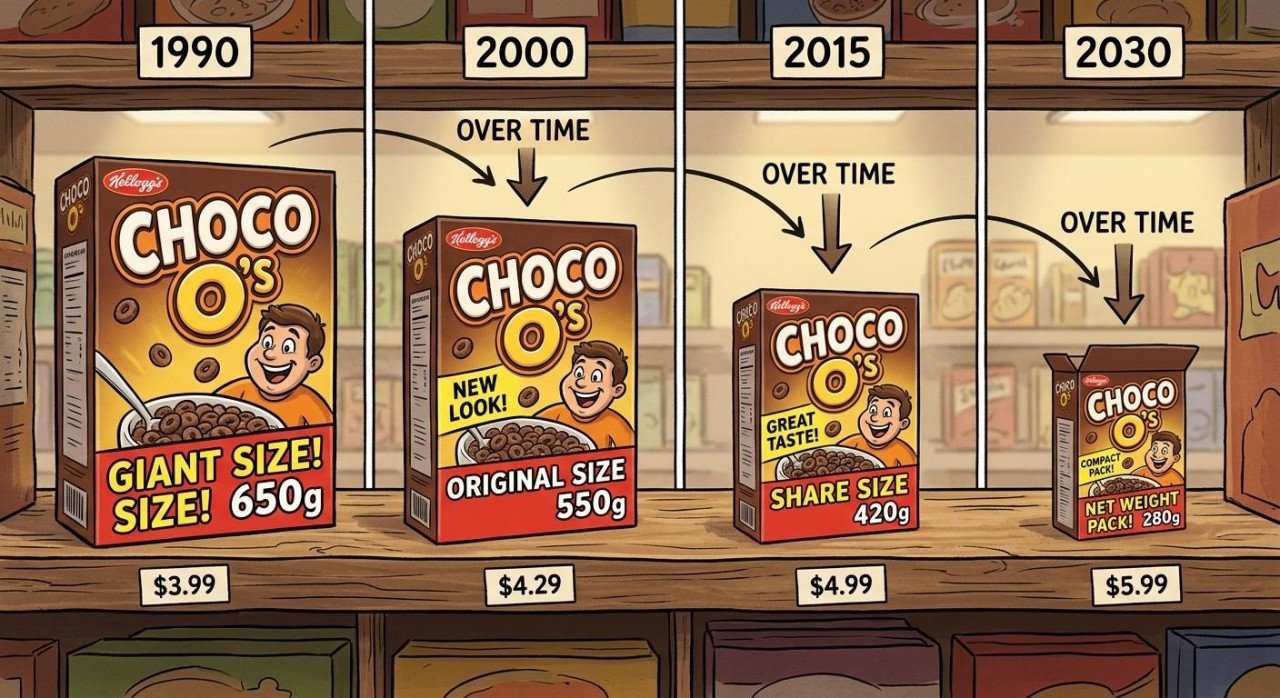
Shrinkflation is when a product quietly loses size or count while the price holds steady (or rises). You pay the same, but you get less, so your real cost per ounce, per sheet, or per serving goes up without the sticker ever changing.
Here's the part that surprises people: across the whole economy, downsizing is a small slice of inflation. A 2025 U.S. Government Accountability Office analysis of Bureau of Labor Statistics data found that downsizing accounted for less than one-tenth of a percentage point of the 34.5 percent total rise in consumer prices from 2019 to 2024. In other words, shrinkflation is not the main reason your groceries cost more — regular price increases are.
But that economy-wide average hides where shrinkflation really concentrates: the everyday packaged goods you toss in the cart without thinking. The same GAO report found that downsizing contributed meaningfully to inflation in specific categories — about 3.0 percentage points for household paper products, 2.6 for snacks, 2.3 for candy and gum, 1.6 for breakfast cereal, and 1.4 for coffee. These are exactly the repeat-purchase items where a shrinking package adds up over a year.
The real-world examples are easy to find. A LendingTree analysis of roughly 100 common products found that about one-third had shrunk since the pandemic. Household paper products were the worst offenders, with around 60 percent of the tracked items losing sheet count. Roughly 44 percent of breakfast items had downsized — family-size Frosted Flakes slipped from 24 ounces to 21.7 — and about 38 percent of candy shrank, including party-size Reese's miniatures dropping from 40 ounces to 35.6, and milk chocolate M&Ms going from 42 ounces to 38.
Why Your Brain Misses It
Shrinkflation works because of a quirk in how we shop. We notice prices, but we rarely notice sizes. The GAO review pointed to research showing the asymmetry plainly: a 1 percent price increase on an item led to a 1.95 percent drop in units sold, but a 1 percent size decrease actually led to a slight 0.76 percent increase in packages sold. Shrink the box and shoppers keep buying — many never register the change. Manufacturers know this, which is why downsizing is such an attractive lever when their costs rise.
There's an equity angle too: the GAO found that lower-income households tend to be more sensitive to downsizing than higher-income ones, which makes sense when every dollar is already accounted for. The flip side is encouraging — paying attention is a skill anyone can build, and it pays off most for the households that need it most.
Your Single Best Weapon: Shop by Unit Price
If you do just one thing differently, make it this: ignore the big sticker price and read the unit price — the small number on the shelf tag showing cost per ounce, per pound, per 100 sheets, or per quart. Because shrinkflation hides in package size, the unit price is the one number that exposes it instantly. A box that shrank from 24 to 21.7 ounces will show a higher price per ounce even if the front-of-pack price never moved.
This isn't just a nice idea — it's measurable. In a field study by researchers at Queensland University of Technology, 400 shoppers were tracked over 25 weeks. The group taught to use unit pricing each week trimmed 18 percent off their average grocery shop by week six, settling into a steady 13 percent saving for the rest of the study. On a $200 weekly grocery bill, a sustained 13 percent is more than $1,300 a year — for the simple habit of comparing the little number in the corner of the tag.
A few unit-price ground rules:
- Compare apples to apples. Make sure the units match — cost per ounce versus cost per ounce, not per item versus per pound.
- Bigger isn't automatically cheaper. The "value" size sometimes carries a higher unit price than the regular one, especially on promotion.
- Watch the store brand. Generic and store-brand staples frequently beat name brands on unit price for nearly identical contents.
- Re-check your regulars. A product that was the best deal last year may have quietly shrunk. The unit price will tell you.
Lean on Whole-Food Staples
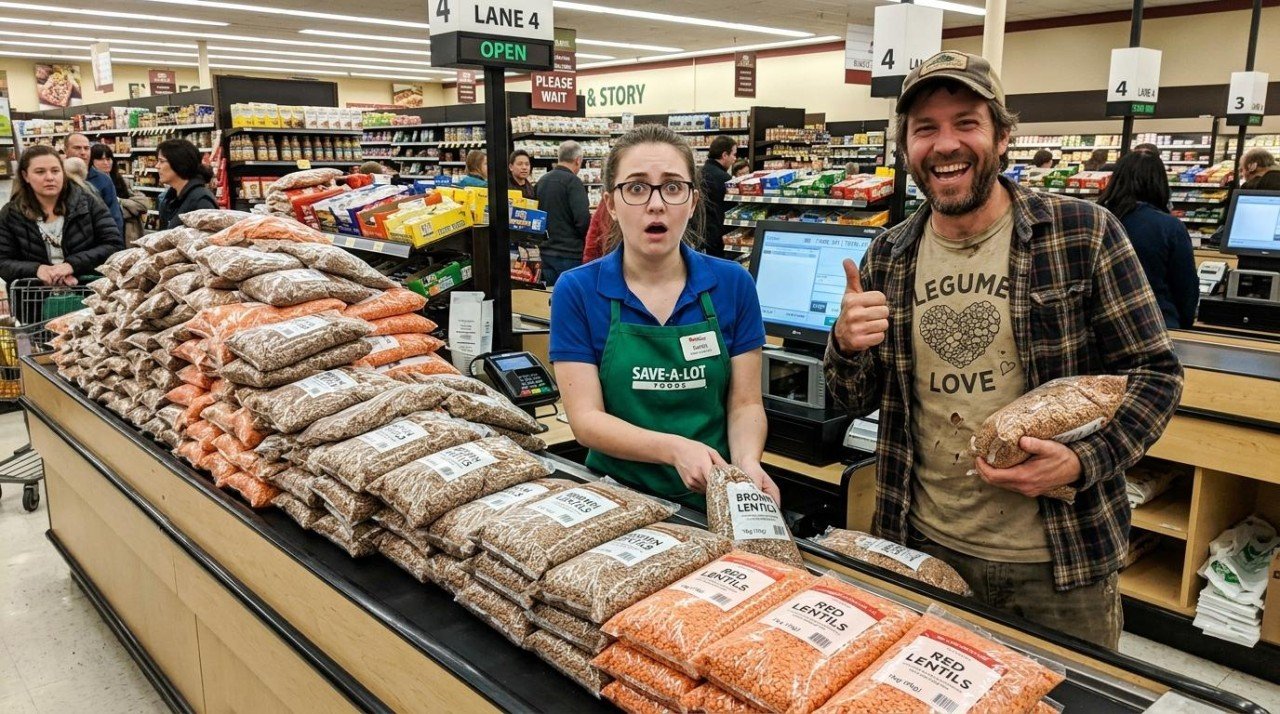
Shrinkflation thrives in the packaged, branded middle aisles. It has far less grip on plain, whole ingredients — a pound of dried beans, a bag of oats, a sack of potatoes, a dozen eggs, a head of cabbage. These foods aren't just shrink-resistant; they're some of the most nutrition you can buy per dollar.
USDA data backs this up. In 2022, you could meet the daily fruit and vegetable recommendations for about $2.50 to $3.00 a day. Plenty of produce comes in well under 50 cents per cup: baked white potatoes at 27 cents, iceberg lettuce at 32 cents, onions at 43 cents, fresh apples at 50 cents, and watermelon at just 24 cents. Building meals around these workhorses gives you more food and more nutrients for less money.
Beans and potatoes are quiet superstars here. A study in PLoS ONE analyzing the cost of nutrients across nearly 100 vegetables found that beans and starchy vegetables like white potatoes delivered the most nutrients per penny. Beans, for instance, provided 10 percent of the daily value for fiber for around a nickel, and topped the affordability index the researchers built around nutrients flagged as important in the Dietary Guidelines. Cheap, filling, shelf-stable, and genuinely good for you — that's a hard combination to beat when budgets are tight.
Cook a Little More From Scratch
Whole ingredients only pay off if you turn them into meals, which brings up the scratch-cooking question. Is it actually cheaper? Mostly, yes — with one honest caveat. A French study that compared 19 common dishes to their packaged, ready-made equivalents found that home-prepared versions cost less on ingredients — about 0.84 euros cheaper per four portions, and still cheaper after factoring in cooking energy.
The caveat: when the researchers assigned a wage to the time spent cooking, the convenience products came out ahead by several euros per dish, because the average recipe took about 36 minutes to make. That's the real trade-off in plain terms. Cooking from scratch saves money but spends time. Convenience food saves time but costs money — and, more often than not, comes with more salt, sugar, and additives along for the ride.
This is exactly why a little planning is so powerful. The biggest time costs in home cooking aren't the cooking itself — they're the daily "what's for dinner?" stall, the extra grocery runs, and the spoiled ingredients you bought without a plan. Knock those out and scratch cooking gets dramatically cheaper on both fronts, money and time. When you walk in with a plan and a precise list, fresh, whole-food meals stop being the hard option and start being the default.
Take the Guesswork Out of Eating Well
Eat Well Planner helps you organize your favorite recipes, plan balanced meals, and automatically generate shopping lists — all in one place. Whether you're tracking macros, managing dietary restrictions, or just trying to stop asking "what's for dinner?", we've got you covered.
Our AI-powered tools can adapt any recipe to your dietary needs, help you discover new meals you'll love, and even log your nutrition effortlessly. It's meal planning made simple.
Start Organizing Your Meals — FreeBuy in Bulk — Strategically
Bulk buying can be a genuine shrinkflation hedge: larger formats and warehouse packs often carry a lower unit price, and they're a useful way to lock in staples before the next price bump. But bulk only saves money if you actually use what you buy. A 10-pound bag of spinach that rots in the crisper isn't a deal — it's waste at a discount.
A few rules keep bulk honest:
- Bulk the non-perishables first. Dried beans, rice, oats, canned goods, pasta, frozen vegetables, and toilet paper store for ages and reward buying ahead.
- Still check the unit price. Warehouse and "family size" packs aren't always cheaper per ounce. Do the math before you assume.
- Match bulk to a plan. Buy the big bag of chicken thighs because you know which three meals it's going into this week, not because it looked like a bargain.
- Freeze the overflow. Portion and freeze perishables you bought in bulk so "more food" doesn't quietly become "more waste."
Plan Your Way Out of the Squeeze
Notice the thread running through every tactic here: unit pricing, whole-food staples, scratch cooking, smart bulk buying. They all work best when you shop with intention instead of improvising in the aisles. A plan is what turns these from good ideas into actual savings — and it's also your strongest defense against the impulse, processed, and just-grabbing-something purchases that shrinkflation feeds on.
That's the gap Eat Well Planner is built to close. You can save and organize recipes built around affordable, whole-food staples — beans, eggs, potatoes, seasonal produce — and let the app generate a weekly meal plan from them, so the daily "what should I cook?" decision is already made. From that plan, it builds an organized shopping list automatically, which means you walk into the store knowing exactly what you need and how much. Buying to a list is one of the simplest ways to cut impulse spending and the food waste that comes from over-buying without a plan.
Because every recipe carries its nutrition data, it's easy to lean into the high-nutrition, low-cost staples that shrinkflation can't touch — and to see that you're still eating well even while spending less. And if a price spike (hello, eggs) throws off a recipe, the built-in AI recipe chat can suggest swaps and substitutions on the spot, so a budget curveball doesn't derail dinner.
The Bottom Line
Shrinkflation and rising prices count on one thing: that you're too busy to notice. The fix isn't a strict budget or giving up the foods you enjoy — it's paying attention in a few high-leverage spots. Read the unit price. Build meals around cheap, nutrient-dense staples. Cook a bit more from scratch. Buy in bulk only when it fits a plan. Do those consistently and you'll get more real nutrition per dollar, no matter what the packaging tries to hide.
The single habit that ties it all together is planning ahead — and that's where a tool helps most. Try organizing your meals with Eat Well Planner and turn intentional, budget-aware eating into your path of least resistance.