Maybe you're in a dorm room with a mini-fridge and a shared microwave down the hall. Maybe you're renting a place where the "kitchen" is a countertop, a kettle, and not much else. Maybe you're stuck in a hotel for work, or your real kitchen is mid-renovation, or your office break room is the only place you can heat food all day. Whatever the setup, the conclusion people usually jump to is the same: I guess I'll just live on takeout and snacks until this is over.
You don't have to. A microwave and a kettle are genuinely enough to put together meals that are warm, filling, and built around real food — plenty of protein, plenty of fiber, plenty of vegetables. It takes a little planning and a small stash of the right pantry items, but it's far more doable than most people assume. Here's how to eat well with almost no equipment.
First, Stop Apologizing for the Microwave
There's a stubborn myth that microwaving "kills" the nutrients in food or somehow makes it less healthy. It's the opposite of true. The microwave is one of the gentlest ways to cook vegetables you have access to.
Here's the logic. The nutrients most vulnerable to cooking — vitamin C, certain B vitamins, beneficial plant compounds — are damaged by two things: long exposure to heat, and dissolving out into cooking water that you then pour down the drain. According to Harvard Health, "The cooking method that best retains nutrients is one that cooks quickly, heats food for the shortest amount of time, and uses as little liquid as possible. Microwaving meets those criteria." They go further: using the microwave with a small splash of water "essentially steams food from the inside out. That keeps in more vitamins and minerals than almost any other cooking method."
The research backs this up. Less vitamin C is lost from green vegetables during microwaving than in most other cooking methods, and microwave-steamed broccoli holds on to more of its beneficial glucosinolate compounds than boiled or fried broccoli. Boiling, by contrast, is one of the worst offenders precisely because so much goodness leaches into the water. So if you've been feeling like the microwave is a sad compromise, let that go. For vegetables, it's arguably an upgrade over the pot of boiling water you'd use in a full kitchen.
The Minimal Kit: What to Buy Once
You can build a surprisingly capable little setup for the cost of a couple of takeout orders. A one-time shopping trip for equipment looks like this:
- A large microwave-safe bowl with a lid (or a plate to cover it) — your main cooking vessel for steaming, oats, and bowls.
- A microwave-safe mug or ramekin — for eggs, single-serving oats, and mug meals.
- A fork, a spoon, and a small sharp knife — the knife matters more than you'd think.
- A can opener (many canned beans now have ring-pulls, but don't assume).
- A heatproof jug or bowl the kettle water can go into.
- A fine mesh sieve or colander — for rinsing canned beans and grains. A clean takeout container with holes poked in it works in a pinch.
That's it. No hot plate, no stove, no oven required.
The Pantry That Makes It Work
The difference between sad microwave meals and genuinely good ones is what's in your cupboard. Stock these shelf-stable staples and you'll always be a few minutes from a real meal:
- Canned beans, chickpeas, and lentils — the backbone of no-stove eating. More on why below.
- Instant grains — couscous and bulgur wheat both "cook" by just sitting in hot water from the kettle. Microwave rice and quinoa pouches heat in 90 seconds.
- Rolled or instant oats — breakfast, but also a base for savory bowls.
- Eggs — if you have a fridge, these are your cheapest fast protein.
- Long-life UHT milk, plain yogurt, or a plant milk for oats and sauces.
- Frozen vegetables and frozen fruit — if you have freezer access, these are as nutritious as fresh, already prepped, and never go off before you use them.
- A potato or two — the original no-stove dinner.
- Flavor builders — olive oil, salt, pepper, stock cubes, a jar of curry paste or pesto, hot sauce, soy sauce, dried herbs, garlic powder, lemon. These weigh nothing and turn plain ingredients into food you actually want to eat.
- Nuts, seeds, and nut butter — for crunch, healthy fats, and a protein and fiber boost on top of anything.
What the Kettle Does
A kettle isn't just for tea. Boiling water poured over the right ingredients and left to sit with a lid on does real cooking:
- Couscous: Cover with just-boiled water (about a finger's width above the grain), put a plate on top, wait five minutes, fluff with a fork. Done.
- Bulgur wheat: Same idea, a little longer — a nuttier, higher-fiber alternative to couscous.
- Instant oats: Hot water or warm milk, stir, wait two minutes.
- Soups and dried noodle pots: Useful, but read the label — many instant noodle and soup products are very high in sodium and low on actual vegetables and protein. Treat them as a base to build on, not the whole meal. Crack in some beans, frozen peas, or a handful of spinach.
- Rehydrating: Pour hot water over a handful of frozen peas or sweetcorn to thaw and warm them, or over a tea towel of greens to wilt them.
What the Microwave Does
The microwave is where most of the actual cooking happens:
- Steamed vegetables: Put chopped or frozen veg in your bowl with a tablespoon of water, cover, and microwave in one- to two-minute bursts until tender. Broccoli, green beans, carrots, cauliflower, spinach, and frozen mixes all work.
- Jacket (baked) potatoes: Scrub a potato, prick it several times with a fork, and microwave about five minutes, turning halfway, until soft. A whole hot meal from one ingredient.
- Scrambled or "poached" eggs: The fastest protein you can make (safe method below).
- Oatmeal: Oats and liquid in a deep mug, microwaved in short bursts so it doesn't boil over.
- Warming beans, lentils, and grains: Tip canned beans into a bowl, add a spoon of curry paste or pesto, and heat through for a fast, hearty bowl.
Make Protein and Fiber the Priority
When you're cooking with limited equipment, it's easy to drift toward beige carbs — instant noodles, plain toast, cereal. They fill you up for an hour and leave you hungry again. The two things that make a meal genuinely satisfying and nourishing are protein and fiber, and the great news is that the cheapest, most shelf-stable no-stove foods are loaded with both.
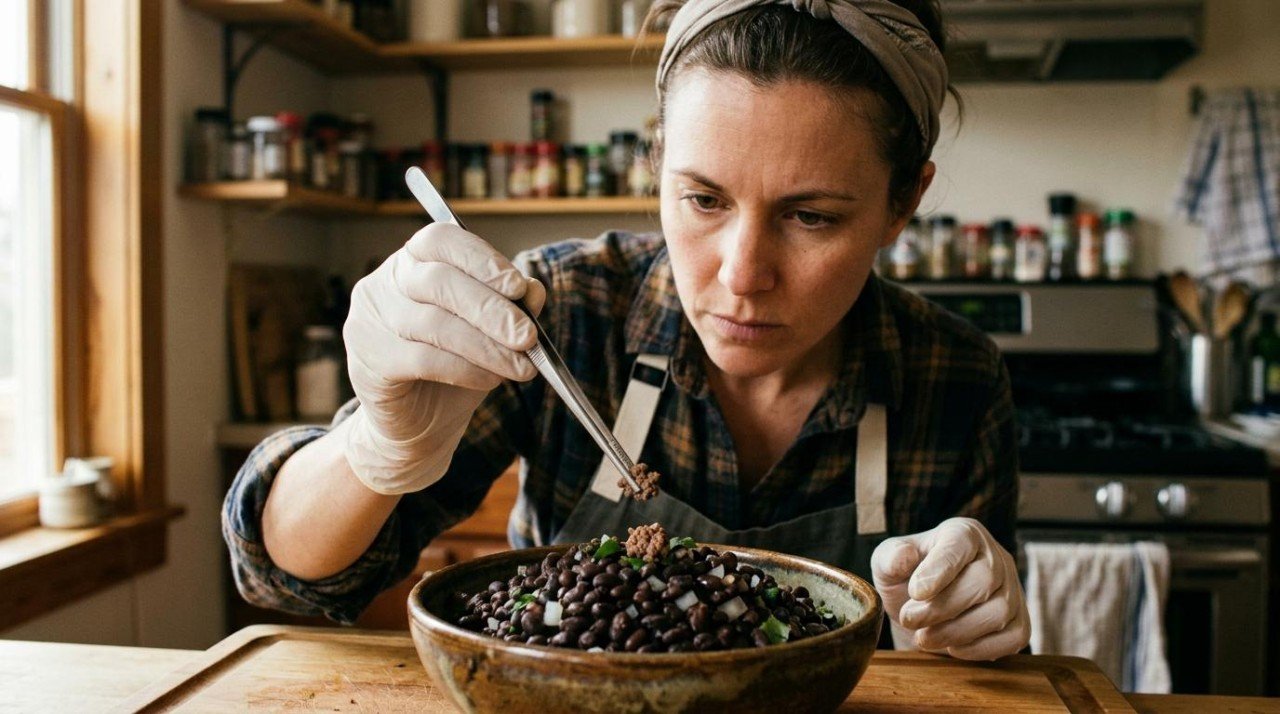
Canned beans and lentils are the stars here. According to nutrition data compiled by Healthline, a cup of cooked lentils delivers about 18 grams of protein and nearly 16 grams of fiber; a cup of black beans gives roughly 15 grams of protein and 15 grams of fiber; and chickpeas come in around 14.5 grams of protein and 12.5 grams of fiber. Canned versions are nutritionally equivalent to home-cooked — just rinse them well to cut the sodium. Open a can, rinse, microwave, season, and you've built a meal around one of the best protein-and-fiber foods there is, with zero cooking skill required.
That fiber number matters more than most people realize. Adults are generally advised to get around 25 grams of fiber a day for women and 38 grams for men, yet research published in the journal Nutrients found the average American eats only about 16.2 grams a day — and roughly 95% of adults and children fall short of the recommendation. Fiber feeds your gut bacteria, steadies blood sugar, and keeps you full. A single bean-and-vegetable bowl can cover half a day's worth, which makes a no-stove diet built on legumes quietly one of the healthier ways to eat.
Eggs cover protein when you want something different, and even a humble jacket potato pulls its weight: per 100 grams, potatoes eaten with the skin on are a good source of potassium, vitamin C, and fiber — and most of that fiber lives in the skin, so don't peel it.
The Build-a-Bowl Formula
Once you stop thinking in terms of recipes and start thinking in terms of a formula, no-stove eating gets easy. Almost every good bowl is:
- A base: couscous, bulgur, microwave rice, oats, or a jacket potato.
- A protein: canned beans, lentils, chickpeas, or eggs.
- Vegetables: steamed frozen veg, a handful of spinach wilted in hot water, or something raw like grated carrot, cucumber, or tomato.
- Flavor and fat: olive oil, pesto, curry paste, hot sauce, lemon, herbs, plus nuts or seeds for crunch.
Mix and match and you'll never eat the same thing twice. A few examples to get you started:
- Breakfast: oats made with milk, topped with frozen berries (thawed in the microwave for 30 seconds), a spoon of peanut butter, and a sprinkle of seeds.
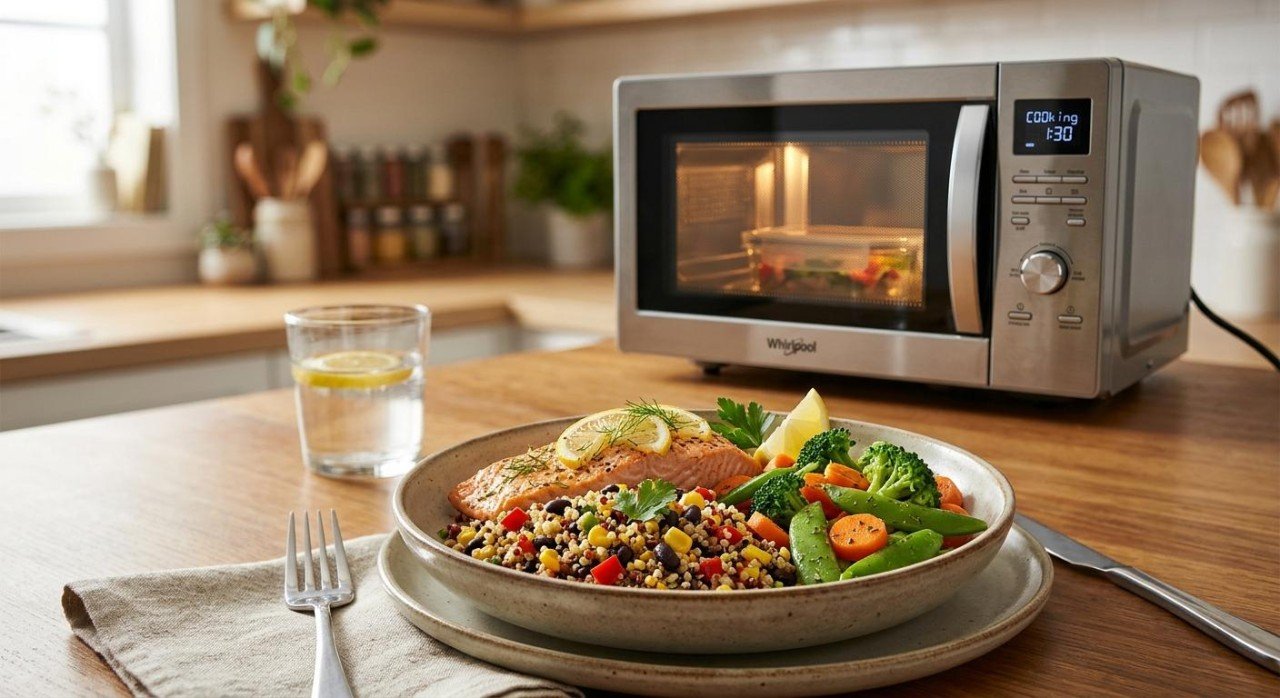
- Lunch: couscous soaked from the kettle, stirred together with rinsed chickpeas, microwave-steamed frozen vegetables, lemon, olive oil, and black pepper.
- Dinner: a jacket potato split open and topped with warmed black beans, a spoon of yogurt, hot sauce, and wilted spinach.
- Fast protein fix: scrambled eggs in a mug with frozen peas and a little cheese.
None of these takes more than about ten minutes, and every one of them beats a sad sandwich or another delivery order on nutrition, cost, and how you feel afterward.
The real trick to making this stick isn't any single recipe — it's having a plan before you're hungry. When you already know what you're eating this week and the ingredients are sitting in your cupboard, the microwave meal becomes the easy default and the takeout app stays closed. That's exactly the gap a little planning fills.
Take the Guesswork Out of Eating Well
Eat Well Planner helps you organize your favorite recipes, plan balanced meals, and automatically generate shopping lists — all in one place. Whether you're tracking macros, managing dietary restrictions, or just trying to stop asking "what's for dinner?", we've got you covered.
Our AI-powered tools can adapt any recipe to your dietary needs, help you discover new meals you'll love, and even log your nutrition effortlessly. It's meal planning made simple.
Start Organizing Your Meals — FreeWhere Eat Well Planner Fits In
Planning around a tiny kitchen is the part that trips people up, and it's where Eat Well Planner can do the heavy lifting. You can save and organize no-stove recipes — including ones you import straight from an Instagram reel or a YouTube video you stumbled across — so your handful of microwave-and-kettle meals are all in one place instead of scattered across screenshots and memory.
From there, the app builds a weekly meal plan from the recipes you've saved and generates an organized shopping list automatically, which is exactly what a minimal-kitchen setup needs: you buy a tight, intentional list of pantry staples and fresh ingredients instead of wandering the store grabbing whatever's quick. The nutrition tracking also lets you see whether you're actually hitting your protein and fiber targets for the day — genuinely useful when you're working with a limited rotation of ingredients and want to make sure the simple meals are still doing their job. And if a recipe assumes a stove you don't have, the AI recipe chat can suggest a microwave or no-cook version on the spot.
Food Safety: The Non-Negotiable Basics
Eating well also means not getting sick, and a few simple rules cover almost everything. The key concept is the danger zone — the temperature range where bacteria multiply fastest. According to the University of Nebraska–Lincoln's food safety guidance, that range is 40°F to 140°F, and the goal is to keep food out of it.
The practical rules:
- Refrigerate leftovers within 2 hours of cooking (within 1 hour if the room is above 90°F). Don't leave that pot of beans on the counter all afternoon.
- Eat refrigerated leftovers within 3 to 4 days. If you're not sure how long something's been in the fridge, it's not worth the risk.
- Reheat thoroughly to 165°F — or, without a thermometer, until the food is steaming hot all the way through, not just warm on the outside.
The microwave needs one extra bit of care here: it heats unevenly and leaves cold spots where bacteria can survive. Always use a microwave-safe container, cover the food, and rotate or stir partway through so it heats evenly. When reheating, give it a stir and let it sit a moment, then check that the middle is genuinely hot.
One more microwave-specific warning: eggs. Never microwave an egg in its shell — it will explode. And even out of the shell, you need to pierce the yolk and white several times with a fork before cooking (or whisk them completely), because steam builds up inside and has to have somewhere to escape. Cook in short bursts, and use a microwave-safe mug or bowl.
You Can Eat Well From Almost Nothing
A real kitchen is nice. It is not a requirement for eating well. With a kettle, a microwave, a few good pantry staples, and the simple habit of building each meal around a protein, a fiber source, and some vegetables, you can eat better than most people do with a full range of appliances. The equipment was never really the limiting factor — the plan was. Sort that out, and a tiny setup stops being a constraint and starts being plenty.
Try organizing your no-stove meals with Eat Well Planner and make eating well the easy option, whatever your kitchen looks like.