If you have done a double take at the meat case lately, you are not imagining it. In July 2025, the average price of ground beef hit $6.25 a pound, just weeks after it broke $6 for the first time ever. Steaks, roasts, and even chicken have climbed too. For households that genuinely love meat and have no interest in going vegetarian, the rising tab can feel like a no-win choice: pay up, or give up the food you enjoy.
Here is the good news. There is a wide middle ground between "steak every night" and "tofu forever," and that middle ground is where most of the savings live. You can keep meat in your meals, keep the flavors you love, and still knock a big chunk off your grocery bill — mostly by changing how you use meat rather than whether you eat it. As a bonus, almost every one of these strategies nudges your plate toward more vegetables, beans, and fiber, which your gut will thank you for.
Why Meat Got So Expensive
This is not your imagination or a temporary blip. The core reason is supply. As of January 1, 2026, the U.S. had roughly 86.2 million head of cattle and calves, according to the USDA's National Agricultural Statistics Service — one of the smallest national herds in decades. Years of drought pushed ranchers to sell off cattle they could not afford to feed, and many have not rebuilt their herds. Fewer cattle means less beef, and less beef plus steady demand means higher prices at the register.
Because the herd takes years to rebuild, these prices are not expected to snap back overnight. That makes it worth building a few durable habits now rather than just gritting your teeth and hoping for relief. The strategies below are not belt-tightening sacrifices — they are smarter ways to cook that happen to cost less.
Strategy 1: Stretch Your Meat Instead of Replacing It
The single most effective trick is also the simplest: use less meat per dish by bulking it out with cheaper, nutrient-dense ingredients. Think of it as making your meat go further rather than removing it.
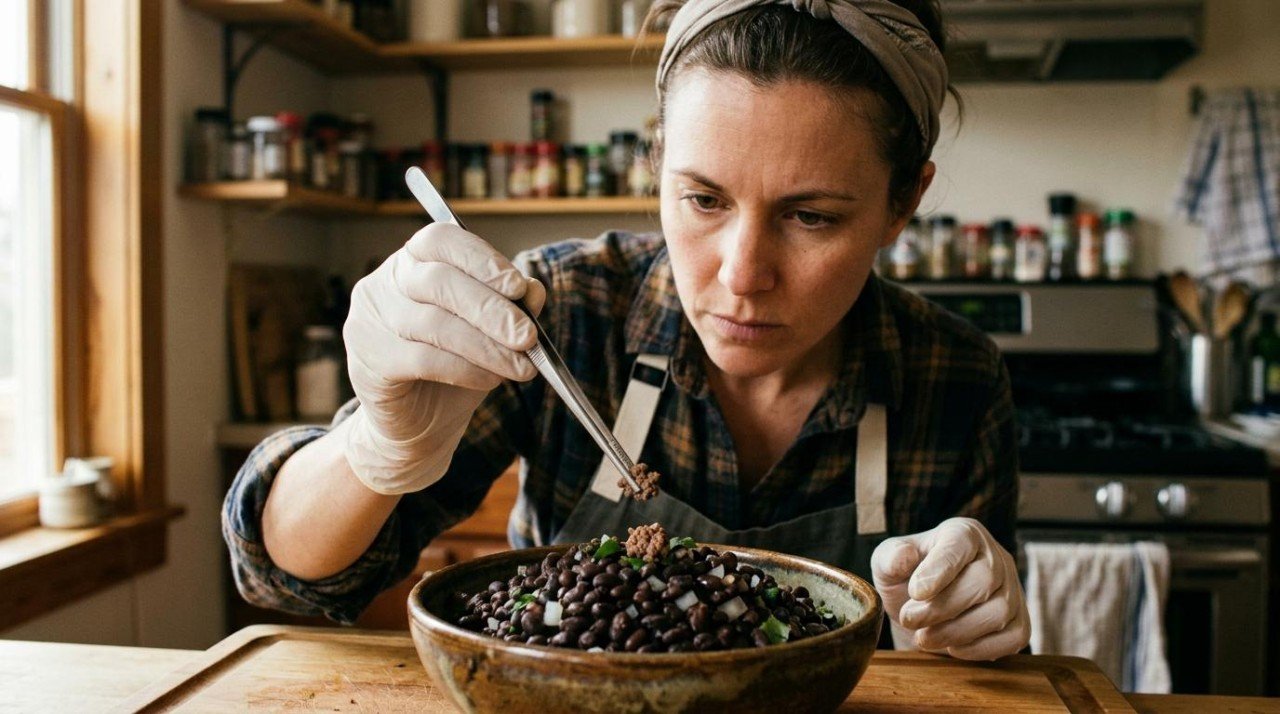
The classic move is the half-and-half approach to ground meat. When you brown a pound of ground beef for tacos, chili, bolognese, or shepherd's pie, swap a portion of it for cooked lentils, black beans, or finely chopped mushrooms. The dish still tastes meaty, the texture holds up, and you have quietly cut your meat cost — often by a third or more — while adding fiber the meat alone does not provide.
The math here is striking. According to a cost analysis from the Vegetarian Resource Group, dried beans run about 10 to 20 cents per serving, compared with 80 cents to over a dollar for a serving of ground beef. Measured by protein, dried beans cost roughly 12 to 25 cents per 10 grams of protein, while ground beef runs 50 to 73 cents for the same amount. Every spoonful of beans or lentils you fold into a dish is displacing some of the most expensive thing in your cart with one of the cheapest.
Mushrooms deserve a special mention because of the blended burger. Finely chop mushrooms, cook off their moisture, and mix them into your ground beef before forming patties. Mushrooms are loaded with umami — the same savory, meaty taste that makes beef satisfying — so the result tastes rich rather than diluted. In a pilot study comparing a mushroom-blend burger to an all-beef burger in school meals, palatability scores were similar across flavor and texture, while the blended version had fewer calories (129 versus 176 per patty) and less sodium (215 versus 279 milligrams). You get a comparable burger for less money, with a little less saturated fat and salt along for the ride.
Strategy 2: Make Meat the Flavor, Not the Main Event
Much of the world has eaten this way for centuries, and it is one of the most reliable ways to spend less without feeling deprived. In the traditional Mediterranean pattern — one of the most studied diets for long-term health — red meat is eaten infrequently and in small amounts, often used as a flavoring rather than the centerpiece of the plate.
Harvard Health's practical guide to the diet puts it plainly: save red meat for occasional consumption, or use meat as a condiment, accompanied by lots of vegetables, as in stews, stir-fries, and soups. A few ounces of sausage can flavor an entire pot of white beans and greens. A little diced pancetta or bacon can carry a big pan of vegetables. Half a chicken breast, sliced thin, can flavor a stir-fry that feeds the whole family over a mound of rice and crunchy vegetables.
This is not a sacrifice so much as a reframe. Instead of asking "what's the meat tonight and what goes with it?", you ask "what's the dish, and how much meat does it actually need?" Almost always, the answer is less than you are used to — and the vegetables, beans, and grains that fill the gap cost a fraction of what the meat does.
Strategy 3: Buy Cheaper Cuts and Let Time Do the Work
The most tender cuts — the steaks and tenderloins — are also the priciest. The cheaper cuts, like chuck roast, brisket, pork shoulder, beef shin, and chicken thighs, are tougher precisely because they come from hard-working muscles full of connective tissue. That connective tissue is collagen, and collagen is the secret to cheap meat that tastes expensive.
When you cook these cuts low and slow — in a slow cooker, a Dutch oven, or a covered pot in a low oven — the collagen slowly melts into gelatin. The result is meltingly tender meat in a rich, glossy sauce, the kind of thing you would pay a premium for at a restaurant. A chuck roast that costs a fraction of a ribeye becomes pot roast, ragu, shredded tacos, curry, or a week of lunches. Chicken thighs, which are cheaper and more forgiving than breasts, stay juicy in braises, sheet-pan dinners, and soups.
The slow cooker is the budget cook's best friend here because it is nearly hands-off. Brown the meat if you have time, pile in vegetables and liquid, and walk away for six to nine hours. You convert cheap, tough cuts into something special while you are at work, and a single large cut stretches across multiple meals.
Strategy 4: Buy in Bulk and Freeze in Portions
Per-pound prices almost always drop when you buy larger packages, family packs, or a discounted whole cut. The catch is that buying in bulk only saves money if the food does not spoil — which is exactly what your freezer is for.
When you spot a good price, buy the bigger pack, then divide it into meal-sized portions before freezing. Label each bag with the date and what is inside. A few habits make this genuinely pay off:
- Portion ground meat flat in freezer bags so it thaws quickly and stacks neatly.
- Freeze meat in the quantities you actually cook with — half a pound for a meat-stretched chili, a couple of thighs for two people — so you never thaw more than you need.
- Shop the sales and the "manager's special" reduced-for-quick-sale section, which is often perfectly good meat marked down because it is near its sell-by date. Freeze it that day.
- Keep cooked beans and lentils in the freezer too, so the cheap protein you stretch your meat with is always on hand.
This is also one of the best ways to cut food waste, which is money you have already spent quietly going in the trash. A plan plus a freezer means you buy at the best price and use what you buy.
Strategy 5: Add a Couple of Plant-Forward Dinners a Week
You do not have to go fully vegetarian to benefit from going vegetarian sometimes. Even swapping two dinners a week for genuinely satisfying plant-forward meals — a hearty lentil soup, a chickpea curry, black bean tacos, a big pot of pasta e fagioli — meaningfully lowers your weekly meat spend without any sense of restriction the other five nights.
The savings compound. If a plant-based dinner costs a couple of dollars in beans, grains, and vegetables instead of ten or more in meat, two swaps a week adds up to real money over a year. And because beans and lentils are so cheap per gram of protein, these meals are filling and protein-rich, not sad side dishes masquerading as dinner.
The honest barrier to all of this is not knowledge — most people already know beans are cheap and slow-cooked chuck is delicious. The barrier is the daily logistics: remembering to thaw the right thing, having a meat-stretched recipe in mind, and writing a shopping list that actually supports the plan instead of defaulting to "grab a pack of mince and figure it out later."
Take the Guesswork Out of Eating Well
Eat Well Planner helps you organize your favorite recipes, plan balanced meals, and automatically generate shopping lists — all in one place. Whether you're tracking macros, managing dietary restrictions, or just trying to stop asking "what's for dinner?", we've got you covered.
Our AI-powered tools can adapt any recipe to your dietary needs, help you discover new meals you'll love, and even log your nutrition effortlessly. It's meal planning made simple.
Start Organizing Your Meals — FreeThe Trick Is Having a Plan
Eating well for less is mostly a planning problem, not a willpower problem. When dinner is already decided and the ingredients are already in the fridge, reaching for an expensive last-minute option — or worse, takeout — stops being the path of least resistance. This is exactly where a tool can carry the load.
Eat Well Planner is a free app built around making the healthy, economical choice the easy one. You can build a weekly meal plan that deliberately mixes a few meat-centered dinners with meat-stretched and plant-forward ones, then let the app generate an organized shopping list automatically — so you buy exactly what the plan needs and skip the impulse purchases that wreck a budget. You can import recipes from any website, Instagram reel, or YouTube video, so when you find a great lentil bolognese or a slow-cooker chuck roast, it lands in your recipe book ready to use.
The AI recipe chat is especially handy for this topic: open any meat-heavy recipe and ask how to stretch it with beans or mushrooms, how to swap in a cheaper cut, or how to scale it down so a single pack of meat covers two meals. It is like having a thrifty cook looking over your shoulder, turning recipes you already love into versions that cost less.
A Cheaper Plate That Happens to Be a Healthier One
Here is the part that makes all of this worth doing even when beef prices eventually ease: the money-saving moves are, almost without exception, the same moves a nutritionist would recommend. Every bean, lentil, and vegetable you add to stretch a dish brings fiber that meat simply does not contain — and most of us are badly short on it.
Only about 7.4% of U.S. adults get the recommended amount of fiber, according to an analysis of national survey data. The typical American eats around 16 grams a day, well short of the 25 to 38 grams recommended for adults. Beans, lentils, and the vegetables you are now leaning on are some of the densest fiber sources on the shelf, and they are cheap.
That fiber does more than keep you regular. Your gut bacteria ferment it into compounds called short-chain fatty acids, including butyrate, which serves as the primary fuel for the cells lining your colon and helps beneficial bacteria thrive, according to a 2022 review of fiber and health. A plate with a little less meat and a lot more plants tends to mean more fiber, more of these beneficial compounds, and a happier gut microbiome — the kind of shift associated with better digestion, steadier blood sugar, and lower inflammation.
So the next time the price of ground beef makes you wince, treat it as a nudge rather than a defeat. Stretch the meat you do buy, lean on cheaper cuts and your slow cooker, stock the freezer when prices dip, and let a couple of bean-based dinners into the rotation each week. Your grocery bill comes down, your meals stay satisfying, and your body comes out ahead. You never had to give up meat — you just had to use it a little more wisely.
Ready to make the cheaper, healthier choice the easy one? Try planning your week with Eat Well Planner and let it build the shopping list for you.