You already know you should eat better. More vegetables, fewer takeaways, less of the stuff that comes in crinkly wrappers. You know this. Everyone does. And yet — you haven't really started. Not properly.
Maybe it's because you're busy. Maybe it's because healthy food feels expensive, or because your last attempt at cooking from scratch ended with a smoke alarm and a pizza delivery. Maybe your kids won't eat anything green, or you tried a meal plan once and it fell apart by Wednesday.
These feel like solid reasons. But here's the uncomfortable truth: most of them aren't barriers. They're priorities. And understanding the difference is the first step toward actually changing how you eat — not with some dramatic overhaul, but with small, practical shifts that add up over time.
Let's walk through the most common excuses, one by one, and dismantle them. Not to shame you — but to show you that the path is more accessible than you think.
"I Don't Have Time to Cook"
This is the big one. And let's be honest — for a lot of people, it's legitimate. If you're juggling a full-time job (or two), raising children, trying to be present with your family, keeping a household running, and squeezing in some form of rest so you don't burn out — your day is genuinely full. Nobody's here to tell you that you're lazy or that your schedule isn't demanding.
But here's the question that's worth sitting with: what is more important than the health of you and your family? Because when you really think about it, very few things are. Your health is the foundation that everything else is built on — your energy to work, your ability to be present with your kids, your long-term quality of life. When we say "I don't have time to cook," what we're really saying is "I'm currently prioritizing other things above feeding my family well." And some of those things are genuinely important. But are all of them?
Try this exercise: sit down and write out everything you do in a typical day, hour by hour. Be honest. Include the 20 minutes scrolling your phone before bed. The time spent deciding what to order for dinner. The drive to the fast food place and the wait in the queue. Then look at that list and ask: where could I find 30 minutes? Not two hours. Just 30 minutes. Because that's all it takes.
According to the Bureau of Labor Statistics' American Time Use Survey, the average American still spends 2 hours and 36 minutes per day watching television. Not everyone has that luxury — but most people have something in their day that could be adjusted. Maybe it's one less episode. Maybe it's ordering groceries online instead of wandering a supermarket. Maybe it's letting go of one commitment that's draining more than it's giving.
And here's what matters: a huge chunk of the "time" problem isn't actually cooking — it's everything around cooking. Deciding what to make. Finding a recipe. Figuring out what ingredients you need. Going to the shop because you're missing three things. That planning and decision-making overhead is often what makes cooking feel like it takes an hour when the actual cooking is 20 minutes.
This is exactly why tools like Eat Well Planner exist. It automatically generates a weekly meal plan full of quick, nutritious recipes based on your preferences — meals that can be on the table in under 30 minutes. Then it creates your shopping list automatically. The planning, deciding, and list-writing that eats up your mental energy? Gone. All that's left is the actual cooking — and that's the part that takes less time than you think.
What people who cook regularly will tell you is that it gets faster. The first time you dice an onion, it takes five minutes and a lot of nervous concentration. The twentieth time, it takes thirty seconds without thinking. A longitudinal study published in the Journal of Nutrition Education and Behavior found that people who developed adequate cooking skills by their early twenties were 3.5 times more likely to cook with vegetables regularly a full decade later — and ate significantly less fast food. Cooking is a skill, and like any skill, it compounds. The awkwardness is temporary. The benefits are permanent.
Quick meals that prove the point
Think you need an hour to make something worthwhile? Consider these:
- A chickpea curry with canned chickpeas, canned tomatoes, and spices — 20 minutes
- Salmon with roasted vegetables — 25 minutes, most of it hands-off oven time
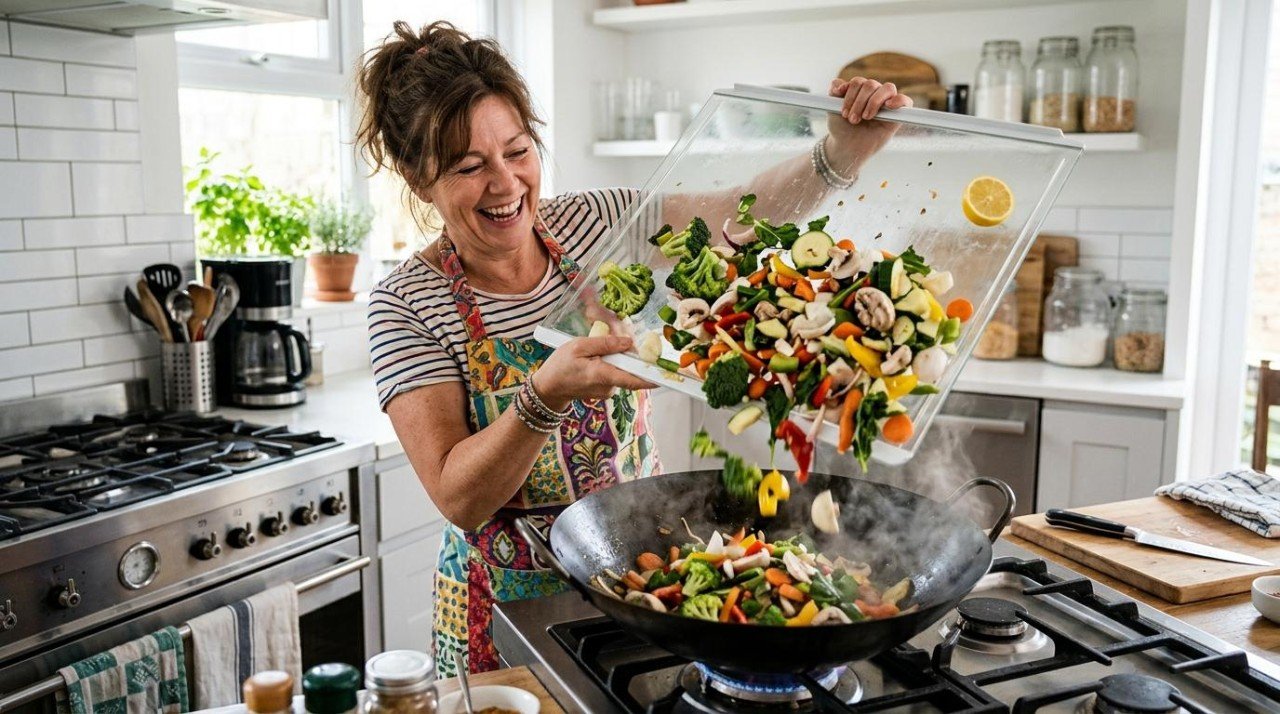
- Stir-fried vegetables with eggs and rice — 15 minutes if the rice is already cooked
- A big salad with canned tuna, beans, and whatever vegetables you have — 10 minutes
None of these require culinary training. None require special equipment. They just require you to decide that 30 minutes of your day is worth investing in the health of you and your family.
The weekend option
If weeknights genuinely are chaos, there's another approach: spend an hour or two on the weekend preparing meals for the week ahead. Cook a big batch of chilli, portion out some grain bowls, chop your vegetables in advance. When Monday hits and you're exhausted, dinner is already done — just reheat and eat. This isn't some productivity hack from a lifestyle blog. It's how millions of busy families actually make healthy eating work.
Take the Guesswork Out of Eating Well
Eat Well Planner helps you organize your favorite recipes, plan balanced meals, and automatically generate shopping lists — all in one place. Whether you're tracking macros, managing dietary restrictions, or just trying to stop asking "what's for dinner?", we've got you covered.
Our AI-powered tools can adapt any recipe to your dietary needs, help you discover new meals you'll love, and even log your nutrition effortlessly. It's meal planning made simple.
Start Organizing Your Meals — Free"Healthy Food Is Too Expensive"
This one feels true — until you look at the numbers.
A half-cup serving of rolled oats costs less than 10 cents. Dried lentils run about 10 cents per serving and deliver 18 grams of protein and 15 grams of fiber per cup. Dried beans, bought in bulk, come in at roughly 12 cents per ounce. Brown rice costs approximately 5 cents per 100 calories. A head of cabbage yields around 15 servings.
Compare that to eating out. Industry data shows the average home-cooked meal costs around $4 per serving, while a restaurant meal averages over $16 — and that's at an inexpensive restaurant. Over a year, that difference adds up to thousands of pounds.
The perception that healthy food is expensive often comes from comparing the worst-value healthy options (organic pre-washed salad kits, high-end supermarket ready meals labelled "clean") with the cheapest junk food. But the real staples of nutritious eating — beans, lentils, oats, rice, eggs, frozen vegetables, canned fish, potatoes, cabbage — are among the cheapest foods you can buy.
Frozen vegetables deserve special mention here. Research published in the Journal of Food Composition and Analysis found that the nutritional value of frozen fruits and vegetables is generally equal to fresh — and in some cases, frozen produce retains more vitamins than fresh produce that's been sitting in your fridge for several days, because freezing locks in nutrients at peak ripeness. Frozen vegetables are cheaper, last longer, and produce zero waste. They're one of the best budget tools available.
Another hidden cost that people overlook: waste. When you don't plan your meals, you buy ingredients on impulse, use half of them, and throw the rest away at the end of the week. A tool like Eat Well Planner generates a precise shopping list based on exactly what you're cooking that week — so you buy only what you need. Less waste means less money in the bin.
So the real question isn't whether you can afford to eat well. It's what else you're spending money on that you've prioritized above your health. The gym membership you don't use. The daily coffee shop habit. The subscription services running in the background. The four takeaway orders a week that cost more than a full trolley of groceries. Everyone's situation is different, but most people can find room in their budget for beans and broccoli if they're honest about where their money actually goes.
"I Don't Know How to Cook"
Here's a secret: you don't need to know how to cook. Not really. Not in the way you're imagining.
When people say they "can't cook," they usually mean they can't make the kind of meals they see on Instagram or cooking shows — elaborate dishes with twenty ingredients and techniques they've never heard of. But that's not what daily cooking looks like. Daily cooking is heating oil in a pan, adding vegetables, adding a protein, adding seasoning, and putting it on a plate. That's it.
You need approximately five meals in your rotation to eat well. Not fifty. Five. A simple curry. A stir-fry. A sheet-pan dinner where you toss everything on a tray and let the oven do the work. A soup or stew that's basically "put everything in a pot and wait." A salad or grain bowl that requires no cooking at all.
Master those five, and you can feed yourself nutritious meals every day of the week. The research backs this up: that same longitudinal study found that even self-perceived cooking adequacy — simply believing you can cook basic meals — predicted better dietary behaviors for over a decade. You don't need to be good. You just need to start.
And starting has never been easier. YouTube has millions of free cooking tutorials. Recipe websites break every step down with photos. You can find a recipe for almost anything with "easy" and "beginner" in the search terms. The knowledge barrier that existed for previous generations — when you either learned from family or you didn't learn at all — simply doesn't exist anymore.
Better yet, when you find a recipe you like — whether it's on a website, an Instagram reel, or a YouTube video — you can import it straight into Eat Well Planner with one click. The AI extracts the ingredients and instructions for you, so your recipes are all organized in one place instead of scattered across bookmarks and screenshots. And if a recipe has an ingredient you're unsure about or want to swap out, the built-in AI recipe chat lets you ask questions, get substitutions, or adapt the recipe to your skill level — like having a patient cooking mentor available whenever you need one.
"Healthy Food Is Boring"
If your idea of healthy food is plain steamed broccoli and dry chicken breast, then yes — that is boring. It's also a completely false picture of what nutritious eating looks like.
The world's most celebrated cuisines — Indian, Thai, Mexican, Ethiopian, Japanese, Mediterranean — are built on vegetables, legumes, grains, and spices. A dal made with red lentils, turmeric, cumin, and coconut milk is healthy and one of the most satisfying things you'll ever eat. A black bean taco bowl with lime, coriander, and roasted peppers is nutrient-dense and bursting with flavor.
The "healthy food is boring" excuse usually means "I don't know how to use spices." That's a fixable problem. Start with these five and you can transform almost any simple ingredient into something worth eating:
- Cumin — earthy, warm, essential for curries and Mexican food
- Smoked paprika — instant depth and a hint of smokiness
- Garlic powder — the universal flavor enhancer
- Chilli flakes — a little heat goes a long way
- Turmeric — vibrant color and subtle warmth, pairs brilliantly with black pepper
Add salt, pepper, olive oil, and an acid (lemon juice or vinegar), and you have enough flavor tools to make hundreds of different meals interesting. The issue was never that healthy food is inherently bland. It's that the version of "healthy food" sold by diet culture — plain, unseasoned, joyless — was never the only option.
If you're not sure where to start with flavorful healthy meals, Eat Well Planner can help here too. Its AI-powered meal plans draw from a wide variety of cuisines and flavor profiles, so you're not stuck eating the same three "healthy" meals on repeat. You can also browse community recipes that other users have published and voted on — real meals that real people actually enjoy cooking and eating.
"My Family Won't Eat It"
This is a real challenge, especially with young children. But it's also one that gets easier with the right approach.
First: you don't have to change everything at once. Gradual shifts work better than dramatic overhauls, both for you and for reluctant family members. If your kids currently eat pasta with jarred sauce, try making the sauce from canned tomatoes, garlic, and a bit of olive oil — it takes ten minutes and they probably won't notice the difference. If they eat chicken nuggets, try making baked chicken strips at home with a simple breadcrumb coating. Same concept, better ingredients.
The "build your own" approach works brilliantly for families with mixed preferences. Set out a base — rice, wraps, or noodles — alongside a spread of toppings and let everyone assemble their own. Taco nights, Buddha bowl bars, pizza with homemade dough. Kids (and adults) are far more likely to eat something they've assembled themselves.
Another strategy: involve your family in the process. Children who help choose recipes and participate in cooking are more likely to try new foods. It doesn't have to be a big production — even letting a child tear lettuce or stir a pot creates ownership over the meal.
And for the partner who insists they only eat beige food? Lead by example. Don't make it a battle. Cook something that smells incredible and put it on the table. Curiosity usually wins eventually.
Eat Well Planner is particularly useful for families because you can set up multiple dietary profiles — one for you, one for a partner with different needs, one for a child who's a picky eater — and the AI generates meal plans that work for everyone. You can also use the AI recipe chat to create variations of meals: the same base dish, but adapted so one version works for the adult who wants it spicy and another for the child who doesn't.
"I've Tried Before and Failed"
Of course you have. Everyone has. The question is what you tried and why it didn't stick.
Most people fail at healthy eating because they attempt too much too fast. They go from eating takeaway five nights a week to a rigid meal plan with foods they've never cooked before — and by day four, they're exhausted, overwhelmed, and ordering pizza. That's not a personal failing. That's a predictable outcome of an unsustainable approach.
The research on this is clear. A review published in the American Journal of Lifestyle Medicine found that small changes to diet and physical activity behaviors are "more realistic, feasible to achieve and maintain" than large ones. In one trial, adults making small, targeted dietary changes lost a clinically significant amount of weight — around 5% of body weight — and kept it off at the three-month follow-up. Small changes also build self-efficacy: each small success makes the next change feel more achievable.
So instead of overhauling your entire diet on Monday, try this: pick one thing to change this week. Just one. Here are some examples:
- Replace one takeaway meal per week with a home-cooked meal
- Stop buying one specific ultra-processed food you currently eat regularly
- Add a vegetable to one meal per day that doesn't currently have one
- Cook double portions on Sunday and eat the leftovers on Monday
- Set a firm limit: fast food no more than twice a week
That's it. Do that for a month. When it feels normal — when it's no longer a conscious effort — add another change. Then another. In six months, your diet will look completely different. In a year, you'll wonder why you ever thought this was hard.
Progress, not perfection. Small changes compound. That's not a motivational slogan — it's how behavior change actually works.
One reason previous attempts fail is that they relied entirely on willpower and manual planning. This time, let technology do the heavy lifting. With Eat Well Planner, you can log what you eat in a food diary — even by voice — and the AI tracks your nutrition automatically. You can see your patterns, watch your intake improve week over week, and get concrete evidence that your small changes are adding up. It's a lot harder to quit when you can see the progress.
A Note on Real Barriers
Everything above is aimed at people whose barriers are largely about habits and priorities rather than circumstances. But it would be dishonest to pretend that everyone starts from the same place.
Food deserts — areas with limited access to affordable, nutritious food — affect millions of people, disproportionately in low-income communities and communities of color. Disability, chronic illness, and mental health conditions can make cooking genuinely difficult or impossible on some days. Shift workers, single parents working multiple jobs, and people in unstable housing face constraints that go well beyond "just plan ahead."
These are systemic problems that require systemic solutions — better food policy, community programs, improved access. If you're dealing with these realities, this post isn't here to tell you that your struggles are just excuses. They're not.
But for the majority of people reading this — people with a kitchen, a supermarket within reach, and enough income to currently spend money on things that aren't food — the barriers are more about habit than circumstance. And habits can change.
Your "Start Here" Action Plan
You don't need a complete life overhaul. You need a starting point. Here's a practical plan for the next 30 days:
Week 1: Learn one meal. Pick the simplest recipe that appeals to you — a stir-fry, a curry, a big soup — and make it. Don't worry about making it perfectly. Just get through the process once. Cook enough for leftovers.
Week 2: Replace one meal. Take one meal you'd normally buy (takeaway, ready meal, fast food) and cook at home instead. Use the recipe you learned last week, or try a second one.
Week 3: Stock your kitchen. Buy a small collection of staples that make quick cooking possible: canned beans, canned tomatoes, rice or pasta, frozen vegetables, eggs, olive oil, and a few basic spices. With these on hand, you can always make something.
Week 4: Start a rotation. By now you should have two or three meals you're comfortable with. Start rotating them through your week. Plan which nights you'll cook and which you won't — even cooking three nights out of seven is a massive improvement if you're starting from zero.
After a month of this, you'll have built a foundation. You'll know a few recipes. You'll have staples in your cupboard. You'll have proven to yourself that you can cook, that it doesn't take as long as you feared, and that it doesn't have to cost a fortune.
If you want to speed this process up, Eat Well Planner can handle the planning side from day one — generating a meal plan with simple, quick recipes tailored to your preferences, creating your shopping list, and tracking your nutrition as you go. It's free, and it removes the biggest friction points that cause people to give up in the first few weeks.
It Starts With a Decision
Every excuse in this post boils down to the same thing: you're currently prioritizing something else over the health of you and your family. That's not an insult — it's just what's happening. We all have 24 hours in a day and a finite amount of money. The question isn't whether you can eat better. It's whether you're ready to rearrange your priorities enough to make it happen.
You don't need to become a chef. You don't need to spend a fortune on organic produce. You don't need to meal prep like a fitness influencer. You just need to cook a few simple meals each week, using affordable ingredients, and gradually build from there.
The path from "I can't" to "I do" is shorter than you think. It starts with one meal. Make it tonight.