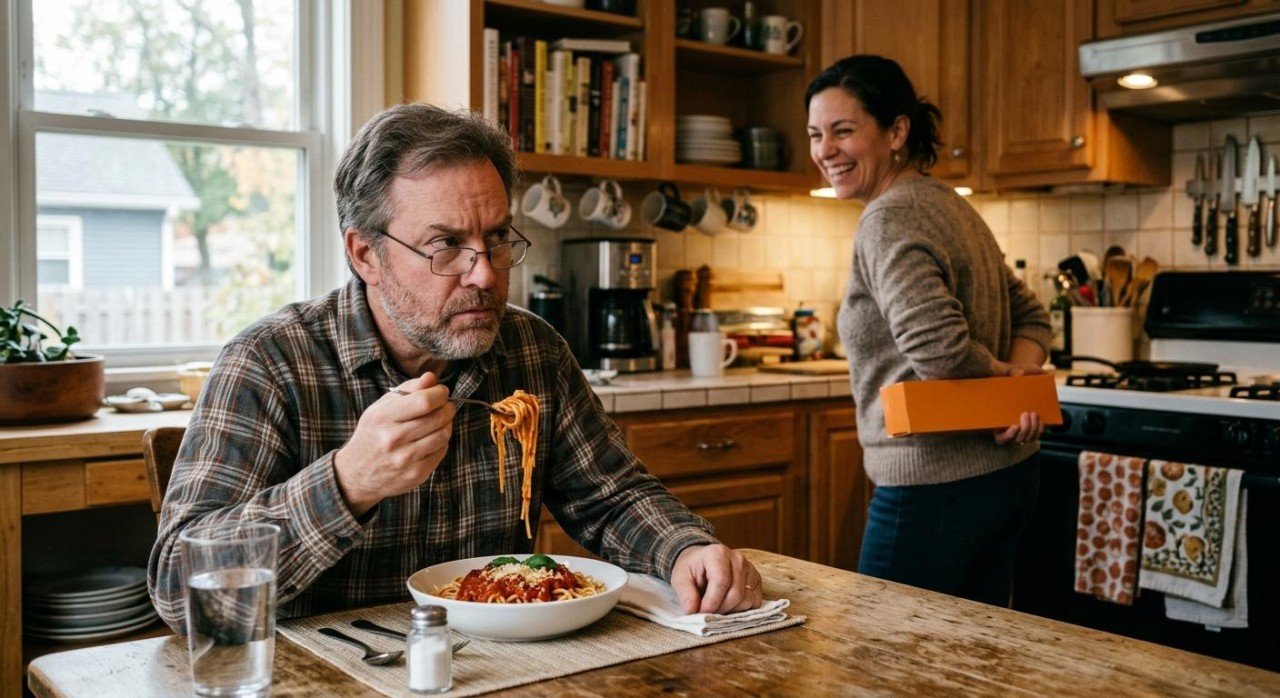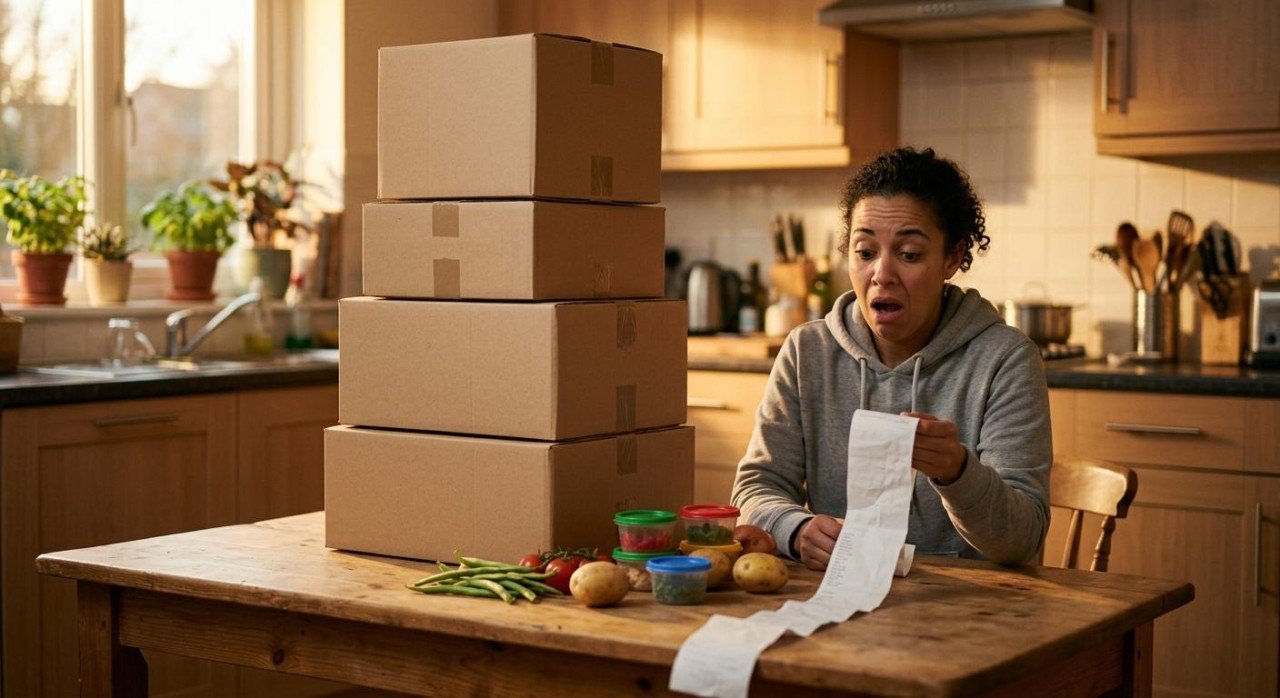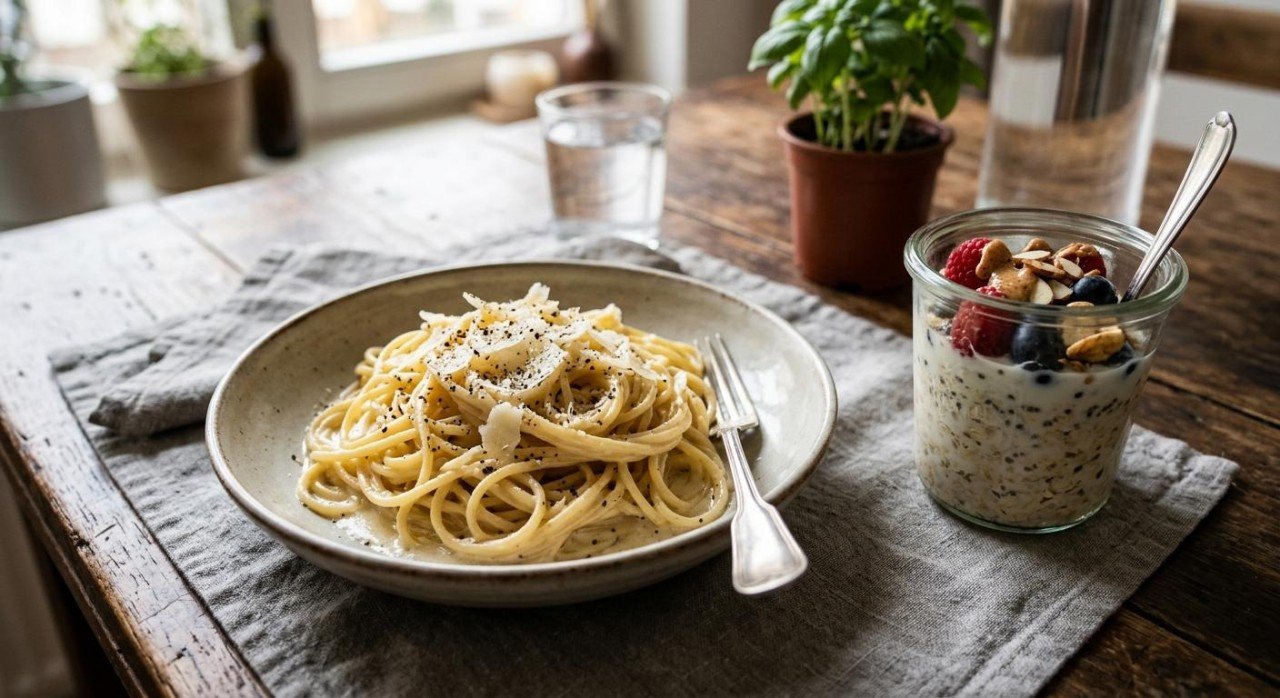
Let's get one thing out of the way: you are allowed to hate cooking. Some people find chopping onions meditative and lose entire weekends to slow-braised ragu. Other people look at a sink full of dishes and feel their soul leave their body. If you're in the second group, the wellness internet has not been kind to you. Every other piece of advice seems to assume you'd love to spend an hour making cauliflower three ways, if only you knew the technique.
Here's the good news, and it's bigger than it sounds: eating well and cooking well are two completely different skills. You can be genuinely bad at cooking — uninterested, impatient, allergic to recipes longer than four lines — and still feed yourself nutritious, real food every single day. The trick isn't becoming a better cook. It's building a small set of low-effort moves that don't require you to be one.
This matters more than it used to. According to CDC data from 2021 to 2023, Americans get about 55% of their daily calories from ultra-processed foods — and for kids and teens it's nearly 62%. A lot of that isn't because people don't care. It's because at 6:45pm on a Tuesday, the path of least resistance is a package, and nobody planned an alternative. The strategies below are about making the real-food option just as easy to reach for.
1. Rotisserie Chicken Is a Complete Cheat Code
The single best thing in most grocery stores for people who hate cooking is the hot, fully-cooked chicken sitting under a heat lamp near the deli. It costs a few dollars, it's already done, and it turns "I have no dinner" into "I have dinner" in the time it takes to open a bag.
The move: rotisserie chicken plus a bag of pre-washed salad greens plus whatever dressing you like. That's a balanced meal — protein, vegetables, fiber — with zero cooking and one bowl to wash. Pull the rest of the meat off the bones while you're at it and you've got the next two lunches handled: chicken on top of more greens, chicken in a wrap, chicken stirred into soup. You did not cook. You assembled. Assembly is a perfectly respectable way to eat.
2. Overnight Oats: Two Minutes Tonight, Breakfast Tomorrow
Breakfast is where a lot of "I don't cook" mornings collapse into a granola bar or nothing at all. Overnight oats fix this without any cooking whatsoever, because the soaking does the work while you sleep.
The entire recipe: put roughly equal parts rolled oats and milk (dairy or plant) in a jar, add a spoonful of yogurt or some chia seeds if you have them, stir, and put it in the fridge. In the morning it's a soft, ready-to-eat bowl. Top it with fruit and you're done. Total active effort: about two minutes, most of which is finding the lid.
The reason this is worth doing isn't just convenience. Oats are one of the few foods with an FDA-authorized heart health claim, thanks to a soluble fiber called beta-glucan. According to Harvard's Nutrition Source, a meta-analysis found that eating 3 grams of beta-glucan a day from whole oats modestly lowered blood cholesterol — the fiber binds to cholesterol-rich bile acids in your gut and carries them out of the body. So the laziest breakfast in your kitchen is also quietly one of the best for you.
3. Canned Fish on Toast Is Secretly Elite
Canned fish has an image problem in the United States that it absolutely does not deserve. In plenty of countries, a tin of sardines or mackerel on good bread is a normal, even beloved, lunch. Here it tends to get filed under "sad desk meal." It should be filed under "nutrient powerhouse you can make in 90 seconds."
Toast a slice of whole grain bread, mash a can of sardines on top with a squeeze of lemon, add sliced tomato or avocado if you're feeling fancy. Canned salmon, mackerel, and tuna all work the same way. No heat, no knife skills, no cleanup beyond a fork.
Nutritionally, this punches far above its price. The Cleveland Clinic notes that sardines provide about 2 grams of heart-healthy omega-3s per 3-ounce serving — one of the highest levels of any fish — and because you eat the soft little bones, they're a real source of calcium and vitamin D too. Vitamin D is notoriously hard to get from food, so a fish that delivers it, plus calcium, plus omega-3s, with no cooking required, is a genuinely great deal.
4. Frozen Vegetables Are Not the Compromise You Think They Are
This is the myth worth dismantling, because it quietly stops people from eating vegetables at all. The belief goes: fresh is best, frozen is the sad backup, so if I can't keep up with fresh produce I might as well skip the vegetables. Let it go.
Frozen vegetables are typically picked at peak ripeness and flash-frozen within hours, which locks in their nutrients. Fresh produce, meanwhile, is often picked early and then spends days in transit and in your fridge slowly losing vitamins. As Healthline summarizes the research, the antioxidant and nutrient content of fresh and frozen produce comes out broadly similar — and in some cases frozen peas or spinach actually contain more vitamin C than fresh versions that have sat at home for several days. Green peas, the article notes, can lose up to half their vitamin C in the first day or two after harvest.
For someone who hates cooking, frozen vegetables are close to a miracle: no washing, no chopping, no spoilage guilt when you forget about them, and they cook from frozen in a few minutes. A bag of frozen broccoli or mixed vegetables steamed in the microwave is a legitimate side dish, and it'll be there next week too.
5. The Three-Ingredient Pasta Night
Some evenings the goal isn't impressive, it's over. For those, keep the ingredients for a no-thinking pasta on hand: a jar of good tomato or marinara sauce, a box of whole wheat pasta, and a bag of frozen vegetables.
Boil the pasta, throw a handful of frozen vegetables into the same pot for the last few minutes, drain, stir in the sauce. One pot, maybe fifteen minutes, mostly unattended. Choosing whole wheat pasta adds fiber, and the jar of vegetables you tossed in means it's not just a beige bowl of carbs. Add the leftover rotisserie chicken from move number one and it becomes a real, satisfying dinner with effectively no extra work.
This is the kind of meal that quietly replaces takeout or a frozen entree on the nights you're running on empty — which, over a week, adds up to a meaningful shift away from ultra-processed defaults without any heroics.
6. Smoothies for When You Genuinely Cannot
There are days when even assembling toast feels like a big ask. For those, a smoothie is a meal you can drink. Frozen fruit, a handful of spinach (you won't taste it, promise), milk or yogurt, and something to make it filling — a spoon of peanut butter, oats, or protein powder. Blend, drink, rinse the blender. Done.
The trick to making a smoothie an actual meal rather than a sugary snack is to give it staying power: protein and a little fat and fiber, not just fruit and juice. With spinach, frozen berries, yogurt, and a spoon of nut butter, you've packed in vegetables, fruit, protein, and fiber in a single glass — on a day you'd otherwise have skipped eating altogether.
7. Sheet Pan Dinners: Dump, Roast, Done
If you're willing to turn on the oven but not to actually cook, sheet pan dinners are your people. The entire method: chop a few things (or buy them pre-chopped), toss them on a single tray with oil and salt, and roast. Chicken thighs with potatoes and green beans. Sausage with peppers and onions. A tray of mixed vegetables with chickpeas. The oven does everything while you do literally anything else.
The reason this feels so effortless is the cleanup, or lack of it — one pan, often lined with parchment so there's nothing to scrub. And because you're roasting whole ingredients, it's about as far from ultra-processed as dinner gets, with almost none of the fuss people associate with "cooking from scratch."
The Real Secret: A Tiny Rotation Beats a Big Repertoire
Notice what none of these strategies required: talent, recipes, or enthusiasm. What they do quietly require is a little bit of having the stuff on hand. The reason people default to ultra-processed food isn't usually a lack of willpower — it's that at the hungry, tired moment of decision, the easy option is the only one stocked. The fix isn't to cook more. It's to make the good option the stocked one.
You don't need fifty recipes for this. You need maybe seven or eight no-effort meals you actually like, on repeat, with the ingredients reliably in your kitchen. That's the whole game. A short, dependable rotation plus a shopping list that refills it is more powerful than any amount of culinary ambition you don't have.
This is exactly the friction Eat Well Planner is built to remove. You can save your handful of go-to, minimal-effort meals in one place — including importing ones you spot in a 30-second Instagram or YouTube clip, which is often where the genuinely easy stuff lives. From the meals you've saved, it builds a weekly plan and then turns that plan into an organized shopping list automatically, so the rotisserie chicken, the oats, the canned fish, the frozen vegetables, and the jar of sauce are already on the list before you've had to think about any of it. The planning and the deciding — the parts that actually wear people down — get handled for you.
Take the Guesswork Out of Eating Well
Eat Well Planner helps you organize your favorite recipes, plan balanced meals, and automatically generate shopping lists — all in one place. Whether you're tracking macros, managing dietary restrictions, or just trying to stop asking "what's for dinner?", we've got you covered.
Our AI-powered tools can adapt any recipe to your dietary needs, help you discover new meals you'll love, and even log your nutrition effortlessly. It's meal planning made simple.
Start Organizing Your Meals — FreePermission to Keep It Boring
Somewhere along the way, "eating well" got tangled up with "loving to cook," and a lot of people who don't love it concluded the whole project wasn't for them. It is. Eating well can be repetitive, unglamorous, and almost entirely uncooked. Rotisserie chicken on greens four nights in a row is not a failure of imagination — it's a nutritious dinner you actually ate instead of ordering, which is the only comparison that counts.
You don't have to find joy in the kitchen to take good care of yourself. You just need a few reliable moves, the ingredients to do them, and permission to stop treating cooking like a personality trait you're supposed to have. Pick two or three strategies from this list, keep their ingredients stocked, and let the rest go. Eating well, it turns out, is something even people who hate cooking can do on autopilot.
Ready to build your own no-effort rotation? Try organizing your meals with Eat Well Planner and let it handle the planning and the shopping list so you can get back to not cooking.