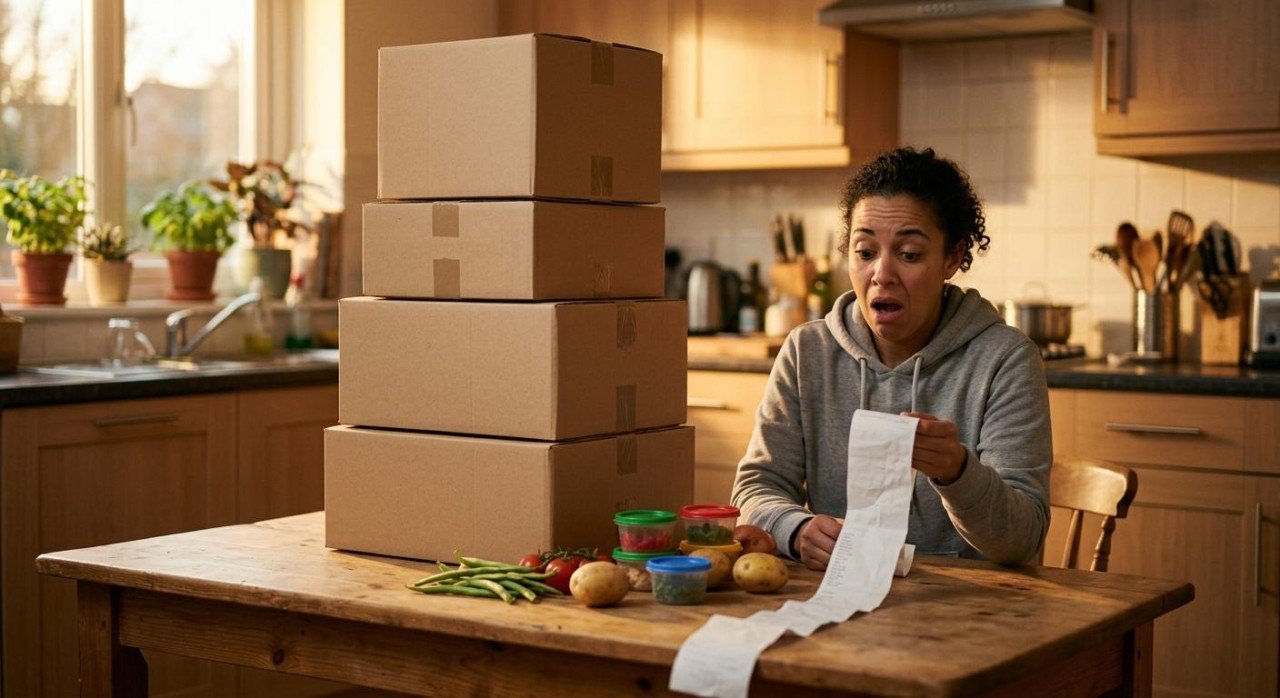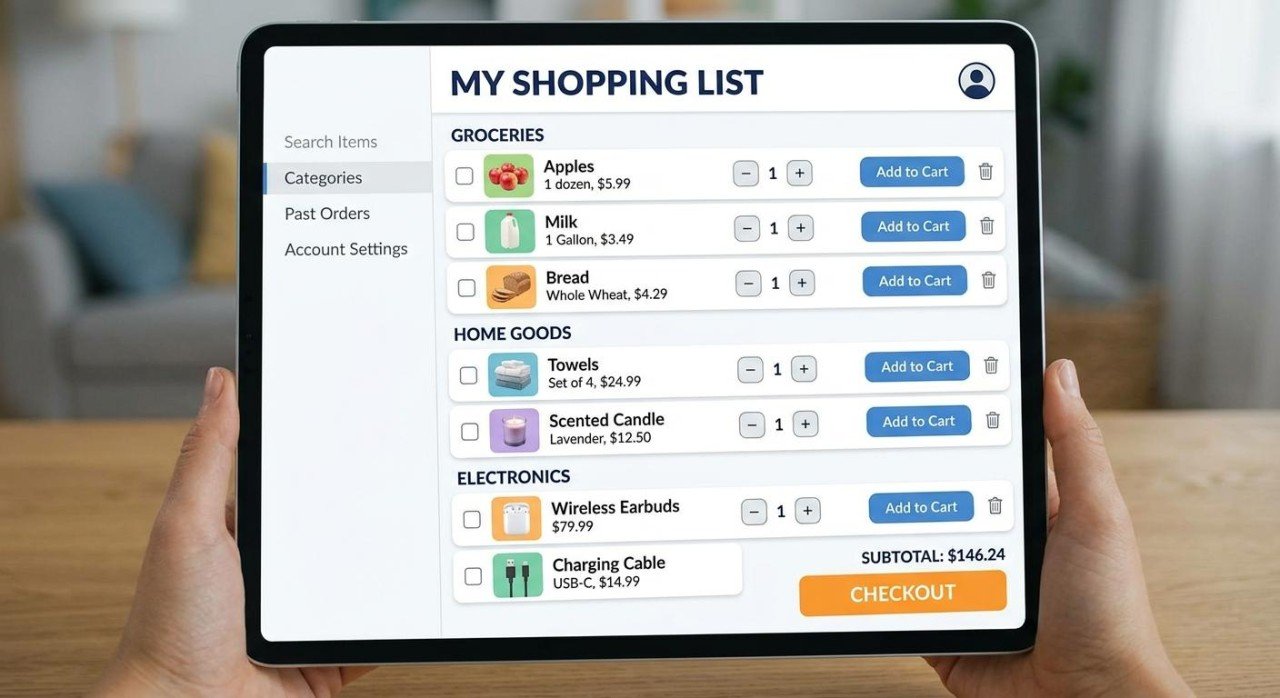
Picture the unplanned grocery run. You walk in with a vague idea — something for dinner, maybe snacks, definitely coffee — and start wandering. The end-cap displays do their job. A two-for-one deal lands in the cart. You forget the one thing you actually came for, grab three things you didn't, and circle back to the produce section twice. Two days later you're back at the store for the onion you missed, and somehow you leave with another twenty dollars of stuff.
That cycle is expensive, and it's more common than most of us admit. The fix isn't willpower at the checkout — it's a list. Not a vague mental list, but a real one built from the meals you actually plan to cook that week, organized so you can move through the store once and be done. When the list is built right, it does the hard part for you. Here's why it works, and how to make one that practically writes itself.
The Hidden Cost of Shopping Without a Plan
Start with how often we shop and how much we spend. The average American makes about six grocery trips or orders a month and spends roughly $174 per trip, according to a 2024 survey of 1,000 U.S. shoppers by Drive Research. In that same survey, 39% of people said they regularly exceed their monthly grocery budget, and 56% expected to spend more than they did the year before. Only 7% came in under budget.
A big chunk of that overspending is unplanned. Roughly half of consumers say they're inclined to make impulse purchases while grocery shopping, and Capital One Shopping's 2024 analysis estimates the average person spends about $282 a month — close to $3,400 a year — on impulse buys across all categories, at an average of roughly $29 a pop. Grocery stores are designed to encourage exactly this: the layout, the displays, the strategically placed treats near the register.
Every extra trip compounds the problem. Each unplanned "I just need milk" run is another walk past those displays, another opportunity for three more things to fall into the basket. Fewer, more deliberate trips mean fewer of those moments — and a list is what makes fewer trips possible, because you bought everything the first time.
Why a List Actually Works
It's tempting to think impulse buying is irresistible, but the research is more encouraging. Wharton marketing professor David Bell and colleagues studied real shopping trips and found that unplanned purchases made up only about 20% of items bought — far below the 60% to 70% figure the retail industry had long assumed. In fact, the researchers found no unplanned buying at all on slightly more than 60% of shopping trips.
What separated the disciplined trips from the spendy ones? Not the store's displays, but the shopper's mindset going in. Bell's team found that people who described themselves as "fast and efficient" shoppers made 82% fewer impulse buys, and trips focused on immediate needs or forgotten items showed dramatically less unplanned spending. In other words, walking in with a clear, specific purpose is the single biggest defense against the cart filling up on its own.
A list is how you manufacture that purpose. It turns a fuzzy "let's see what looks good" trip into a defined mission with a finish line. You know what you need, you know roughly what it costs, and everything not on the list has to make its case against a plan you already committed to — which is a much higher bar than an empty cart and a hungry stomach.
The catch is that most of us already know we should use a list. The reason we don't is that building a good one feels like work: you have to decide what you're cooking, check what each recipe needs, cross-reference the pantry, and write it all down. That planning step is the real friction — and it's exactly the part that can be automated away.
Take the Guesswork Out of Eating Well
Eat Well Planner helps you organize your favorite recipes, plan balanced meals, and automatically generate shopping lists — all in one place. Whether you're tracking macros, managing dietary restrictions, or just trying to stop asking "what's for dinner?", we've got you covered.
Our AI-powered tools can adapt any recipe to your dietary needs, help you discover new meals you'll love, and even log your nutrition effortlessly. It's meal planning made simple.
Start Organizing Your Meals — FreePlan the Meals First, Then the List Builds Itself
The order matters more than people realize. A grocery list shouldn't be the starting point — it should be the output of deciding what you're going to eat. When you plan the week's meals first, the list isn't a guess about what you might want; it's the exact set of ingredients those specific meals require.
This is the difference between writing "chicken, vegetables, something for lunch" and writing "1.5 lb chicken thighs, 2 bell peppers, 1 lime, cilantro" because you know Tuesday is sheet-pan fajitas. The vague list leaves you improvising in the store, which is where overspending and forgotten items creep in. The recipe-derived list leaves nothing to decide on the floor — every item traces back to a meal you'll actually make.
Planning ahead has benefits well beyond the receipt, too. A study of 40,554 French adults published in the International Journal of Behavioral Nutrition and Physical Activity found that people who planned their meals had higher overall diet quality and greater food variety, and were less likely to be overweight or obese. The researchers were careful to note the study can't prove cause and effect — but it lines up with something intuitive: when you decide in advance, you tend to choose better than when you decide while hungry in aisle seven.
Organize by Aisle to Shop Once and Skip Nothing
A list built from recipes solves what to buy. Organizing it by section solves how to buy it without backtracking. A list grouped by store area — produce, dairy, meat, pantry, frozen — lets you sweep through in a single pass instead of crisscrossing the store and discovering at checkout that you never made it back for the eggs.
This is where forgotten items get eliminated. The classic mid-week top-up run usually happens because something slipped through: it wasn't on the list, or it was buried at the bottom and overlooked. When every ingredient from every planned meal is captured and sorted by aisle, there's nothing left to forget — which means one fewer reason to make an extra trip past all those impulse-buy displays.
It also makes the shop genuinely faster. You're not standing in the cereal aisle reading your phone trying to remember why you're there. You glance at the produce group, grab those six things, move on. For anyone juggling work, kids, or just a packed schedule, cutting the shop from forty wandering minutes to fifteen focused ones is worth as much as the money saved.
The Food You Stop Throwing Away
There's a second bill that planning quietly lowers: the food you buy and never eat. The EPA estimates that 30 to 40 percent of the food supply in the U.S. is never eaten, and households are a major source. A Penn State analysis of about 4,000 households, published in the American Journal of Agricultural Economics, found that the average American household wastes 31.9% of the food it acquires — an estimated $1,866 per household per year tossed in the trash.
Unplanned shopping is a direct contributor. When you buy on impulse or "just in case," you end up with ingredients that don't connect to any actual meal — the optimistic bunch of kale, the second container of berries, the herbs for a recipe you never got around to. They sit in the fridge until they wilt. A list built from the week's real meals does the opposite: you buy the cilantro because Tuesday's fajitas need it, and it gets used Tuesday. Precise quantities tied to specific dishes mean far less produce slowly dying in the crisper drawer.
That's money saved twice — once at the register by not overbuying, and again at home by not throwing food away. For a household losing close to $1,900 a year to waste, even cutting that in half is a meaningful chunk of the grocery budget back in your pocket.
How to Build a List That Truly Writes Itself
You can do all of this with pen and paper, and it's worth it even then. The basic workflow looks like this:
- Pick the week's meals first. Choose a handful of dinners (and lunches or breakfasts if you want), leaning on recipes you actually intend to cook. Deciding here, calmly, is what prevents deciding badly in the store.
- Pull the ingredients from each recipe. Go meal by meal and list everything each one needs, with real quantities. This is the step that turns a vague list into a precise one.
- Check it against your kitchen. Cross off what you already have so you're not buying a third bottle of olive oil. This is where waste and duplicate buys get cut.
- Group it by store section. Sort the remaining items into produce, dairy, meat, pantry, and frozen so you can shop in one clean pass.
- Shop the list and stop there. With everything you need already on paper, anything else has to earn its way into the cart against a plan you already made.
The honest problem is that steps one through four take time and mental effort, and that's exactly why so many good intentions end with another aimless trip. This is the part worth automating. With Eat Well Planner, you build a meal plan from your saved recipes — import them from any website, Instagram reel, or YouTube video, or add your own — and the app generates the shopping list automatically. Every ingredient from every planned meal is pulled together and organized for you, so the list genuinely writes itself the moment your plan is set.
Because the plan is built around fresh, whole-food recipes rather than whatever's on display at the store, the list naturally steers you toward real ingredients and away from the ultra-processed convenience foods we default to when we shop without a plan. You can add individual recipes to the list anytime, set up separate profiles for different people in the house, and let the AI build balanced weekly plans around your preferences and goals — which means less time staring into the fridge and fewer "what's for dinner" panic runs to the store.
The Bottom Line
Shopping without a plan costs you three ways: extra trips, impulse buys, and food that rots before you eat it. A list fixes all three at once — but only if it's built from real meals, sorted by aisle, and complete enough that you trust it. The research is clear that a clear purpose at the door is the best defense against the cart filling itself, and that people who plan tend to eat better and waste less.
The only thing standing between you and that list is the planning work behind it. Hand that part to a tool that does it automatically, and the grocery list stops being a chore you skip and becomes something that's just there, waiting, every time you're ready to shop.
Try planning your week with Eat Well Planner and let your shopping list build itself.