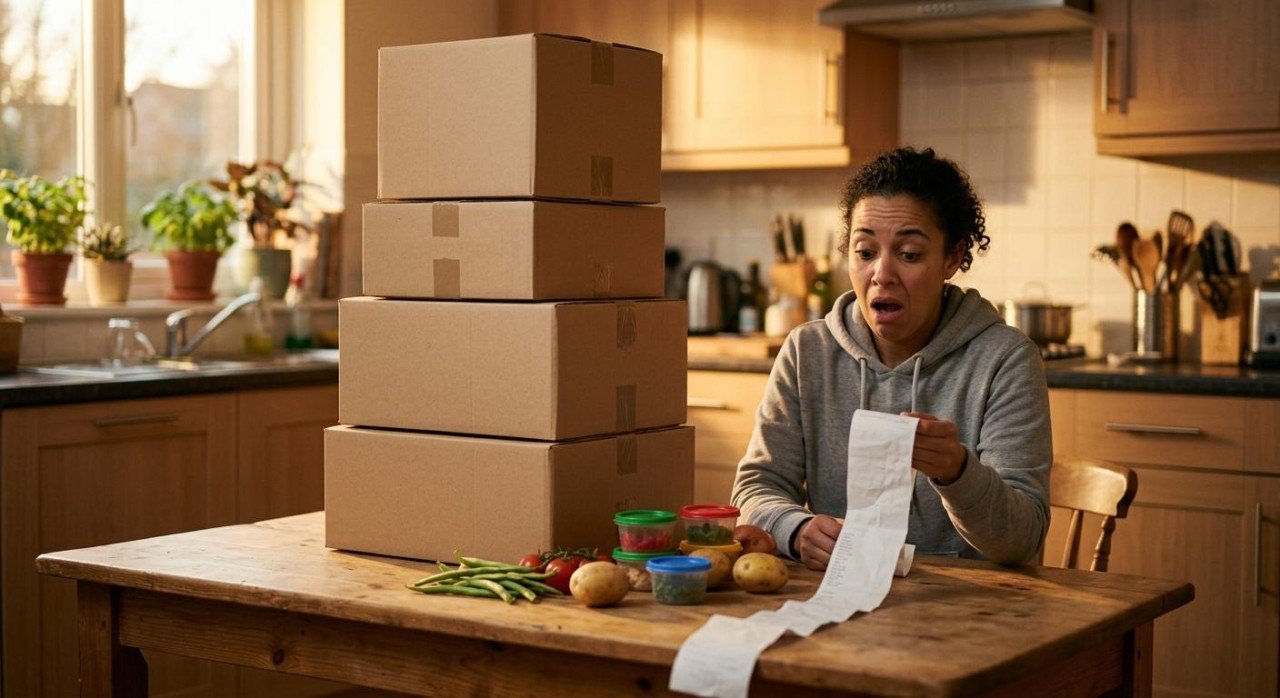
The USDA's cheapest food budget -- the Thrifty Food Plan -- estimates it costs a family of four roughly $229 per week to eat at home. That's over $990 a month. For families already stretched thin, that number can feel like proof of what they've always suspected: eating well is something only comfortable households can afford.
But that figure is built around averages that don't account for the strategies budget cooks have relied on for generations. When you build meals around dried beans, lentils, eggs, oats, rice, and frozen vegetables -- and plan ahead so nothing goes to waste -- the math changes dramatically.
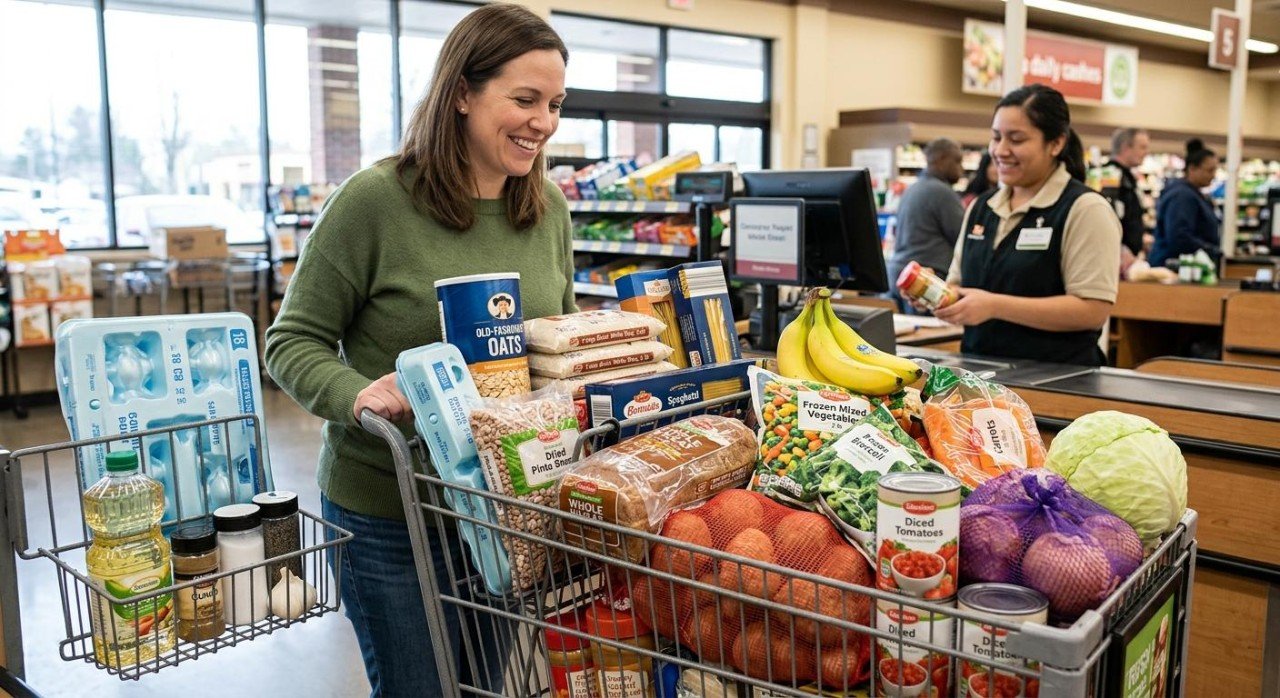
This is a week of meals for a family of four that comes in at approximately $35. It's tight, and the variety is limited. But every meal is built from real, whole-food ingredients, and the strategies behind it work whether your weekly budget is $35 or $135.
The $35 Shopping List
This list assumes you're shopping at a budget retailer like Walmart or Aldi and choosing store-brand products. Prices vary by location, but these are realistic 2026 estimates for store-brand items at a major US grocery chain.
Protein
- Eggs, 18 count (1.5 dozen) -- $4.00
- Dried lentils, 1 lb bag -- $1.50
- Dried pinto beans, 2 lb bag -- $2.80
- Peanut butter, 16 oz jar -- $2.00
Grains and starches
- Old-fashioned oats, 42 oz canister -- $3.00
- Long-grain white rice, 2 lb bag -- $1.80
- Pasta (spaghetti or penne), 1 lb box -- $1.00
- Bread, store-brand loaf -- $1.50
- Potatoes, 5 lb bag -- $3.00
Vegetables
- Frozen mixed vegetables, 2 lb bag -- $2.50
- Frozen broccoli, 12 oz bag -- $1.25
- Canned diced tomatoes, 2 cans -- $1.80
- Onions, 3 lb bag -- $2.00
- Carrots, 2 lb bag -- $1.50
- Cabbage, 1 head -- $1.50
Fruit and other
- Bananas, ~2 lbs -- $1.20
- Garlic, 1 head -- $0.50
- Cooking oil and basic spices (salt, pepper, cumin) -- ~$1.00 amortized weekly
Approximate total: $34.85
A few things to note. The oats canister and peanut butter jar will last beyond one week, which brings your effective cost down in subsequent weeks. This list assumes you already have basic pantry staples like cooking oil, salt, and pepper. If you're building a pantry from scratch, add $5-10 to your first week for those items -- they'll last months.
Seven Days of Meals
This plan feeds two adults and two children using everything on the shopping list above. Batch cooking is the key -- several dinners make enough for the next day's lunch, which cuts prep time and keeps costs low.
Monday
- Breakfast: Oatmeal with sliced banana and peanut butter
- Lunch: Peanut butter sandwiches with raw carrot sticks
- Dinner: Lentil and vegetable soup (lentils, canned tomatoes, onion, carrot, garlic, cumin) with bread -- make a big pot for leftovers
Tuesday
- Breakfast: Scrambled eggs on toast
- Lunch: Leftover lentil soup with bread
- Dinner: Rice and pinto beans (simmered with onion, garlic, and cumin) with steamed frozen broccoli
Wednesday
- Breakfast: Oatmeal with banana and peanut butter
- Lunch: Egg sandwiches with carrot sticks
- Dinner: Pasta with tomato sauce (canned tomatoes simmered with garlic and onion) and frozen mixed vegetables stirred in
Thursday
- Breakfast: Scrambled eggs on toast
- Lunch: Leftover pasta and vegetables
- Dinner: Potato, cabbage, and egg hash -- diced potatoes and shredded cabbage pan-fried with onion, topped with a fried egg per person
Friday
- Breakfast: Oatmeal with banana and peanut butter
- Lunch: Rice and bean bowl (leftover rice and beans with any remaining vegetables)
- Dinner: Egg fried rice with frozen mixed vegetables and garlic
Saturday
- Breakfast: Scrambled eggs on toast
- Lunch: Potato and carrot soup (potatoes, carrots, onion, garlic -- mash or blend for a creamy texture)
- Dinner: Pasta e fagioli -- pasta and bean soup (pasta, pinto beans, canned tomatoes, onion, garlic, carrots)
Sunday
- Breakfast: Oatmeal with banana and peanut butter
- Lunch: Leftover pasta e fagioli
- Dinner: Lentil and potato stew (lentils, diced potatoes, cabbage, carrots, onion) with bread
You'll notice patterns: oatmeal most mornings, leftovers for lunch, and soups and stews for many dinners. That's by design. Soups and stews stretch ingredients further, deliver more nutrition per dollar, and create automatic leftovers. The meals are simple, but they cover the bases -- protein from beans, lentils, and eggs; fiber from oats, vegetables, and legumes; vitamins and minerals from a range of vegetables; and complex carbohydrates from rice, potatoes, and pasta to keep everyone full.
This isn't a gourmet week. But it's a genuinely nutritious one.
The 10 Strategies That Make This Work
That shopping list and meal plan didn't come together by accident. They're built on strategies that budget-conscious families around the world rely on -- and every one of them works at any budget level, not just an extreme one.
1. Buy Frozen and Canned Vegetables
Fresh produce has a reputation advantage it doesn't entirely deserve. Research compiled by Healthline, drawing on multiple peer-reviewed studies, found that the nutritional content of fresh and frozen produce is similar -- and that frozen vegetables sometimes retain more nutrients because they're flash-frozen at peak ripeness. A "fresh" vegetable that's been sitting in your fridge for five days may have lost more vitamins than a frozen one you just steamed.
Frozen vegetables also cost less and produce almost no waste. You use exactly what you need and put the rest back in the freezer. When money is tight, a bag of frozen broccoli that keeps for months beats a fresh head that wilts in four days.
Canned vegetables -- particularly tomatoes and beans -- are similarly underrated. Canning preserves most nutrients, and canned tomatoes are actually higher in the antioxidant lycopene than fresh ones because heat processing increases its bioavailability. Rinse canned beans to cut sodium by about 40%.
2. Make Beans and Lentils Your Protein Base
This is the single biggest budget lever in the entire plan. Dried beans and lentils are among the cheapest protein sources available -- by a wide margin.
A one-pound bag of dried lentils delivers roughly 90-100 grams of protein for under $2, and lentils don't even require soaking -- they cook in 20-25 minutes. Dried pinto or black beans offer similar value at around $1.40-1.50 per pound. Compare that to chicken breast or ground beef, which typically cost three to five times more per gram of protein.
The nutritional payoff goes beyond protein. Legumes deliver about 15 grams of fiber per cup cooked, plus iron, folate, potassium, and magnesium. They're one of the few foods that provide both protein and fiber in a single package. Shifting just two or three dinners per week from meat to beans and lentils can cut a family's protein spending by half or more.
3. Buy in Bulk: Oats, Rice, and Pasta
The cheapest foods per serving in any grocery store are almost always the big bags and canisters of staples. A serving of oatmeal costs roughly $0.15-0.25 and delivers 5 grams of protein and 4 grams of fiber -- including beta-glucan, a soluble fiber shown to lower cholesterol and stabilize blood sugar. Long-grain rice runs about $0.10-0.15 per serving. Pasta costs $0.12-0.15 per serving.
These aren't nutritional superstars on their own, but they're the foundation you build meals around. Rice and beans together form a complete protein covering all essential amino acids. Oats with peanut butter and banana makes a breakfast that keeps you full for hours. Pasta with canned tomatoes and frozen vegetables is a balanced dinner for under $2.
4. Plan Your Meals to Slash Food Waste
The average American family of four wastes roughly $2,913 worth of food every year, according to a 2025 EPA report. That's over $56 per week thrown in the trash.
Most of that waste comes from buying food without a plan: the vegetables that rot in the crisper, the leftover rice that gets forgotten, the bread that goes stale because nobody planned a meal around it. Planning even loosely -- deciding on five or six meals for the week before you shop -- prevents most of this. When every ingredient on your shopping list has a specific meal it belongs to, food waste drops to nearly zero.
On a $35 budget, you can't afford waste. But even on a $150 budget, cutting waste effectively gives you more food without spending more money.
5. Cook from Scratch
A 2023 study in Public Health Nutrition compared 54 ready meals to their homemade equivalents and found that ready meals cost roughly twice as much per serving, with lower nutritional quality across the board.
That gap gets even wider when you compare home cooking to fast food. A pot of lentil soup that feeds a family of four costs about $3-4 total. A big pan of egg fried rice costs under $3. The average fast-food combo meal costs over $11 -- per person. On a tight budget, cooking from scratch isn't just healthier. It's the only way the math works.
6. Buy Seasonal Produce
When fruits and vegetables are in season locally, supply is high and prices drop. Out-of-season produce has to be shipped from farther away -- sometimes from another hemisphere -- and those transportation costs show up at the register.
The specific savings vary by item and time of year, but the principle is reliable: if something seems unusually cheap at the grocery store, it's probably in season. Cabbage, potatoes, onions, and carrots -- the workhorses of this meal plan -- stay affordable year-round because they store well and grow widely. When you have a bit more to spend, seasonal fresh produce stretches the budget further than out-of-season alternatives.
7. Choose Store Brand Over Name Brand
Consumer Reports found that store-brand groceries are typically 25-30% cheaper than name-brand equivalents, with minimal quality differences -- and for some items, savings reach 40% or more. Store-brand canned tomatoes, oats, rice, and frozen vegetables are functionally identical to the name-brand versions at a fraction of the price.
On a $35 budget, this isn't optional -- it's essential. But even on a more comfortable budget, switching to store brands across your entire cart adds up to hundreds of dollars saved per year.
8. Grow Your Own Herbs
A packet of fresh herbs at the store costs $2-4 and wilts within a week. A small pot of basil, parsley, or cilantro on a windowsill costs roughly the same upfront but keeps producing for months.
This matters on a tight budget not just for the savings but for the impact on meal quality. The reason budget food tastes bland isn't the ingredients -- it's the seasoning. A handful of fresh herbs on a bowl of rice and beans transforms it from bare-minimum sustenance into something you actually look forward to eating. Even a few pots of mint, chives, and rosemary can save $10-15 a month while making simple meals taste like deliberate choices.
9. Shop with a List (And Don't Shop Hungry)
Shopping without a list leads to impulse purchases that inflate your bill, and shopping while hungry amplifies the effect. Research consistently shows that hungry shoppers buy more high-calorie processed foods and spend more overall.
For this meal plan, the list is the plan. Every item has a purpose. If it's not on the list, it doesn't go in the cart. That discipline is what keeps the total under $35 -- but it's also what makes a $100 budget stretch to $120 worth of usable food.
10. Batch Cook and Freeze Portions
Nearly every dinner in this meal plan makes extra, and that's intentional. Monday's lentil soup becomes Tuesday's lunch. Saturday's pasta e fagioli covers Sunday's lunch. Cook once, eat twice.
Rather than preparing 21 separate meals in a week, you're cooking 7 dinners and stretching them to cover 14 meals. Breakfasts take 5 minutes (oatmeal) or 10 minutes (scrambled eggs). The heavy lifting happens once per day.
If you have freezer space, this extends even further. A big batch of lentil soup or bean chili portioned into containers gives you ready-made meals for weeks -- without the sodium, additives, or price tag of store-bought frozen dinners.
Take the Guesswork Out of Eating Well
Eat Well Planner helps you organize your favorite recipes, plan balanced meals, and automatically generate shopping lists — all in one place. Whether you're tracking macros, managing dietary restrictions, or just trying to stop asking "what's for dinner?", we've got you covered.
Our AI-powered tools can adapt any recipe to your dietary needs, help you discover new meals you'll love, and even log your nutrition effortlessly. It's meal planning made simple.
Start Organizing Your Meals — FreeThe Real Barriers -- And What Actually Helps
A meal plan on paper doesn't account for the real-world obstacles that make healthy eating harder for millions of families. Acknowledging those barriers isn't making excuses -- it's being honest about what people are actually dealing with.
Time Poverty
The biggest barrier to cooking from scratch isn't skill or money -- it's time. Parents working multiple jobs, shift workers with unpredictable schedules, and caregivers managing someone else's needs often don't have the luxury of an hour in the kitchen.
This meal plan tries to account for that: most breakfasts take under 5 minutes, lunches are mostly leftovers that just need reheating, and dinners are simple one-pot meals. But even that assumes a basic level of available time. If you're in a season where even 20 minutes feels like a stretch, focus on the ingredients themselves: oatmeal, scrambled eggs, canned beans on toast, and frozen vegetables microwaved on the side. These take minutes and still deliver real nutrition.
Food Deserts
Approximately 39 million Americans live in areas the USDA classifies as low-income with limited access to affordable, nutritious food. In these neighborhoods, a full-service grocery store may be miles away, while the nearest options -- convenience stores and small markets -- charge more for less.
Many items on this shopping list -- canned beans, rice, oats, peanut butter, frozen vegetables -- are among the most likely to be available even at smaller stores because they're shelf-stable and common. They won't be as cheap as at Walmart or Aldi, but they're usually available. Online grocery delivery and pickup services have also expanded access for some families, though they're not universally available or affordable.
This is a systemic problem no individual meal plan can solve. But within the constraints, focusing on shelf-stable, nutrient-dense staples gives you the best chance of eating well regardless of what's nearby.
Cooking Skills and Confidence
Cooking shows and social media have set an impossibly high bar for what "cooking" looks like. But every meal in this plan uses the same handful of basic techniques: boiling, simmering, scrambling, and chopping. You don't need knife skills or perfect timing. You need a pot, a pan, and the willingness to try.
If you're starting from zero, pick one meal from this plan -- lentil soup is a great first attempt -- and make it once. The next time will be faster. The time after that, it'll feel routine. Cooking is a skill built on repetition, not talent.
This Is the Floor, Not the Ceiling
To be clear: $35 a week for a family of four is an emergency-level budget. The meals are nutritious and the food is real, but the variety is limited and the repetition is real. This isn't how anyone wants to eat indefinitely.
But the strategies behind this plan -- buying in bulk, cooking from scratch, choosing store brands, planning meals to eliminate waste, and building around beans, lentils, eggs, and frozen vegetables -- are the same strategies that make a $75 or $100 weekly budget feel comfortable. More money buys variety: fresh fruit, a wider range of vegetables, chicken thighs, cheese, yogurt, more spices. The foundation stays the same.
And that foundation takes apart the myth that launched this whole post: eating well is not inherently expensive. The most nutritious foods per dollar -- beans, lentils, oats, eggs, frozen vegetables, potatoes -- are also among the cheapest items in the store. What it does require is planning: knowing what you'll eat, buying only what you need, and cooking with intention rather than defaulting to whatever's fastest.
If the planning is the part that stops you, that's exactly the kind of barrier Eat Well Planner is designed to remove. It generates weekly meal plans based on your budget and dietary needs, builds automatic shopping lists so you only buy what you need, and tracks the nutrition in every meal so you can see that even simple, affordable food is covering your bases. The idea is to take the decision-making off your plate -- so all that's left is the cooking and the eating.