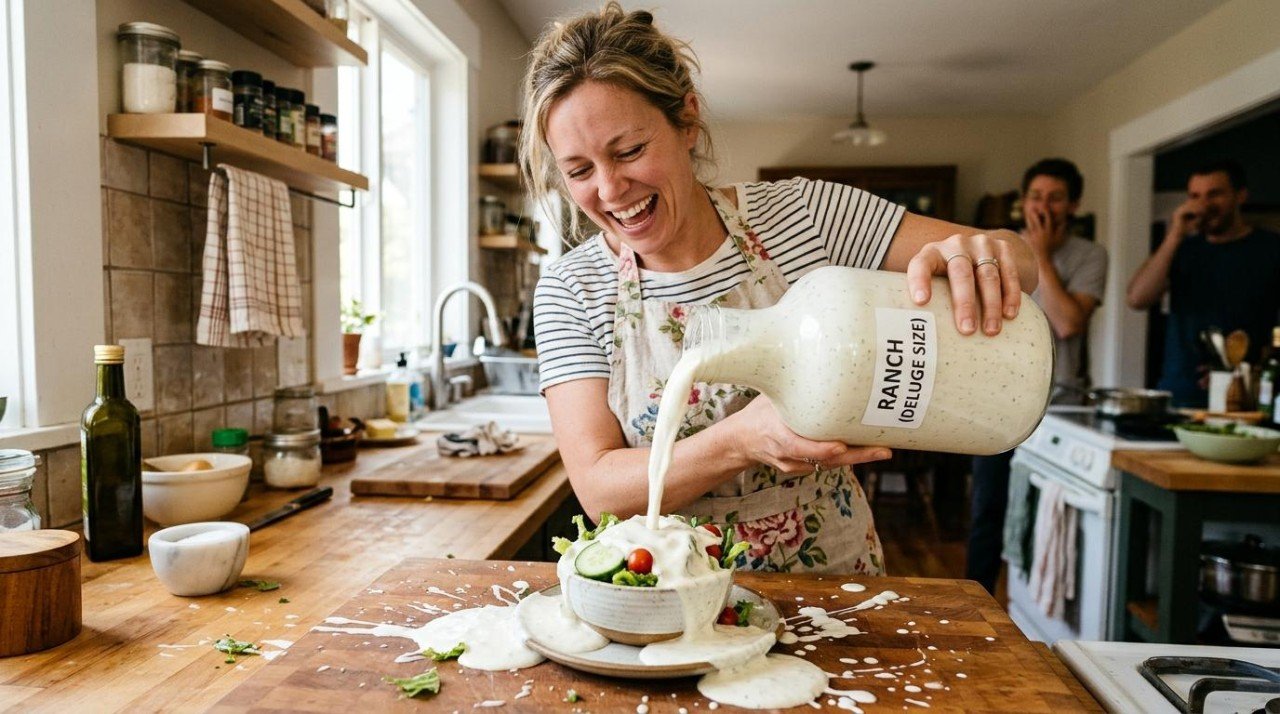
You built a salad. Greens, tomatoes, carrots, maybe some chickpeas. It is the most virtuous thing on the table. Then you reach into the fridge door, grab a bottle, and give it a generous glug or three.
That bottle is quietly doing a lot of work. Depending on the style, a couple of tablespoons can carry a meaningful slice of your day's sodium and a few teaspoons of sugar, and almost nobody stops at a couple of tablespoons. It's not that salad dressing is "bad." It's that it's the one ingredient in a healthy meal we almost never look at.
Here's what is actually in popular styles, the part of the story most people get backwards (hint: it's not the fat), and five jar dressings that take about two minutes to shake together.
What's Actually in the Bottle
Brands and recipes vary a lot, so instead of picking on one label, here are USDA reference values for common regular (full-fat) dressing styles from FoodData Central, the government's nutrient database. Figures are rounded and work out to roughly one 2-tablespoon serving (about 30 grams):
- Caesar: about 360 mg sodium, under 1 g sugar
- Russian: about 340 mg sodium, 5 g sugar
- Italian: about 300 mg sodium, 3 g sugar
- Thousand Island: about 290 mg sodium, 5 g sugar
- Creamy poppyseed: about 280 mg sodium, 7 g sugar
- Ranch: about 270 mg sodium, 1 g sugar
- French: about 200 mg sodium, 5 g sugar
- Honey mustard: about 150 mg sodium, 5 g sugar
- Homemade oil and vinegar (no salt added): essentially 0 mg sodium, under 1 g sugar
Two patterns jump out. Almost every bottled style lands somewhere between 150 and 360 mg of sodium per serving, whether it tastes salty or not. And the sweet-leaning styles (French, Russian, Thousand Island, poppyseed, honey mustard) sit around 5 to 7 grams of sugar per serving, which is a bit over a teaspoon.
On their own, those numbers don't look alarming. The trouble is what happens when the bottle meets a real salad.
The Serving Size Is Doing a Lot of Heavy Lifting
Every one of those figures assumes two level tablespoons. That's the standard label serving, and on a side salad it's plenty. On a big dinner salad, with a free pour straight from the bottle, four tablespoons is easy to hit without noticing. Try measuring your usual pour once; it's a genuinely eye-opening ten seconds.
Double the serving and the math changes:
- Sodium: Four tablespoons of a Caesar-style dressing is roughly 720 mg of sodium, close to a third of the FDA's Daily Value of less than 2,300 mg. The FDA notes that Americans already average about 3,400 mg a day, and that over 70% of it comes from packaged and prepared foods rather than the salt shaker.
- Sugar: Four tablespoons of French is about 10 grams of sugar, and creamy poppyseed is closer to 14. The current Dietary Guidelines, as summarized by the CDC, suggest adults keep added sugars to no more than 10 grams per meal. A generous pour of a sweet dressing can use up that whole allowance before you've touched anything else on the plate.
That's the "sneaky" part. Nobody counts the dressing. It doesn't feel like a food so much as a finishing touch, so it slides past the mental math we do for dessert or soda. (If you want to get better at spotting sugar on an ingredient list, our guide to the many names for added sugar is a good companion to this post.)
The Part Most People Get Backwards: The Fat Is Not the Problem
For decades, the "healthy" move was to grab the fat-free or light bottle. The research points the other way.
Many of the most valuable compounds in a salad, like the beta-carotene in carrots, the lutein in spinach, and the lycopene in tomatoes, are carotenoids, and carotenoids are fat-soluble. Your body needs some fat in the same meal to absorb them well.
In a small but often-cited 2004 Iowa State study, seven volunteers ate the same salad of spinach, romaine, cherry tomatoes and carrots with dressings containing 0, 6 or 28 grams of canola oil. With the fat-free dressing, the researchers reported that essentially no absorption of carotenoids was observed. The reduced-fat dressing did better, and the full-fat dressing did best.
A larger 2012 Purdue study of 29 adults followed up by testing salads dressed with butter, canola oil (mostly monounsaturated) or soybean oil (mostly polyunsaturated) at 3, 8 or 20 grams of fat. More fat generally meant more carotenoid absorption, but the monounsaturated canola dressing got about the same absorption at 3 grams as at 20. As lead author Mario Ferruzzi put it, "If you want to utilize more from your fruits and vegetables, you have to pair them correctly with fat-based dressings."
There's also a long-term heart health angle. In the Nurses' Health Study, researchers following more than 76,000 women for 10 years found that those who ate oil and vinegar dressing five to six or more times a week had about half the risk of fatal ischemic heart disease compared with women who rarely ate it. That's an observational finding, so it can't prove the dressing itself was responsible. But the authors pointed to oil-based dressing as an important source of alpha-linolenic acid, a plant omega-3, and it's a nice reminder that a simple vinaigrette is a food with real nutritional value, not just a calorie problem.
And Fat-Free Versions Often Make Up the Difference Elsewhere
When manufacturers take the fat out, they have to replace the body and flavor somehow, usually with more water, thickeners, sugar and salt. In USDA's reference data, several fat-free and reduced-fat versions come out higher in sodium or sugar than the regular version, per serving of about 2 tablespoons:
- Fat-free honey mustard: about 300 mg sodium vs. 150 mg for regular, with slightly more sugar too
- Fat-free French: about 260 mg sodium vs. 200 mg for regular, with about the same sugar
- Fat-free Italian: about 340 mg sodium vs. 300 mg for regular
- Reduced-fat coleslaw dressing: about 12 g sugar and 480 mg sodium vs. roughly 6 g and 255 mg for regular
So the fat-free bottle can hand you more of the things worth limiting, while taking away the one ingredient that helps you absorb the good stuff in your vegetables. That's a rough trade.
We saw a version of this when we scored ranch for our healthier ranch makeover: a plate of raw vegetables scored 87 on its own, 61 with bottled ranch, and 79 with a homemade Greek yogurt ranch that kept a little real mayo. The goal wasn't zero fat. It was less sodium and a better base.
How to Read a Dressing Label in 20 Seconds
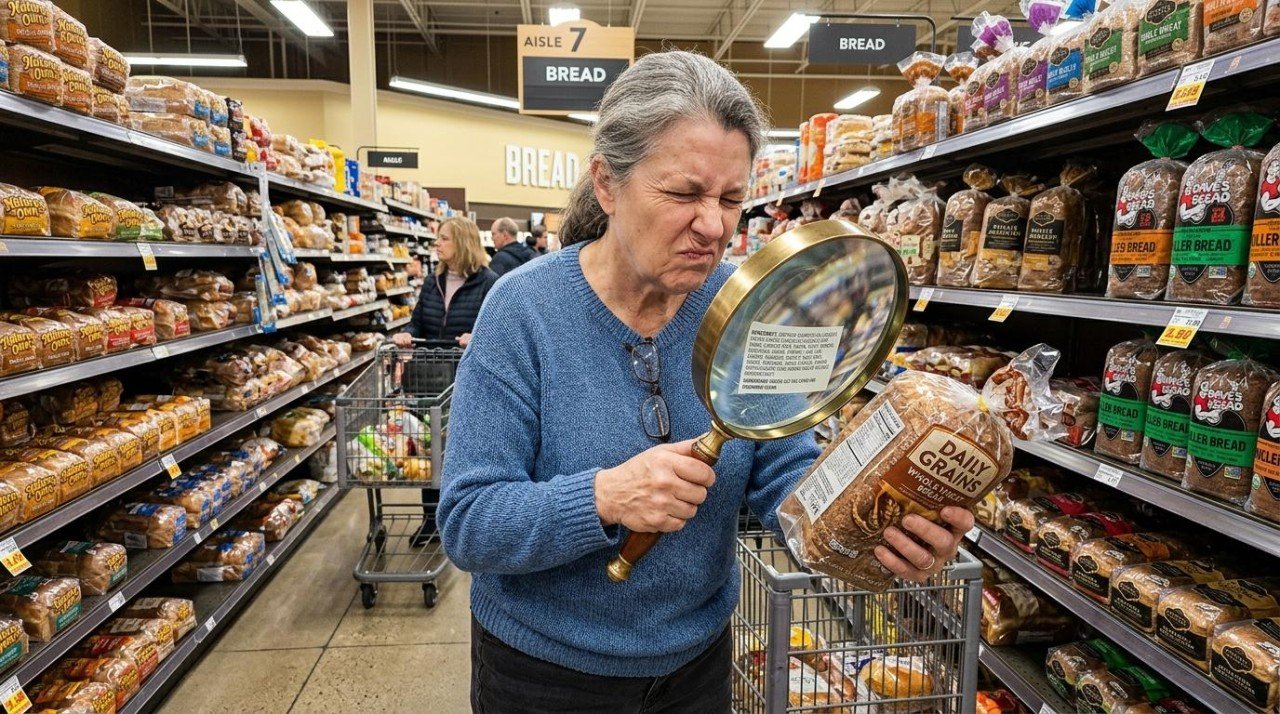
None of this means you need to swear off bottled dressing. Plenty of bottles are perfectly reasonable, and convenience matters on a weeknight. When you're standing in the aisle, check four things:
- Sodium per serving. On a Nutrition Facts label, the FDA treats 5% DV or less as low and 20% DV or more as high. For something you pour freely, a bottle under about 200 mg (roughly 9% DV) per 2 tablespoons gives you more room.
- Added sugars. The label lists added sugars separately. For savory styles like Italian, Caesar or ranch, 0 to 2 grams is easy to find. Sweet styles will run higher, so just pour them with that in mind.
- The oil. Look for which oil is actually in it. Olive oil and avocado oil dressings exist, though "made with olive oil" on the front can mean a little olive oil blended with others. Soybean and canola are fine choices too; we dig into the evidence in our seed oils explainer.
- Your real serving. Whatever the label says, multiply it by what you actually pour.
The other simple trick: ask for dressing on the side at restaurants and dip your fork into it before each bite. It's one of the FDA's own suggestions for keeping condiment sodium in check, and you'll likely use far less without missing it.
Where Eat Well Planner Fits In
The hardest part of all this isn't knowing it, it's noticing it. Dressing hides because it's an afterthought. One way to stop it from being an afterthought is to treat it like any other ingredient in the recipe.
In Eat Well Planner, every recipe you save gets a Nutrition Score, and the dressing counts. Save your favorite salad with the bottled dressing listed, and you'll see exactly how much sodium and sugar the dressing contributes. Open it in the Recipe Playground, swap the bottle for one of the homemade dressings below, and watch the score change live before you commit. Or tap Make It Healthier, which proposes specific ingredient swaps and checks the real nutritional gain of each one with a calculator, so you're getting verified upgrades instead of generic advice.
Once you've landed on a salad you like, drop it into your weekly meal plan and the ingredients for the dressing go straight onto your shopping list. A lemon and a jar of Dijon on the list are what make the two-minute dressing actually happen on a Tuesday.
Take the Guesswork Out of Eating Well
Eat Well Planner helps you organize your favorite recipes, plan balanced meals, and automatically generate shopping lists — all in one place. Whether you're tracking macros, managing dietary restrictions, or just trying to stop asking "what's for dinner?", we've got you covered.
Our AI-powered tools can adapt any recipe to your dietary needs, help you discover new meals you'll love, and even log your nutrition effortlessly. It's meal planning made simple.
Start Organizing Your Meals — FreeFive Jar Dressings That Take Two Minutes
The method for all five is the same: put everything in a clean jar with a lid, shake hard for 15 to 20 seconds, taste, and adjust. Each makes about half a cup, or roughly four 2-tablespoon servings. Keep them in the fridge. Olive oil firms up when it's cold, so let the jar sit out for 10 minutes or run it under warm water, then shake again.
A quick note on salt: a quarter teaspoon of table salt in a half-cup jar works out to roughly 150 mg of sodium per serving, and you can go lower once your taste adjusts. You're in control of the shaker, which is the whole point.
1. Lemon-Dijon Vinaigrette (the everyday one)
- 6 tablespoons extra virgin olive oil
- 2 tablespoons fresh lemon juice
- 1 teaspoon Dijon mustard
- 1 small garlic clove, grated, or a pinch of garlic powder
- A pinch of salt and plenty of black pepper
The mustard isn't just flavor. It helps the oil and lemon emulsify so the dressing clings to the leaves instead of pooling at the bottom of the bowl. If you're buying olive oil for this, our guide to buying real extra virgin olive oil is worth a skim.
2. Balsamic Vinaigrette With a Whisper of Honey
- 6 tablespoons extra virgin olive oil
- 2 tablespoons balsamic vinegar
- 1 teaspoon Dijon mustard
- 1 teaspoon honey or maple syrup
- A pinch of salt and pepper
One teaspoon of honey spread across the whole jar is about 1 to 1.5 grams of added sugar per serving, a fraction of most bottled balsamic or raspberry vinaigrettes. Balsamic is naturally a little sweet already, so taste before adding more.
3. Creamy Greek Yogurt Herb Dressing (the ranch fan's pick)
- 1/3 cup plain Greek yogurt
- 1 tablespoon mayonnaise or extra virgin olive oil
- 1 to 2 tablespoons lemon juice or buttermilk, to thin
- 2 tablespoons chopped fresh herbs (dill, chives, parsley, or any mix)
- 1/4 teaspoon garlic powder and 1/4 teaspoon onion powder
- A pinch of salt and pepper
Keeping a little mayo or oil in the mix matters, for the carotenoid reasons above and because it rounds out the tang. Use this one within a few days. For the fully tested version, see our healthier ranch recipe.
4. Sesame-Ginger Dressing
- 3 tablespoons neutral oil (avocado or canola)
- 1 tablespoon toasted sesame oil
- 2 tablespoons unseasoned rice vinegar
- 1 tablespoon low-sodium soy sauce
- 1 teaspoon freshly grated ginger
- 1/2 teaspoon honey (optional)
Buy unseasoned rice vinegar; the seasoned kind already has sugar and salt added. The soy sauce brings all the salt this one needs, so skip the shaker. Great on slaw, cucumber salads, and grain bowls.
5. Lemon-Tahini Dressing
- 3 tablespoons tahini
- 3 tablespoons lemon juice
- 1 small garlic clove, grated
- 2 to 4 tablespoons water, added a little at a time
- A pinch of salt and a pinch of cumin (optional)
Tahini can seize up and look broken when the lemon goes in. Keep shaking and add water a spoonful at a time, and it turns smooth and creamy. It's dairy-free, rich enough to stand in for a creamy dressing, and the sesame fat does the same carotenoid-boosting job as olive oil. It's especially good on roasted vegetables and kale, which can stand up to a thicker dressing.
The Bottom Line
Salad dressing isn't the villain, and fat definitely isn't. A good oil-based dressing helps you absorb more of what makes vegetables worth eating. What deserves a closer look is the sodium in almost every bottle, the sugar in the sweeter styles, and the reality that most of us pour a lot more than two tablespoons.
You don't need to give up bottled dressing to fix that. Read the sodium and added sugar lines once, pick a bottle you like that fits, measure your pour one time so you know what "normal" looks like, and keep one jar dressing in the fridge for the nights you have two minutes. That small habit turns the most-ignored ingredient in your salad into one that's actually working for you.
Want an easy way to see what your salads (and everything else) are really delivering? Try planning your meals with Eat Well Planner and let the Nutrition Score do the label math for you.