You don't need to overhaul your entire diet to eat better. In fact, trying to change everything at once is one of the most reliable ways to change nothing at all. The meal plans get abandoned by Wednesday, the quinoa sits unopened in the cupboard, and the takeaway menu wins again.
The good news is that nutrition research consistently shows that small, sustainable changes often deliver more long-term benefit than dramatic short-lived overhauls. You don't need a new diet. You need a few better defaults — swaps so simple they barely feel like effort, but that genuinely shift the nutritional quality of what you're eating.
Here are five of them. Each one takes seconds to implement, works with meals you already enjoy, and is backed by real research.
1. White Rice to Brown Rice, Quinoa, or Cauliflower Rice
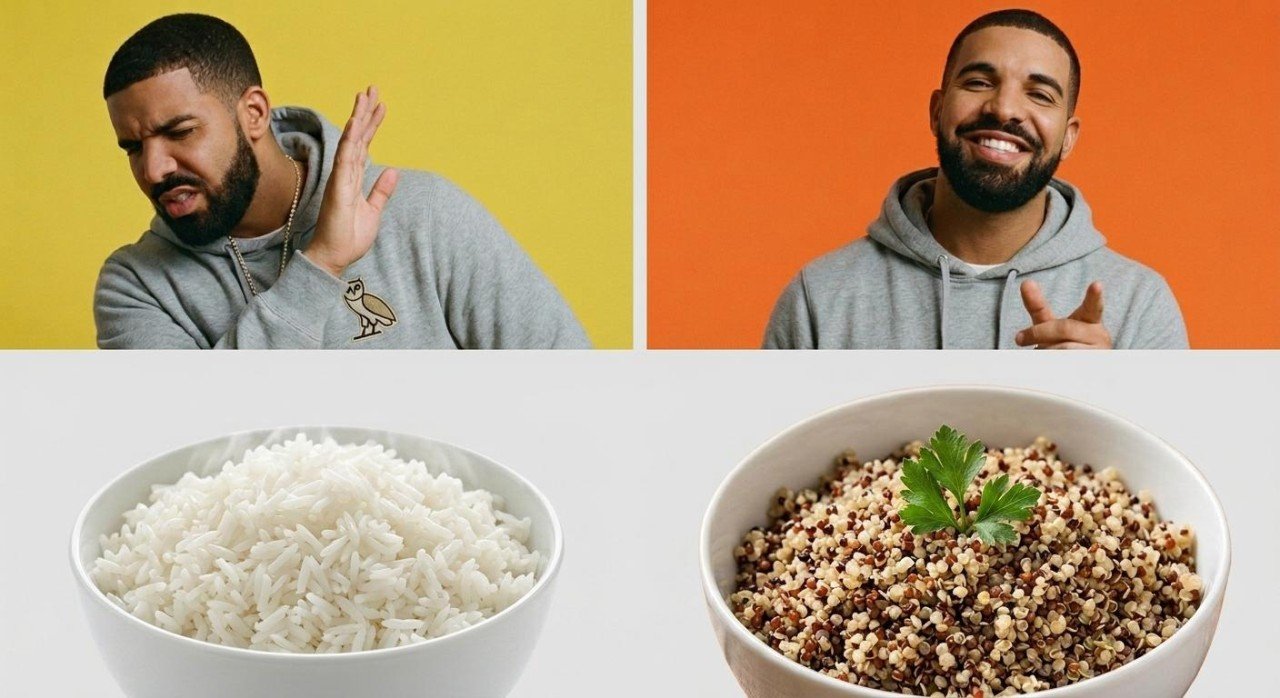
White rice isn't bad for you. But it is missing most of what made the grain nutritious in the first place. During milling, the bran and germ are stripped away, leaving behind the starchy endosperm with significantly less fiber, fewer vitamins, and fewer minerals.
The numbers tell the story. According to Harvard Health, brown rice delivers more fiber, magnesium, potassium, iron, and B vitamins (B1, B3, B6, and B9) than white rice. A cooked cup of brown rice contains 218 calories versus 242 for white rice — not a dramatic difference, but the nutritional density per calorie is meaningfully higher. Brown rice also has a lower glycaemic index (68 versus 73 for white rice), meaning your blood sugar rises more gradually after eating it.
Then there's quinoa, which is in a different league entirely. One cooked cup of quinoa provides 8 grams of protein and 5 grams of fiber, compared to just 0.6 grams of fiber in the same amount of white rice. Quinoa is also one of the few plant foods that qualifies as a complete protein, containing all nine essential amino acids your body needs for immune function, tissue repair, and nutrient absorption.
You don't need to make the switch every time. Even replacing white rice with brown rice or quinoa in two or three meals a week meaningfully increases your fiber and micronutrient intake. Cauliflower rice is another option if you're looking to add more vegetables — it's lower in calories and carbohydrates, and counts toward your daily plant intake.
Try it: Next time you make a stir-fry or curry, swap in brown rice or quinoa. Cook a batch at the start of the week and keep it in the fridge so it's just as convenient as the white rice you'd normally reach for.
2. Cream-Based Sauces to Tomato-Based or Yogurt-Based Alternatives
A creamy pasta sauce feels indulgent for a reason — it's typically built on heavy cream, butter, and cheese, which means a significant amount of saturated fat and calories per serving. A typical cream-based sauce can easily add 400 to 600 calories to a dish before you've even counted the pasta.
Tomato-based sauces, on the other hand, are naturally lower in calories and saturated fat while delivering something cream sauces don't: lycopene. This powerful antioxidant, responsible for the red color of tomatoes, has been linked to reduced risk of heart disease and certain cancers. And here's the part most people don't know — cooking tomatoes actually makes the lycopene more available to your body, not less. Research from Cornell University found that heating tomatoes increased their absorbable lycopene content by 54% after just two minutes, and by 171% after fifteen minutes. Adding a small amount of olive oil increases absorption even further, because lycopene is fat-soluble.
If you love the creaminess but want to cut the saturated fat, Greek yogurt is a remarkably effective substitute. It offers roughly five times the protein of sour cream with far less saturated fat. A half-cup serving of Greek yogurt-based sauce provides around 12 grams of protein, plus beneficial probiotics for gut health. You can stir it into pasta sauces, use it as the base for a curry sauce, or blend it into salad dressings.
Try it: Make a simple tomato sauce with tinned tomatoes, garlic, olive oil, and fresh basil — it takes about 15 minutes and works on pasta, chicken, or fish. For creamy dishes, swap heavy cream for plain Greek yogurt stirred in at the end of cooking (add it off the heat to prevent curdling).
3. Refined Snacks to Nuts, Seeds, and Fruit with Nut Butter
The snack aisle is designed to work against you. According to Harvard's Nutrition Source, the food and beverage industry spends nearly $14 billion per year on advertising in the US, with more than 80% of that promoting fast food, sugary drinks, confectionery, and other ultra-processed snacks. The result is that most people's default snack choices are calorie-rich, nutrient-poor, and engineered to make you eat more than you intended.
Swapping those chips, biscuits, and cereal bars for a handful of nuts, some seeds, or fruit with nut butter is one of the highest-impact changes you can make. The evidence is striking. An analysis by Imperial College London, published in BMC Medicine and covering 29 studies with up to 819,000 participants, found that eating just 20 grams of nuts per day — roughly a small handful — was associated with a 30% reduction in coronary heart disease risk, a 15% reduction in cancer risk, and a 22% reduction in the risk of premature death.
A 2023 review published in Nutrients confirmed that higher nut consumption was associated with a 19% lower risk of cardiovascular disease incidence and a 25% lower risk of cardiovascular mortality. The optimal intake appears to be around 15 to 20 grams per day, with limited additional benefit from eating more than one 28-gram serving.
Nuts and seeds also provide fiber, healthy fats, magnesium, and zinc — nutrients that most people aren't getting enough of. Pair them with an apple or banana and you've got a snack that stabilises your blood sugar rather than spiking it. Harvard recommends aiming for 150 to 250 calories per snack, which is roughly what you get from a small handful of almonds with a piece of fruit.
Try it: Keep a bag of mixed nuts in your desk drawer, car, or bag. When you need a snack, grab a small handful (about 20g) alongside a piece of fruit. For something more substantial, spread almond or peanut butter on apple slices or a banana.
Take the Guesswork Out of Eating Well
Eat Well Planner helps you organize your favorite recipes, plan balanced meals, and automatically generate shopping lists — all in one place. Whether you're tracking macros, managing dietary restrictions, or just trying to stop asking "what's for dinner?", we've got you covered.
Our AI-powered tools can adapt any recipe to your dietary needs, help you discover new meals you'll love, and even log your nutrition effortlessly. It's meal planning made simple.
Start Organizing Your Meals — Free4. Sugary Breakfast Cereals to Overnight Oats or Eggs with Vegetables
Breakfast cereal is one of those foods that has somehow maintained a health halo despite decades of evidence to the contrary. Many popular cereals — even those marketed as "nutritious" or "whole grain" — are heavily processed and loaded with added sugar. And the situation is getting worse, not better.
A 2025 study published in JAMA Network Open examined over 1,200 breakfast cereals sold between 2010 and 2023 and found that per-serving sugar content increased by nearly 11%, total fat rose by 34%, and sodium climbed by 32% over that period. Protein and fiber levels actually declined. As Dr. Peter Lurie of the Center for Science in the Public Interest put it: "It's extraordinary that, at a time when Americans are becoming more health conscious, a product often marketed as offering a healthy start to one's day is actually getting less healthy."
The processing itself is part of the problem. Harvard Health notes that industrial methods like extrusion and explosive puffing used to make cereals accelerate starch digestion and cause exaggerated blood sugar spikes — even in products without much added sugar. A labelled serving of 120 to 150 calories sounds reasonable, but most people pour considerably more than the standard three-quarter cup serving, easily exceeding 300 calories before adding milk.
Oats are a fundamentally different proposition. When researchers compared oatmeal to the same number of calories from processed cereal, the oatmeal group felt significantly fuller, reported less hunger, and ate significantly fewer calories at lunch — with overweight participants consuming less than half the calories at their next meal compared to those who ate processed cereal. Oats contain beta-glucan, a soluble fiber that forms a gel in your digestive system, slowing glucose absorption and improving cholesterol levels. A meta-analysis of 28 randomised controlled trials found that consuming at least 3 grams of oat beta-glucan daily reduced LDL cholesterol by a statistically significant amount — and a bowl of porridge gets you most of the way there.
Eggs are another excellent swap. A two-egg breakfast with some sauteed spinach or tomatoes provides around 14 grams of protein, keeps you full well into the morning, and delivers choline, B vitamins, and lutein — none of which you'll find in a bowl of Frosties.
Try it: Make overnight oats the night before — rolled oats, milk or yogurt, a handful of berries, and a sprinkle of seeds. It takes two minutes to prepare and is ready when you wake up. For weekends, scramble two eggs with whatever vegetables you have in the fridge.
5. Shop-Bought Dressings to Simple Olive Oil and Lemon or Vinegar
A salad should be one of the healthiest things you eat. But drench it in a shop-bought dressing and you might be undoing much of the benefit. Most commercial dressings contain a surprisingly long list of ingredients that have nothing to do with flavor and everything to do with shelf life and manufacturing cost.
Analysis of store-bought dressings reveals that many contain 5 to 8 grams of added sugar per two-tablespoon serving, hundreds of milligrams of sodium, refined oils, gums, stabilisers, and flavor enhancers that aren't needed in a fresh version. Fat-free varieties are particularly problematic — to compensate for the missing fat, manufacturers typically add more sugar and artificial thickeners. Creamy dressings can contribute 150 to 250 calories per serving without you noticing.
A simple vinaigrette made from extra-virgin olive oil, lemon juice or vinegar, a pinch of salt, and some pepper takes about 30 seconds to make and contains none of those extras. More importantly, the olive oil actively helps you absorb the fat-soluble vitamins (A, D, E, and K) and antioxidants in your salad vegetables — something a fat-free dressing can't do.
Extra-virgin olive oil is also a cornerstone of the Mediterranean diet, which research has consistently linked to reduced cardiovascular risk and lower rates of chronic disease. The polyphenols in high-quality olive oil have anti-inflammatory properties that no bottled ranch dressing can match.
Try it: Mix three parts extra-virgin olive oil with one part lemon juice or balsamic vinegar. Add a small pinch of salt, some cracked pepper, and optionally a teaspoon of Dijon mustard. Shake it in a jar and keep it in the fridge — it'll last a week and works on any salad, roasted vegetables, or grain bowl.
Why Small Changes Add Up
None of these five swaps requires you to buy special ingredients, learn new cooking techniques, or spend more time in the kitchen. Most of them save money. All of them are things you can start doing with the very next meal you make.
That's the real argument for thinking in swaps rather than overhauls. A complete diet transformation demands willpower, planning, and a tolerance for discomfort that most people can sustain for about two weeks. A single swap — brown rice instead of white, overnight oats instead of cereal — becomes automatic within days. Stack five of those defaults and you've meaningfully shifted your fiber intake, your micronutrient profile, your saturated fat consumption, and your daily sugar load, without ever feeling like you went on a diet.
The practical challenge isn't knowing what to swap — it's having the right ingredients in the kitchen when the moment arrives. When there are nuts in the cupboard, you eat nuts. When there aren't, you eat biscuits. When overnight oats are already in the fridge, breakfast is decided. When they're not, the cereal box wins.
That's where planning ahead makes all the difference. When your meals are mapped out for the week and your shopping list matches the plan, these swaps stop being conscious decisions and start being the default. The healthier choice becomes the easier choice — which is the only way it sticks long-term.