Maybe the zucchini in the crisper drawer turned to mush before you got to it. Maybe the store was out, it is February, and the only zucchini on the shelf costs more than the rest of dinner. Or maybe you just do not like it and want to make the recipe anyway. Whatever brought you here, zucchini is one of the easiest vegetables in the kitchen to replace, as long as you match the swap to the job.
Zucchini does very different work depending on the recipe. In zucchini bread and muffins it is mostly hidden moisture: raw zucchini is almost 95% water, and that water keeps the crumb tender. In sautés, roasts, soups, and stir-fries it is a mild, quick-cooking vegetable that soaks up whatever it is cooked with. And in zoodles, boats, and lasagna it is a shape: a noodle, a vessel, or a sheet. The best substitute for one job is often the wrong one for another, so this guide is split by use, with exact amounts for each.
Two numbers worth knowing before you start: by USDA weights, one medium zucchini is about 7 ounces (196 g), and one cup of chopped zucchini is about 4.4 ounces (124 g). Most of the swaps below replace zucchini cup for cup or ounce for ounce, so if your recipe says "2 medium zucchini," you are looking for roughly 14 ounces, or a little over 3 cups chopped.
The Quick List
- Yellow squash or another summer squash — the near-perfect stand-in for every use, including bread
- Chayote — mild and squash-like, but stays slightly crisp; great in sautés, soups, and stir-fries
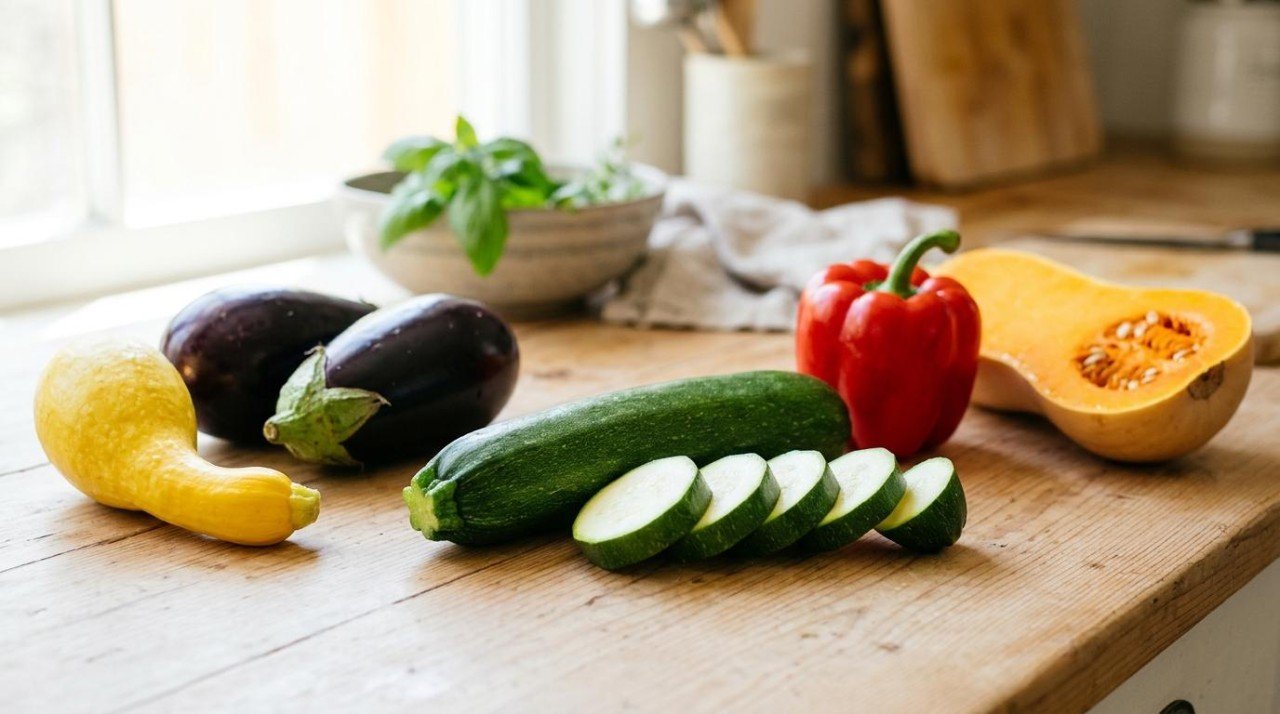
- Eggplant — soft, meaty swap for ratatouille, roasted vegetables, lasagna, and boats
- Mushrooms — savory, quick-cooking swap for sautés, pasta, frittatas, and stir-fries
- Bell peppers — sweeter, sturdier swap for stir-fries, fajitas, grilling, and stuffing
- Butternut squash — a heartier, sweeter swap for roasting, soups, and stews (needs more time)
- Cucumber — raw uses only: salads, slaws, crudités, and cold noodle bowls
- Shredded carrots — the classic zucchini bread and muffin swap (slightly drier and sweeter)
- Shredded apple — moist, sweet swap for zucchini bread, muffins, and snack cakes
- Pumpkin puree — a 1:1 bread and muffin swap that makes a denser, moister loaf
- Spaghetti squash — the best cooked substitute for zoodles
- Spiralized carrots, sweet potato, or butternut squash — sturdier, more colorful noodles
For Sautés, Roasting, Grilling, Soups, and Stir-Fries
This is where most zucchini goes, and where you have the most options. The general rule: anything soft and mild swaps in directly, while firmer vegetables need to be cut smaller or cooked longer.
Yellow Squash (or Any Summer Squash)
- Swap: 1:1 by weight or volume, cut the same way
- Best for: Everything zucchini does: sautés, grilling, roasting, soups, fritters, bread, zoodles, boats
- Skip it for: Nothing, really — just expect a slightly softer result
- Health notes: Nutritionally a near twin: 19 calories and 1 g fiber per 100 g, against zucchini's 17 calories and 1 g
Yellow crookneck and straightneck squash are the same species as zucchini, and they cook the same way in the same time. The flesh is a touch softer and the skin can be a little thicker near the neck, so slice larger squash slightly thicker and watch sautés so they do not slump. Any other summer squash works too: pattypan, round "eight ball" zucchini, light-green Mexican gray squash (often sold as calabacita), and Middle Eastern cousa, which is perfect for stuffing.
If you are swapping into zucchini bread, yellow squash is the one substitute that needs no other changes at all. Shred it, measure it the same way the recipe measures zucchini, and bake as written. The flecks will be yellow instead of green, and that is the only difference anyone will notice.
Chayote
- Swap: 1:1 by volume. One chayote is about 7 ounces (203 g), the same as one medium zucchini
- Best for: Sautés, stir-fries, soups, stews, curries, grilling, raw slaws and salsas
- Skip it for: Zucchini bread (too firm) and anything where you want zucchini's melting softness
- Health notes: 19 calories and 1.7 g fiber per 100 g, slightly more fiber than zucchini
Chayote is a pale green, pear-shaped squash common in Mexican, Central American, and Asian cooking, and it is one of the best zucchini swaps that most people have never tried. The flavor is just as mild. The difference is texture: when America's Test Kitchen swapped chayote into a sautéed summer squash recipe, it kept "a pleasant underlying crispness that the summer squash lost." If you have ever been disappointed by zucchini going watery in a stir-fry, this is your fix.
Prep it differently from zucchini: peel off the tough skin, cut it lengthwise into quarters, and cut out the hard central seed with a paring knife before slicing. The cut flesh can leave a sticky film on your hands, so some cooks wear gloves. Because it is firmer, give it 2 to 3 extra minutes in a sauté and a few extra minutes in soups. Raw, it is crisp like jicama, which makes it a great replacement for raw zucchini ribbons in salads.
Eggplant
- Swap: 1:1 by volume, cut into the same size pieces (1 medium zucchini → about 1 1/2 cups cubed eggplant)
- Best for: Ratatouille, roasted vegetables, pasta sauces, curries, grilling, lasagna, stuffed "boats"
- Skip it for: Raw uses, zoodles, and zucchini bread
- Health notes: 3 g fiber per 100 g, three times zucchini's 1 g, at 25 calories
Eggplant and zucchini already share a pan in ratatouille and caponata, and eggplant can take over zucchini's spot in either. It has a softer, creamier, meatier bite once cooked. The catch is that it acts like a sponge for oil and it must be cooked through; undercooked eggplant is spongy and unpleasant in a way undercooked zucchini never is. Roast cubes at 425°F with a light coating of oil until deeply browned and collapsed, about 25 to 30 minutes, then fold them into the dish rather than trying to sauté them from raw in a crowded pan.
For zucchini lasagna, slice eggplant lengthwise about 1/4 inch thick and roast or grill the slices before layering. For zucchini boats, halve small eggplants lengthwise, scoop out the center leaving a 1/2-inch wall, and roast the shells for 15 to 20 minutes before filling, since eggplant needs more cooking than the filling does.
Mushrooms
- Swap: 1:1 by weight (an 8-ounce package replaces about one medium zucchini)
- Best for: Sautés, pasta, frittatas and omelets, stir-fries, grain bowls, pizza
- Skip it for: Baking, zoodles, and raw salads where you want crunch
- Health notes: 3.1 g protein per 100 g against zucchini's 1.2 g, plus B vitamins
Mushrooms are mostly water too, so they behave a lot like zucchini in the pan: they release liquid, shrink, and then brown once the liquid cooks off. They bring far more savory flavor, which is a bonus in pasta and egg dishes but means they do not disappear into a dish the way zucchini does. Cook them in a hot pan without crowding, and salt them only once they have started to brown. If you are swapping the other way, we have a full guide to substitutes for mushrooms (where, fittingly, zucchini makes the list).
Bell Peppers
- Swap: 1:1 by volume, sliced or chopped the same size
- Best for: Stir-fries, fajitas, kebabs, grilling, sheet-pan dinners, stuffing
- Skip it for: Baking and anywhere you need a mild, neutral flavor
- Health notes: Red bell pepper has 128 mg vitamin C per 100 g, about seven times zucchini's 17.9 mg
Bell peppers are sweeter and firmer than zucchini, and they hold their shape better on a grill or in a stir-fry, so they are a good choice any time zucchini tends to go soft on you. They take about the same time in a hot pan (5 to 7 minutes for strips) and a little longer on a sheet pan. For stuffed zucchini recipes, halved bell peppers are a sturdy vessel: par-roast the halves for about 10 minutes before filling so they finish tender at the same time as the filling.
Butternut Squash
- Swap: 1:1 by volume, but cut into smaller pieces (1/2-inch cubes instead of 1-inch) and cook longer
- Best for: Roasting, soups, stews, curries, chili, grain bowls
- Skip it for: Quick sautés, raw uses, and anything that should cook in under 10 minutes
- Health notes: 532 mcg vitamin A (RAE) per 100 g, more than half the daily value, against zucchini's 10 mcg; also 2 g fiber
Butternut squash is a winter squash, so it is denser, starchier, and sweeter than zucchini, at 45 calories per 100 g instead of 17. It will not give you the same light, summery result, but it works well in roasted vegetable mixes, soups, and stews where you want the dish to feel a bit heartier. Plan on 25 to 35 minutes at 425°F for roasted cubes, versus 15 to 20 for zucchini, or add it to a soup or stew 15 minutes earlier than the recipe adds the zucchini.
Pre-cut butternut squash from the produce section saves most of the work. Acorn and kabocha squash swap in the same way.
Cucumber (Raw Only)
- Swap: 1:1 by volume
- Best for: Raw zucchini salads, slaws, ribbons, crudités, cold noodle bowls, chilled soups
- Skip it for: Any cooked dish. Heat turns it limp and watery within minutes
Raw zucchini and cucumber are close cousins in texture, so cucumber is a natural swap for shaved zucchini salads and raw zucchini noodles. It is even more watery (95.2% water), so dress it right before serving, and if you are making cucumber noodles, toss them with a pinch of salt in a colander for 10 minutes and pat them dry first. English or Persian cucumbers have thinner skins and fewer seeds, which makes them the best choice here.
For Zucchini Bread, Muffins, and Cakes
In baking, shredded zucchini is really a moisture source with very little flavor. Any substitute needs to supply about the same amount of water without adding so much sweetness or starch that the loaf turns gummy. Yellow squash (above) is a perfect 1:1 swap. These are the next best options.
Shredded Carrots (or Sweet Potato)
- Swap: 1:1 by volume, finely shredded. If your recipe has you squeeze the zucchini dry, do not squeeze the carrots; if it uses zucchini unsqueezed, add 1 to 2 tablespoons of milk or water per cup of carrot
- Best for: Zucchini bread, muffins, snack cakes, pancakes, fritters
- Skip it for: Recipes where you want the vegetable to disappear completely (carrot shows up orange and sweet)
- Health notes: 2.8 g fiber and 835 mcg vitamin A (RAE) per 100 g
Zucchini bread and carrot cake are cousins, so this is the most familiar swap there is. Carrots are about 88% water against zucchini's 95%, so a straight cup-for-cup swap makes a slightly drier, denser loaf. That is why the small amount of extra liquid helps when the original recipe counted on wet, unsqueezed zucchini. Carrots are also naturally sweeter, so you can cut the sugar by a tablespoon or two if you like. Shred them on the fine side of a box grater: coarse carrot shreds can stay crunchy in a quick bread.
Shredded raw sweet potato works the same way and gives a slightly denser, more autumnal loaf. Use the fine side of the grater and the same splash of extra liquid.
Shredded Apple
- Swap: 1:1 by volume, shredded with the skin on, juices included
- Best for: Zucchini bread, muffins, snack cakes, overnight oats
- Skip it for: Savory zucchini recipes like fritters, savory muffins, and quiche
Shredded apple adds moisture in a very similar way to zucchini, plus a mild fruity sweetness that suits cinnamon-spiced zucchini bread recipes perfectly. Tart apples like Granny Smith keep the loaf from tasting too sweet. Do not squeeze the shreds, but do work quickly or toss them with a teaspoon of lemon juice, because apple browns fast once grated. A half-carrot, half-apple mix is a great middle ground.
Pumpkin Puree
- Swap: 1 cup canned pumpkin puree for each 1 cup of shredded zucchini
- Best for: Zucchini bread, muffins, and snack cakes
- Skip it for: Savory dishes, fritters, and anything that relies on shreds for texture
- Health notes: Canned pumpkin has 2.9 g fiber and 778 mcg vitamin A (RAE) per 100 g
Pumpkin puree is about 90% water, close enough to zucchini that most zucchini bread recipes can take it cup for cup. The result is a smoother, denser, more tender loaf without the green flecks, and it may need an extra 5 to 10 minutes in the oven. Test the center with a toothpick rather than going by the clock. Use plain pumpkin, not pumpkin pie filling, which is already sweetened and spiced. If you only have half a can, use pumpkin for half the zucchini and shredded carrot for the rest. For more on swapping pumpkin itself, see our pumpkin puree substitutes.
Frozen Zucchini (If You Stocked Up Last Summer)
- Swap: 1:1 by volume once thawed and drained
- Best for: Zucchini bread, muffins, soups
- Skip it for: Sautés, grilling, or anything that needs the zucchini to hold its shape
Frozen shredded zucchini is the obvious substitute if you have it, but freezing breaks down its cell walls, so it thaws much wetter than fresh. The National Center for Home Food Preservation recommends steam-blanching grated zucchini for 1 to 2 minutes before freezing it in measured amounts, and says plainly: "If watery when thawed, discard the liquid before using the zucchini." Thaw it in the fridge overnight, pour off the liquid, and then measure. Skipping that step is the most common reason a winter zucchini bread comes out gummy.
For Zoodles and Zucchini Noodles
Zucchini noodles are mostly about the shape and the lightness. These options give you a noodle with very different personalities.
Spaghetti Squash
- Swap: 1:1 by volume, 1 cup cooked strands per cup of zoodles. A 3-pound squash gives roughly 4 1/2 cups
- Best for: Pasta-style dishes with marinara, pesto, meat sauce, or garlic and olive oil; casseroles
- Skip it for: Raw noodle salads (it must be cooked) and quick weeknights if you have not cooked it ahead
- Health notes: 27 calories and 1.4 g fiber per 100 g cooked, about 42 calories a cup
Spaghetti squash is the closest cooked replacement for zoodles: mild, light, and naturally stringy. It is also less watery once cooked, so it does not leave a puddle in the bottom of the bowl the way zoodles can. Montana State University Extension's recipe roasts a 3-pound squash halved, seeded, and cut-side down at 375°F for 40 minutes, until the skin gives under slight pressure, and gets six 3/4-cup servings from it. Rake the flesh out with a fork along the length of the squash for the longest strands.
Spiralized Carrots, Sweet Potato, or Butternut Squash
- Swap: 1:1 by volume of noodles
- Best for: Stir-fries, peanut noodles, sheet-pan noodles, and heartier sauces
- Skip it for: Delicate sauces where you want the noodle to fade into the background
Firmer vegetables make sturdier, more filling noodles that do not go watery. They need more cooking than zoodles: sauté sweet potato and butternut noodles for 5 to 8 minutes, or roast them at 400°F for 10 to 12 minutes, until just tender. Raw carrot noodles work in cold salads; for hot dishes, give them 2 to 3 minutes in the pan. Many grocery stores sell these pre-spiralized, which saves you buying a spiralizer for a single recipe.
Cucumber, Kohlrabi, or Daikon Noodles
For raw zucchini noodle salads, spiralized cucumber is the closest match (salt and drain it first, as above). Kohlrabi and daikon radish make crunchy, slightly peppery raw noodles that hold up for hours, which makes them better than zucchini for meal-prepped salads.
Regular or Whole Wheat Pasta
Sometimes the honest answer is just pasta. If you were using zoodles to lighten a dish, a good compromise is half pasta and half vegetable noodles, or a half-portion of whole wheat pasta with a big handful of the sautéed vegetables above. Our pasta substitutes guide covers the higher-protein and higher-fiber options.
For Stuffed Zucchini Boats, Fritters, and Lasagna
- Zucchini boats: Halved bell peppers (par-roast 10 minutes), small eggplants (scoop and roast 15 to 20 minutes first), yellow squash or round zucchini, large portobello caps, or chayote boiled whole until a knife slides in, then halved and seeded.
- Zucchini fritters: Shredded yellow squash is a direct swap. Shredded carrot, sweet potato, or russet potato all work at the same volume. Squeeze potato shreds hard in a towel, since potato starch and water make a gluey fritter.
- Zucchini lasagna: Eggplant slices, roasted or grilled first, are the best sheet-style swap. Thin slices of butternut squash (from the solid neck) also work, roasted until just tender.
Which Swap for Which Dish
- Zucchini bread or muffins: Yellow squash, then shredded carrot, apple, or pumpkin puree
- Ratatouille or caponata: Eggplant (more of it), yellow squash, or bell peppers
- Stir-fry: Chayote, bell peppers, or mushrooms
- Grilled vegetables: Yellow squash, bell peppers, eggplant planks, or chayote slices
- Minestrone or vegetable soup: Yellow squash, chayote, or green beans; butternut squash for a heartier pot
- Pasta primavera or zucchini pasta: Yellow squash, mushrooms, or asparagus
- Zoodles with pesto or marinara: Spaghetti squash, or half pasta and half spiralized carrot
- Raw zucchini salad: Cucumber or chayote, shaved thin
- Frittata or quiche: Mushrooms, bell peppers, or spinach (squeeze cooked spinach dry)
Healthier Upgrades: Swaps That Add Something
Zucchini is a perfectly good vegetable, but it is a light one: 17 calories, 1 g of fiber, and modest amounts of most nutrients per 100 g. Its strengths are potassium (261 mg per 100 g) and vitamin C. That means many substitutes actually bring more to the plate than the zucchini would have:
- More fiber: Eggplant (3 g per 100 g), shredded carrot (2.8 g), and canned pumpkin (2.9 g) each have roughly three times zucchini's fiber.
- More vitamin A: Butternut squash, carrot, and pumpkin are all excellent sources, where zucchini has very little.
- More vitamin C: Red bell pepper has about seven times the vitamin C of zucchini.
- More plant variety: Swapping in chayote, kohlrabi, or a mix of squashes is an easy way to add a new plant to your week, and a wider variety of plants is linked to a more diverse gut microbiome. Our post on eating 30 plants a week explains why that matters.
One honest note on zoodles: they are not a health upgrade over spaghetti squash, and spaghetti squash is not one over zoodles. Both are far lighter than pasta. A cup of cooked spaghetti is about 196 calories by USDA data, against about 21 for a cup of raw zucchini and 42 for spaghetti squash. That is useful if you are watching calories or carbs, but vegetable noodles alone will leave most people hungry. Pair them with a real protein, like chicken, shrimp, beans, or lentils, and a little olive oil or cheese.
Not sure which of these fits the recipe in front of you? That depends on the rest of the dish, and a guide like this one can only speak in general terms. In Eat Well Planner, you can ask the AI recipe chat right from your saved recipe ("I'm making this ratatouille and I don't have zucchini — what should I use?") and get an answer that accounts for everything else in the pan. Or open the recipe in the Recipe Playground and swap zucchini for eggplant or butternut squash to see the nutrition score change before you shop.
Take the Guesswork Out of Eating Well
Eat Well Planner helps you organize your favorite recipes, plan balanced meals, and automatically generate shopping lists — all in one place. Whether you're tracking macros, managing dietary restrictions, or just trying to stop asking "what's for dinner?", we've got you covered.
Our AI-powered tools can adapt any recipe to your dietary needs, help you discover new meals you'll love, and even log your nutrition effortlessly. It's meal planning made simple.
Start Organizing Your Meals — FreeWhat Not to Use
- Cucumber in cooked dishes. It turns limp and watery in minutes. Keep it raw.
- Raw butternut squash in a quick sauté. It needs real cooking time. Swapped into a 6-minute zucchini sauté, it comes out crunchy and starchy. Cut it small and roast or simmer it instead.
- Undrained frozen zucchini in bread. The extra liquid released on thawing makes a gummy, sunken loaf. Drain it first.
- Pumpkin pie filling instead of pumpkin puree. It is already sweetened and spiced, so your bread ends up too sweet and the spices double up.
- Okra. It looks like it should work in a sauté, but it releases a slippery texture that is welcome in gumbo and unwelcome almost everywhere zucchini is used.
- Spaghetti squash in zucchini bread. Its long strands stay stringy in a loaf. If it is all you have, chop the cooked strands finely and squeeze them dry, but carrots or pumpkin are better.
The Bottom Line
If you can find yellow squash or any other summer squash, use it and do not change anything else. For bread, carrots, apple, and pumpkin puree all work at the same volume, as long as you account for moisture. For sautés and stir-fries, chayote is the swap most people do not know about, and it holds its texture better than zucchini does. Eggplant takes over in ratatouille, lasagna, and boats, and spaghetti squash is the best cooked stand-in for zoodles. Many of these substitutes bring more fiber or vitamins than zucchini would have.
And when you are looking at a specific recipe and still are not sure, you do not have to adapt it line by line. Eat Well Planner can create a recipe variation with the swap already worked in, from the amounts down to the cooking times, so you can get dinner on the table with what you have.