The tortillas are warming, the salsa is made, and the pantry has every can except the black beans. Or the recipe is a black bean soup, a batch of black bean brownies, or a tray of veggie burgers, and the bag of dried beans you thought you had turns out to be pinto. It happens to everyone, and it is one of the easier problems in the kitchen to solve.
Black beans are not irreplaceable, but they do a few different jobs. In tacos and burritos they are a soft, earthy filling. In soups and chili they simmer down into a dark, thick base. In brownies they vanish into a fudgy batter, and in burgers they are the structure that holds the patty together. The best stand-in for one job can be the wrong pick for another.
So the substitutes below are grouped by what the black beans were doing in your recipe, with exact amounts for each. All swaps assume the standard unit: one 15-ounce can, drained and rinsed, which is about 1 1/2 cups.
The Quick List
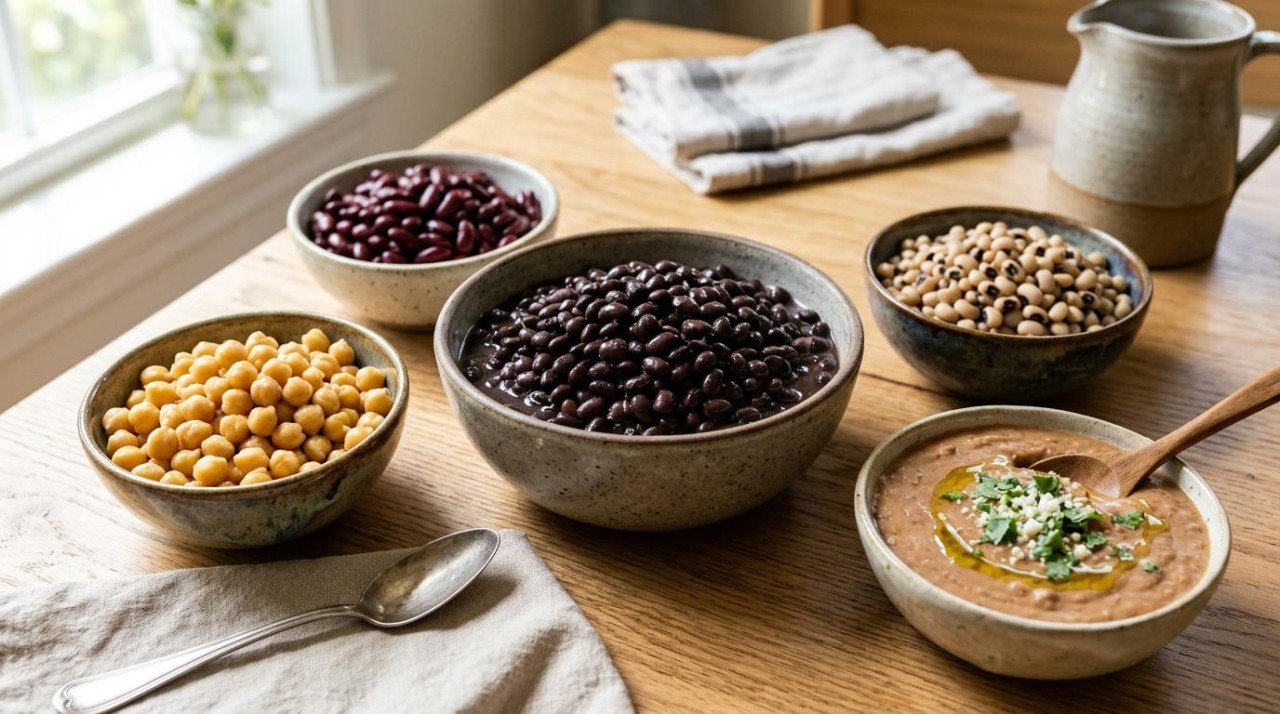
- Pinto beans — the closest all-purpose swap for tacos, burritos, bowls, chili, and burgers
- Kidney beans — sturdy and dark, the best pick for chili and soups, and a good brownie bean
- Small red or pink beans — creamy Latin-pantry beans that act a lot like black beans in rice and beans
- Refried beans — a fast swap for burritos, quesadillas, and tostadas when you want a creamy filling
- Brown or green lentils — the pick for tacos, bowls, and soups, with more iron than black beans
- Adzuki beans — small, slightly sweet, and great in soups, bowls, and brownies
- Chickpeas — for salads, bowls, and veggie burgers when you want a firmer bite
- Black soybeans — the low-carb, high-protein swap that looks almost the same
- Black-eyed peas — for salsas, salads, and stews
- White beans — for smooth bean dips and black bean brownies
Canned vs. Dried: The Conversion You Need
Before getting to substitutes, the most common black bean problem is not having the right form. Here are the numbers:
- 1 can (15 ounces), drained = about 1 1/2 cups cooked beans
- 1/2 cup dried black beans = about 1 1/4 to 1 1/2 cups cooked, so plan on a heaping 1/2 cup dried per can
- 1 pound dried beans (about 2 cups) = roughly 5 to 6 cups cooked, or 3 1/2 to 4 cans
If the recipe calls for canned and you only have dried, that is a time problem. Dried black beans need a soak (overnight, or a quick soak: boil for 2 minutes, then rest covered for an hour) and about 1 to 1 1/2 hours of simmering, or about 25 to 30 minutes in a pressure cooker with no soak at all. Our guide on how to cook dried beans from scratch covers the whole process. If dinner is in 30 minutes, a can of almost any bean below is the faster fix.
One more note for recipes that use the liquid from the can: some black bean soups and chili recipes call for the beans undrained, because that starchy liquid thickens the pot. With a substitute, drain and rinse the beans and add 1/2 cup of broth or water instead, then simmer a few extra minutes to thicken. The liquid from other beans works too, but it is often saltier and lighter in color.
Substitutes for Black Beans in Tacos, Burritos, and Bowls
In a filling, black beans bring a soft, creamy texture and a mild, earthy flavor that soaks up cumin, chili, and lime. Most beans that are soft and similar in size will slip right in.
1. Pinto Beans
- Swap: 1 can black beans → 1 can pinto beans, drained and rinsed (1:1)
- Best for: Tacos, burritos, burrito bowls, nachos, chili, quesadillas, and veggie burgers
- Skip it for: Recipes where the dark color is the point, like a black bean soup you want inky and dramatic
- Health notes: Nearly identical to black beans. A cup of cooked pinto beans has 245 calories, 15.4 g of protein, and 15.4 g of fiber, against 227 calories, 15.2 g of protein, and 15 g of fiber in a cup of black beans
If you remember just one swap, make it this one. Pinto beans are the other workhorse of Mexican and Tex-Mex cooking, and they behave almost exactly like black beans in a filling: soft, creamy, and happy to be mashed a little with the back of a spoon. They taste a touch milder and creamier, with less of the earthy, slightly mushroomy note black beans have, so a pinch more cumin or a little smoked paprika keeps the flavor where you want it.
The only real difference is color. Pintos cook up a pinkish beige, so a dish that was meant to look dark and dramatic will look more like a classic bean burrito. For flavor, texture, and nutrition, you will not miss anything.
2. Small Red Beans or Pink Beans
- Swap: 1 can black beans → 1 can small red beans or pink beans, drained and rinsed (1:1)
- Best for: Rice and beans, burrito bowls, stewed beans, and Latin American and Caribbean dishes
- Skip it for: Brownies, where their thin skins make a slightly grainy batter
Small red beans and pink beans (habichuelas rosadas) are staples in Central American, Puerto Rican, and Caribbean kitchens, often in the same dishes where black beans would be used in Cuba or Venezuela. They are about the same size as black beans, creamy inside, and they keep their shape in a simmer while thickening the sauce around them. Look for them in the Latin foods aisle. Do not confuse small red beans with red kidney beans, which are much bigger and firmer (see below).
3. Refried Beans
- Swap: 1 can black beans → about 1 cup refried beans (a 16-ounce can is roughly 1 3/4 cups, so use a little over half)
- Best for: Burritos, quesadillas, tostadas, layered dips, and nachos
- Skip it for: Bowls, salads, soups, and anywhere you want whole beans
- Health notes: Check the label. Traditional refried beans are often cooked with lard and can be high in sodium; vegetarian and fat-free versions are easy to find
Refried beans are a texture change, not a like-for-like swap, but in a burrito or quesadilla that is often an upgrade: a creamy layer that glues the filling together and keeps it from falling out of the tortilla. Warm them in a pan with a splash of water or broth to loosen them so they spread easily. Use a little less than you would whole beans, because they are denser. Refried black beans exist too, if you want to keep the color.
4. Brown or Green Lentils
- Swap: 1 can black beans → 1 1/2 cups cooked brown or green lentils (from about 2/3 cup dried, simmered 20 to 25 minutes)
- Best for: Taco filling, burrito bowls, soups, and stews
- Skip it for: Salsas and salads where you want whole, distinct beans, and brownies
- Health notes: A cup of cooked lentils has 17.9 g of protein, 15.6 g of fiber, and 6.6 mg of iron, almost twice the 3.6 mg in a cup of black beans
Lentils are the best swap when the pantry has no cans at all, because they need no soaking and are tender in about 20 minutes. Simmered with taco seasoning, a spoonful of tomato paste, and a splash of broth, they make a taco filling that is closer in texture to seasoned ground meat than to whole beans. That is a perk if you were using black beans as a meat replacement in the first place. If your taco seasoning is missing too, our guide has an easy homemade blend.
Use brown or green lentils, not red ones, for anything that should hold its shape. Red lentils fall apart into a puree, which is lovely in a soup and mushy in a taco.
5. Chickpeas
- Swap: 1 can black beans → 1 can chickpeas, drained and rinsed (1:1)
- Best for: Salads, grain bowls, roasted vegetable bowls, and veggie burgers
- Skip it for: Mashed fillings and smooth soups, where they stay firmer and grainier than black beans
- Health notes: A cup of chickpeas has 269 calories, 14.5 g of protein, and 12.5 g of fiber, with a little more fat (about 4 g) than black beans
Chickpeas are firmer and nuttier than black beans, and they never quite go soft and creamy. That makes them a poor match for a mashed burrito filling but a great one for bowls and salads, where a bean with some bite is welcome. Toss them in a hot skillet with a little oil, cumin, and chili powder for 5 minutes and they take on Tex-Mex flavor beautifully. For more on this bean, see our chickpea substitutes guide, which runs the swap in the other direction.
Substitutes for Black Beans in Soups, Chili, and Stews
In a simmer, black beans hold their shape for a while and then slowly break down, thickening the pot and turning it dark. Pinto beans and lentils from the section above both work well here. These are the other strong options.
6. Kidney Beans
- Swap: 1 can black beans → 1 can kidney beans, drained and rinsed (1:1)
- Best for: Chili, hearty soups, stews, and anything that simmers 30 minutes or more
- Skip it for: Soft taco fillings and smooth purees, unless you blend them well
- Health notes: A cup of red kidney beans has 225 calories, 15.4 g of protein, and 13.1 g of fiber, close to black beans across the board
Kidney beans are bigger, firmer, and thicker-skinned than black beans, which makes them the best choice for chili and long-simmered soups: they hold their shape for hours and do not turn to mush. Dark red kidney beans also keep a pot looking rich and deep, so they are the closest visual swap in a dark soup. The trade-off is a slightly beanier flavor and a firmer bite. In a black bean soup that gets blended, simmer them an extra 10 minutes first so they puree smoothly.
A safety note if you use dried kidney beans: they contain a natural toxin that only a real boil destroys. Kansas State University food safety specialists advise soaking them, then boiling them in fresh water for at least 30 minutes, and not cooking red kidney beans from dried in a slow cooker, which likely will not get hot enough. Canned kidney beans are already fully cooked and safe.
7. Adzuki Beans
- Swap: 1 can black beans → 1 can adzuki beans, drained and rinsed, or 1 1/2 cups cooked (1:1)
- Best for: Soups, stews, grain bowls, and brownies
- Skip it for: Heavily spiced Tex-Mex fillings where their sweetness can feel out of place
- Health notes: The most fiber per cup of anything here. A cup of cooked adzuki beans has 16.8 g of fiber, 17.3 g of protein, and 4.6 mg of iron, for 294 calories
Adzuki beans are small, dark reddish-brown beans used across Japan, China, and Korea, most famously in sweet red bean paste. They are a little smaller than black beans, with a creamy texture and a gentle, slightly sweet, nutty flavor. In a soup or stew they behave much like black beans, holding their shape and then softening into the broth. Dried adzuki beans also cook faster than most beans, often in under an hour with no long soak, which makes them a handy backup if you only have dried legumes. Look for them in health food stores, Asian markets, and the bulk bins.
8. Black Soybeans
- Swap: 1 can black beans → 1 can black soybeans, drained and rinsed (1:1)
- Best for: Chili, soups, bowls, and salads, especially if you are cutting carbs
- Skip it for: Refried beans, dips, and brownies — they stay firm and will not mash smooth
- Health notes: A cup of cooked mature soybeans has 28.6 g of protein and 17.1 g of carbohydrate (10.3 g of it fiber), against 15.2 g of protein and 40.8 g of carbohydrate in a cup of black beans. They also have much more fat, about 15 g per cup, mostly unsaturated
Black soybeans look almost the same as black beans in a pot, which makes them the go-to swap on low-carb and keto plans, where regular beans are often off the table. They are firmer and nuttier than black beans and stay al dente no matter how long they simmer, so they are best in chili, soups, and salads where whole beans are the goal. The numbers above are for regular mature soybeans; black soybeans are very similar, but brands vary, so check the label if you are counting carbs closely.
Substitutes for Black Beans in Salads and Salsas
Black bean and corn salsa, black bean salads, and Southwest-style chopped salads need a bean that holds its shape, does not stain everything around it, and tastes good cold. Chickpeas and kidney beans from above both work. One more is worth knowing.
9. Black-Eyed Peas
- Swap: 1 can black beans → 1 can black-eyed peas, drained and rinsed (1:1)
- Best for: Salsas, cold bean salads, and stews
- Skip it for: Brownies and smooth dips
Black-eyed peas are close to black beans in size, with a creamy center and a mild, earthy flavor, and they are the base of "Texas caviar," a black-eyed pea salsa with peppers, onion, and a tangy dressing. That makes them a natural swap in a black bean and corn salsa: use the same dressing, the same lime and cilantro, and you will have a bright, slightly lighter-looking dip. They are softer than chickpeas, so fold them in gently.
A practical tip for any bean in a salad or salsa: rinse well and let them drain for a few minutes, or pat them dry. Wet beans water down the dressing, and that is a much bigger problem than which bean you used.
Substitutes for Black Beans in Brownies and Baking
Black bean brownies use a whole can of beans, blended smooth, in place of most or all of the flour. The beans add moisture, structure, and fiber, and the cocoa hides them completely. Our healthier brownies makeover found the flourless black bean version actually beat the classic on nutrition, with nearly 3 g of fiber and 4 g of protein per brownie. Here, the key is a bean that blends silky smooth.
10. White Beans (Cannellini, Great Northern, or Navy)
- Swap: 1 can black beans → 1 can cannellini, great northern, or navy beans, drained, rinsed, and blended very smooth (1:1)
- Best for: Bean brownies and blondies, bean dips, and creamy soups
- Skip it for: Dark soups and salsas, where the color is all wrong
White beans have thin, tender skins, so they blend into a smoother, silkier batter than almost any other bean. In brownies the color does not matter, because a few tablespoons of cocoa turn the batter dark no matter what, and their mild flavor disappears even more completely than black beans do. Blend them with the wet ingredients for a full minute until there is no trace of skin, and add a splash of milk if the blender struggles. If you are short on cocoa powder too, our guide covers what works in brownies.
The other good brownie beans:
- Kidney beans work well and keep the batter dark. Their skins are thicker, so blend for an extra 30 to 60 seconds.
- Adzuki beans are a natural fit. They have been used in sweets for centuries, and their slight sweetness suits chocolate.
- Chickpeas work in a pinch but make a slightly denser, nuttier brownie. They are better known in chickpea blondies, where the nutty flavor is welcome.
Skip pinto beans in delicate desserts if you can. They blend fine, but their flavor is a little more noticeable than white or black beans. And never use refried beans, which carry salt and sometimes lard.
Substitutes for Black Beans in Veggie Burgers
In a burger, black beans are the structure. They mash into a sticky paste that binds with bread crumbs or oats and holds together on the grill. The best swaps are pinto beans, chickpeas, and lentils, all covered above, but each needs a small adjustment:
- Pinto beans (1:1): The easiest swap. They mash just like black beans and hold together the same way. Follow your recipe as written.
- Chickpeas (1:1): Firmer and drier. Pulse them in a food processor instead of mashing by hand, and add a tablespoon or two of water or an extra egg if the mixture crumbles. They make a falafel-like patty that browns well.
- Brown or green lentils (1 1/2 cups cooked per can): Softer and wetter. Drain them very well, mash half and leave half whole, and add an extra 2 to 3 tablespoons of bread crumbs or oats so the patties hold.
- Kidney beans (1:1): Workable, but wetter and with tougher skins. Pulse them in a food processor and dry them first (see below).
The trick that saves any bean burger: drain and rinse the beans, pat them dry, spread them on a baking sheet, and bake at 375F for about 15 minutes until the skins start to split. Drier beans need less binder and make a firmer, crispier patty that does not turn mushy in the middle. Let the patties chill for 20 to 30 minutes before cooking, too; cold patties hold together much better.
Healthier Upgrades
Black beans are already one of the most nourishing foods in the pantry: about 15 g of fiber and 15 g of protein per cup, plus 64 percent of the Daily Value for folate and 29 percent for magnesium, with almost no fat. There is no reason to swap them out for health. But a few substitutes do bring something extra:
- Lentils for more iron. Almost twice the iron of black beans per cup, and they cook in 20 minutes with no soaking. Pair them with a squeeze of lime or some tomato to help your body absorb that plant iron.
- Black soybeans for more protein and fewer carbs. Nearly twice the protein and less than half the carbohydrate, though with more fat and calories.
- Adzuki beans for the most fiber. About 17 g per cup, a little more than black beans.
- A mix of beans for plant diversity. Use half black beans and half pinto or kidney in your next chili and you have two different plants instead of one, which adds up if you are aiming for 30 different plants a week for your gut.
Whichever bean you choose, rinsing canned beans washes off a good part of the sodium in the canning liquid, and no-salt-added cans get rid of most of it. If beans tend to leave you uncomfortable, our post on why beans give you gas has practical fixes that apply to every bean on this list.
Curious what a swap does to your own recipe? In Eat Well Planner, the Recipe Playground lets you change black beans to lentils, pinto, or black soybeans and watch the nutrition score, fiber, and protein update live before you cook. Every new bean you add also counts toward your Plant Points.
Take the Guesswork Out of Eating Well
Eat Well Planner helps you organize your favorite recipes, plan balanced meals, and automatically generate shopping lists — all in one place. Whether you're tracking macros, managing dietary restrictions, or just trying to stop asking "what's for dinner?", we've got you covered.
Our AI-powered tools can adapt any recipe to your dietary needs, help you discover new meals you'll love, and even log your nutrition effortlessly. It's meal planning made simple.
Start Organizing Your Meals — FreeWhat Not to Use
- Baked beans or beans in sauce. They are sweet and seasoned, and the sauce will take over a taco, soup, or salad. Use plain canned beans only.
- Raw dried kidney beans in a slow cooker. As noted above, they need a hard boil first. Use canned, or boil dried ones for at least 30 minutes before they go into the slow cooker.
- Red lentils in salads, salsas, or burgers. They break down into mush. Save them for soups and stews, where that creamy texture is welcome.
- Refried beans in brownies or bowls. They are salted, sometimes cooked with lard, and have the wrong texture for both.
Which Substitute Fits Your Recipe?
For most recipes, a can of pinto beans is the answer, and nobody at the table will know. Reach for kidney beans in chili and dark soups, lentils when you have no cans at all, white beans for brownies, and black soybeans if you are cutting carbs.
Still not sure which one suits the dish in front of you? Eat Well Planner's AI Recipe Chat knows the full recipe you are cooking, so you can ask "I am out of black beans, what can I use in this?" and get an answer for that dish, not a general list. And if you want a new take on a classic, our healthier burrito bowl and healthier beef chili makeovers both put beans to work.