The parsley is chopped, the lemons are juiced, and the tabbouleh recipe wants half a cup of fine bulgur you do not have. Or the pilaf is underway and the bag turns out to hold two tablespoons.
Bulgur does two very different jobs. Fine bulgur is a no-cook grain: it softens in a short soak and goes straight into tabbouleh, kisir, and kibbeh. Coarse bulgur is a cooked grain: it simmers like rice into pilafs, stuffed vegetables, and soups. A substitute that is perfect for one is often wrong for the other, so this guide is split the same way.
One honest note before the list: bulgur is hard to beat nutritionally. At about 8 grams of fiber per cooked cup for roughly 150 calories, most substitutes give some of that back. Where a swap costs fiber, we say so - and the end of the guide covers how to win it back.
The Quick List
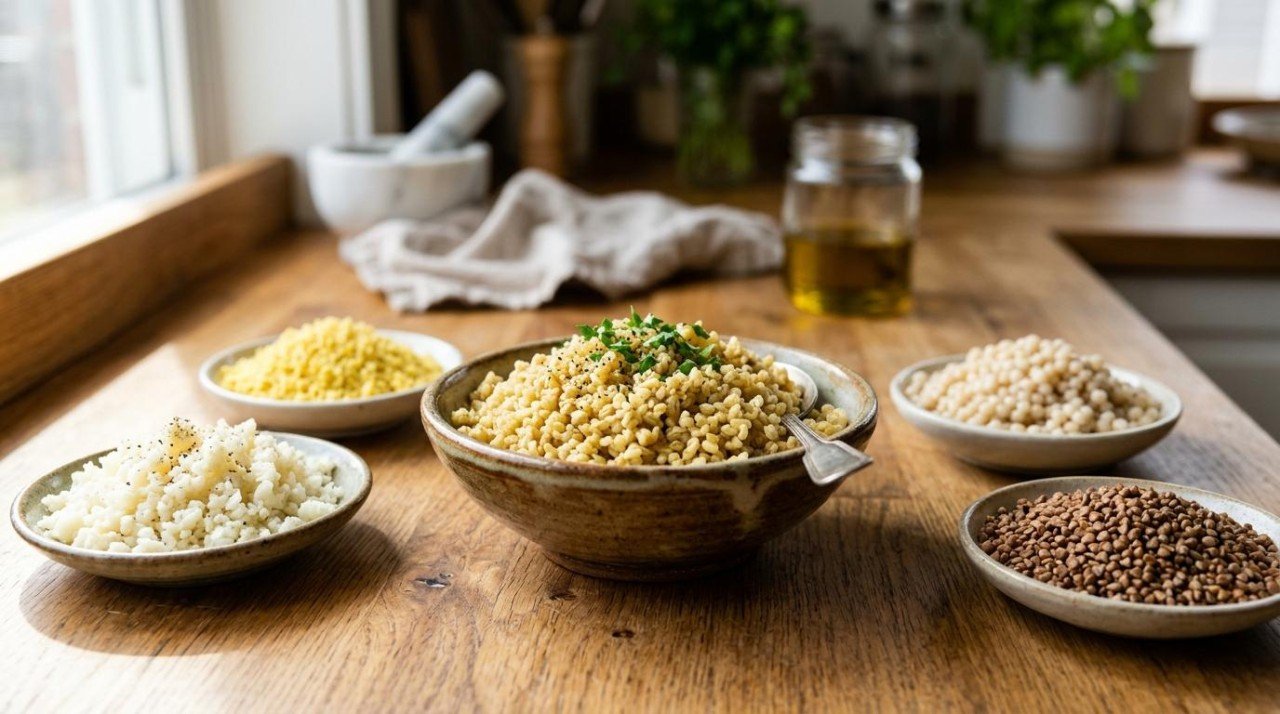
- Quinoa - the best gluten-free swap for tabbouleh and pilaf, and it even works in kibbeh
- Couscous - the fastest swap, ready in 10 minutes with no simmering
- Cracked freekeh - the closest flavor and nutrition match, with a smoky edge
- Riced cauliflower - the low-carb tabbouleh, no cooking at all
- Millet - a fluffy gluten-free pilaf grain
- Buckwheat groats - gluten-free and earthy, good in salads with bold herbs
- Pearl couscous - a chewy pilaf that stays separate
- Farro - a chewier, heartier pilaf and grain salad
- Brown rice - the everyday pilaf and stuffed-vegetable swap
- Pearled barley - the soup and stew swap
How to Swap Without Ruining Dinner
For cooked dishes, most grains here swap 1:1 by dry volume: 1 cup of dry bulgur becomes 1 cup of the dry substitute, with the liquid and timer adjusted as listed under each one. For tabbouleh and other no-cook salads, it is easier to match the prepared amount: 1 cup of dry bulgur yields about 2½ to 3 cups once soaked or cooked, so measure your substitute after it is cooked and cooled.
Also check which grind your recipe means. Bulgur is sold in four grinds, from #1 (fine, about the size of raw sugar) to #4 (very coarse, about the size of steel-cut oats). Fine and medium are usually soaked and tossed into salads or bound into kibbeh; coarse is boiled for pilaf. If a recipe just says "bulgur," the method tells you: soaking means fine, simmering means coarse.
If It Has to Be Gluten-Free
Bulgur is wheat, so it is not safe for celiac disease, and neither are several of its most obvious stand-ins.
- Naturally gluten-free: quinoa, millet, buckwheat (not related to wheat despite the name), brown rice, riced cauliflower
- Contains gluten: couscous, pearl couscous, freekeh, farro, barley, cracked wheat
For Tabbouleh and Other No-Cook Salads
In tabbouleh, bulgur is a supporting player - the classic Lebanese version is mostly parsley, with just enough grain to catch the lemon and olive oil. That means the substitute matters less than you might think, as long as it stays small, separate, and cool.
Quinoa
- Swap: Replace each 1 cup of prepared bulgur with 1 cup cooked, fully cooled quinoa. To cook it, rinse 1 cup dry quinoa and simmer in 2 cups water for 12 to 15 minutes; it yields about 3 cups.
- Best for: Gluten-free tabbouleh, kisir, grain salads, pilafs
- Skip it for: Nothing major - this is the most versatile swap on the list
- Health notes: About 8.1 grams of protein and 5.2 grams of fiber per cooked cup, versus bulgur's 5.6 grams of protein and 8.2 grams of fiber - more protein, less fiber, and about 70 more calories (USDA FoodData Central)
Quinoa's grains are close to medium bulgur in size and hold a dressing without going soft, which is why it has become the default gluten-free tabbouleh. The one rule is to let it cool completely - spread it on a sheet pan if you are in a hurry - because warm quinoa wilts the parsley and turns the salad soggy. Our quinoa substitutes guide works the other way around, if you ever have bulgur and no quinoa.
Couscous
- Swap: 1 cup dry bulgur to 1 cup dry couscous. Pour 1 cup boiling water or broth over it, cover, and let it sit 5 to 10 minutes before fluffing. For tabbouleh, cool it before mixing.
- Best for: Fast tabbouleh, salads served the same day, a quick side
- Skip it for: Gluten-free cooking, and salads that need to sit overnight - fine couscous gets pasty
- Health notes: About 2.2 grams of fiber per cooked cup, roughly a quarter of bulgur's. Whole wheat couscous closes much of the gap.
Couscous behaves the most like fine bulgur: no simmering, just hot liquid and a lid. The difference is that it is tiny semolina pasta, not a whole grain, so it is softer and milder and absorbs dressing faster. Dress it right before serving and it is hard to tell the difference in a parsley-heavy salad.
Riced Cauliflower
- Swap: Replace each 1 cup of prepared bulgur with 1 to 1½ cups raw riced cauliflower. Pulse florets in a food processor until they are the size of bulgur grains, or use a bag of fresh riced cauliflower. No cooking needed.
- Best for: Low-carb tabbouleh, salads eaten within a day
- Skip it for: Kibbeh (it will not bind), pilaf, and make-ahead salads - salt draws water out of it overnight
- Health notes: About 27 calories and 5 grams of carbohydrate per raw cup, versus about 150 calories and 34 grams for cooked bulgur - but you lose more than half the protein and about three-quarters of the fiber (USDA FoodData Central)
Raw cauliflower is surprisingly good here because tabbouleh never cooked its grain anyway - you are trading one crunchy little base for another. Salt it lightly, dress it just before serving, and add an extra squeeze of lemon, since cauliflower does not soak up dressing the way grain does.
Buckwheat Groats
- Swap: 1 cup dry bulgur to 1 cup buckwheat groats simmered in 2 cups water for about 20 minutes, then drained and cooled. Pre-toasted kasha cooks faster - start checking at 10 minutes.
- Best for: Gluten-free grain salads with assertive flavors - mint, scallions, pomegranate, toasted nuts
- Skip it for: A classic-tasting tabbouleh; buckwheat has a strong earthy flavor that does not hide
- Health notes: About 5.7 grams of protein and 4.5 grams of fiber per cooked cup, and gluten-free (USDA FoodData Central)
Buckwheat goes from perfect to porridge quickly, so pull it the moment the groats are tender and rinse them under cold water to stop the cooking. It makes a genuinely good salad, just a different one: think of it as a new dish rather than a stand-in.
For Kibbeh
Kibbeh is the hardest dish to swap for, because fine bulgur is not just filler - it soaks up moisture and binds with the meat into a shell that holds its shape. Fine couscous and cauliflower will not do this.
Quinoa (Again)
- Swap: About 3 cups cooked, cooled quinoa (1 cup dry) for roughly 1 pound of meat in the shell mixture, blended together in a food processor with a few ice cubes to keep the meat cold
- Best for: Baked tray kibbeh
- Skip it for: Raw kibbeh nayyeh - stick with bulgur, or make something else
The Matbakh's quinoa kibbeh is the most convincing version we have seen. The author is candid that the mixture is "a little stickier than bulgar wheat kibbeh" and that bulgur still wins on taste and texture, but the baked result holds together and tastes right. Wet your hands with cold water when shaping the layers, and drain the cooked quinoa well so the shell does not go soft.
For Pilafs, Stuffed Vegetables, and Soups
Coarse bulgur pilaf is cooked like rice, so almost any whole grain can step in. The choice comes down to how much time you have and how chewy you want it.
Cracked Freekeh
- Swap: 1 cup dry bulgur to 1 cup cracked freekeh simmered in 2½ cups water for about 20 minutes, then rested covered off the heat for 10 minutes. For a pilaf cooked in broth, use 2 cups broth and simmer about 15 minutes. Whole freekeh needs about 35 minutes.
- Best for: Pilafs, grain salads, stuffed peppers and squash, soups
- Skip it for: Gluten-free cooking, and no-cook tabbouleh - it needs a real simmer
- Health notes: About 5 grams of protein and 4.5 grams of fiber per ¼ cup dry, roughly on par with bulgur gram for gram (Healthline)
Freekeh is bulgur's closest relative: durum wheat harvested while still young and green, then roasted and usually cracked. The roasting gives it a smoky, nutty flavor that bulgur does not have - wonderful in a pilaf with chickpeas and caramelized onions, a little loud in a delicate salad. If you want the swap that keeps bulgur's nutrition intact, this is it.
Millet
- Swap: 1 cup dry bulgur to 1 cup hulled millet simmered in 2½ cups water for 25 to 35 minutes, then fluffed with a fork
- Best for: Gluten-free pilafs and sides
- Skip it for: Kibbeh, and salads dressed far ahead - millet keeps absorbing liquid and softens
- Health notes: About 6.1 grams of protein but only 2.3 grams of fiber per cooked cup (USDA FoodData Central)
Toast the dry millet in the pot for a few minutes until it smells nutty before adding the liquid, then leave it alone - stirring breaks the grains and releases the starch that makes millet gluey. Done this way it is light and separate, the closest gluten-free match to a fluffy bulgur pilaf.
Pearl Couscous
- Swap: 1 cup dry bulgur to 1 cup pearl (Israeli) couscous, boiled in salted water like pasta for 8 to 10 minutes and drained
- Best for: Pilafs, warm grain salads, make-ahead salads
- Skip it for: Gluten-free cooking, and tabbouleh - the pearls are too big to read as bulgur
Pearl couscous is the easy crowd-pleaser: chewy, separate, and good at holding a dressing for days. Toast it in a little olive oil before boiling for a nuttier flavor closer to bulgur's. Like regular couscous, it is refined pasta rather than a whole grain, so expect less fiber.
Farro
- Swap: 1 cup dry bulgur to 1 cup farro simmered in 2½ cups water for 25 to 40 minutes - pearled farro at the fast end, whole farro at the slow end
- Best for: Hearty pilafs, robust salads that need to keep, soups
- Skip it for: Gluten-free cooking, tabbouleh, and kibbeh - the grains are too big and chewy
Farro turns a bulgur side into something closer to a main course. The grains are large and firmly chewy and almost impossible to overcook into mush. It is one of the most underused whole grains in the average pantry, and a good one to keep around.
Brown Rice
- Swap: 1 cup dry bulgur to 1 cup long-grain brown rice cooked in 2½ cups liquid for 25 to 45 minutes, then rested off the heat for 10 minutes
- Best for: Pilafs, stuffed peppers and grape leaves, anything served under a sauce
- Skip it for: A fast dinner, tabbouleh, and kibbeh
- Health notes: About 3.2 grams of fiber per cooked cup, well under bulgur's 8.2, but still well ahead of white rice (USDA FoodData Central)
Brown rice is the swap almost everyone already has, and in stuffed vegetables nobody will notice. Cook it fully before stuffing unless the recipe bakes for well over an hour - raw rice will not soften in a 30-minute bake the way bulgur does.
Pearled Barley
- Swap: 1 cup dry bulgur to 1 cup pearled barley simmered in 3 cups liquid for 25 to 30 minutes, draining any excess.
- Best for: Soups and stews, mushroom pilafs
- Skip it for: Gluten-free cooking, tabbouleh, and kibbeh
- Health notes: About 6 grams of fiber per cooked cup, the closest of the common pantry grains to bulgur, though protein is lower at about 3.5 grams (USDA FoodData Central)
Barley releases starch as it cooks, which gives soups a silky body that bulgur adds too. That same starch makes it clump when cold, so rinse it under cool water if it is going into a salad.
Keeping the Fiber When You Swap
Bulgur is one of the most fiber-dense grains you can buy: about 8.2 grams per cooked cup, more than quinoa, brown rice, millet, or couscous. That is worth knowing, because most swaps on this list quietly cost you some of it. Freekeh and pearled barley come closest; couscous and millet give back the most.
The easy fix is to add a legume. A cup of rinsed canned chickpeas folded into a quinoa tabbouleh, or a cup of cooked brown or green lentils stirred into a millet pilaf, more than makes up the difference and adds protein too. It also turns a side dish into something closer to a meal - bulgur and lentils together are the base of mujaddara for a reason.
Swapping grains around is also an easy way to eat a wider range of plants. If you usually reach for the same two or three grains, cooking with freekeh, millet, or buckwheat counts as a new plant in your week, which matters if you are working toward 30 different plants a week for gut health.
Take the Guesswork Out of Eating Well
Eat Well Planner helps you organize your favorite recipes, plan balanced meals, and automatically generate shopping lists — all in one place. Whether you're tracking macros, managing dietary restrictions, or just trying to stop asking "what's for dinner?", we've got you covered.
Our AI-powered tools can adapt any recipe to your dietary needs, help you discover new meals you'll love, and even log your nutrition effortlessly. It's meal planning made simple.
Start Organizing Your Meals — FreeWhat Not to Use
- Cracked wheat in place of fine bulgur - they look nearly identical and are often shelved together, but bulgur is parboiled and cracked wheat is raw. Cracked wheat takes much longer to cook, and soaking it like bulgur for tabbouleh leaves it unpleasantly crunchy. It works in a pilaf if you simmer it until tender.
- Instant rice - it collapses under dressing and has almost none of bulgur's fiber.
- Steel-cut or rolled oats - oats turn gummy in a salad and will not hold their shape in a pilaf. Keep them for breakfast.
- Fine couscous in a make-ahead salad - great on day one, pasty by day two. Use quinoa, freekeh, or pearl couscous if it has to keep.
- Cauliflower or couscous in kibbeh - neither binds with the meat, and the shell falls apart. Cooked quinoa is the only swap here that reliably holds.
The Real Answer Depends on Your Recipe
A guide can only tell you how each grain behaves in general. Whether quinoa or freekeh is right for the dish in front of you depends on whether it is soaked or simmered, how long it has to sit, and who is eating it.
That is where Eat Well Planner's recipe chat helps: import the recipe, tell it you are out of bulgur, and it answers with your actual ingredient list in front of it - including how the liquid and timing should change. If you need the whole recipe gluten-free, Recipe Variations rewrites it with the swaps already worked in, and the Recipe Playground shows what a swap does to the dish's fiber and nutrition score before you commit.