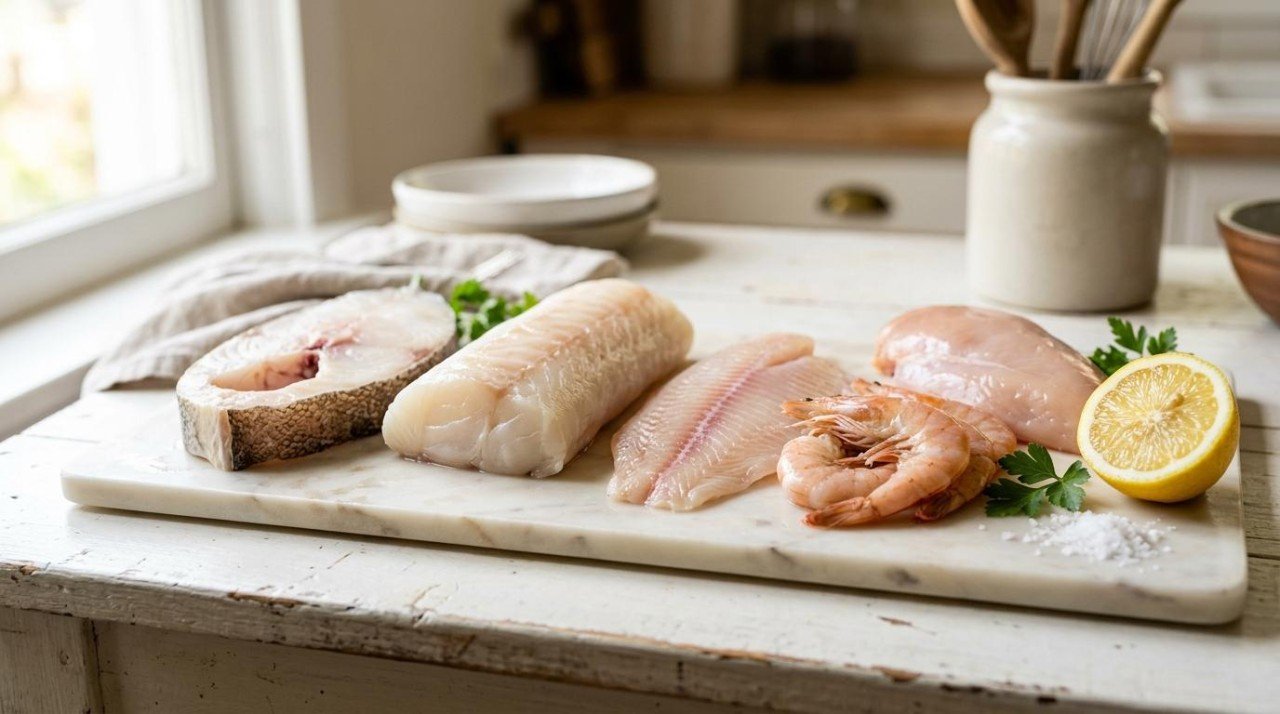
The recipe says cod. The fish counter had haddock, pollock, and a stack of frozen tilapia. Or you already bought the tilapia, and now the recipe is telling you to bake it for 18 minutes, which is going to turn it into chalk.
Here is the good news: white fish are the most interchangeable ingredient in the kitchen. They are all mild, all lean, all slightly sweet. Flavor is almost never what breaks the swap.
Two other things do. The first is firmness — whether the fish holds together in a stew, on a grill grate, or in a taco, or collapses into shreds. The second is thickness, which is the one people forget: a half-inch tilapia fillet cooks in a third of the time of a thick cod loin, and nothing about the swap will tell you that. Every entry below gives you both.
The Quick List
- Haddock — the closest 1:1 swap for cod, in anything
- Pollock — the cheap, dependable pick for battered and breaded fish
- Hake or whiting — soft and sweet, ideal for chowders and pan-frying
- Tilapia — thin, mild, and everywhere; cut the cook time
- Flounder or sole — for delicate sauteed and stuffed fillets only
- Basa or swai — the budget freezer staple; season it hard
- Halibut — the upgrade: firm, steak-like, grill-safe, expensive
- Grouper, snapper, or rockfish — firm enough to blacken, grill, and stuff into tacos
- Catfish — richer and firmer; built for cornmeal and a hot skillet
- Monkfish — dense and lobster-like; the one that survives a stew
- Mahi-mahi — meaty steaks for the grill, with more flavor of its own
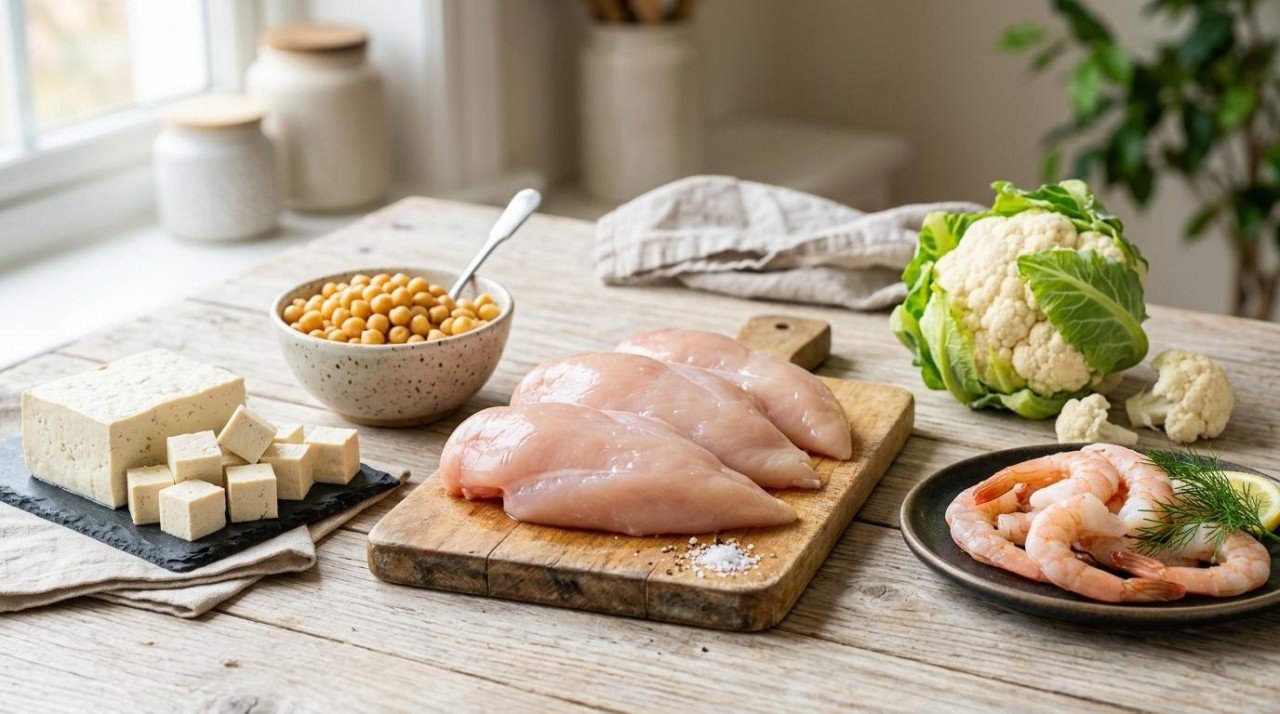
- Chicken breast or thighs — the no-seafood answer for curries, tacos, and sheet pans
- Shrimp or scallops — fast-cooking swaps for stews, curries, and pasta
- Extra-firm tofu, hearts of palm, or banana blossom — the plant-based options, by application
First: Firm or Flaky, and How Thick?
Firm fish — halibut, monkfish, grouper, snapper, mahi-mahi, catfish — hold their shape. They can go on a grill, into a stew, onto a skewer, or into a stir-fry. Flaky fish — cod, haddock, pollock, hake, tilapia, flounder, sole, basa — break into pieces when you push them around. That is perfect for tacos, chowders, and breaded fillets, and a disaster on a grill grate.
Then thickness. The old kitchen standard is the ten-minute rule, and it still works: bake at 450F for 10 minutes per inch of thickness, measured at the thickest point, turning halfway through. Add 5 minutes if the fish is wrapped in foil or sitting in sauce, and double the time to 20 minutes per inch if you are cooking it straight from frozen. Pieces under half an inch do not need turning at all.
Either way, the target is the same: an internal temperature of 145F, when the flesh turns opaque and just begins to flake with a fork. So when a recipe written for a 1.25-inch cod loin hands you a half-inch tilapia fillet, you are looking at roughly 5 minutes instead of 13 — not a small adjustment.
Flaky and Mild: The Cod-Class Swaps
Haddock
- Swap: 1 lb cod → 1 lb haddock, 1:1, same cook time if the fillets are the same thickness
- Best for: Everything cod does — fish and chips, baking, chowder, tacos, fish pie
- Skip it for: Grilling directly on grates, and long simmers
- Health notes: The leanest option here at about 77 calories and 17 grams of protein per 3 ounces cooked, versus 89 calories and 19 grams for cod
If you only remember one swap from this page, make it this one. Haddock is a cod relative with the same clean, mildly sweet flavor and a slightly finer, more tender flake. It is what most British chip shops actually use. Fillets tend to run a little thinner than cod loins, so check with a thermometer a few minutes early.
Pollock
- Swap: 1 lb → 1 lb. Fillets are usually thinner than cod, so take 2 to 3 minutes off the baking time
- Best for: Battered fish, breaded fillets, fish sandwiches, casseroles, fish cakes
- Skip it for: Anything where big intact chunks matter — it flakes finer than cod
- Health notes: Very lean, and on the EPA and FDA list of fish that are even lower in mercury
Pollock is the fish in most fish sticks and fast-food fish sandwiches, which tells you exactly what it is good at: it takes batter and breadcrumbs beautifully and costs a fraction of cod. It is a touch softer and a touch more watery, so pat the fillets very dry before they hit oil or a hot pan.
Hake or Whiting
- Swap: 1 lb → 1 lb. Add it later than you would cod, and handle it once
- Best for: Chowders and brothy stews, pan-frying, Spanish and Portuguese fish dishes
- Skip it for: Grilling, skewers, stir-fries, anything stirred
- Health notes: Lean and mild; whiting is also on the EPA and FDA lower-mercury list
Hake is soft, sweet, and a little more fragile than cod — it wants a gentle hand and a short cook. Lay pieces into a soup rather than stirring them in, and lift them with a thin spatula. Whiting is the smaller, cheaper cousin, excellent fried whole or in fillets.
Thin and Lean: The Tilapia-Class Swaps
Tilapia
- Swap: 1 lb → 1 lb, but fillets run about half an inch thick against a 1 to 1.25-inch cod loin. Roughly halve the cook time and check early
- Best for: Fish tacos, blackened fillets, breaded and pan-fried, weeknight sheet pans
- Skip it for: Stews, grilling, and any recipe built around thick, meaty chunks
- Health notes: Roughly 105 calories and 21 grams of protein per 3 ounces cooked, with 86% of the Daily Value for selenium
Tilapia is the most-searched substitute for cod and the one most likely to go wrong, entirely because of thickness. It is genuinely mild — blander than cod — so it wants more seasoning, more acid, and more char than the original recipe probably calls for. Blackening spice and a squeeze of lime do most of the work.
Flounder or Sole
- Swap: 1 lb → 1 lb. Fillets are a quarter to half an inch thick and cook in 3 to 5 minutes total; under half an inch, do not turn them at all
- Best for: Sauteed fillets, sole meuniere, stuffed and rolled fillets, quick broiling
- Skip it for: Fish and chips, stews, curries, grilling, tacos — it disintegrates
- Health notes: Extremely lean; both are on the EPA and FDA lower-mercury list
These are the most delicate fish on the list and the narrowest swap. In a butter-and-lemon skillet dish they are better than cod. Anywhere the fish has to survive being moved, stirred, or battered, they are the wrong tool. Flour them lightly, use a wide pan, and get them out fast.
Basa or Swai
- Swap: 1 lb → 1 lb, cooking like tilapia — thin fillets, short time
- Best for: Breaded and fried fillets, curries with bold sauces, budget weeknight bakes
- Skip it for: Grilling, stews, and any dish where the fish is the star
- Health notes: Lean, but noticeably lower in protein per serving than cod or tilapia
Basa and swai are farmed Southeast Asian catfish sold cheaply in freezer aisles. The texture is moist and a little softer and coarser than tilapia, and the flavor is close to nonexistent. That neutrality is fine under a curry or a crust, and thin under a delicate sauce. Buy from a brand you trust, and drain thawed fillets well — they hold a lot of water.
Firm and Meaty: When the Fish Has to Hold Together
Halibut
- Swap: 1 lb → 1 lb. Steaks and fillets run 1 to 1.5 inches, so use the full 10 minutes per inch and pull it the moment it hits 145F
- Best for: Grilling, roasting, pan-searing, sheet-pan dinners, anything plated as a centerpiece
- Skip it for: Recipes where the fish gets buried in batter — it is too expensive for that
- Health notes: About 94 calories, 19 grams of protein, and 0.22 grams of EPA and DHA per 3 ounces — the most omega-3 of the white fish here. It is not on the EPA and FDA lower-mercury list, so it is one to rotate rather than eat every week
Halibut is the luxury end of white fish: firm, large-flaked, and dense enough to sit on a grill without a basket. It is also the least forgiving. Lean and thick is a bad combination for overcooking, and 30 seconds too long is the difference between silky and cottony. Use a thermometer, not a timer.
Grouper, Snapper, or Rockfish
- Swap: 1 lb → 1 lb. Similar thickness to cod, so cook times usually carry over unchanged
- Best for: Blackening, grilling, fish sandwiches, tacos, roasting whole (snapper)
- Skip it for: Delicate cream sauces, where their fuller flavor competes
- Health notes: Lean and high in protein. Like halibut, grouper carries more mercury than the lighter white fish, so treat it as an occasional pick
These three share firm, dense flakes and a mildly sweet flavor with a little more character than cod. Rockfish (often sold as Pacific snapper) is the affordable one and the best taco fish on this list — firm enough to flip, flaky enough to fall apart on the tortilla.
Catfish
- Swap: 1 lb → 1 lb. Fillets are firm and moderately thick; keep the original time and check at 145F
- Best for: Cornmeal-crusted frying, blackening, grilling, gumbo, po-boys
- Skip it for: Delicate poached or cream-sauce dishes — its flavor is more assertive
- Health notes: About 123 calories, 16 grams of protein, and 6 grams of fat per 3 ounces — the richest fish here, and still on the EPA and FDA lower-mercury list
Catfish is firmer and moister than cod, with a slightly sweet, distinctly fuller flavor. That extra fat is exactly why it fries and blackens so well: it stays juicy where lean cod goes dry. It is the natural swap in anything Southern, Cajun, or fried, and the wrong swap in a French-leaning fillet dish.
Monkfish
- Swap: 1 lb → 1 lb, cut into 1-inch medallions or cubes. Dense flesh needs longer than cod — figure 8 to 12 minutes, still to 145F
- Best for: Stews and bouillabaisse, curries, roasting, skewers, anything with a long simmer
- Skip it for: Thin breaded fillets and quick sautes
- Health notes: Lean and high in protein, with a firmness no other white fish matches
Monkfish is the one fish here that behaves more like shellfish than fish — dense, springy, sweet, and famous as poor man's lobster. It will not flake apart in a stew no matter how long it sits there, which makes it the answer whenever a recipe keeps turning your cod into soup. If your fillet still has the gray membrane on it, peel it off first — it shrinks and toughens in the pan.
Mahi-Mahi
- Swap: 1 lb → 1 lb. Steaks are thick, so use 10 minutes per inch and do not push past 145F
- Best for: Grilling, blackened tacos, marinated fillets, tropical and citrus preparations
- Skip it for: Subtle poached or cream dishes; its flavor leads rather than follows
- Health notes: Very lean and high in protein, with a slightly stronger flavor profile than cod
Not technically a white fish — the raw flesh is pinkish and cooks up off-white — but it slots into firm white fish recipes so cleanly that it belongs here. It is meaty, holds together on a grill, and stands up to marinades. Because it is so lean, it dries out fast, so pull it early and let it rest.
When You Are Not Using Fish at All
Chicken Breast or Thighs
- Swap: 1 lb fish → 1 lb boneless chicken in 3/4-inch pieces or thin cutlets. Cook to 165F, 5 to 8 minutes, and add it much earlier in the recipe than the fish would have gone in
- Best for: Curries, tacos, sheet-pan dinners, breaded cutlets, chowders
- Skip it for: Fish and chips and anything where the point is the flake
The most common real-world reason for this swap is one household member who does not eat fish. Chicken slots in almost everywhere, with one adjustment: timing. Fish goes in at the end; chicken goes in near the beginning. Push back the missing sea flavor with lemon, capers, dill, or a little Old Bay. For cut-specific detail, see the guides to chicken breast substitutes and chicken thigh substitutes.
Shrimp or Scallops
- Swap: 1 lb fish → 1 lb shrimp or scallops, folded in during the last 2 to 3 minutes
- Best for: Chowders, curries, paella, pasta, stews, tacos
- Skip it for: Battered fillets and anything needing a knife-and-fork piece of fish
Both cook in a fraction of the time white fish does, so the swap is really a timing change: whatever the recipe says, add them at the very end. They also bring more sweetness, which is usually a gain in a tomato or coconut base. Working the other direction? The shrimp substitutes guide covers it, including the shellfish-allergy version.
Extra-Firm Tofu, Hearts of Palm, or Banana Blossom
- Swap: 1 lb fish → one 14 to 16 oz block of extra-firm tofu, pressed and cut into planks; or two 14 oz cans of hearts of palm, drained and shredded; or two cans of banana blossom, drained and marinated (overnight is better)
- Best for: Tofu for curries, tacos, and sheet pans; hearts of palm for fish cakes and shredded fillings; banana blossom for battered and fried fillets
- Skip it for: Any dish where the protein number matters — only tofu comes close
None of these taste like fish on their own. A sheet of nori, a splash of the brine from a jar of capers, or a pinch of kelp granules does more for the illusion than anything else. Of the three, banana blossom is the one prized for genuinely flaky texture under batter — it is bland alone, so marinate it before it goes anywhere near the fryer.
Which Swap for Which Dish
- Fish and chips or beer-battered: Haddock, pollock, cod, hake. Banana blossom if you are going plant-based
- Baked or roasted fillets: Haddock, halibut, grouper, snapper, cod. Tilapia works if you cut the time
- Fish tacos: Rockfish, tilapia, mahi-mahi, cod, catfish
- Chowder and brothy stews: Monkfish, halibut, cod, haddock, hake. Add shrimp or scallops at the end
- Grilling on bare grates: Halibut, mahi-mahi, monkfish, grouper, thick catfish fillets. Everything else needs a basket, plank, or foil
- Curries and coconut braises: Monkfish, halibut, basa, tilapia, chicken, extra-firm tofu
- Blackened or cornmeal-fried: Catfish, tilapia, rockfish, grouper
- Sauteed with butter and lemon: Sole, flounder, haddock, halibut
- Fish cakes and patties: Pollock, cod, canned salmon, hearts of palm
The Honest Nutrition Picture
White fish is already one of the better things you can put on a plate: high protein, very low saturated fat, and rich in selenium and B12. There is not much to upgrade. The one real gap is omega-3s. Cod carries about 0.15 grams of EPA and DHA per 3 ounces; farmed Atlantic salmon carries about 1.8 grams — roughly twelve times as much.
So if the recipe can take it, salmon or trout is the genuinely more nutritious swap. Be honest with yourself about the dish, though: salmon is stronger, oilier, and nearly double the calories, and it will take over a delicate lemon-butter or a mild chowder. It is a fantastic swap in tacos, curries, and sheet-pan dinners, and a poor one in fish and chips.
The other thing worth knowing is that most white fish sit on the EPA and FDA list of fish that are even lower in mercury — catfish, flounder, haddock, pollock, sole, tilapia, and whiting are all named — and the agencies advise eating 2 to 3 servings a week from the Best Choices list, or 1 serving from the Good Choices list. Halibut and grouper do not make that lower-mercury list, which is a good reason to rotate them rather than default to them.
And the boring truth: in most white fish recipes, the fish is not the health variable. The breading, the frying oil, and the tartar sauce are.
Take the Guesswork Out of Eating Well
Eat Well Planner helps you organize your favorite recipes, plan balanced meals, and automatically generate shopping lists — all in one place. Whether you're tracking macros, managing dietary restrictions, or just trying to stop asking "what's for dinner?", we've got you covered.
Our AI-powered tools can adapt any recipe to your dietary needs, help you discover new meals you'll love, and even log your nutrition effortlessly. It's meal planning made simple.
Start Organizing Your Meals — FreeWhat Not to Use
- Swordfish and orange roughy. Both are firm and both look like sensible swaps. Both are also on the short list of high-mercury fish to avoid, along with shark, king mackerel, and tilefish.
- Flounder, sole, or basa in a stew. They will be shreds within five minutes. Any brothy or stirred dish needs cod-class or firmer.
- Anything delicate on a bare grill grate. Below halibut, grouper, monkfish, mahi-mahi, and catfish, use a basket, a plank, or foil.
- Canned tuna in a baked fillet recipe. It is already cooked and already flaked. Great in fish cakes and casseroles, useless as a fillet.
- Imitation crab. It is made from pollock, but it is a formed, seasoned, ready-to-eat product, not a substitute for a raw fillet.
- The original cook time. The single most common way this swap fails is keeping the recipe's minutes when the new fillet is half the thickness. Measure, or use a thermometer.
Which One Should You Actually Use?
Nine times out of ten the answer is haddock or pollock for a cod recipe, tilapia or rockfish for tacos, and halibut or monkfish for anything that has to hold its shape. The tenth time depends on your specific recipe — how long it simmers, how thick the pieces are, whether there is a sauce doing the flavor work.
That is where a blog post runs out of road and Eat Well Planner picks up. Its AI recipe chat can see your actual recipe, so you can ask "I have tilapia instead of cod, what do I change?" and get an answer about your fillet thickness and your cook time, not a general one. If you are swapping for dietary reasons, Recipe Variations will rewrite the whole recipe with the substitution worked in. And if you want to know what trading white fish for salmon actually does to a meal's nutrition, the Recipe Playground shows the score move live before you commit to it.
Now go check your fillet thickness. It is probably not what the recipe assumed.