The onions are soft, the lentils are rinsed, the recipe says "add 4 cups vegetable broth" — and the cupboard where the carton should be is empty. Good news: vegetable broth is one of the easiest ingredients in the kitchen to replace, and a few of the stand-ins below will taste better than what you were planning to pour in.
That is not a hot take. When America's Test Kitchen reviewed supermarket vegetable broths, they summed up an earlier tasting of ten products bluntly: the vast majority were "sour, cloyingly sweet, or bitter," and only one was recommendable. The reasons are built into the product: vegetable aromas fade in liquid, bitter notes from celery and parsley concentrate during processing, and makers cover the problems with salt and sweet vegetables. So what you are actually replacing is modest — a savory backbone, a little sweetness, and a fair amount of salt. All three are easy to rebuild.
The best pick depends on what you are cooking and who you are cooking for. Most substitutes below are vegetarian and vegan; the ones that are not are clearly marked. Substitutes run from most versatile to most specialized, followed by a cheat sheet by dish and a sodium comparison.
The Quick List
- Vegetable base (the paste in a jar) — the best all-around stand-in; keeps for months in the fridge
- Vegetable bouillon cubes or powder — the pantry backup; read the box for the water ratio
- Chicken broth — a 1:1 swap if nobody at the table is vegetarian
- Water + miso — ten seconds, deeply savory, and lighter in sodium than a carton
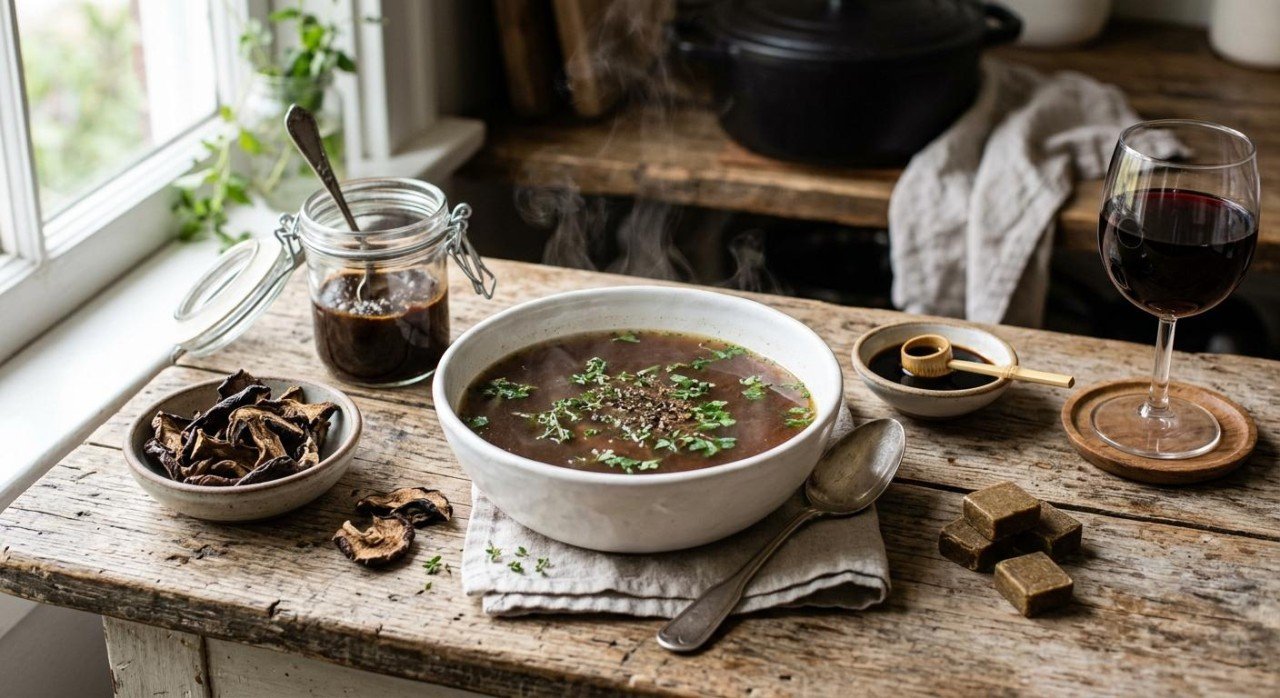
- Mushroom broth or dried mushroom soaking liquid — the richest vegan option
- Quick stovetop broth (water + aromatics + soy sauce) — 20 minutes from nothing
- Kitchen-scrap broth — the best-tasting, cheapest, lowest-sodium version, if you plan ahead
- Kombu dashi — clean, savory, and vegan; made for Asian soups and noodles
- White wine + water — for risotto, pan sauces, and braises, as part of the liquid
- Bean cooking liquid — free body and flavor for bean soups and stews
- Plain water + salt — honestly fine in any dish that is already full of vegetables
Vegetable Base (the Paste in a Jar)
- Swap: 1 teaspoon base dissolved in 1 cup (8 ounces) boiling water = 1 cup broth
- Best for: Everything — soups, stews, risotto, grains, sauces, gravy
- Skip it for: Nothing, though use a little less in anything that reduces hard
- Health notes: Better Than Bouillon Seasoned Vegetable Base has 700 mg sodium and 1 g protein per teaspoon — right in line with a cup of carton broth
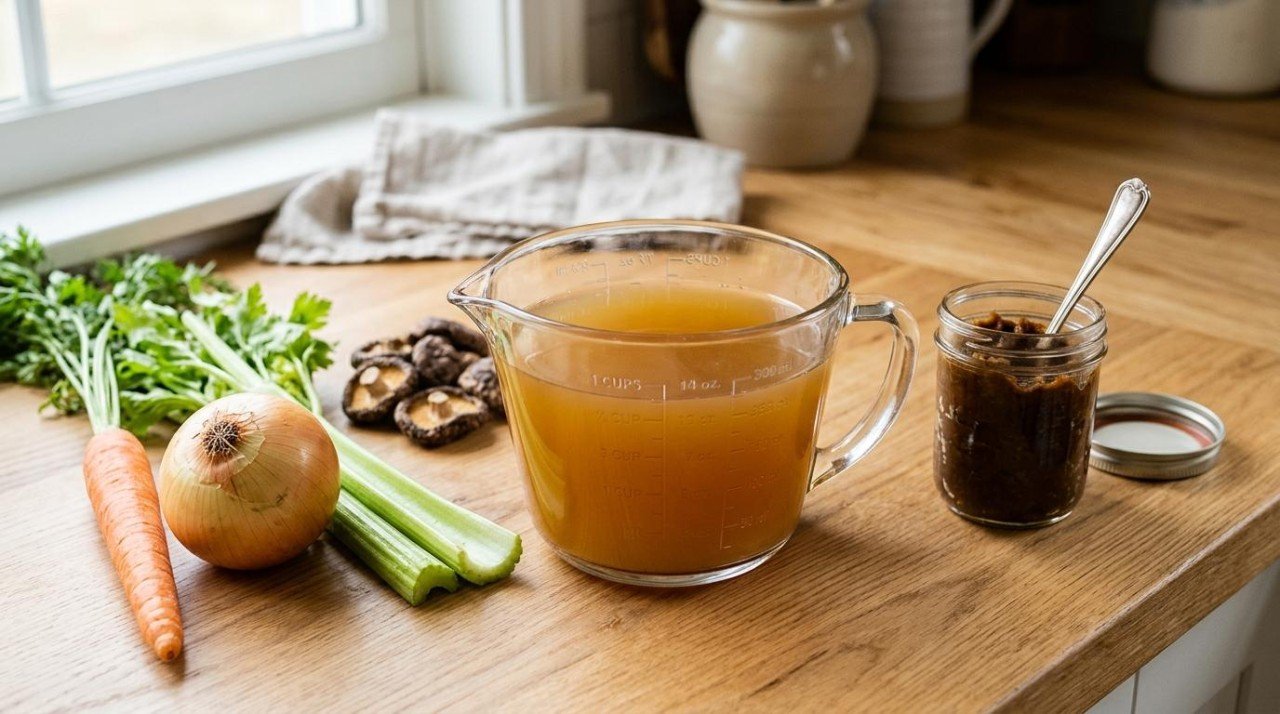
If you keep one vegetable broth backup on hand, make it this. A paste base is basically concentrated cooked vegetables — the Better Than Bouillon version is built on carrots, celery, onion, and tomato, plus soy protein and salt — and one 8-ounce jar replaces a shelf of cartons. The jar label calls for 1 teaspoon per 8 ounces of boiling water, or about 1½ tablespoons per quart.
The paste also does something a carton cannot: you can use it undiluted. Half a teaspoon stirred straight into a pan of sauteed greens, a skillet of beans, or a soup that tastes a little flat adds depth without adding liquid. Just remember that half teaspoon brings about 350 mg of sodium, so taste before you salt anything else.
Vegetable Bouillon Cubes or Powder
- Swap: Follow the box. Herb-Ox vegetable cubes are made for 1 cup of boiling water per cube, but some brands build one cube for 2 cups. Mixing these up is the number one way this swap goes wrong.
- Best for: Soups, stews, rice, grains, beans
- Skip it for: Light, brothy soups where the broth is most of what you taste
- Health notes: One Herb-Ox vegetable cube carries 960 mg sodium and 0 g protein; its first three ingredients are salt, hydrolyzed soy protein, and sugar
Cubes and powders are the dependable fallback, and in a pot of minestrone or lentil soup simmered with plenty of onion, carrot, and garlic, almost nobody will notice. They are saltier and more one-note than a paste base, so let the rest of the pot do the work.
One option worth knowing about: the winner of ATK's vegetarian broth tasting was not a vegetable product at all but Orrington Farms Vegan Chicken Flavored Broth Base, a powder with barely any vegetables in it — which, the testers concluded, is exactly why it avoided the bitter, sour, and sweet off-flavors of vegetable-heavy broths. "Vegan chicken" bouillon sounds odd, but it is a genuinely good all-purpose vegetarian broth. In anything that reduces, use about three quarters of what the box says and salt at the end.
Chicken Broth (Not Vegetarian)
- Swap: 1:1
- Best for: Soups, risotto, grains, braises, sauces — essentially everything
- Skip it for: Any dish you are serving to vegetarians or vegans, obviously
- Health notes: Close to a wash. Good & Gather chicken broth has 860 mg sodium and 1 g protein per cup against the same brand's vegetable broth at 801 mg and 0 g
If you reach for vegetable broth out of habit rather than because the meal is meatless, chicken broth is the easiest swap in this guide. It is a little richer and rounder, which most soups and grain dishes welcome. The only place it really shows is a delicate vegetable soup, where a chicken note can crowd the vegetables. (Our chicken broth substitutes guide covers the reverse swap, and the beef broth guide explains why beef broth is a poor match here: it is dark, roasted, and far heavier than what a vegetable broth recipe expects.)
Water + Miso
- Swap: 1 teaspoon white or yellow miso whisked into 1 cup warm water; go up to 2 teaspoons for a heartier soup
- Best for: Noodle soups, vegetable soups, grains, braised greens, stir-fry sauces, vegan gravy
- Skip it for: Sweet or delicately flavored dishes, like a pureed squash soup meant to taste mainly of squash
- Health notes: A tablespoon of miso has 634 mg sodium, so a teaspoon per cup lands around 210 mg — roughly a quarter of a carton
Miso is fermented soybean paste, and it is loaded with the same savory glutamates that commercial broths add through yeast extract and hydrolyzed protein. One spoonful does the whole job of broth in about ten seconds, with real depth instead of plain saltiness. White (shiro) and yellow miso are mild and slightly sweet, which is closest to vegetable broth; red miso is stronger and saltier, so use less.
Two tips. Whisk the miso into a little warm liquid first so it does not clump, and add it near the end of cooking rather than boiling it hard for an hour — long boiling dulls its flavor. For a soup, simmer everything in water, then stir the dissolved miso in during the last few minutes.
Mushroom Broth or Dried Mushroom Soaking Liquid
- Swap: Store-bought mushroom broth 1:1. For homemade: steep ½ ounce dried porcini or shiitake in 2 cups boiling water for 20 to 30 minutes, strain through a coffee filter or paper-towel-lined sieve, and use 1:1 with a pinch of salt per cup.
- Best for: Vegan gravy, mushroom and barley soup, stews, risotto, braised beans, French onion soup without beef
- Skip it for: Light, bright soups, where its earthy, dark flavor takes over
- Health notes: Pacific Foods Organic Mushroom Broth has 440 mg sodium per cup, about half a regular vegetable broth; soaking liquid has essentially none until you salt it
Mushrooms are naturally rich in glutamates, which is why mushroom broth is the most savory vegan liquid you can buy — it has the depth that vegetable broth usually lacks. Use it anywhere you want a heartier, meatier result. In a risotto or a creamy soup it makes the dish darker and earthier, which can be wonderful, but it will not taste like the original.
Soaking liquid from dried mushrooms is even stronger. Strain it carefully, since dried mushrooms carry grit that sinks to the bottom of the bowl, and do not throw the mushrooms away — chop them and add them to the dish. Out of fresh mushrooms for the recipe too? See our mushroom substitutes guide.
Quick Stovetop Broth (Water + Aromatics + Soy Sauce)
- Swap: For 4 cups: cook 1 chopped onion, 1 chopped carrot, 1 chopped celery stalk, and 2 smashed garlic cloves in 1 tablespoon oil for 5 minutes. Add 4½ cups water, 1 tablespoon soy sauce, a bay leaf, a few peppercorns, and a few parsley stems. Simmer 20 minutes, strain, and add salt to taste.
- Best for: Any soup, stew, or grain dish with time to spare
- Skip it for: A pan sauce you need in two minutes
- Health notes: About 220 mg sodium per cup from the soy sauce before you add any salt
This is vegetable broth made the way the carton is supposed to taste. Onion, carrot, and celery are the classic broth base; a few minutes in oil before the water goes in gives them a little sweetness and color. Soy sauce adds the savory backbone that plain vegetables in water lack — a tablespoon carries 879 mg of sodium, spread across the pot. Use tamari if you need it gluten-free.
A shortcut: if your recipe already starts by cooking onion, carrot, celery, and garlic, you are halfway there. Add plain water and a teaspoon of soy sauce or miso per cup, simmer the dish a little longer, and the pot makes its own broth as it cooks.
Kitchen-Scrap Broth
- Swap: Cover 8 to 16 cups of saved vegetable scraps with water, simmer covered at least 30 minutes until the scraps are soft, strain, and stir in ½ to 1 teaspoon salt. Yields 6 to 12 cups, used 1:1.
- Best for: Everything, especially soups, risotto, and grains
- Skip it for: Tonight, unless you already have a bag of scraps in the freezer
- Health notes: You decide the salt — the full teaspoon over 6 cups is under 400 mg per cup, and less salt means less
This method comes from Oregon State University Extension, and it is the best long-term answer to running out of vegetable broth. Keep a labeled container in the freezer and add onion ends and skins, carrot peels, celery tops, leek greens, mushroom stems, tomato cores, garlic, parsley stems, and thyme as you cook. When it is full, make broth. Refrigerated broth keeps 3 to 4 days; frozen, it is best within 2 to 3 months.
The extension's guide also lists what to limit. Broccoli, Brussels sprouts, cabbage, cauliflower, asparagus, and leafy greens turn the broth bitter in large amounts. Beets add dark color and a bitter edge. Potato, sweet potato, and winter squash flesh make it thick and cloudy. And never use anything moldy or slimy — the freezer bag is for trimmings, not spoiled vegetables.
Kombu Dashi
- Swap: 20 grams kombu (dried kelp) per 4 cups cold water. Steep it in the fridge overnight, about 10 hours, then strain. Or heat slowly over low for about 20 minutes and remove the kombu as the water reaches a simmer. Use 1:1.
- Best for: Miso soup, noodle soups, ramen, Asian-style braised vegetables, rice, steamed greens
- Skip it for: Italian, French, or Mexican soups, where a faint sea flavor would be out of place
- Health notes: Zero sodium until you season it; kombu is very high in iodine, so check with your doctor before making it a daily habit if you have a thyroid condition
Kombu is one of the most glutamate-rich foods there is, which is why plain kombu stock is the foundation of Japanese vegan cooking. It is clean and savory rather than vegetable-sweet, so it is the best substitute in this guide for any Asian soup or noodle dish that calls for vegetable broth. Add a few dried shiitake mushrooms to the steep for extra depth.
Follow Rouxbe's method and take the kombu out before the water boils — left in a simmering pot, it turns slimy and can taste bitter.
Take the Guesswork Out of Eating Well
Eat Well Planner helps you organize your favorite recipes, plan balanced meals, and automatically generate shopping lists — all in one place. Whether you're tracking macros, managing dietary restrictions, or just trying to stop asking "what's for dinner?", we've got you covered.
Our AI-powered tools can adapt any recipe to your dietary needs, help you discover new meals you'll love, and even log your nutrition effortlessly. It's meal planning made simple.
Start Organizing Your Meals — FreeWhite Wine + Water
- Swap: ¼ cup dry white wine + ¾ cup water per cup of broth; simmer at least a few minutes before the dish moves on
- Best for: Risotto, pan sauces, braised vegetables, steamed mussels or clams (not vegetarian, but a classic)
- Skip it for: Replacing all the liquid in a soup — straight wine is sour and boozy
Many risotto and pan-sauce recipes already use both wine and broth, so leaning a little harder on the wine and adding a teaspoon of miso or a pinch of vegetable base per cup of water fills the gap nicely. The wine brings acidity and fruit; the water and seasoning bring the volume. Let it bubble for a few minutes so the raw, sharp edge cooks off. Out of white wine too? Our white wine substitutes guide has the alcohol-free options.
Bean Cooking Liquid
- Swap: 1:1 for some or all of the broth; taste for salt, since canned liquid is already seasoned
- Best for: Bean soups, chili, minestrone, braised greens, stews
- Skip it for: Clear soups and risotto, where its starch clouds and thickens the dish
The liquid left from cooking dried beans or chickpeas — or the liquid in the can — is starchy, savory, and full of bean flavor. In a bean soup or a pot of chili, it adds body and a creamy texture that thin carton broth never does. Save it when you cook a pot of beans; it freezes well. Making a bean dish and short on the beans themselves? See our guides to chickpea and cannellini bean substitutes.
Plain Water + Salt
- Swap: 1:1, plus salt to taste at the end (start around ¼ teaspoon per cup of water)
- Best for: Vegetable-packed soups, stews, chili, beans, curries, and anything with lots of aromatics and spices
- Skip it for: Brothy soups with few ingredients, and risotto, where the broth is a main flavor
Given how thin and sweet many carton vegetable broths are, plain water is a respectable substitute far more often than people think. A pot of lentil soup with onion, garlic, carrots, cumin, and tomatoes makes its own broth as it simmers; the carton was mostly adding salt. Use water, season properly at the end, and finish with a squeeze of lemon or a splash of vinegar to brighten everything. This is also where a little tomato paste cooked in the oil or a parmesan rind dropped into the pot (not vegetarian, as most parmesan uses animal rennet) adds depth for free.
Make Your Own Freezer Broth Base
If vegetable broth is a staple in your kitchen, America's Test Kitchen's homemade vegetable broth base is worth one afternoon. You puree leeks, carrots, celery root, parsley, dried minced onion, kosher salt, tomato paste, and soy sauce into a paste and freeze it. It yields about 1¾ cups — enough for 7 quarts of broth — and keeps up to 6 months. Because of the salt, it never freezes solid, so you can scoop out 1 tablespoon at a time and stir it into 1 cup of boiling water. It tastes far more like real vegetables than any carton and takes up almost no freezer space.
Harvard's Nutrition Source makes a similar point from the health side: store-bought vegetable stock tends to have "a lot of sodium but not a lot of flavor," while their homemade version, made with browned onions, carrots, leeks, parsnips, celery, garlic, tomatoes, and dried mushrooms, comes in at 190 mg sodium per cup.
Which Swap for Which Dish
Soups and Stews
The most forgiving category, because a soup builds its own flavor as it simmers. Vegetable base, bouillon, the quick stovetop broth, and miso all work well. Bean cooking liquid is excellent in bean and lentil soups, and water plus proper seasoning is honestly fine in any soup crowded with vegetables and spices. For a delicate, brothy vegetable soup, skip plain water and use base, scrap broth, or the stovetop broth.
Risotto and Grains
Risotto absorbs all of its liquid, so the broth's flavor ends up in every bite. Use vegetable base, scrap broth, the stovetop broth, or chicken broth if it does not need to be vegetarian, and replace up to a quarter with white wine. Mushroom liquid makes an excellent mushroom risotto but takes over a lemon or pea risotto. For rice, quinoa, or farro, a teaspoon of miso or a pinch of vegetable base in the cooking water does the job.
Sauces and Gravy
These reduce, so sodium concentrates fast — a full-strength bouillon cube in a gravy that boils down by half is a lot of salt. Use mushroom broth, dried mushroom liquid, or water plus miso for vegan gravy, and season at the very end. For a standard gravy, 2 tablespoons fat and 2 tablespoons flour per cup of liquid will thicken whichever substitute you choose.
Asian Soups, Noodles, and Stir-Fries
Kombu dashi is the best match, with miso and water a close second. Mushroom liquid from dried shiitake works beautifully too. A carton of vegetable broth with carrot and celery is actually the odd one out here, so this is one case where the substitute is more traditional than the original.
Cooking for Vegetarians or Vegans
Skip chicken broth, of course, and also watch for animal ingredients in the "quick fixes": standard Worcestershire sauce contains anchovies, fish sauce is fish, and most parmesan uses animal rennet. Bouillon labels vary, so check the ingredients. Vegan-safe options in this guide: vegetable base, vegetable or vegan chicken-flavored bouillon, miso, mushroom broth, kombu dashi, the stovetop broth, scrap broth, bean liquid, wine, and water.
The Sodium Question, Honestly
Vegetable broth has a healthy reputation, but a regular carton is nearly as salty as chicken broth. Here is how the options stack up per cup:
- Herb-Ox vegetable bouillon cube: 960 mg
- Good & Gather chicken broth: 860 mg
- Good & Gather vegetable broth: 801 mg
- Better Than Bouillon vegetable base (1 teaspoon): 700 mg
- Pacific Foods mushroom broth: 440 mg
- Water + 1 teaspoon miso: about 210 mg
- Harvard's homemade vegetable stock: 190 mg
- Pacific Foods low-sodium vegetable broth: 120 mg
- Kombu dashi or dried mushroom liquid: essentially 0 mg until you season it
A cup of regular vegetable broth delivers about a third of a day's recommended sodium limit, and a soup recipe often uses four cups. That sodium is spread over several servings, so it is not a reason to avoid broth — but it does lead to two practical rules:
- If the recipe reduces the liquid, start with a low-sodium option and salt at the end. Gravies, pan sauces, and risotto concentrate whatever salt you add at the start.
- If the liquid stays in the dish, sodium matters less. A soup eaten as-is spreads the salt across the pot.
The genuinely healthier move is to pick a low-sodium base — miso, scrap broth, kombu, mushroom liquid, or low-sodium broth — and season at the end, when you can taste what the dish actually needs. You will almost always use less salt than the carton would have added.
Which Swap Fits Your Recipe?
A guide can tell you that miso works in a noodle soup and that bean liquid will cloud a risotto. It cannot look at your recipe. Eat Well Planner can: its AI recipe chat has your actual recipe in front of it, so "I'm making this lentil soup and I'm out of vegetable broth — what should I use?" gets an answer built around your ingredients, cook time, and how much the liquid reduces. Need a whole recipe converted to vegan? Recipe Variations rewrites it with the swaps already worked in, from the broth to the cheese.
If you are swapping to cut sodium rather than because the pantry is empty, the Recipe Playground lets you try the change and watch the nutrition score update live, with a per-edit delta showing exactly what moving from carton broth to low-sodium broth or miso did to the dish. Make It Healthier suggests swaps like these on its own, with a calculator verifying the real nutritional gain before anything is suggested.
What Not to Use
- Beef broth. It is dark, roasted, and heavy. It overwhelms vegetable soups and is not vegetarian anyway.
- Doubling the bouillon "for more flavor." You get more salt, not more vegetable flavor.
- Straight wine as all the liquid. Keep wine to about a quarter of the total.
- A scrap bag full of broccoli, cabbage, or beets. Your broth will taste bitter or turn magenta. Stick mainly to onion, carrot, celery, leek, mushroom, and herbs.
- Worcestershire or fish sauce in a vegetarian dish. Both are made from fish. Use soy sauce or miso instead.
- Vegetable juice or V8 as broth. It is thick, tomato-heavy, and sweet — fine for a tomato soup, wrong for most others.
The Short Version
A jar of vegetable base is the best backup to keep around, bouillon is fine if you read the box, and chicken broth swaps 1:1 if the meal does not need to be vegetarian. The fastest vegan fix is a teaspoon of miso whisked into a cup of water. For depth, use mushroom broth or dried mushroom liquid; for Asian soups and noodles, kombu dashi. And in a soup already full of vegetables, plain water plus proper seasoning does more than you would think.
If you would rather not hit this problem mid-recipe again, Eat Well Planner is free, keeps all your recipes in one searchable place, and turns your weekly meal plan into a shopping list automatically — so the broth ends up in the pantry before the recipe calls for it.