The onions are soft, the recipe says "stir in 2 tablespoons of tomato paste," and the little can is not in the cupboard. You need an answer in the next ninety seconds.
Here is the thing worth knowing before you pick one: tomato paste is not there to make the dish taste like tomatoes. It is there to make it taste like more. Paste is tomato with almost all the water boiled out — US law requires it to contain not less than 24.0 percent tomato soluble solids, against 8 to 24 percent for puree. That concentration is what turns a chili or a bolognese savory and round rather than thin and bright. When you fry it in the pan for a minute and it darkens to brick red, you are caramelizing sugars and building the same kind of background depth you would get from anchovies or soy sauce. It is a umami ingredient that happens to be made of tomatoes.
So every good substitute solves the same problem: get tomato flavor in without getting a quarter cup of water in. Almost all of them come down to reducing something thinner, or reaching for something already concentrated. The picks below are ordered most versatile first, each with an exact ratio.
The Quick List
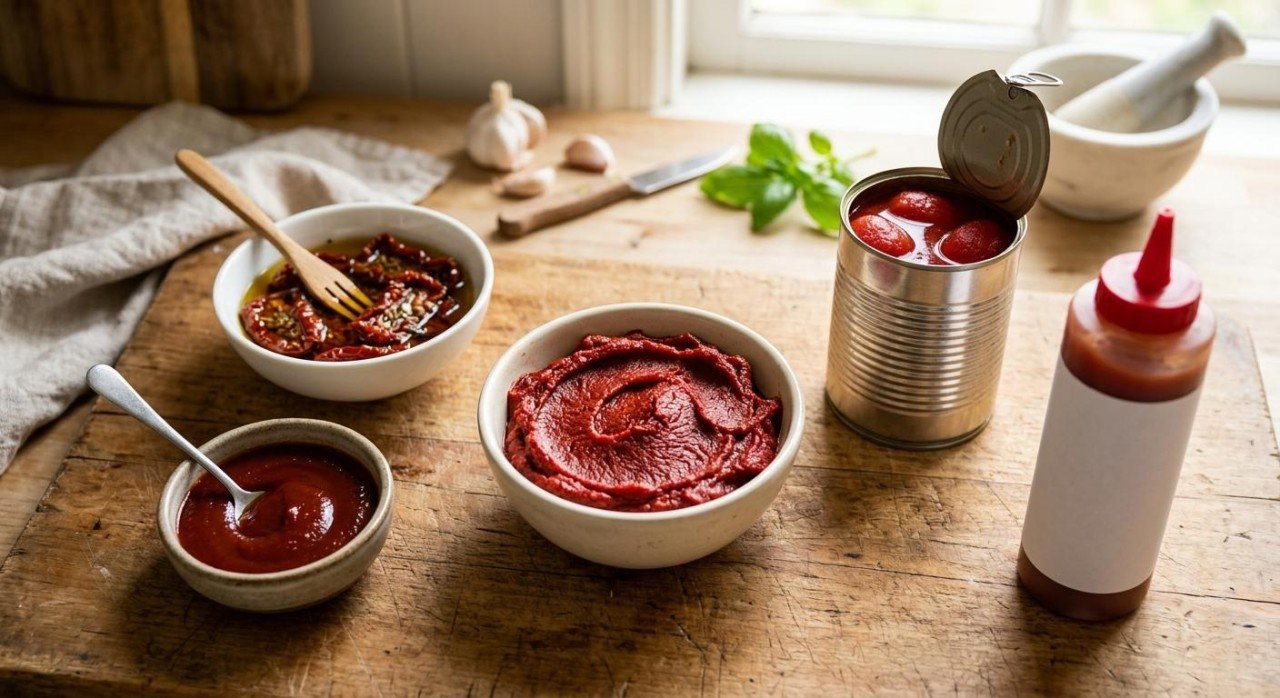
- Tomato puree or passata, reduced — the closest match; same product, less concentrated
- Canned tomato sauce, reduced — the everyday pantry fix, 3 tablespoons down to 1
- Canned whole or crushed tomatoes — use the thick juice, not the fruit
- Sun-dried tomato paste or blended sun-dried tomatoes — more intense than the real thing, and a genuine upgrade in some dishes
- Ketchup — works, in small amounts, if you pull back the sugar and vinegar elsewhere
- Marinara or pizza sauce — fine when the recipe already has Italian seasoning in it
- Tomato powder — the best pantry staple almost nobody has; rehydrates into actual paste
- Condensed tomato soup — last resort, and only in casual dishes
- Nothing at all, plus umami from elsewhere — often the right call for 1 tablespoon
Tomato Puree or Passata, Reduced
- Swap: 1 tablespoon tomato paste → 2 tablespoons tomato puree or passata, plus a pinch of sugar; remove 1 tablespoon of other liquid from the recipe
- Best for: Anything. Sauces, stews, chili, braises, soups
- Skip it for: Recipes where paste is the only liquid and needs to fry in oil — reduce it first instead
Puree is the same product as paste, caught earlier on its way through the evaporator. That makes it the most honest substitute on this list: nothing to compensate for except water. A Couple Cooks gives the ratio as 2 tablespoons of puree plus a quarter teaspoon of sugar per tablespoon of paste, with a tablespoon of other liquid pulled out to keep the balance — and that works in most simmered dishes, where the extra water cooks off anyway.
If the recipe wants you to fry the paste with the aromatics (a lot of curries and chilis do), give the puree two or three minutes alone in the pan first to thicken and darken. That step is the whole point of the ingredient, and it is worth the extra time.
Canned Tomato Sauce, Reduced
- Swap: 1 tablespoon tomato paste → 3 tablespoons tomato sauce, simmered down to about a third; or add all 3 tablespoons and remove 2 tablespoons of other liquid
- Best for: Chili, meat sauces, stews, sloppy joes, braises — anything that simmers
- Skip it for: Quick pan sauces and marinades where there is no chance to cook the water off
- Health notes: Sauce is usually salted; paste often is not. USDA figures put canned tomato sauce at about 474 mg sodium per 100 g against roughly 59 mg for no-salt-added paste
The 3-to-1 ratio is not folklore — it is roughly the concentration difference. USDA FoodData Central lists no-salt-added tomato paste at 82 calories per 100 g and canned tomato sauce at 24, which is about a threefold gap in tomato solids. Three tablespoons in, one tablespoon out.
You have two ways to spend that difference: simmer the sauce in a small pan for 10 to 15 minutes until it is thick and glossy, or dump it straight in and take 2 tablespoons of stock, wine, or water out of the recipe. In a chili that will bubble for an hour, the shortcut is fine. Do watch the salt — three tablespoons of a salted sauce carries roughly 200 mg of sodium the paste would not have, so taste before you season.
Canned Whole or Crushed Tomatoes
- Swap: 1 tablespoon tomato paste → 3 tablespoons of the thick juice from the can, reduced by about two-thirds. Or reduce a whole 14.5 oz can down to about ⅔ cup of real homemade paste
- Best for: Anything simmered, and especially recipes already calling for canned tomatoes
- Skip it for: Weeknights when you do not have 20 minutes
If a can is already open, do not fish out the tomatoes — you want the thick juice they are packed in, which is essentially dilute puree. Three tablespoons of it, simmered hard until it will hold a line when you drag a spoon through, gives you about a tablespoon of paste.
The bigger version is worth knowing: a whole 14.5-ounce can of crushed tomatoes simmered down to roughly ⅔ cup is tomato paste, full stop. It takes 20 to 30 minutes of occasional stirring and it tastes better than the can.
Sun-Dried Tomato Paste (or Sun-Dried Tomatoes, Blended)
- Swap: Start with ¾ tablespoon jarred sun-dried tomato paste per 1 tablespoon of tomato paste, then taste — it is more intense and usually saltier. From whole tomatoes: blend 2 to 3 oil-packed halves with a splash of water or their oil per tablespoon
- Best for: Braises, ragùs, bean dishes, vinaigrettes, anything Mediterranean
- Skip it for: Delicate dishes and recipes where you want clean tomato flavor — it brings a distinct dried, almost raisiny sweetness
- Health notes: Most jarred versions are packed with salt and oil. Check the label rather than assuming
This is the substitute that can beat the original. Sun-dried tomato paste is concentrated the same way — water removed, sugars intensified — but the drying adds a deeper, sweeter, faintly funky note regular paste does not have. In a lamb ragù or a white bean stew, most people would call it an improvement.
The catch is that it is not neutral: it tastes like sun-dried tomatoes, which is wonderful in some places and wrong in others. Use less than the recipe asks for, taste, then add more. Whole sun-dried tomatoes work the same way — if yours are dry-packed rather than in oil, soak them in hot water for 10 minutes first and blend with a spoonful of the soaking water, which is full of flavor.
Ketchup
- Swap: 1 tablespoon tomato paste → 1 tablespoon ketchup for a straight swap. For more tomato body, go up to 2 tablespoons and cut any sugar and vinegar the recipe calls for
- Best for: Sloppy joes, meatloaf, baked beans, barbecue sauce, chili — savory-sweet dishes that already want tang
- Skip it for: Marinara, curries, anything Italian, and any dish where you want clean tomato depth. The vinegar and spice show up immediately
- Health notes: This is the one swap where the numbers genuinely matter. Per tablespoon, USDA data puts ketchup at about 154 mg sodium and 3.6 g sugar, against roughly 9 mg and 1.9 g for no-salt-added paste
Ketchup is concentrated tomato with sugar, vinegar, and spice already stirred in — which is why it works at all, and why it fails where it fails. Sources split on the ratio: A Couple Cooks calls it a 1:1 swap, while Tasting Table suggests starting at two tablespoons per tablespoon of paste. Start at 1:1 and taste. It is easy to add more and impossible to take the sweetness back out.
Two practical notes. Simmer it for a minute before the other ingredients go in — it is thinner than paste, and a little reduction cooks off water and mellows the vinegar. And read the rest of your recipe before you pour: if it also calls for brown sugar and a splash of vinegar, the ketchup has covered some of that already, so pull those back. That is where the sugar hit is really decided — not by the tablespoon of ketchup, but by everything you forgot to remove around it.
Marinara or Pizza Sauce
- Swap: 1:1, and remove about 1 tablespoon of other liquid per tablespoon used
- Best for: Italian-leaning dishes that already contain garlic, basil, and oregano
- Skip it for: Curries, chili, Mexican dishes, anything where Italian herbs would be out of place
Pizza sauce is usually thicker than jarred marinara and closer to what you want. Both are already seasoned, so treat them as a package deal rather than a plain tomato swap: taste before you add the herbs and salt the recipe calls for, because some of it is already in there.
Tomato Powder
- Swap: 1 tablespoon tomato paste → 1 tablespoon tomato powder stirred into 1 to 2 tablespoons of warm water; start at 1:1 water and add more until it looks like paste
- Best for: Everything, and it keeps for a year in the cupboard
- Skip it for: Nothing much — but you have to have bought it in advance
Tomato powder is dehydrated tomato, so rehydrating it does not give you an approximation of paste — it gives you paste. It is the quiet fix for the whole problem this post exists to solve: a jar in the pantry never leaves you stranded, and never leaves you with a half-used can going furry in the fridge. Add the water gradually, since it thickens as it sits.
Condensed Tomato Soup
- Swap: 1 tablespoon tomato paste → 2 to 3 tablespoons undiluted condensed tomato soup; remove an equal amount of other liquid
- Best for: Casseroles, meatloaf, sloppy joes, weeknight chili
- Skip it for: Anything you care about. It is sweet, salty, and already seasoned
Honest ranking: this is near the bottom for a reason. But if it is what is in the cupboard and dinner is a casserole, it will get you there. Do not add salt until you have tasted.
Tube Paste and Double Concentrate: The Conversion Nobody Explains
You will read all over the internet that tubed Italian tomato paste is "double concentrated," so you should use half as much. That advice is mostly wrong.
Italian law defines doppio concentrato as not less than 28 percent dry residue, net of added salt. American canned paste has to clear 24 percent. That is a few percentage points, not a factor of two. Swap a double-concentrate tube 1:1 for canned paste and you will be fine. It tastes brighter and less cooked, because it is processed at lower temperatures, but it is not twice as strong.
The exception is triplo concentrato, which the same standard sets at not less than 36 percent dry residue. That one really is meaningfully stronger: use about two-thirds to three-quarters as much and taste. If your tube is labeled simply "concentrato" with no doppio, it is weaker than canned paste, and you will want closer to one and a half times as much.
The Healthier Angle (It Is Not What You Would Guess)
The nutrition story here runs opposite to most substitution posts: the ingredient you ran out of is the healthy one, and most of the swaps are a small step down.
Tomato paste is one of the densest sources of lycopene in the supermarket. USDA FoodData Central lists no-salt-added canned paste at about 28,800 micrograms per 100 g against roughly 2,570 for a raw tomato — more than ten times as much by weight. And unlike most nutrients, cooking does not cost you here. In the American Journal of Clinical Nutrition, Gärtner and colleagues found that people who ate tomato paste with corn oil hit lycopene peak blood concentrations 2.5 times higher than people given the same 23 mg dose as fresh tomatoes, with a 3.8-fold higher area-under-the-curve response. Processing breaks down the cell walls; the fat carries it in. That minute of frying the paste in olive oil is doing nutritional work as well as culinary work.
A tablespoon of no-salt-added paste also brings about 162 mg of potassium and roughly 9 mg of sodium — against ketchup's 154 mg in the same tablespoon. So the honest summary is that paste is an excellent ingredient and the swap that costs you most is the sweet, salty one. None of which should stop you cooking dinner: use the ketchup if ketchup is what you have. Just do not swap it in and then also add the brown sugar.
Take the Guesswork Out of Eating Well
Eat Well Planner helps you organize your favorite recipes, plan balanced meals, and automatically generate shopping lists — all in one place. Whether you're tracking macros, managing dietary restrictions, or just trying to stop asking "what's for dinner?", we've got you covered.
Our AI-powered tools can adapt any recipe to your dietary needs, help you discover new meals you'll love, and even log your nutrition effortlessly. It's meal planning made simple.
Start Organizing Your Meals — FreeFreeze the Rest — The Tip That Ends This Problem
The reason you are reading this is almost certainly a can. Recipes want a tablespoon; cans hold twelve. The rest goes to the back of the fridge and grows a beard.
So: open the can, and before you use any of it, spoon the leftovers onto a parchment-lined plate in tablespoon-sized dollops. Freeze until solid, then tip them into a freezer bag. They keep for months, they are pre-portioned to exactly the unit recipes ask for, and they go straight into a hot pan frozen — no thawing. An ice cube tray works too, at roughly 2 tablespoons per cube.
Do this once and you will never search for this post again. An opened can in the fridge is good for about a week; an opened tube lasts weeks longer, which is the tube's real advantage.
What Not to Use
- Fresh tomatoes. The most tempting mistake. A fresh tomato is roughly 95 percent water — the exact thing paste exists to have removed. You would need to cook down a pound to get a couple of tablespoons
- Tomato juice, straight. Same problem, worse. Reduced hard it can work, but you will be there a while
- Salsa. Chunky, watery, acidic, and full of cilantro, lime, and onion. It brings everything except concentration
- Barbecue sauce. Smoke, molasses, and a lot of sugar. It will take the dish somewhere, but not where the recipe was going
- Sriracha or gochujang. Both are concentrated and savory, which is why people reach for them — but both are also very spicy, and neither tastes like tomato
- Doubling the canned tomatoes. Adding more of a watery ingredient does not concentrate anything. It just makes the dish thinner and more sour
When You Can Simply Leave It Out
If the recipe calls for 1 tablespoon and you have nothing on this list, consider skipping it. Paste at that quantity is a background note, not a structural ingredient — the dish will be a little less deep and nobody will know why.
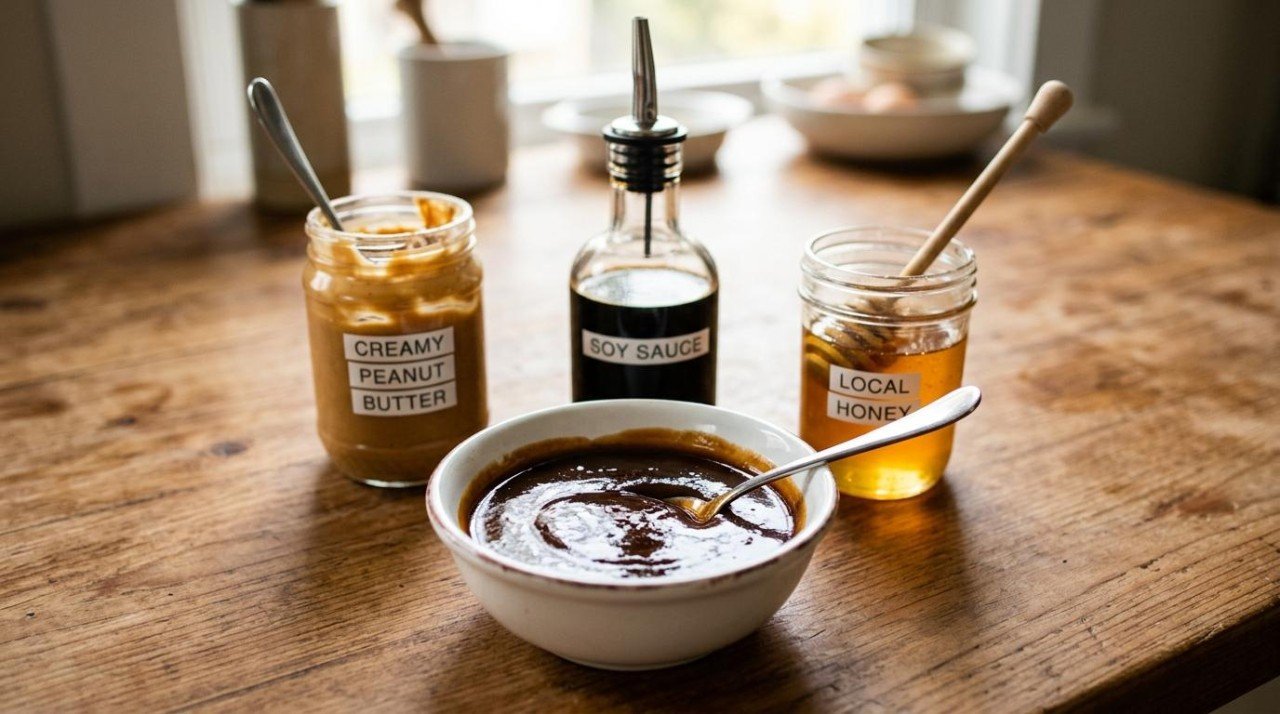
Better still, cover the job it was doing. Half a teaspoon of soy sauce, a dash of Worcestershire sauce, a teaspoon of miso, or a splash of balsamic vinegar with a pinch of sugar all deliver savory depth from a different direction. They will not make the dish taste of tomato, but tomato was never really the assignment — as we covered in our piece on umami, depth is depth, and there are several roads to it.
Which One Fits Your Dish?
The honest answer to "what can I use instead of tomato paste" is "it depends what you are making" — a swap that disappears into a chili will announce itself in a delicate sauce. That is exactly what Eat Well Planner's AI recipe chat is built for: import the recipe you are actually cooking, ask what to use instead, and get an answer that accounts for the other twelve ingredients rather than a general rule. If the swap moves the nutrition — that ketchup sodium, say — the Recipe Playground shows you the difference live before you commit, and Make It Healthier proposes swaps a calculator has already verified are real improvements.
And if you are here because you keep buying cans you never finish: freeze the dollops, and plan the week. Knowing on Sunday what you are cooking on Wednesday is what keeps the can in the cupboard when you need it.