The garlic is minced, the lemon is squeezed, and the Caesar dressing recipe calls for "4 anchovy fillets, mashed." The tin in the pantry turns out to be sardines, or there is no tin at all. Or you are cooking for someone who does not eat fish and you only now noticed the anchovies in the puttanesca.
Here is the good news: in most recipes, anchovies are not there to make the dish taste like fish. Salt-cured anchovies are packed with savory, glutamate-rich flavor, and when you mash them into a dressing or melt them into warm oil they disappear completely. What is left is a deep, salty background savoriness that makes everything around it taste more like itself. That background note is what you are replacing, and plenty of pantry staples can provide it.
The right swap depends on what the anchovy is doing in your recipe. Where the fillets dissolve (Caesar dressing, pasta sauces, salsa verde), you want something that melts in and brings concentrated salt and savoriness. Where they stay whole (pizza, salads, toast), you also need a briny bite you can see. In long-cooked sauces and braises, almost any savory booster works. Below are the substitutes that actually work, with exact ratios, then a pick-by-dish guide.
The Quick List
- Anchovy paste — the closest match for anything where the fillets get mashed or melted; 1/2 teaspoon per fillet
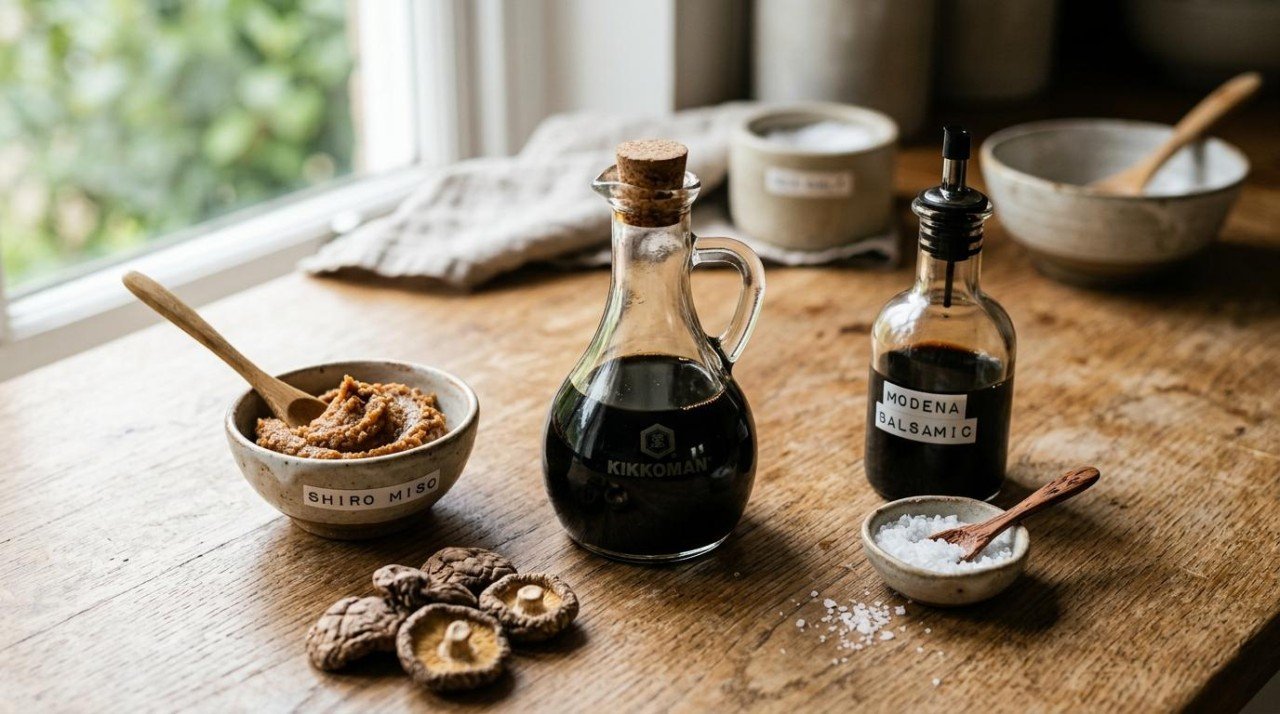
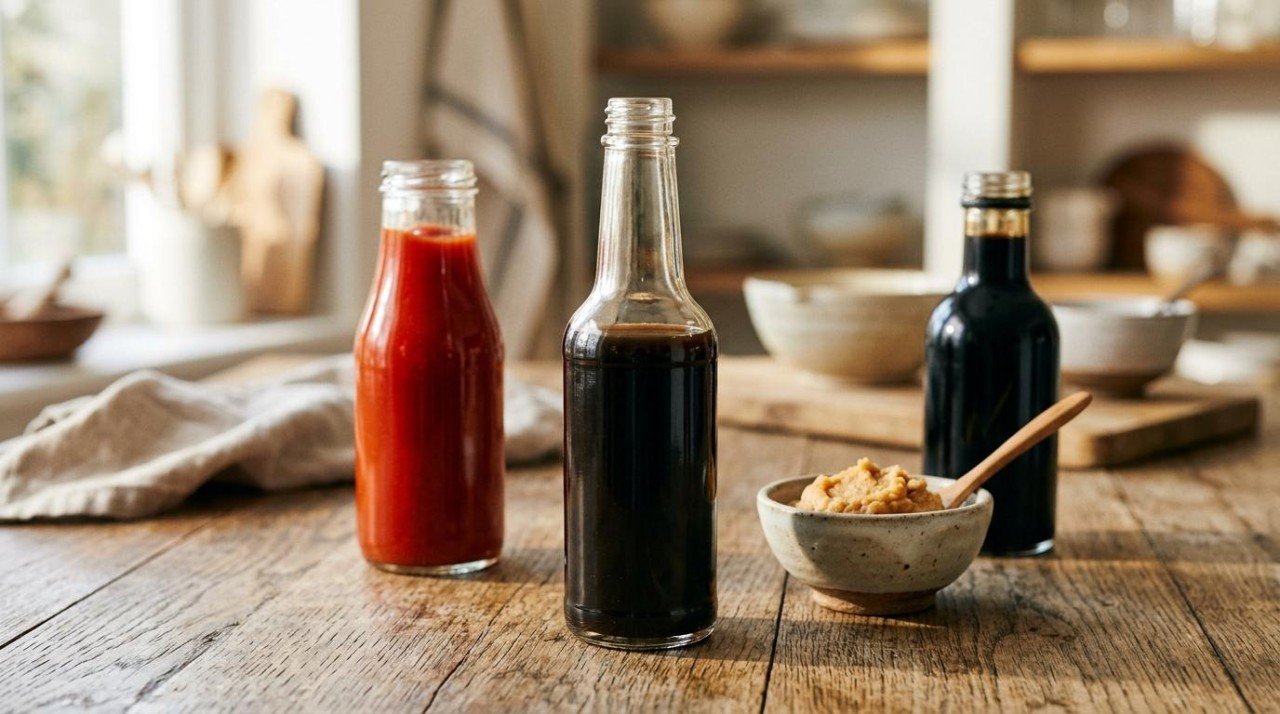
- Worcestershire sauce — already made with anchovies; excellent in Caesar dressing, burgers, and braises
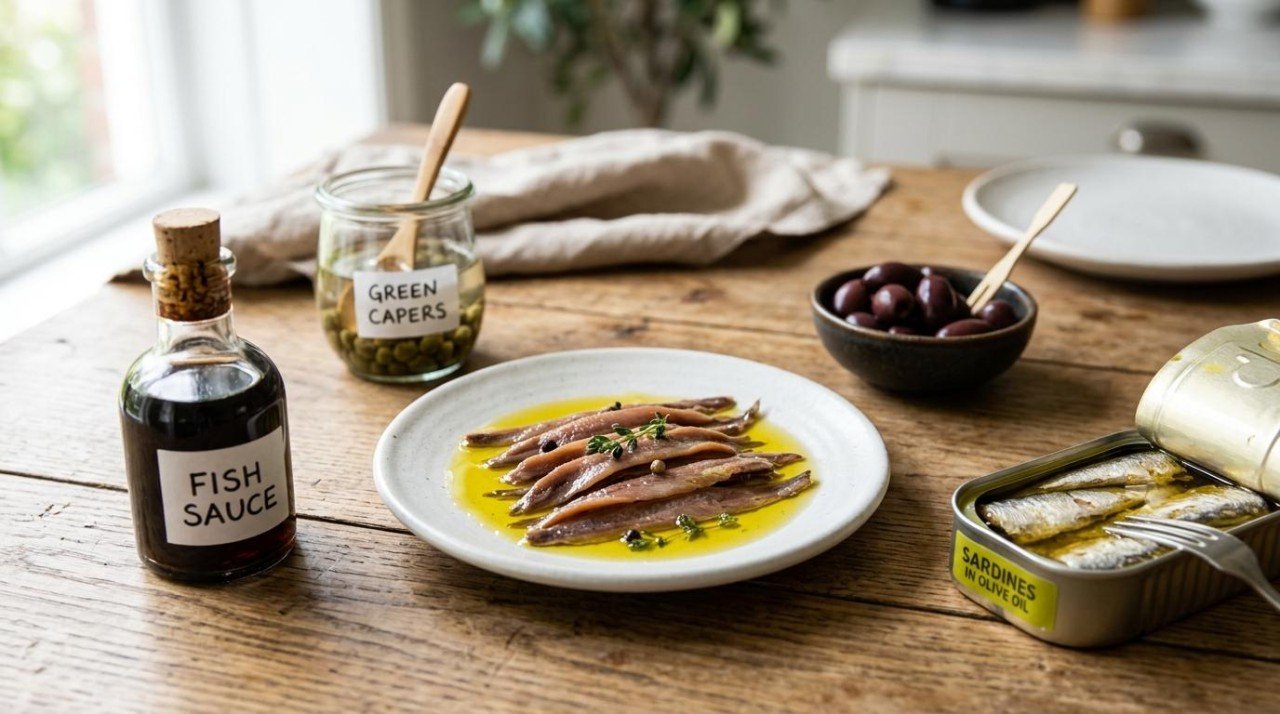
- Fish sauce — the most powerful umami swap for pasta sauces, braises, and stir-fries (too thin for creamy dressings)
- White miso — the best vegetarian and vegan pick for Caesar dressing and pasta
- Capers — briny pops for puttanesca, pizza, salads, and salsa verde, and fully plant-based
- Sardines — the closest whole-fish swap for pizza, toast, and pasta, with far less sodium
- Kalamata olives — salty, savory, and visible; great on pizza, in salads, and in tapenade
- Soy sauce or tamari — a quick umami fix for sauces, braises, and marinades
- Yeast extract (Marmite or Vegemite) — intense and meaty; a vegan booster for stews and gravies
- Shrimp paste — even funkier than anchovies; for Southeast Asian dishes and bold braises, in small doses
Two numbers worth keeping in mind as you read: one canned anchovy fillet weighs about 4 grams, and a standard 2-ounce tin holds about 45 grams of drained fish, or roughly 10 to 12 fillets. All the ratios below are per fillet, so scale up from there.
Anchovy Paste
- Swap: 1 anchovy fillet → 1/2 teaspoon anchovy paste
- Best for: Caesar dressing, pasta sauces, bagna cauda, salsa verde, butter sauces, marinades, any recipe that says "mash" or "melt"
- Skip it for: Pizza, salads, or toast where the fillets are laid on whole — paste cannot be seen or felt
If you have a tube of anchovy paste in the fridge door, your problem is solved. It is simply anchovies ground with salt and oil, so the flavor is nearly identical. In a side-by-side test of anchovy substitutes in Caesar dressing, Pantry & Larder rated anchovy paste a perfect 10 out of 10 at a 1/2-teaspoon-per-fillet ratio, noting that it tasted almost the same, just a little less fresh.
Because it is already smooth, paste is actually easier to work with than whole fillets in dressings. There is nothing to mash and no risk of a stray fishy lump. Brands vary in saltiness, so add the paste before any extra salt the recipe calls for, then taste.
Worcestershire Sauce
- Swap: 1 anchovy fillet → 1/2 teaspoon Worcestershire sauce
- Best for: Caesar dressing, burgers and meatloaf, beef stews, braises, bolognese, Bloody Marys
- Skip it for: Vegetarian or vegan cooking (most Worcestershire contains anchovies), pale delicate sauces where the brown color shows
- Health notes: 1/2 teaspoon has about 37 mg of sodium, versus roughly 147 mg in one fillet, based on USDA data
Worcestershire is a smart swap because it is made from the very thing you are missing. Classic brands ferment anchovies together with tamarind, vinegar, molasses, and spices (our Worcestershire sauce substitution guide breaks down what is in the bottle). The result is the same savory depth, plus extra tang and gentle sweetness. Pantry & Larder scored it 9 out of 10 in Caesar dressing, noting it was more complex than anchovies but thinner.
That thinness is the one thing to manage. In a Caesar or any emulsified dressing, Worcestershire adds liquid and acid, so hold back a teaspoon of the lemon juice and add it back only if the dressing tastes flat. In stews, braises, and meat mixtures the extra liquid does not matter at all. Fun fact for Caesar purists: the original 1924 Caesar salad was made with Worcestershire and no anchovies at all, so this swap has real history behind it.
Fish Sauce
- Swap: 1 anchovy fillet → 1/2 teaspoon fish sauce
- Best for: Pasta sauces, puttanesca, braised greens, lamb, roasted vegetables, stir-fries, marinades, salsa verde
- Skip it for: Creamy Caesar dressing (it thins it and tastes harsher) and anywhere anchovy is the lead flavor
- Health notes: The saltiest swap here: 1/2 teaspoon carries about 236 mg of sodium, more than the fillet it replaces
Fish sauce is made by fermenting anchovies with salt for months, so in flavor terms it is anchovy in liquid form, and the umami hit is powerful. The trouble is texture and pungency. In a Caesar test, Pantry & Larder found fish sauce made the dressing too briny and metallic, and thinned it out. Where anchovies melt quietly into a big cooked dish, though, a few drops of fish sauce disappear just as well.
Add it to the pan along with the other liquids rather than frying it in oil on its own, and start with less than you think. If your bottle is a particularly strong brand, 1/4 teaspoon per fillet may be plenty. If you already have a bottle open, our fish sauce substitution guide covers the reverse swap too.
White Miso
- Swap: 1 anchovy fillet → 1/2 teaspoon white (shiro) miso, mashed with a little of the recipe's oil or lemon juice
- Best for: Vegetarian and vegan Caesar dressing, pasta sauces, salsa verde, roasted vegetable dressings, compound butter
- Skip it for: Pizza and salads that need a visible, briny topping; very high-heat frying, where miso can scorch
- Health notes: About 106 mg of sodium per 1/2 teaspoon, a bit less than a fillet; brands vary widely
Miso is fermented soybean paste, and it brings two things anchovies do: deep savoriness and a salty edge. It also has a soft, paste-like texture that blends into dressings the way mashed anchovy does. Pantry & Larder called miso their favorite vegan option at 1/2 teaspoon per fillet, and found it got the saltiness and texture right. Stick with white or yellow miso for dressings. Red miso is stronger and darker and works better in braises and stews.
For the most convincing vegan Caesar, pair miso with capers. Many plant-based Caesar recipes use this combination, such as Urban Farmie's version, which uses 2 teaspoons white miso plus 1 tablespoon each of capers and caper brine, because together they cover both the savory and the briny sides of anchovy. A pinch of finely crumbled nori adds a faint ocean note if you miss the sea-flavor entirely.
Capers
- Swap: 1 anchovy fillet → 1 teaspoon capers, minced (or left whole for scattering)
- Best for: Puttanesca, pizza, salsa verde, tapenade, salads, chicken and fish pan sauces
- Skip it for: Recipes where anchovy's savory depth carries the dish on its own, like bagna cauda, without adding miso or another umami source
- Health notes: About 67 mg of sodium per teaspoon of drained capers, less than half a fillet
Capers are the most useful substitute when the anchovies are meant to be noticed. They deliver salt and briny sharpness in small bursts, just like anchovy pieces on a pizza or in a chunky sauce, and they are fully plant-based. Pantry & Larder recommends them for pasta puttanesca, which already uses both ingredients, so doubling up on capers keeps the dish recognizable.
What capers do not bring is the round, meaty savoriness, and they add a sour, slightly floral note anchovies lack. In a dish built around anchovy flavor, add a little miso or soy sauce alongside them. A splash of the caper brine works well in dressings. And if you are short on capers too, our capers substitution guide has you covered.
Sardines
- Swap: 1 anchovy fillet → about 1/4 ounce canned sardine (roughly a third of an average sardine), mashed or flaked
- Best for: Pizza, toast, pasta, puttanesca, tomato sauces, salads with whole fillets
- Skip it for: Smooth Caesar dressing — the firmer flesh leaves little bits unless you blend it
- Health notes: USDA data shows canned sardines have about one-twelfth the sodium of canned anchovies by weight, plus more calcium from their soft, edible bones
Sardines are the only swap on this list that gives you actual fish you can see and eat. They are milder and rounder than cured anchovies, because they are packed in oil rather than salt-cured for months, so they will not dissolve or deliver the same punch. On pizza or toast that is often a plus: you get savory, oily little pieces of fish without the intense saltiness that puts some people off anchovies.
Pantry & Larder rated sardines 8 out of 10, noting they left visible bits in Caesar dressing. For a pasta sauce, mash them into the warm oil with garlic and they mostly break down. Since they are much less salty, taste and add salt, capers, or a few olives to make up the difference.
Kalamata Olives
- Swap: 1 anchovy fillet → start with 1 teaspoon finely chopped Kalamata olives, then taste
- Best for: Pizza, Greek and Niçoise-style salads, tapenade, puttanesca, roasted vegetables
- Skip it for: Caesar dressing and pale sauces, where the purple-black color and fruity flavor stand out
Brined Kalamata olives bring salt, savoriness, and a bit of richness, and unlike pastes they are something you can see on the plate. That makes them a natural pick for pizza and salads, where an anchovy fillet's job is partly to provide salty, dark little bursts in every few bites. Their flavor is fruitier and less meaty than anchovy, so they work best combined with something else from this list. Olives plus capers is a classic Mediterranean pairing, and olives plus a little miso or anchovy paste in tapenade gets very close to the real thing.
Soy Sauce or Tamari
- Swap: 1 anchovy fillet → 1/2 teaspoon soy sauce or tamari
- Best for: Braises, stews, gravies, marinades, roasted vegetables, savory pasta sauces
- Skip it for: Caesar dressing (thin and too obviously soy) and light-colored sauces
Soy sauce is a fast, vegan, almost universally stocked umami fix. Like Worcestershire and fish sauce, it is a liquid, so it suits dishes that already have some broth, wine, or tomato. It adds a brown color and a recognizable flavor if you use too much, which is why it shines in hearty cooked dishes rather than bright dressings. Tamari is usually gluten-free, which makes it the pick when gluten is a concern. Our soy sauce substitution guide covers lower-sodium options if salt is a worry.
Yeast Extract (Marmite or Vegemite)
- Swap: 1 anchovy fillet → 1/4 to 1/2 teaspoon yeast extract, dissolved in a little warm liquid
- Best for: Beef or mushroom stews, gravies, braises, vegan bolognese, savory pie fillings
- Skip it for: Caesar dressing, salads, and anything delicate
Yeast extract is a concentrated savory paste that tastes bolder and meatier than anchovy. Pantry & Larder tested it at 1/2 teaspoon per fillet and found it had similar saltiness but a gloopy texture. Since it is so intense, we suggest starting at 1/4 teaspoon and building up. It is a great vegan option for long-cooked dishes where anchovy was quietly deepening the flavor, but it will not pass for anchovy in a dressing.
Shrimp Paste
- Swap: 1 anchovy fillet → 1/4 teaspoon shrimp paste
- Best for: Southeast Asian curries, stir-fries, sambal, fried rice, bold braises
- Skip it for: Caesar dressing, Italian dishes, or anything where its funk would stand out
Fermented shrimp paste (belacan, kapi, or terasi) is the opposite of a subtle swap. It is much more pungent than anchovies, so Pantry & Larder recommends half as much as you would use of anchovy paste. Fry it briefly in oil to mellow it, and keep it for recipes where a strong savory backbone is welcome. If the anchovies were going into a Thai or Malaysian dish in the first place, shrimp paste may actually be the more traditional choice.
Which Substitute for Which Dish
Caesar Dressing
Anchovy paste is the perfect swap. Without it, Worcestershire (1/2 teaspoon per fillet, with a touch less lemon) is the easiest pantry fix. For vegetarians, use white miso, and add capers or caper brine if you want the brine too. Extra finely grated Parmesan also boosts savoriness, though traditional Parmesan is made with animal rennet and is not strictly vegetarian. Skip fish sauce and soy sauce here: both thin the dressing and taste too sharp.
Pasta Sauces, Bagna Cauda, and Salsa Verde
Anything where the anchovies melt into olive oil and garlic takes anchovy paste, fish sauce, or miso equally well. Puttanesca is the exception that wants something visible: use extra capers plus chopped olives, or mashed sardines. For bagna cauda, where anchovy is the main flavor, only paste or sardines plus a little fish sauce will really satisfy.
Pizza, Salads, and Toast
When the fillets are laid on whole, you need texture as well as flavor. Sardines are the closest match, broken into pieces. Capers and chopped Kalamata olives give the salty pops without fish. A few drops of fish sauce or a little anchovy paste whisked into the olive oil you brush on the crust brings back the savory depth.
Braises, Stews, and Roasts
Long-cooked dishes are the most forgiving. Worcestershire, fish sauce, soy sauce, miso, or yeast extract all work at the ratios above. Lamb, beef stews, and slow-cooked tomato sauces are where anchovies are most often used as a hidden seasoning, and any savory liquid stands in comfortably.
The Healthier Angle: Anchovies Are Already a Good Choice
Unlike many ingredients people search to replace, anchovies are not something you need to swap out for health reasons. They are small, oily fish, rich in omega-3 fats, and the FDA lists anchovies among its "Best Choices" for low-mercury fish. Per USDA data, canned anchovies have about 2 grams of the omega-3s EPA and DHA per 100 grams. The catch is that a fillet is tiny, so the few in a dressing contribute only a little.
The real trade-off is sodium. An ounce of drained canned anchovies has about 1,040 mg of sodium, which works out to about 147 mg per fillet. Here is how the main swaps compare per fillet replaced, using USDA reference values (brands vary, so check your labels):
- Sardines (1/4 ounce): about 22 mg sodium, and about 70 mg of EPA plus DHA — nearly as much as the 82 mg in the fillet it replaces
- Worcestershire (1/2 teaspoon): about 37 mg sodium
- Capers (1 teaspoon): about 67 mg sodium
- White miso (1/2 teaspoon): about 106 mg sodium
- Anchovy fillet: about 147 mg sodium
- Fish sauce (1/2 teaspoon): about 236 mg sodium
So if you are watching sodium, sardines are the standout, keeping most of the omega-3s and adding calcium from their bones. Capers and Worcestershire also come in lower than anchovies. Fish sauce is the one swap that goes the other way. And if you are using capers, olives, or miso in place of fish, you are adding another plant to your week, which counts toward the 30 different plants a week that gut-health research often points to.
Take the Guesswork Out of Eating Well
Eat Well Planner helps you organize your favorite recipes, plan balanced meals, and automatically generate shopping lists — all in one place. Whether you're tracking macros, managing dietary restrictions, or just trying to stop asking "what's for dinner?", we've got you covered.
Our AI-powered tools can adapt any recipe to your dietary needs, help you discover new meals you'll love, and even log your nutrition effortlessly. It's meal planning made simple.
Start Organizing Your Meals — FreeWhat Not to Use
- Fresh or vinegar-marinated anchovies (boquerones). These white, mild anchovies have not been salt-cured, so they do not have the deep savory flavor and will not melt into a sauce. They are lovely on toast, but they will not do the job of tinned fillets.
- Canned tuna. It looks like a reasonable fish-for-fish swap, but tuna is mild, flaky, and not cured, so it adds bulk without the salt or umami.
- Just extra salt. Salt covers the saltiness and nothing else. Your dish will be seasoned but flat. If that is truly all you have, Pantry & Larder found that simply leaving anchovies out still made a good dressing, but one that lacked depth.
- Fish sauce in Caesar dressing. Covered above, but worth repeating: it is too thin and too sharp for a creamy dressing.
- Too much of any liquid swap at once. A recipe with 6 fillets does not need a tablespoon of fish sauce poured in at the start. Add half, taste, and build up.
Not Sure Which One Fits Your Recipe?
This guide tells you which kind of swap works for which kind of dish. What it cannot tell you is how much the anchovy matters in your specific recipe — whether it is a quiet background note in a stew or the backbone of a dressing.
That is where Eat Well Planner helps. Import your recipe from any website, Instagram reel, or YouTube video, and its AI recipe chat can answer with the actual ingredient list in front of it: which substitute fits, how much to use, and what else to adjust. If you are cooking for someone vegetarian or vegan, Recipe Variations can rewrite the whole recipe with the swaps already worked in. And if sodium is your reason for swapping, the Recipe Playground shows how each change affects the recipe's nutrition score as you make it, so you can see whether sardines or capers is the better trade before you cook.