The chicken is on the grill, the pork shoulder has been in the slow cooker since breakfast, or the beans are already in the pot, and the bottle in the fridge door has about a teaspoon left in it. BBQ sauce does a lot of work in a recipe. Running out of it feels like a much bigger problem than running out of most condiments.
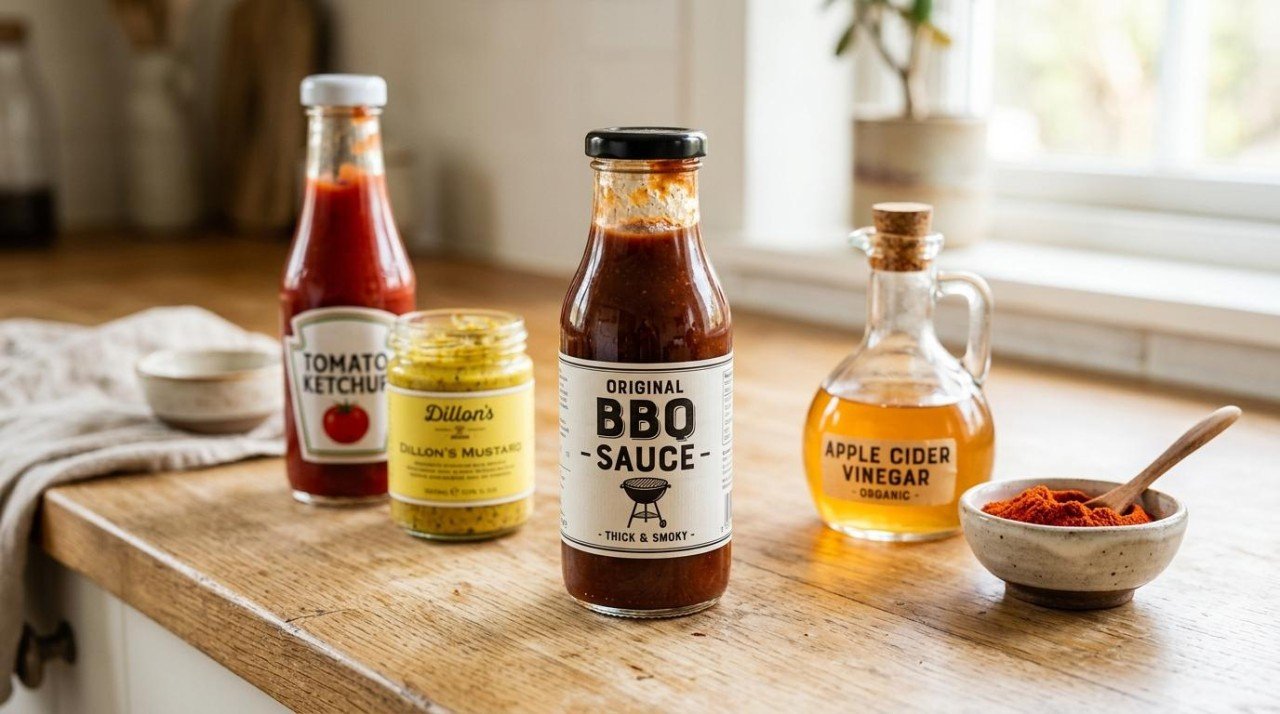
It is easier to fix than it looks. Most American BBQ sauce is ketchup with extra sweetness, vinegar, smoke and spice. If you have ketchup and smoked paprika, you can have a convincing bottle's worth in five minutes. If you don't, BBQ is a whole family of regional sauces, and several of them are made from things you almost certainly already have, like vinegar, mustard or mayonnaise.
The right pick depends on the job. A glaze needs sugar that caramelizes and body that clings. Pulled pork and baked beans need flavor that soaks in. A dipping sauce just has to taste good cold. Below are the substitutes that actually work, most versatile first. Each one comes with an exact ratio and an honest note on what changes.
The Quick List
- Ketchup + brown sugar + vinegar + smoked paprika: the five-minute rebuild, and the closest match to the bottle
- Tomato paste BBQ sauce: the from-scratch version, with less than half the sugar and about a third of the sodium
- Carolina vinegar sauce: the classic for pulled pork, made from cider vinegar and pepper flakes
- Carolina Gold mustard sauce: tangy-sweet, made from yellow mustard; excellent on pork and chicken
- Alabama white sauce: mayo-based, built for grilled and smoked chicken
- Hoisin thinned with vinegar: the best quick glaze for ribs and wings
- Gochujang BBQ sauce: sweet, spicy and funky; great on wings, ribs and tofu
- Teriyaki, thickened: good as a glaze for chicken and salmon, but very salty
- Steak sauce + honey + smoked paprika: the best fix for burgers, meatloaf and beans
- Apple butter BBQ sauce: fruity and thick, made for pork chops and ribs
- A dry rub: skip the sauce entirely, which is how a lot of serious barbecue is done anyway
What BBQ Sauce Is Actually Doing
A standard Kansas City-style bottle does five things at once. Knowing which ones your dish needs is what separates a good swap from a disappointing one:
- Sweetness: about 5.7 grams of sugar per tablespoon, according to USDA FoodData Central. That is roughly 60 percent more than ketchup. This sugar is what caramelizes into a sticky glaze.
- Tang: vinegar that cuts through rich, fatty meat
- Smoke: from smoked paprika, liquid smoke or chipotle, so oven-cooked food tastes like it saw a grill
- Savory depth: tomato, Worcestershire, onion and garlic, plus about 175 mg of sodium per tablespoon
- Thick, clingy body: it stays on a rib instead of running off into the coals
For a glaze, you need the sugar and the body. For pulled pork, the tang matters most, and a thin sauce actually soaks in better. In baked beans, the sweetness and smoke matter more than the thickness. Every substitute below says which of those it delivers.
Ketchup, Brown Sugar, Vinegar and Smoked Paprika
- Swap: 1 cup ketchup + 2 tablespoons brown sugar (or honey) + 2 tablespoons apple cider vinegar + 1 tablespoon Worcestershire sauce + 1 teaspoon smoked paprika + 1/2 teaspoon each garlic powder and onion powder. Makes about 1 1/4 cups; use it 1:1.
- Bare minimum: 1/4 cup ketchup + 1 teaspoon brown sugar or honey + 1 teaspoon vinegar + 1/4 teaspoon smoked paprika
- Best for: Everything: glazes, pulled meat, baked beans, dipping, burgers, meatloaf
- Skip it for: Nothing, really. It just tastes a little brighter than the bottle until it simmers.
- Health notes: About 4 g sugar and 130 mg sodium per tablespoon, against 5.7 g and 175 mg in bottled sauce
This is the answer for most people. Ketchup already supplies the tomato, vinegar, sugar and salt. The rest of the list adds the depth and smoke that turn ketchup into BBQ sauce. Whisk it cold and it is usable right away. Simmer it for 10 minutes and it thickens, the vinegar mellows, and it tastes noticeably less homemade. Once Upon a Chef's fuller version follows the same pattern with sauteed onion, molasses and chili powder added, simmered about 15 minutes. It keeps up to a week in the fridge.
The smoke is the part people miss, so a few backups help. No smoked paprika? Use 1 teaspoon of the adobo sauce from a can of chipotles, or 1/4 teaspoon of liquid smoke per cup. Liquid smoke is extremely concentrated, so add it a few drops at a time. If you have molasses, a tablespoon in place of half the brown sugar gives you the dark, slightly bitter edge of a Kansas City sauce. Out of ketchup too? Our ketchup substitutes guide covers the tomato paste rebuild, which leads straight into the next option.
Tomato Paste BBQ Sauce (the Lower-Sugar Scratch Version)
- Swap: 1 can (6 oz) tomato paste + 1/2 cup water + 3 tablespoons apple cider vinegar + 1 tablespoon molasses + 1 tablespoon honey or maple syrup + 1 tablespoon Worcestershire sauce + 1 1/2 teaspoons smoked paprika + 1/2 teaspoon each garlic powder, onion powder and table salt + a pinch of cayenne. Simmer 10 minutes. Makes about 1 1/2 cups; use it 1:1.
- Best for: Pulled pork and chicken, baked beans, sloppy joes, meatloaf, everyday glazing
- Skip it for: Anyone who wants the candy-sweet, lacquered finish of a commercial sauce. This one is deeper and less sweet.
- Health notes: Roughly 2.3 g sugar and 60 mg sodium per tablespoon, against 5.7 g and 175 mg bottled. Leave out the honey and it drops to about 1.6 g.
Skipping ketchup means you start from concentrated tomato with no sugar already in it, so you decide every gram that goes in. Unsalted tomato paste has about 12 grams of naturally occurring sugar per 100 grams, plus around 4 grams of fiber and over 1,000 mg of potassium, according to USDA data. Molasses brings the dark, smoky-sweet flavor of a classic sauce in a small amount, so it is doing more work than the same spoonful of white sugar would.
Two technique notes. First, simmer it. Raw tomato paste has a flat, slightly metallic taste, and 10 minutes over low heat (stirring, because it spits) fixes that and thickens the sauce. Second, taste at the end and adjust. If it seems sharp, add a teaspoon more honey. If it seems flat, add a splash more vinegar. It will glaze under a broiler, but it browns more slowly than a sugary bottled sauce, so give it a couple of extra minutes.
Carolina Vinegar Sauce
- Swap: 1 cup apple cider vinegar + 1 tablespoon brown sugar + 1 teaspoon kosher salt + 1 teaspoon crushed red pepper flakes + 1/2 teaspoon black pepper. Shake together and let it sit for at least an hour. Toss with pulled meat a few tablespoons at a time, about 1/4 cup per pound to start.
- Best for: Pulled pork, chopped pork, pulled chicken, coleslaw, collard greens
- Skip it for: Glazing, dipping, or anything that needs a sauce to cling. It is as thin as water.
- Health notes: Under 1 g sugar per tablespoon
In eastern North Carolina, this is barbecue sauce, and it is one of the oldest styles of American barbecue. It is not trying to be a thick sweet sauce. It is a sharp, peppery seasoning that soaks into chopped pork and cuts the fat in every bite. Published versions vary a lot. Southern Cast Iron's recipe is just cider vinegar, kosher salt, paprika and two kinds of red pepper, with no sugar at all. Many cooks add a little brown sugar to round it off, which is what the version above does.
If you want something closer to a tomato sauce, do what western North Carolina does and stir ketchup into the vinegar. Southern Cast Iron's western-style version uses 3/4 cup ketchup to 2 cups vinegar, with brown sugar and red pepper, simmered for 15 minutes. It stays thin, but it is redder and sweeter. Either style keeps for weeks in the fridge.
Carolina Gold Mustard Sauce
- Swap: 1/2 cup yellow mustard + 2 tablespoons honey + 2 tablespoons apple cider vinegar + 1 teaspoon Worcestershire sauce + 1/4 teaspoon smoked paprika + a pinch each of black pepper and cayenne. Whisk, or simmer 5 minutes to blend. Use it 1:1.
- Best for: Pulled pork, ribs, grilled or baked chicken, pork chops, dipping fries and pretzels, sausages
- Skip it for: Baked beans, brisket, or anyone who just wants a "normal" red BBQ sauce
- Health notes: Around 3 g sugar per tablespoon. Yellow mustard itself has almost none.
Central South Carolina's mustard sauce is tangy, sweet and bright yellow, and it may convert people who think BBQ sauce is too sweet. Bonappeteach's Carolina Gold recipe credits it to the region's German heritage. Their version uses a lot more mustard (1 1/2 cups) with honey, brown sugar, cider vinegar and a little ketchup. The scaled-down version above makes enough for a pound or two of pork.
Plain yellow mustard works best. It is mild enough to use by the half cup. Dijon is far sharper and will make the sauce taste harsh, so if that is all you have, use half Dijon and half honey. Brush it on chicken in the last few minutes of grilling, or toss it through pulled pork the way you would a vinegar sauce.
Alabama White Sauce
- Swap: 1 cup mayonnaise + 1/2 cup distilled white vinegar + 1/4 cup apple juice + 1 teaspoon prepared horseradish + 1 teaspoon black pepper + 1/2 teaspoon salt + 1/4 teaspoon cayenne. Whisk, and chill if you have time.
- Best for: Grilled and smoked chicken, chicken wings, turkey, pulled chicken sandwiches, dipping
- Skip it for: Long cooking or glazing. Mayo separates under sustained heat.
- Health notes: Low in sugar, but mayo makes it the highest-calorie sauce on this list
This is the odd one out, and it is excellent. North Alabama's white sauce is a peppery, tangy mayo sauce created at Big Bob Gibson Bar-B-Q in Decatur. The version above is half of the recipe published in Chris Lilly's Big Bob Gibson's BBQ Book, which calls for 2 cups mayonnaise to 1 cup white vinegar and 1/2 cup apple juice. The book describes it as a marinade, baste or dipping sauce.
The traditional move is to dunk grilled or smoked chicken in it straight off the heat. On the grill, brush it on only in the last minute or two. For a lighter version, replace half the mayonnaise with plain Greek yogurt. That cuts a lot of the fat and adds protein. It also makes the sauce tangier, so you may need a little less vinegar.
Hoisin Thinned with Vinegar
- Swap: 1/4 cup hoisin + 1 tablespoon rice vinegar or apple cider vinegar + 1 tablespoon water. Add 1 teaspoon sriracha if you want heat. Use it 1:1.
- Best for: Ribs, wings, pork tenderloin, chicken thighs, meatballs, Asian-leaning pulled pork
- Skip it for: Classic baked beans and Southern pulled pork, where the five-spice tastes out of place
- Health notes: About 4.4 g sugar and 258 mg sodium per tablespoon (USDA). Thinning it with vinegar and water cuts that per spoonful.
Hoisin is the closest thing in the Asian pantry to BBQ sauce. It is thick, sweet, dark and savory, and it caramelizes beautifully, which is why Chinese char siu pork is basically barbecue. Straight from the jar it is too thick and too sweet to brush on evenly. The vinegar brings it close to BBQ sauce's tang, and the water loosens it to a brushable consistency.
Like any sugary glaze, it goes on late. Brush it on in the last 10 minutes on the grill, or in the last 20 minutes on ribs in a low oven, and add a second coat before serving. If the hoisin jar turns out to be empty too, our hoisin substitutes guide has a rebuild that starts from peanut butter and soy sauce.
Gochujang BBQ Sauce
- Swap: 2 tablespoons gochujang + 2 tablespoons ketchup + 1 tablespoon honey + 1 tablespoon rice vinegar + 1 teaspoon soy sauce + 1/2 teaspoon toasted sesame oil. Makes about 1/2 cup; use it 1:1.
- Best for: Wings, ribs, pork belly, grilled chicken thighs, tofu, glazed salmon
- Skip it for: Kids and anyone who avoids spice, and baked beans
Gochujang is a fermented Korean chili paste. It is thick, sweet, spicy and deeply savory all at once, which makes it a natural base for a BBQ-style glaze. The ketchup brings the tomato and tang that make it read as barbecue, and the honey helps it caramelize. A tablespoon of gochujang can be fairly hot depending on the brand, so taste before adding more.
It is also very thick, so this sauce clings well. That makes it one of the best glaze substitutes on the list. It is less good tossed through a big batch of pulled meat, because the spice builds up over a full sandwich. Use it where a little goes a long way.
Teriyaki, Thickened
- Swap: 1/2 cup teriyaki sauce + 1 teaspoon cornstarch whisked into 1 tablespoon cold water, simmered 1 to 2 minutes until glossy. Add 1/2 teaspoon smoked paprika for a BBQ lean. Use 3/4 as much as the BBQ sauce called for.
- Best for: Chicken, salmon, pork chops, grilled pineapple, vegetable skewers
- Skip it for: Pulled pork, baked beans and anything that needs a lot of sauce. The salt adds up fast.
- Health notes: Much lower in sugar (about 2.5 g per tablespoon) but about four times the sodium, at roughly 690 mg per tablespoon (USDA)
Teriyaki has BBQ sauce's sweet-savory shape, and it browns well. The problem is texture. Most bottled teriyaki is thin, so it runs off food instead of glazing it, and a little cornstarch fixes that in two minutes. It is a better match for chicken and fish than for big pork cuts.
The sodium is the real trade-off. A tablespoon of bottled teriyaki has close to a third of the FDA's 2,300 mg daily value for sodium, which is why it works as a glaze and fails as a sauce you use by the half cup. Our teriyaki guide has a homemade version where you control the salt.
Steak Sauce, Honey and Smoked Paprika
- Swap: 1/2 cup tomato-based steak sauce + 1 to 2 tablespoons honey or brown sugar + 1/2 teaspoon smoked paprika. Use it 1:1.
- Best for: Burgers, meatloaf glazes, baked beans, brisket, sloppy joes, marinades
- Skip it for: Dipping straight from the bottle (it is very tangy) and chicken, where the raisin-like flavor tastes heavy
- Health notes: Plain steak sauce has about 1.7 g sugar per tablespoon but about 280 mg sodium (USDA). Adding honey brings the sugar up to roughly BBQ sauce levels.
Steak sauce is BBQ sauce's sour cousin. It is tomato, vinegar and fruit purees, with less sweetness and no smoke. Add those two things back and it becomes a solid substitute in beefy dishes. In a pot of baked beans or brushed on a meatloaf, most people would not guess the difference.
Go easy on the honey at first. One tablespoon per half cup is usually enough for burgers and meatloaf. Two is better for a glaze that needs to caramelize. Steak sauce is already salty, so do not add extra salt to the dish until you have tasted it.
Apple Butter BBQ Sauce
- Swap: 1/2 cup apple butter + 2 tablespoons apple cider vinegar + 1 tablespoon ketchup or tomato paste + 1 tablespoon Worcestershire sauce + 1 teaspoon smoked paprika + a pinch of cayenne. Use it 1:1.
- Best for: Pork chops, pork tenderloin, ribs, ham, chicken thighs, meatballs
- Skip it for: Beef and pulled pork in bulk, where the apple flavor gets one-note
Apple butter is already thick, sweet and lightly spiced, and apple with pork is a pairing that barely needs explaining. The vinegar and Worcestershire turn it from a toast spread into something savory, and the smoked paprika does the rest. It glazes very well, because the cooked-down fruit sugars caramelize quickly.
Peach or apricot preserves work the same way, using the same ratio. Preserves are usually sweeter and more set than apple butter, though, so add a little extra vinegar and a splash of water. Either way, brush it on near the end. Fruit-based glazes scorch faster than tomato-based ones.
A Dry Rub Instead
- Swap: 2 tablespoons smoked paprika + 1 tablespoon brown sugar + 1 tablespoon kosher salt + 1 tablespoon garlic powder + 1 teaspoon each onion powder and black pepper + 1/4 teaspoon cayenne. Use about 1 tablespoon per pound of meat, rubbed on before cooking.
- Best for: Ribs, chicken pieces, pork shoulder, pork chops, roasted chickpeas and potatoes
- Skip it for: Baked beans, sloppy joes, and anything where the sauce is part of the dish itself
- Health notes: Far less sugar on the plate than a sauced dish. The salt in the rub is the number to watch.
If you are cooking the meat rather than finishing it, you may not need a sauce at all. Memphis "dry" ribs are traditionally served with rub rather than sauce, and plenty of pitmasters season with a rub and serve sauce on the side as optional. The rub makes a crust that has the smoky-sweet flavor of BBQ sauce, but none of the sauce's tendency to burn.
Pair it with a splash of the vinegar sauce above at the table and you get the full effect: smoky crust, tangy finish, and a fraction of the sugar of a heavily sauced rack.
Which Swap for Which Job
- Grilling glaze (ribs, chicken, wings): Ketchup rebuild, hoisin with vinegar, gochujang sauce, apple butter sauce, thickened teriyaki
- Pulled pork and chicken: Carolina vinegar sauce, Carolina Gold, tomato paste sauce, ketchup rebuild
- Baked beans: Ketchup rebuild with molasses, tomato paste sauce, steak sauce with honey
- Dipping (fries, nuggets, wings): Ketchup rebuild, Carolina Gold, Alabama white sauce, gochujang sauce
- Burgers and meatloaf: Steak sauce with honey, ketchup rebuild, tomato paste sauce
- Smoked or grilled chicken: Alabama white sauce, Carolina Gold, dry rub
How to Glaze Without Burning It
A lot of "my substitute did not work" stories are really "my glaze went on too early" stories. Anything sweet burns over direct heat, whether it is bottled BBQ sauce, hoisin, honey mustard or apple butter. Put it on at the start of grilling and it turns black and bitter long before the meat is cooked through.
The fix is timing. Chowhound's advice is that sauce belongs in the final stages of cooking: sweeter Kansas City-style sauces go on in the final few minutes, and vinegar-based or low-sugar sauces can go on earlier. It also suggests lowering the heat when you add the sauce so it sets without scorching. In practice, cook the meat with a rub or just salt and pepper, then brush on a thin coat of sauce in the last 5 to 10 minutes. Turn it, and add a second coat. Several thin layers set into a lacquer. One thick layer just slides off. That is also why the lower-sugar substitutes here, like the tomato paste sauce and the vinegar sauce, are more forgiving. They can go on earlier without scorching.
The Healthier Angle: It Is the Sugar, Mostly
BBQ sauce is not a big source of calories, at about 29 per tablespoon. The issue is quantity and sugar. A pulled pork sandwich or a plate of sauced ribs easily carries 1/4 cup of sauce. At USDA's figures, that is about 23 grams of sugar and 700 mg of sodium. USDA's total includes the tomato's own sugar, so the added-sugar figure is a little lower. Even so, that one sandwich covers a large share of the FDA's 50-gram daily value for added sugars. Most people do not think of a savory meal as a sugar source, which is exactly why added sugar in savory foods is so easy to miss.
This is where making your own pays off, because you control how much goes in:
- Bottled BBQ sauce: about 5.7 g sugar and 175 mg sodium per tablespoon
- Ketchup rebuild: about 4 g sugar and 130 mg sodium
- Carolina Gold: about 3 g sugar
- Tomato paste sauce: about 2.3 g sugar and 60 mg sodium, or about 1.6 g sugar without the honey
- Carolina vinegar sauce: under 1 g sugar
Brands vary widely, so if you buy bottled, compare the "Includes Added Sugars" line on the label rather than assuming they are all alike.
None of this means BBQ sauce is something to avoid. It means a homemade version, or a regional sauce that never relied on sugar in the first place, can make the meal you are already cooking a little better. A general guide can't tell you what a specific swap does to your own recipe, though. Eat Well Planner can. Its AI recipe chat has your recipe in front of it, so asking "I'm making these slow-cooker ribs and I'm out of BBQ sauce, what should I use?" gets an answer built around your ingredients and quantities. Its Make It Healthier feature suggests swaps like these and uses a nutrition calculator to check how much each one actually improves the recipe before suggesting it.
Take the Guesswork Out of Eating Well
Eat Well Planner helps you organize your favorite recipes, plan balanced meals, and automatically generate shopping lists — all in one place. Whether you're tracking macros, managing dietary restrictions, or just trying to stop asking "what's for dinner?", we've got you covered.
Our AI-powered tools can adapt any recipe to your dietary needs, help you discover new meals you'll love, and even log your nutrition effortlessly. It's meal planning made simple.
Start Organizing Your Meals — FreeWhat Not to Use
- Plain ketchup with nothing added: it works in a pinch, but it tastes like ketchup. At minimum, add vinegar and smoked paprika.
- Liquid smoke by the spoonful: it is extremely concentrated, and too much tastes acrid and chemical. Measure it in drops or quarter teaspoons.
- Straight honey or maple syrup as a glaze: pure sugar with no acid or salt. It burns fast and tastes flat on savory meat.
- Hot sauce alone: Frank's or Tabasco is thin vinegar and heat, with no sweetness or body. It is good mixed into one of the sauces above, but not on its own.
- Salsa: it is mostly water, it is not sweet, and it does not caramelize. It is great on a pulled pork taco, but not as a glaze.
- Sweet chili sauce as a pulled pork sauce: it is sweet and sticky enough to glaze wings, but it has no tomato or smoke, so in a big batch of pulled meat it just tastes like candied chili.
The Bottom Line
If you have ketchup, you have BBQ sauce: add brown sugar, vinegar, Worcestershire and smoked paprika, then simmer for 10 minutes. If you would rather control the sugar, the tomato paste version is a genuine upgrade, not a compromise. For pulled pork, a Carolina vinegar or mustard sauce is arguably better than the bottle. For chicken, Alabama white sauce might become a regular.
Once you have a version you like, save it so you don't have to work it out again next time. Eat Well Planner's Recipe Variations can rewrite a recipe with the substitution built in, so your ribs or pulled pork recipe lists the sauce you actually use. The nutrition and shopping list update to match.