The coconut milk is open, the chicken is sliced, and the recipe wants two tablespoons of red curry paste. The little jar you were sure was in the fridge door is either gone or holding a dried-out crust from last spring.
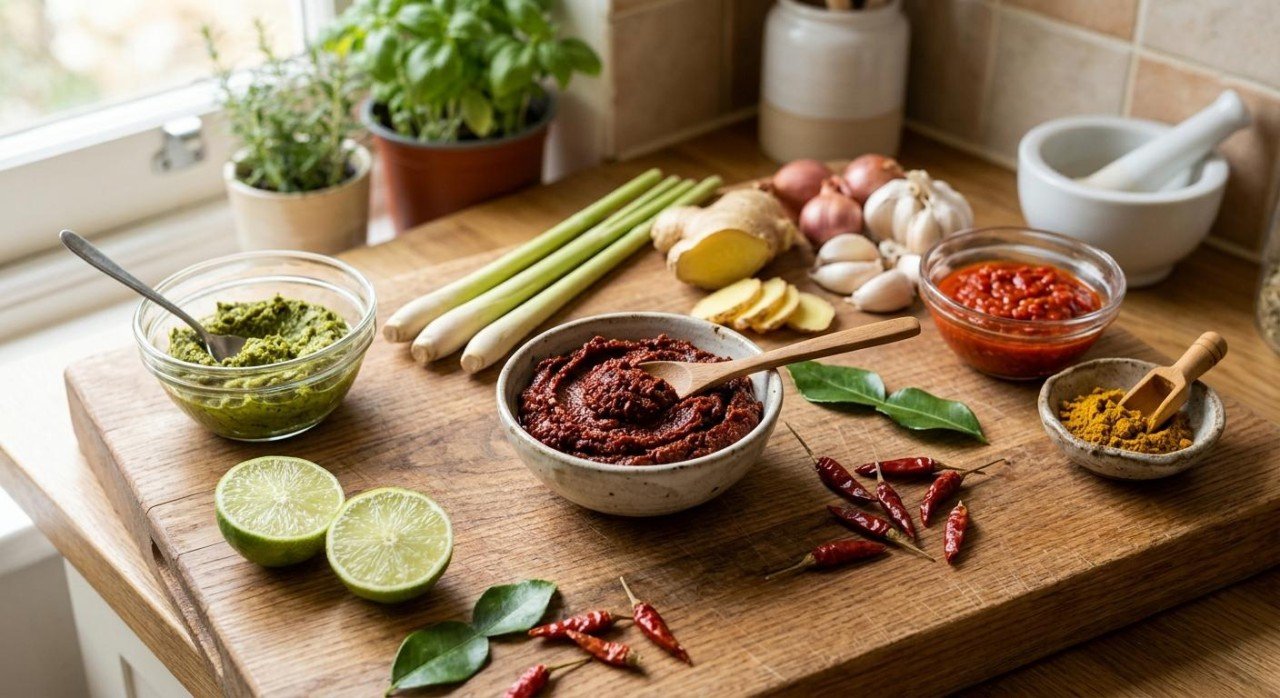
Thai red curry paste is a concentrated blend of dried red chiles, garlic, shallots, lemongrass, galangal, makrut lime peel and spices, often with a spoonful of fermented shrimp paste for savory depth. It does a lot of work in one spoonful: heat, aromatics, salt, umami and that brick-red color. That is why no single pantry item replaces it cleanly, but several combinations get you very close.
The best choice depends on what you have and how authentic the dish needs to taste. Another Thai curry paste is the easiest swap. If you have none, a few rebuilds from chili paste or spices will still give you a curry worth eating tonight. Exact ratios for each are below.
The Quick List
- Homemade red curry paste — the real thing; about 30 minutes of soaking plus a quick blend, and it freezes well
- 15-minute pantry curry paste — garlic, ginger, lime zest and ground spices; no specialty ingredients needed
- Yellow curry paste — the closest store-bought swap; 1:1, a little milder and more golden
- Panang curry paste — 1:1; milder, nuttier and a bit sweeter
- Green curry paste — 1:1; more herbal, very different color, heat varies by brand
- Laksa paste — 1:1; red and chile-forward, slightly tangy, great with seafood
- Sambal oelek + lemongrass and ginger — the best rebuild from a chili paste you may already own
- Harissa + lemongrass and fish sauce — a smoky, North African-leaning stand-in
- Indian curry paste (like Madras) — 1:1; earthier and more cumin-forward, still very good
- Curry powder + chili + lime zest — the spice-cabinet fallback; reads more Indian than Thai
- Chili garlic sauce or sriracha + aromatics — the last resort when that is all you have
What You Are Actually Replacing
Red curry paste does five jobs in a dish, and the best substitute is the one that covers the jobs your recipe depends on most:
- Chile heat and color — from a large amount of dried red chiles, which give red curry its color and a deep, slightly fruity heat
- Citrusy aromatics — lemongrass, galangal and makrut lime peel. This trio is what makes it taste Thai rather than just spicy
- Alliums — a lot of garlic and shallot, which melt into the sauce
- Warm spices — coriander, cumin and white pepper, used lightly
- Salt and umami — from salt and, in many brands, shrimp paste
Most failed swaps cover only the first job. Hot sauce or chili flakes alone will make a curry spicy, but it will taste flat and a little harsh. That is why the rebuilds below add lemongrass or lime zest for the citrus note, ginger for the galangal note, and fish sauce (or soy sauce) for the savory depth.
About the ratios: each swap replaces 1 tablespoon of red curry paste unless noted. Most curries for 4 use 2 to 4 tablespoons, so scale up from there.
A Word on Brands: They Are Not Interchangeable
Before you swap anything, it helps to know what the recipe writer probably used, because store-bought red curry pastes vary a lot in heat, salt and how much you need:
- Mae Ploy (big tubs) — hot, salty and pungent. Its label lists garlic, dried red chili, lemongrass, shallot, salt (13 percent), galangal, shrimp paste, makrut lime peel and pepper, and the brand itself suggests using half the amount for a milder curry
- Maesri (small 4-ounce cans) — bright and balanced. Its US listing shows dried red chilies, garlic, shallot, salt, lemongrass, sugar, makrut lime, galangal and spices, with no shrimp paste on the label, and one can is meant to season about 6 large servings
- Thai Kitchen (small glass jars, most US supermarkets) — much milder, and labeled vegan and gluten-free. Recipes written for this brand often call for 3 or 4 tablespoons, which would be a lot of Mae Ploy
In a Milk Street tasting of seven brands, Maesri came out on top for its bright, balanced flavor, Mae Ploy was liked but some tasters found it heavy on shrimp paste, and Thai Kitchen was described by most as dull. The practical takeaway: if a recipe calls for a large amount of paste, it was probably written for a mild brand, so lean toward the milder swaps below or start with less. If it calls for a tablespoon or two in a big pot, the writer likely used something potent.
Homemade Red Curry Paste
- Swap: 1:1 for store-bought once made. Makes about 1 cup, roughly 16 tablespoon portions
- Recipe: 15 to 20 dried red chiles (soaked in warm water 30 minutes, then seeded and chopped) + 2 fresh red chiles (seeded) + 3 lemongrass stalks (white part only, thinly sliced) + 1-inch piece galangal or ginger + 5 garlic cloves + 4 small shallots + 3 cilantro stems + 3 makrut lime leaves (optional) + 1 tablespoon coriander seeds + 2 teaspoons ground cumin + 2 teaspoons white peppercorns + 1 teaspoon shrimp paste (optional). Blend, adding water a tablespoon at a time until smooth (usually 1/2 to 3/4 cup)
- Best for: Anyone who cooks Thai curry often, or wants full control over heat and salt
- Skip it for: Tonight, if you have no dried chiles or lemongrass on hand
- Health notes: No added salt beyond the optional shrimp paste, so you season the curry yourself, and it packs about 10 different plants into one spoonful
This is the Wok & Skillet red curry paste, and it is a forgiving template. If you cannot find galangal, the recipe says to use an equal amount of ginger. Ginger is warmer and less citrusy than galangal, so a little grated lime zest alongside it gets you closer. Guajillo or New Mexico chiles give a milder paste with great color; add a few chiles de arbol or Thai bird chiles for more heat.
The paste keeps about a week in the fridge and around 6 months in the freezer. Freeze it in tablespoon portions in an ice cube tray, then move the cubes to a bag, and the next curry is as fast as opening a jar. Because it has no added salt, taste the finished curry and season with fish sauce or salt at the end.
15-Minute Pantry Curry Paste
- Swap: Replaces 2 tablespoons of red curry paste. Mash together 2 grated garlic cloves + 2 tablespoons minced shallot or onion + 1 teaspoon grated fresh ginger + 1/2 teaspoon lime zest + 1 teaspoon tomato paste + 1 teaspoon paprika + 1/4 to 1/2 teaspoon cayenne + 1/2 teaspoon ground coriander + 1/4 teaspoon ground cumin + a pinch of white or black pepper + 1 teaspoon neutral oil
- Upgrade: Add 1 to 2 teaspoons lemongrass paste (the squeeze-tube kind) if you have it
- Best for: Coconut curries, curry noodle soups, marinades
- Skip it for: Dishes where red curry paste is the main flavor with little else, like a curry dipping sauce
- Health notes: No salt in the paste itself, so you control the sodium in the finished dish
This is not a traditional recipe. It is a practical rebuild of each job the paste does, using what most kitchens have: paprika and cayenne for chile color and heat, tomato paste for body and the brick-red look, garlic and shallot for the allium base, and ginger plus lime zest standing in for galangal and makrut lime. Grate the garlic and ginger on a fine grater or Microplane so everything melts into a paste.
Fry it in the oil for a minute or two before adding the coconut milk, the same way you would bloom store-bought paste. This step softens the raw garlic and wakes up the spices. Finish the curry with a splash of fish sauce, a pinch of sugar and a squeeze of lime, then taste. Those last three are what pull it from "spicy tomato sauce" toward Thai curry.
Yellow Curry Paste
- Swap: 1 tablespoon yellow curry paste for 1 tablespoon red curry paste
- Best for: Chicken, potato and vegetable curries, soups
- Skip it for: Dishes where the red color matters, like a red curry noodle bowl
Yellow curry paste shares the same base of chiles, garlic, shallot, lemongrass and galangal, plus turmeric and more warm spices like coriander and cumin. It is usually somewhat milder and noticeably more golden. Pantry & Larder rates it the closest overall match for heat and flavor among store-bought pastes.
If you want the heat of red curry, add a pinch of cayenne or a sliced fresh chile along with the paste. A teaspoon of paprika also nudges the color back toward red.
Panang Curry Paste
- Swap: 1 tablespoon Panang paste for 1 tablespoon red curry paste
- Best for: Beef, chicken and tofu curries, especially thicker, saucier ones
- Skip it for: Anyone with a peanut allergy. Many Panang pastes contain peanuts, so check the label
Panang paste is essentially red curry paste with a nuttier, rounder flavor, often from ground peanuts, and a little more sweetness. It is milder than red curry paste, so the swap tastes richer but less fiery. Add fresh or dried chiles if you want the original heat level.
Panang is traditionally cooked thicker, with less liquid, but it works fine in a soupy red curry. Just taste before adding any extra sugar the recipe calls for, since the paste may already be sweeter.
Green Curry Paste
- Swap: 1 tablespoon green curry paste for 1 tablespoon red curry paste, but start with 2 teaspoons if you do not know the brand
- Best for: Chicken, shrimp, fish and vegetable curries
- Skip it for: Recipes where you need the deep red color or the roasted, dried-chile flavor
Green curry paste uses fresh green chiles instead of dried red ones, plus fresh herbs, so it is brighter, grassier and more herbal. The curry will be pale green instead of red, but the overall balance of coconut, aromatics and heat still works in almost any red curry recipe.
Heat is the wild card. Fresh green chiles can make green paste hotter than red, especially in brands made for Thai cooks, while some supermarket versions are quite mild. Start with less, taste after a few minutes of simmering, and add more if needed. A small pinch of sugar or a splash more coconut milk helps balance a very herbal paste.
Laksa Paste
- Swap: 1 tablespoon laksa paste for 1 tablespoon red curry paste
- Best for: Coconut noodle soups, shrimp and fish curries
- Skip it for: Anyone avoiding shellfish or tree nuts. Many laksa pastes contain dried shrimp and candlenuts or cashews
Laksa paste, from Malaysia and Singapore, has a very similar red chile, lemongrass and galangal base, with tamarind and nuts that make it a little tangier and milder. It shines in anything brothy with seafood, and it gives you the red color red curry paste would.
Take the Guesswork Out of Eating Well
Eat Well Planner helps you organize your favorite recipes, plan balanced meals, and automatically generate shopping lists — all in one place. Whether you're tracking macros, managing dietary restrictions, or just trying to stop asking "what's for dinner?", we've got you covered.
Our AI-powered tools can adapt any recipe to your dietary needs, help you discover new meals you'll love, and even log your nutrition effortlessly. It's meal planning made simple.
Start Organizing Your Meals — FreeSambal Oelek + Lemongrass and Ginger
- Swap: 2 teaspoons sambal oelek + 1 teaspoon lemongrass paste (or 1/2 teaspoon lime zest) + 1/2 teaspoon grated fresh ginger + 1 small garlic clove, grated + a pinch of ground coriander + 1/2 teaspoon fish sauce
- Best for: Coconut curries, stir-fries, curry noodle soups
- Skip it for: Nothing in particular, though the chile flavor is fresher and brighter than dried red chiles
Sambal oelek is a simple paste of ground fresh red chiles, salt and vinegar, so it already covers heat, red color and some salt. What it lacks are the aromatics and the savory depth, which the lemongrass, ginger, garlic and fish sauce add back. This is the best rebuild if you already keep a jar of sambal for stir-fries.
Sambal is quite hot, so for a mild curry start with 1 teaspoon and add 1 teaspoon of paprika for color. Fry the mixture briefly in oil before adding coconut milk. If you are out of fish sauce, our fish sauce substitutes guide covers soy sauce and other swaps, and our fresh ginger guide has options if you only have ground ginger.
Harissa + Lemongrass and Fish Sauce
- Swap: 1 tablespoon harissa + 1 teaspoon lemongrass paste (or 1/2 teaspoon lime zest) + 1/2 teaspoon fish sauce + a squeeze of lime at the end
- Best for: Braised chicken, roasted vegetables in coconut sauce, marinades
- Skip it for: A dish you want to taste unmistakably Thai
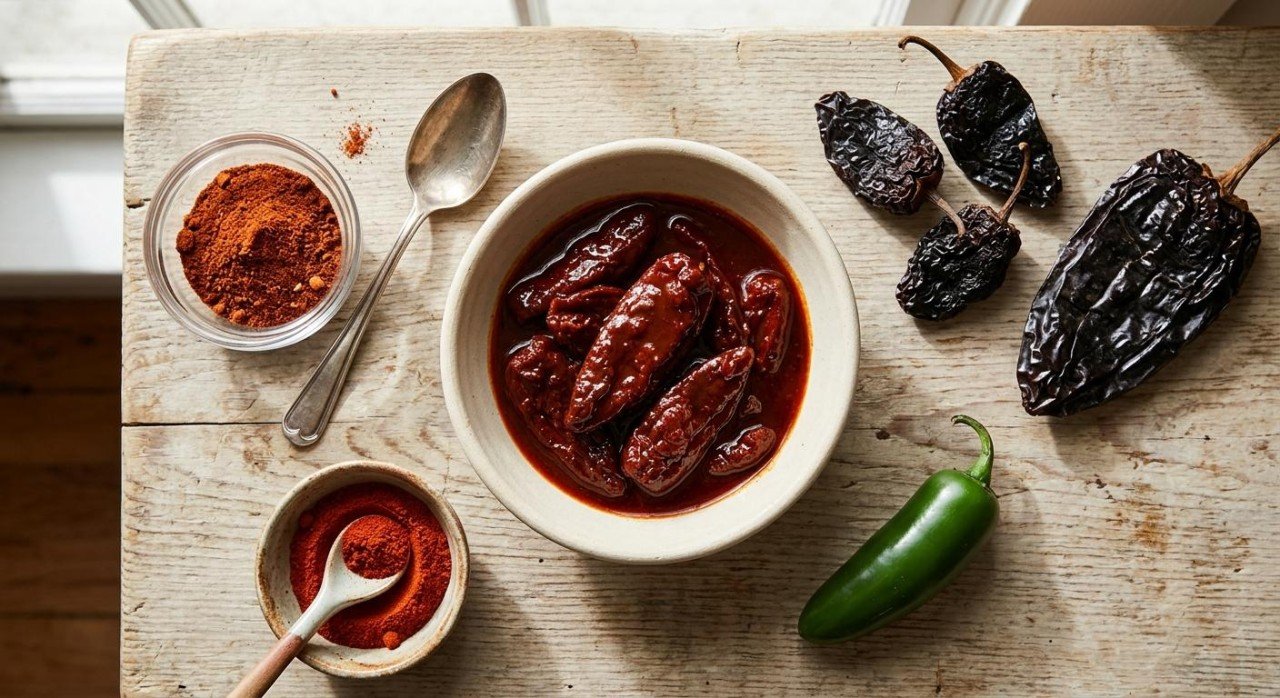
Harissa is the closest cousin in structure: a dried red chile and garlic paste loosened with oil. The difference is the spice blend, since harissa leans on caraway and cumin, which give it a North African flavor. Adding lemongrass and lime moves it toward Thai, and the fish sauce brings back the savory note that shrimp paste provides.
Harissa heat varies a lot by brand, from mild jarred sauces to fiery tube pastes. Taste yours first, and if it is very mild, you may need 1 1/2 tablespoons per tablespoon of curry paste. If you are out of harissa too, see our harissa substitutes guide.
Indian Curry Paste (Like Madras)
- Swap: 1 tablespoon Indian curry paste for 1 tablespoon red curry paste
- Best for: Hearty chicken, lentil, chickpea and vegetable curries
- Skip it for: Light, fragrant Thai dishes like red curry noodle soup
Jarred Indian curry pastes like Madras are built on dried chiles too, but with more cumin, turmeric and coriander and no lemongrass or galangal. The curry will taste earthier and more Indian than Thai, but it will be well-seasoned and properly spiced, and the coconut milk still ties it together.
To bring it closer to Thai, add 1/2 teaspoon lime zest or 1 teaspoon lemongrass paste and finish with a squeeze of lime and a splash of fish sauce. Fresh basil or cilantro on top helps too.
Curry Powder + Chili + Lime Zest
- Swap: 1 teaspoon curry powder + 1/4 teaspoon cayenne (or 1/2 teaspoon red pepper flakes) + 1 small garlic clove, grated + 1/2 teaspoon grated fresh ginger + 1/4 teaspoon lime zest + 1 teaspoon oil, fried together for 30 to 60 seconds
- Best for: Weeknight coconut curries with lots of vegetables
- Skip it for: Recipes where you want the Thai flavor to be the star
Curry powder is a blend of turmeric, coriander, cumin and other warm spices, closer to Indian flavors than Thai ones. On its own it lacks heat and any citrusy note, so the cayenne, ginger and lime zest are doing important work here. The result is a pleasant, golden, mildly Thai-ish curry.
Always bloom the powder in oil before adding liquid, or it tastes dusty and raw. Our curry powder guide explains what is in a typical blend if you need to build your own.
Chili Garlic Sauce or Sriracha + Aromatics
- Swap: 2 teaspoons chili garlic sauce or sriracha + 1/2 teaspoon grated ginger + 1/4 teaspoon lime zest + a pinch of ground coriander
- Best for: Quick stir-fries and soups when nothing else is available
- Skip it for: A curry where the paste is the backbone of the dish
Chili garlic sauce covers heat, garlic and some color, and sriracha adds a little sweetness and vinegar tang. Neither has the depth of a curry paste, which is why they are the last resort. The ginger, lime and coriander help, and finishing with fish sauce and fresh herbs helps even more.
Sriracha in particular is tangy and sweet, so use the smaller amount and taste before adding any sugar the recipe calls for. If you are out of sriracha as well, see our sriracha substitutes.
Making It Vegan or Shellfish-Free
Many red curry pastes, including Mae Ploy, contain shrimp paste, so they are not vegan or safe for a shellfish allergy. Some brands, like Maesri and Thai Kitchen, leave it out, but formulations change, so always check the label.
- Homemade paste: Leave out the shrimp paste, or replace the 1 teaspoon of shrimp paste with 1 to 2 teaspoons of white miso. Pantry & Larder suggests miso or Korean doenjang for this job, since both add fermented, savory depth
- Rebuilds that call for fish sauce: Use the same amount of soy sauce or tamari. A pinch of mushroom powder or a splash of mushroom soaking liquid adds extra savoriness
- Watch for: Fish sauce or anchovies in jarred harissa and laksa pastes, and dried shrimp in many laksa pastes
Without shrimp paste, the curry tastes a little less deep, so finish it with an extra squeeze of lime and a pinch of salt, and taste again. Acid and salt do a lot to make up the difference.
Healthier Upgrades
Red curry paste is used in small amounts, so it is rarely the thing that makes or breaks a meal's nutrition. Two places where a swap genuinely helps:
Salt control
Commercial pastes are very salty, because salt is part of what preserves them. Mae Ploy lists salt as 13 percent of the paste by weight, before counting the salt in its shrimp paste. That works out to roughly 800 mg of sodium per tablespoon, and many recipes use 2 or more tablespoons before adding fish sauce. For context, the FDA recommends less than 2,300 mg of sodium a day, and the average American eats about 3,400 mg.
The homemade and pantry pastes above contain no added salt, so all the seasoning happens at the end, where you can taste and stop when it is right. That is usually much less salt than a jar plus fish sauce, with no loss of flavor. Mild pastes like Thai Kitchen have less salt per spoonful, but recipes tend to call for more of them, so the totals can end up similar.
More plants, more color
A batch of homemade paste contains about 10 different plants: chiles, garlic, shallots, lemongrass, galangal or ginger, cilantro, lime leaf, coriander, cumin and pepper. If you track plant diversity, a spoonful of homemade paste in a vegetable-heavy curry adds up quickly. Pair it with plenty of vegetables, and consider using half light coconut milk, which keeps the curry creamy with less saturated fat. Our coconut milk substitutes guide covers lighter options in detail.
For a full worked example, see our healthier Thai green curry makeover, which tests each swap against a nutrition score to see which ones genuinely make a difference. In Eat Well Planner, Make It Healthier does the same thing for your own recipes, and the Recipe Playground lets you try a swap and watch the nutrition score change before you commit.
What Not to Use
- American chili powder alone — it is a blend with cumin, garlic and oregano, built for chili con carne. Without lemongrass, ginger or lime, the curry tastes like Tex-Mex. See our chili powder guide for what is in it
- Tomato paste + red pepper flakes — heat and color, but nothing else. Fine as part of the pantry paste above, but not on its own
- Sweet chili sauce — mostly sugar, with little heat or aromatics. It will make the curry sweet and thin
- Chili crisp — the crunchy texture and fried shallot flavor do not dissolve into a curry sauce, and the oil can make the dish greasy
- Gochujang alone — sweet, fermented and sticky. Good in its own dishes, but it pulls a curry in a completely different direction
Which One Should You Use?
If you have any other Thai curry paste, use it 1:1 and adjust the heat. If you have none, the 15-minute pantry paste is the best all-around answer, and the sambal oelek rebuild is close behind if you keep sambal in the fridge. And if you make Thai curry more than once a month, a batch of homemade paste in the freezer is the best upgrade of all: better flavor, less salt and no more empty jars.
If you are still not sure which swap fits the dish in front of you, Eat Well Planner's AI recipe chat can help. Ask it "I'm out of red curry paste, what should I use in this recipe?" and it will answer with your actual recipe in context: the protein, the vegetables, how much paste it calls for and what else is in your pantry. If you need the whole dish vegan or shellfish-free, Recipe Variations can rewrite the full recipe with those swaps already worked in.