The chicken is already searing, the rice is done, and the teriyaki bottle in the fridge door turns out to hold about a teaspoon. Or you picked it up, read the label, and found wheat in the soy sauce or 690 mg of sodium per tablespoon, and decided you would rather not.
Here is the good news: teriyaki is the easiest bottled sauce to replace, because it is less a recipe than a ratio. Teri means shine and yaki means grilled, so the name describes a glaze, not a formula. The traditional Japanese version is four ingredients — soy sauce, sake, mirin, and sugar. The thick American bottle drops the alcohol, adds garlic and ginger, and leans on a starch so it clings to a rice bowl. Either way, what the dish actually needs is salty soy, something sweet, a little aromatic warmth, and enough body to coat.
You almost certainly have the first two in the cupboard right now. The picks below are ordered from most faithful to most situational, each with an exact ratio and an honest note on where it falls apart. The five-minute homemade version at the top is better than most bottles, so start there if you can.
The Quick List
- 5-minute homemade teriyaki — soy, honey, ginger, garlic, cornstarch; better than the bottle
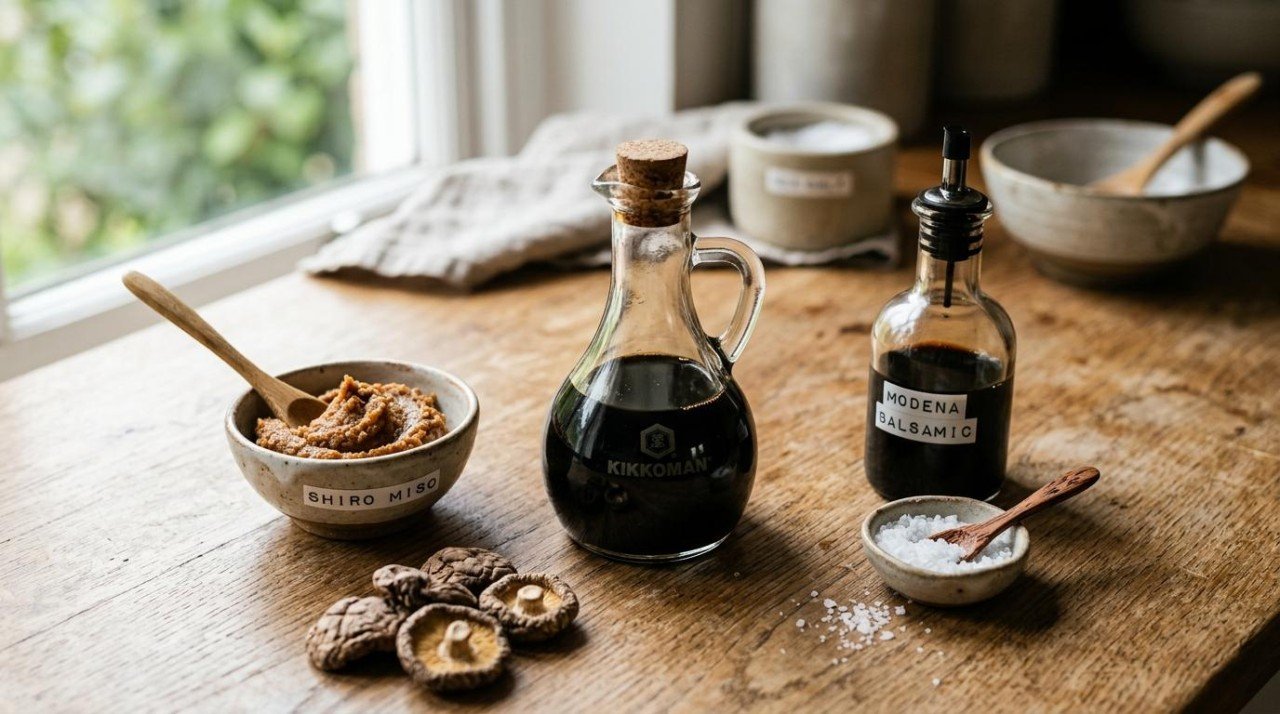
- Traditional tare (soy + sake + mirin + sugar) — the real Japanese glaze, thin and elegant
- Soy sauce + brown sugar — the two-ingredient emergency fix, ready in 15 seconds
- Soy sauce + honey + ginger and garlic — the best no-cook glaze for salmon and chicken
- Hoisin, thinned — one bottle, already sweet and thick; more anise-forward
- Unagi (eel) sauce — nearly a drop-in; thicker and sweeter, so use less
- Kecap manis — Indonesian sweet soy; the fastest single-bottle swap
- Oyster sauce + sugar — the savory-leaning stir-fry answer
- Coconut aminos + honey — soy-free, gluten-free, about 60% less sodium
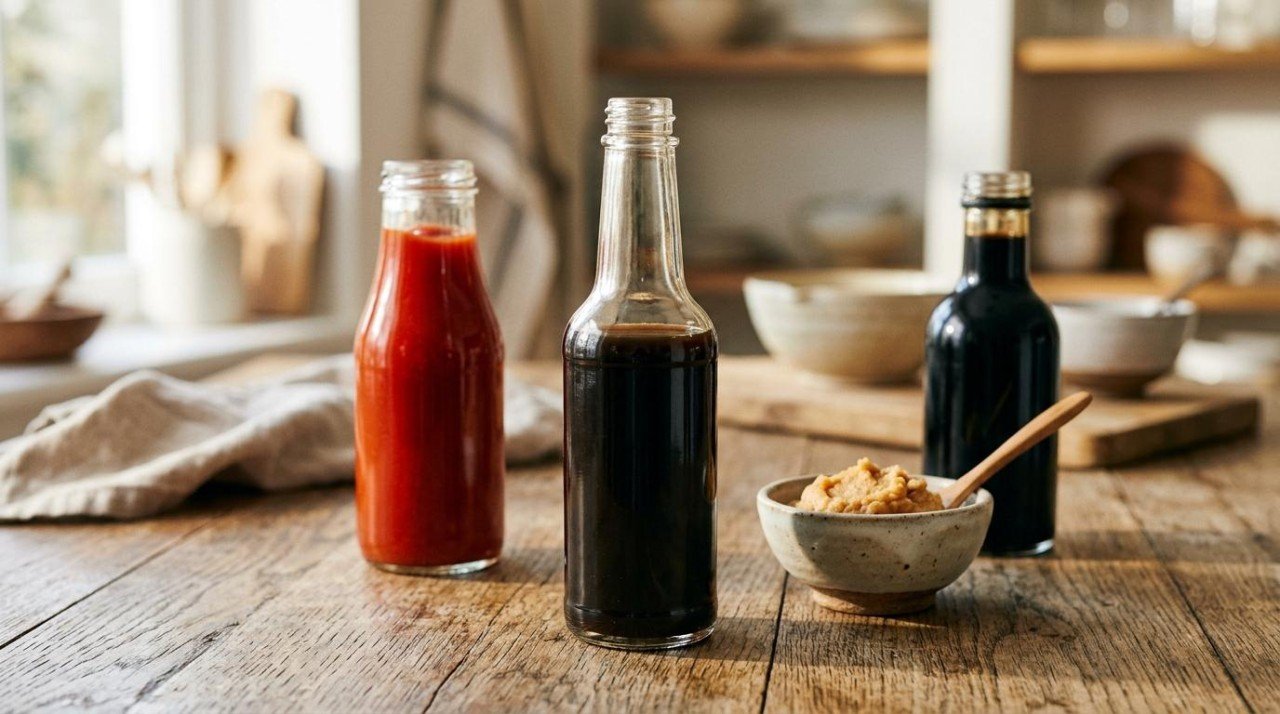
- BBQ sauce + soy sauce — surprisingly good on the grill, wrong in a wok
Pick by What You Are Making
- Marinade (chicken thighs, steak, tofu, salmon before it hits the heat) — thin swaps are fine here; soy + brown sugar, the traditional tare, or coconut aminos all work
- Stir-fry (the sauce is one voice in a crowded pan) — soy + brown sugar, hoisin thinned, or oyster sauce + sugar
- Finishing glaze (brushed on at the end, meant to go glossy) — the homemade version, soy + honey, unagi sauce, or kecap manis
This split explains something confusing on the shelf: bottles labeled "teriyaki marinade and sauce" are thin and salty, while "teriyaki baste and glaze" bottles are thick and sweet. They are not interchangeable with each other, let alone with a single substitute. Match your swap to the job rather than to the bottle you remember buying.
One rule cuts across all of them: sweet sauces burn. Whatever you use, add it in the last two or three minutes of cooking and let it reduce around the food, rather than pouring it into a screaming-hot pan at the start.
5-Minute Homemade Teriyaki
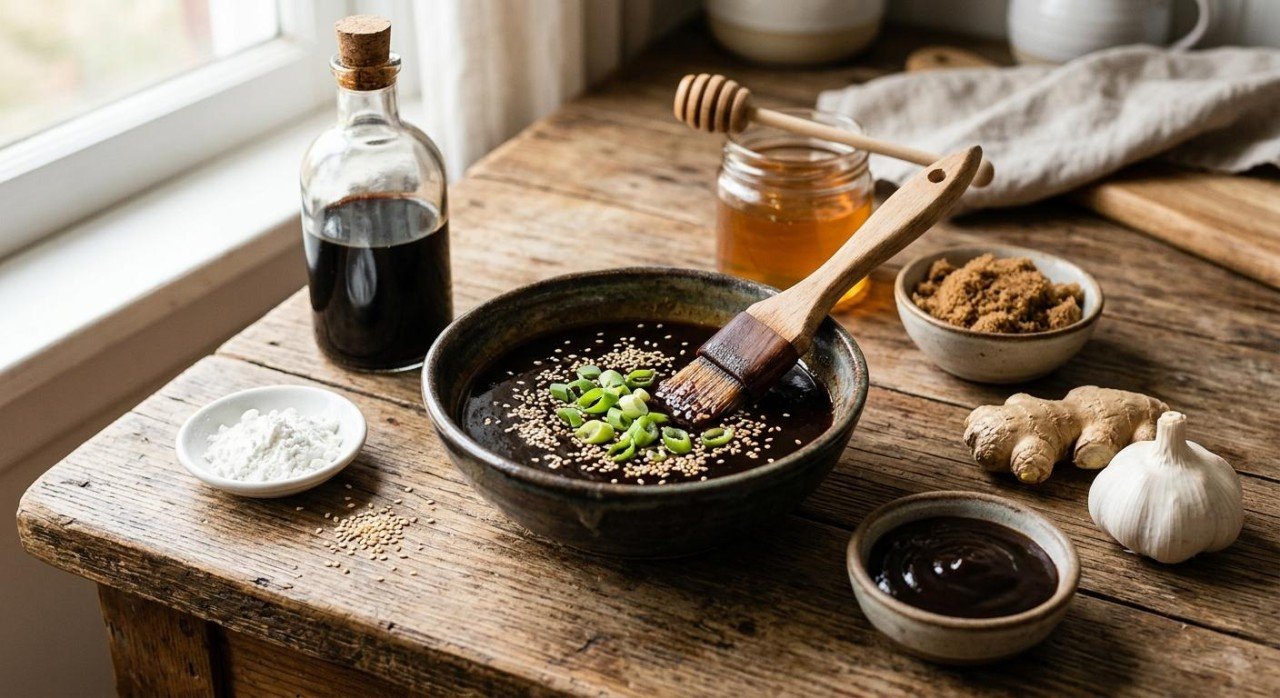
- Swap: Makes about ⅔ cup — ¼ cup soy sauce + ¼ cup water + 3 tablespoons honey (or packed brown sugar) + 1½ teaspoons rice vinegar + 1 teaspoon grated fresh ginger + 3 grated garlic cloves, thickened with 1½ teaspoons cornstarch whisked into 1½ teaspoons cold water
- Best for: Everything — rice bowls, glazed salmon, stir-fries, meatballs, dipping
- Skip it for: Nothing, though it is worth doubling since it keeps a week or two
- Health notes: You control both dials. Reduced-sodium soy sauce roughly halves the salt, and you can cut the honey by a third before anyone notices
This is a half batch of the teriyaki sauce from Cookie and Kate, which makes about 1¼ cups from ½ cup soy sauce or tamari, ½ cup water, ⅓ cup honey or maple syrup, 1 tablespoon rice vinegar, 2 teaspoons grated ginger, and six cloves of garlic. Simmer everything except the slurry for a few minutes, whisk the cornstarch and cold water together separately, then pour it in and stir for about 30 seconds until the sauce thickens and turns glossy.
Two details make or break it. The cornstarch has to go in as a cold slurry, never dumped straight into hot liquid, or you get lumps you cannot whisk out. And the sauce thickens considerably as it cools, so pull it off the heat while it still looks slightly thin. It keeps in a jar in the fridge for one to two weeks — the real argument for making the full batch.
Traditional Japanese Tare (Soy + Sake + Mirin + Sugar)
- Swap: Makes about 1 cup — ½ cup soy sauce + ½ cup sake + ½ cup mirin + ¼ cup sugar, simmered 10 to 15 minutes
- Best for: Salmon, yellowtail, chicken thighs, tofu — anything pan-glazed the Japanese way
- Skip it for: Thick American-style rice bowls; this sauce is meant to be thin and will run rather than cling
This is the 2:2:2:1 proportion Japanese cooks call the golden ratio, and it is the version Just One Cookbook uses. There is no cornstarch in it and no garlic. The shine comes entirely from reducing the sugars in the mirin and sake until they cling, which is why that recipe insists the result should stay thin and lightly sweet rather than syrupy. If you have only ever had the bottled kind, this tastes cleaner and far less sugary.
No mirin? Replace each ½ cup with ¼ cup sake plus ¼ cup water plus 3 tablespoons sugar. No alcohol at all? Use ½ cup water plus 3 tablespoons sugar in place of the mirin, and water in place of the sake. You lose a little depth, but the glaze still works. It keeps two to three weeks refrigerated.
Soy Sauce + Brown Sugar
- Swap: 1 tablespoon teriyaki → 2 teaspoons soy sauce + 1 teaspoon packed brown sugar + 1 teaspoon water
- Best for: Stir-fries, fried rice, noodles, quick marinades
- Skip it for: Dipping or a finishing glaze — with nothing else in the bowl, it reads as salty sugar water
This is the one to reach for when the pan is already hot. Brown sugar rather than white is doing real work: the molasses in it supplies the caramel note that a long reduction would otherwise have to build, so the swap tastes finished instead of flat. Stir it until the sugar dissolves before it goes anywhere near the heat.
Scaling up, ¼ cup of teriyaki becomes about 3 tablespoons soy sauce, 1½ tablespoons brown sugar, and 1 tablespoon water. Grate in a little ginger and garlic if you have 20 spare seconds, which turns this into the next entry and is a genuine upgrade.
Soy Sauce + Honey + Ginger and Garlic
- Swap: 1 tablespoon teriyaki → 2 teaspoons soy sauce + 1 teaspoon honey + a pinch each of grated ginger and garlic
- Best for: Glazing salmon, chicken, meatballs, roasted vegetables, tofu
- Skip it for: Anything with a long cook time in the pan — honey scorches faster than sugar
Honey brings its own floral note and, more usefully, a stickiness that a sugar syrup takes longer to reach. Brush this on salmon in the last two minutes under a broiler and it lacquers beautifully. Pour it into a pan at the start and you get bitter black spots.
Maple syrup swaps in one for one and reads slightly less sweet, with a rounder, woodier flavor that is very good on pork and roasted squash. If you want it thicker without cooking anything separately, whisk in ⅛ teaspoon of cornstarch per tablespoon of sauce and let it bubble for 20 seconds in the hot pan.
Hoisin Sauce, Thinned
- Swap: 1 tablespoon teriyaki → 2 teaspoons hoisin sauce + 1 teaspoon water + ¼ teaspoon rice vinegar
- Best for: Stir-fries, glazed meatballs, pork, chicken wings, lettuce wraps
- Skip it for: Delicate white fish, and any dish where you want it to taste specifically Japanese
Hoisin already has almost everything teriyaki has — fermented soybean savoriness, sugar, garlic, and enough body to glaze — plus a warm five-spice note that teriyaki does not. Straight from the jar it is too thick and too sweet, so the water thins it to brushing consistency and the vinegar pulls the sugar back toward balance.
Taste before you commit. Hoisin is noticeably sweeter than thin bottled teriyaki, so if your recipe already includes sugar or honey elsewhere, dial that back. On ribs, wings, and anything headed for a grill, plenty of people prefer the hoisin version anyway.
Unagi Sauce (Eel Sauce)
- Swap: 1 tablespoon teriyaki → 2½ teaspoons unagi sauce. To make it: ¼ cup mirin + 1½ tablespoons sake + 2½ tablespoons sugar + ¼ cup soy sauce, simmered 10 minutes
- Best for: Rice bowls, grilled fish, drizzling over anything already cooked
- Skip it for: Savory stir-fries where you did not want extra sugar
Unagi sauce and teriyaki are the same four ingredients in different proportions, which is what makes this the closest bottled swap on the list. Just One Cookbook notes the two differ mainly in richness and sweetness, with unagi coming out thicker and sweeter — hence using slightly less of it. If you have a squeeze bottle left over from a sushi night, it is already a better teriyaki than most supermarket bottles, and it keeps two to three months in the fridge.
Kecap Manis (Indonesian Sweet Soy Sauce)
- Swap: 1 tablespoon teriyaki → 2 teaspoons kecap manis + 1 teaspoon water + a pinch of grated ginger
- Best for: Grilling, satay, fried rice, noodles, skewers
- Skip it for: Subtle dishes — the palm sugar and spices are assertive and unmistakably not Japanese
Kecap manis is soy sauce cooked down with palm sugar and often cinnamon, star anise, and clove, which leaves it thick, syrupy, and already halfway to a glaze. That thickness is the selling point: it clings to grilled chicken with no starch and no reduction at all. It is also sweeter and more molasses-forward than teriyaki, so it works best where char and smoke can meet it halfway.
Oyster Sauce + Sugar
- Swap: 1 tablespoon teriyaki → 2 teaspoons oyster sauce + ½ teaspoon sugar + ½ teaspoon water
- Best for: Beef and vegetable stir-fries, broccoli, noodles, anything from a wok
- Skip it for: Vegetarian dishes, unless you use the mushroom version, and delicate fish
Oyster sauce brings the thick, glossy body and deep savoriness of teriyaki without much of its sweetness, so the small amount of sugar is not optional here. What you end up with leans savory rather than candied, which many people prefer in a stir-fry — the vegetables still taste like vegetables.
Coconut Aminos + Honey
- Swap: 1 tablespoon teriyaki → 1 tablespoon coconut aminos + ½ teaspoon honey + a pinch each of ginger and garlic, plus a small pinch of salt to taste
- Best for: Gluten-free, soy-free, and lower-sodium cooking; marinades and glazes alike
- Skip it for: Dishes that want a bold, salt-forward sauce — this one is gentler by design
- Health notes: About 270 mg of sodium per tablespoon versus roughly 920 mg for soy sauce and 690 mg for bottled teriyaki
Note that this one goes in at 1:1, not the 2:1 of the soy-based swaps. Coconut aminos are milder and already faintly sweet, so you need the full volume and less added sweetener. DaVita puts them at 270 mg of sodium per tablespoon against about 920 mg for regular soy sauce and 575 mg for the reduced-sodium kind, which is why they turn up in so many blood-pressure-conscious kitchens.
If sodium is not your concern but gluten is, tamari is the more faithful choice — brewed without wheat and close to indistinguishable from soy sauce, though at roughly 1,005 mg of sodium per tablespoon it is no lighter on salt. Check the label either way, since not every tamari is certified gluten-free.
BBQ Sauce + Soy Sauce
- Swap: 1 tablespoon teriyaki → 2 teaspoons BBQ sauce + 1 teaspoon soy sauce + a pinch of ginger
- Best for: Grilled chicken, burgers, wings, kebabs, sheet-pan meatballs
- Skip it for: Stir-fries and rice bowls — the tomato and smoke are impossible to hide indoors
This is the swap for the night you are already at the grill and the teriyaki is simply not happening. BBQ sauce supplies the sugar, tang, and clinging texture; the soy sauce restores the savory backbone that tomato and vinegar alone do not provide. Choose the plainest bottle you have — heavy hickory or bourbon flavors will fight the ginger.
The Healthier Angle: Sodium First, Sugar Second
Teriyaki is one of the few sauces where making it yourself is a clear nutritional win rather than a marginal one, because the bottled versions are extreme at opposite ends. Thin bottled teriyaki carries about 690 mg of sodium and 2.5 g of sugar per tablespoon — 30% of a day's sodium in one spoonful. Thick baste-and-glaze bottles flip it: Kikkoman's runs 370 mg of sodium but 4 g of added sugar per tablespoon. Most rice bowls use three or four tablespoons.
Three adjustments do most of the work, and none of them change the dish much:
- Use reduced-sodium soy sauce or tamari in any of the homemade versions above. It cuts the salt by roughly a third to a half, and in a sauce carrying this much sweetness and aromatics, almost nobody can tell.
- Cut the sweetener by a third. Start the homemade recipe with 2 tablespoons of honey instead of 3 and taste from there. Sauces built at home are far less sweet than the bottle to begin with, so there is room.
- Replace some liquid with pineapple or orange juice. Swapping half the water for juice adds sweetness and acidity for very little added sugar. One caveat: fresh pineapple juice contains bromelain, which breaks down protein, so keep marinating under an hour or the meat turns mushy. Canned and bottled juice is heat-treated and does not have that problem.
How you serve it matters as much as the recipe. Brushing a glaze on at the end uses a fraction of what pouring sauce over a finished bowl does, and it tastes stronger for it, because the sauce sits on the surface where your tongue meets it first.
Take the Guesswork Out of Eating Well
Eat Well Planner helps you organize your favorite recipes, plan balanced meals, and automatically generate shopping lists — all in one place. Whether you're tracking macros, managing dietary restrictions, or just trying to stop asking "what's for dinner?", we've got you covered.
Our AI-powered tools can adapt any recipe to your dietary needs, help you discover new meals you'll love, and even log your nutrition effortlessly. It's meal planning made simple.
Start Organizing Your Meals — FreeWhat Not to Use
- Plain soy sauce on its own. The most common mistake by far. Without sweetness it will never glaze, and at teriyaki volumes it makes the dish inedibly salty. It needs sugar, honey, or mirin — that is the entire point of the sauce.
- Ponzu. It looks the part in the bottle, but it is citrus and vinegar over soy: thin, sour, and completely wrong as a glaze. Ponzu is a dressing and a dipping sauce, not a stand-in.
- Worcestershire sauce straight. Tamarind, anchovy, and vinegar make it sharp and thin where teriyaki is round and sweet. It can be part of a fix once you add soy sauce and brown sugar, but never a one-for-one swap.
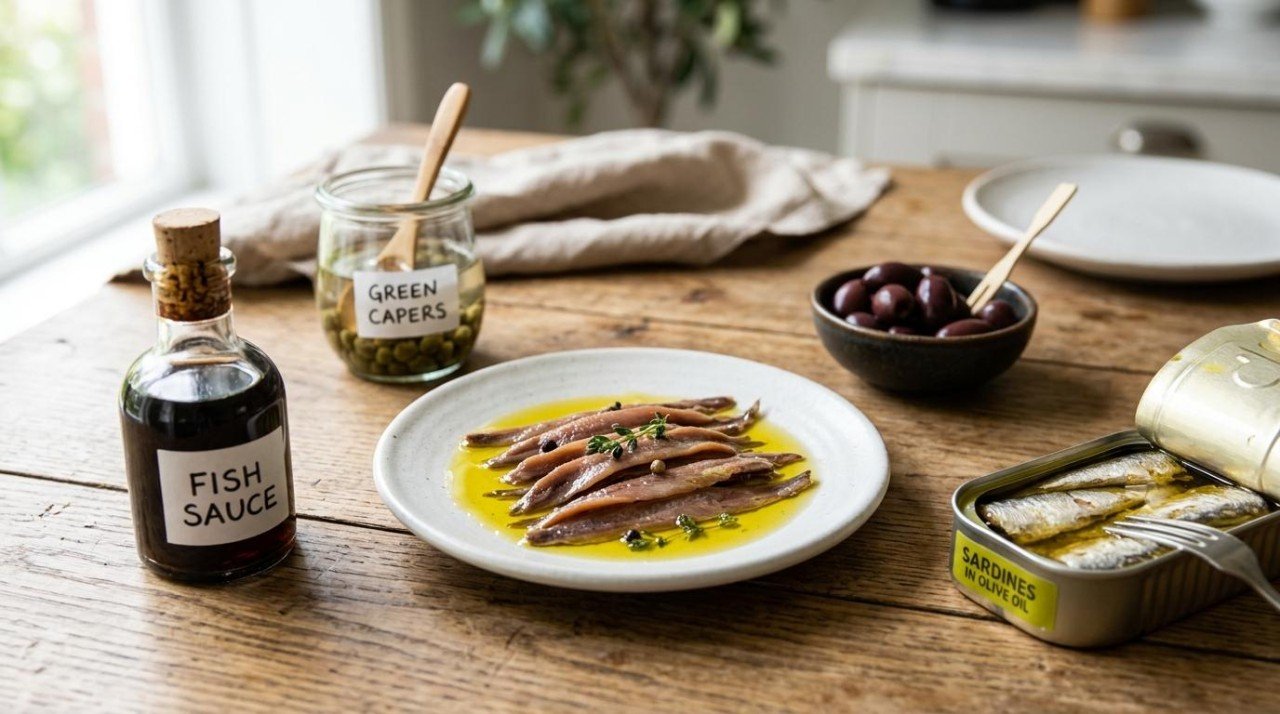
- Sweet chili sauce as a drop-in. Mostly sugar, vinegar, and chili, with none of the fermented depth. A fine sauce in its own right; it just is not this one.
Which One Should You Actually Use?
If you have five minutes and a saucepan, make the homemade version — it beats anything on the shelf and you will stop buying the bottle. If the pan is already hot, soy sauce plus brown sugar gets you there in 15 seconds. And if what you are cooking is Japanese rather than Japanese-ish, the traditional tare is worth the trip to buy mirin.
The hard part is rarely the ratio; it is knowing which one fits your dish. That is where Eat Well Planner earns its keep — its AI recipe chat reads your actual recipe and tells you which of these swaps works in it, scaled to your quantities. For dietary swaps it can go further and rewrite the whole recipe gluten-free or soy-free with the substitutions already worked in, instead of leaving you to adapt line by line.
And because sauces like this are usually where an otherwise sensible dinner quietly picks up most of its sodium, the app's nutrition score and Make It Healthier suggestions show you exactly what a swap changes, with a calculator verifying the gain before any suggestion appears. You can also test a swap in the recipe playground and watch the numbers move before you cook anything at all.